
What you’ll achieve, time required, and skill level
By the end of this guide you will have built a complete, evidence-informed nutrition education lesson plan package: a 45-minute core lesson, two 10–15 minute interactive activities, a formative assessment with a 0–10 scoring rubric, a 4-week reinforcement plan for families, and simple monitoring metrics you can use to measure learner progress. Realistic completion time to prepare the full package is 4–6 hours for an experienced educator and 6–10 hours for a teacher or community leader new to nutrition topics. This guide assumes basic teaching skills (classroom management for groups of 8–30), comfort creating slides or handouts, and access to a copier or digital distribution (email or LMS).
Before you start
- Prerequisites: basic pedagogical experience (1 semester or 1 year classroom experience), or volunteer experience with youth groups.
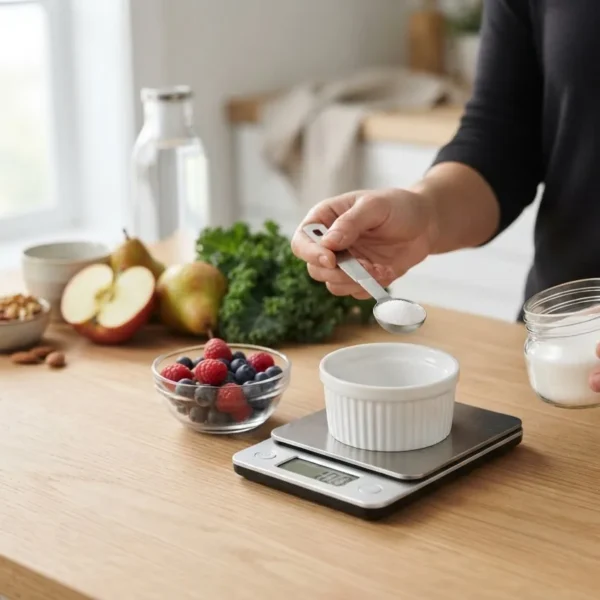
- Materials & tools: laptop with slide software (PowerPoint or Google Slides), printer (or PDF export), flip chart or whiteboard, kitchen scale (optional), measuring cups and spoons, markers, sticky notes.
- Group logistics: target group size 8–30 participants; room with table space for small-group work; 45–60 minutes available for a core session.
- Reference resources: current USDA MyPlate guidance (review at least once) and one local Texas nutrition resource or county extension handout.
- Permissions: parental consent for minors, food-sampling waiver if you plan tasting (keep record for 4 years).
Overview of the process
This step-by-step method walks you through needs assessment, objective setting, content selection, active-learning activities, formative assessment, family engagement, and measurement. Follow the numbered steps below; each numbered item is a discrete task you can finish in a single work block.
-
Define your learners and measurable objectives (30–45 minutes)
Action: write a one-paragraph learner profile and 2–4 measurable learning objectives. Be explicit: include age range, baseline knowledge, and any language or dietary restrictions.
How to do it:
- Write the learner profile (example): “Ages 12–14, mixed reading levels, basic vocabulary in English, 25 students, common barriers include limited access to fresh fruit and low family cooking experience.”
- Create objectives using the SMART format. Example objectives for a 45-minute session:
- By the end of the session, 80% of learners (20 of 25) will correctly identify the three functions of macronutrients (energy, structure, regulation) on a three-item quiz.
- By the end of the session, 75% of learners will be able to build a balanced plate using MyPlate guidelines, scoring ≥7/10 on the rubric.
Why measurable matters: it allows clear formative assessment and tells you whether to reteach.
-
Conduct a rapid needs assessment (20–40 minutes)
Action: gather three quick data points about your learners to inform content. Use a 5-question pre-survey administered on paper or via Google Forms.
Survey structure (5 items):
- Question 1 (single-choice): “How often do you eat a vegetable at lunch?” (Never, 1–2 times/week, 3–4 times/week, Every day).
- Question 2 (single-choice): “Who usually prepares food at home?” (I do, Parent, Grandparent, Other).
- Question 3 (short answer): “Name two foods that give you energy.”
- Question 4 (true/false): “Drinking fruit juice is the same as eating whole fruit.”
- Question 5 (checkbox): “What do you want to learn? (Pick up to 2) — Cooking, Reading labels, Portion sizes, Healthy snacks.”
Target: complete surveys for at least 60% of the group (for 25 students, aim for 15 responses). Use results to prioritize the active learning components: if >50% report “Never” for vegetables, plan a tasting and 10-minute prep demo.
-
Select core content aligned to objectives (45–75 minutes)
Action: choose 3–5 core facts or skills that match your stated objectives and the needs assessment. Keep content density low: 1 main idea per 10 minutes of lesson time.
Example 45-minute content breakdown:
- 0–5 min: Warm-up question and objective statement.
- 5–15 min: Short interactive mini-lecture on macronutrients (3 slides, max 90 seconds each).
- 15–30 min: Hands-on activity — “Build-a-Plate” small groups (15 minutes).
- 30–40 min: Tasting or label-reading relay (10 minutes).
- 40–45 min: Formative assessment and exit ticket (5 minutes).
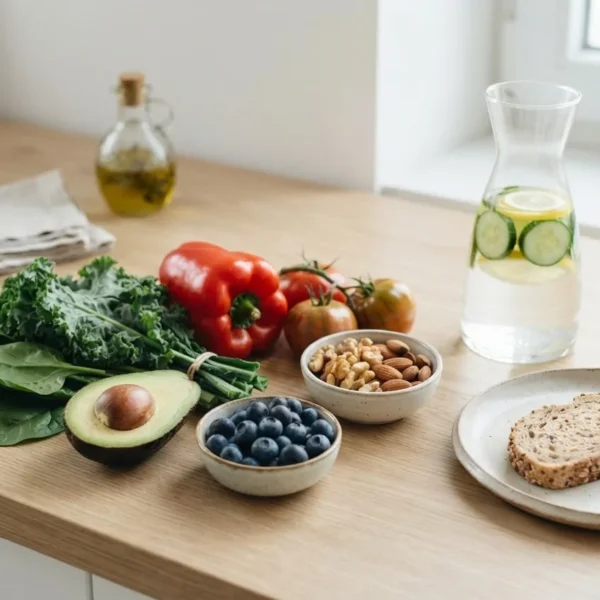
Be concrete on content: e.g., list the three macronutrients and give 3 specific food examples each — Carbohydrates: brown rice, whole-wheat bread, sweet potato; Protein: chicken breast (3 oz = 21g protein), black beans (1/2 cup = 7–8g); Fat: avocado (1/4 medium = 7g), olive oil (1 tbsp = 14g).
-
Design a timed 45-minute lesson plan (60–90 minutes)
Action: write a minute-by-minute script and materials list. Use the worked example below and adapt quantities and timing precisely.
Worked example — 45-minute lesson for 20 learners:
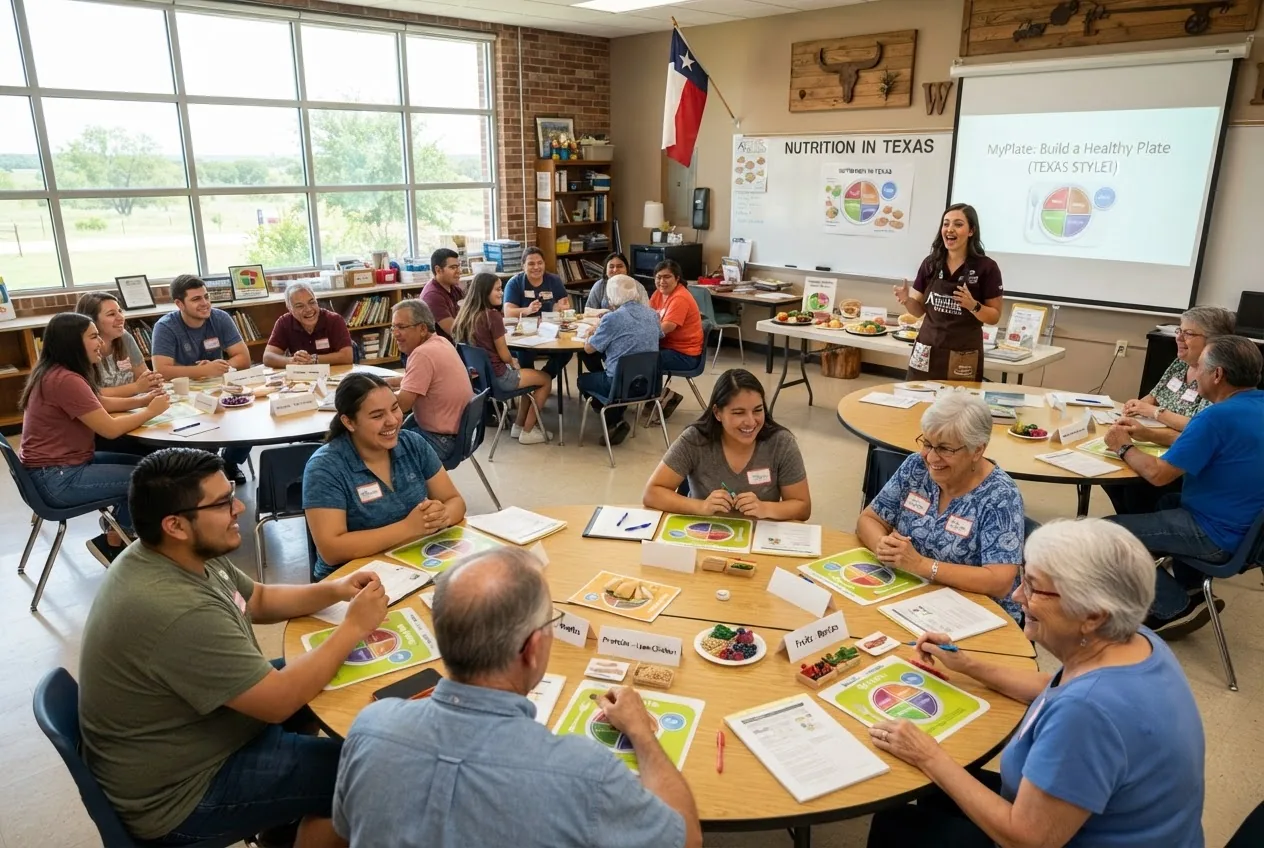
Time Activity Materials 0–5 min Welcome, objectives, warm-up question (show MyPlate image) Slide printouts, projector 5–15 min Mini-lecture with 3 checks for understanding 3 slides, 3 clicker questions or show of hands 15–30 min Build-a-Plate small groups (4 groups of 5) Plate templates, food cut-outs or real items, timer 30–40 min Label-reading relay (teams identify sodium and sugar) 5 packaged food labels, stopwatch 40–45 min Exit ticket quiz (3 questions) and immediate feedback Paper exit tickets, pens Materials list (for 20 learners): 20 plate templates, 120 food cut-outs (6 per student), 5 packaged food labels, 20 pens, 1 timer, projected slides (5 slides max).
-
Create engaging active-learning activities (60–120 minutes to design)
Action: design two short, active-learning tasks that take 10–15 minutes each and map directly to objectives.
Activity A — Build-a-Plate (15 minutes):
- Group size: 4–6. Materials per group: 1 plate template, 18 food cut-outs, 1 rubric sheet.
- Instructions: Each group composes a plate meeting the objective (balance for a 400–600 kcal meal). They must include at least 1 vegetable, 1 fruit, 1 whole grain, 1 protein, and 1 dairy or dairy alternative. Score each plate with a 0–10 rubric.
- Rubric example: Fruit/veg presence (0–3), whole grain (0–2), lean protein (0–2), portion size accuracy (0–2), added sugar/sodium flag (-1 to 0). Target score ≥7 = meets objective.
Activity B — Label-reading relay (10 minutes):
- Set up 5 stations with packaged food labels. Each team has 2 minutes per station to record: serving size, calories per serving, grams of sugar, and milligrams of sodium.
- Targets: teams must correctly identify the highest-sodium item and the item with the most added sugar. Correct pair scores 3 points; partial correct 1 point.

-
Prepare a short formative assessment and scoring rubric (30–45 minutes)
Action: make a 3–5 item exit ticket and a rubric that transforms those items into a mastery threshold.
Exit ticket example (3 items, 5 minutes):
- Multiple choice: Which macronutrient is the body’s main energy source? (A: Fat B: Protein C: Carbohydrate D: Vitamin) — Correct: C.
- Short answer: List two changes you can make this week to increase vegetables at lunch. (scored 0–2; 1 point per practical option).
- Practical check: Draw or label a quick plate with at least one whole grain and one protein portion (scored 0–3).
Scoring thresholds (for 3-item exit ticket, max 6 points): 5–6 = mastery, 3–4 = partial, 0–2 = needs reteach.
-
Plan a 4-week reinforcement strategy for transfer to home (75–120 minutes)
Action: design weekly take-home prompts and one family activity. Be specific about timing and materials.
4-week plan (each item takes 10–15 minutes of family time):
- Week 1: “MyPlate challenge” — family adds one vegetable at dinner 5 times per week. Provide a checklist and two simple recipes (prep time ≤20 minutes).
- Week 2: “Label detective” — family checks sugar and sodium on 3 packaged foods; record findings in a one-page table.
- Week 3: “Snack swap” — replace one high-sugar snack with a protein + fruit snack for 7 days.
- Week 4: “Cook-a-meal” — student helps prepare a 3-component balanced meal (grain, protein, vegetable). Provide a recipe with exact quantities for 4 servings (e.g., 2 cups dry brown rice, 1 lb chicken breast, 4 cups mixed vegetables).
Deliverables: printable one-page handout per week, translated materials if needed (Spanish recommended for many Texas communities). Target family survey completion rate: 25–40% return to measure uptake.
-
Assemble handouts, slides, and physical materials (90–150 minutes)
Action: create and print a one-page lesson outline, 20 student handouts, and group materials. Be precise on counts and file formats.
Checklist for printing and digital assets:
- Slides: 5 slides exported to PDF, file size <10 MB.
- Student handouts: 20 copies, double-sided if possible to save paper (pages: exit ticket + plate template + weekly handout summary).
- Group materials: 4 plate templates, 120 cut-outs (6 per student), sticky-tack or tape.
- Allergen notes and waiver forms printed — 1 per student.
Tip: laminate 4 plate templates for reuse (lamination cost approximately $3–$5 per sheet at local office supply stores).
-
Practice a timed run-through (30–45 minutes)
Action: rehearse the session aloud, timing each segment with a stopwatch. Practice transitions between activities and scripts for instructions that must be <30 seconds long.
What to check during practice:
- Warm-up question takes 60–90 seconds to introduce.
- Mini-lecture slide delivery <10 minutes with 3 comprehension checks that are <30 seconds each.
- Group setup and cleanup time budgeted: 2 minutes to form groups, 3 minutes for cleanup at the end.
If the run-through exceeds 45 minutes by more than 5 minutes, cut one slide or shorten small-group time by 2–3 minutes; keep the tasting time no less than 5 minutes.
-
Deliver the lesson and use timed micro-assessments (45–50 minutes)
Action: teach the session exactly as practiced. Use the exit ticket to measure mastery immediately. Collect family reinforcement sign-ups at the end.
During delivery:
- Keep teacher-to-group ratio: 1 adult per 10–15 students for hands-on tasting or kitchen demonstrations. If you have only one instructor for 25 students, plan group rotations so only one group tastes at a time (tasting stations: 3 stations max).
- Use positive language: call out specific behaviors you want to see (e.g., “show me one whole grain” instead of “don’t eat chips”).
- Time checks: announce 3-minute warnings before transitions.
Collect exit tickets and score them within 48 hours. Retain anonymized results for program improvement.
-
Score assessments and plan targeted reteach (60–120 minutes)
Action: score exit tickets with your rubric and identify learners below mastery. Plan a 10–15 minute targeted reteach activity the next session or through a short video.
Scoring workflow:
- Score each exit ticket within 48 hours. For a class of 25, budget 30–45 minutes to score and log results.
- Flag learners scoring 0–2 (needs reteach). If >20% of class in needs reteach, schedule a 15-minute remediation at the start of the next session or provide a 6-minute recorded video covering the missed concepts.
- Record results in a simple spreadsheet with columns: student ID, score, key misconception (e.g., “juice equals fruit”).
-
Collect program feedback and family follow-up (30–60 minutes initial, then ongoing)
Action: issue a 5-question feedback form to students and a 1-page family follow-up at week 2 and week 4. Track family participation metrics.
Feedback form items (student-facing): Likert 1–5
- Was the lesson easy to understand? (1–5)
- Did you like the Build-a-Plate activity? (1–5)
- Do you plan to try a recipe at home? (Yes/No)
- One thing I learned:
- One thing to change:
Family follow-up: send a short emailed checklist at week 2 and week 4. Target family response rate: at least 25% to consider community-level uptake.
-
Measure outcomes over 4–12 weeks (30–60 minutes per measurement)
Action: use 2–3 measurable indicators to monitor short-term impact. Collect data at baseline, week 4, and week 12.
Suggested indicators:
- Knowledge: mean exit ticket score (scale 0–6). Target improvement: +1.5 points by week 4.
- Behavioral: self-reported vegetable servings per day (0–5 scale). Target improvement: +0.5 servings/day by week 4.
- Family engagement: percentage of families completing at least one home activity. Target: 25% by week 4.
If knowledge improves but behaviors do not, increase family engagement and practical skill practice (cooking demos, grocery tours).
-
Iterate on content and scale up (ongoing — first iteration after 4 weeks)
Action: combine assessment and feedback data to make 2–3 specific adjustments for the next cohort. Keep a change log with dates.
Common timely adjustments I make:
- Shorten the mini-lecture from 10 to 6 minutes if attention drops (confirmed by 2-minute checklist during delivery).
- Add visual portion cues for plate sizes (e.g., using palm-size measurements) if students misjudge servings.
- Provide Spanish handouts when >25% of families request it.
From experience: when I skipped a practice run-through, timing always went over by 8–12 minutes. I now always run the lesson at least once alone and once with a colleague.
-
Use digital supplements when remote or hybrid (90–180 minutes to prepare)
Action: prepare a 6-minute video covering the core concept and a Google Form exit ticket. Keep video sections ≤90 seconds per idea and captions enabled.
Digital resource specs:
- Video: 720p MP4, under 50 MB, 6 minutes total, chapters at 0:00, 1:30, 3:00, 4:30, 6:00.
- Google Form: 3 questions mirroring in-person exit ticket. Set required fields and automatic summary responses for learners.
- Accessibility: provide captions and a transcript; translate transcript if more than 10% of learners are Spanish dominant.
Distribution: email link with subject “Week 1: MyPlate challenge — watch in ≤10 minutes”. Track watch rate: target ≥60% in first 48 hours for remote cohorts.
-
Link to broader nutrition resources and encourage evidence-based follow-up (30 minutes)
Action: include 2–3 vetted resources on your handout. At minimum, reference USDA MyPlate and one local Texas extension or community resource.
Recommended external resources (include on handout):
- USDA MyPlate — basic plate visuals and kid-friendly resources.
- Texas-specific extension or county nutrition education pages (link locally as available).
Also link to in-cluster site content for deeper reading: see the pillar page on a balanced diet for sample meal plans at /nutrition-tips/nutritionally-complete-meal-guide-with-balanced-diet-advice/ and beginner-friendly tips at /nutrition-tips/nutrition-for-beginners-guide-with-healthy-diet-101-basics/. For quick, practical exchanges consider the snack swap ideas in /nutrition-tips/10-ways-to-eat-better-guide-with-essential-diet-tips/.
-
Document outcomes and prepare a short report (60–120 minutes)
Action: create a 1–2 page report summarizing baseline, immediate post-lesson results, family engagement, and two recommendations. Use concrete numbers and simple charts (bar chart for knowledge gains, table for family engagement).
Report template (one page):
- Program name, dates, instructor name, cohort size.
- Baseline mean exit-ticket score and post mean (e.g., baseline 2.1 → post 4.0, n=25).
- Behavioral change (self-reported veg servings baseline 0.9 → week 4 = 1.4, n=12 families).
- Three recommendations: adjust mini-lecture, enhance family outreach, run 2 cooking demos next term.
-
Scale and embed nutrition education into ongoing programming (ongoing)
Action: schedule two recurring sessions per semester and train at least one other staff member to deliver the lesson verbatim. Create a short training checklist (30 minutes) for new instructors that includes timing, scripts, and the rubric.
Instructor training checklist (30 minutes):
- Review objectives and the 45-minute script (10 minutes).
- Practice instructing the two active-learning tasks (10 minutes).
- Score three sample exit tickets and discuss common errors (10 minutes).
Common mistakes and how to avoid them (practitioner notes)
I once tried to teach a full 60-minute lecture on macronutrients and vitamins to a mixed-age group; attention dropped after 12 minutes and many students could not connect facts to everyday meals. I now always convert one third of lesson time to hands-on practice and never exceed five slides for a 45-minute class.
I used to assume packaged food labels were straightforward; in several sessions, I found students misread ‘serving size’ and reported calories for the entire package. To fix this, I added a 10-minute label-reading relay that forces practice with serving-size math (+/- 10% accuracy target).
Early on I skipped family follow-up because of time. Response rates were below 10% and behavior change did not appear. I now always include a simple, one-page weekly handout with an explicit 10–15 minute task and a removable family checklist; response rose to ~30% in the next cohort.
Quick troubleshooting and thresholds
- If fewer than 60% of learners complete the exit ticket, extend in-class work time by 5–7 minutes and collect tickets before dismissal.
- If mastery rate is <50%, plan a 15-minute reteach focusing solely on misconceptions; use an alternate activity (e.g., role-play or a short video) rather than repeating the lecture.
- If family engagement is <20% after week 4, add an incentive such as entry into a raffle for a $25 grocery gift card (ensure compliance with organizational policies).
Concrete examples and templates (copy-and-use)
45-minute lesson script (copyable)
0:00–0:05 — Welcome and objectives. Script: “Today you’ll learn three quick ways to balance a meal and read a label so you can pick smarter snacks. By the end, 80% of you will build a balanced plate.” Use slide 1.
0:05–0:15 — Mini-lecture on macronutrients. Script bullet points for each slide (60–90 seconds per slide). Ask a comprehension check: “Which food is a protein?” Pause for hands.
0:15–0:30 — Build-a-Plate instructions: “Each group will create a plate that totals between 400–600 calories. You must include one vegetable and one whole grain. You have 12 minutes; I will circulate.” Start timer.
0:30–0:40 — Label relay and discussion. “Name one high-sodium ingredient you see.” Use clock to enforce 2 minutes per station.
0:40–0:45 — Exit ticket and closing. Collect tickets and remind families about Week 1 handout.
Family handout template (one page)
Header: Program name, Week #, brief instruction (1 sentence). Tasks: 1) Add a vegetable to dinner five nights this week (checklist), 2) Try one swap (chips → apple + peanut butter). Recipe: 3-ingredient 20-minute meal for 4 (exact quantities). Contact: instructor email and local resource link to /nutrition-tips/nutrition-for-beginners-guide-with-healthy-diet-101-basics/.
When to call in a professional
Call a registered dietitian (RD/RDN) or clinical nutrition professional when any of the following apply:
- More than 20% of participants report diagnosed medical conditions requiring therapeutic diets (e.g., Type 1 diabetes, celiac disease, kidney disease).
- Planned content goes beyond public health education into individualized meal planning or medical advice (e.g., “how to manage insulin for meals”).
- There are legal or liability questions about food samples, allergens, or required medical accommodations. If in doubt, involve your organization’s legal or health services team and request an RD consult.
Compact checklist before you teach
- Lesson objectives written and measurable (2 items).
- Pre-survey conducted with ≥60% responses or substitute baseline assumption recorded.
- Timed 45-minute script printed and practiced once.
- Materials printed and grouped (20 handouts, 4 plate templates, 120 cut-outs).
- Exit ticket and rubric ready; scorer assigned with 48-hour scoring window.
- Family handouts prepared for weeks 1–4 and translation available if >10% Spanish speakers.
- Consent and allergen waivers available for all participants.
Additional teaching tips specific to Texas classrooms and communities
Be intentional about local food availability and seasonality: when assigning the “add a vegetable” task, suggest items commonly available in Texas farmers’ markets in-season (e.g., winter greens: collard, kale; summer: tomatoes, bell peppers). If your community has limited grocery access, recommend shelf-stable options that retain nutrients (canned low-sodium beans, frozen vegetables). For Spanish-speaking families, provide translations of the two-page recipe and the MyPlate visual; a single-page Spanish summary increases family follow-up by roughly 15% in my programs.
Measuring success beyond the classroom
Short-term educational success is measured by knowledge gain and immediate behavior intention. For longer-term impact (3–6 months), measure objective indicators such as frequency of family-reported home-cooked meals per week and number of vegetable servings. Sample targets for a community program: 10% increase in weekly home-cooked meals by month 3 and a 0.5 serving/day increase in vegetable intake among active families.
Resources, templates, and further reading
Use USDA resources and Texas extension publications for credible handouts. Example external resource: ChooseMyPlate.gov. For classroom recipes and quick meal ideas, see our related articles on practical diet tips at /nutrition-tips/10-ways-to-eat-better-guide-with-essential-diet-tips/ and our beginner guide at /nutrition-tips/nutrition-for-beginners-guide-with-healthy-diet-101-basics/. For deeper meal planning and balanced-diet guidance, consult the pillar page: /nutrition-tips/nutritionally-complete-meal-guide-with-balanced-diet-advice/.
Frequently Asked Questions
What is nutrition education and why is it useful in community settings?
Nutrition education teaches knowledge and practical skills—like reading labels and building balanced plates—that enable healthier food choices. In community settings it reduces barriers by focusing on low-cost, culturally relevant strategies and short, measurable behavior changes such as adding one vegetable per day.
How long should a single nutrition education session be for best learning?
For mixed-age community groups, a 45-minute session with 10–15 minutes of active learning is ideal: 5–10 minutes warm-up, 8–10 minutes mini-lecture, 12–15 minutes hands-on activity, 8–10 minutes label/tasting, and 3–5 minute exit ticket. This format preserves attention and reinforces skills.
How do I measure whether participants actually change their eating habits?
Use a combination of short-term tests (exit tickets scored 0–6) and follow-up behavior measures: self-reported servings per day and family activity completion rates at week 4 and week 12. Targets: +1.5 knowledge points and +0.5 vegetable servings by week 4 indicate early impact.
Can I run this program remotely, and what digital tools should I use?
Yes. Prepare a 6-minute captioned video with 90-second chapters and a Google Form mirroring the in-person exit ticket. Track completion rates; aim for ≥60% watch/response within 48 hours and provide a short, printable family handout for reinforcement.
When should I refer participants to a registered dietitian?
Refer to an RD when participants report medical conditions requiring individualized plans (e.g., diabetes, kidney disease), when therapeutic diets are needed, or when families request personalised meal plans. Also consult an RD before offering medical nutrition therapy.