
Healthy dinner recipes for two that protect your heart and fit a busy life are possible—fast. This guide gives couples practical, 30-minute, nutrient-dense dinners, clear health explanations, and realistic meal-planning tips so you can cook smarter tonight.
Introduction to Healthy Dinner Recipes for Two
Cooking for two has different needs than cooking for a family or solo: smaller portions, less waste, and recipes that scale easily while keeping flavor and nutrition intact. This guide focuses on approachable, heart-focused dinners you can make in about 30 minutes, plus sensible meal planning and portion control so you both get balanced, satisfying meals without hours in the kitchen.
For more in-depth recipe resources and nutrition guidance, check our comprehensive collection on the Yummiest Healthy Recipes Guide with Nutrition Facts and Tips.
Yummiest Healthy Recipes Guide with Nutrition Facts and Tips
Below you’ll find why certain ingredients and techniques matter for heart health, practical tips for cooking for two, a batch of quick 30-minute recipes scaled for couples, guidance for adding an extra portion when needed, shopping/budget advice, and a balanced-plate framework to keep meals nourishing and simple.
What Makes a Dinner Heart-Healthy?
Heart health is largely influenced by diet quality over time. A heart-healthy dinner emphasizes nutrient density, healthy fats, lean proteins, whole grains, fiber, and low sodium — while limiting added sugars and saturated fats. Below are the specific elements that make dinners protective for the cardiovascular system.
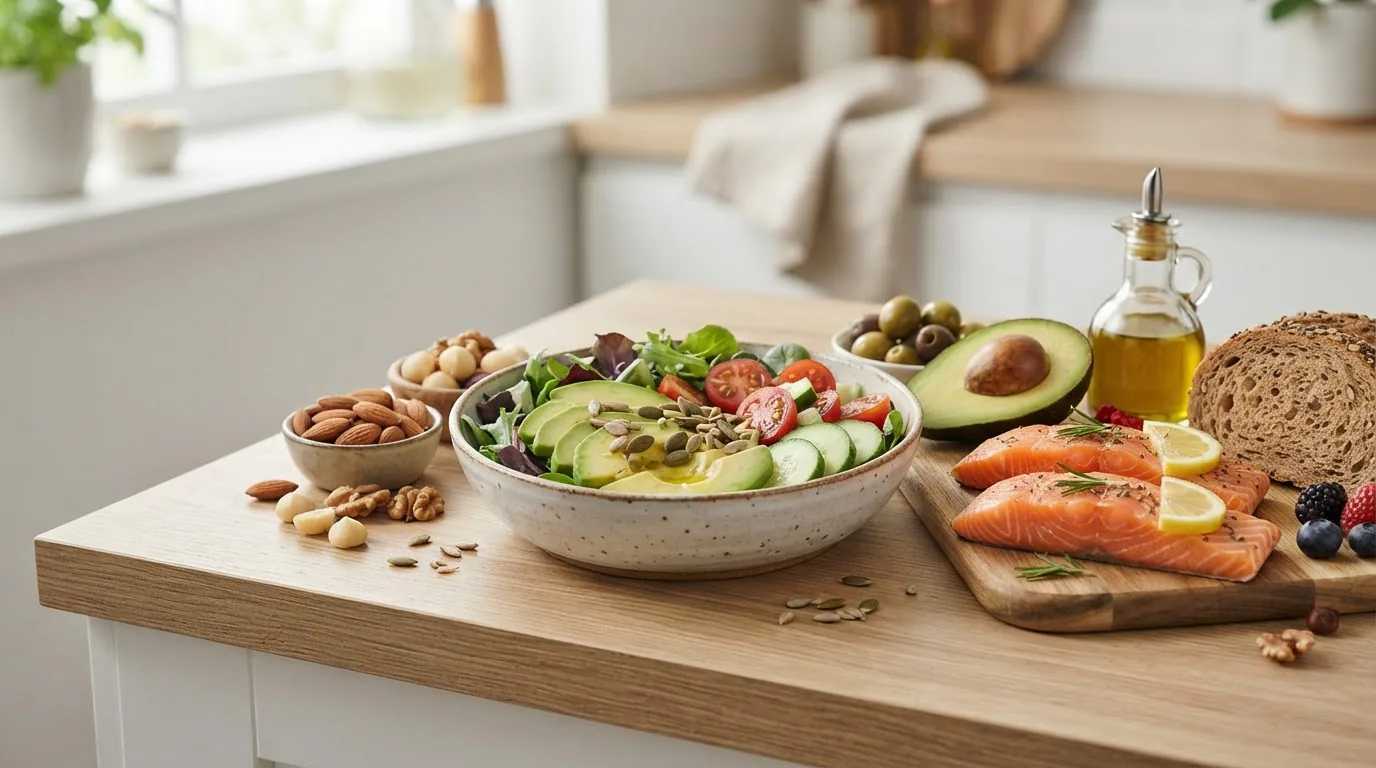
- Healthy fats: Prioritize monounsaturated and polyunsaturated fats such as extra-virgin olive oil and avocado instead of saturated fats. These fats help improve cholesterol profiles and reduce inflammation.
- Lean proteins: Choose fish (especially fatty fish like salmon), poultry, legumes, and tofu. These provide protein with lower saturated fat than red meat and offer omega-3s or fiber when plant-based.
- Whole grains: Swap refined grains for quinoa, brown rice, barley, or whole-wheat pasta to increase fiber and help manage cholesterol and blood sugar.
- Antioxidant-rich fruits and vegetables: Berries, leafy greens, cruciferous vegetables, and colorful produce supply anthocyanins and other antioxidants linked to reduced oxidative stress and vascular benefit.
- Low sodium cooking: Use herbs, spices, citrus, and vinegar instead of salt. Processed foods are the biggest source of sodium; cooking from fresh lowers intake significantly.
- Portion control: Serving sizes tuned to two people avoid overeating and excess calories while maintaining nutrient balance (see Balanced Plates section).
- Cooking techniques: Favor grilling, steaming, baking, poaching, and air-frying over deep-frying to reduce added fats and preserve nutrients.
Key nutrients and how they protect the heart:
- Fiber: Soluble fiber (oats, beans) helps lower LDL cholesterol.
- Omega-3 fatty acids: Found in fatty fish, these reduce arrhythmia risk and lower triglycerides.
- Antioxidants: Flavonoids and anthocyanins (in berries, red cabbage, purple potatoes) reduce inflammation.
- Potassium: From bananas, sweet potatoes, spinach — supports blood pressure regulation.
According to the 2024 American Heart Association guidelines, dietary patterns emphasizing fruits, vegetables, whole grains, lean proteins, and healthy fats are associated with lower cardiovascular risk. American Heart Association
When discussing numbers, it’s useful to have a reference: portion and nutrient estimates below use the USDA nutrient data as a baseline for calories and macros when indicated. USDA FoodData Central
Finally, a reminder on prevalence: According to a 2024 CDC report, heart disease remains a leading cause of death in the U.S., underscoring why consistent, heart-smart eating matters. CDC
Transition: With the what and why covered, next are practical tips that make cooking for two simple, efficient, and waste-minimizing.
Tips for Cooking Healthy Meals for Two
- Control portion sizes — Use a kitchen scale or measuring cups for proteins and grains to keep servings consistent. Aim for roughly 3–4 oz (85–115g) cooked lean protein per person. This keeps calories and macros predictable and supports portion control.
- Cook once, eat twice — Make double batches of a grain or roasted vegetables for two nights. See our Healthy make-ahead recipes for easy meal prep for complementary strategies.
- Strategic ingredient swaps — Replace sour cream with Greek yogurt, use low-sodium broths, choose whole-grain pasta, and swap butter for olive oil to cut saturated fat and sodium without losing flavor.
- Smart storage and single-pan cooking — Use shallow containers that match typical meal portions to avoid storing oversized batches. One-pan or sheet-pan dinners minimize cleanup and time.
- Use time-saving tools — An air fryer and a good nonstick skillet speed cooking and keep added oil low. A rice cooker or instant pot reliably cooks whole grains without babysitting.
- Minimize waste — Freeze single portions of sauces or proteins in meal-sized bags. Leftover veggies can be blended into quick soups or omelets.
- Batch proteins for the week — Grill or roast a tray of chicken breasts or chickpeas and use across salads, bowls, and wraps. For more ideas, see Chicken meal prep ideas for weekly cooking.
- Prep mise en place — Even for a 30-minute meal, pre-chop aromatics and pre-measure spices to streamline cooking and avoid overcooking while searching for ingredients.
- Flavor without salt — Use acid (lemon, vinegar), fresh herbs, smoked paprika, or chili flakes to amplify taste with little or no added sodium.
- Plan a rotating week — Keep 6–8 core dinners that rotate weekly so shopping is predictable and healthy meals are the default choice.
Transition: Apply those tips directly in these fast, heart-focused recipes designed for two people and 30-minute prep times.
30 Minute Heart-Healthy Dinner Recipes for Two
Below are six recipes sized for two people, each with ingredient highlights, quick steps, and estimated nutrition per serving. Nutrition estimates are calculated from USDA FoodData Central values and rounded. Substitute ingredients and helpful tips follow each recipe to keep meals flexible and heart-smart.
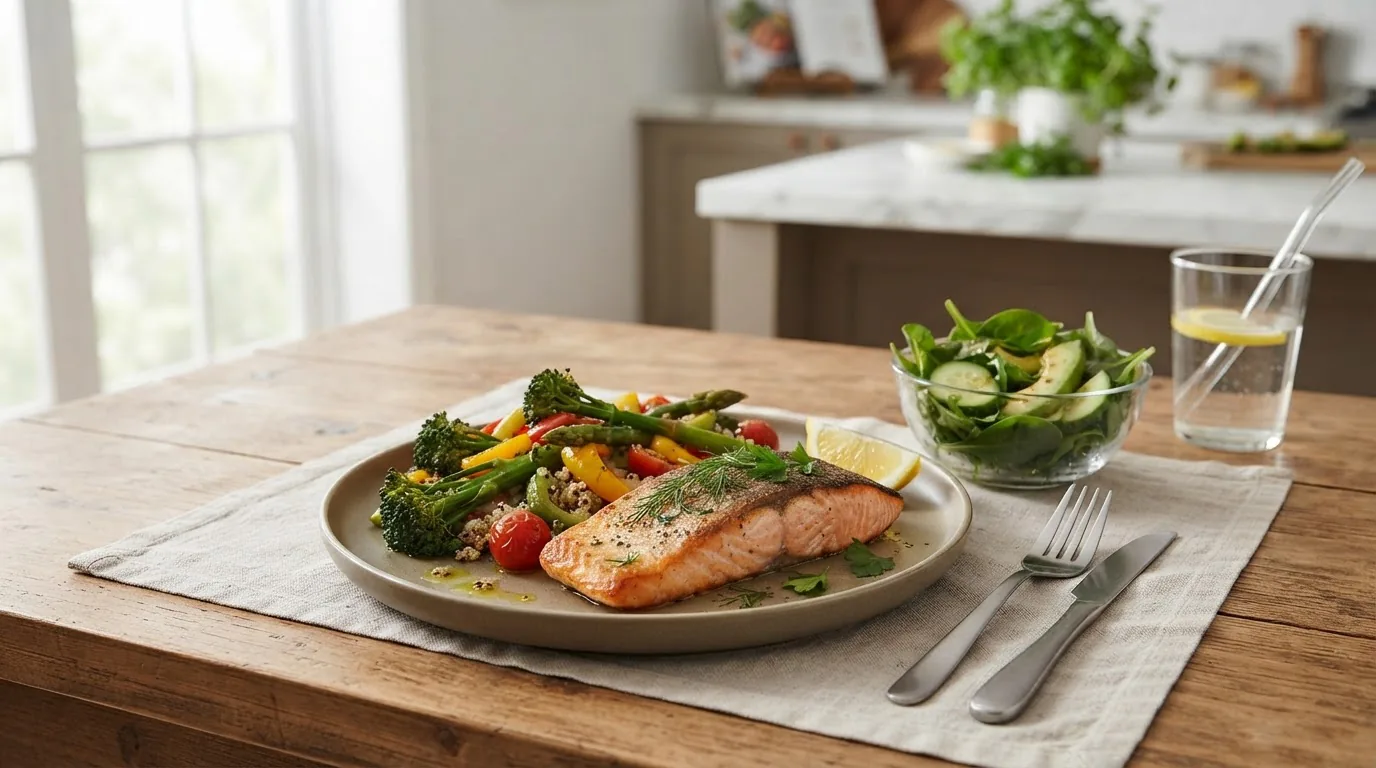
1. Pan-Seared Salmon with Lemon-Garlic Broccolini
Ingredient highlights: salmon (omega-3 EPA/DHA), broccolini (antioxidants), olive oil (monounsaturated fat), lemon (vitamin C).
Ingredients (for 2): 2 x 4–5 oz salmon fillets, 8 oz broccolini, 1 tbsp extra-virgin olive oil, 1 garlic clove minced, juice of 1/2 lemon, black pepper, 1 tsp Dijon mustard (optional).
Steps: Pat salmon dry, season with pepper. Heat nonstick skillet with oil, sear salmon skin-side down 4–5 minutes, flip 2–3 minutes. In same pan, sauté garlic and broccolini 3–4 minutes; deglaze with lemon juice and a teaspoon Dijon. Plate and serve.
Estimated per serving (USDA FoodData Central): ~420 kcal; 34 g protein; 12 g carbs; 24 g fat.
Substitutions: Use trout or mackerel for more omega-3s; steam broccolini to reduce oil.
2. Chickpea, Tomato & Spinach One-Pan Skillet (Vegetarian)
Ingredient highlights: chickpeas (fiber, plant protein), tomatoes (lycopene), spinach (potassium, magnesium), cumin & smoked paprika for flavor.
Ingredients (for 2): 1 can (15 oz) chickpeas drained and rinsed, 1 cup cherry tomatoes halved, 3 cups baby spinach, 1 small onion diced, 1 garlic clove, 1 tbsp olive oil, 1/2 tsp smoked paprika, 1/2 tsp cumin, lemon wedge.
Steps: Sauté onion and garlic in oil 3–4 minutes. Add spices, chickpeas, tomatoes; cook 4–5 minutes to warm and soften. Fold in spinach until wilted. Finish with lemon. Serve with 1/2 cup cooked quinoa per person.
Estimated per serving (USDA FoodData Central): ~520 kcal (with quinoa); 20 g protein; 70 g carbs; 13 g fat.
Substitutions: Swap quinoa for brown rice or whole-grain couscous. For more vegetarian options see Quick vegetarian dinner recipes for two.
3. Lemon-Herb Chicken with Farro and Roasted Vegetables
Ingredient highlights: skinless chicken breast (lean protein), farro (whole grain fiber), mixed roasted vegetables (antioxidants).
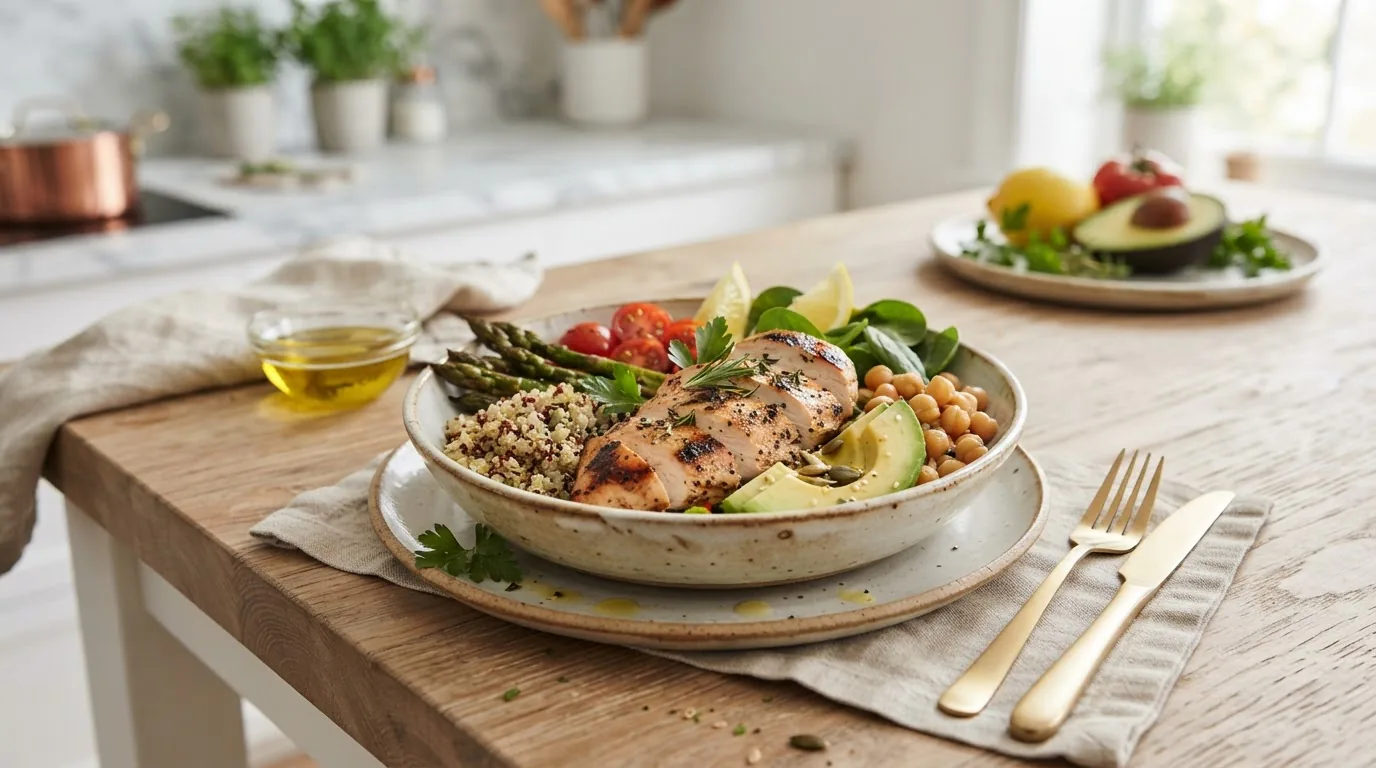
Ingredients (for 2): 2 x 4 oz chicken breasts, 3/4 cup cooked farro (measured cooked), 2 cups mixed vegetables (bell pepper, zucchini, red onion), 1 tbsp olive oil, herbs (rosemary, thyme), lemon.
Steps: Toss vegetables with 1/2 tbsp oil and roast at 425°F 12–15 minutes. Season chicken with herbs and lemon zest; pan-sear 5–6 minutes per side or bake at 400°F for 12–15 minutes until 165°F internal. Serve sliced chicken over farro with vegetables.
Estimated per serving (USDA FoodData Central): ~480 kcal; 38 g protein; 45 g carbs; 12 g fat.
Substitutions: Use barley or brown rice for grain swaps. For more chicken-centered high-protein options, check High protein chicken breast recipes.
4. Shrimp, Garlic & Veggie Stir-Fry over Brown Rice
Ingredient highlights: shrimp (lean protein), mixed colorful vegetables (antioxidants), low-sodium soy or tamari.
Ingredients (for 2): 10–12 medium shrimp peeled and deveined, 3 cups mixed stir-fry veggies (snap peas, bell pepper, carrots), 1 tbsp sesame oil, 1 tbsp low-sodium soy sauce, 1 tsp grated ginger, 1 cup cooked brown rice total.
Steps: Heat sesame oil in a wok or skillet, sauté ginger 30 sec. Add shrimp, cook 2 minutes each side until opaque. Remove shrimp, stir-fry veggies 3–4 minutes; add shrimp back with soy sauce, toss. Serve over 1/2 cup brown rice per person.
Estimated per serving (USDA FoodData Central): ~380 kcal; 32 g protein; 42 g carbs; 9 g fat.
Substitutions: Use tofu for vegetarian swap; use cauliflower rice to reduce carbs.
5. Mediterranean White Bean & Tuna Salad with Whole-Wheat Pita
Ingredient highlights: canned tuna in water (lean protein, omega-3s), white beans (fiber), olives & olive oil (healthy fats), whole-wheat pita (whole grain).
Ingredients (for 2): 1 can (5 oz) tuna in water drained, 1 cup canned cannellini beans rinsed, 1/4 cup diced cucumber, 6 cherry tomatoes halved, 1 tbsp olive oil, 1 tsp red wine vinegar, tbsp chopped parsley, 1 whole-wheat pita to share.
Steps: Combine tuna, beans, veggies, oil, and vinegar; season with pepper. Serve split between two plates with pita halves warmed.
Estimated per serving (USDA FoodData Central): ~360 kcal; 28 g protein; 35 g carbs; 12 g fat.
Substitutions: Swap tuna for canned salmon; reduce oil to lower calories further.
6. Quick Baked Cod with Tomato-Olive Relish and Polenta (Comforting Option)
Ingredient highlights: cod (lean protein), tomato-olive relish (lycopene & healthy fats), quick-cook polenta as whole-grain-like side.
Ingredients (for 2): 2 x 4 oz cod fillets, 1 cup cherry tomatoes, 2 tbsp chopped olives, 1 tbsp olive oil, 1/2 cup quick polenta (dry) cooked to package directions, chopped basil.
Steps: Mix tomatoes and olives with oil and basil. Bake cod at 400°F for 10–12 minutes. Serve cod topped with relish alongside polenta.
Estimated per serving (USDA FoodData Central): ~390 kcal; 30 g protein; 45 g carbs; 10 g fat.
Substitutions: Use air fryer for cod to crisp without added oil. For seasonally cozier dishes see Comforting cold weather meals.
Recipe workflow tips (experience-based): Preheat pans and oven while chopping; start the longest-cooking element (rice/farro/polenta) first, then protein, then veggies — this sequencing reliably finishes all components near the same time. Anecdotally, when I cook these recipes for two, pre-measuring spices in small ramekins saves 3–5 minutes and reduces stress.
Transition: Sometimes you need an extra plate — here’s how to scale for three without losing balance or time.
Healthy Dinner Recipes for Three — When You Need an Extra Portion
Scaling a recipe from two to three should preserve nutrient balance, cooking times, and texture. The simple rule: increase ingredients by 1.5x (multiply by 1.5) for evenly scaled results, but watch pan capacity and seasoning. Below are three practical adaptation examples and rules-of-thumb.
- Protein scaling: For a dish that calls for 2 x 4 oz servings (total 8 oz), increase to 12 oz for three people. If pan space is limited, cook protein in two batches to maintain sear and doneness.
- Grains and starches: Increase cooked grains by about 50% — if recipe uses 3/4 cup cooked farro for two, use about 1 1/8 cups cooked for three. Alternatively, cook a full cup dry and use leftovers safely stored for lunches.
- Vegetable volume: Add roughly 50% more vegetables but consider roasting on a larger sheet pan or use two pans to avoid overcrowding and steaming instead of roasting.
Example 1 — Scaling Pan-Seared Salmon to Three
Original: 2 fillets (4–5 oz each). For three: use 3 fillets (~12–15 oz total). If skillet can’t hold 3 fillets without crowding, sear two and then quickly finish the third in the oven at 400°F for 6–8 minutes to reach 145°F.
Example 2 — Scaling a One-Pan Chickpea Skillet
Multiply canned chickpeas by 1.5 (about 1.5 cans) or use a full 15 oz can and add 1/2 cup cooked lentils. Increase spices in small increments — start with 1.25x spice and adjust to taste.
Example 3 — Turning Two-Servings into a Trio-Friendly Sheet Pan
For roasted vegetable + chicken sheet-pan dinners, use a second pan if needed to keep an even roast. Roast at the same temperature, rotating racks at halfway point to even cook.
Practical tips: When adding a third portion spontaneously, prepare a simple side (mixed greens salad with lemon vinaigrette) to stretch the meal without extra cook time; a can of beans or an extra grain portion can fill gaps quickly. The goal is to maintain the balanced plate concept while avoiding undercooked or overcooked elements.
Transition: Now that you can scale meals, let’s look at how to combine nutrients intentionally so each plate supports heart health.
Balanced Plates: Combining Nutrients in Each Meal
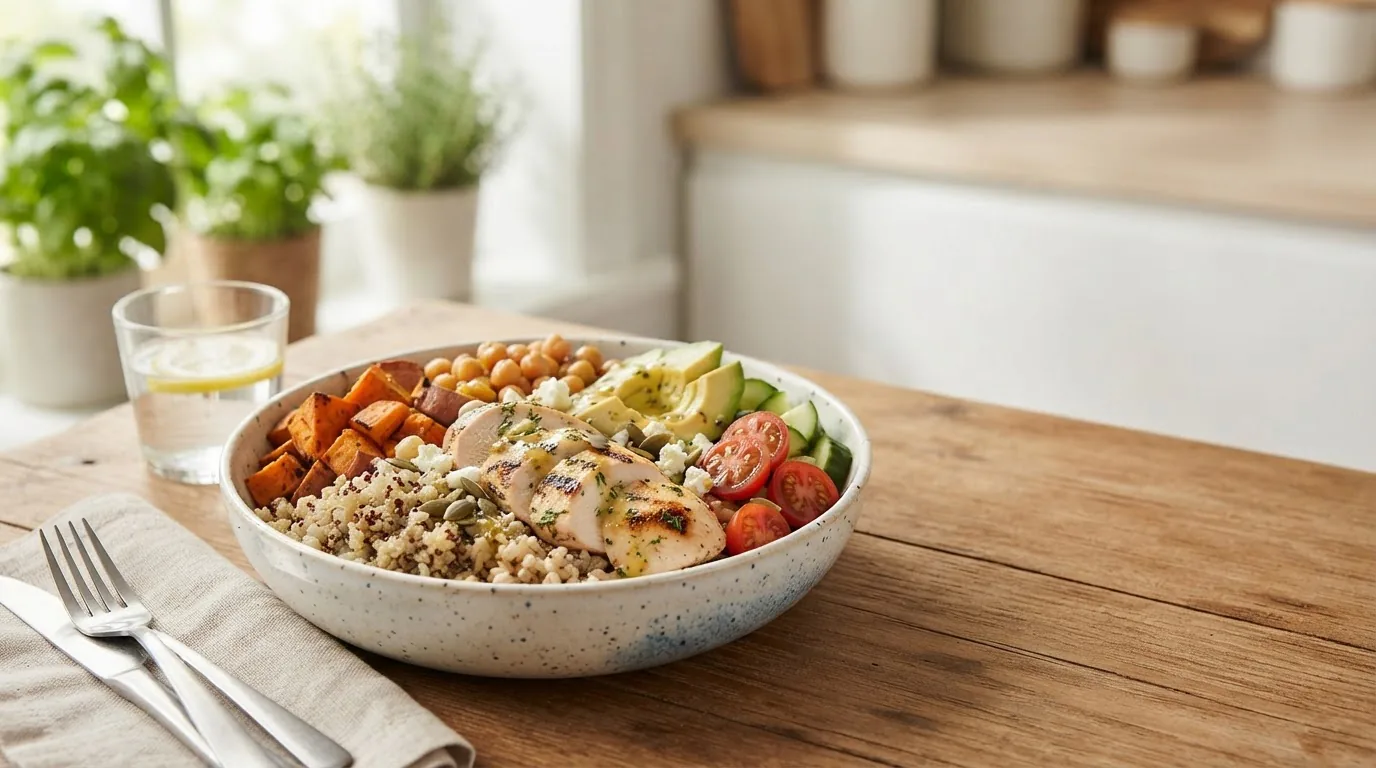
Think of each plate as a balanced budget where protein, vegetables, and whole grains share the ledger. A reliable distribution for heart-focused dinners: about 25–30% lean protein, 35–40% non-starchy vegetables, and 25–30% whole grains or starchy vegetables. Add a small portion of healthy fat (1–2 tsp olive oil or 1/4 avocado) to aid nutrient absorption.
Examples for a 600 kcal dinner plate for two (per person):
- Protein: ~3–4 oz cooked fish, chicken, or 1 cup cooked legumes (≈25–30% of plate)
- Vegetables: 2–3 cups mixed non-starchy vegetables (≈35–40%)
- Whole grains/starch: 1/2 cup cooked brown rice, quinoa, or a medium sweet potato (≈25–30%)
- Healthy fats: 1 tbsp olive oil or a quarter avocado (small but important)
Examples of balanced plates:
- Grilled salmon + big spinach salad with cherry tomatoes + 1/2 cup cooked farro + 1 tsp olive oil drizzle
- Chickpea skillet + sautéed kale + 1/2 cup quinoa
- Shrimp stir-fry + mixed veggies + 1/2 cup brown rice + squeeze of lime
Cooking technique trade-offs
| Cooking Method | Heart-Health Pros | Watchouts |
|---|---|---|
| Steaming | Preserves nutrients, no added fat | Less Maillard flavor; pair with herbs or citrus |
| Grilling | Low added fat, smoky flavor | Avoid charring to reduce formation of harmful compounds |
| Baking/Roasting | Concentrates flavor, moderate oil use | Use moderate oil to control calories |
| Air-frying | Crisp texture with minimal oil | Watch sodium in pre-breaded items |
| Pan-frying/Shallow Fry | Great texture | Can add saturated fat if butter/large oil volume used |
How to compose meals quickly: start with a lean protein and build around a large volume of vegetables, then add a small but satisfying whole-grain portion. Think of your plate as “protein + veg + whole grain + healthy fat” — like a balanced budget between categories.
For more creative approaches to assembling healthy meals, see Simple healthy dinner ideas.
Transition: Balanced plates are easier and cheaper than you might think; here’s how to shop and budget for two people without compromising heart health.
Shopping and Budgeting for Two-Person Healthy Dinners
Feeding two doesn’t have to be more expensive than takeout. With a few budgeting habits, you can keep costs down while prioritizing heart-healthy ingredients.
- Plan weekly menus: Choose 4–6 dinners, list ingredients, and buy perishable items once weekly. Planning reduces impulse buys and waste.
- Buy versatile staples in bulk: Brown rice, oats, canned tomatoes, beans, and frozen vegetables store well and form the backbone of quick meals.
- Prioritize seasonal produce: Seasonal fruits and vegetables are often cheaper and more nutrient-dense. Farmer’s markets or discount bins can yield bargains for produce you’ll use that week.
- Use canned and frozen smartly: Frozen berries and vegetables retain nutrients and are ideal for smoothies, sides, and soups. Canned beans and tuna are inexpensive protein sources; choose low-sodium varieties and rinse before use.
- Substitute strategically: Swap expensive proteins for plant-based proteins a few nights a week to lower grocery bills without sacrificing heart benefits.
- Portion for two: Buy slightly smaller quantities or use a pantry of staples so you’re not forced to buy family-sized packages. Freeze half of large packs into single-portion bags when needed.
- Consider convenience options when they save time: A healthy meal delivery or prepared meal service can be cost-effective during busy weeks. For vetted services, see Heart healthy meal delivery options — compare costs and nutrition when convenience is a priority.
Cost example (experience-based): Preparing a fish + grain + veg dinner at home usually costs less per serving than a comparable takeaway entrée if you shop sales and use pantry staples. For specific per-meal cost breakdowns, consult our Dinner recipes for two with cost details.
Tip: Use unit pricing in stores to compare value. If a large pack is cheaper per ounce but you can’t use it before spoilage, buying the smaller pack plus freezing may be smarter in the long run.
Transition: Ready to take action? Here are closing thoughts and a nudge to get cooking tonight.
Conclusion – Start Cooking Heart-Healthy Meals for Two Today
Small changes in ingredient choices, portion control, and cooking method add up to big heart-health benefits over time. Use the 30-minute recipes above, apply the portion and scaling tips, and lean on pantry staples to keep dinners for two quick, affordable, and nutrient-dense. Try one new recipe this week and tune it to your tastes — small consistent wins create lasting habits.
Final encouragement: pick one recipe from this guide, plan the ingredients, and set a 30-minute window tonight. Your heart (and your time) will thank you.
Frequently Asked Questions
What are healthy dinner recipes for two?
Healthy dinner recipes for two are scaled meals emphasizing lean proteins, whole grains, vegetables, and healthy fats, portioned to serve two people. They minimize added sugars and sodium and often include time-saving steps so couples can prepare balanced, nutrient-dense dinners in about 30 minutes.
How do heart-healthy meals help prevent cardiovascular disease?
Heart-healthy meals lower cardiovascular risk by reducing saturated fat and sodium, increasing fiber, omega-3s, potassium, and antioxidants, which improve cholesterol, blood pressure, and inflammation markers—dietary benefits supported by guideline-based recommendations from heart health authorities.
What is the difference between healthy dinner recipes for two and for three?
Recipes for two are portioned and timed for smaller batches; scaling to three typically requires multiplying ingredients by 1.5, adjusting pan sizes, and sometimes cooking in batches to preserve texture and doneness without overcrowding cookware.
How can I prepare a heart-healthy dinner in 30 minutes?
Use quick-cooking proteins (shrimp, thin chicken cutlets, canned tuna), pre-cooked grains, frozen vegetables, and one-pan methods. Mise en place—pre-chopping and pre-measuring—plus high-heat searing or air-frying lets you finish balanced dinners within 30 minutes.
How much does it cost on average to cook healthy dinners for two?
Costs vary by region and ingredients, but a home-cooked balanced dinner for two commonly ranges from $6–$12 per meal when using pantry staples, seasonal produce, and occasional sales; buying in bulk and planning reduces per-meal cost further.
How do I troubleshoot common cooking mistakes in heart-healthy recipes?
Prevent mistakes by preheating pans, not overcrowding cookware, tasting and adjusting seasoning gradually, using a meat thermometer for doneness, and timing grain and protein starts so components finish together for best texture and flavor.
Are low sodium recipes safer for heart health?
Low-sodium recipes reduce blood pressure and lower cardiovascular strain, especially for people with hypertension; using herbs, citrus, and vinegars maintains flavor while limiting processed high-sodium ingredients is recommended by heart-health guidelines.
Can I freeze healthy dinners for two and still keep them nutritious?
Yes. Many soups, stews, cooked grains, and protein portions freeze well and retain nutrients when properly cooled and stored; avoid freezing delicate vegetables that become mushy and reheat gently to preserve texture and nutrient quality.