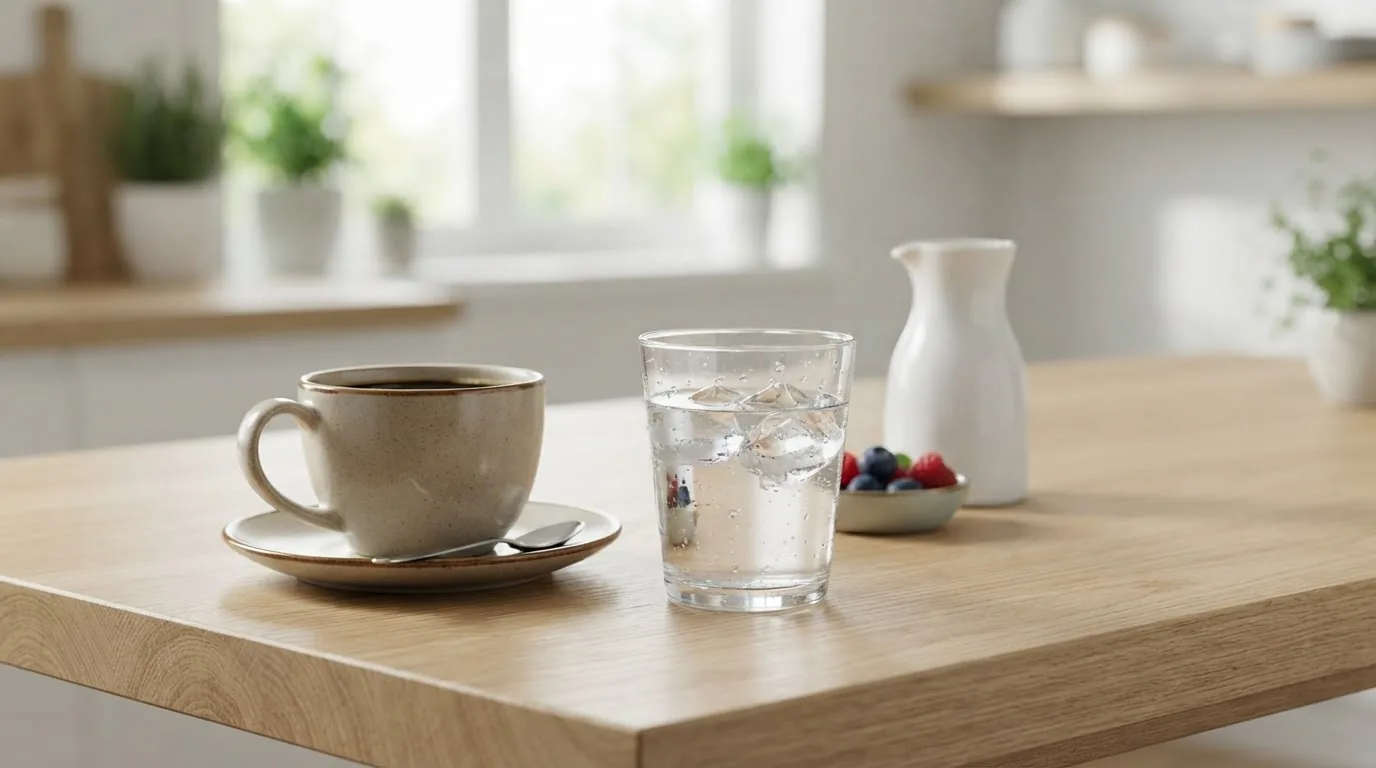
Does drinking coffee count as drinking water? Short answer: yes—mostly. This guide unpacks the science behind coffee and tea as fluid sources, explains how caffeine affects urine output and fluid balance, debunks common myths, and gives practical tips so your beverage habits support real hydration.
Does Drinking Coffee Count As Drinking Water?
The core question—does drinking coffee count as drinking water—asks whether the liquid you ingest when you drink coffee provides net fluid to your body. The straightforward part: brewed coffee is >95% water and therefore delivers fluid. The complicated part is how caffeine, other components, and your usual consumption patterns affect overall fluid balance.
Below we’ll examine composition, caffeine’s physiological effects, and practical implications so you can decide how much coffee safely contributes to your daily hydration.
Understanding Coffee’s Water Content
Brewed coffee is mostly water. Typical drip or pour-over coffee is roughly 98–99% water by volume; espresso is concentrated but still mainly water. The water in coffee behaves like water for many purposes: it is absorbed in the gut, enters circulation, and contributes to the body’s fluid pool.
What matters for hydration is net fluid effect—not just the water content. A beverage contributes to hydration when the amount of fluid it supplies exceeds any extra fluid loss it might trigger (for example, via urine). In normal daily situations, a standard cup (240 mL / 8 fl oz) of black coffee provides nearly the same immediate fluid benefit as 240 mL of plain water.
Other factors that change coffee’s hydration contribution include added ingredients (milk, sugar, syrups), the brew strength, and drinking pattern. Milk and milk-based coffee drinks add electrolytes and calories, which can alter absorption and satiety, while sugary or alcoholic mixes change osmolarity and downstream fluid handling.
Everyday scenario: a person drinking three 8-ounce cups of black coffee across the morning typically receives roughly 700–750 mL of fluid from those cups. That volume counts toward daily intake, though it should be considered alongside other beverage and food fluids.
Caffeine’s Diuretic Effect Explained
Diuretic means a substance increases urine production. Caffeine is a mild diuretic in some contexts, but the magnitude and relevance depend on dose, habitual use, and individual sensitivity.
How caffeine affects urine production—key points:
- Caffeine blocks adenosine receptors in the kidney and can increase renal blood flow and glomerular filtration rate, producing a modest rise in urine output for some people.
- Mild-to-moderate doses (about 100–300 mg) cause small increases in urine in some individuals; very high doses (>500 mg) are more likely to produce a noticeable diuretic effect.
- Regular consumers develop tolerance: habitual coffee drinkers show less diuretic response than non-habitual users.
- Randomized crossover trial: Moderate coffee (about 3–4 cups/day) did not produce net dehydration in habitual consumers (clinical trial data: PLoS One, 2014).
- Acute studies: Single high-caffeine doses can increase short-term urine output (peer-reviewed trial data).
- Population guidance: Health authorities treat fluid from caffeinated drinks as part of total fluid intake with caveats for high caffeine exposure (government nutrition guidance).
Evidence detail: A controlled trial found that in well-hydrated adults who habitually consume caffeine, normal amounts of coffee did not lead to net fluid loss compared with water (peer-reviewed study). Public health resources (e.g., CDC and Mayo Clinic) also note that moderate caffeine intake usually isn’t dehydrating for most adults (CDC guidance, Mayo Clinic).
Practical takeaway: caffeine’s diuretic effect exists but is typically mild at normal consumption levels, attenuated in regular drinkers, and unlikely to negate the fluid you get from your coffee.
Does Coffee Contribute to Fluid Balance?
Understanding whether coffee contributes to hydration requires thinking in terms of net balance: fluid in minus fluid out equals the contribution to your body’s water pool. Several physiological compensations occur after you drink any beverage:
- Absorption: The water component is rapidly absorbed in the intestines and increases circulating plasma volume.
- Renal regulation: Kidneys adjust urine concentration, conserving or excreting water to keep osmolarity stable.
- Hormonal control: Antidiuretic hormone (ADH) responds to changes in blood osmolality and volume; small fluid loads from beverages suppress ADH briefly, allowing urine output, but strong sustained signals are required for major shifts.
Net hydration effect of coffee—key considerations:
1) Habit and tolerance: Habitual consumers show less urine increase after coffee, so habitual consumption typically gives net hydration similar to water. 2) Dose-dependent effect: Small-to-moderate coffee amounts (1–3 cups) usually add to daily fluid balance. 3) Beverage composition: Coffee drinks with milk or electrolytes may be slightly more hydrating than black coffee because the solutes slow gastric emptying and provide sodium/potassium that aid fluid retention. 4) Behavioral factors: Drinking coffee often reduces desire for plain water; if coffee displaces water and overall intake drops, net hydration can suffer.
Evidence-based perspective: Trials comparing equal volumes of coffee and water in habitual coffee drinkers have shown similar effects on hydration markers such as body mass, plasma osmolality, and urine output over the short term (peer-reviewed study). That indicates coffee contributes to fluid replacement in ordinary settings.
Biomarkers and monitoring: urine color, urine specific gravity, body weight before/after exercise, and subjective thirst are practical measures. For a quick check, use urine color hydration indicators to assess status—pale straw color usually indicates adequate hydration; darker urine suggests you need more fluid. urine color hydration indicators
Special contexts where coffee’s contribution is limited:
- High heat/exercise: Sweat losses dominate; plain water and electrolyte solutions are better than coffee for rehydration during or after heavy exercise.
- Illness with vomiting/diarrhea: Rapid fluid and electrolyte loss must be replaced with oral rehydration solutions rather than coffee; see guidance on dehydration due to illness for recovery options. dehydration due to illness
- Caffeine-sensitive people: Increased heart rate or diuresis may make coffee a poorer choice for hydration if symptoms occur.
Scenario (experience signal): A 35-year-old teacher drinks six small cups of coffee across the day and notices lightheadedness mid-afternoon. After switching two of those cups for plain water and adding a small snack with sodium, symptoms resolved. This illustrates how beverage mix and sodium intake affect perceived hydration.
Bottom line: For most adults, regular moderate coffee consumption contributes meaningfully to daily fluid balance, though it shouldn’t be your only source when sweat or illness increases losses.
Transition: Tea shares many of coffee’s hydration properties but varies more because of differing caffeine levels and herbal options—let’s compare them next.
How Does Tea Compare in Terms of Hydration?
Tea, like coffee, is primarily water and generally contributes to hydration. However, tea types vary widely in caffeine content, added ingredients, and customary serving patterns, which affect their hydration potential.
| Beverage | Typical Caffeine | Hydration Notes |
|---|---|---|
| Black tea | 40–70 mg per 8 oz | Major fluid contributor; mild diuretic effects similar to coffee but usually less per cup due to lower caffeine. |
| Green tea | 20–45 mg per 8 oz | Hydrating; antioxidant benefits; lower caffeine than black tea so minimal diuretic effect for habitual drinkers. |
| Herbal tea (caffeine-free) | 0 mg | Fully hydrating; behaves like flavored water and is a good alternative for those avoiding caffeine. |
| Matcha and concentrated tea | Higher per serving | Stronger caffeine dose may cause more urine output in sensitive individuals; still contributes fluid but watch dose. |
Types of Tea and Their Hydration Potential
Black, green, oolong, white, and herbal teas differ by leaf processing and caffeine content. Black tea often has higher caffeine than green tea, while herbal teas (e.g., chamomile, rooibos) typically have none. Since hydration is largely about water volume, any brewed tea contributes to hydration. Caffeine-containing teas may have mild diuretic effects at higher doses, but habitual drinkers show tolerance.
Consider these specifics:
- Black tea: Often consumed in larger mugs; 2–3 mugs/day can add 400–700 mL of fluid. The average black tea cup contains enough caffeine to be mildly diuretic in sensitive people, but for most, it adds to fluid intake.
- Green tea: Lower caffeine per cup; provides fluid and bioactive compounds with minimal diuretic risk for habitual drinkers.
- Herbal infusions: Because they’re caffeine-free, herbal teas are as hydrating as water and useful for people avoiding caffeine or in the evening.
- Sweetened or milky teas: Adding sugar or milk changes osmolarity and energy content—milk contributes electrolytes (sodium, potassium, calcium) that can modestly support hydration compared with plain black tea.
From an absorption standpoint, tea and coffee are similar: the water they contain is bioavailable and supports plasma volume. The relative hydration potential mainly tracks caffeine dose and beverage additives.
Can Tea Count as Water Intake?
Yes, tea can count toward your daily fluid intake. The primary caveats are caffeine dose, added solutes (sugar, salt, milk), and context (exercise, fever, vomiting/diarrhea). For most people drinking typical amounts, tea provides net hydration comparable to water.
Evidence and expert guidance: Public health messaging treats brewed tea as a contributor to total fluid intake. Habitual tea drinkers do not appear to experience clinically meaningful dehydration from ordinary tea consumption (CDC).
Practical comparisons:
- Volume equivalence: An 8-ounce cup of black tea yields about the same immediate volumetric fluid input as 8 ounces of water.
- Diuretic margin: Because black tea typically contains less caffeine than coffee, the potential diuretic margin is often smaller per cup.
- Herbal teas: With no caffeine, herbal teas are functionally the same as flavored water for hydration purposes and useful for lowering overall caffeine intake.
Special cases where tea may be less suitable than plain water:
- During intense exercise or heat exposure: electrolyte-containing drinks are preferred over plain tea.
- When limiting caffeine for sleep or anxiety reasons: rely on caffeine-free herbal teas or water instead.
- When sugar intake is a concern: sweetened tea adds calories and may blunt hydration benefits if consumed in excess.
Example: An adult who replaces two glasses of water per day with two large lattes (milk + coffee) will still receive fluid, but the added calories and sodium from milk and sugar change the overall nutrition and hydration profile. By contrast, replacing water with herbal tea is a closer one-for-one swap.
Transition: Now that we’ve contrasted coffee and tea hydration, let’s clear up common myths and facts so you don’t over- or underreact to beverage claims.
Myths and Facts About Coffee, Tea, and Hydration
-
Myth: Coffee dehydrates you so it doesn’t count toward your water intake.
Fact: For most people, moderate coffee contributes to net fluid balance. Habitual consumers show tolerance to caffeine’s diuretic effect, and trials comparing equal volumes of coffee and water often find similar hydration markers (peer-reviewed clinical trials). -
Myth: Any caffeinated drink causes significant fluid loss.
Fact: The diuretic effect of caffeine is dose-dependent and typically mild at normal consumption levels. High doses can increase urine output acutely, but usual beverage servings rarely cause clinically important dehydration. -
Myth: Tea is less hydrating than water.
Fact: Brewed tea, including black and green tea, is primarily water and contributes to daily fluid intake; caffeine levels are generally lower than coffee’s and usually don’t negate hydration. -
Myth: You must avoid coffee and tea when trying to hydrate after exercise.
Fact: During and immediately after high-intensity or long-duration exercise, drinks with electrolytes are recommended over caffeinated beverages. Coffee or tea can be consumed later as part of normal rehydration but aren’t the optimal first-line rehydration fluid. -
Myth: Decaffeinated coffee or tea is non-hydrating.
Fact: Decaffeinated versions are nearly identical to their caffeinated counterparts in hydration potential—decaf provides fluid with minimal caffeine effects. -
Myth: Taste or color changes in urine after coffee indicate dehydration.
Fact: Coffee can temporarily change urine color or odor due to metabolites, but color is a useful longer-term hydration marker; persistent darker urine likely reflects insufficient fluid intake—use urine color hydration indicators as a practical check. urine color hydration indicators -
Myth: Children and older adults can drink coffee instead of water safely for hydration.
Fact: Children and older adults are more sensitive to caffeine and its effects. Plain water and age-appropriate fluids are preferred; consult healthcare providers for specific recommendations. -
Myth: Coffee’s water doesn’t count because caffeine causes more urination than the water provides.
Fact: Studies show that moderate coffee consumption does not produce a net fluid deficit in habitual drinkers; the water in coffee typically exceeds any small extra urine produced. -
Myth: You can’t rely on herbal teas for hydration because they’re “not real water.”
Fact: Herbal teas are essentially flavored water and fully count toward fluid goals; they’re excellent for those avoiding caffeine. -
Myth: Only plain water improves hydration-related energy and cognitive function.
Fact: Fluid from coffee and tea contributes to hydration and can support cognitive function partly via hydration and partly via caffeine’s stimulatory effect. For pure hydration benefits without stimulants, plain or electrolyte-containing water is best. hydration benefits of water
Each myth/fact pair above is grounded in controlled studies and authoritative guidance; where study results vary, the consistent message is moderate caffeinated beverages contribute to daily fluid intake for most healthy adults.
Transition: With myths clarified, here are practical tips for coffee and tea drinkers to ensure beverages help—not hinder—hydration goals.
Practical Hydration Tips for Coffee and Tea Drinkers
Practical strategies help you include coffee and tea as useful fluid sources without relying on them exclusively. Below are actionable items you can adopt immediately.
- Alternate caffeinated drinks with plain water. A simple pattern: have a glass of water after each cup of coffee or tea to balance stimulation and maintain steady fluid intake.
- Time high-caffeine beverages away from heavy exercise or heat exposure. Use electrolyte solutions during prolonged exercise and reserve coffee/tea for post-exercise enjoyment.
- Choose herbal or decaffeinated options in the evening to add fluid without disturbing sleep. Herbal teas are as hydrating as water and can increase daily fluid volume.
- Monitor urine color daily. Pale straw color generally indicates adequate hydration; darker colors suggest increase water or choose hydrating beverages. urine color hydration indicators
- If you drink many milk-based coffee drinks, remember they contribute electrolytes but also calories and sodium. Balance with water and nutrient-dense snacks.
- Know your caffeine thresholds. Track how many milligrams you consume per day from all sources and adjust if you experience diuretic-like symptoms, jitteriness, or sleep disruption.
- Use small behavioral cues: keep a water bottle visible on your desk and set hydration reminders between coffee breaks. This reduces the risk of coffee displacing plain water.
- For intentional rehydration after vomiting, diarrhea, or heavy sweating, prioritize oral rehydration solutions or electrolyte drinks over coffee/tea. See resources on dehydration due to illness for recovery specifics. dehydration due to illness
- Use a simple intake tracker or tool to estimate total fluids when changing habits. If you want a precise tool, try a hydration intake calculator to combine beverage and food fluids. hydration intake calculator
- If you’re considering very high water goals, read about the health considerations of high water intake and balance fluids with electrolytes and activity level. health considerations of high water intake
- Optimize the water you drink—mineral composition matters for long-term intake and electrolyte balance. See guidance on best water for hydration to choose suitable sources. best water for hydration
- Broaden beverage options beyond coffee and tea. Include smoothies, broths, and fruits with high water content; for choices, consult the best hydrating beverages guide. best hydrating beverages
- For daily planning, consider how beverage size maps to container sizes you own. Learn how bottle size influences intake by checking a guide on how many ounces a water bottle contains. how many ounces a water bottle contains guide and size chart
- Understand your body water baseline: resources about how much water is in a body help contextualize daily needs when you drink coffee and tea. how much water is in a body guide and percentage explained
- If you want healthier beverage options to replace some coffee or sugary teas, consult a healthy drinks guide for lower-calorie hydrating swaps. healthy drinks guide and beverage choices for better hydration
These practical items mix behavioral strategies, substitution options, and quick checks so coffee and tea support, not undermine, your fluid goals.
Transition: Some people need extra caution—learn when coffee and tea may be inadequate or risky for hydration.
When to Be Cautious About Relying on Coffee or Tea for Hydration
Certain conditions and contexts make coffee and tea less appropriate as primary hydration sources. Consider the following key points:
- High fluid losses: In heavy sweating, prolonged exercise, fever, vomiting, or diarrhea, prioritize oral rehydration solutions or electrolyte drinks. For clinical recovery during illness, read more on water fasting safety considerations and when plain water and electrolytes are required. water fasting safety considerations
- Caffeine sensitivity: People with palpitations, anxiety, insomnia, or certain arrhythmias should limit caffeine; water and caffeine-free herbal teas are safer.
- Medication interactions: Some medications interact with caffeine or require tight fluid management—ask your healthcare provider about specific guidance.
- Older adults and infants: Both groups handle water and caffeine differently. Infants should not be given coffee; older adults may need monitored fluid replacement strategies and assessment of kidney function.
- Low blood pressure risk: If dehydration could cause hypotension, be cautious. Learn about dehydration effects on blood pressure to evaluate risks. dehydration effects on blood pressure
- Illness-related fluid loss: During gastrointestinal illness, rely on rehydration solutions rather than caffeinated beverages; for comprehensive recovery guidance, see resources on dehydration due to illness. dehydration due to illness
Bullet summary of clinical cautions:
- Do not rely on coffee/tea alone when replacing large fluid and electrolyte losses.
- Limit caffeine if you are sensitive or on interacting medications.
- Consult health professionals for infants, older adults, and people with kidney or heart disease.
Transition: Below is a concise summary and practical recommendation you can apply now.
Summary and Recommendations
Does drinking coffee count as drinking water? Yes—broadly speaking. Brewed coffee and tea are mostly water and contribute to daily fluid intake. For most healthy, habitual consumers, moderate coffee or tea provides net hydration because the water they supply outweighs any mild caffeine-induced increase in urine.
Practical recommendations:
- Count typical cups of coffee and tea toward your daily fluid total, but balance them with plain water—especially during heat or exercise.
- Prefer herbal or decaffeinated teas if you need to avoid caffeine while staying hydrated.
- Use urine color and simple behavior cues to judge hydration status; for precise planning, consider a hydration intake calculator or the recommended daily targets such as the recommended daily water intake of 2 liters as a starting point for many adults. hydration intake calculator recommended daily water intake of 2 liters
- When planning large changes (e.g., very high water targets), review the health considerations of high water intake. health considerations of high water intake
Final actionable point: if you enjoy coffee and tea, include them as part of a diverse fluid strategy—pair them with plain water and electrolyte sources when needed, monitor hydration markers, and adjust for your health status and activity level.
Call to action: Try alternating each cup of coffee or tea with a glass of water for one week and track your urine color and energy; if you notice improvement, make it a habit. For a complete set of strategies to maintain hydration, see our pillar guide: 5 tips to stay hydrated and improve wellness
Frequently Asked Questions
Does drinking coffee count as drinking water for hydration?
Yes. Brewed coffee is mostly water and, in moderate amounts for habitual drinkers, contributes to net hydration because the fluid it provides typically exceeds any mild caffeine-induced urine increase.
Can tea count as water intake like plain water?
Yes. Brewed tea—including black and green tea—largely counts toward daily fluid intake; caffeine content is usually lower than coffee, and herbal (caffeine-free) teas are fully hydrating like flavored water.
How does caffeine in coffee and tea affect hydration?
Caffeine can be a mild diuretic at high doses, but typical serving sizes produce minimal extra urine in habitual consumers; the diuretic effect is dose-dependent and attenuated with regular use.
How can I track if I am getting enough hydration if I drink mostly coffee and tea?
Monitor practical markers: urine color (pale straw = adequate), body weight changes during activity, thirst levels, and energy. Use a hydration intake calculator to estimate total fluid from drinks and foods. hydration intake calculator
How much coffee or tea can I drink daily without risking dehydration?
Most healthy adults can safely drink several cups (2–4) of coffee or tea daily without dehydration; tolerance varies—watch for symptoms of caffeine excess and increase plain water if you sweat heavily or are ill.
What are signs that coffee and tea aren’t keeping me properly hydrated?
Signs include persistent dark urine, infrequent urination, lightheadedness, dry mouth, and decreased energy; if present, increase plain water and consider electrolyte solutions during heavy fluid loss.
Are herbal teas just as hydrating as water?
Yes. Herbal teas are caffeine-free and behave like flavored water, so they fully contribute to hydration and are a good choice for reducing caffeine while increasing fluid intake.
Is it safe to rely on coffee and tea for hydration during exercise or hot weather?
No. During intense exercise or heat exposure, prioritize water and electrolyte-containing beverages; coffee and tea are not optimal first-line rehydration fluids when sweat losses are high.