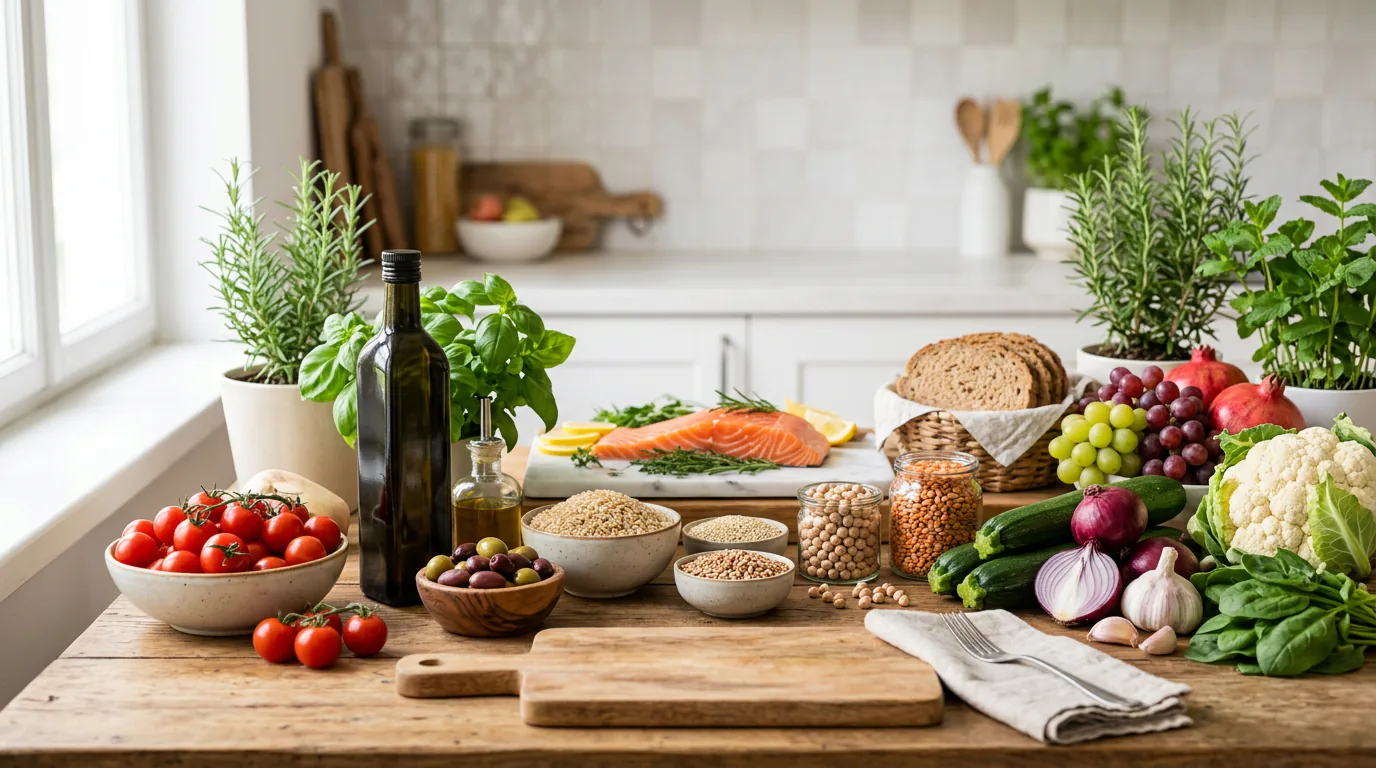
Mediterranean diet shopping list essentials make healthy eating simple: stock your cart with vegetables, whole grains, healthy fats and fish to build balanced meals. This guide gives an actionable grocery list, meal requirements and swap options so beginners and weight-loss seekers can shop, plan and cook confidently.
Introduction to the Mediterranean Diet and Its Benefits
The Mediterranean diet is a food-first pattern centered on vegetables, fruits, whole grains, legumes, nuts, olive oil and regular fish, with limited red meat and processed foods. It’s not a rigid plan but a set of food choices and meal patterns that support heart health, metabolic improvements and sustainable weight management.
Clinical evidence supports cardiovascular and metabolic benefits: according to a 2018 meta-analysis of randomized trials, Mediterranean-style diets reduced cardiovascular events and improved risk factors; according to a 2024 industry report, adherence is increasingly linked with longer-term weight maintenance in real-world cohorts. For practical foundational nutrition learning, see the Balanced Nutrition Guide and Meal Requirements for Health.
Real-life shoppers find success by treating their grocery cart like a Mediterranean garden—prioritizing produce and pantry basics, then filling proteins and healthy fats around them. Below we move from benefits into an immediately usable, categorized shopping list so you can create meals that meet portion and macro goals.
Transition: Knowing the diet’s benefits helps prioritize which foods to buy; next we list the core foods to stock.
Core Foods on the Mediterranean Diet Shopping List
This practical, categorized Mediterranean diet foods list covers staples for most U.S. grocery stores, seasonal swaps, and budget-friendly choices. Use it as a weekly checklist and as a pantry baseline for flexible meals.
Vegetables and Fruits
- Non-starchy vegetables (buy weekly fresh; freeze extras): leafy greens (spinach, kale, arugula), broccoli, cauliflower, bell peppers, zucchini, eggplant, tomatoes.
- Starchy vegetables (moderate portions): sweet potatoes, winter squash.
- Fruits (whole fruits preferred): apples, pears, oranges, bananas, grapes, berries (strawberries, blueberries), citrus, figs (fresh or dried in moderation).
- Allium and aromatic produce: onions, garlic, shallots, leeks—for flavor without excess salt.
- Quick tips: choose a mix of colors; buy frozen berries and vegetables to save money and reduce waste.
- healthy food vitamin chart — useful for planning nutrient variety in produce.
Vegetables and fruits provide fiber, vitamins and volume to meals. For beginners, aim for at least 4–6 servings of vegetables and 2–3 servings of fruits daily; adjust upward during active training or higher-calorie needs.
Whole Grains and Legumes
- Whole grains: brown rice, farro, barley, bulgur, whole-wheat pasta, quinoa, whole-grain bread (look for >3g fiber per slice).
- Breakfast grains: oats (rolled or steel-cut), whole-grain cereals with minimal added sugar.
- Legumes: canned or dried lentils, chickpeas, black beans, cannellini beans — buy canned for convenience (rinse before use).
- Pantry basics: whole-grain couscous, freekeh (if available), polenta (cornmeal).
- CCHO diet guide and consistent carb plans — helps align carb choices with daily energy needs.
Whole grains and legumes supply complex carbohydrates, fiber and plant protein. They are foundational for satiety and blood-sugar control; include at least 2–3 whole-grain servings daily in most meal plans.
Healthy Fats and Oils
- Extra-virgin olive oil (EVOO): primary cooking and finishing oil — buy a quality bottle and store away from heat.
- Nuts: almonds, walnuts, pistachios — raw or dry-roasted; portion control matters (about 1 oz per serving).
- Seeds: chia, flax, sesame, sunflower — great for salads and yogurt.
- Avocados: fresh or pre-sliced; excellent on salads and toast.
- Olives: green or Kalamata for snacks and flavor.
Healthy fats are central to the Mediterranean pattern and help with nutrient absorption and satiety. Use EVOO as your primary fat; replace butter and hydrogenated fats with nuts and avocados.
Protein Sources: Fish, Poultry, Legumes, Dairy
- Seafood: canned tuna (in water or olive oil), salmon (fresh or canned), sardines, mackerel — aim for fatty fish 2–3 times weekly for omega-3s.
- Poultry: skinless chicken or turkey — lean, versatile protein.
- Red meat: lean cuts (infrequent, limited portions); prioritize plant and fish proteins over red meat.
- Plant proteins: tofu (firm), tempeh, edamame, seitan (if desired), and a variety of legumes.
- Dairy: plain yogurt (Greek or regular), kefir, small portions of cheese (feta, Manchego) — choose low-fat options if reducing calories.
Choose fish and plant proteins as primary protein sources; use dairy in moderation. If aiming for weight loss, reduce frequent high-fat cheeses and processed meats.
Herbs, Spices, and Condiments
- Fresh herbs: basil, parsley, cilantro, mint, dill, oregano — buy potted herbs or small bunches for peak flavor.
- Dried herbs/spices: oregano, thyme, rosemary, cumin, paprika, cinnamon, crushed red pepper.
- Condiments: mustard, capers, balsamic vinegar, red wine vinegar, low-sodium soy sauce, tahini (sesame paste).
- Flavor-building staples: low-sodium broth, lemon and citrus zest, honey (use sparingly).
Herbs and spices are low-cost ways to add Mediterranean flavor without extra salt or calories.
Transition: With core foods outlined, the next section explains how to combine these items into meals and follow portion guidance for different goals.
Mediterranean Diet Meal Requirements and Portion Guidance
Translating Mediterranean diet meal plan principles into portion sizes helps you meet weight-loss or maintenance goals without guesswork. Portion guidance below uses USDA serving equivalents and MyPlate-style distribution adapted for Mediterranean patterns.
General daily template: 50–60% of calories from carbohydrates (mostly whole grains and legumes), 20–25% from fat (mostly unsaturated), and 15–25% from protein (more plant and fish-based). For calorie-specific plans, see the 1400 calorie meal plan guide for a structured example. For macronutrient planning tools, consult the macro meal planner guide.
| Meal | Typical Portion Guide | Examples |
|---|---|---|
| Breakfast | 300–500 kcal; 1 cup fruit or vegetables + 1 serving whole grain + 1 serving protein/fat | Greek yogurt + ½ cup berries + ¼ cup oats + 1 tbsp nuts |
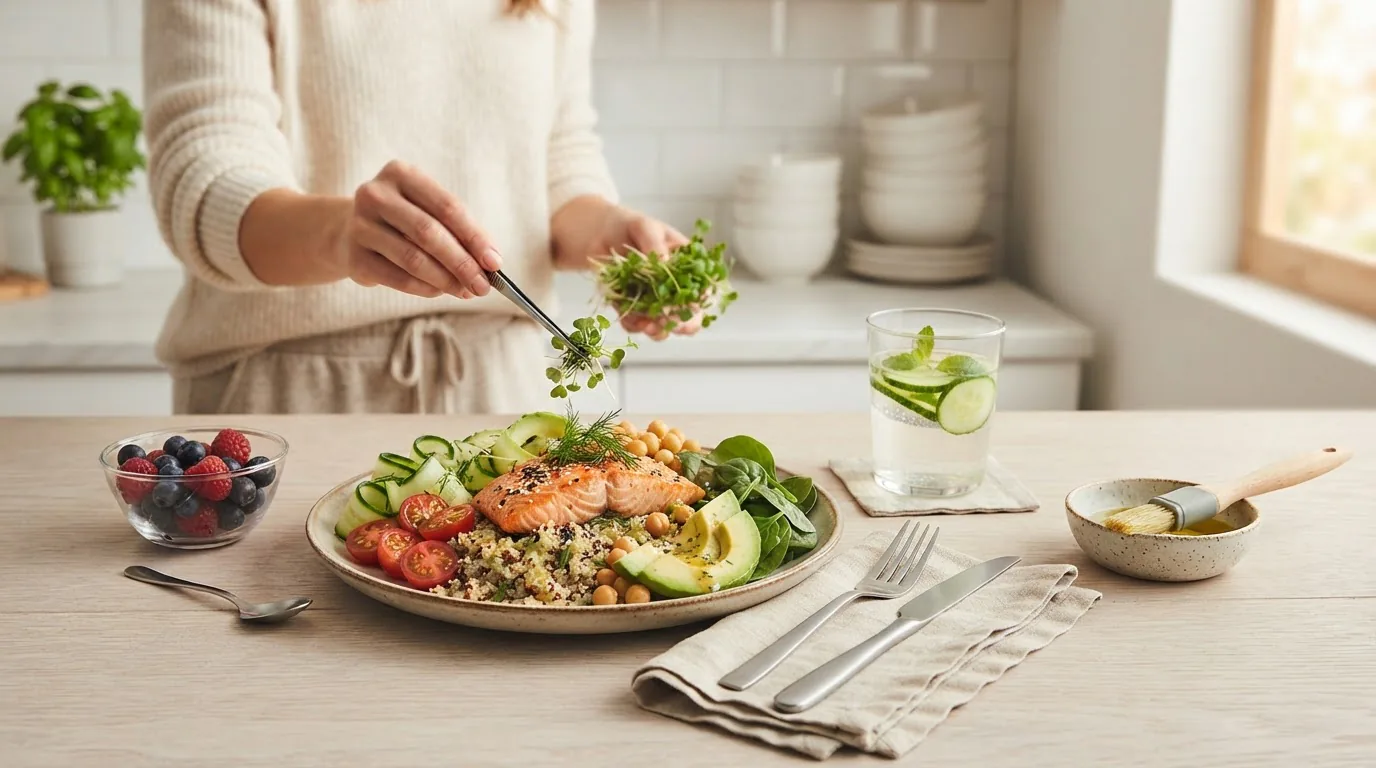
| Lunch | 400–700 kcal; plate: ½ vegetables, ¼ whole grains/legumes, ¼ protein | Large salad with 3 oz grilled salmon, ½ cup quinoa, olive oil dressing |
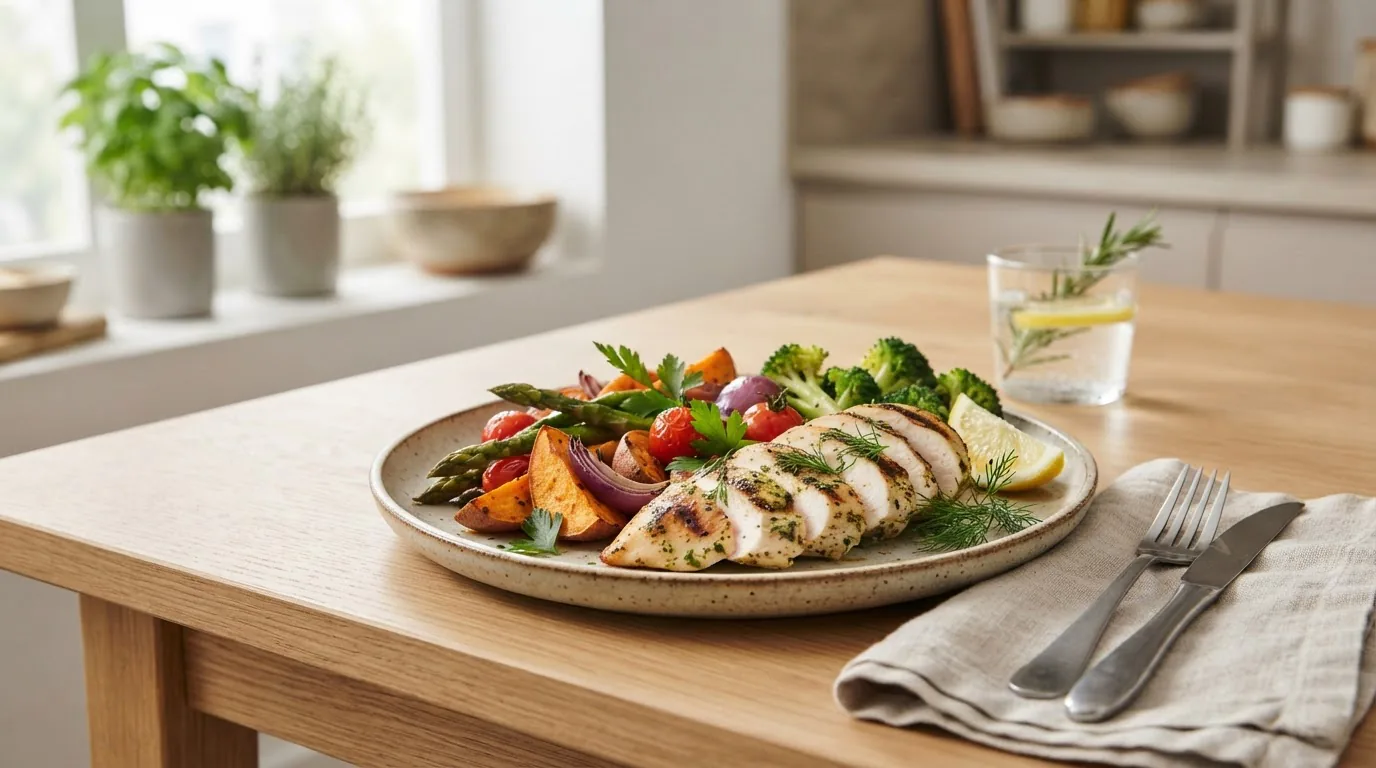
| Dinner | 400–700 kcal; similar to lunch, slightly smaller if evening activity low | Grilled chicken (4 oz), 1 cup roasted vegetables, ½ cup bulgur |
| Snacks | 100–200 kcal; fruit, nuts (1 oz), hummus + veg sticks | Apple + 10 almonds; carrot sticks + 2 tbsp hummus |
Portion visual guide (easy at-home method): use your plate — half vegetables, one quarter protein, one quarter grains/legumes. For fats, a thumb-sized serving (1 tbsp oil or 1 oz nuts) per meal typically fits Mediterranean patterns and weight goals.
Calorie adjustments and sample targets:
- Weight maintenance (moderate activity): 1,800–2,400 kcal/day for many adults; adjust by sex, age, activity level.
- Weight loss target (moderate deficit): 1,200–1,600 kcal/day typically produces steady weight loss for many women; 1,600–2,000 kcal/day for many men — see an example in the 1400 calorie meal plan guide.
- Higher activity needs: increase whole-grain portions and snack size to support training.
For visual learners who want printable charts, pair this section with the balanced diet printable nutrition charts.
Protein distribution: aim for 20–30 grams of protein per main meal for satiety and muscle preservation. For older adults or those reducing calories, prioritize protein to maintain lean mass — tools like the portion and serving size guide help quantify servings.
Micronutrient note: Mediterranean diets rich in produce and legumes supply fiber, potassium, magnesium and antioxidants. If you have specific deficiencies, consult a clinician and refer to the healthy food vitamin chart.
Transition: With portion and meal structure clarified, next are grocery strategies to shop efficiently and affordably for Mediterranean meals.
Mediterranean Diet Shopping Tips and Grocery List Strategies
Smart shopping reduces waste and saves money while keeping your Mediterranean meal plan sustainable. Use these step-by-step strategies to organize weekly trips and pantry rotation.
- Plan meals first, shop second. Build a 3–7 day menu before shopping to buy only what you’ll use. For printable planning templates, see the meal planner printable guide.
- Shop the perimeter then the pantry. Start with produce, seafood, lean proteins, and dairy; then visit whole grains and legumes aisles.
- Buy frozen produce and seafood. Frozen fruits/vegetables and frozen fish keep nutrients and cut costs.
- Use a core pantry list. Keep staples on hand: EVOO, canned tomatoes, canned beans, whole grains, vinegars, dried herbs.
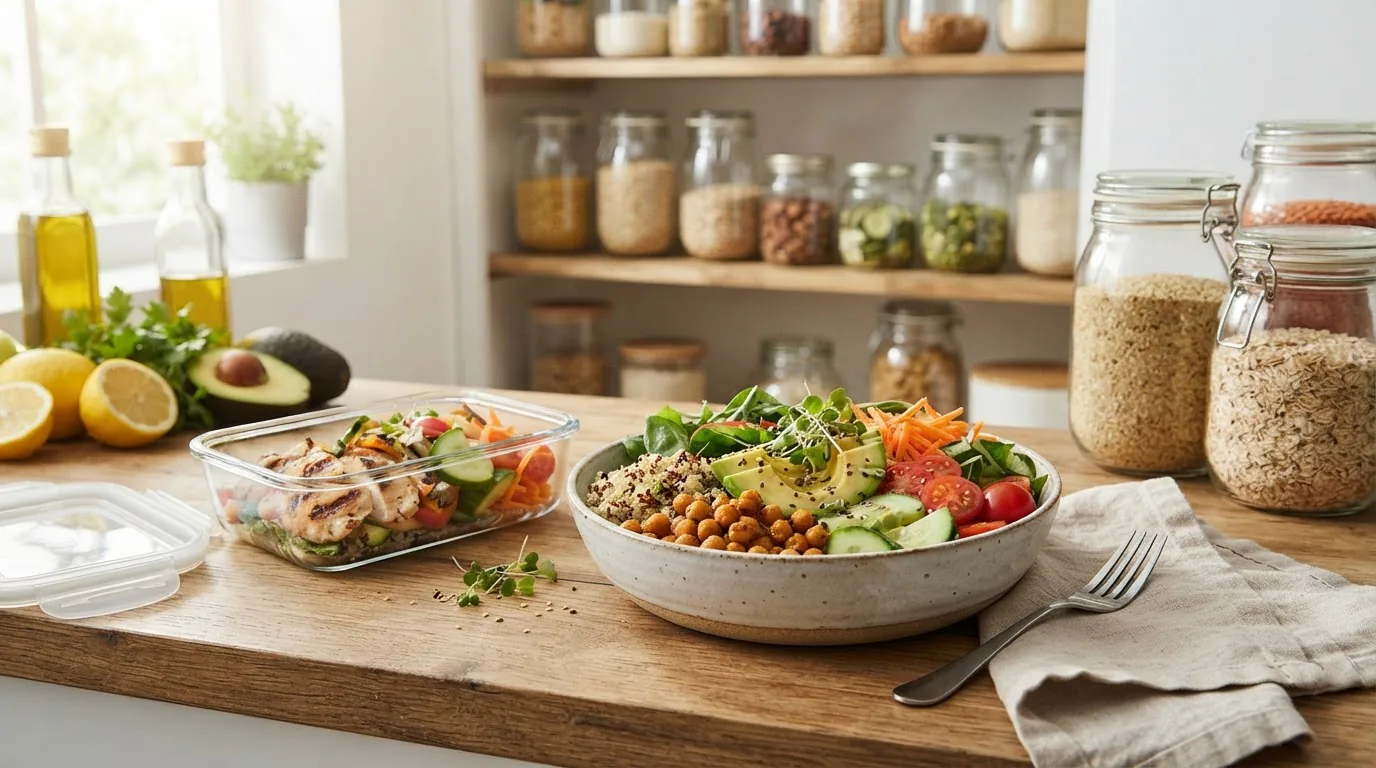
- Batch cook and repurpose. Roast a tray of vegetables, cook a pot of grain or legumes, and use across meals (salads, bowls, soups).
- Watch portions for nuts and oils. Pre-portion nuts into snack bags and measure oils by tablespoon when cooking.
- Seasonal shopping. Choose in-season produce for flavor and price; substitute seasonal greens and fruits in recipes.
- Label and rotate. FIFO (first in, first out) for pantry and fridge items reduces spoilage.
- Short grocery checklist (weekly): 5–7 different vegetables, 3 fruits, 2 whole grains, 2 canned legumes, 2 fish/poultry options, EVOO, 1 nut, fresh herbs, yogurt, lemon.
Example weekly grocery cart for a single adult (real-life shopping example):
- 2 heads of romaine, 1 bag spinach, 1 bunch kale
- 4 bell peppers, 3 tomatoes, 1 lb carrots, 1 zucchini
- 2 apples, 3 oranges, 1 pint berries (or frozen)
- 1 lb salmon fillets (or 2 canned salmon), 1 lb chicken breasts
- 1 bag brown rice, 1 box quinoa, 2 cans chickpeas, 1 can black beans
- 1 bottle extra-virgin olive oil, 1 jar tahini, 1 package almonds
- 1 container Greek yogurt, 1 block feta
Budget tips: buy store-brand legumes and whole grains, choose seasonal produce, and prioritize frozen fish when fresh is expensive. For meal timing and energy-focused eating, cross-reference the energy food requirements explained guide.
Transition: Ready to shop? Next, use the shopping list items to build a practical 7-day sample meal plan you can follow or adapt.
Sample Mediterranean Diet Weekly Meal Plan and Menu Ideas
This 7-day sample plan balances convenience, portion guidance and Mediterranean foods. It targets a typical moderate-calorie approach (~1,500–1,800 kcal/day) that can be adjusted using linked calorie guides. For printable planners and worksheets, refer to the healthy diet worksheet and printable meal requirements and the meal planner printable guide.