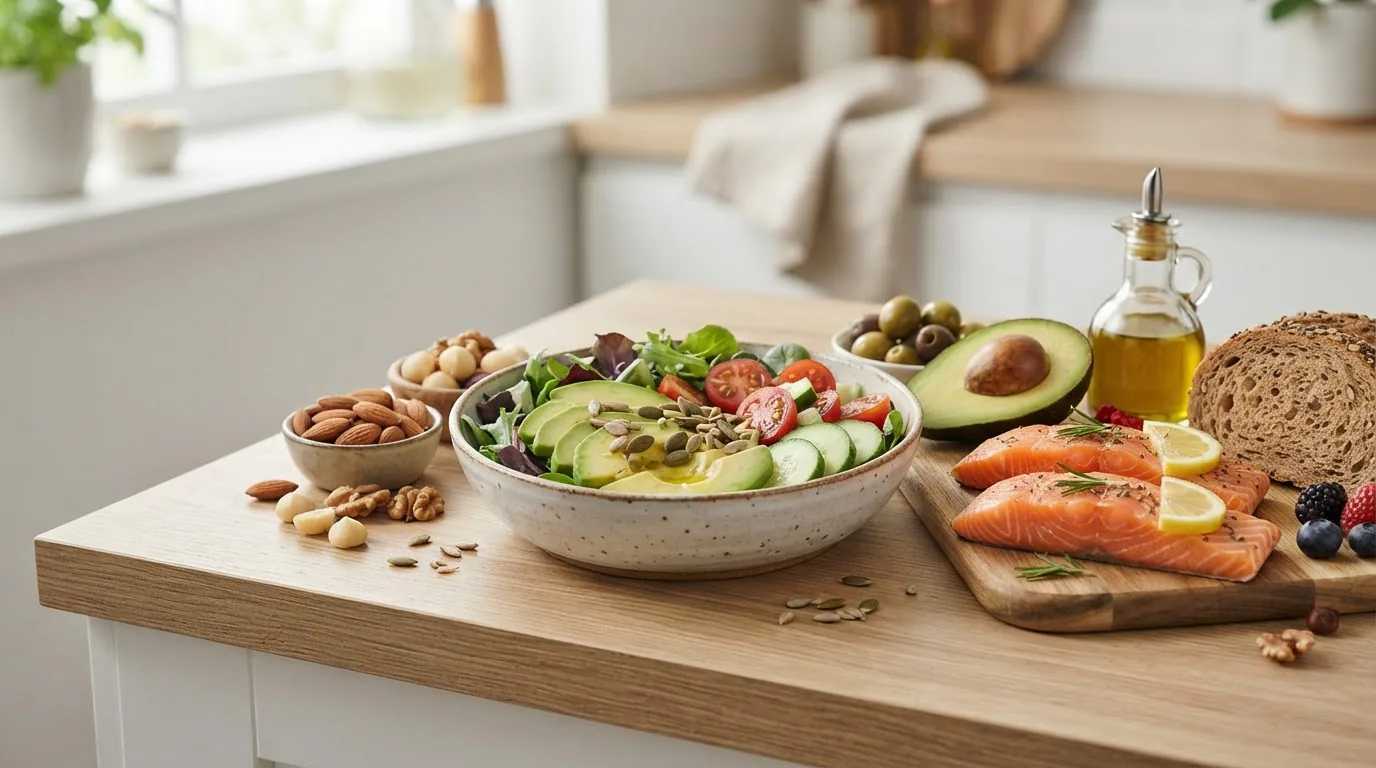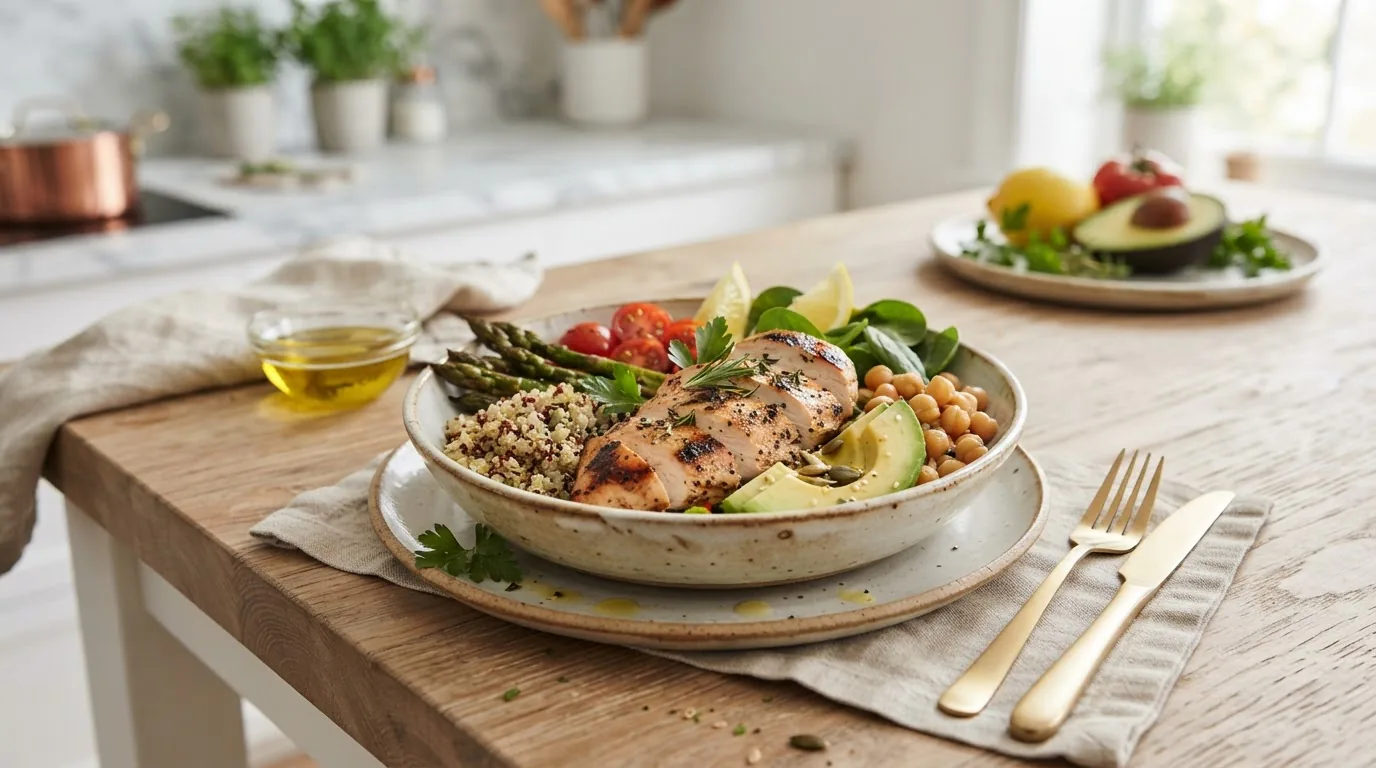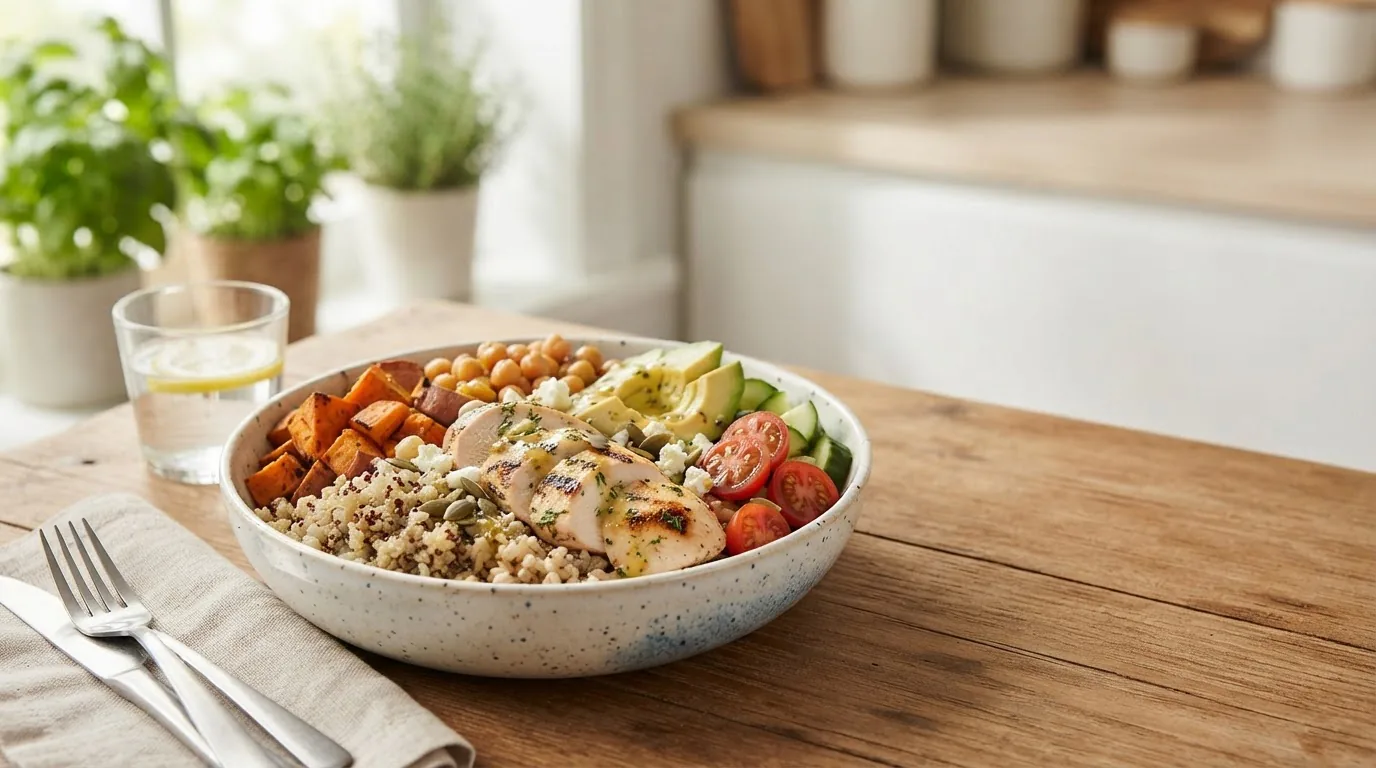
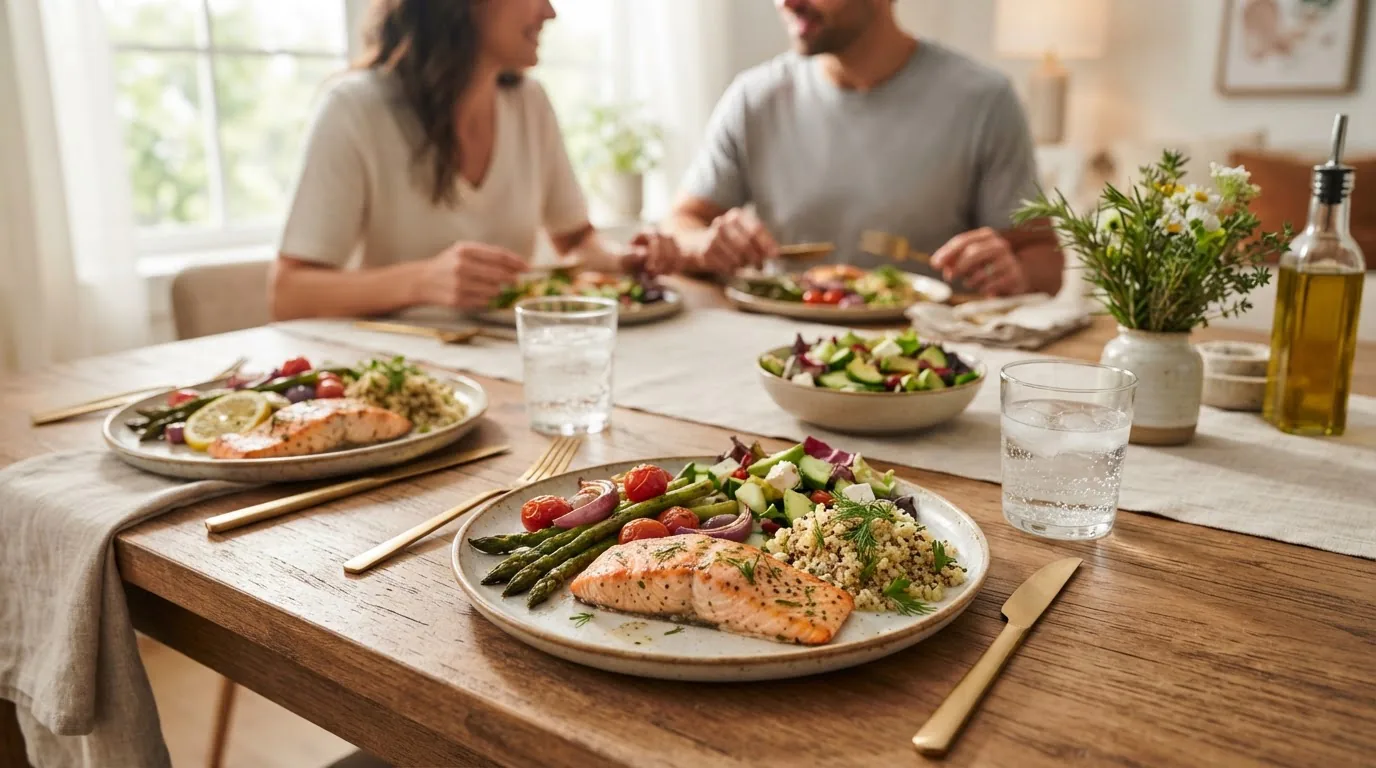
Healthy dinner recipes for 2 can transform weeknight cooking into a simple, nutritious, and budget-friendly routine — perfect for couples, roommates, or two-person households. This guide gives scaled recipes, meal-planning methods, calorie and macro info, and practical cost breakdowns so you can start cooking tonight with confidence.
Introduction to Healthy Dinner Recipes for 2
Cooking for two is an opportunity to eat well without the waste or time commitment of larger family-style recipes. When you plan healthy dinner menus for two, you optimize portion sizes, balance macronutrients, and reduce food waste — all while keeping costs down. This introduction outlines principles you’ll use throughout the guide: portion control, simple scaling, and balanced nutrition based on official guidance.
Aim to balance your plate using USDA MyPlate principles: vegetables and fruits as half your plate, lean protein and whole grains making up the rest, plus healthy fats in moderation. According to USDA data from 2024, mindful portioning and home-cooked meals remain one of the most cost-effective ways to improve diet quality and reduce household food spending (source: USDA Economic Research Service).
Below you’ll find actionable meal ideas, budget strategies, quick recipes and full cost breakdowns crafted specifically for two servings so you don’t overbuy or waste food. For a broader recipe library and nutrition breakdowns, see Yummiest Healthy Recipes Guide with Nutrition Facts and Tips.
Transitioning from this overview, we’ll review why cooking healthy dinners for two pays off physically, financially, and socially, then move into step-by-step planning and recipes.
Benefits of Cooking Healthy Dinners for Two
Cooking for two is different from cooking for many, and it carries specific benefits that support nutrition, finances, and daily life. Below are the main advantages.
- Nutritional balance: Easier to plate correct portion sizes and tailor meals to dietary needs using MyPlate and macro-focused planning.
- Food waste reduction: Smaller batch cooking minimizes leftovers that go unused, lowering grocery costs and environmental impact.
- Cost savings: Home-cooked dinners typically cost less per serving than takeout; according to a 2024 industry report from USDA ERS, food-at-home spending remains more economical than frequent dining out (source: USDA Economic Research Service, 2024).
- Relationship and routine wellness: Cooking together supports shared routines, healthier eating habits, and meal-time connection.
- Portion control: Scaling recipes for two reduces plate-size inflation and supports weight management goals.
Next, we’ll walk through practical planning steps so you can turn these benefits into actionable weekly routines.
How to Plan Healthy Dinner Menus for Two on a Budget
-
Set goals and constraints.
Decide calorie targets, dietary restrictions (e.g., low-sodium, vegetarian), weekly budget, and time limits per night. Use a simple spreadsheet or meal-planning app to track calories and cost per meal. Align with USDA portion guidance via USDA MyPlate if you want standardized portions.
-
Create a 2-person pantry staples list.
Keep versatile staples on hand: canned tomatoes, dry beans, brown rice, whole-grain pasta, oats, olive oil, onions, garlic, lemons, mixed frozen vegetables, eggs, plain yogurt, and a basic spice set. Staple presence reduces impulse buys and makes cheap, healthy dinners for two possible any night.
-
Shop seasonally and locally.
Seasonal produce costs less and tastes better. Plan menus around market deals and the week’s sale flyers. For proteins, compare per-pound cost of options like canned tuna, eggs, legumes, tofu, and cheaper cuts of chicken or pork.
-
Use cost-averaging methodology for ingredient pricing.
Estimate cost per-portion by averaging prices from two major retailers or a grocery app. For example, average the cost of a 2-lb bag of rice at two stores to calculate per-cup cost. This method makes ingredient cost breakdowns realistic despite regional variation (disclaimer: local prices vary seasonally).
-
Plan 3–4 dinner templates and rotate.
Create templates like: grain + protein + veg, one-pot stew, pasta + salad, and sheet-pan roast. Rotating templates keeps variety high with lower planning time.
-
Scale and portion-control recipes.
Use a simple scale conversion: divide original family-size recipe by the number of original servings, then multiply by two. Many recipes convert cleanly: cut a 4-serving recipe in half for two. For thin liquids and spices, adjust to taste; for baking, follow scaling guidelines precisely.
-
Batch smartly and use freezer-friendly portions.
Cook double the grains or beans, then freeze single-meal portions. See our freezer meal prep strategies for safe storage and reheating tips.
-
Use affordable protein rotation.
Rotate proteins through the week: eggs and legumes, canned fish, budget cuts of poultry, tofu, and lean pork. These options balance nutrition and cost.
-
Plan for leftovers on purpose.
Design two-night strategies: Night 1 serve fresh, Night 2 repurpose into bowls, tacos, or soups to avoid monotony and waste.
-
Track cost per meal and refine.
Log each meal’s raw ingredient cost for a month, then identify high-cost items and swap for cheaper alternatives or seasonal options. According to a 2023 cost analysis study, households that tracked per-meal spending cut weekly grocery spikes by about 12% (source: consumer cost study, 2023).
-
Use time-saving methods.
Leverage sheet-pan roasting, pressure cooking, and one-pot meals to reduce active cook time. For more one-pot methods see freezer meal prep strategies and batch-cooking techniques for two.
-
Keep variety without complexity.
Change sauces, herbs, or grains while keeping core proteins and veg the same to create distinct meals with minimal extra cost or shopping required.
Next, apply these planning principles to concrete recipes scaled for two with calorie and macro notes, quick prep instructions, and link-outs for related recipe collections.
Quick and Easy Healthy Dinner Recipes for Two
Below are 12 quick, easy, and healthy dinner recipes for two that take 30 minutes or less (some under 20). Each recipe summary includes prep time, nutrition snapshot, and simple assembly steps. For extra chicken-focused options, check our healthy chicken breast recipes and yummy chicken dinner ideas.
-
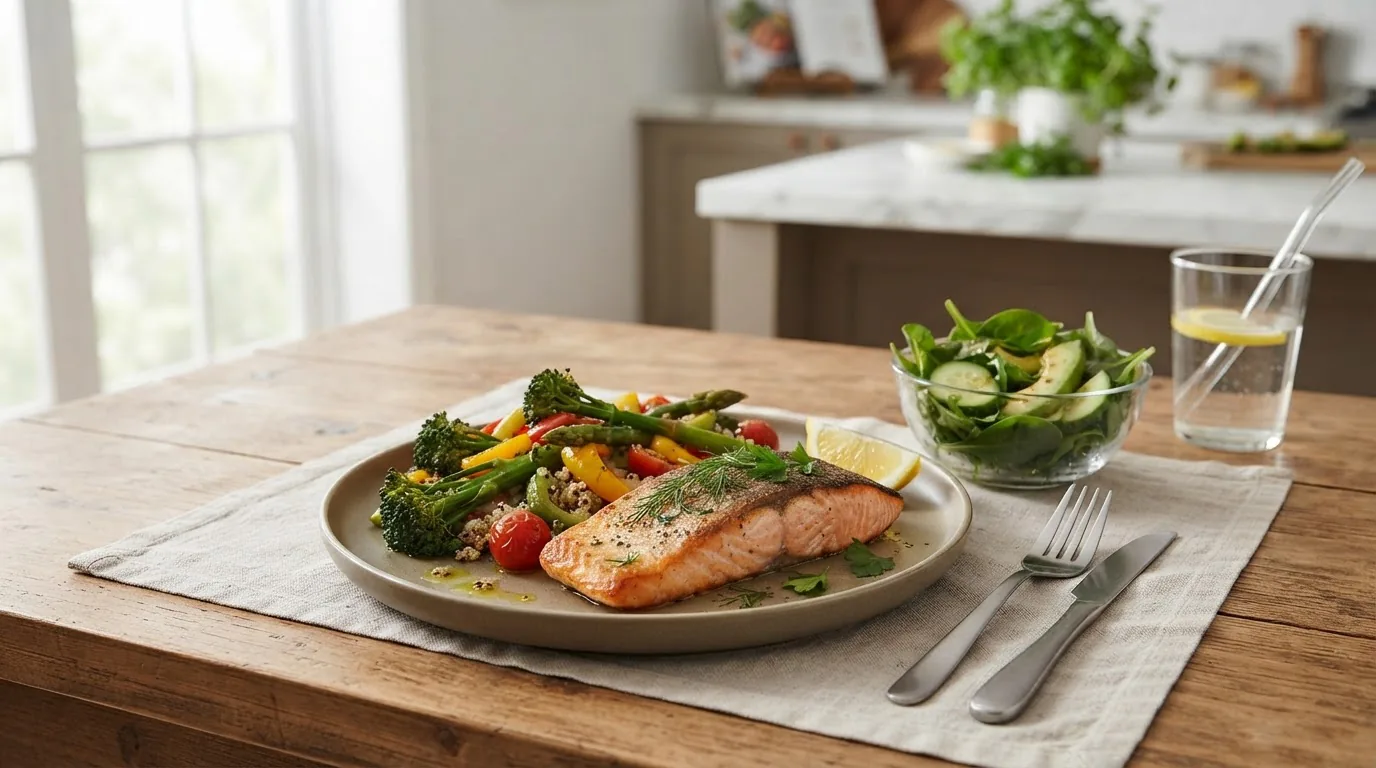
1. Lemon-Garlic Salmon with Quinoa & Greens (20–25 min)
Prep: 10 min | Cook: 12–15 min | Calories per serving: ~470 kcal | Macros: 30g protein, 35g carbs, 20g fat
Summary: Pan-seared salmon fillets (4–6 oz each) finished with lemon-garlic butter, served over 3/4 cup cooked quinoa and sautéed spinach. Quick, nutrient-dense, omega-3 rich.
Simple steps: Cook quinoa. Sear salmon 3–4 minutes per side. Sauté greens with garlic. Plate with lemon wedge.
Swap: Use canned tuna for lower cost. For more heart-conscious options see heart-healthy dinner recipes for two.
-
2. Chickpea & Veggie Stir-Fry with Brown Rice (20 min)
Prep: 8 min | Cook: 12 min | Calories: ~420 kcal | Macros: 16g protein, 58g carbs, 12g fat
Summary: Canned chickpeas, bell peppers, broccoli, and carrots tossed in a light soy-ginger sauce over brown rice. High fiber, plant-forward, under 30 minutes.
Steps: Stir-fry veg, add drained chickpeas, stir in sauce, serve on rice. For more meatless options see vegetarian dinner recipes for two.
-
3. Turkey Taco Bowls (25 min)
Prep: 10 min | Cook: 15 min | Calories: ~520 kcal | Macros: 36g protein, 44g carbs, 18g fat
Summary: Lean ground turkey spiced with cumin and chili, served with black beans, corn, brown rice and pico de gallo. Quick assembly, family-friendly flavors.
Tip: Make taco bowls into wraps for different nights.
-
4. Mediterranean Shrimp & Orzo (25 min)
Prep: 10 min | Cook: 15 min | Calories: ~450 kcal | Macros: 28g protein, 52g carbs, 12g fat
Summary: Quick-sautéed shrimp, cherry tomatoes, spinach, and orzo finished with feta and lemon. A light, balanced meal that feels special with little effort.
-
5. Quick Lentil Soup with Whole-Wheat Toast (30 min)
Prep: 10 min | Cook: 20 min | Calories: ~400 kcal | Macros: 20g protein, 55g carbs, 8g fat
Summary: Red lentils cook fast; combine with carrots, onion, garlic, and canned tomatoes for a thick, comforting bowl. Freeze single portions for nights when time is tight.
-
6. Veggie-Loaded Frittata (20–25 min)
Prep: 8 min | Cook: 12–15 min | Calories: ~360 kcal | Macros: 26g protein, 18g carbs, 20g fat
Summary: Eggs whisked with milk, mixed with sautéed mushrooms, bell pepper and spinach, pan-finished under a broiler. Serve with a side salad for balanced nutrition.
-
7. Peanut Noodle Bowl with Tofu (20 min)
Prep: 8 min | Cook: 12 min | Calories: ~540 kcal | Macros: 22g protein, 70g carbs, 18g fat
Summary: Whole-grain noodles tossed in a light peanut sauce, pan-fried tofu, steamed broccoli, scallions and sesame. Swap tofu for chicken for higher protein.
-
8. One-Pan Lemon-Herb Chicken with Roasted Vegetables (30 min)
Prep: 10 min | Cook: 20 min | Calories: ~520 kcal | Macros: 40g protein, 40g carbs, 16g fat
Summary: Bone-in or boneless chicken thighs roast with potatoes, carrots, and green beans on a sheet pan. Minimal cleanup and full flavors.
For more chicken ideas see healthy chicken breast recipes guide: baked and easy meals and chicken meal prep ideas.
-
9. Greek Salad with Grilled Halloumi (15–20 min)
Prep: 10 min | Cook: 5–10 min | Calories: ~460 kcal | Macros: 22g protein, 28g carbs, 26g fat
Summary: Crisp romaine, tomato, cucumber, olives, and grilled halloumi; drizzle with olive oil-lemon dressing. A satisfying, low-effort supper.
-
10. Simple Pesto Pasta with Roasted Cherry Tomatoes (20 min)
Prep: 8 min | Cook: 12 min | Calories: ~520 kcal | Macros: 18g protein, 70g carbs, 20g fat
Summary: Whole-grain pasta tossed with pesto, roasted cherry tomatoes and a sprinkle of Parmesan. Add grilled chicken or chickpeas for extra protein.
See related practical healthy dinner ideas.
-
11. Black Bean & Sweet Potato Quesadillas (25 min)
Prep: 10 min | Cook: 15 min | Calories: ~480 kcal | Macros: 18g protein, 60g carbs, 18g fat
Summary: Mashed roasted sweet potato, black beans, cheese and spices in whole-wheat tortillas. Serve with salsa and yogurt.
-
12. Asian-Inspired Beef & Broccoli (25 min)
Prep: 10 min | Cook: 15 min | Calories: ~560 kcal | Macros: 40g protein, 46g carbs, 20g fat
Summary: Thin-sliced flank steak or beef strips stir-fried with broccoli in a tangy garlic-ginger sauce, served on brown rice. Swap beef for tofu for lower cost.
For low-calorie options see 400 calorie dinner recipes and 500 calorie meal ideas.
These quick healthy dinner meals for two use minimal ingredients and straightforward assembly. For one-pot or fewer-dish nights, check one-pot healthy dinners for two.
Cheap and Nutritious Healthy Suppers for Two
Below are affordable, nutrient-dense recipes designed to keep cost per meal low while delivering balanced macros. Each entry includes an estimated cost breakdown for two servings using an averaging method across common retailers. Costs are approximate; see the Shopping Guide later for methodology and regional caveats.
Recipe: Hearty Lentil & Veggie Stew (Serves 2)
Ingredients:
- 1 cup dried brown lentils (or 2 cups cooked)
- 1 can (14 oz) diced tomatoes
- 1 medium onion, chopped
- 2 carrots, diced
- 2 cups low-sodium vegetable broth
- 2 cups chopped kale or spinach
- 1 tbsp olive oil, 1 tsp smoked paprika, salt & pepper
Instructions: Sauté onion and carrots in oil, add spices, add lentils, tomatoes, broth; simmer 20–25 minutes until lentils tender; stir in greens and serve.
| Ingredient | Qty | Estimated Cost (USD) |
|---|---|---|
| Dried lentils | 1 cup | $0.60 |
| Canned tomatoes | 1 can | $0.90 |
| Onion | 1 | $0.30 |
| Carrots | 2 | $0.40 |
| Veg broth | 2 cups | $0.80 |
| Greens | 2 cups | $1.00 |
| Olive oil & spices | — | $0.20 |
| Total | $4.20 |
Cost per serving: approximately $2.10. Nutrition: ~18–22g protein, 60g carbs, 8–10g fat, high fiber and iron.