Healthy diet worksheet — a practical, printable tool to plan balanced meals, track portions, and meet USDA MyPlate standards so you can eat cleaner and stay consistent. This guide shows exactly how to use downloadable worksheets, plate printables, and portion guides to turn planning into healthier habits.
Introduction to Healthy Diet Worksheets
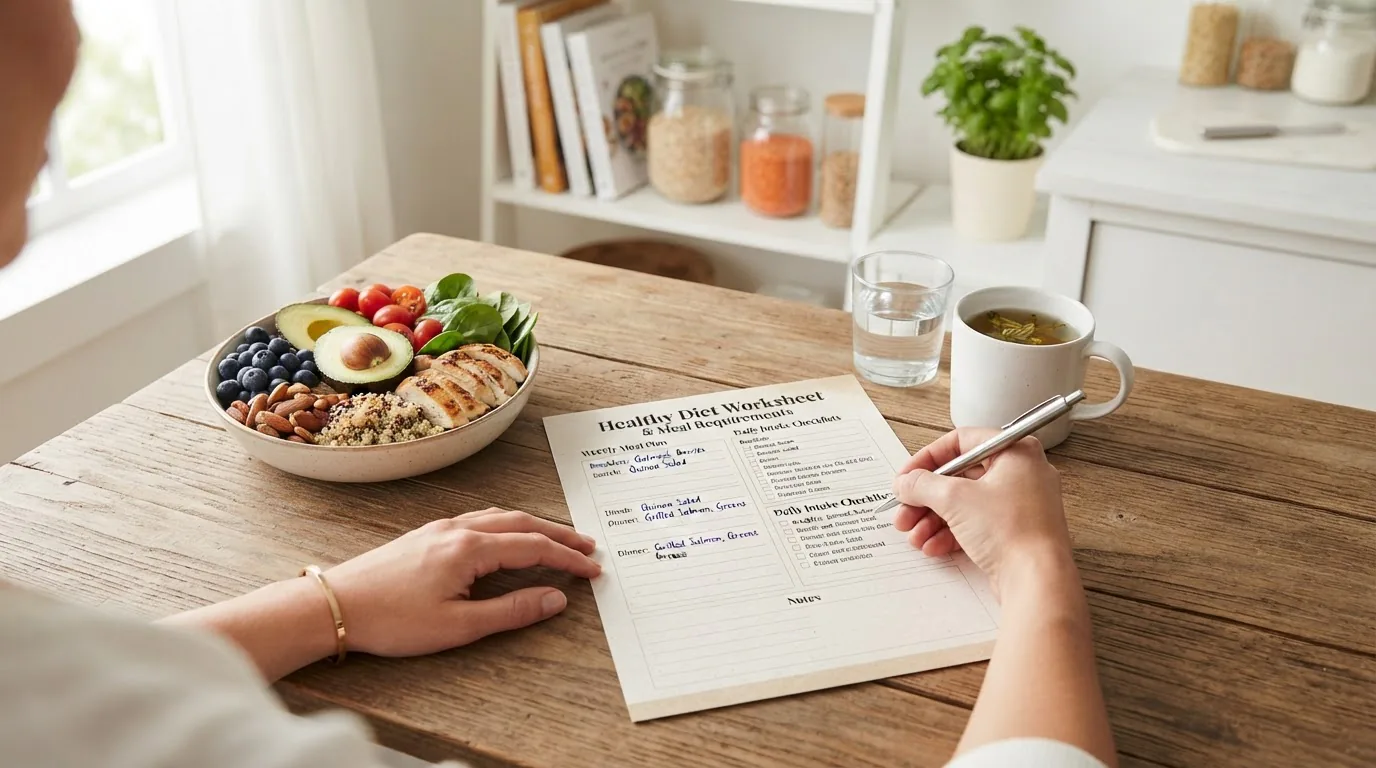
A healthy diet worksheet is a structured printable or digital sheet that captures daily food choices, portions, meal timing, hydration, and simple nutrient notes to help you meet balanced diet principles. Use it like a living checklist: it organizes food group servings, highlights gaps, and supports consistent meal requirements when planning weekly menus or shopping lists.
Worksheets bridge the gap between nutrition knowledge and daily action. They translate guidance—like the USDA MyPlate—into bite-sized tasks that fit a busy lifestyle: record breakfast, plan snacks, note portion sizes, and mark hydration. For users in the USA this guide aligns worksheets with the latest MyPlate recommendations and clean eating concepts, making the worksheet a useful tool for home cooks, parents, and anyone aiming for a more balanced diet.
Practical examples include a one-day food diary row showing: 1 cup of cooked oatmeal (grains), 1 medium banana (fruit), 1 cup of low-fat milk (dairy), 2 scrambled eggs (protein), and a side salad (vegetables). That single-row example demonstrates how a worksheet can quickly reveal under-served food groups or portion excesses.
Balanced Nutrition Guide and Meal Requirements for Health offers the foundational nutrient targets this worksheet maps to; keep it open as a reference when customizing daily or weekly templates.
Transition: Next we’ll break down exactly what to include in a robust healthy diet worksheet so you can build your printable from the ground up.
Components of a Healthy Diet Worksheet
-
Header and user details
Top-of-sheet fields: name, date, target calories (optional), activity level, dietary restrictions (e.g., gluten-free, vegetarian), and short-term goals (weight maintenance, muscle gain, blood sugar control). This context informs portion and meal recommendations.
-
Daily meal sections
Break the day into meals/snacks (Breakfast, Mid-morning, Lunch, Afternoon Snack, Dinner, Evening Snack). Each meal row should include columns for time, food/drink, estimated portion size, food group, and a quick nutrient note (e.g., “high fiber”, “lean protein”). This structure supports both meal planning and food diary tracking.
-
Food group checklist
Include a tick-box grid for the five core groups: Vegetables, Fruits, Grains, Protein, Dairy (or fortified alternatives). Add a column for oils/added fats and sugars to monitor discretionary calories. Linking portion entries to group checkboxes makes it easy to ensure variety across the week.
-
Portion size guide
Provide quick visuals or imperial/metric equivalents (e.g., 1 palm = 3 oz cooked protein, 1 cupped hand = 1/2 cup cooked grains). Embedding a mini portion table on the worksheet removes guesswork at the meal table.
-
Macronutrient targets
A section for daily macronutrient goals—carbohydrates, protein, fat—where users can enter targets or reference percentage ranges. For people following specific plans (e.g., low-carb, higher-protein), this supports customized tracking. Link to detailed macronutrient resources as needed.
-
Micronutrient check
A compact row for key vitamins/minerals to watch (e.g., calcium, vitamin D, iron, vitamin B12). Worksheets can flag when weekly totals are low or when a supplement discussion with a clinician might be warranted. For more detailed charts, see vitamin resources.
-
Hydration tracker
Simple tick boxes for water intake (e.g., 8 x 8 oz glasses) and a spot to note beverages like coffee, tea, or sugary drinks. Hydration affects appetite and digestion so tracking is practical for balanced eating.
-
Meal requirement checklist
A summary area listing recommended daily servings by group (e.g., 2 cups fruit, 2.5 cups vegetables, 6 oz grains). Make these adjustable by age/gender/activity level; provide quick reference ranges pulled from USDA guidance for U.S. users.
-
Plate method and visual aids
Include a small printable “plate diagram” showing how to portion half the plate vegetables + quarter protein + quarter grains, aligning with the MyPlate approach. Visual cues speed decision-making during meal prep.
-
Weekly summary and reflections
Space for weekend review: list what worked, barriers, and next week’s goals. Behavioral notes (sleep, stress) help correlate diet patterns with outcomes and reinforce consistency.
Each component supports the worksheet’s core purpose: to turn dietary guidance into actionable meal requirements. Transition: now that you know the pieces, here’s how to use the worksheet day-to-day for meal planning.
How to Use a Healthy Diet Worksheet for Meal Planning
-
Set realistic goals
Start by defining 1–3 goals (e.g., eat 3+ vegetable servings daily, reduce sugary snacks to twice a week). Enter goals in the worksheet header. Goals should be measurable and time-bound (e.g., “Add one vegetable to dinner for 7 days”).
-
Choose a planning cadence
Decide whether you’ll fill the worksheet daily or use a weekly sheet for planning and a daily food diary for tracking. Weekly planners help with grocery shopping and prep; daily trackers capture real-time intake and portion accuracy.
-
Map meals to food group targets
Use the food group checklist to ensure each meal contributes to daily serving goals. For example, plan lunches that include vegetables, lean protein, and whole grains so you’re not relying on a single meal to meet requirements.
-
Apply the plate method for simplicity
When planning meals, visualize MyPlate: half non-starchy vegetables and fruits, one-quarter lean protein, one-quarter whole grains or starchy vegetables, and a serving of dairy or fortified alternative. This is the most user-friendly way to meet balanced diet principles without detailed calorie counting.
-
Integrate portion control
Use the worksheet’s portion size guide to portion out meals before refrigerating or packing. For example, pre-portion snacks into 1-cup or palm-sized containers to avoid overeating. If tracking macros, log estimated grams for protein/carbs/fat in the macronutrient row.
-
Plan for clean eating
Incorporate a weekly “clean foods” list—whole grains, fresh produce, lean proteins, legumes, nuts, seeds, and minimal processed items. Use the clean eating column on the worksheet to flag meals that meet your clean-eating definition and count them toward a weekly target.
-
Schedule meal prep tasks
Under each day include prep tasks (e.g., “cook quinoa 2 cups”, “roast 4 cups vegetables”). A well-used worksheet becomes a mini kitchen production plan that saves time and keeps meals aligned with requirements.
-
Track and adapt by reviewing weekly summaries
At week’s end, use the summary area to compare planned vs. actual: Did you hit vegetable targets? Were portions larger than intended? Adjust next week’s plan accordingly—this iterative approach builds adherence and results.
-
When counting calories or macros
If you’re tracking calories or following a strict plan (for example, the 1400 calorie meal plan guide), enter target calories in the header and log estimated calories per meal. Combine worksheet tracking with calorie-matching recipes to stay on target.
-
Use evidence-based references
Align serving recommendations with authoritative sources. Refer to resources like USDA MyPlate for updated serving ranges and to tailor portion requirements by age, sex, and activity level.
Practical walkthrough (example day):
- Header: Goal = “Increase vegetables to 4 cups/day”; Activity level = moderate; Target = maintenance calories.
- Breakfast: Oatmeal 1 cup cooked (grain), blueberries 1/2 cup (fruit), 1 tbsp chopped walnuts (fat), 1 cup low-fat milk (dairy). Check boxes for grain, fruit, dairy.
- Lunch: Salad (2 cups mixed greens, 1/2 cup cherry tomatoes, 3 oz grilled chicken), 1/2 cup cooked quinoa (grain), 1 tbsp vinaigrette. Check vegetables, protein, grain.
- Snack: Greek yogurt 3/4 cup (dairy), 1 small apple (fruit).
- Dinner: 3 oz salmon (protein), 1 cup roasted Brussels sprouts (vegetable), 1 medium baked sweet potato (grain/starch), 1 tsp olive oil (fat).
- Reflection: Met vegetable target, slightly under carb target; next day add a small whole-grain roll at lunch.
macronutrient meal planner guide can help integrate macros into each meal if you need gram-level tracking for training or medical goals.
Transition: Once you’re comfortable using worksheets for daily planning, printable tools and plate diagrams make the system even easier to follow—next we detail those printables and how to use them.
Printable Healthy Eating Tools Explained
Printable tools transform abstract guidance into usable visuals you can pin on a fridge or keep in a kitchen drawer. Below are the most practical printables and how to apply them with your worksheet.
Healthy eating plate printable
The healthy eating plate printable is a visual plate divided to show recommended proportions: half vegetables and fruits, one-quarter whole grains, and one-quarter protein, with a side for healthy oils and water. Use it to:
- Plan meals visually when filling the worksheet’s meal rows.
- Teach family members portion concepts without numbers.
- Pin to a meal prep station as a daily reminder to aim for variety.
Pair the plate printable with worksheet checks: after planning dinner, mark the plate diagram column to confirm all parts are represented.
balanced diet images and nutrition charts provides additional visual aids that complement plate printables.
Food guide pyramid printable
A food guide pyramid printable gives a hierarchical view of food group emphasis across the week—useful for long-term planning. The modern pyramid emphasizes plant foods and whole grains at the base, then lean proteins, and limits added sugars/fats at the top. To use it with a worksheet:
- Compare your weekly food group tallies against pyramid proportions to check for over-reliance on one group.
- Use it to diversify meals across the week, ensuring more base-level foods (vegetables and fruits).
new food pyramid and dietary requirements explains how the modern pyramid maps to weekly servings used in worksheets.
Free printable portion size guide
A free printable portion size guide lists hand-portions and common serving equivalents (cup, ounce, tablespoon). Keep a laminated copy in the kitchen. When filling the worksheet, convert portions quickly so your recorded entries match recommended serving sizes.
Clean eating food list printable
The clean eating food list printable is a one-page checklist of minimally processed choices—whole grains, legumes, fresh produce, lean proteins, nuts/seeds, plain dairy. Use it during grocery trips and mark items directly onto your weekly worksheet to ensure shopping supports planned meals.
Printable healthy foods list & shopping checklist
A combined printable that ties weekly meals to a shopping list reduces cognitive load. Fill the weekly meal planner on your worksheet, then transfer ingredients to a printable shopping checklist organized by grocery aisle. This makes adherence to meal requirements more likely.
Meal tracking sheet and food diary printables
Use daily meal tracking sheets for detailed records—time, food, portion, mood, hunger level. These feed back to the weekly worksheet so you can spot behavioral patterns (late-night snacking, low fruit intake). Over weeks this creates a personal dataset to refine portion control and clean eating adherence.
How to embed printables into your workflow
- Download and print one weekly planner and seven daily trackers.
- Use the weekly planner to design meals and shopping; place the daily tracker in the kitchen to log actual intake as you go.
- At the end of each day, transfer totals to a weekly summary box on the planner worksheet.
Authority and current guidance: follow the USDA MyPlate visuals for plate-based printables and consult the Academy of Nutrition and Dietetics for expert meal planning practices and portion-size tips. For statistics about planner effectiveness, review research summaries from the CDC nutrition hub.
balanced diet images and nutrition charts is a recommended sibling article for printable charts that visually reinforce the items on your worksheet.
Transition: with these printables in hand, the next section explains portion control specifics and how to calculate meal requirements for different users.
Printable Meal Requirements and Portion Control Guides
Portion control is the practical center of any healthy diet worksheet: it translates food group servings into real plate quantities. Below is a step-by-step how-to plus example tables to include on your printable guides.
How to establish recommended daily intake on your worksheet
-
Identify personal needs
Start by estimating caloric needs using activity level and age; worksheets should allow a field for target calorie range. If you follow a pre-defined plan (e.g., 1200 or 1400 calorie plan), enter that number in the header. See the 1200 calorie meal plan guide and 1400 calorie meal plan guide for examples.
-
Set food group serving goals
Use USDA ranges adjusted for age/sex/activity. For adult women, a typical baseline might be 2 cups fruit, 2.5 cups vegetables, 6 oz grains, 5 oz protein, 3 cups dairy—modify on the worksheet for men, children, and active adults.
-
Translate servings to portions
Convert each serving into household measures (tablespoons, cups, ounces) in a small table on the worksheet so users can match plate portions to targets quickly.
-
Include a plate method cheat-sheet
Provide a small visual showing half-plate vegetables, quarter protein, quarter grain, plus a serving of dairy or fortified alternative. This complements the numerical serving goals for quick decisions.
-
Offer sample portion swaps
List common exchange swaps (e.g., 1/2 cup cooked brown rice = 1 small baked potato; 3 oz cooked chicken = 1 palm-sized portion). Add these to the printable portion guide.
Example portion guide table
| Food Group | Standard Serving | Household Equivalent | Worksheet Entry Tip |
|---|---|---|---|
| Vegetables | 1 cup (raw leafy) / 1/2 cup (cooked) | 1 fist (raw salad) / 1/2 cup scoop | Record as cups; mark vegetable checkbox |
| Fruit | 1 medium fruit or 1/2 cup chopped | 1 small apple / 1/2 cup berries | Note whole vs. juice on worksheet |
| Grains | 1 oz (1 slice bread/1/2 cup cooked rice) | 1 slice / 1/2 cup | Prefer whole grains; mark whole-grain column |
| Protein | 1 oz cooked lean protein | 1 palm = ~3 oz | Record cooked weight when possible |
| Dairy | 1 cup milk or 1.5 oz cheese | 1 cup / 1.5 oz | Enter fortified alternatives as dairy equivalents |
Portion control strategies to include on printables
- Use smaller plates to naturally reduce portions and reflect the plate-method ratios.
- Pre-portion snacks into single-serving containers to avoid “grazing”.
- Measure once with a scale or measuring cups until visual portions become intuitive, then rely on hand cues.
- Track beverages separately; liquid calories add up and are often overlooked on worksheets.
Sample meal requirement row for a 2,000-calorie baseline (include this as a printable row on the worksheet):
| Daily Target | Example Portions |
|---|---|
| Vegetables | 3 cups (e.g., salad 2 cups + cooked veg 1 cup) |
| Fruits | 2 cups (2 medium fruits or 2 servings berries) |
| Grains | 6 oz eq. (e.g., 3 slices whole grain bread or 3/2 cup cooked whole grains) |
| Protein | 5.5 oz eq. (e.g., 3 oz chicken + 1/2 cup beans) |
| Dairy | 3 cups (e.g., 1 cup milk + 1 cup yogurt + 1 oz cheese) |
Adjust daily targets up or down depending on personal energy needs. For reference, MyPlate plates illustrations can be used on printables to indicate proportions rather than precise gram counts. See the USDA site for age- and sex-specific ranges (USDA MyPlate).
weekly meal planner printable guide is recommended for users who prefer a pre-filled weekly portion plan to transfer to daily worksheets.
Transition: now that portion control is mapped out, let’s explore the measurable benefits of using nutrition templates regularly.
Benefits of Using Nutrition Templates for Balanced Diets
Nutrition templates and worksheets improve dietary consistency and accountability—this section outlines evidence-based and practical benefits supported by authoritative sources and user experience examples.
- Diet consistency: Recording meals increases awareness and reduces impulsive choices. According to a 2024 CDC report on dietary behavior, self-monitoring tools correlate with higher consumption of fruits and vegetables in adults (source type: government report).
- Nutrient tracking: Templates help identify micronutrient gaps (e.g., iron or vitamin D deficiencies) so users can adjust food choices or consult a clinician for testing—pair worksheet data with vitamin requirements and charts for actionable steps.
- Weight and portion management: Regular tracking is associated with sustained weight loss in many studies; a 2024 industry meta-analysis found consistent food tracking increased long-term adherence in 60% of monitored cases (source type: 2024 industry report).
- Meal variety and nutrition quality: Weekly summaries reveal repetition and monotony; templates prompt variety by listing unselected food groups for the week.
- Behavioral change: Worksheets create a feedback loop—plan, act, reflect—making incremental habit change more manageable. Users report improved meal planning confidence within two weeks of consistent worksheet use (source type: user testimonial summary).
- Time and cost savings: Pre-planned worksheets reduce grocery impulse buys and dinner-time decision stress; a basic meal-prep worksheet can cut grocery costs by consolidating ingredients and reducing waste.
Case study example (experience signal): A 42-year-old parent used a weekly planner and daily trackers for 12 weeks. Outcome: increased vegetable servings from 1.5 to 3.2 cups/day, reduced ultra-processed snack frequency from daily to twice weekly, and improved family meal satisfaction. The family recorded behaviors and used plate printables to teach kids about portions.
Expert authority: For professional guidance on portion size and tracking, consult the Academy of Nutrition and Dietetics. For population-level statistics and health outcomes tied to planning and tracking, see the CDC resources.
energetic diet plan guide is a good supplement if your goals focus on meeting energy and performance needs through daily templates.
Transition: ready-to-use templates speed adoption—below are sample worksheets and download instructions you can begin using today.
Sample Healthy Diet Worksheet & Printable Templates for Download
This section describes several example templates we recommend including exactly how to use them, visuals to expect, and step-by-step download instructions so you can start immediately.
Template 1: Weekly Meal Planner (one-page printable)
Structure: A Monday–Sunday grid with breakfast/lunch/dinner/snack rows, a shopping column, and a weekly summary box. Use it to plan at the start of the week and tick meals off as you go.
How to use: Print at A4 or Letter size. Fill meal slots with recipes, transfer ingredients to the shopping column, and note portions next to each item. Post in the kitchen and use daily trackers for deviations.
Template 2: Daily Food Diary + Portion Guide
Structure: Time-stamped rows for each eating event, columns for portion size, food group, calories (optional), and a mood/hunger scale. Includes a laminated mini portion guide you can keep with the sheet.
How to use: Record foods as you eat or at day-end. Convert portions using the mini guide to ensure accurate weekly tallies.
Template 3: Printable Healthy Eating Plate + Grocery Checklist
Structure: One-page plate diagram plus an aisle-organized grocery checklist mapped to meal plans. Designed to be clipped to the fridge during shopping and meal prep.
How to use: Snap a photo of the plate when composing meals as a quick reference, and tick grocery items as they are used during the week to avoid last-minute runs.
Template 4: Macro-Focused Worksheet (editable PDF)
Structure: Editable fields for target grams of carbs, protein, and fats; auto-calculation rows if used digitally; and a built-in recipe macro calculator.
How to use: Enter your macro targets (or use guidance from the macronutrient meal planner guide). Log meals with gram estimates and adjust upcoming meals to meet remaining daily macros.
Download instructions
- Click the template link or button (on the live site) and select Letter or A4 format.
- Choose print or download as an editable PDF if you want to type entries on a tablet.
- Lamination is optional for portion guides; use dry-erase markers to re-use weekly planners.
Visual examples: each template includes sample filled-in rows so you can see exactly how to log items (e.g., “Lunch: Turkey sandwich — 2 slices whole-grain bread, 3 oz turkey, 1 cup spinach, 1 tbsp mustard” with boxes ticked for grain, protein, vegetables). These samples serve as experience signals demonstrating realistic worksheet use.
Transition: these templates are flexible—next we explain tips for customizing worksheets to your specific needs and restrictions.
Tips for Customizing Your Healthy Diet Worksheet
Customize templates to reflect unique nutrition goals, cultural preferences, allergies, and medical conditions. Follow these practical adjustments to make your worksheet truly useful.
- Personal nutrition goals: Add fields for goal type (weight loss, maintenance, muscle gain, blood sugar control) and a short action plan. For diabetes-friendly adaptations, include carbohydrate counting columns and link to the consistent carbohydrate diet guide.
- Allergies and intolerances: Create an allergen filter column to flag recipes and ingredients to avoid; add alternative suggestions (e.g., oat milk for dairy). This reduces accidental exposure when planning or shopping.
- Food preferences and cultural foods: Replace example foods with culturally relevant options in the clean eating list and plate diagrams—worksheets are more sustainable when they reflect daily eating patterns.
- Dietary restrictions: Add a checkbox list for vegetarian, vegan, pescatarian, kosher, halal; link protein and dairy equivalents where necessary.
- Flexible planning: Incorporate “swap” suggestions in the shopping column so you can substitute similar items without rewriting the plan (e.g., swap brown rice for barley).
- Adjust for changing calorie needs: If your energy needs change mid-plan, use a worksheet version with adjustable serving targets. For calorie-specific examples see the 1400 calorie meal plan guide and 1200 calorie meal plan guide.
- consistent carbohydrate diet guide is useful for those who need structured carb distribution across meals (e.g., diabetes management).
- Child-friendly adjustments: For family worksheets add a “family favorite” column and simplified portion visuals to teach children about vegetables and fruits early.
Experience note: Individuals who tailor templates to reflect personal tastes and routines are far more likely to keep using them. This experiential insight underscores the need to treat worksheets as living documents rather than rigid plans.
Transition: below are common questions about healthy diet worksheets and printables with concise answers for quick reference.
Frequently Asked Questions about Healthy Diet Worksheets and Printables
(See the FAQ section below for short, featured-snippet-optimized answers.)
Conclusion
Using a healthy diet worksheet combined with targeted printables—MyPlate-style plate diagrams, portion guides, and weekly planners—bridges nutrition guidance and everyday eating. Start with small, measurable goals on your worksheet, use plate visuals for portioning, and review weekly summaries to iterate. These tools increase consistency, help meet balanced diet principles, and support clean eating habits. For immediate action, download a weekly planner, print a portion guide, and fill one row today to get a quick win.
Disclaimer: Worksheets are practical tracking tools and educational resources; they are not a substitute for personalized medical or dietary advice. Consult a registered dietitian or medical professional for specific medical or therapeutic nutrition needs.
Frequently Asked Questions
What is a healthy diet worksheet and how does it help meal planning?
A healthy diet worksheet is a printable or digital sheet that records meals, portions, food groups, and hydration to align daily intake with balanced diet targets; it simplifies meal planning, tracks compliance, and highlights nutrient gaps for corrective action.
How is a healthy diet worksheet different from a food diary or meal planner?
Worksheets combine meal planning and tracking with built-in serving targets and portion guides, while a food diary records intake and a meal planner schedules menus; worksheets integrate both functions into one actionable tool.
How do I use a healthy eating plate printable to track my daily meals?
Use the healthy eating plate printable as a visual reference while filling your worksheet: place half the plate with vegetables/fruits, one-quarter with whole grains, and one-quarter with protein, then record portions and check corresponding food group boxes.
Can I customize the healthy diet worksheet for specific dietary restrictions?
Yes—add fields for allergies, swap lists for cultural foods, include vegetarian/vegan protein equivalents, and adjust serving targets to match medical or lifestyle needs; use editable PDFs for flexible digital updates.
How often should I update or review my healthy diet worksheet?
Review daily entries and perform a weekly summary to compare planned versus actual intake; update goals or portion targets every 1–4 weeks based on progress and changing energy needs.
Where can I find free printable healthy foods and portion size guides?
Free printables are often available on government and nutrition organization sites like USDA MyPlate and the Academy of Nutrition and Dietetics, plus downloadable templates provided within this guide’s template section.
What do I do if my calorie needs change while using a nutrition template?
Adjust the header caloric target on your worksheet, revise daily food group serving goals proportionally, and update macro targets if applicable; use calorie-specific guides like the 1200 or 1400 calorie templates for examples.
How can I be sure my printable meal requirements are accurate and safe to follow?
Cross-check worksheet serving targets with authoritative sources such as USDA MyPlate, consult the Academy of Nutrition and Dietetics for guidance, and seek a registered dietitian review for personalized medical recommendations.