
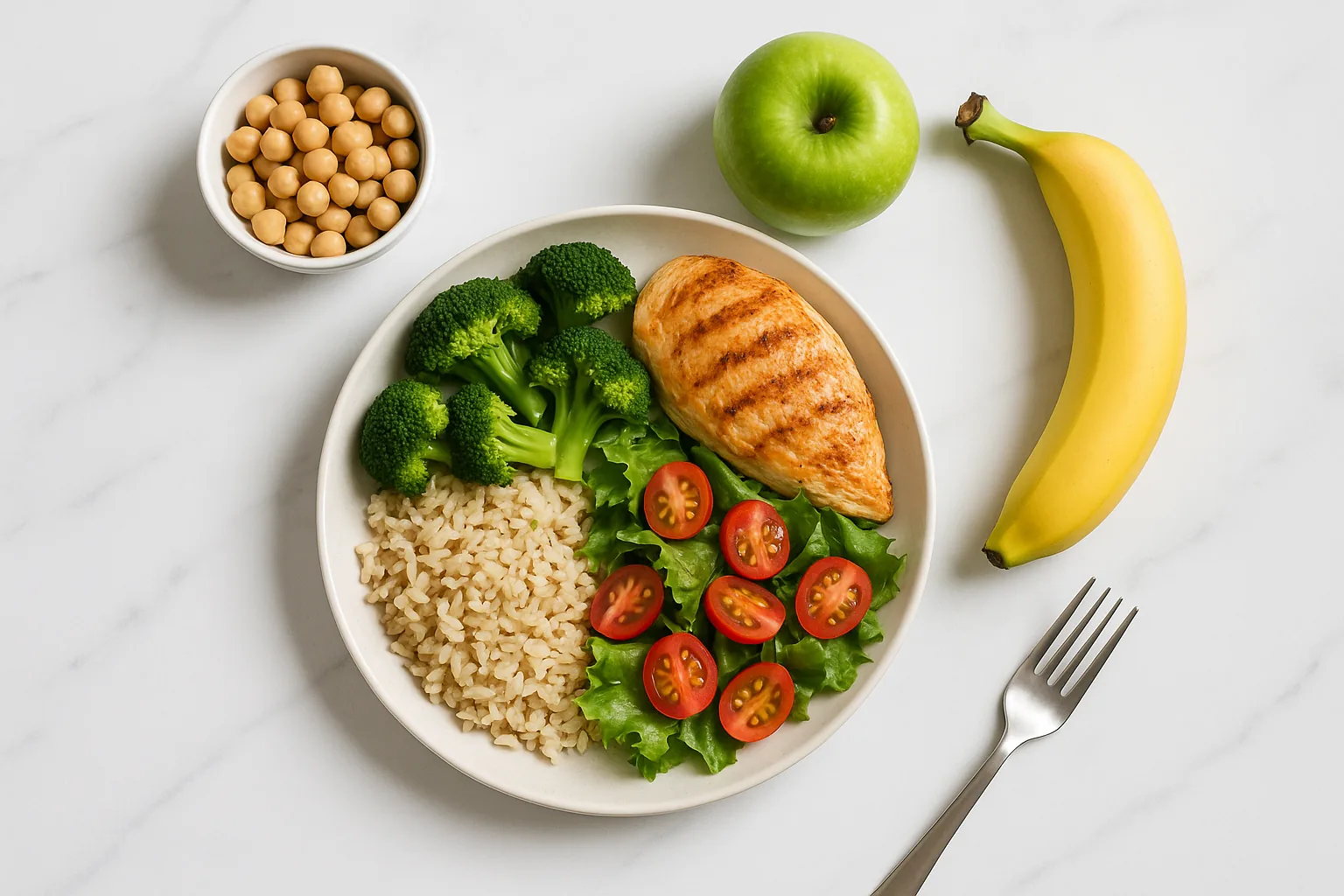
By the end of this hands-on CCHO guide you will have a clear, actionable plan to set consistent daily carbohydrate targets, build repeatable meals, and track results — a process that typically takes 2–4 weeks to establish habits and requires beginner-level nutrition skills and basic tracking tools.
Start here if you know the basics of food groups and want a practical method to stabilise blood sugar and energy with the ccho diet (the consistent carbohydrate diet approach).
Before you start
- Medical clearance: recent lab results or primary-care signoff if you have diabetes or take insulin.
- Tools: digital kitchen scale (grams), measuring cups, a blood glucose meter or CGM (if prescribed), and a smartphone.
- Apps & lists: download a carb-counting app or print a carb exchange list; have a note-taking app or paper meal log.
- Time: block 60–90 minutes initially to set targets and map a week of meals; 10–20 minutes weekly to adjust.
Introduction to the CCHO Diet and Its Purpose
The ccho diet (Consistent Carbohydrate Diet) is a structured, repeatable approach that keeps the amount of carbohydrate eaten at each meal and snack roughly the same day-to-day to reduce blood sugar swings and simplify insulin and medication matching. The CCHO method is purpose-built for predictable glycemic responses, easier meal decisions, and clearer tracking compared with ad hoc carbohydrate variation.
This guide emphasises the CCHO method as an operational routine — a way to set a target carb count per meal and design interchangeable meal templates that fit weekdays, weekends, work shifts and travel. If you want broader context on overall dietary balance before you apply carb consistency, see balanced nutrition principles.
Before the “how-to”, we will define terms you’ll use daily: carbohydrate counting (quantifying grams or exchanges), carb portions per meal (target grams or exchanges), glycemic index (speed of carb absorption), and carbohydrate-containing food groups (grains, fruits, starchy vegetables, dairy). For plain dictionary-level context on diet terms, see diet definitions.

Who benefits most: people managing type 1 or type 2 diabetes, anyone on multiple daily insulin doses, and those who find variable meal carbs produce unpredictable energy or cravings. The CCHO method is also used by clinicians to standardise inpatient and outpatient meal plans for safer insulin dosing (protocols referenced in clinical practice guidance).
Practical outcome: after reading, you’ll be able to set a per-meal carb target (e.g., 30–60 g), build swap-ready recipes from a template library, and use simple tracking tools to check glycemic responses across 7–14 days.
Principles of the Consistent Carbohydrate Diet
Below are the core principles of the CCHO approach presented as actionable steps you can implement immediately. Each item includes what to measure, how to set starting values, and where to adapt for personal needs.

- Set a consistent carb target per meal: choose a starting range based on activity and medications — most adults begin with 30–60 grams of carbohydrate per main meal and 10–20 grams per snack. These are starting targets you will personalise: if you use insulin, match with your insulin-to-carb ratio or clinician advice; if not, monitor blood glucose trends. Document your starting numbers and review after 7–14 days.
- Use portion control to stabilise intake: translate carb grams into portions (one carb portion commonly equals 15 g). Build meals from portions: for example, 3 portions (45 g) might be 1 cup cooked rice (1 portion), 1 medium apple (1 portion), and 1 cup milk (1 portion). Use a kitchen scale and measuring cups for accuracy during the first 2 weeks, then transition to visual cues.
- Standardise meal frequency and timing: keep consistent meal times and spacing (e.g., breakfast at 7–8am, lunch 4–5 hours later, dinner 4–5 hours after lunch, snacks as needed). Regular timing reduces insulin and glucose variability by producing predictable absorption windows.
- Balance macronutrients around carbs: combine carbohydrates with protein and healthy fats at each meal to slow absorption and improve satiety — for example, pair 30–45 g carbs with 20–30 g protein and a tablespoon of olive oil or 1 oz nuts. This principle ties the CCHO approach into broader dietary balance and energy management.
- Prefer lower glycemic-impact carbs: when possible choose whole grains, legumes, and intact fruits over refined starches. The glycemic index and fibre content help predict absorption speed; place higher-GI foods in controlled portions and pair them with protein/fat to blunt spikes.
- Use carb exchanges and simple tools: adopt an exchange list or carb-counting app to make meals interchangeable. An exchange approach (15 g carbs per exchange) lets you swap foods within a meal without changing total carbs, simplifying grocery shopping and out-of-home eating.
- Monitor and adjust with data: record pre- and 1–2 hour post-meal glucose (or trend from CGM) for at least 7 days to spot patterns. Adjust per-meal targets by 10–20% if repeated post-meal values fall outside your glycemic goals.
- Personalise for activity and life patterns: increase carb targets on active days or decrease before prolonged fasting; use consistent morning and evening templates if you have shift work or variable schedules.
For nutrient baselines used when setting targets, review the recommended adequate intake recommendations so you keep vitamins, minerals and protein at recommended levels while standardising carbs.
Historical models like the food pyramid models and the modern food guide pyramid inform portion emphasis; use them to visualise servings while you standardise carb counts. Also build meals from regular balanced food choices common to your household to keep the plan sustainable.
Common mistakes and how to avoid them (practitioner notes)
I’ve seen clients try to make every meal perfect on day one — that fails. Start with two stable meals (usually breakfast and dinner), track them for 7 days, then add the third meal. I also saw underestimating condiments and liquid carbs; weigh and log sauces, dressings, and drinks for accurate carb totals.
Checklist before moving on
- Chosen starting per-meal and per-snack carb targets recorded for 7 days.
- Downloaded carb-counting app or printed exchange list.
- Measured at least one week’s worth of typical meals to confirm portion-to-carb translations.
When to call a professional
Seek a registered dietitian or your clinician if you are on insulin, pregnant, underweight, or have frequent hypoglycemia. For medication adjustments related to carb changes, speak with your prescribing clinician before changing dosing.
How the CCHO Diet Supports Blood Glucose Stability
Consistency reduces variability. When carbohydrate amounts are predictable, medication (especially insulin) dose-matching becomes more straightforward and glucose excursions are easier to interpret. The CCHO method reduces the number of variables the body and caregiver must manage: total grams, timing, and composition.
Mechanisms in brief: consistent carbs lead to predictable gastric load and glucose absorption; pairing with protein and fat slows glucose appearance; regular meal spacing prevents large fasting-refeeding swings. Clinical guidelines emphasise matching insulin to carbohydrate intake to avoid post-meal hyperglycemia or hypoglycemia — American Diabetes Association guidance supports individualized carbohydrate planning and insulin adjustment.
Glycemic index concepts at a glance:
- Low GI: ≤55 — slower rise (e.g., steel-cut oats, lentils).
- Medium GI: 56–69 — moderate (e.g., whole wheat bread).
- High GI: ≥70 — rapid rise (e.g., white bread, glucose).
Small-stat block: track pre-meal and 1–2 hour post-meal glucose to assess whether a chosen carb target is producing acceptable postprandial values for you. For people using CGM, look for consistent 1–2 hour peaks; for meter users, record discrete values.
For strategies that connect carb consistency with daily energy, see optimizing energy through diet. For scientific overviews of diabetes and carbohydrate management, consult clinical resources such as NIH / NIDDK.
Practical CCHO Diet Meal Planning and Portion Guidelines
This section walks you through a hands-on meal-planning workflow plus sample templates you can reuse. Follow the numbered steps below to design a week of swap-ready meals that maintain consistent carb totals.
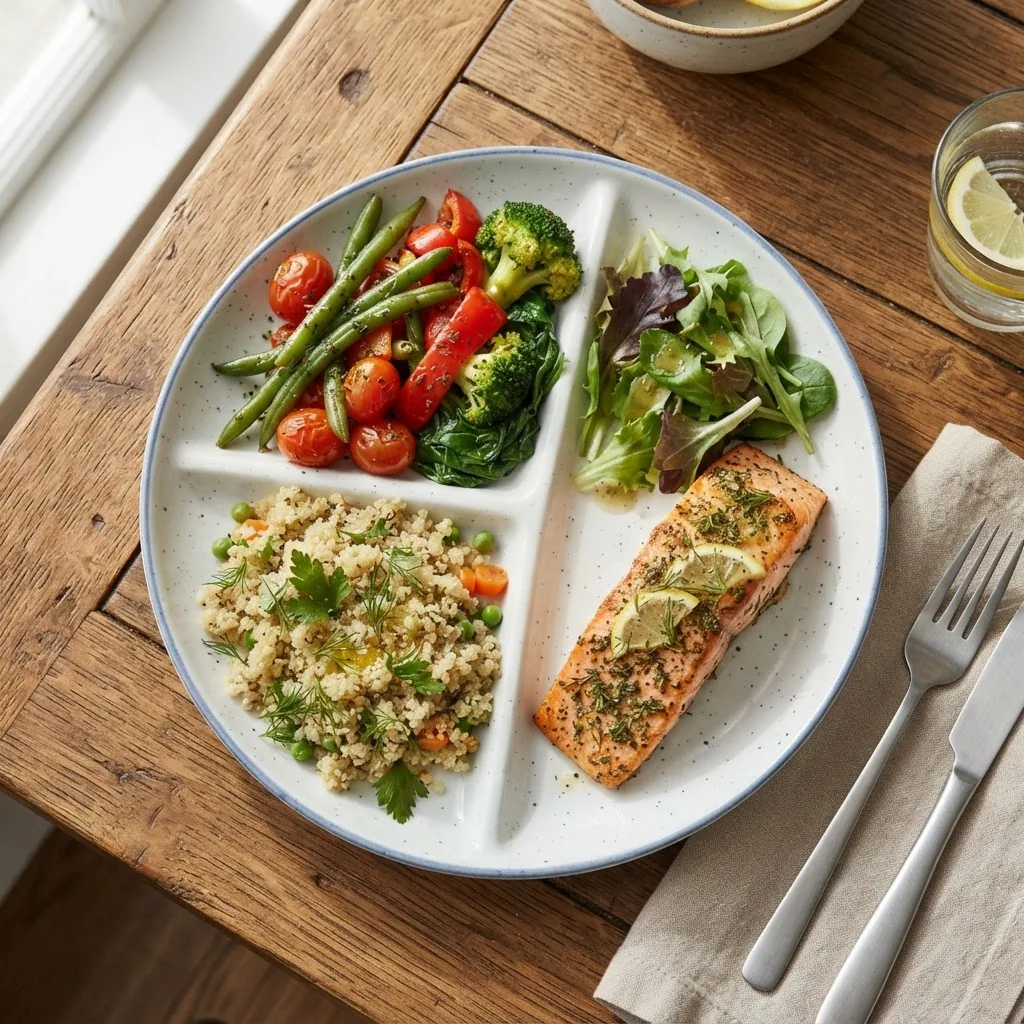
- Inventory common carb foods: list the household staples that contain carbs: brown rice (1 cup cooked = ~45 g carbs), black beans (1/2 cup cooked = ~20 g), corn tortilla (1 medium = ~12–15 g), sweet potato (½ medium ≈ 15–20 g), apple (1 medium ≈ 20–25 g), 1% milk (1 cup ≈ 12 g). Use a scale and app to confirm gram values for your brands.
-
Create plate templates: build 3–5 templates that hit your per-meal target. Example templates for a 45 g per-meal target:
- Template A (Tex-Mex daily): 2 corn tortillas (24 g), ½ cup black beans (20 g) + non-starchy veg and 3 oz grilled chicken.
- Template B (Grain bowl): ¾ cup cooked brown rice (34 g) + ½ cup roasted sweet potato (15 g) + 2 oz avocado + 3 oz salmon (adjust rice to hit 45 g).
- Template C (Breakfast): 1 cup cooked steel-cut oats (27 g) + 1 small banana (22 g) + 1 tbsp almond butter — swap to reach target.
- Build snack rules: standard snacks at 10–20 g carbs are easiest: examples — 1 small apple (15 g) with 1 tbsp peanut butter, or 6 whole grain crackers (15 g) with 1 oz cheese.
- Plan a weekly menu using swaps: choose two breakfasts, three lunches, and three dinners and rotate them. Each template should be interchangeable because carb totals are equal; this simplifies grocery shopping and meal prep.
-
Map Texas-friendly examples: use local flavors to keep the plan practical. Texas examples:
- Breakfast taco: 1 corn tortilla (12 g) + 1 scrambled egg + 1 oz cheddar; eat two tortillas for a 24 g carb breakfast or add a side of fresh fruit to reach 40–45 g.
- Tex-Mex lunch bowl: ½ cup brown rice (22 g) + ¼ cup black beans (10 g) + roasted corn (¼ cup ≈ 8 g) + grilled fajita veggies and lean protein to total ~45 g.
- Barbecue plate: ½ cup collard greens + ¾ cup baked sweet potato (≈25 g) + 1/2 cup corn on the cob (≈15 g) + lean brisket; adjust potato portion for carb target.
- Use tools and exchanges: adopt a carb exchange list: 1 exchange = 15 g carbs. For a 45 g meal, use three exchanges. For on-the-go choices, memorise equivalencies: one medium apple ≈ 1¾ exchanges, one slice of sandwich bread ≈ 1½ exchanges.
-
Sample day templates (non-calorie specific):
- Breakfast: Breakfast tacos (2 corn tortillas) + ¼ cup pico + 1 scrambled egg + ½ cup fruit (~40–45 g).
- Snack: Greek yogurt, plain, ¾ cup (~10–12 g) + handful walnuts (0 g carbs) — total 10–15 g.
- Lunch: Tex-Mex bowl with ¾ cup brown rice + ¼ cup beans + 2 cups salad greens (~45 g).
- Snack: 6 whole grain crackers + 1 oz cheese (~15 g).
- Dinner: Grilled fish, 1 cup roasted vegetables, ½ cup cooked corn or 1 small baked potato to meet 45 g target.
- Prep and portion: batch-cook rice, beans and measured fruit portions. Pre-portion 45 g carb meal components into containers or resealable bags for 3–5 days. Label containers with carb grams and date.
- Dining out strategy: pick menu items with known carbs (e.g., rice, tortilla, potatoes) and ask for half-portion or extra veg as swaps. Round to the nearest 5 g carb and log immediately.
For printable templates and trackers that map portions to carb targets, see nutrition planning worksheets. If you prefer visual cues, reference visual healthy meal plans while you learn portion sizes.
For readers who want calorie-specific options, we provide companion meal plans at different calorie levels: see balanced weight loss meal plans and healthy balanced diet meal plans for templates that can be adapted to the CCHO structure.
Use visual portion resources like the portion and serving size guide and the portion plate method while you practice measuring and building interchangeable meals. Additional printable weekly planners are available at meal planner printable guide.
Comparing the CCHO Diet with Other Carbohydrate-Based Diets
The CCHO diet is about consistency, not necessarily restriction. Below is a side-by-side comparison versus common carb-focused approaches.
| Approach | Core idea | Typical goals |
|---|---|---|
| CCHO (Consistent Carb) | Same amount of carbs each meal; focus on predictability | Glycemic stability, simpler dosing |
| Low-carb | Reduce daily carb intake overall | Weight loss, reduced insulin needs |
| Ketogenic | Very low carbs (typically <50 g/day), high fat | Nutritional ketosis, rapid insulin reduction |
| Balanced plate (MyPlate-style) | Proportional distribution of food groups | Overall nutrition quality and variety |
Summary: CCHO trades tight carb restriction for consistency. Low-carb and keto aim to reduce absolute carbs; CCHO keeps carbs predictable and often easier to sustain long-term. Choose CCHO when insulin or medication matching and consistent energy are priorities; choose low-carb/keto when rapid carb reduction is clinically desired and supervised.
Tools and Tips for Successful CCHO Diet Tracking
Use these practical tools to track carbs, measure outcomes and reduce friction.
- Use a carb-counting app: MyFitnessPal, Carb Manager, or a dedicated diabetes app can record grams and show trends. For insulin users, apps with insulin calculators are useful but always cross-check with your clinician.
- Keep a meal log: write time, carb grams, protein, and post-meal glucose. A 7-day log with repeated meals is the fastest way to identify predictable spikes.
- Weigh and measure for 2 weeks: use a kitchen scale (grams) for at least one week of breakfasts and lunches to create a reliable portion-to-carb mapping.
- Macro planning tools: for advanced users, integrate a macro planner — macro nutrition planning tools — to keep carbs within targets while meeting protein needs.
- Track trends not perfection: focus on median post-meal glucose and frequency of outliers; tweak targets by 10–20% rather than large sudden changes.
- Common app settings: set serving sizes to grams, calibrate food database entries to your brand, and use barcode scans to speed entry.
Combine digital tracking with printed exchange lists for backups. For trusted nutrition standards on portioning and plate balance, reference USDA MyPlate & Dietary Guidelines.
Potential Challenges and How to Overcome Them on the CCHO Diet
The most common adherence barriers are social eating, cravings, inconsistent portion estimation, and variable activity. Below are observed challenges and practical solutions.
- Challenge: I underestimated restaurant portions and had post-meal spikes. Solution: split portions, ask for a side of vegetables instead of a carb side, or log a conservative higher carb estimate and adjust next time.
- Challenge: Carb cravings at 3pm. Solution: increase lunchtime protein by 10–15 g and add a 10–15 g planned snack at 3pm to avoid overeating later.
- Challenge: Difficulties measuring condiments and drinks. Solution: measure once and save entries in your app as ‘favorite’ to reuse exact values.
- Challenge: Overconsumption when socialising. Solution: use substitution rules (one carb exchange per dessert) and apply documented swap lists before the event.
- Challenge: Losing track of portions under stress. Solution: rely on pre-portioned meals for 3–4 days when life is busy.
For targeted strategies on reducing portions and preventing overeating, consult the practical tactics in portion control techniques.
Conclusion and Key Takeaways for Implementing the CCHO Diet
The CCHO diet gives you a repeatable framework: pick consistent carb targets, use templates and exchanges to build interchangeable meals, and track short-term glucose responses for adjustments. Starting with 30–60 g per meal and 10–20 g per snack is a practical range; personalise using your glucose data and clinical guidance.
Practical next steps: choose two meal templates today, measure them once, and log post-meal glucose for 7 days. If you want printable trackers and visual plates to support implementation, explore the visual healthy meal plans and the nutrition planning worksheets.
If you are managing diabetes, coordinate with your healthcare team before changing insulin or medications. For clinical guidance on diabetes care and carbohydrate matching, consult the ADA and NIH resources linked above.
Ready to stabilise your meals? Start by picking one template for breakfast and one for dinner this week — measure, log, and review in seven days. If you want help building personalised templates, book time with a registered dietitian.