What you’ll finish with, time required & assumed skill
By the end of this guide you’ll confidently select, ripen, store and preserve fresh fruits and veggies for a Texas household of 2–4 people: you’ll know precise visual and tactile checks for 20+ common items, where to buy for best value, exact fridge and pantry settings, blanch/freezing times, and a weekly rotation routine to cut spoilage under 7%. Expect to spend 60–120 minutes reading and doing the hands‑on checks the first time, then 20–30 minutes weekly maintaining your system. This guide assumes basic kitchen skills: weighing produce, using a refrigerator and stove, and following simple time/temperature instructions.
Before you start
- Prerequisites: basic kitchen tools (kitchen scale, sharp paring knife, vegetable peeler, large pot, colander, ice bath container).
- Storage tools: 1 digital fridge thermometer, 1 pantry thermometer, 2 airtight containers (1–3 L), 3 reusable produce bags, 1 salad spinner, paper towels.
- Materials: a small spray bottle (for 1:3 vinegar rinse), 1 roll of food-safe cling film or beeswax wraps, freezer-safe bags (quart and gallon), labels and marker.
- Reference resources: local seasonal calendar (Texas region), week’s meal plan so you know how much to buy.
- Time & space: clean 2–3 sq ft of counter, 1 clean kitchen towel, and 20–40 minutes for initial sorting and storing after shopping.
Step-by-step process: select, ripen, store and preserve
-
Check the season and plan quantities
Start with a seasonal list. In Texas, buy higher quantities of melon, peaches and tomatoes in summer; buy apples, citrus and root vegetables in fall/winter. For typical household servings plan per week:
- Fruit: 14–21 servings (one serving = 1 medium fruit or 1 cup chopped). That means 14–21 apples/bananas or 1.5–2.0 lb berries per week.
- Vegetables: 21–28 servings (1 serving = 1 cup raw leafy greens or 1/2 cup cooked veg). That equates to ~1 head lettuce, 2 lb broccoli, 1.5 lb carrots per week.
Buying by plan reduces impulse buys and waste. If your fridge is small, limit fresh berries and leafy greens to 3–4 servings per week and rely on frozen equivalents for the rest.
-
Inspect appearance and sound at purchase
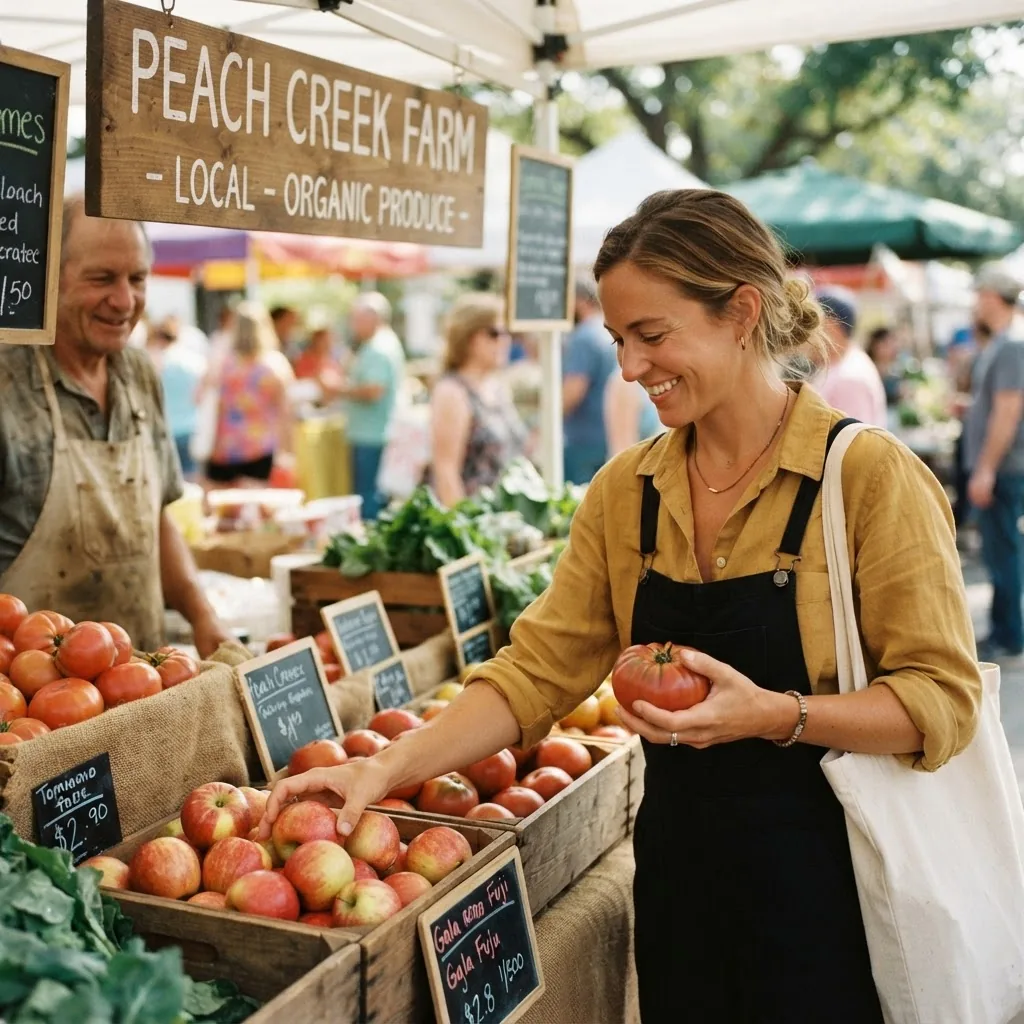
Action-first checks save returns later. At the store or market, do this for each produce type:
- Apples: firm with no soft spots; press near stem with thumbnail—no indentation; weight should feel proportional (8–12 oz for larger varieties). Smell should be fresh, not fermented.
- Bananas: choose according to use—green (30–50% green) for 4–7 day ripening, yellow with brown flecks for immediate use. Avoid heavy bruises.
- Berries (strawberries, blueberries, raspberries): inspect container—no more than 10% soft/juicy berries. Avoid open packages with visible mold. A 1-pint clamshell should be at least 85% firm.
- Tomatoes: check color and slight give at the shoulders; heavy tomatoes with deep color and a firm stem scar indicate flavor.
- Leafy greens: look for crisp ribs, no slimy stems; minimal yellowing and cool feel when touched. Avoid tubs with standing water.
- Root vegetables: carrots and beets should be firm and smooth; tiny root hairs are OK; avoid soft spots or wrinkling which indicates dehydration.
-
Select by weight and price per pound
When buying supermarkets or co-ops, always calculate the price per pound or per unit rather than price per package. Use your phone calculator: if a 3 lb bag of sweet potatoes costs $5.49, unit price = $5.49 / 3 = $1.83 per pound. Aim for these benchmarks (Texas, 2020s averages):
- Apples: $1.50–$2.20 per lb
- Seasonal tomatoes: $1.20–$2.50 per lb
- Berries: $3.00–$6.00 per pint (buy closer to $3–4 when in-season)
- Leafy greens (bagged): $2.50–$4.50 per 5–8 oz pack
Buy bulk only when you can preserve or use within the shelf-life described later. If a sale is 2 for $5 on berries but you can only use one pint in 48 hours, buy one and freeze the second for smoothies within 24 hours.
-
Prioritize the cold chain: get produce home within 60 minutes
Temperature control matters. From checkout to fridge, keep perishable items cool—especially berries, leafy greens, herbs and mushrooms. Action steps:
- Use insulated bag or cooler: place delicate produce into a small insulated bag immediately at checkout. Aim to drive home in under 60 minutes; if ambient is above 85°F, reduce to 30 minutes.
- In-car: avoid the trunk. Place bags on the passenger floor away from direct sun.
Failing the cold chain increases bacterial growth and shortens shelf-life by 1–3 days for fragile items.
-
Sort and discard damaged pieces immediately
As soon as you unload groceries, sort produce into use-now, ripen-at-room-temp, and store-in-fridge piles. Remove fruit or vegetable items with any soft spots, mold, or cuts — these spread decay. Concrete rules:
- If >10% of a berry container is soft or leaking, transfer remaining berries to a new container lined with paper towel and discard the rotten ones; use remaining within 48 hours or freeze.
- Any tomato with skin split >0.5 inch or soft patch >1 inch: cook immediately that day.
- Leafy greens with >20% yellowing or any slime should be composted — not stored.
-
Ripen ethylene-sensitive items together but separate from ethylene producers
Ethylene gas speeds ripening. Keep ethylene-producing items (bananas, avocados, pears, tomatoes, melons) together if you want simultaneous ripening; keep ethylene-sensitive items (leafy greens, broccoli, cucumbers) separate. Practical settings:
- Ripen box method: place 2–4 avocados and 2 bananas in a medium paper bag at room temperature (68–72°F). Check daily—avocados ripen in 2–5 days depending on initial firmness; bananas turn fully yellow in 2–4 days.
- For faster ripening, add 1 ripe banana to the bag to halve time (emit extra ethylene).
To slow ripening, refrigerate tomatoes and pears only after they reach desired ripeness; refrigeration stalls texture change but can soften flavor if kept cold too long.
-
Wash only before use—do not prewash berries and mushrooms
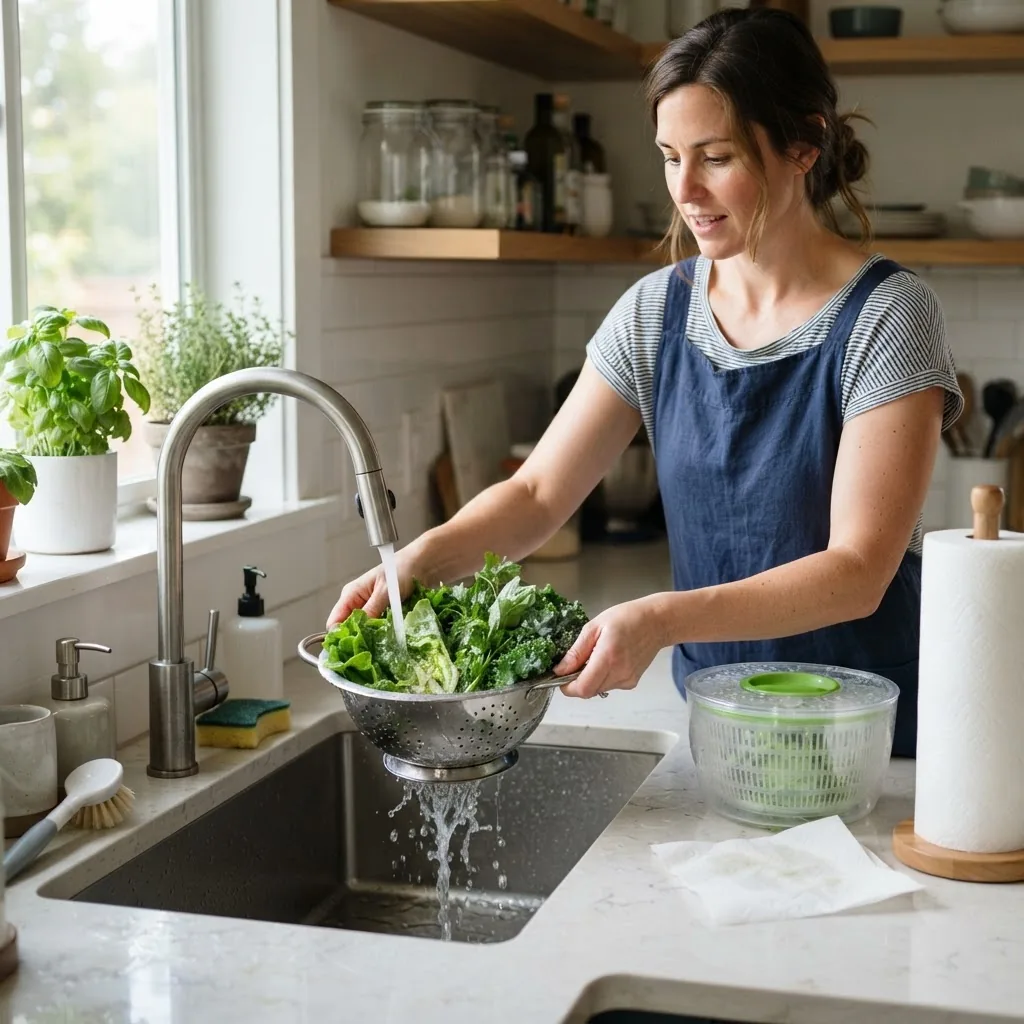
Moisture speeds spoilage. For most produce, wash just before eating or cooking. Exceptions: hard-skinned produce (apples, potatoes) can be washed before storing; leafy greens should be washed then spun dry before storage.
- Berries and mushrooms: keep dry; transfer to a paper-towel-lined container, cover loosely, and refrigerate. Wash in a colander with cold water only when using.
- Leafy greens: submerge in cold water, agitate 10–15 seconds, lift out and spin dry in a salad spinner for 30–60 seconds. Line storage container with 1–2 layers of paper towel.
- Vinegar wash option: mix 1 part white vinegar to 3 parts water in spray bottle; spray firm-skinned produce and rinse under cold water—use only for items you’ll store more than 4 days to reduce microbes. Do not use on porous produce like berries or mushrooms.
-
Set refrigerator zones and temperatures
Set fridge temperature to 34–38°F (1–3°C) measured with a digital fridge thermometer placed mid-shelf. Organize zones:
- Crisper drawers: set one to low humidity for fruits (apples, pears, grapes) and one to high humidity for vegetables (lettuce, cucumbers, broccoli). Calibrate with drawer controls if present.
- Top shelf (34–36°F): prepared salads, cut fruit (use within 48 hours), dairy.
- Bottom shelf ~34°F: raw meat only in sealed container; keep separate from produce to avoid cross-contamination.
Fridge guideline: leafy greens last 7–10 days at high humidity; broccoli 5–7 days; carrots 3–4 weeks when stored in perforated bag at 34–38°F.
-
Store produce in the correct containers and packaging
Container choices matter. Concrete storage recipes:
- Leafy greens: after washing and spinning, store in a 2–3 L airtight container lined with dry paper towels; change towels every 3–4 days. Expect 7–10 days crispness.
- Herbs (soft-stem like cilantro, parsley): trim stems, place upright in 2–3 inches of water inside a pint jar, cover loosely with a plastic bag, store in fridge—replace water every 3 days. Herbs last 10–14 days this way.
- Root veg (carrots, beets): remove greens, store roots in perforated plastic bag or damp sand in a cool pantry at 40–50°F for up to 4–12 weeks depending on type.
- Berries: transfer from original container to a single layer on paper-towel-lined shallow container, cover loosely. Use within 48–72 hours or freeze within 24 hours for best texture.
-
Freeze properly: blanch vegetables to retain color and nutrition
Freezing is the fastest way to preserve surplus produce. For vegetables, blanch times are critical to deactivate enzymes and preserve texture.
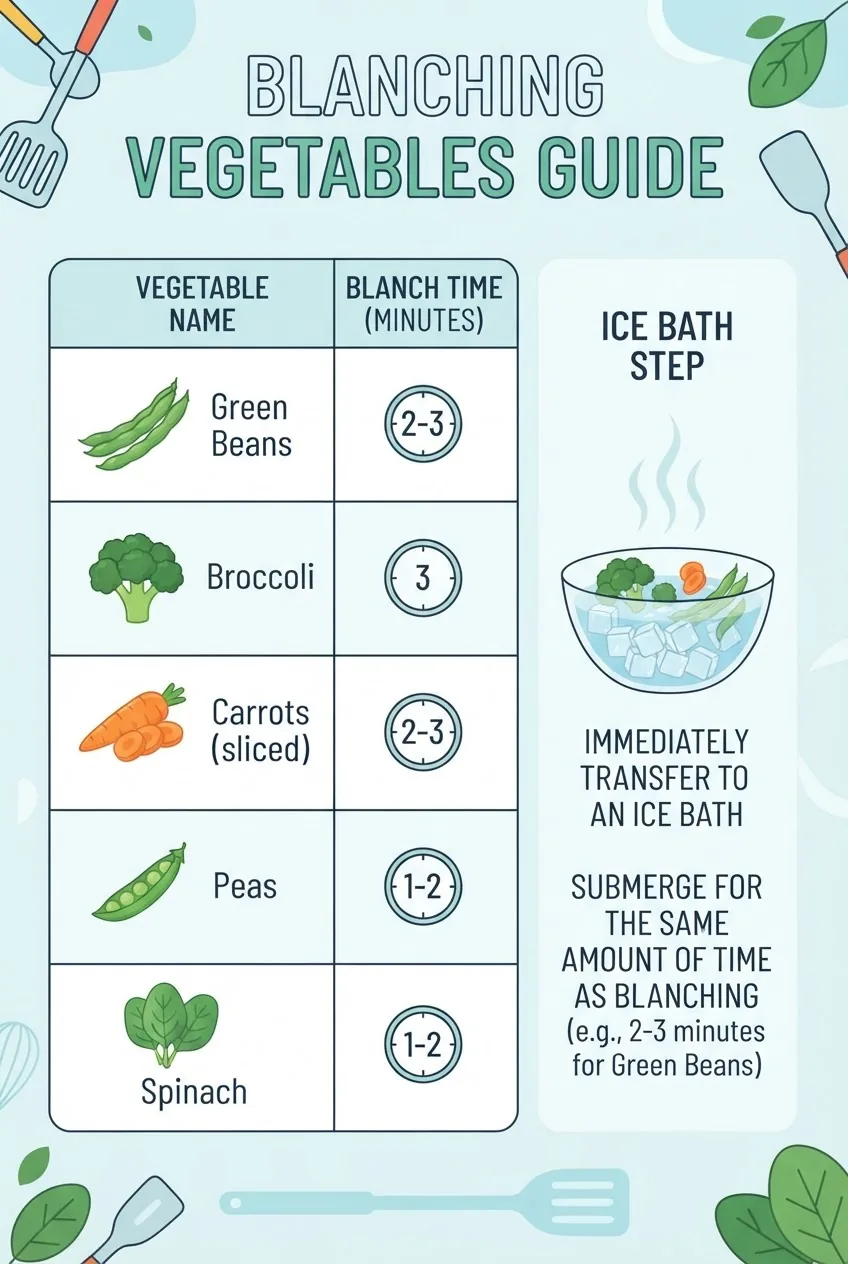
- Blanching method: bring 3–4 quarts of water to a rolling boil per pound of vegetables, prepare an equal-volume ice bath. Submerge vegetables in boiling water for the exact time, then plunge into ice bath for the same time to stop cooking.
- Common blanch times (minutes): green beans 2–3, broccoli florets 3, broccoli stems 2, carrots (sliced 1/4″) 2–3, peas 1–2, spinach 1–2.
- Pack: drain thoroughly, pat dry, portion into freezer bags removing as much air as possible, label with date. Most blanched vegetables keep 8–12 months at 0°F.
Fruits generally freeze well without blanching. For berries: wash then drain, spread in single layer on tray to flash-freeze 2–3 hours, then transfer to freezer bags. Prevents clumping and preserves cell structure.
-
Preserve with pickling and quick ferments for excess produce
When you have more vegetables than you can freeze, quick pickling and lacto-fermentation are low-equipment options. Examples with measurements:
- Quick pickle (1 pint): 1 cup white vinegar (5% acidity), 1 cup water, 1 tbsp salt, 1 tbsp sugar, 1 tsp mustard seeds, 1 clove garlic. Heat to simmer, pour over sliced cucumbers or carrots in a pint jar, cool and refrigerate 24 hours—lasts 4–6 weeks refrigerated.
- Basic lacto-ferment for cabbage (sauerkraut): shred 2 lb cabbage, mix with 1 tbsp kosher salt, massage to release juices for 5–8 minutes until briny, pack tightly into 1 quart jar leaving 1–2 inches headspace, weight down and ferment at 65–72°F for 7–14 days. Taste at day 7; refrigeration slows fermentation and extends shelf-life to 3–6 months.
Label jars with start date and monitor: if you detect unpleasant rotten or putrid smells, discard. Safe ferments are tangy, slightly sour and bubbly.
-
Prepare produce for immediate meals to reduce handling waste
Meal-prep saves time and reduces waste. Practical preps for weekly use:
- Wash and chop 1.5 lb carrots into 1/2″ coins—store in airtight 1 L container with fresh water changed every 3 days; use for snacks and soups within 14 days.
- Pre-cut bell peppers into strips, dry thoroughly, store in airtight container layered with paper towel—use within 5–7 days.
- Spinach and salad mixes: pre-wash, spin dry and store in 2–3 L container with paper towel—consume within 7 days.
Always date containers. Label with “use by” dates: leafy preps 5–7 days, chopped root veg 10–14 days, prepped berries are not recommended—only wash berries when using.
-
Handle delicate fruit and greens gently to avoid bruising
Bruising accelerates spoilage. Practical handling rules I use:
- Carry berries and cherries by the package base; never stack more than two thin containers on top of one another.
- For peaches and plums, hold by the stem end and avoid applying pressure to the shoulder; use a bowl lined with a soft towel for short-term storage (1–2 days).
- Remove bulky packaging at home to inspect and repackage in a single layer to prevent weight bruising.
-
Rotate: use FIFO labeling in your fridge
Implement First In, First Out (FIFO) to prevent waste. Label each container with purchase or prep date. Rules I follow:
- New purchases go to the back; move older items forward. When prepping, leave one slot on top for ‘use within 48 hours’ items (like cut fruit).
- Check the fridge every 48 hours; remove and plan to cook any items showing early softening.
-
Monitor humidity and airflow for long-term pantry storage
Not every vegetable needs the fridge. For pantry storage follow these numbers:
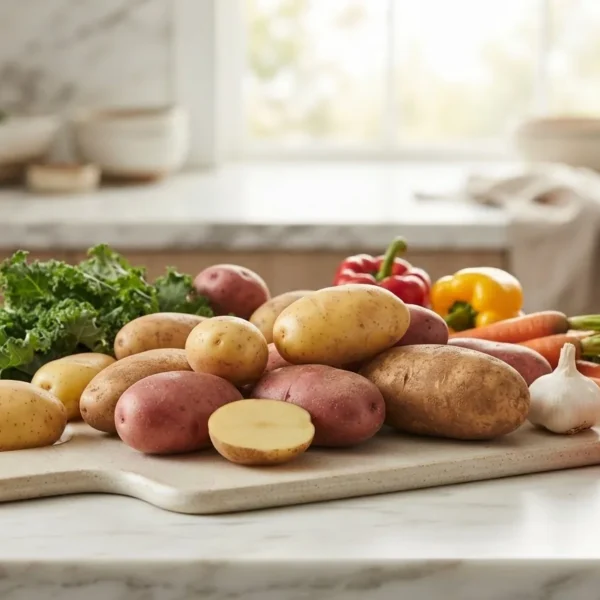
- Potatoes, sweet potatoes: store at 45–55°F in a dark, ventilated area; avoid storing with onions. Expect 3–8 weeks depending on variety.
- Onions and shallots: 40–50°F, dry and ventilated; last 2–3 months.
- Winter squash (butternut, acorn): keep at 50–55°F, lasts 1–3 months.
In Texas homes without cool cellars, use cool pantry or garage spaces at night if temps fall below 55°F. Avoid areas above the stove or in direct sun.
-
Use sensory checks before eating: smell, touch and taste
Before eating or cooking, I do a 15‑second check: smell for fermentation or sour notes; touch for sliminess or stickiness; taste a small piece if uncertain. If any sour or rotten smell exists, discard the entire container. For leafy greens, slimy texture = discard.
-
Plan weekly menus around perishables
Structure your weekly meals so most perishable items are used within their optimal window:
- Day 1–2: use berries, tender herbs, salad greens and ripe tomatoes.
- Day 3–4: use broccoli, peppers, mushrooms, and slightly ripe stone fruit.
- Day 5–7: use root vegetables, squash, and any preserved or frozen items.
This sequencing reduces spoiling and makes leftovers predictable.
-
Buy from reliable sources and inspect labeling
At farmer’s markets ask growers specific questions: harvest date, irrigation type, and when the produce was picked. For supermarkets read labels: “packed on” or “packed for” dates help—prefer items packed within 3–7 days for leafy greens and berries. When in doubt, choose produce with a visible harvest date from the farm or packer.
Internal links for deeper reading: check the fruit types guide for variety selection and how to prepare vegetables for recipes that use surplus produce.
-
Decide when to choose organic vs conventional
For budget-conscious shoppers I use a hybrid approach. Use the following thresholds:
- Buy organic for these “higher residue” items when possible: berries, leafy greens, bell peppers, tomatoes, and apples. If organic price premium is >40% and you can’t use within 48 hours, consider conventional and peel or cook when appropriate.
- Conventional is fine for avocados, corn (when in-season), onions, and lemons—these often test lower for pesticide residues.
When in doubt for Texas produce, ask vendors about integrated pest management and wash produce with the vinegar rinse when buying conventional for longer storage.
-
Handle specialty items: melons, avocados, and citrus
Specific tips:
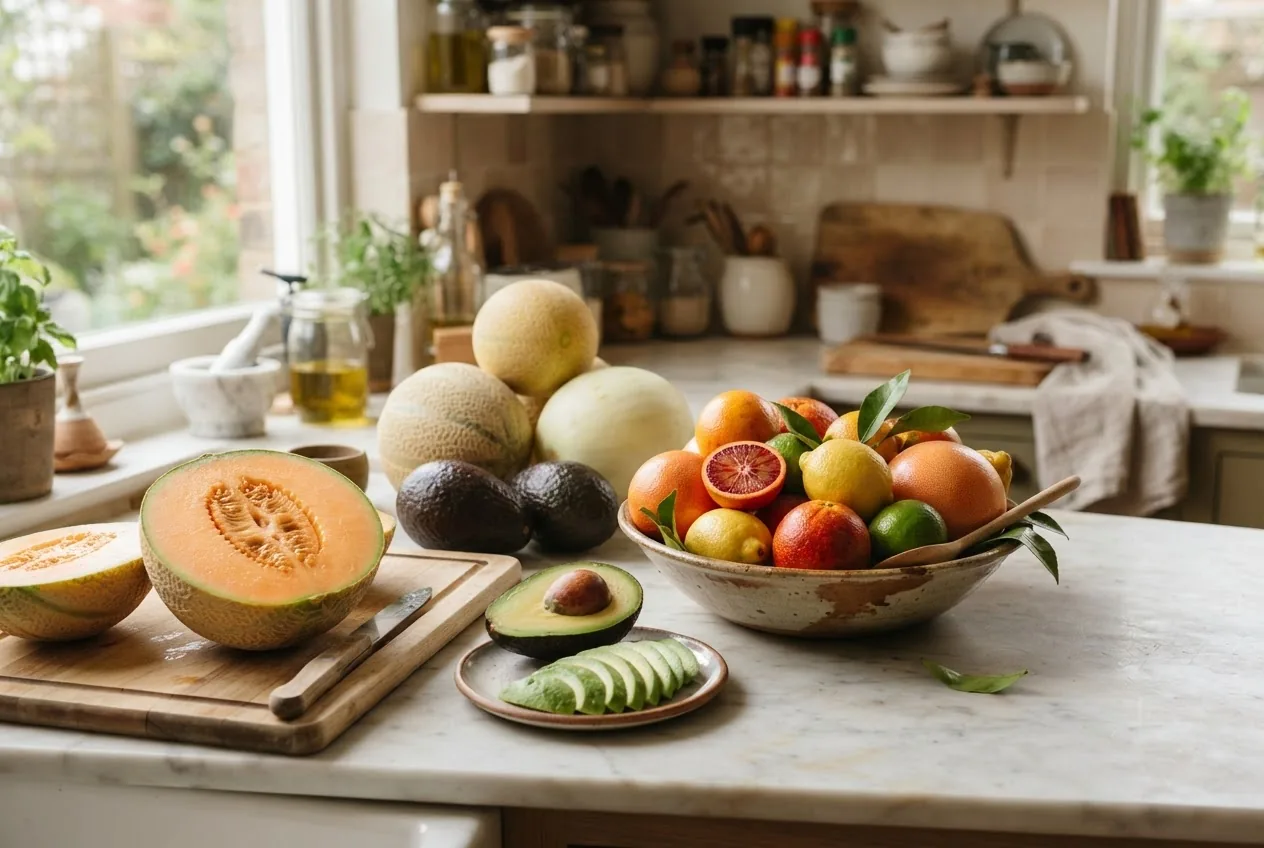
- Melons (cantaloupe, honeydew): check the blossom end; a ripe melon has a firm rind with a slight give at the blossom and a sweet smell at the stem end. If refrigerated whole, keep at 36–40°F and use within 7–10 days; cut melon lasts 3–4 days wrapped in airtight container.
- Avocados: feel for slight give; ripen at room temp in 2–5 days if green; accelerate ripening by placing in a paper bag with a banana—check daily. Refrigerate once ripe and use within 3–5 days.
- Citrus: store at 45–55°F to last 3–5 weeks; in fridge crisper at 38–40°F they last 4–6 weeks.
-
Use weight-based portioning for family planning
For meal prep and budgeting I recommend weighing produce when buying and dividing into meal-sized portions. Examples:
- One adult serving of cooked vegetables = 85 g (about 3 oz). For 4 adults and 5 dinners a week, you need ~85 g × 4 × 5 = 1,700 g (1.7 kg) of cooked veg per week.
- One cup raw salad greens ≈ 30 g. For 4 people × 5 dinners, buy ~2,400 g (2.4 kg) of raw greens per week if salad is served daily.
Weighing reduces overbuying by 20–30% compared to volume estimates.
-
Sanitation: keep tools and surfaces clean
Cross-contamination spoils food and risks foodborne illness. My cleaning routine:
- Sanitize cutting boards with hot, soapy water after cutting raw meat; dedicate one board for produce where possible. Replace plastic boards every 18–24 months if knife grooves appear.
- Wash the salad spinner, colander and containers with hot soapy water after each use; air dry completely before storing produce.
-
Track spoilage metrics and adjust buying
Measure waste to improve buying decisions. Keep a simple log for 4 weeks: note item, purchase date, discard date, and reason. If you discard more than 20% of any category over a month, reduce purchases of that item by 25% next week or preserve immediately (freeze or pickle).
Common mistakes and how to avoid them
I’ve seen these mistakes repeatedly in practice; here’s what I do to avoid them:
- Buying too many perishables on sale: I once bought four pints of strawberries at 50% off because they looked perfect, then lost two containers to mold within 48 hours. Now I only buy on-sale berries if I plan to freeze at least half within 24 hours.
- Prewashing berries and then storing them wet: I used to rinse berries and put them back into the fridge — they went moldy in two days. Now I keep them dry and wash just before eating; if I must wash earlier I dry fully on paper towels and use within 24 hours.
- Using only fridge temperature settings without a thermometer: I once set my fridge to “cold” and still lost herbs because it was at 40–42°F. I now always place an inexpensive digital thermometer on the middle shelf and keep it at 34–38°F.
- Not removing greens from roots: I stored carrots with leafy tops attached and they wilted in 3–4 days. Removing tops extends storage life: remove greens within 12 hours of purchase and store separately.
- Overpacking the fridge: Crowding prevents air circulation and hides early spoilage. I learned to leave a 1–2 inch gap around stacked containers and limit new purchases if the crisper drawers are >80% full.
Compact checklist — verify your work
- Fridge temperature set to 34–38°F and verified with a thermometer.
- Produce sorted into use-now, ripen, and store piles within 60 minutes of purchase.
- Leafy greens washed, spun dry, stored in airtight container with paper towel and labeled with date.
- Berries inspected; any soft berries removed; remaining stored dry and used within 48–72 hours or frozen within 24 hours.
- Root vegetables stored in cool, ventilated spot at 45–55°F; greens removed from roots.
- Blanched vegetables frozen using exact blanch times and labeled with date (8–12 months storage target).
- At least one jar of quick-pickles or ferments started when bulk purchases exceed weekly plan.
- FIFO system in place and labelled containers rotated weekly.
When to call in a professional
Call a professional if you face any of these situations:
- Recurring spoilage exceeding 30% of produce each week despite following storage guidelines — consider a registered dietitian or food systems consultant to audit your shopping and storage routine.
- Suspected foodborne illness after consuming home-stored produce (vomiting, diarrhea, fever) — contact your local health provider or Poison Control immediately and keep the suspected food for testing.
- Commercial bulk storage or small business selling fresh produce — consult a certified food safety manager to set up HACCP-like controls, cooling systems and sanitation plans.
Resources and next reads
To deepen specific topics, see our related guides: store healthy food guide, 100 vegetables name guide, and the Fruit Types Guide with Benefits and Nutritional Information for variety-specific nutrition.
Frequently Asked Questions
How long do common fresh fruits and veggies last in the fridge?
Most leafy greens last 7–10 days at 34–38°F; berries 48–72 hours; broccoli 5–7 days; carrots 3–4 weeks in a perforated bag at 34–38°F. Store temperatures and packaging determine these ranges; always check for soft spots and smell before using.
Can I wash produce before storing to reduce bacteria?
Wash only hard-skinned produce before storage; wash leafy greens then spin dry and store; never prewash berries or mushrooms as added moisture promotes spoilage. Use a 1:3 vinegar rinse only for firm produce you’ll refrigerate longer than four days.
What are exact blanch times for freezing vegetables?
Use the following blanch times: green beans 2–3 minutes, broccoli florets 3 minutes, carrots (sliced 1/4″) 2–3 minutes, peas 1–2 minutes, spinach 1–2 minutes. Always use an equal-time ice bath immediately after blanching.
How can I ripen avocados and peaches faster or slower?
To speed ripening, place avocados or peaches in a paper bag with a ripe banana at 68–72°F; check daily—2–5 days to ripen. To slow ripening, refrigerate only after they reach desired softness; refrigeration slows enzymatic activity and can extend use by 3–5 days.
Is it worth buying organic for all produce?
Not always. Prioritize organic for berries, leafy greens, bell peppers, apples and tomatoes due to higher residue risk; conventional is fine for avocados, onions and corn. If price premium exceeds 40% and usage is immediate, prioritize freshness or washing methods.
How should I store herbs to last longest?
For soft-stem herbs (cilantro, parsley), trim stems and place upright in 2–3 inches of water in a pint jar, cover loosely with a plastic bag, refrigerate and change water every 3 days—herbs stay fresh 10–14 days. For basil, keep at room temperature like fresh flowers to avoid chilling damage.