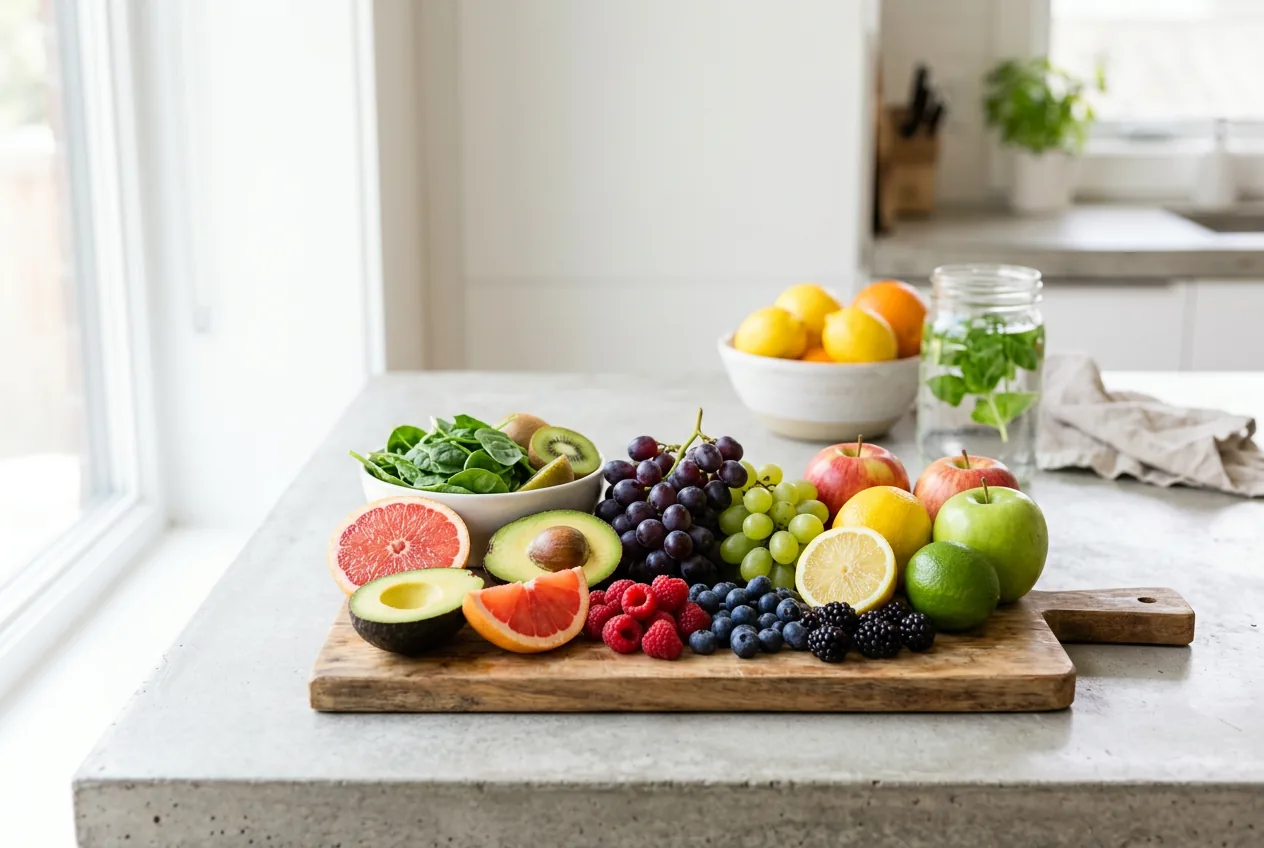
The best fruits for weight loss are low-calorie, high-fiber, water-rich options—berries, apples, pears, grapefruit, kiwi, and stone fruits—because they increase fullness, lower calorie intake, and stabilize blood sugar while providing nutrients that support fat loss when combined with a caloric deficit and balanced diet.
What qualifies a fruit as one of the best fruits for weight loss?
Answer: A fruit qualifies if it is low in calories per serving, high in fiber or water for satiety, has a moderate-to-low glycemic impact, and provides vitamins or polyphenols that support metabolic health without prompting excess calorie intake.
Calorie: a unit of energy that measures how much energy food provides when eaten.
Fiber: plant-based carbohydrate that resists digestion and promotes fullness, bowel regularity, and slower glucose absorption.
Glycemic index (GI): a scale that ranks carbohydrate-containing foods by how much they raise blood glucose relative to pure glucose.
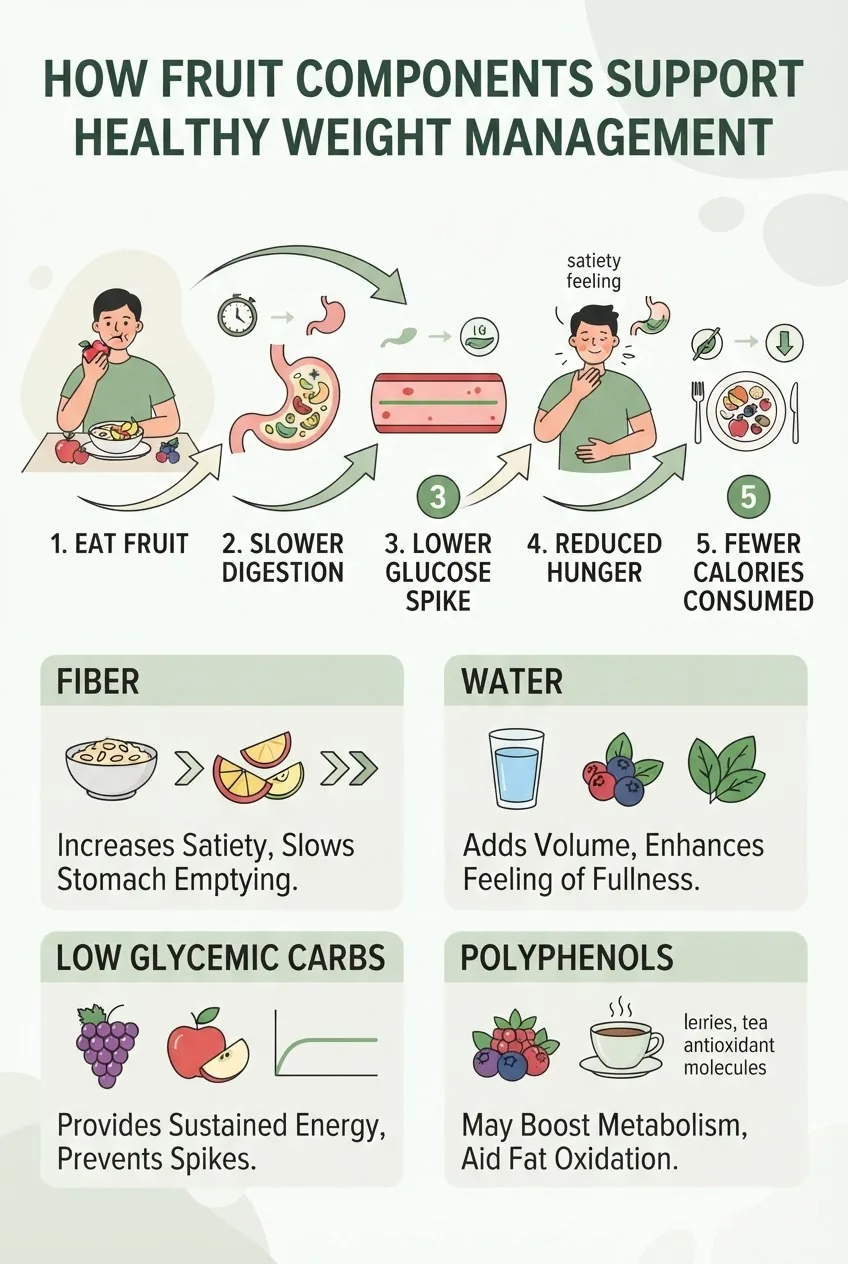
Low-calorie fruits reduce total energy intake; fiber and water increase satiety so you naturally eat fewer calories later; low-GI fruits blunt blood sugar spikes that can drive hunger and fat storage; vitamins and polyphenols (plant compounds) support recovery and may modestly influence metabolism.
How do fruits help burn fat and support weight loss?
Answer: Fruits support fat loss primarily by increasing satiety, reducing overall calorie intake, moderating blood sugar and insulin responses, and supplying nutrients that support metabolism and exercise performance.
Satiety: the feeling of fullness after eating that reduces subsequent food intake.
Thermogenesis: the process by which the body produces heat, which can modestly increase energy expenditure after eating.
Mechanisms:
- High fiber slows gastric emptying and reduces later calorie intake.
- High water content lowers energy density so a large portion can contain few calories.
- Low-to-moderate GI reduces rapid glucose swings and insulin peaks that can trigger hunger.
- Polyphenols and micronutrients support mitochondrial function and exercise recovery, indirectly helping maintain a higher activity level.
Which fruits have the lowest calories and highest fiber per serving?
Answer: Berries (strawberries, raspberries, blueberries), apples, pears, grapefruit, kiwi, and watermelon are among the lowest-calorie, highest-fiber fruits per 100 g, making them efficient choices for weight loss.
Use the table below to compare common fruits on calories, fiber and approximate GI to choose portions and pairings that fit your daily calorie target.
| Fruit | Calories (per 100 g) | Fiber (g per 100 g) | Approx. GI |
|---|---|---|---|
| Strawberries | 33 kcal | 2.0 g | 40 |
| Raspberries | 52 kcal | 6.5 g | 32 |
| Blueberries | 57 kcal | 2.4 g | 53 |
| Apple (with skin) | 52 kcal | 2.4 g | 38 |
| Pear (with skin) | 57 kcal | 3.1 g | 38 |
| Grapefruit | 42 kcal | 1.1 g | 25 |
| Kiwi | 61 kcal | 3.0 g | 52 |
| Watermelon | 30 kcal | 0.4 g | 72 |
| Cantaloupe | 34 kcal | 0.9 g | 65 |
| Orange | 47 kcal | 2.4 g | 43 |
| Banana (ripe) | 89 kcal | 2.6 g | 51 |
| Avocado | 160 kcal | 6.7 g | 15 |
Use berries and citrus to bulk snacks or breakfast for low-calorie volume. Avocado is higher calorie but exceptionally satiating due to monounsaturated fats and fiber; include in small portions to manage appetite without excess calories.
Energy density: calories per gram of food; lower energy density means more volume for fewer calories.
What is the best fruit for fat loss specifically?
Answer: No single fruit guarantees fat loss, but berries (especially raspberries and strawberries) and apples are consistently top choices because they combine low energy density, high fiber, and polyphenols that support appetite control and metabolic health.
Raspberries provide soluble and insoluble fiber that slows digestion and feeds gut bacteria promoting satiety. Apples with skin are high in pectin, a soluble fiber that reduces hunger. Berries also contain anthocyanins, polyphenols linked in studies to improved insulin sensitivity and reduced fat accumulation in animal and some human studies.
Nutrient density: amount of vitamins, minerals and beneficial compounds per calorie; higher nutrient density supports health while managing calories.
How many fruits and what portions should I eat daily to lose weight?
Answer: Aim for 1.5–3 cups of whole fruit daily depending on your calorie target, choosing mostly low-calorie, high-fiber options and adjusting portion sizes so total fruit calories fit within your planned caloric deficit.
Guidelines and worked examples:
- Estimate daily calorie target for weight loss (commonly 500–750 kcal below maintenance for ~0.5–1 kg/week). Then allot 10–20% of that target to fruit calories if you enjoy fruit as snacks or dessert.
- Example for a 1,500 kcal target: 150–300 kcal for fruit → roughly 2–3 cups of berries or 1–2 medium apples plus 1 cup berries spread across the day.
- Include fruit as snacks or dessert, not as the main source of calories at every meal; pair fruit with a protein or healthy fat to increase satiety (e.g., apple + 1 tbsp peanut butter, Greek yogurt + berries).
Caloric deficit: consuming fewer calories than your body uses, which causes weight loss over time.
Can fruit smoothies and juices hinder weight loss?
Answer: Yes—fruit juices and some smoothies can hinder weight loss because they remove fiber and concentrate calories, raising the chance of consuming excess calories; whole fruits are generally preferable.
Caloric bypass foods: foods that are calorie-dense or easy to overconsume because they bypass normal chewing or satiety signals (e.g., sweetened juices, smoothies with lots of added sugars).
Details:
- Fresh fruit juice removes fiber and is calorie-dense: an 8 oz glass can equal multiple servings of fruit and deliver 100–200+ kcal with fast absorption.
- Smoothies vary—blended whole fruit retains fiber but can still be high-calorie when made with sweetened yogurt, fruit juice, dried fruit, nut butters or large portions of banana/avocado.
- If you drink smoothies, prioritize vegetable bases, water or unsweetened plant milk, controlled portions (8–12 oz), and add a protein source (plain Greek yogurt or protein powder) to slow absorption and increase satiety.
Which fruits should I eat before and after workouts for fat loss and performance?
Answer: Eat easily digestible fruits with moderate carbs pre-workout (banana, apple, grapes) and combine carbs plus protein post-workout (berries with Greek yogurt, orange with cottage cheese) to support energy, recover glycogen and maintain muscle during a caloric deficit.
Pre-workout suggestions (30–60 minutes before):
- Small banana or half an apple for quick glucose and potassium to support exercise.
- A small handful of grapes or dates before high-intensity sessions but keep portions small to avoid excess calories.
Post-workout suggestions (within 1 hour):
- Berries or banana + 15–25 g of protein to assist muscle repair and satiety.
- Fruit with a lean protein and veggies for balanced recovery without large calorie load.
Practical tip: when cutting calories, prioritize preserving protein intake while using fruit for carbohydrate timing around workouts rather than as large standalone meals.
How do fruits compare with low calorie vegetables for weight loss?
Answer: Vegetables generally have lower calories and higher bulk per calorie than most fruits, making them superior for filling volume; however, fruits add palatability, nutrients and convenient sweetness which can help adherence when combined with low calorie vegetables.
Lowest calorie vegetables: leafy greens, cucumbers, celery, radishes, and most salad vegetables deliver minimal calories and high volume.
Comparison points:
- Vegetables (e.g., lettuce, spinach, cucumbers) are typically lower in sugar and calories per cup, so use them to enlarge meals without adding many calories.
- Fruits add fiber, vitamins, and natural sweetness that reduce cravings for sweets and can replace higher-calorie desserts.
- Combine fruits and vegetables—e.g., spinach salad with strawberries and a small portion of nuts—to maximize nutrient density and satiety.
Internal resources for further reading: see the broader Fruit Types Guide with Benefits and Nutritional Information and practical meal plans in the Fruit Diet Guide for Weight Loss.
Are there truly ‘fat burning’ fruits or just marketing claims?
Answer: No fruit is a magic ‘fat burner’; some fruits contain compounds that may modestly support metabolism or insulin sensitivity, but meaningful fat loss requires a sustained caloric deficit and activity—fruits help as part of overall diet quality, not as standalone fat-burning cures.
Evidence and clarifications:
- Research shows polyphenol-rich fruits (berries, apples, pomegranates) can influence glucose handling and inflammation, potentially aiding metabolic health over time—effects are modest in humans.
- Green tea and caffeine-containing foods/beverages have short-term thermogenic effects; most fruits do not contain stimulants that increase metabolic rate significantly.
- Marketing terms like “fat burning” or “metabolism booster” applied to single fruits are exaggerated; view fruit as supportive rather than curative for fat loss.
Which fruits help control appetite and reduce cravings most effectively?
Answer: High-fiber, high-water fruits like pears, apples, oranges, and berries reduce appetite best when eaten whole; fruits with healthy fats like avocado also prolong fullness when consumed in small amounts with a protein source.
How they reduce cravings:
- Pears and apples contain soluble fiber (pectin) which increases gastric viscosity, slowing digestion and reducing hunger for several hours.
- Berries offer high volume for low calories, satisfying sweet cravings without large caloric cost.
- Avocado contains monounsaturated fats that slow gastric emptying—use 1/4–1/2 avocado with a salad or eggs to stabilize appetite.
Practical pairings to reduce cravings: apple slices with 1 tbsp nut butter, Greek yogurt with mixed berries and a sprinkle of chia seeds, or a small avocado on whole-grain toast with lemon.
How should I combine fruits with protein and fats when cutting calories?
Answer: Always pair fruit with a portion of protein or healthy fat to blunt blood sugar spikes and extend satiety—for example, berries with Greek yogurt, apple with nut butter, or sliced pear with cottage cheese.
Portion and macro guidance:
- Protein source: aim for 12–25 g per snack to maximize satiety (e.g., 3/4 cup Greek yogurt, 1 serving protein shake, 2 oz turkey).
- Healthy fat: 1 tbsp nut butter, 8–12 almonds, or 1/8–1/4 avocado complements fruit without excessive calories.
- Example snacks: 1 cup strawberries + 3/4 cup plain Greek yogurt (~150 kcal), 1 medium apple + 1 tbsp peanut butter (~190 kcal).
Combining macros preserves lean mass during weight loss and reduces compensatory hunger that can derail progress.
How to plan a full day of meals featuring weight-reducing fruits and vegetables?
Answer: Build meals around lean protein and vegetables, add 1–2 fruit servings timed around breakfast, snacks or workouts, and keep total calories within your target—here’s a practical 1,500 kcal example day using fruits strategically.
1,500 kcal example day (worked):
- Breakfast (~350 kcal): Greek yogurt (3/4 cup) + 1/2 cup blueberries + 2 tbsp oats + cinnamon.
- Mid-morning snack (~150 kcal): 1 medium apple + 10 almonds.
- Lunch (~420 kcal): Grilled chicken salad (3 oz) + large mixed greens, 1/2 cup sliced strawberries, cucumber, 1 tbsp olive oil + vinegar, 1/4 avocado.
- Afternoon snack (~120 kcal): 1 small orange + 1 string cheese or 2 tbsp hummus with celery.
- Dinner (~390 kcal): Baked salmon (4 oz) + steamed broccoli and cauliflower + 1/2 cup roasted sweet potato + small side salad.
Adjust portions upward or downward to match your calorie target and swap fruit types by season. Use vegetables like leafy greens and cruciferous varieties to provide volume at low calories.
Internal tools: calculate fruit calories and serving sizes using the Calories in Fruit Guide to precisely fit fruit into meal plans.
What are common mistakes people make when using fruit for weight loss?
Answer: Common mistakes include relying on fruit juices, over-consuming dried fruit, not accounting fruit calories in daily totals, and using fruit as the main meal replacement without adequate protein and fats.
Specific pitfalls to avoid:
- Drinking fruit juice as a substitute for whole fruit—loses fiber and promotes rapid calorie intake.
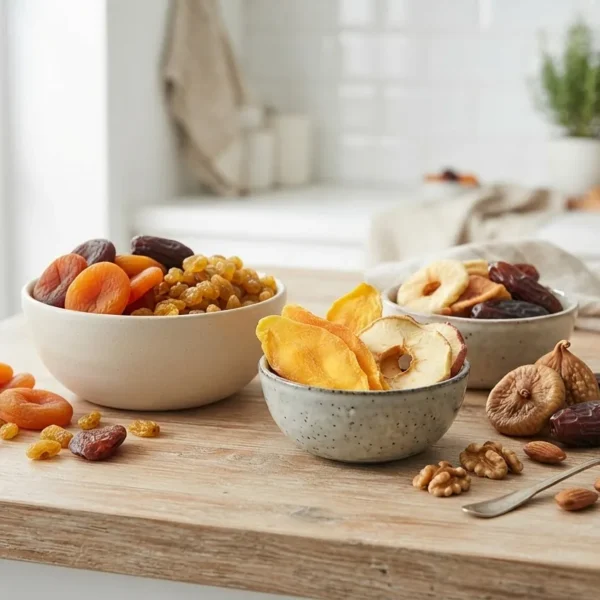
- Eating large portions of dried fruit (raisins, dates) which are calorie-dense: a small handful can equal a cup of fresh fruit in calories.
- Assuming “natural sugar” means unlimited consumption—fruit still contains calories that add up.
- Using fruit-only meals that lack protein and fat, leading to early hunger and muscle loss when cutting calories.
How to shop and store fruits to make weight-loss friendly choices in Texas?
Answer: Shop seasonally, choose whole fruits over pre-cut or sweetened options, prioritize fresh berries and citrus for low-calorie snacks, and store perishables properly to reduce waste and maintain convenience.
Shopping checklist:
- Buy seasonal and local when possible for better flavor and price—Texas spring/summer markets often have berries, stone fruit and melons.
- Avoid pre-sweetened fruit cups and canned fruit in syrup—choose whole fruit or canned in water/juice with drained syrup removed.
- Purchase frozen berries or sliced mango for convenience and lower cost—frozen retain nutrients and are ideal for smoothies with controlled portions.
Storage tips:
- Refrigerate berries and cherries immediately; eat within 3–5 days for freshness.
- Store apples and pears in the fridge to slow ripening; keep bananas at room temperature and refrigerate when ripe to extend life.
- Freeze surplus ripe fruit in measured portions (1 cup) for smoothies or compotes to avoid overeating fresh stock and reduce waste.
How should fruits be prepared to maximize weight-loss benefits?
Answer: Prepare fruits to preserve fiber and avoid added sugars—eat whole, chop into salads, blend into protein-containing smoothies in controlled portions, or roast/poach without added syrups for desserts.
Preparation do’s and don’ts:
- Do: eat whole fruit with skin where edible to retain fiber (apple, pear, kiwi).
- Do: pair fruit with protein or fat to slow absorption (yogurt, cottage cheese, nut butter).
- Don’t: add sugar, honey, sweetened yogurt, or sweetened granola in excess to fruit portions—these add calories quickly.
- Roasting or grilling fruit is fine if you skip syrups; spices like cinnamon enhance sweetness perception without calories.
How soon will I notice weight loss from eating more fruits and vegetables?
Answer: If increasing fruits and vegetables helps you maintain a sustained caloric deficit, measurable weight loss typically appears in 2–4 weeks; body composition changes and improved energy may take longer depending on your starting point, activity and adherence.
Tracking timeline and metrics:
- Short term (1–4 weeks): small weight reductions of 1–4 pounds possible largely from water and initial fat loss if calorie deficit is present.
- Medium term (4–12 weeks): steady fat loss and improvements in waist circumference are common when diet and activity are consistent.
- Long term (3+ months): sustainable habits that include fruits and vegetables support ongoing weight maintenance and metabolic health.
Use metrics beyond the scale: waist measurement, fit of clothing, energy levels, and progress photos give a fuller picture of change.
Which fruits work best when you are ‘cutting’ (bodybuilding or competitive dieting)?
Answer: When cutting, choose low-calorie, fiber-rich fruits like berries, apples and grapefruit to satisfy sweet cravings with minimal calories, and time starchy fruits (banana) around training for performance when needed.
Cutting-specific guidance:
- Berries and citrus: minimal calories, high volume to decrease appetite without adding bulk calories.
- Bananas and dates: reserve for pre-/post-workout carbohydrate to maintain training intensity when in a caloric deficit.
- Avocado: include small amounts to preserve dietary fat intake and hormonal health; avoid large servings late at night if tracking strict calories.
What are nutrient-dense fruit and vegetable combinations for weight loss?
Answer: Combine high-fiber fruits with leafy greens and a lean protein to create nutrient-dense, low-calorie meals—for example, spinach + strawberries + grilled chicken + a splash of balsamic provides vitamins, fiber and protein while being calorie-efficient.
Example combinations:
- Spinach salad, 1 cup strawberries, 3 oz grilled turkey, 1 tbsp chopped walnuts.
- Kale, 1/2 cup blueberries, 3 oz salmon, lemon vinaigrette.
- Mixed greens, 1/2 grapefruit segments, 1/4 avocado, 1 boiled egg.
Foods to consume to lose weight: prioritize lean proteins, low-calorie vegetables, whole fruits, and controlled portions of healthy fats and complex carbs to create sustainable meal patterns that support fat loss.
How can I avoid overconsuming dried fruit, tropical fruit or fruit-based snacks?
Answer: Measure portions, treat dried fruit as a condiment not a snack staple, limit tropical fruits like mango and pineapple to planned servings, and avoid fruit snacks that add sugar or syrups.
Practical rules:
- Limit dried fruit to 1–2 tablespoons per serving and combine with nuts to slow absorption.
- Use a scale or measuring cups until you become familiar with typical portion sizes.
- Choose frozen or fresh fruit and check labels—avoid added sugar and syrup-packed canned fruit.
Which fruits are best for blood sugar control for those managing insulin resistance or diabetes?
Answer: Low-GI, high-fiber fruits—berries, apples, pears, cherries and citrus—are preferable because they produce smaller post-meal glucose rises when eaten in typical portions and paired with protein or fat.
Management tips:
- Always consume fruit with a protein or fat source to blunt glucose response.
- Monitor blood glucose response personally—individual reactions vary, especially with ripe tropical fruits and bananas.
- Work with a clinician for individualized carbohydrate allowances; fruit counts toward daily carbohydrate targets for diabetes management.
What measurements and tracking strategies help ensure fruits support weight loss rather than stall it?
Answer: Track calories or portions for at least two weeks, prioritize whole fruit servings, record hunger and fullness, and monitor weekly weight and waist circumference to ensure fruit intake fits your caloric deficit.
Tracking checklist:
- Log portions in a tracking app or food diary; compare fruit calories to your daily allowance.
- Measure hunger at intervals using a simple 1–10 scale to assess satiety from fruit pairings.
- Adjust fruit volume, timing, or pairings (add protein/fat) if you experience frequent hunger or stalled weight loss.
What are affordable fruit choices that still support weight loss?
Answer: Frozen berries, seasonal apples, canned fruit in water, oranges, bananas and in-season melons offer cost-effective, nutrient-dense options; prioritize frozen or on-sale seasonal produce for best price-to-nutrition.
Budget tips:
- Buy frozen berries in bulk—they are nutrient-retaining, cheaper per serving, and useful for measured smoothies or toppings.
- Shop farmers markets close to closing time for discounts on imperfect but usable fruits.
- Use canned fruit packed in water and drain it to avoid syrups and excess sugar.
How should I adjust fruit intake if I hit a weight loss plateau?
Answer: Reassess total calories, increase non-exercise activity, tighten portion control on higher-calorie fruits (avocado, dried fruit), and prioritize lower-calorie fruits like berries and citrus until progress resumes.
Stepwise adjustments:
- Track intake for 7 days to identify untracked fruit calories or sweetened fruit products.
- Swap higher-calorie fruit servings for lower-calorie options (e.g., 1/2 avocado → 1 cup strawberries) to reduce 80–120 kcal per swap.
- Increase protein at meals to improve satiety and minimize compensation later in the day.
How do cultural and seasonal choices in Texas affect fruit selection for weight loss?
Answer: Texas seasonal availability—berries in spring, stone fruits in summer, citrus in winter—means you can access fresh, lower-cost produce seasonally; frozen options fill gaps year-round and preserve nutrients for weight-friendly meal planning.
Local considerations:
- Summer: peaches, plums and melons are abundant—choose moderate portions to avoid high sugar load from very ripe fruits.
- Winter: citrus provides vitamin C and low-calorie options for snacks and salads.
- Always adapt portions by ripeness—riper fruits have higher sugar; moderate portion size accordingly.
Frequently Asked Questions
Which single fruit should I eat daily for weight loss?
One daily apple or a cup of mixed berries is a practical choice because both offer fiber, low energy density, and strong satiety—pair with protein or healthy fat to extend fullness and reduce overall daily calories.
Can eating only fruits help me lose weight quickly?
No—solely eating fruit (a mono-fruit diet) may produce short-term weight loss from calorie reduction but risks nutrient imbalances and muscle loss; sustainable weight loss requires balanced protein, vegetables, and controlled calories.
Are dried fruits useful for weight loss?
Dried fruits can fit a weight-loss plan but must be portion-controlled because they are calorie-dense; treat them as condiments (1–2 tbsp) rather than free snacks and pair with protein or fat to slow absorption.
Do green fruits like apples and kiwi burn more fat than others?
No—green color does not make a fruit fat-burning; apples and kiwi are helpful because of fiber and low to moderate calories, but fat loss depends on overall calorie balance, not a fruit’s color.
How should I count fruit in my daily calories when cutting?
Log measured fruit servings like any other food: note grams or typical serving sizes (e.g., 1 medium apple ≈ 95 kcal, 1 cup berries ≈ 50–85 kcal) and include them in your daily calorie tally to maintain a deficit.
Is a fruit-only breakfast good for weight loss?
A fruit-only breakfast is not ideal because it lacks protein and may lead to early hunger; add a protein source (eggs, yogurt, cottage cheese or a protein shake) to improve satiety and preserve muscle during weight loss.
Can I eat fruit at night and still lose weight?
Yes—eating fruit at night does not inherently block fat loss if it fits your calorie target; choose lower-calorie options like berries or a small apple and pair with protein if needed for fullness.
What fruit choices are best for people with insulin resistance?
Choose low-GI, high-fiber fruits such as berries, apples, pears and cherries, and always consume fruit with a protein or fat source to reduce post-meal glucose spikes and improve blood sugar control.