Drinking a gallon of water a day—about 3.8 liters—can improve hydration, energy, digestion, skin health, and aid weight management for many active adults, but it’s not essential for everyone; individual needs vary by body size, activity, medications, and medical conditions, so adjust intake and consult a clinician if you have kidney or heart issues.
What does “drinking a gallon of water a day” mean?
It means consuming roughly 1 U.S. gallon (3.785 liters) of fluid in 24 hours from water and hydrating beverages and foods, measured cumulatively rather than as eight fixed glasses.
Term: U.S. gallon: a unit of volume equal to 3.785 liters or 128 U.S. fluid ounces.
Term: Liter: a metric unit of volume equal to 1,000 milliliters (mL) or about 33.8 U.S. fluid ounces.
Practical measurement converts the gallon into common bottles and cups so you can plan intake:
| Container | Volume | How many to reach 1 gallon |
|---|---|---|
| Typical reusable bottle | 20 oz (≈0.59 L) | 6.4 bottles |
| Standard water bottle | 16.9 oz (0.5 L) | 7.6 bottles |
| Large jug | 64 oz (1.89 L) | 2 jugs |
| Glasses (8 oz) | 8 oz (237 mL) | 16 glasses |
When people say “drink a gallon,” they usually mean plain water but the target can include other beverages and high-water foods; counting should be cumulative across the day.
Is drinking a gallon of water a day healthy?
It can be healthy for many adults but is not universally appropriate; benefits depend on activity, climate, body size and health conditions, and excessive intake can cause electrolyte imbalance if not managed.
Term: Hyponatremia: a dangerous drop in blood sodium concentration usually from excessive water diluting serum sodium.
Healthiness breaks into benefit vs risk assessments:
- Benefits: supports cellular function, cognitive clarity, blood volume, temperature regulation and kidney filtration.
- Risks: overhydration leading to hyponatremia, increased urinary frequency that disrupts sleep, and burdening kidneys in rare disease states.
Clinical recommendations vary: public health agencies provide general intake ranges rather than a single daily gallon prescription. A gallon can be above or within individual needs depending on body mass and activity; for example, an active 80 kg person in Texas summer will require more than a sedentary 55 kg person in cool weather.
Always evaluate personal medication profiles (diuretics, SSRIs, antipsychotics), chronic diseases (heart failure, chronic kidney disease), and recent hospital or lab results before making a large, sustained increase in water intake.
What are the main benefits of drinking a gallon of water a day?
Primary benefits include improved hydration status, clearer cognition, better exercise performance, more regular digestion, and potential support for weight control when water replaces caloric beverages.
Mechanisms behind benefits:
- Blood volume and circulation: adequate water preserves plasma volume and aids oxygen/nutrient delivery.
- Thermoregulation: more fluid supports sweat production and cooling in hot climates or exercise.
- Kidney clearance: sufficient intake helps the kidneys excrete waste and reduces kidney stone risk when balanced with electrolytes.
- Satiety and calorie displacement: drinking water before meals can reduce meal energy intake by creating temporary gastric distension.
Evidence-based notes:
- Performance: drinking to maintain body mass loss under 2% during exercise is associated with preserved strength and endurance.
- Cognition: even mild dehydration (~1–2% body weight) impairs attention and short-term memory; restoring fluids improves function.
- Skin and digestion: adequate hydration supports skin turgor and stool softening, lowering constipation risk.
Benefits are strongest when extra water corrects prior underhydration; starting from already well-hydrated status yields smaller marginal gains.
Who should and shouldn’t drink a gallon of water a day?
People with high activity, hot work environments, breastfeeding mothers, and larger-bodied adults often tolerate and benefit from a gallon daily; people with heart failure, advanced kidney disease, or specific medication regimens should not increase intake without medical advice.
| Group | Is 1 gallon/day appropriate? | Notes |
|---|---|---|
| Endurance athletes | Often appropriate | May require additional electrolytes to replace sweat losses. |
| Sedentary small adults | Possibly excessive | Smaller body size often needs less than 1 gallon. |
| Pregnant or breastfeeding | Often safe and beneficial | Breastfeeding increases fluid needs; check with provider. |
| Chronic kidney disease / dialysis | Usually not recommended | Fluid limits are often required to prevent fluid overload. |
| Heart failure | Typically restricted | Fluid restriction commonly advised to prevent edema and pulmonary congestion. |
| Older adults | Individualized | Thirst perception can be blunted; monitor urine, but avoid sudden large increases. |
When in doubt, use simple monitoring (thirst, urine color, and frequency) and consult a primary care provider for tailored guidance.
How should you safely transition to drinking a gallon of water a day?
Increase total daily intake gradually over two weeks, add one additional 8–16 oz serving every 2–3 days, monitor urine color and frequency, and add electrolytes when sweating heavily.
Stepwise plan (example):
- Week 1: Add two 8 oz glasses split morning and afternoon to your baseline.
- Week 2: Add two more 12–16 oz servings around exercise or meals.
- Week 3: Reach the target by replacing caloric drinks with water and using a large bottle to track total volume.
Monitoring checklist:
- Urine color: pale straw to light yellow indicates adequate hydration.
- Frequency: 6–8 clear/light-yellow voids per 24 hours is common for increased intake.
- Electrolyte symptoms: persistent muscle cramps, weakness, or nausea may indicate imbalance—add sodium and potassium sources or reduce volume.
Worked example: A 70 kg person starting at 2 L/day increases by 500 mL every 3 days: Day 1–3: 2.5 L; Day 4–6: 3.0 L; Day 7–9: 3.5 L; Day 10–12: 3.8 L (1 gallon). Adjust pace if experiencing sleep disruption or frequent nocturia.
What are signs you’re drinking too much water?
Early signs include persistent clear urine and frequent urination; severe signs include headache, nausea, confusion, and seizures from hyponatremia and electrolyte dilution—seek urgent care if severe symptoms occur.
Red flags to act on immediately:
- Confusion, lethargy, or seizures
- Bloated feeling, persistent nausea/vomiting
- Markedly decreased serum sodium if tested
Clinical thresholds: Hyponatremia is classically defined as serum sodium <135 mmol/L and becomes symptomatic typically when sodium drops rapidly below 125 mmol/L. If you suspect hyponatremia, stop excess fluid intake and seek medical assessment.
Prevention strategies:
- Match electrolyte losses during heavy sweating with sodium-containing fluids or snacks.
- Avoid forcing a gallon in a short period—spread fluid intake across the day.
- Monitor antidiuretic hormone-related risks (some medications increase ADH effect), and consult with your prescriber.
How does drinking a gallon of water a day affect weight loss and metabolism?
Drinking a gallon can aid weight loss when it replaces caloric drinks and increases satiety; water itself produces only modest short-term increases in metabolic rate and supports behaviors that reduce calorie intake.
Mechanisms and evidence:
- Pre-meal water: drinking 500 mL (about 17 oz) before meals can reduce meal energy intake in some adults, aiding modest weight loss over months.
- Water-induced thermogenesis: acute increases in metabolic rate after cold or room-temperature water consumption are small (tens of kcal) and not sufficient alone for weight loss.
- Behavioral substitution: replacing sugar-sweetened beverages with water removes high-calorie sources, producing clear calorie deficits.
Practical example: Replacing a daily 12 oz soda (~150 kcal) with water and drinking one extra pre-meal glass could produce a net 150–300 kcal/day reduction when combined with portion control, supporting ~0.5 lb/week weight loss when sustained.
How do you track and measure a gallon of water a day?
Track by using bottles with known volumes, refillable jugs, or simple math: cumulatively sum containers or mark a 1-gallon jug; set time-based targets and log intake in an app or paper habit tracker.
Tools and techniques:
- Use a single 1-gallon jug marked with time targets (e.g., 9am, noon, 3pm, 6pm, 9pm).
- Use reusable bottles with milliliter/ounce markers and count fills.
- Set hourly reminders or pair drinking with routine tasks (after bathroom breaks, with meals).
- Record in a hydration app or a simple checklist to stay accountable.
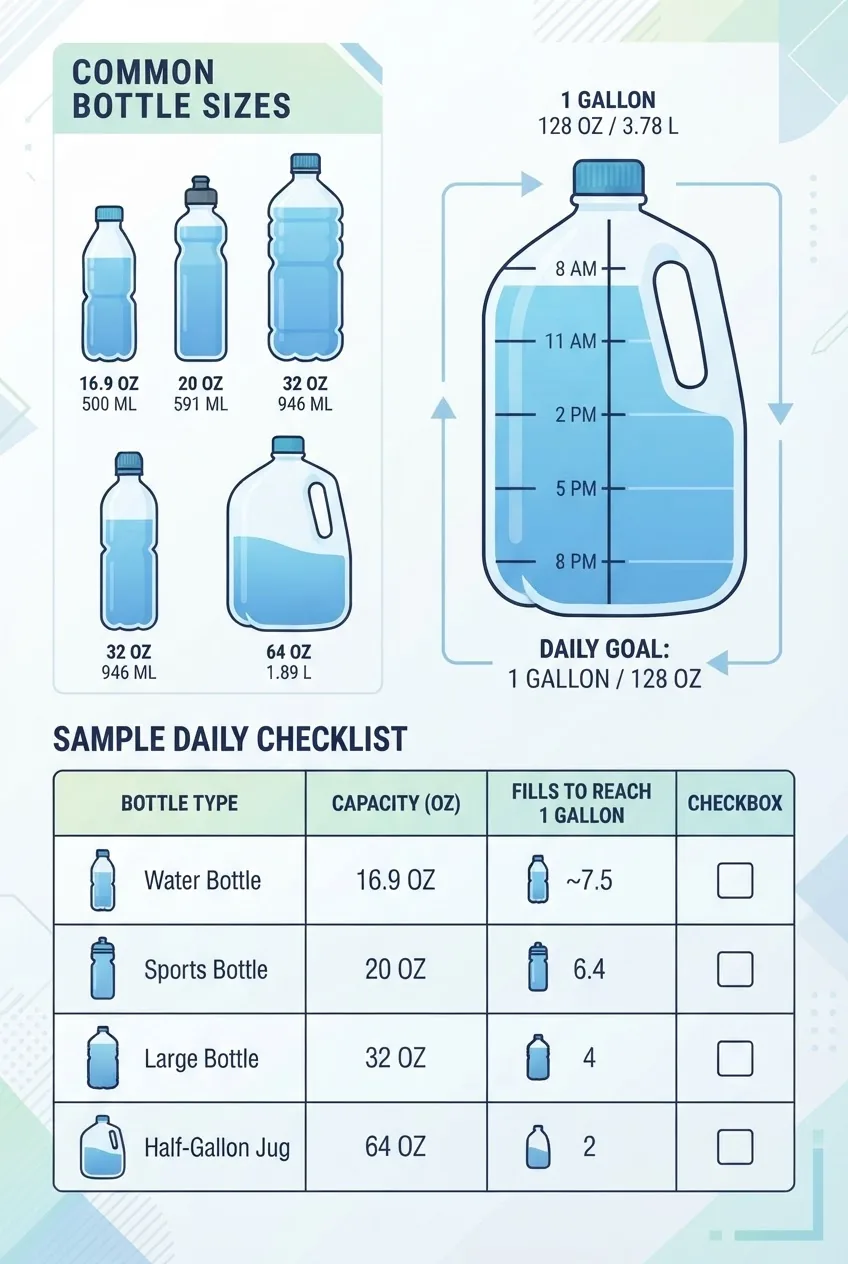
Worked tracking example: If using a 32 oz (946 mL) bottle, drink two full bottles plus one 16 oz refill to hit approximately 80 oz (~2.37 L) and then add a 32 oz bottle later to reach 112 oz (≈3.3 L); adjust to reach 128 oz (1 gallon) by adding a final 16 oz glass.
What common myths about drinking a gallon of water a day should be corrected?
The main myths are that everyone must drink a gallon daily, that water “detoxes” quickly, and that more water always speeds weight loss—each claim is partially or entirely false depending on context.
Myth corrections:
- Myth: “Everyone needs a gallon.” Correction: Needs vary by body size, activity, and climate.
- Myth: “Water flushes toxins fast.” Correction: Liver and kidneys clear metabolites; water supports filtration but isn’t an instant detox.
- Myth: “More water equals faster weight loss.” Correction: Only when water replaces caloric beverages or reduces appetite; water alone has small metabolic effects.
- Myth: “If urine is clear you’re optimally hydrated.” Correction: Very clear urine can indicate overhydration; pale straw is a safer target.
How should you manage electrolytes when drinking a gallon of water a day?
Balance increased water with dietary electrolytes—primarily sodium and potassium—when fluid losses are high; include salty snacks or sports drinks during prolonged sweating and consider oral rehydration solutions for intense losses.
Term: Osmolality: a measure of solute concentration in body fluids, important for maintaining electrolyte balance and cell function.
Practical electrolyte guidelines:
- Light activity: regular meals normally supply enough sodium and potassium; no special additions required.
- Moderate-to-heavy sweating (>1 L sweat loss/hr): use sports drinks or salted snacks to restore sodium and avoid hyponatremia.
- Endurance events: follow sports-science recommendations for sodium (300–700 mg/hr) depending on sweat rate and duration.
Food-based options for sodium and potassium:
- Sodium: salted nuts, pretzels, broths.
- Potassium: bananas, potatoes, yogurt, spinach.
If you have hypertension, kidney disease, or are on a sodium-restricted diet, discuss electrolyte strategies with your clinician before adding salt to fluids.
How much does it cost to drink a gallon of water a day?
Cost per gallon varies widely: tap water costs pennies, filtered pitcher systems are low-cost per gallon, and bottled water is the most expensive; the financial impact depends on your source and bottle reuse habits.
| Source | Estimated cost per gallon | Monthly cost (@1 gal/day) |
|---|---|---|
| Municipal tap water (Texas average) | $0.002–$0.01 | $0.06–$0.30 |
| Filtered pitcher (cost amortized) | $0.05–$0.20 | $1.50–$6.00 |
| Reusable bottled water (store-bought 1 gal) | $1.00–$3.00 | $30–$90 |
| Single-use bottled (multiple bottles/day) | $2.00–$6.00 | $60–$180 |
Cost-saving tips:
- Use municipal tap water with a home filter; calculate filter cartridge cost spread over volume to get per-gallon cost.
- Buy large reusable jugs rather than single-use bottles.
- Carry a reusable bottle to reduce purchases when out.
Can you drink a gallon of water a day in Texas heat and is it different from other climates?
Yes, but Texas heat raises fluid and electrolyte needs; sweating increases sodium and water losses, so a gallon may be necessary or even insufficient depending on outdoor work or exercise intensity and duration.
Factors to adjust for Texas climate:
- Ambient temperature and humidity increase sweat rate—monitor body weight changes around exercise.
- Schedule hydration to avoid heat stress: pre-hydrate before outdoor activity and drink regularly during activity.
- Replace electrolytes if sweating heavily to protect against hyponatremia and cramps.
Worked example for outdoor worker: a laborer losing 1.5 L sweat per hour over a 6-hour shift may require 3–6 liters (1–1.6 gallons) including replacement of sodium; individualized sweat testing or weighing before/after shifts provides precise guidance.
What are sample daily schedules to meet a gallon of water a day?
Schedules should spread intake across waking hours, include pre- and post-exercise hydration, and align with meals to limit overnight disruptions; below are three practical schedules tailored to activity level.
Sedentary adult schedule
Answer: Spread 128 oz across waking hours to prevent nocturia: 20–24 oz at breakfast, 24–32 oz mid-morning and mid-afternoon, 16 oz with lunch, 24 oz late afternoon, and 12–16 oz with dinner.
- Wake: 12 oz
- After breakfast (9am): 16 oz
- Late morning (11am): 16 oz
- Lunch: 16 oz
- Afternoon (3pm): 24 oz
- Dinner: 16 oz
- Evening (before 8pm): 28 oz
Moderately active adult schedule
Answer: Increase around workouts—drink 16–24 oz before exercise, 8–16 oz every 15–30 minutes during moderate activity, and 16–24 oz after to recover fluids.
- Pre-workout (30–60 min): 16–20 oz
- During 45–60 min workout: 8–16 oz
- Post-workout (within 1 hr): 16–24 oz including a salty snack
- Distribute remaining fluid evenly through day with meals and bottles.
High-performance athlete schedule
Answer: Athletes must match sweat losses and include electrolytes; plan hourly targets based on measured sweat rate and include carbohydrate-electrolyte drinks for long sessions.
- Pre-event: 16–24 oz with 200–300 mg sodium
- During event: 200–400 mL every 10–20 min plus 200–700 mg sodium per hour depending on sweat
- Post-event: 20–32 oz plus a recovery snack with sodium and potassium
How do other beverages and foods count toward the gallon goal?
Beverages such as tea, coffee, milk, and juice count toward total fluid intake; many fruits and vegetables (cucumbers, watermelon, lettuce) provide substantial water and should be included in the daily tally.
Guidelines for counting:
- Caffeinated beverages count toward fluid total; moderate caffeine intake has mild diuretic effect but does not negate hydration across the day.
- Alcohol dehydrates and should not be relied on to meet hydration goals; additional water is needed when drinking alcohol.
- High-water foods: cucumbers (96% water), lettuce (95%), tomatoes (94%), watermelon (92%), and oranges (87%).
Example meal contributions: A 2-cup salad and a large orange can add 400–600 mL toward the gallon goal; include these when summing daily intake.
How long until you notice benefits from increasing to a gallon a day?
Immediate benefits such as improved thirst control and clearer urine occur within hours; cognitive and digestion improvements are noticeable in days; skin and sustained weight changes may take weeks of consistent intake and lifestyle support.
Typical timelines:
- Hours: reduced thirst, increased urine output.
- 24–72 hours: improvements in headache frequency and concentration for those previously slightly dehydrated.
- 1–4 weeks: fewer constipation episodes, some skin hydration benefits, and modest weight changes when paired with diet adjustments.
Note: If you were previously overhydrated, benefits may be the opposite; always compare to baseline symptoms and use objective measures like body weight and urine color to track progress.
What medical monitoring or tests should you consider when dramatically changing water intake?
Consider baseline serum electrolytes (sodium, potassium), blood urea nitrogen (BUN), creatinine, and urine studies if you plan prolonged high intake or have comorbid conditions; repeat tests if symptoms or medications change.
Common tests and why they matter:
- Serum sodium: detects hyponatremia or dilution.
- BUN and creatinine: evaluate kidney function and adequacy of clearance.
- Urine osmolality or specific gravity: assesses concentration ability and hydration status.
- 24-hour urine for sodium: useful for evaluating net sodium losses in heavy sweaters or athletes.
When to seek lab testing:
- Pre-existing kidney or heart disease
- Medication changes affecting fluid balance
- Development of symptoms like confusion, swelling, or unexplained fatigue
Work with your medical provider to interpret results in the context of activity level and climate.
What practical tips make drinking a gallon of water a day sustainable?
Sustainability comes from habit pairing, equipment (large reusable bottle or marked jug), flavoring strategies, and incremental goals; avoid punitive “must-drink” mindsets and focus on consistent timing and monitoring signals such as urine color.
Actionable tactics:
- Buy one large reusable jug with time markers and carry it; refill as needed.
- Pair water with routine tasks—after each bathroom break, before each meal, and after meetings or errands.
- Flavor lightly with citrus, cucumber, or a splash of 100% fruit juice to improve adherence without adding many calories.
- Use iced water in hot climates and lukewarm water if sensitive to cold during winter to maintain intake consistency.
- Set realistic daily targets and reward consistency (not perfection).
For office workers in Texas, keep a bottle at your desk and aim to finish one 32 oz bottle every 3–4 hours; refill to maintain the 1-gallon target without habitual trips that interrupt workflow.
How does drinking a gallon a day compare to official hydration recommendations?
Official recommendations provide ranges (e.g., Adequate Intake ~2.7 L/day for women and 3.7 L/day for men from all beverages and foods), so a gallon overlaps and may exceed some guidelines depending on sex and needs; personalize based on activity and conditions.
| Reference | Typical guidance (total fluids/day) | How 1 gallon compares |
|---|---|---|
| Common adult female guidance | ~2.7 L/day (≈91 oz) | 1 gallon (128 oz) exceeds by ~37 oz (≈1.1 L) |
| Common adult male guidance | ~3.7 L/day (≈125 oz) | 1 gallon is roughly equivalent |
These ranges include fluids from all beverages and high-water foods; if you already consume a variety of fluids and water-rich foods, a separate gallon target might be redundant.
Where does drinking a gallon a day fit in a broader hydration routine?
Think of a gallon target as one tool in a broader hydration routine that includes monitoring thirst, urine color, meal timing, electrolyte balance, and environmental and activity adjustments to maintain stable hydration across seasons.
Components of a balanced routine:
- Baseline intake from meals and regular beverages
- Pre- and post-exercise hydration strategies
- Electrolyte replacement during high sweat periods
- Monitoring signals: thirst, urine color, body weight changes
To integrate a gallon goal responsibly, consult the Essential Guide for overarching strategies and the calculator in related resources to estimate personalized needs: see the /hydration-and-well-being/essential-guide-with-5-tips-to-stay-hydrated-and-healthy/ and the intake calculator at /hydration-and-well-being/how-much-water-to-drink-a-day-calculator-intake-guide/ for tailored numbers.
Are there special considerations for older adults and children?
Yes: children and infants have lower absolute needs scaled to body weight and are at both dehydration and overhydration risk, while older adults may have impaired thirst perception and comorbidities—both groups require individualized approaches and clinician guidance.
Children:
- Use weight-based fluid guidelines; do not impose an adult gallon target on children.
- Monitor urine, activity, and skin turgor; replace fluids during illness or fever promptly.
Older adults:
- Encourage regular small volumes throughout the day rather than large boluses to prevent nocturia and falls.
- Review medications and cardiac/renal diagnoses before increasing intake; consider periodic lab checks.
How to resolve common troubleshooting scenarios when drinking a gallon a day?
Troubleshoot by identifying the symptom cause—excessive urination, nocturia, cramps, bloating—and adjust timing, electrolyte intake, or total volume accordingly; consult a clinician for persistent or severe problems.
- Excessive nighttime urination: move more intake earlier in the day and limit fluids 2 hours before bedtime.
- Muscle cramps: increase sodium/potassium during heavy sweating or reduce total volume if electrolyte dilution suspected.
- Bloating or nausea: slow the rate of increase, reduce per-serving volume, and space drinks more evenly.
- Persistent clear urine without thirst: consider reducing volume slightly and monitoring for hyponatremia risk factors.
If symptoms persist after adjustments, schedule medical evaluation for endocrine, renal, or cardiac causes that influence fluid balance.
How can you record progress and results when trying a gallon-a-day plan?
Track baseline markers (body weight, blood pressure, urine color, bowel frequency, energy levels) and log daily fluid volume and symptoms for at least 2–4 weeks to evaluate benefits and adverse effects objectively.
Suggested tracking template:
- Morning weight (fasted)
- Number of voids and typical urine color
- Daily total fluid volume
- Daily symptoms: headaches, cramps, energy
- Weekly average body weight and mood/cognitive notes
Compare trends rather than single-day changes; a meaningful evaluation requires consistent recording and matching fluid changes with lifestyle or medication changes.
What are recommended next steps if a gallon a day feels wrong for you?
If a gallon causes adverse symptoms, reduce toward the intake level that resolves issues, reintroduce electrolytes as needed, and consult a clinician to test for underlying causes of abnormal fluid handling.
Action sequence:
- Decrease total daily volume by 25–33% and monitor for symptom improvement over 48–72 hours.
- Reassess timing and composition of fluids; add sodium if heavy sweating or cramps continue.
- If symptoms persist, order serum electrolytes and renal function tests or see your primary care provider for individualized advice.
Use related guidance from /hydration-and-well-being/informational-guide-on-can-you-drink-too-much-water-safely/ to understand overhydration risks and when to seek care.
What are quick takeaways for someone considering drinking a gallon of water a day?
Quick answer: A gallon can benefit many adults but isn’t required for everyone—personalize by body size, activity, climate, and health status; increase gradually, monitor urine and symptoms, and add electrolytes when sweating heavily.
- Start slowly—do not force an immediate jump to 1 gallon.
- Use simple markers: urine color (pale straw), frequency (6–8/day), and lack of adverse symptoms.
- Consult a clinician if you have heart, kidney disease, or take medications affecting fluid balance.
- Leverage internal resources for broader hydration strategies at /hydration-and-well-being/essential-guide-with-5-tips-to-stay-hydrated-and-healthy/.
Frequently Asked Questions
Can you safely drink a gallon of water a day?
Yes for many healthy adults, especially larger or active individuals, if intake is spread through the day and electrolytes are replaced during heavy sweating; avoid rapid large boluses and consult a clinician if you have heart or kidney disease or take medications that affect fluid balance.
Will drinking a gallon of water a day help me lose weight?
Drinking a gallon can support weight loss primarily by replacing caloric drinks and increasing pre-meal satiety; water alone produces only modest metabolic increases, so combine with diet and exercise for meaningful results.
How do I measure a gallon of water in bottles I already own?
Sum the labeled volumes of your bottles until you reach 128 ounces (1 gallon). For example, seven 16.9-ounce bottles equal roughly 118 oz, so add one small glass to reach a full gallon; marking a single 1-gallon jug with time targets simplifies tracking.
What are early symptoms of drinking too much water?
Early signs include very clear urine and frequent urination; more serious symptoms are headache, nausea, confusion, and muscle weakness from hyponatremia—stop excess intake and seek medical evaluation for severe signs.
Should athletes drink a gallon of water a day?
Athletes often need a gallon or more when training, but must replace electrolytes to match sweat losses; individualized plans based on measured sweat rates and event duration are recommended to avoid hyponatremia or performance loss.
Does coffee count toward the gallon-a-day goal?
Yes—regular coffee and other caffeinated beverages count toward daily fluid total; moderate caffeine does not negate hydration across a full day, though very high caffeine intake can have diuretic effects in sensitive individuals.
How long until I notice skin or digestion benefits from more water?
Digestive changes like softer stools and fewer constipation episodes can appear within days to a week; skin changes (improved hydration and turgor) typically require several weeks of consistent intake combined with nutrition and skin care routines.
What should I do if I have kidney disease but want to improve hydration?
Do not increase water intake without medical guidance; patients with kidney disease often require individualized fluid targets and monitoring of electrolytes and weight—coordinate any change with your nephrologist or primary care provider.