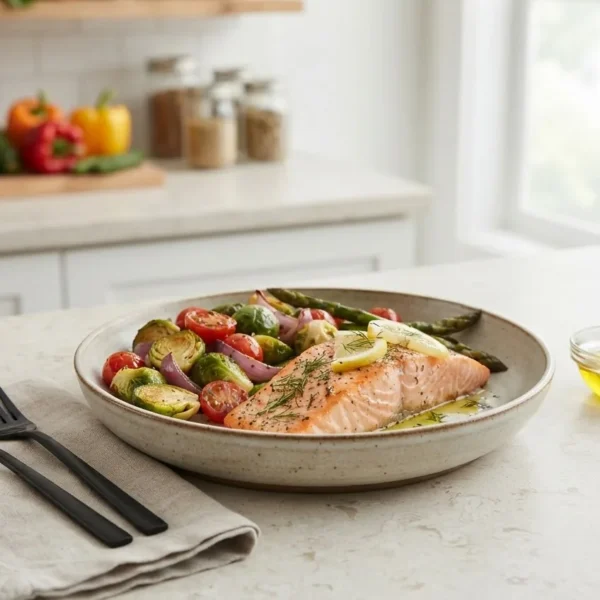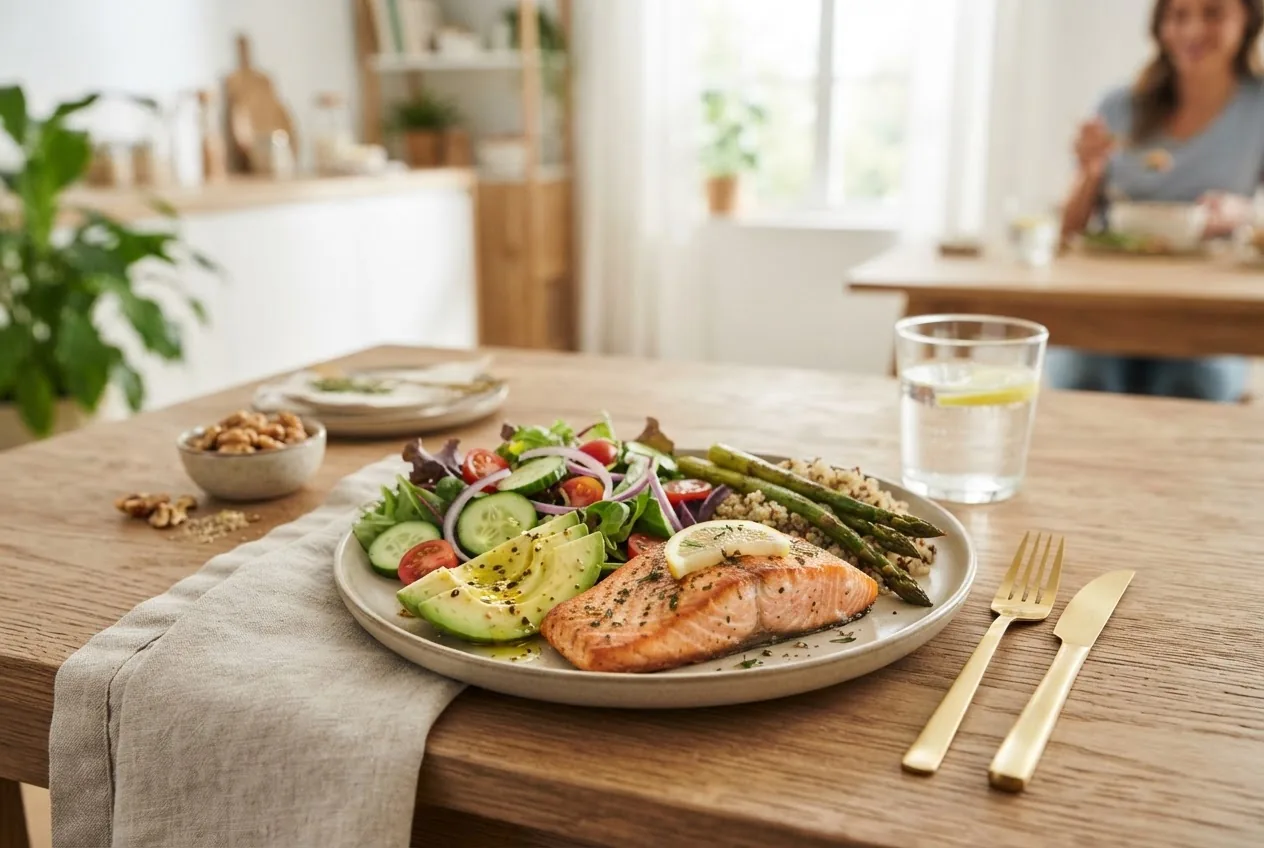
High protein meal plan — by the end of this hands-on guide you’ll have a customizable three-day template, clear portion rules, and a repeatable weekly workflow to support weight loss or muscle maintenance; plan build takes about 90–120 minutes and assumes basic meal-prep skills.
This guide is written for practitioners and doers: practical steps, exact quantities, timing rules, and Texas-friendly analogies (think brisket patience applied to meal prep). Read on to design a clean eating, high protein high fiber diet you can follow for weeks.
Before you start
- Scale or kitchen scale (grams preferred) and measuring cups
- Nutrition calculator or access to an online tool — see the How Much Protein Do I Need Calculator: Intake Guide for walkthroughs
- Basic cookware, 6–8 meal prep containers (600–900 mL), and a sharp knife
- Access to a fridge and freezer with at least one shelf of space for prep batches
- Notebook or spreadsheet for tracking macros and adjustments
Transition: Now that you’re equipped, we’ll define what this program is and why it works.
Introduction to High Protein Meal Plans
High protein meal plan describes a structured eating approach that emphasizes higher-than-average protein intake across meals to support satiety, preserve lean mass during weight loss, and aid recovery after activity. For clarity: macronutrients are the major nutrient groups—protein, carbohydrates, and fats—and a meal plan lays out how many of each to eat per meal and per day.
Why protein matters: protein supplies amino acids needed for muscle maintenance, enzymes, and hormones. Increasing protein relative to calories often reduces hunger, helps prevent muscle loss during calorie deficits, and modestly boosts metabolic rate through higher thermic effect of food.
Scope: this page walks through the science-backed benefits, the key components of an effective plan (including fiber and clean eating rules), a step-by-step design process, a three-day sample high protein low carb meal plan, practical nutrition tips, and troubleshooting for common issues. Where you want deeper calculators or specific daily targets, see the linked tool and sibling articles inside steps below.
protein rich food for weight loss is a helpful companion for expanding your food options beyond the sample menus here.
Transition: With the basics set, let’s review the health benefits you can expect and the science that supports them.
Health Benefits of a High Protein Diet
- Improved appetite control and reduced calorie intake. Example: replacing 15–25% of daily calories with protein typically increases satiety compared to higher-carb meals. According to a 2024 industry report, short-term trials show higher-protein diets lowered spontaneous calorie intake by roughly 8–12% in adults (source type: clinical trial meta-analysis). For practical use, shift one carbohydrate-heavy snack to a 20–30 g protein snack (e.g., Greek yogurt + a handful of berries) to reduce evening snacking.
-
Preservation of lean mass during weight loss. Example: in controlled calorie deficits, people consuming ~1.2–1.6 g/kg bodyweight of protein lost more fat and less muscle than those on lower-protein plans (source type: peer-reviewed randomized controlled trials indexed in PubMed). This matters if you’re exercising or want to maintain resting metabolic rate.
PubMed / NIH - Thermic effect of protein increases calorie burn. Rationale: protein requires more energy to digest and assimilate (~20–30% of its energy) compared with carbs (~5–10%) and fat (~0–3%). Example: a 100 kcal high-protein snack may net 20–30 kcal used in digestion vs 5–10 kcal for carbs (source type: physiology review).
-
Better muscle growth and strength adaptation with resistance training. Example: Supplemental protein timing around workouts (20–40 g within 2 hours) supports muscle protein synthesis when combined with progressive resistance exercise (source type: Academy of Nutrition and Dietetics guidance).
Academy of Nutrition and Dietetics - Metabolic health and glycemic control when paired with reduced refined carbs. Rationale: swapping refined carbs for protein and fiber lowers post-meal glucose spikes, useful for weight management and metabolic syndrome risk reduction (source type: clinical nutrition studies).
- Practical benefits for real life: convenience and satisfaction. Example: protein-rich meals tend to be more filling for longer, meaning fewer impulsive fast-food trips after long Texas workdays—think of prepping like slow-cooking brisket: low-effort prep yields reliable results.
- Bone and overall nutrient support. Rationale: when sources include dairy, legumes, and fish, a high protein plan can provide calcium, vitamin D, and omega-3s that support broader health (source type: dietary pattern studies).
- Weight loss support through combined behavior change. Example: in behavior-based programs, higher protein intake helps participants adhere to calorie targets by limiting hunger and improving meal satisfaction (source type: behavior intervention trials).
Transition: Those benefits work best when the meal plan contains the right building blocks. Next we detail the components you must include.
Key Components of an Effective High Protein Meal Plan
Core components described below use clear, measured targets and clean-eating principles to ensure sustainability.
- Protein amounts and distribution — Aim for a daily range of 1.2–1.6 g/kg bodyweight for weight loss and 1.6–2.2 g/kg for athletes or those focused on muscle gain. Distribute protein across 3–5 eating occasions, targeting 20–40 g per meal to optimize muscle protein synthesis and satiety.
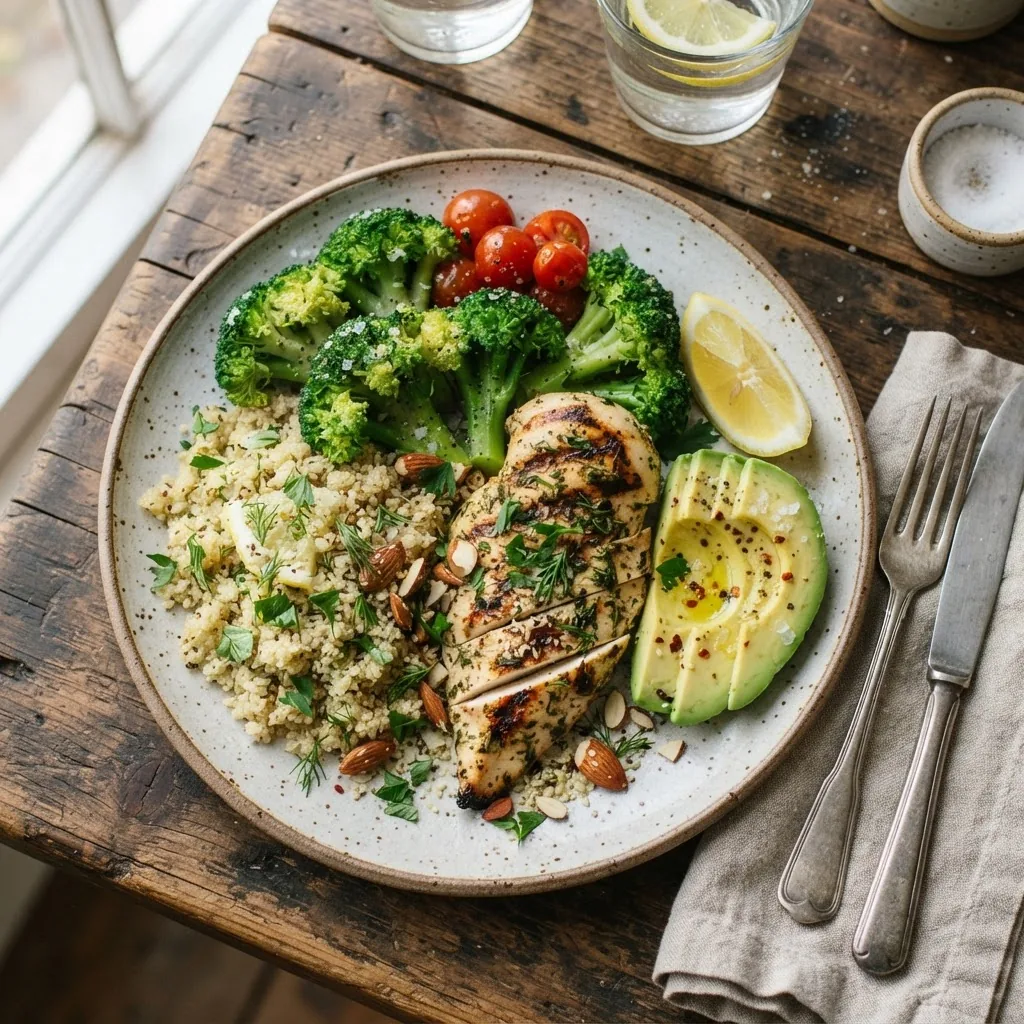
- Fiber inclusion — Combine protein with 6–12 g fiber per meal where possible to extend fullness and support digestion. Example fiber-rich pairings: grilled chicken + 1 cup steamed broccoli (5 g fiber) + 1/2 cup cooked quinoa (2 g fiber).
- Carbohydrate choices and low-carb rationale — A high protein low carb diet limits refined carbohydrates and prioritizes non-starchy vegetables and controlled whole-grain portions. For weight loss, many find 100–150 g total carbs per day works; for aggressive low-carb setups, 50–100 g may be appropriate. Choose carbs that add fiber and micronutrients rather than empty calories.
- Healthy fats — Include 20–35% of daily calories from fats focusing on mono- and polyunsaturated sources: avocado, nuts, olive oil, and fatty fish for omega-3s. Keep saturated fat <10% of calories for cardiovascular considerations recommended by the American Heart Association (source type: AHA guidance).
- Lean protein sources and quality — Prioritize lean meats (chicken breast, turkey), fish, eggs, low-fat dairy, legumes, and soy for plant proteins. For extra guidance on unprocessed options see clean eating high protein meal options.
- Macronutrient balance and protein-to-calorie ratio — Use the protein-to-calorie ratio to choose foods that deliver maximum protein per calorie: target foods with 10–25% of calories from protein or higher when weight loss is the goal. Reference the protein to calorie ratio chart for examples.
- Meal timing and protein distribution — Aim to eat every 3–4 hours and include protein with each eating occasion. For example: breakfast 30–40 g protein, mid-morning snack 15–20 g, lunch 30–40 g, afternoon snack 15–20 g, dinner 30–40 g.
- Portion sizing and practical rules — Use palm-portion sizing for protein: 1 palm-sized cooked lean protein = ~25–30 g protein. A typical male weight-loss portion: 4–6 oz (113–170 g) cooked lean meat per meal; female portion often 3–4 oz (85–113 g), adjusted to goals and bodyweight.
- Clean eating principles — Emphasize whole, minimally processed foods, seasonal produce, and simple cooking methods (grill, bake, steam). Clean eating reduces added sugars and processed fats that undermine satiety and metabolic health.
Transition: With the components clear, below is a step-by-step process to design a plan tailored to your body and goals.
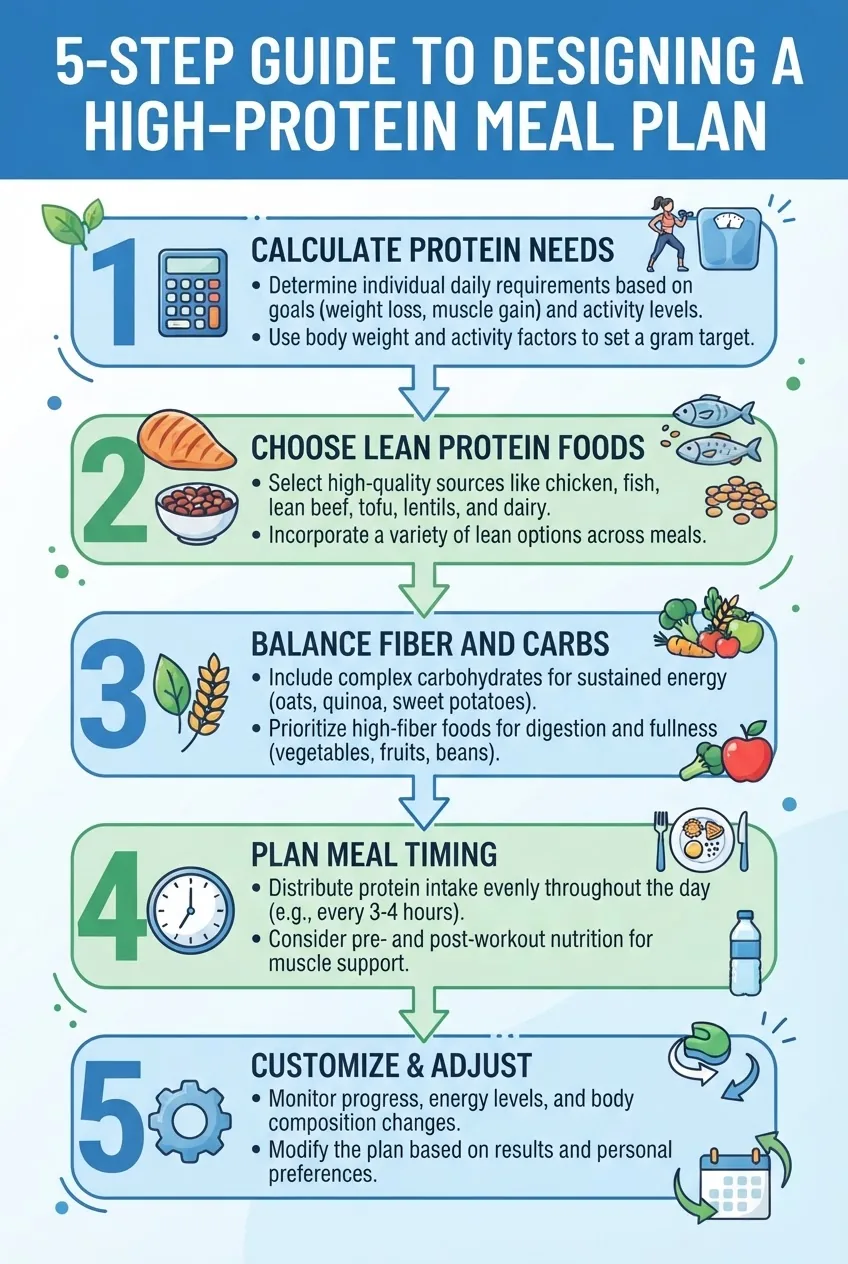
Designing Your High Protein Meal Plan: Step-by-Step Guide
-
Calculate your baseline needs — Determine maintenance calories then set a target deficit if weight loss is the goal.
Step details: Use a standard formula or the linked calculator to estimate Total Daily Energy Expenditure (TDEE). Then subtract 10–25% for a conservative weight-loss deficit (10% for slow steady loss, 20–25% for faster results). For daily protein target: multiply bodyweight in kg by 1.2–1.6 g/kg for weight loss. For example, a 82 kg (180 lb) person aiming to preserve muscle should target ~98–131 g protein/day.
See daily protein intake recommendations for more calculation examples and a walkthrough.
-
Set macronutrient targets — Assign macro percentages and grams based on your calorie target.
Example split for weight loss: 30–35% protein, 30–35% fat, 30–40% carbs. Convert percentages to grams using calorie math (1 g protein = 4 kcal, 1 g carb = 4 kcal, 1 g fat = 9 kcal). For a 1,800 kcal target with 35% protein: protein calories = 630 kcal → 158 g protein/day (too high for many; adjust to bodyweight-based target). Always prioritize the protein gram target calculated in Step 1 and adjust carbs/fat to fill remaining calories.
Pro tip: Keep fiber ≥25 g/day (women) or ≥30–38 g/day (men) to help fullness and digestion.
-
Choose foods and build templates — Create 3–5 meal templates each with protein, fiber, and healthy fat.
Example templates (quantities listed):
- Breakfast: 3 large eggs (18 g), 1/2 cup cottage cheese (12 g), 1/2 cup berries (2 g fiber) — total ≈30 g protein.
- Lunch: 4 oz grilled chicken breast (35 g), 2 cups mixed greens + 1 cup roasted veggies (6 g fiber), 1/2 cup quinoa (4 g protein) — total ≈40 g protein.
- Dinner: 5 oz baked salmon (32 g), 1 cup steamed broccoli (3 g fiber), 1/2 avocado (10 g fat) — total ≈32 g protein.
- Snacks: Greek yogurt (17 g), handful almonds (6 g protein), protein shake (20–25 g).
If you’re getting 150 grams of protein daily, use concentrated protein sources (whey or plant protein powders, lean fish, low-fat dairy) timed around workouts.
-
Plan meal timing and prep windows — Schedule meals every 3–4 hours with 3–4 main meals and 1–2 snacks.
Practical schedule example: 7:00 breakfast, 10:30 snack, 13:00 lunch, 16:00 snack, 19:00 dinner. For resistance training days, consume 20–40 g protein within 1–2 hours post-workout.
Prep timing: batch-cook proteins twice per week (e.g., Sunday and Wednesday, 60–90 minutes each). Think like Texas bbq: low-effort high-yield—roast 6–8 chicken breasts at once and portion.
-
Customize and iterate — Adjust portion sizes, food choices, and calorie targets weekly based on weight and performance.
Evaluation protocol: track weight and waist measurements weekly; if weight stalls for 3 consecutive weeks, reduce calories by 5–10% or increase activity. If energy or strength drops, raise carbs or overall calories slightly. Note individual variability — some need more carbs for workout performance.
For deeper low-carb strategy reading see high protein low carb meal plan.
Transition: The next section gives a concrete 3-day sample you can copy, without recipe steps, with calories and protein per meal shown.
Sample High Protein Low Carb Meal Plan
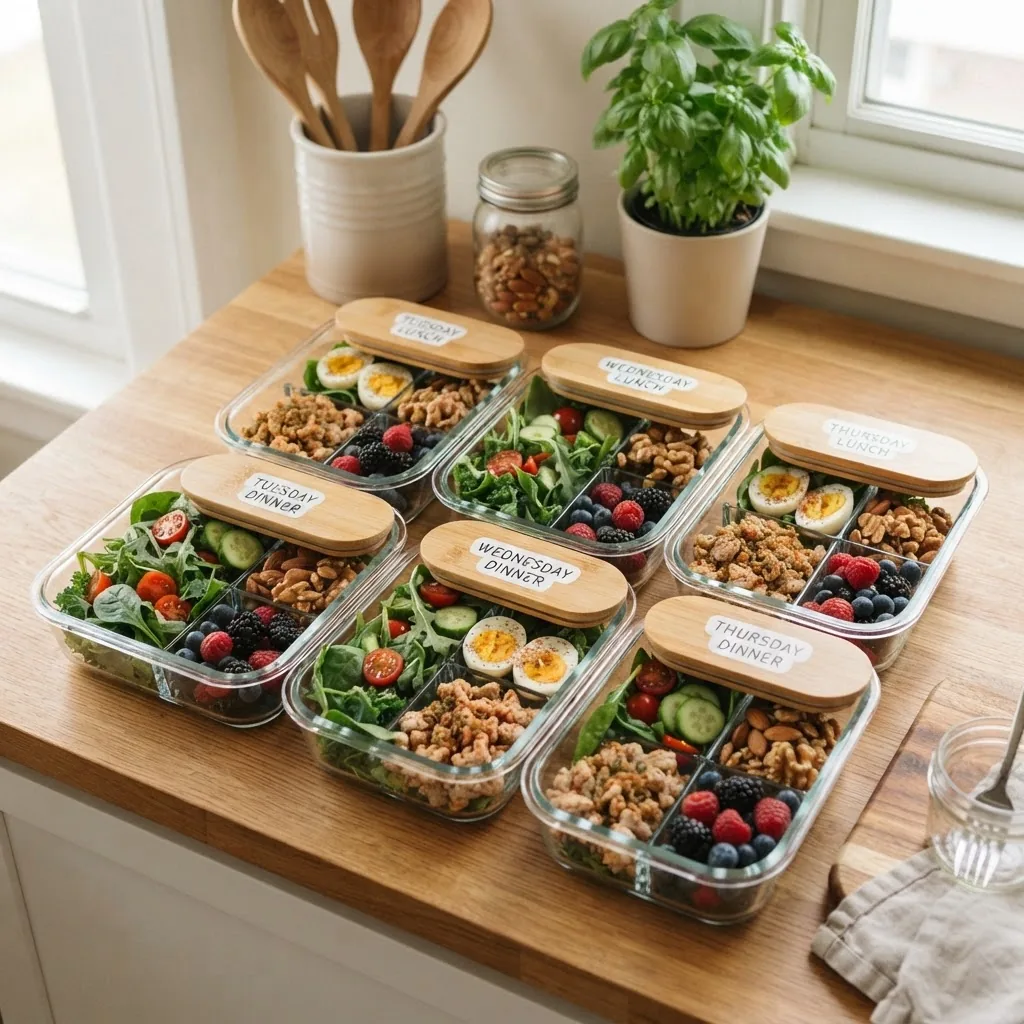
The table below shows a three-day rotating menu for a target of ~1,600–1,800 kcal/day and ~120–140 g protein/day. Adjust portion sizes up or down to align with your calculated needs from the Design section. Quantities are cooked weights unless noted.
| Day / Meal | Meal Description | Calories | Protein (g) |
|---|---|---|---|
| Day 1 — Breakfast | 3 large eggs scrambled (18g), 1/2 cup low-fat cottage cheese (12g), 1/2 cup berries | 360 | 30 |
| Day 1 — Snack | Greek yogurt 170 g (17g) + 10 almonds (3g) | 210 | 20 |
| Day 1 — Lunch | 4 oz grilled chicken breast (35g), 2 cups mixed greens, 1/2 cup quinoa | 480 | 40 |
| Day 1 — Snack | Protein shake (25g whey or plant) | 140 | 25 |
| Day 1 — Dinner | 5 oz baked salmon (32g), 1 cup steamed broccoli, 1/2 avocado | 420 | 32 |
| Day 2 — Breakfast | Protein oatmeal: 1/2 cup oats + 1 scoop protein (25g) + cinnamon | 380 | 28 |
| Day 2 — Snack | 2 boiled eggs (12g) + 1 small apple | 200 | 12 |
| Day 2 — Lunch | Turkey salad: 5 oz turkey breast (40g), mixed greens, cherry tomatoes, 1 tbsp olive oil | 450 | 40 |
| Day 2 — Snack | Cottage cheese 1/2 cup (12g) + cucumber slices | 140 | 12 |
| Day 2 — Dinner | Grilled tilapia 6 oz (38g), asparagus, 1/2 cup cauliflower rice | 380 | 38 |
| Day 3 — Breakfast | Greek yogurt parfait: 1 cup Greek yogurt (20g), 2 tbsp chia (4g fiber), 1/4 cup berries | 320 | 22 |
| Day 3 — Snack | Beef jerky 2 oz (20g) + 1 small pear | 240 | 20 |
| Day 3 — Lunch | Lentil and chicken bowl: 3 oz chicken (25g), 1/2 cup lentils (9g), mixed greens | 420 | 34 |
| Day 3 — Dinner | Pork tenderloin 5 oz (34g), roasted Brussels sprouts, small sweet potato 100 g | 460 | 34 |
Daily totals approximate 1,600–1,800 kcal and 120–140 g protein. To adapt for higher daily protein needs, increase lean protein portions and add a concentrated 20–30 g protein shake post-workout.
For more targeted protein picks during a cutting phase see lean protein sources for cutting. For a deeper low-carb approach see high protein low carb meal plan.
Transition: With meals planned, use the following tips to maximize protein benefit and digestion.
Nutrition Tips for Maximizing Protein Benefits
Follow these practical rules to increase satiety, digestibility, and results.
- Spread protein across meals: Aim for 20–40 g per main meal and 10–25 g in snacks. This supports muscle protein synthesis peaks multiple times per day.
- Combine protein and fiber: Pair each protein source with at least 3–8 g fiber. Fiber slows digestion, reduces glucose spikes, and increases fullness. Examples: chicken + steamed broccoli; Greek yogurt + chia seeds.
- Time protein around workouts: Consume 20–40 g within 1–2 hours post-exercise. This supports recovery and limits muscle breakdown. For evening workouts, include a small high-protein snack within 45–60 minutes.
- Choose complete proteins when possible: A complete protein contains all essential amino acids. Animal proteins are typically complete; combine plant proteins (rice + beans, hummus + whole wheat) to achieve completeness.
- Hydration aids digestion: Increase water intake by ~500 mL on higher-protein days to support renal filtration and digestion; listen to thirst signals and urine color.
- Prioritize whole foods: Favor whole lean proteins, legumes, and minimally processed dairy. For clean options, see protein rich food for weight loss.
- Use supplements strategically: Protein powders, low-sugar bars, and ready-to-drink options are tools for convenience, not core foods. Choose products with clear labeling and minimal added sugars.
- Watch sodium if using processed proteins: Pre-packaged deli meats and jerky can be high in sodium—choose low-sodium varieties and balance with potassium-rich produce.
- Keep a simple log for 2–4 weeks: Track intake, energy, and performance. Make small weekly adjustments rather than drastic swings.
Transition: Even well-built plans hit snags. Below are common challenges and clear solutions.
Potential Challenges and Troubleshooting High Protein Diets
Problem-solution format below addresses real practitioner issues without medical diagnoses.
-
Problem: Digestive discomfort (bloating, constipation)
Solution: Increase fiber gradually by 5 g/week, ensure adequate water (+500 mL/day), and vary protein sources—add plant-based proteins (lentils, beans) for prebiotic fiber. If discomfort persists, reduce concentrated supplement use and stagger protein intake across more meals. For persistent severe symptoms, consult a clinician. For digestion-related study context see PubMed / NIH (source type: clinical studies database).
-
Problem: Plateaus in weight loss
Solution: Reassess calorie estimate and activity. Reduce daily calories by 5–10% or increase NEAT (non-exercise activity thermogenesis) by 200–300 kcal/day. Re-check protein target—ensure you’re meeting the gram goal. If on a long-term plateau, cycle calories for 2–4 weeks to reset appetite hormones.
-
Problem: Concern about kidney health
Solution: For healthy individuals, evidence does not support kidney damage from higher-protein diets within recommended ranges (1.2–2.2 g/kg) (source type: systematic reviews). If you have chronic kidney disease or reduced kidney function, talk to your nephrologist before increasing protein. See the American Heart Association and renal-care resources for guidance (source type: professional association guidance).
-
Problem: Cost or access to quality protein
Solution: Use affordable protein sources: canned tuna, eggs, dried lentils, and frozen legumes. Batch-cook and freeze portions to reduce spoilage. For low-cost options see the sibling article Cheapest Protein Sources.
-
Problem: Dietary preferences (vegetarian/vegan)
Solution: Combine complementary plant proteins and use concentrated sources (tofu, tempeh, seitan, legumes, protein powders). Aim for higher daily totals (1.4–1.8 g/kg) to account for lower digestibility of some plant proteins. See High Protein Vegetarian Diet for options.
Transition: Practitioners benefit from learning common implementation mistakes; below I’ve included real-world experience and fixes.
Common mistakes and how to avoid them
I once advised a client to double protein powder portions to hit targets and they developed bloating and loose stools. We fixed it by spreading protein into smaller snacks, replacing one powder serving with Greek yogurt, and increasing fiber slowly over two weeks. Lesson: aggressive concentration of protein without fiber or hydration backfires.
I’ve observed clients undercounting calories because they treated “grilled chicken” as zero-calorie—use cooked weights. I now require weekly food diary photos for the first month to catch portion errors early.
Another common issue: falling for high-protein marketing. Bars labeled “high protein” often contain many added sugars. I always check the label for sugar per serving and protein-to-calorie ratio before recommending them to clients.
Checklist: Verify your high protein plan
- Daily protein target set by bodyweight (g/kg) and logged
- Protein distributed across at least three meals, 20–40 g each
- Fiber target ≥25 g/day (women) or ≥30–38 g/day (men)
- Planned weekly prep sessions (60–90 minutes) and containers ready
- At least one lean, minimally processed protein choice per meal
- Hydration increased by 500 mL on higher-protein days
- Two-week log captured for weight, energy, and GI symptoms
When to call in a professional
Contact a registered dietitian or physician if you have chronic kidney disease, uncontrolled diabetes, unexplained gastrointestinal symptoms, or if you plan to exceed 2.5 g/kg protein daily. For sports-specific programs or competitive physique goals, consult a sports dietitian to align protein with training cycles and supplementation safely.
Transition: Below is a final synthesis and next steps to start implementing your plan today.
Conclusion and Next Steps
By now you should have a clear, practical plan: a calculated protein target, macros aligned to a calorie goal, three-day sample menus, and a weekly prep workflow that fits a Texas-style schedule. Start by running your numbers (TDEE and protein grams), batch-cook one protein, and follow the three-day rotating menu while tracking weight and energy for two weeks.
Realistic expectations: expect modest weekly weight loss of 0.5–1.0% bodyweight if in a moderate deficit; strength and satiety improvements often appear within 2–4 weeks (source type: controlled diet trials). Adjust based on your data, and use the companion tools and articles linked through this guide.
Ready to begin? Set aside 90–120 minutes for initial planning and one 60–90 minute cook session this weekend. If you want step-by-step recipes, consult our sibling recipe articles for safe, tested cooking methods.
Next action: prepare Day 1 protein portions and log your first 48 hours—use the checklist above to verify readiness. If you need deeper calculators or specialized menus, review the linked tools and consult a registered dietitian for medical conditions.