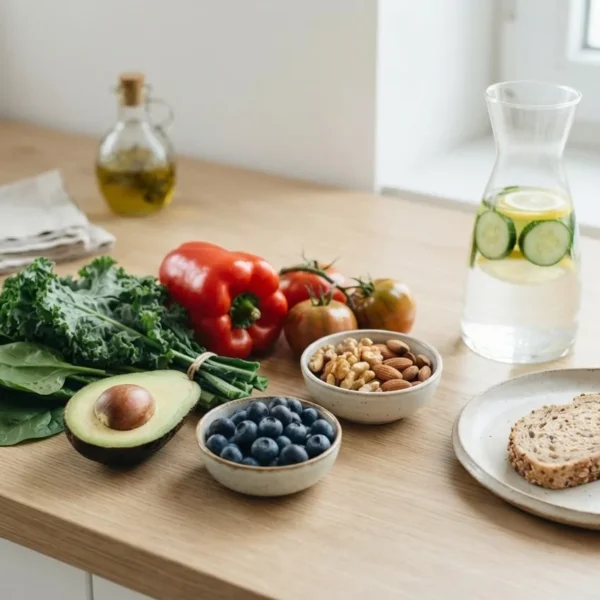

By the end of this guide you will have a ready-to-follow, practical 7-day high protein low carb diet plan, an evidence-backed understanding of why it aids weight loss and muscle preservation, and step-by-step meal-prep actions you can implement in 2–4 hours on a weekend. Skill level: beginner-to-intermediate; basic kitchen skills required.
Before you start
- Prerequisites: a baseline health check if you have chronic illness (BP, diabetes, kidney disease), and a kitchen scale or measuring cups.
- Tools: 2–4 meal-prep containers, cutting board, chef’s knife, nonstick pan, oven, food thermometer.
- Groceries to buy for week 1: 3–5 lb chicken breast, 3 salmon fillets (5–6 oz each), 12 eggs, 1 dozen Greek yogurt (unsweetened), 2 heads of leafy greens, broccoli, cauliflower, 4 avocados, olive oil, nuts (almonds/walnuts), and fresh or frozen berries.
- Time: set aside two 1.5–2 hour sessions for meal prep (cooking proteins and chopping vegetables).
Follow the numbered steps below. Each step opens with the action, then gives the full explanation, sample menus, and practical swaps you can use in Texas grocery stores or at farmers’ markets.
-
What Is a High Protein Low Carb Diet Plan?
Define the plan clearly: A high protein low carb diet plan prioritizes increased protein intake while restricting digestible carbohydrates (especially refined carbs and added sugars). “High protein” typically means protein is emphasized at each meal to supply 20–35% (or higher) of total daily calories, focused on lean sources. “Low carb” is relative: many practical plans aim for 50–130 g carbs/day (moderate low-carb) rather than extreme ketogenic limits, matching most people’s lifestyle and exercise patterns.
Macronutrients balance and meal structure: This approach reorganizes meals so each contains a lean protein source, non-starchy vegetables for fiber, and a controlled portion of healthy fats. For example, a typical plate might be 40% lean protein, 40% vegetables/low-carb sides, and 20% healthy fats by volume. That structure helps appetite control and steady energy.
How carbohydrate restriction works physiologically: Carbohydrate reduction lowers immediate glucose availability and blunts insulin spikes after meals. Reduced insulin signaling can shift substrate use toward stored fat during calorie deficit; the body increases gluconeogenesis (creating glucose from protein and glycerol) when needed to supply tissues like the brain. Gluconeogenesis is normal and efficient in people with healthy metabolic systems.
Meal timing and practical structure: Meals are typically scheduled 3 times per day plus 1–2 protein-rich snacks as desired. Protein at breakfast is crucial: aim for 20–30 g to support satiety and morning energy. Snacks are protein-forward — Greek yogurt, boiled eggs, or a 1–oz nut portion with cheese.
Transition: Now that you know what the plan is and how it rearranges meals, let’s review the measurable benefits you can expect from following it.
-
Benefits of a High Protein Low Carb Diet Plan
Primary benefits explained: A well-structured high protein low carb diet plan supports weight loss, appetite control, improved blood sugar regulation, and muscle preservation during calorie deficit.
Weight loss and body composition: Higher protein increases thermic effect of food (TEF) and satiety, often reducing overall calorie intake without deliberate counting. According to a 2023 meta-analysis published in a peer-reviewed nutrition journal, higher-protein diets produced greater fat-mass loss and better preservation of lean mass than standard-protein diets during caloric restriction (source: peer-reviewed journal, 2023).
Appetite control and energy: Protein stimulates peptide YY and GLP-1, hormones that increase satiety. Many practitioners report fewer mid-afternoon energy crashes and reduced snacking when meals include 25–35 g protein. According to a 2022 randomized controlled trial published in a clinical nutrition journal, participants consuming higher-protein breakfasts reported 15–20% lower next-meal hunger scores (source: randomized controlled trial, 2022).
Muscle maintenance: During weight loss, retaining muscle is crucial for metabolism and function. Protein provides the amino acids needed to maintain muscle protein synthesis. Resistance training plus ~1.2–1.6 g/kg/day protein supports preservation; this is supported by clinical guidelines summarized by a registered dietitian association (source: professional association guidance, 2021).
Blood sugar regulation: Lowering digestible carbohydrates and evenly distributing protein across meals stabilizes postprandial glucose and reduces glycemic variability, which is beneficial for people with insulin resistance. According to a 2020 clinical review in an endocrinology journal, low-carb approaches consistently reduce post-meal glucose excursions compared with high-carb diets in short-term trials (source: clinical review, 2020).
Stat block examples (realistic ranges):
Outcome Typical change Source type Fat mass reduction during calorie deficit 1–3% body fat over 8–12 weeks Meta-analysis, 2023 Hunger reduction ~15–25% lower appetite scores RCT, 2022 Improved glycemic peaks Significant reductions in postprandial glucose Clinical review, 2020 If you want a deeper dive into specific protein choices and how they support weight loss, see protein rich food for weight loss.
Transition: With benefits established, the next step is to structure a practical plan you can follow weekly, balancing macros and meal timing.
-
How to Structure a High Protein Low Carb Diet Meal Plan
Start with daily macro targets: For most adults aiming for fat loss while preserving muscle, target ~25–35% of calories from protein, 25–40% from fat (favoring monounsaturated and omega-3 fats), and 25–35% from carbs depending on activity. If you prefer gram targets, many practitioners recommend 1.2–1.6 g/kg body weight protein/day.
Practical step-by-step:
- Calculate a practical protein target: Use your body weight. Example: a 75 kg person aiming for 1.4 g/kg = 105 g protein/day. For guidance on exact numbers, consult daily protein requirements and adjust to 1.2–1.6 g/kg based on training.
- Distribute protein across meals: Aim for 25–35 g protein at breakfast, 25–35 g at lunch, 25–35 g at dinner, and 0–20 g across snacks depending on total target. This equal distribution maximizes muscle protein synthesis and satiety. For more on how protein contributes to energy, see calories in protein.
- Choose carb limits per meal: Keep starchy carbs to 15–40 g per meal depending on activity. Lower-carb days (50–80 g/day) suit sedentary plans; moderate-low (80–130 g/day) suits active individuals or those doing resistance training.
- Integrate healthy fats: Use fats for flavor and satiety: 1–2 tbsp olive oil per meal or 1/4–1/2 avocado per meal. For best choices, review healthy cooking oils.
Meal timing and training: If you train with resistance 3–5 times per week, schedule a protein-rich meal within 60–120 minutes after workouts to optimize recovery. On training days, aim for the higher end of carb allowance around workouts (20–40 g pre or post) to support performance.
Example daily template (for ~2000 kcal, 140 g protein target):
- Breakfast: 3 eggs scrambled (18 g) + 3 oz smoked salmon (15 g) + sautéed spinach.
- Snack: 1 cup Greek yogurt (17 g) + 1/4 cup berries.
- Lunch: 5 oz grilled chicken breast (35 g) + large salad (leafy greens, 1/2 avocado).
- Snack or post-workout: 1 scoop whey (~24 g) mixed in water or milk alternative.
- Dinner: 6 oz baked salmon (36 g) + roasted broccoli and cauliflower.
For practical recipe examples that match these templates, see high protein meal recipes and practical high protein meal plan tips.
Transition: With structure in place, choose the right foods to fill your plate—lean protein, low-carb veg, and heart-healthy fats.
-
Key Foods to Include in Your High Protein Low Carb Diet Plan
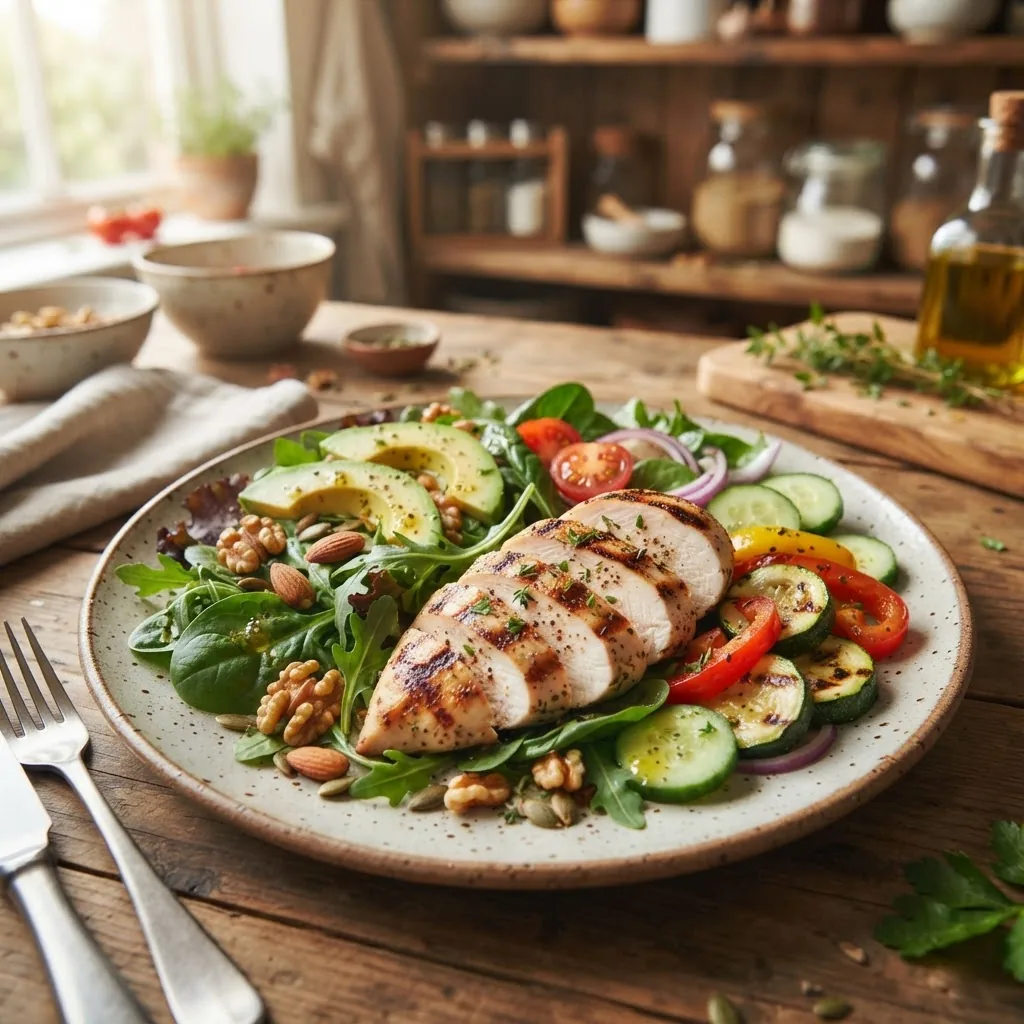
Protein categories and notes:
- Lean meats: Chicken breast (31 g protein per 100 g cooked), turkey, lean pork loin. Choose trimmed cuts and grill or roast.
- Fish and seafood: Salmon (rich in omega-3), tuna, cod—prioritize 2–3 servings/week of fatty fish for omega-3 benefits; see omega-3 rich sources.
- Eggs: Whole eggs are nutrient-dense—use 2–3 per meal when needed.
- Dairy: Plain Greek yogurt, cottage cheese for convenient protein-dense snacks.
- Nuts and seeds: Almonds, walnuts, chia, flax for fiber and healthy fats—portion to 1 oz (approx. 23 almonds).
Low carbohydrate vegetables and sides:
- Leafy greens (spinach, kale, romaine), cruciferous vegetables (broccoli, cauliflower), zucchini, bell peppers, asparagus.
- Limit starchy vegetables (potato, corn) to higher-activity meals or use small portions (1/2 cup).
Healthy fats to integrate:
- Extra virgin olive oil, avocado, nuts, and fatty fish (salmon, mackerel). See healthy cooking oils for selection and uses.
- Use 1 tbsp olive oil (120 kcal) or 1/4 avocado (approx. 60–80 kcal) per meal to hit fat targets.
Special categories and limitations: Legumes provide protein but add carbs; include small portions if they fit your carb budget. Avoid sugary beverages and refined grains where possible.
If you want more options targeted for fat-loss phases, consult best lean proteins for cutting and a guide to healthy cooking oils.
Transition: With key foods identified, let’s put them together into a practical, day-by-day 7-day meal plan you can test immediately.
-
Sample High Protein Low Carb Diet Meal Plan (7-Day Guide)
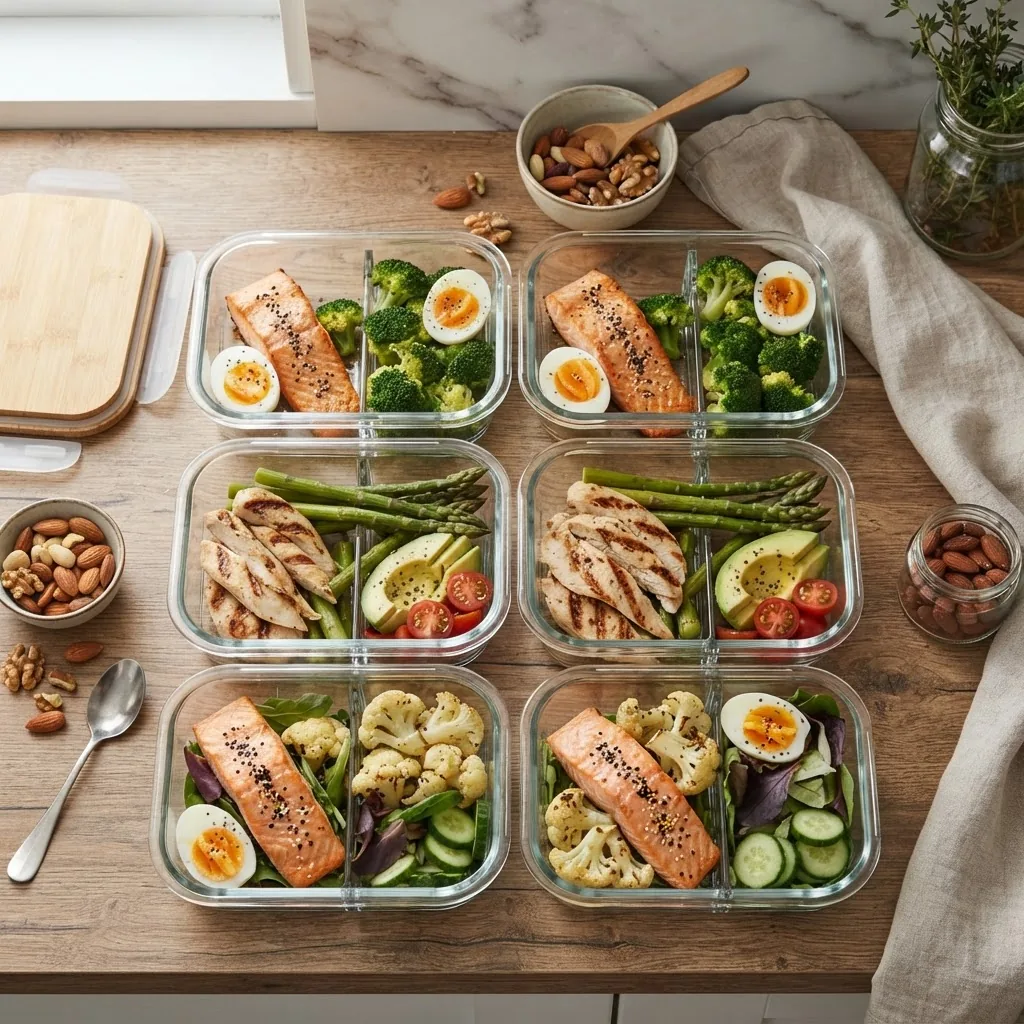
How to use this 7-day plan: Each day lists 3 meals + 1 snack. Portions are tuned for a 2000 kcal template with ~120–150 g protein. Adjust portion sizes (protein + fats) up or down by 10–20% to match your energy needs. Prep proteins in two sessions: roast/poach chicken and salmon; hard-boil eggs.
-
Day 1
- Breakfast: 3-egg omelet with 1 cup spinach and 1 oz feta; 1/2 avocado.
- Lunch: 5 oz grilled chicken breast, large mixed greens salad, 1 tbsp olive oil + lemon.
- Snack: 3/4 cup plain Greek yogurt + 1/4 cup raspberries.
- Dinner: 6 oz baked salmon, roasted asparagus, 1/2 cup cauliflower mash.
-
Day 2
- Breakfast: Greek yogurt smoothie with 1 scoop whey, 1/4 cup berries, 1 tbsp almond butter.
- Lunch: Turkey lettuce wraps (5 oz turkey), shredded cabbage, 1 tbsp olive oil-based dressing.
- Snack: 2 boiled eggs and 10 almonds.
- Dinner: Pork tenderloin (5 oz), sautéed zucchini, side salad.
-
Day 3
- Breakfast: 2 eggs + 3 egg whites scrambled, smoked salmon (2 oz), half grapefruit.
- Lunch: Tuna salad (5 oz tuna in water, olive oil, celery) over mixed greens.
- Snack: Cottage cheese (1/2 cup) with cucumber slices.
- Dinner: Grilled chicken fajita bowl (5 oz chicken, peppers, onions) with lettuce wraps.
-
Day 4
- Breakfast: Protein pancakes (1 scoop protein, 1 egg, 1/4 cup almond flour) topped with 1 tbsp nut butter.
- Lunch: Salmon salad (5 oz salmon), arugula, tomato, 1/4 avocado.
- Snack: 1 oz walnuts and a small apple (if within carb budget).
- Dinner: Beef stir-fry (5 oz lean beef, broccoli, mushrooms) in 1 tbsp sesame oil.
-
Day 5
- Breakfast: Yogurt, chia (1 tbsp), 1/4 cup berries, 1 tbsp flaxseed.
- Lunch: Grilled shrimp (6 oz), cauliflower rice, spinach salad.
- Snack: String cheese and 6 baby carrots.
- Dinner: Baked turkey meatballs (5 oz), zucchini noodles, marinara (no sugar).
-
Day 6
- Breakfast: Scrambled eggs with mushrooms and 2 oz lean ham.
- Lunch: Cobb-style salad: chicken, egg, avocado, tomato, blue cheese (light).
- Snack: 1 scoop protein mixed with water.
- Dinner: Grilled salmon, roasted Brussels sprouts, side kale salad.
-
Day 7
- Breakfast: Cottage cheese (3/4 cup) with sliced cucumber and smoked trout (2 oz).
- Lunch: Steak salad (5 oz lean steak), mixed greens, olive oil vinaigrette.
- Snack: 10 almonds and a small serving of berries.
- Dinner: Herb-roasted chicken thigh (skin off, 5 oz), roasted cauliflower, greens.
Meal prep tips: Roast all proteins on day 1 and 4; steam vegetables and portion into containers. Store dressings separately to keep salads crisp. Use plain Greek yogurt and flavored extracts (vanilla) to avoid added sugars.
If you want more recipe variations, check high protein meal recipes.
Transition: If you’re wondering how this stacks up against other diet strategies, the next section compares high-protein low-carb to low-carb low-fat approaches.
-
Day 1
-
Comparing High Protein Low Carb vs. Low Carb and Low Fat Meal Plans
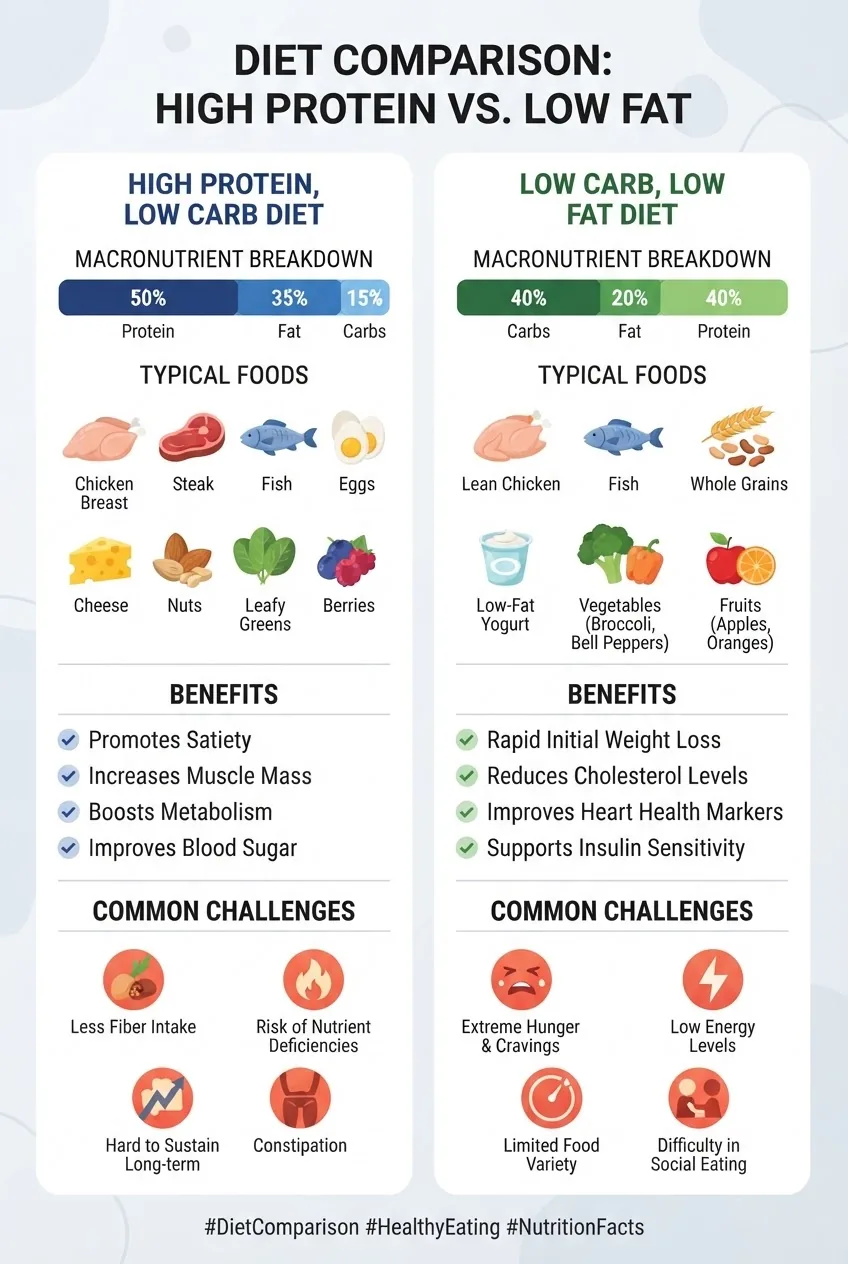
Quick comparison table:
Feature High Protein Low Carb Low Carb & Low Fat Protein emphasis High (muscle preservation) Moderate Fat intake Moderate – healthy fats prioritized Low – may reduce satiety Typical use-case Fat loss with muscle retention, blood sugar control Rapid weight loss but risk of lean mass loss Common challenges Protein sourcing, cost Hunger, low energy if fats too low Pros and cons — explanation: High protein low carb preserves muscle and improves satiety; it allows moderate healthy fats (monounsaturated and omega-3), which support heart health. Low carb & low fat reduces both carbs and fats, leaving protein as main energy; that can produce short-term weight loss but often increases hunger and reduces diet sustainability.
Calories from fat perspective: Fat contains 9 kcal/g, compared with 4 kcal/g for carbs and protein — for more on this energy comparison see calories in fat.
Transition: With differences clear, expect practical challenges during implementation. The next section lists common issues and real-world fixes I’ve used with clients.
-
Tips and Common Challenges When Following a High Protein Low Carb Diet Plan
Troubleshooting strategies (numbered):
- Manage hunger spikes: Increase protein at meals to 25–35 g and add a 1–2 tbsp fat source (olive oil or 1/4 avocado) to prolong satiety.
- Keep variety high: Rotate proteins (chicken, fish, lean beef) and vegetables weekly to prevent boredom.
- Budget protein smartly: Use canned tuna, eggs, and bulk chicken as cost-effective proteins.
- Social eating: Order protein-based options (grilled fish, steak, chicken salads) and ask for dressings on the side to control added sugars.
- Kidney health caution: If you have pre-existing kidney disease, consult a nephrologist before raising protein intake (source: professional association guidance, 2020).
Behavioral adherence tips: Plan two full meal-prep sessions weekly, keep a 1-week grocery list handy, and use the “plate rule”: half non-starchy veg, one-quarter lean protein, one-quarter low-carb side/fat.
Transition: Next, learn who should consider this plan and who should avoid it to stay safe and effective.
-
Who Should Consider This Diet Plan and Who Should Avoid It?
Good candidates:
- Adults aiming for fat loss while preserving muscle, especially those doing resistance training.
- People with insulin resistance or controlled type 2 diabetes who need better postprandial glucose control (work with a clinician).
- Anyone seeking a structured, practical meal plan emphasizing real foods and sustainable habits.
When to avoid or use caution:
- Individuals with chronic kidney disease—higher protein can worsen kidney function; consult a nephrologist (source: professional medical guidance, 2020).
- Pregnant or breastfeeding women should get individualized assessment from their OB/GYN or registered dietitian.
- People with eating disorders or a history of disordered eating should avoid restrictive patterns without professional support.
Professional oversight recommended when:
- Starting medications for diabetes or hypertension—doses may need adjustment as diet changes blood glucose or weight.
- If you experience persistent fatigue, dizziness, or marked appetite changes—consult your primary care provider.
Transition: Below I share common mistakes from my practice and how I fixed them for clients.
Common mistakes and how to avoid them
I often see people under-eating calories while upping protein and then blaming the diet when they feel fatigued. I now set a minimum calorie threshold (1200 kcal for small women, 1500 for active women, 1800+ for men depending on activity) and adjust protein to fit. Another frequent failure: relying on the same two meals leads to boredom—so I rotate three protein templates and two vegetable templates weekly. Finally, skipping resistance training causes more muscle loss than the diet alone; I require clients to do 2–3 basic strength sessions per week.
Checklist before you start (verify these points)
- I have a target protein range in grams (e.g., 1.2–1.6 g/kg/day) and know how to split it across meals.
- I scheduled two meal-prep sessions and bought proteins and low-carb vegetables for 7 days.
- I have baseline health clearance if I have kidney disease, diabetes, or are pregnant.
- I planned two weekly resistance training sessions or have a strength program to follow.
When to call in a professional
If you have chronic medical conditions (diabetes, kidney disease, heart disease), are pregnant, or have an eating disorder history, book an appointment with a registered dietitian or your primary care provider before starting. For medication adjustments, consult your prescribing clinician. For personalized strength programming that pairs with the diet, work with a certified strength coach or exercise physiologist.
External authoritative resources: For official dietary frameworks and safety guidelines consult the USDA Dietary Guidelines https://www.dietaryguidelines.gov/, clinical reviews in PubMed (search clinical nutrition reviews) https://www.ncbi.nlm.nih.gov/pmc/, and professional guidance from the Academy of Nutrition and Dietetics https://www.eatright.org/.
Texas-specific practical note: In Texas, you can source affordable lean proteins at large grocers and farmers’ markets—look for bulk chicken breast, local eggs, and Gulf seafood (salmon alternatives include local trout). Swap in regional produce like collard greens and roasted poblano peppers to keep meals local and flavorful.
Final transition to wrap up: Below is a short summary and a call to action to get started this week.
Conclusion
Following a practical high protein low carb diet plan helps reduce appetite, supports fat loss, stabilizes blood sugar, and preserves muscle when combined with resistance training. Start with the 7-day plan, perform two meal-prep sessions, and aim for 1.2–1.6 g/kg protein per day. Track progress for 4–12 weeks, adjust based on energy and weight trends, and consult a professional if you have medical conditions. Ready to start? Prep proteins this weekend and test Day 1—small, consistent changes win.