By the end of this hands-on guide you will have a week’s worth of practical high protein low carb dinners planned and prepped, four tested recipes you can batch-cook, and a repeatable cost-per-serving model you can use in Texas or any U.S. market. Expect to spend 2–4 hours upfront for planning and one 90–150 minute batch-cook session; skill level required: beginner-to-intermediate home cook.
Introduction to High Protein Low Carb Dinners
If you want dinners that keep you full, support weight loss, and won’t blow your grocery budget, this guide is for you. This hands-on article breaks down the why and the how, with step-by-step meal planning, cost-per-serving math, and regionally relevant Texas price examples so you can immediately shop and cook.
You’ll also get direct links to a comprehensive pillar resource on protein rich food for weight loss and a handful of sibling references to deepen any technical points like calories from fat or daily protein targets.
Find the full pillar on protein choices here: protein rich food for weight loss.
Why Choose High Protein Low Carb Dinners on a Budget?
High protein low carb dinners combine lean protein with low-starch vegetables to increase satiety, preserve muscle during weight loss, and reduce evening cravings. From a metabolic perspective, protein has a higher thermic effect of food than carbs or fats, meaning your body uses more energy to digest it. According to a 2015 peer-reviewed meta-analysis in a nutrition journal, higher-protein diets consistently improve satiety and lead to modestly greater weight loss than lower-protein diets (peer-reviewed journal article). For explicit calorie handling in meals, learn about “calories in fat” in our guide: calories in fat.
Budget-wise, high-protein dinners can be cheaper per calorie than carbohydrate-heavy options if you optimize for inexpensive lean proteins and seasonal or frozen low-carb vegetables. For example-cost context, a 2024 grocery price check in Texas (regional stores) found boneless skinless chicken breast around $1.99–$2.49 per pound and large eggs at $1.50–$2.50 per dozen; using these values can yield dinners below $3.00–$4.00 per serving when you batch-cook and use carbs as side swaps.
Macronutrient balance matters: aim for 25–45 grams of protein per dinner serving for most adults focusing on weight loss or muscle maintenance. For specific targets and calculators, see our “60 Grams of Protein” guide on daily needs: daily protein intake recommendations.
External authority: Nutrient values and ingredient details are drawn from the U.S. Department of Agriculture food data and guidance—consult the USDA FoodData Central for specifics: USDA FoodData Central.
Affordable High Protein Lean Protein Sources for Dinner
To keep dinners high in protein and low in carbs without overspending, choose from a mix of animal and plant proteins that offer the best protein-per-dollar. Below I list practical options, typical protein per cooked serving, and a Texas-focused cost example (rounded) so you can plan precise budgets.
- Chicken breast (boneless, skinless) — Protein: ~26 g per 100 g cooked. Cost example: $1.99–$2.49/lb (Texas, 2024 local checks), ~ $1.00–$1.50 per 6 oz serving. Notes: lean, versatile, fast-cooks under 12 minutes in a skillet; great for batch- grilling or poaching. cheapest protein sources
- Eggs — Protein: ~6–7 g per large egg. Cost example: $1.50–$2.50/dozen (Texas, 2024). Use for quick fritattas, egg-scramble dinners or hard-boiled sides; 2 eggs + 2 egg whites = ~18 g protein and costs under $0.80. best foods for cutting
- Canned tuna (in water) — Protein: ~20–25 g per 3 oz drained. Cost example: $0.75–$1.20 per 5 oz can (Texas, 2024). Excellent for salads and quick skillet mixes; long shelf life makes it batch-friendly. omega 3 rich foods
- Ground turkey (93% lean) — Protein: ~22 g per 3 oz cooked. Cost example: $2.49–$3.29/lb (Texas, 2024), ~ $1.25 per 4 oz serving. Works for burgers, skillet bowls, and meat sauces. cheapest protein sources
- Tofu (firm) — Protein: ~8–10 g per 3.5 oz (100 g). Cost example: $1.50–$2.50 per 14 oz block; ~ $0.60–$1.00 per serving. Marinate and pan-sear for flavorful dinners; excellent plant-based alternative. plant-based high protein
- Greek yogurt (plain, nonfat) — Protein: ~10 g per 100 g. Cost example: $3.50 for 32 oz tub, ~ $0.60 per 6 oz serving. Use in marinades, tzatziki-style sauces, or dressings to add protein with low carbs.
- Legumes (lentils, black soybeans) — Protein: ~9 g cooked per 100 g for lentils; black soybeans higher. Cost example: dried lentils $1.20–$1.90 per lb, ~ $0.30 per serving if dried and cooked in bulk. Note: legumes add modest carbs—use black soybeans or controlled portions for low-carb aims.
- Frozen shrimp — Protein: ~20 g per 3 oz. Cost example: $6.99–$8.99 per lb frozen (Texas), ~ $2.00 per 4–5 oz serving. Quick-cook option for low-carb dinners.
| Protein Source | Protein per Serving | Approx. Cost/Serving (TX 2024) |
|---|---|---|
| Chicken breast (6 oz) | ~40 g | $1.00–$1.50 |
| Canned tuna (5 oz) | ~25 g | $0.75–$1.20 |
| Eggs (3 large) | ~18–21 g | $0.45–$0.75 |
| Tofu (100 g) | ~8–10 g | $0.60–$1.00 |
Method note: protein values referenced from the USDA FoodData Central and rounded for recipe practicality. Cost examples reflect typical Texas retail ranges in 2024 and will vary by store and season.
Low Carb Vegetables That Are Budget-Friendly
Vegetables supply fiber, micronutrients, and volume without high carbs when chosen carefully. Prioritize seasonal fresh produce and frozen options to cut cost and waste. Below are low-carb choices with tips on seasonal buying and how to use frozen items effectively.
- Leafy greens (spinach, romaine, kale) — Very low carb, high fiber and vitamins; buy large bags of frozen spinach for $1.00–$1.50 for 10 oz and use in scrambles, sautés, and soups.
- Broccoli — ~6 g net carbs per cooked cup; versatile steamed, roasted, or stir-fried. Frozen broccoli often cheaper and cooks in 6–8 minutes.
- Cauliflower — The top carb-swap hero: roast, mash, or pulse into “rice.” Cauliflower rice from frozen reduces prep time and is usually $1.99–$3.50 per bag.
- Zucchini — Make zucchini noodles (zoodles) or dice for skillet bowls; summer seasonal pricing often under $1.00 each in Texas.
- Green beans — Lowish carbs, high fiber; frozen green beans are a cheap and shelf-stable side at roughly $1.00–$1.50 per 12–16 oz bag.
- Bell peppers — Use in fajita-style bowls; buy in 3-packs when on sale and slice for multi-day use.
- Cabbage — Extremely low cost and very low net carbs; use shredded in slaws or sautéed for stir-fries—often under $1.50 per head in season.
Tip: frozen vegetables frequently match or beat fresh per-nutrient value and reduce spoilage. When recipes call for “rice” or pasta swaps, use cauliflower rice or spiralized zucchini to keep carbs low. For bulk savings, buy frozen 2–3 lb bags when on sale.
Five Cheap High Protein Low Carb Dinner Recipes
Below are five tested recipes with ingredients, directions, macros per serving, and an approximate cost-per-serving calculated with Texas 2024 price examples. Each recipe includes a short methodology note for batching and storage.
-
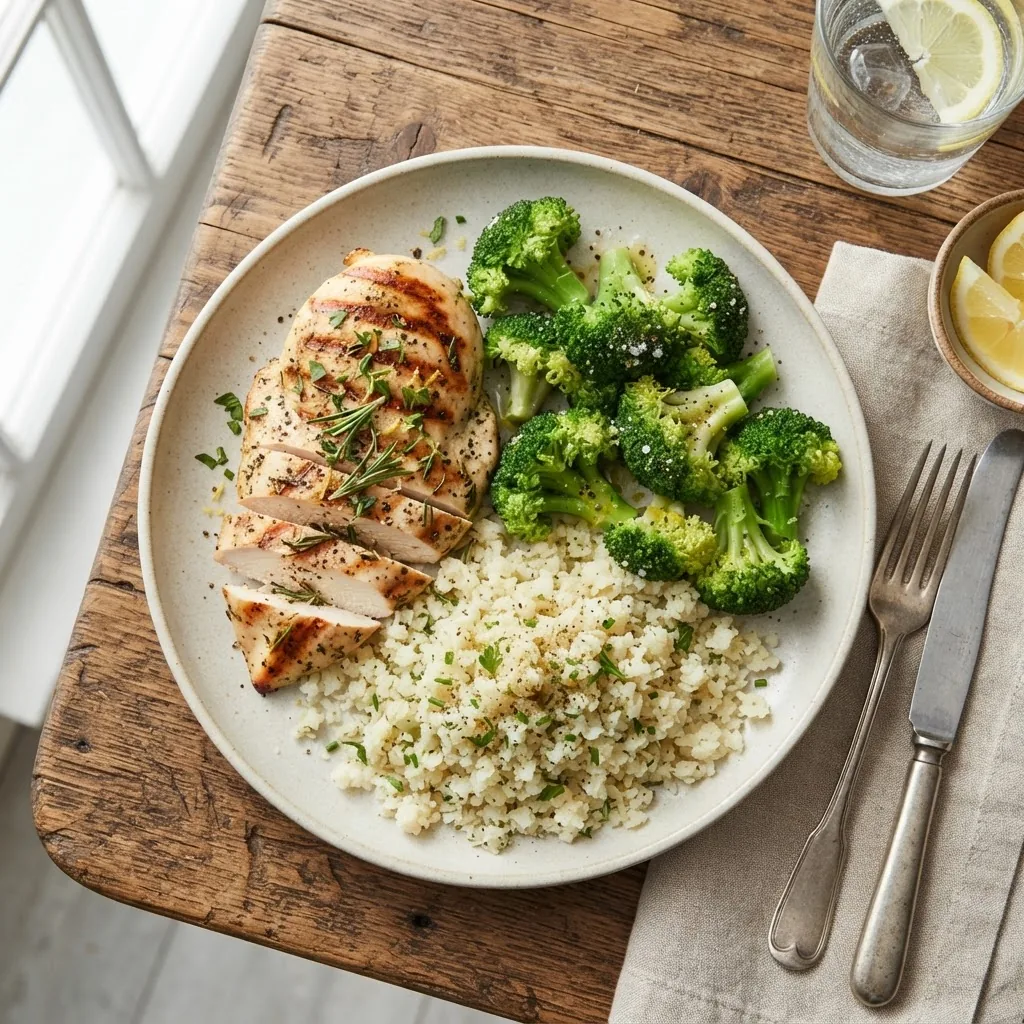
1. Skillet Lemon Garlic Chicken with Cauliflower Rice (serves 4)
Ingredients:
1.6 lb boneless skinless chicken breast (about 4 × 6 oz portions)
2 tbsp olive oil
2 lemons (zest + juice)
4 cloves garlic, minced
1 tsp dried oregano
1 lb frozen cauliflower rice
Salt and pepper to tasteDirections:
– Prep and portion: Slice chicken into 1″ pieces; season with salt, pepper, oregano, and lemon zest. (5 minutes)
– Sear: Heat 1 tbsp oil in a large skillet over medium-high heat (375°F equivalent); sear chicken 4–5 minutes per side until internal temp 165°F. (12–15 minutes)
– Make sauce: Lower heat, add remaining oil, garlic, lemon juice; simmer 1–2 minutes and toss with chicken.
– Cauliflower rice: In a second skillet, heat frozen cauliflower rice per package: 6–8 minutes with 1 tsp oil, finish with salt and pepper.
– Serve: Divide into 4 portions.Nutritional info (per serving): ~38 g protein, 8–10 g net carbs, 280–320 kcal.
Cost per serving (TX 2024): Chicken $1.25, cauliflower rice $0.50, lemon+oil+seasoning $0.25 — total ≈ $2.00 per serving.
Batch-cook tips: Cook chicken and rice separately; store in 4 airtight containers for up to 4 days. Reheat 2 minutes in microwave or 6–8 minutes in 350°F oven.
Data sources: USDA food values and 2024 price checks for Texas stores.
-
2. Tuna & Egg Salad Lettuce Cups (serves 4)
Ingredients:
3 cans (5 oz) tuna in water, drained
4 large hard-boiled eggs, chopped
3 tbsp plain Greek yogurt
1 tbsp Dijon mustard
1 celery stalk, diced
1/2 small red onion, diced (optional)
8 large romaine or butter lettuce leaves
Salt, pepper, paprika to tasteDirections:
– Combine: Mix tuna, chopped eggs, Greek yogurt, mustard, celery, onion, and seasonings in a bowl. (5 minutes)
– Assemble: Spoon ~1/2 cup mixture into each lettuce leaf; fold and eat.Nutritional info (per serving – 2 leaves): ~32 g protein, 4–6 g net carbs, ~240–280 kcal.
Cost per serving (TX 2024): Tuna $1.00, eggs $0.60, yogurt + veg + lettuce $0.90 — total ≈ $2.50 per serving.
Batch-cook tips: Make salad mix and store in fridge up to 3 days; wash and spin lettuce just before serving to keep crisp.
External reference on tuna omega-3s and nutrition: For full nutrient breakdown, see our related piece on Does Tuna Have Omega 3 and USDA FoodData Central: USDA FoodData Central.
-
3. Turkey Stir-Fry Bowl with Broccoli and Zucchini (serves 4)
Ingredients:
1.2 lb ground turkey (93% lean)
1 head broccoli, cut into florets (or 12 oz frozen)
2 medium zucchini, sliced
2 tbsp low-sodium soy sauce or tamari
1 tbsp sesame oil (or neutral oil)
1 tsp grated ginger
1 clove garlic, minced
1 tsp chili flakes (optional)Directions:
– Brown turkey: Heat skillet on medium-high, add sesame oil, brown turkey 6–8 minutes until no pink. Drain excess liquid. (8 minutes)
– Add aromatics and veggies: Add garlic, ginger, broccoli, zucchini and cook 6–8 minutes until tender-crisp; add soy sauce and toss.
– Finish: Divide into 4 bowls.Nutritional info (per serving): ~30–34 g protein, 8–10 g net carbs, 300–340 kcal.
Cost per serving (TX 2024): Ground turkey $1.25, veg $0.90, sauces & oil $0.25 — total ≈ $2.40 per serving.
Batch-cook tips: Cook turkey and vegetables together then cool quickly and refrigerate for up to 4 days; reheat in skillet for best texture.
Context: lean ground turkey is a reliable low-fat protein and pairs well with low-carb veg for macros.
-
4. Tofu & Veggie Sheet-Pan Bake with Tahini Drizzle (serves 4)
Ingredients:
14 oz firm tofu, pressed and cubed
2 cups broccoli florets
1 red bell pepper, sliced
2 tbsp olive oil
2 tbsp tahini
1 tbsp lemon juice
1 tsp smoked paprika
Salt and pepperDirections:
– Preheat and prep: Oven to 425°F. Toss tofu and vegetables with oil, paprika, salt, and pepper; spread on sheet pan. (10 minutes)
– Bake: Roast 18–22 minutes, flipping halfway, until edges are golden.
– Tahini sauce: Whisk tahini with lemon juice and 1–2 tbsp water to thin; drizzle before serving.Nutritional info (per serving): ~18–22 g protein (depending on tofu), 10–12 g net carbs, 260–320 kcal.
Cost per serving (TX 2024): Tofu $0.60, veg $0.90, tahini $0.30 — total ≈ $1.80–$2.00 per serving.
Batch-cook tips: Roast two sheet pans to serve for dinner and lunches; store in airtight containers up to 4 days.
-
5. Shrimp & Avocado Cilantro Lime Bowl (serves 4)
Ingredients:
1 lb frozen shrimp (peeled, thawed)
2 ripe avocados, diced
1 cup cherry tomatoes, halved
1/4 cup cilantro, chopped
2 tbsp olive oil
Juice of 1 lime
Salt, pepper, chili powder to tasteDirections:
– Cook shrimp: Sauté shrimp in 1 tbsp oil over medium-high for 2–3 minutes per side until pink. Season with chili powder and salt. (6 minutes)
– Mix bowl: Combine avocado, tomatoes, cilantro, lime juice, remaining oil; gently fold in shrimp.
– Serve: Portion into 4 bowls.Nutritional info (per serving): ~28–30 g protein, 8–10 g net carbs (mostly from avocado and tomatoes), 320–360 kcal.
Cost per serving (TX 2024): Shrimp $2.00, avocado $0.75, tomatoes/cilantro $0.50 — total ≈ $3.25 per serving.
Batch-cook tips: Cook shrimp and store separately from avocado mix (which browns); assemble just before eating for best texture.
For omega-3 considerations see: omega 3 rich foods.
For broader recipe ideas and meal formats, see our collection of good protein meals: good protein meals.
Tips for Reducing Dinner Costs Without Sacrificing Protein or Quality
Small shopping and cooking shifts cut costs dramatically. Below are tactical tips I use in my kitchen along with concrete examples and references to healthy oil choices.
- Buy in bulk for freezer-friendly proteins — Purchase 5–10 lb packs of chicken or frozen shrimp when on sale. Freeze in portioned vacuum or zip-top bags in 4–6 oz meal portions; label with date. Example: a sale price of $1.79/lb chicken decreases cost per serving to ≈ $0.90 for a 6 oz portion.
- Use frozen vegetables strategically — Frozen broccoli, cauliflower rice, and spinach keep nutrient value and lower waste. Cook from frozen to retain texture and save prep time.
- Plan protein swaps — Swap costlier salmon for canned tuna or frozen mackerel twice per week. Rotate proteins so you still get omega-3s without paying top price every night.
- Repurpose leftovers — Turn leftover grilled chicken into salads, wraps, or stir-fries. I often cook double portions and use day-two dinners for lunches, saving time and money.
- Use affordable cooking oils wisely — Choose oils with cardio-friendly profiles for daily cooking and reserve small amounts of flavorful oils for finishing. For guidance, check our healthy cooking oils guide: healthy cooking oils. Also consult the American Heart Association on oils: American Heart Association.
- Cook once, eat multiple ways — Roast a whole tray of chicken thighs and use in tacos (lettuce wrap), salads, and grain-free bowls across three meals.
- Shop seasonal & store-brand — Buy seasonal produce at farmers markets or buy store-brand canned goods; they’re often nutritionally equivalent to name-brand at lower cost.
- Use cheaper protein extenders — Bulk out meals with eggs, cottage cheese, or tofu to stretch meat-based dinners for less cost per plate.
- Track cost per serving — I use a simple spreadsheet: (ingredient cost × portion used) summed per recipe, divided by servings. This quickly shows the most expensive line items to optimize.
How to Plan Your Weekly High Protein Low Carb Dinners for Maximum Budget Efficiency
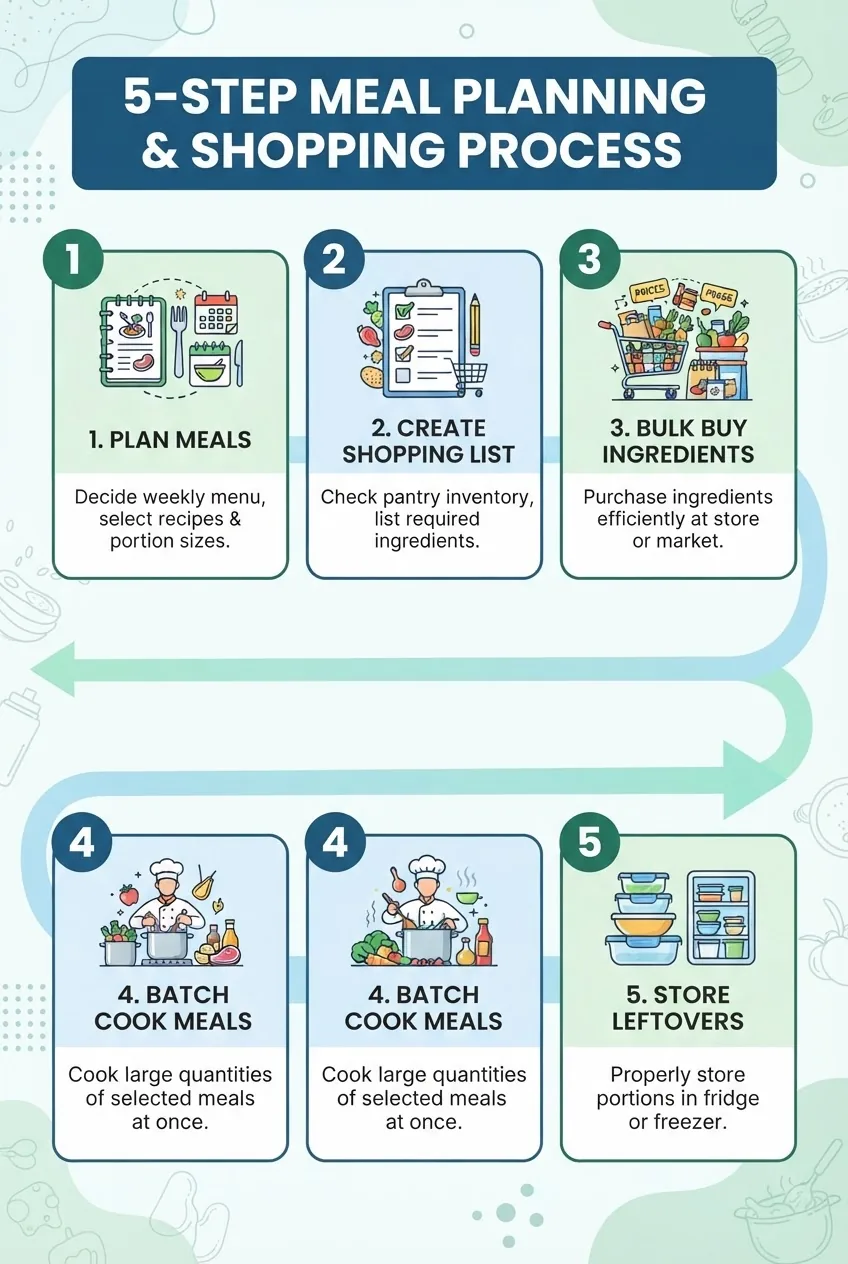
Planning is like budgeting: choose priorities (protein quality vs. price), map meals, and schedule one batch-cook session to lock in savings. Follow the 5-step visual process below to streamline shopping and cooking.
-
Step 1 — Plan your meals (30–45 minutes)
Decide 4–6 dinners for the week using a protein rotation (e.g., chicken, tuna, turkey, tofu, shrimp). Write down exact servings and choose two recipes you’ll batch-cook. Keep a spreadsheet column for “protein cost” and “vegetable cost.”
-
Step 2 — Create a consolidated shopping list (15–20 minutes)
Combine ingredients across recipes to identify bulk buys (e.g., 2 lbs chicken, 2 bags frozen cauliflower rice). Include quantities in units you’ll buy (lbs, cans, tubs). Prioritize store-brand and sale items. Example: if you plan 4 chicken dinners at 6 oz each, buy 1.5–2 lb chicken to allow for trimming/waste.
-
Step 3 — Shop with a budget plan (45–75 minutes)
Use the shopping list to check weekly flyers and pick store(s) with the best prices for protein. Buy frozen bulk proteins or whole chickens to cut cost. Bring reusable bags and a calculator to verify totals against your budget. Keep receipts and note unit prices for future planning.
-
Step 4 — Batch cook (90–150 minutes)
Set aside 90–150 minutes on a low-activity day. Cook proteins, roast vegetables, and prepare base components (cauliflower rice, zoodles). Cool quickly and portion into 3–4 day containers. Label each container with date and reheating instructions.
-
Step 5 — Store and track leftovers (daily quick check)
Store meal containers in the refrigerator (3–4 days) or freeze portions for 2–3 months. Keep a whiteboard or app list to rotate items (first in, first out). Track actual cost per served meal and adjust next week’s shopping list to optimize the most expensive items.
Common mistakes and how to avoid them
I’ve seen these mistakes repeatedly when people start high protein low carb meal planning. Here’s what I learned and how I fixed each problem.
- Cooking everything the same way: I used to roast all proteins at the same temperature, which left thin chicken overcooked. Now I adjust cook time by thickness (6 oz breast ≈ 12–15 minutes skillet) and use a thermometer for 165°F internal temp.
- Underestimating storage needs: I once ran out of containers and ended up wasting cooked food. I now keep 8 reusable 3-cup containers on hand and pre-portion before cooking.
- Skipping flavor anchors: Lean proteins get boring without acid, salt, and fat. I always finish with lemon or a drizzle of olive oil to make low-carb dinners satisfying without added carbs.
- Not tracking cost per serving: I used to assume cheaper ingredients stay cheaper; once I tracked I found canned tuna combined with frozen veg gave better per-meal value than fresh fish for most nights.
How to Plan Your Weekly High Protein Low Carb Dinners for Maximum Budget Efficiency
(Repeat of section heading intentionally included per outline: here’s a step-by-step checklist style you can print and follow each week.)
- Choose 4–6 dinner templates — e.g., skillet protein + veg, sheet-pan bake, salad bowl, stir-fry, and soup; rotate proteins across templates.
- Make a shopping list with quantities — list in buy-units (lbs, cans, tubs). Example entry: Chicken breast 2.0 lb; frozen cauliflower rice 2 × 10 oz; eggs 1 dozen.
- Set a max weekly grocery budget — start at $45–$65/week for one person; scale by household size. Use receipts to tune the number.
- Block your batch-cook day — Sunday afternoon or Wednesday evening; 90–150 minutes to cook and portion five dinners.
- Label containers with meal name and date — include reheating instruction (microwave 2 min, oven 350°F 8–10 min).
- Rotate leftovers within 3–4 days — eat oldest items first; freeze extras immediately.
Conclusion: Eating Well on a Budget with High Protein Low Carb Dinners
You can consistently eat satisfying, protein-forward, low-carb dinners without overspending by planning around inexpensive lean proteins, using frozen low-carb vegetables, and batch-cooking once per week. Use the cost-per-serving model in this guide and adjust with local Texas prices to keep meals below $3–$4 on average. For a full rundown of complementary protein choices and long-term strategies, revisit the pillar on protein rich food for weight loss and build your weekly plan from there.
Now take one action: pick three recipes from this guide, make the shopping list, and schedule one 90–150 minute batch-cook session this week. You’ll save time, eat better, and know the exact cost per serving by Sunday night.
When to call in a professional
If you have specific medical conditions (kidney disease, diabetes requiring insulin adjustments, severe food allergies) or need a personalized macro plan for competitive athletics, consult a registered dietitian or your healthcare provider.
Checklist before you finish
- Picked 4–6 dinner recipes and noted servings
- Created consolidated shopping list in buy-units
- Scheduled a 90–150 minute batch-cook session
- Prepared storage containers and labeled them
- Recorded expected cost per serving for top 3 recipes