Meal prep breakfast: by the time you finish this hands-on guide you’ll have five weekday breakfasts prepped, portioned, and labeled, ready to eat or reheat—this realistic workflow takes about 120–180 minutes of weekend prep and assumes a beginner-to-intermediate cook. I’ll show exact shopping lists, batch-cooking timings, freezer-friendly swaps, an egg-muffin walkthrough, and a Texas-friendly ingredient list so you can save time and eat balanced breakfasts all week.
Why Meal Prep Breakfast Is a Game-Changer for Healthy Eating
When you set aside a focused block of time for healthy breakfast meal prep, you transform mornings from rushed guesswork into a predictable, nutritious start. Meal prep breakfast delivers three consistent benefits: time savings, nutrition consistency, and reduced mental load. You’ll avoid skipping breakfast, grabbing high-sugar convenience foods, and repeating late-morning snacking that can derail energy and hunger cues.
Practical gains are clear: according to a 2024 industry report, people who commit to weekly breakfast prep report saving about 12 minutes each morning on average—time they often reinvest in exercise or more restful mornings. Beyond minutes saved, meal prepping lets you control portion sizes and macronutrient balance so protein, fiber, and complex carbohydrates show up in every meal.
Nutrition-wise, the method supports consistent intake of protein (to sustain satiety), fiber (for steady blood sugar and gut health), and complex carbs (for sustained energy). For nutrient targets and portion guidance I follow established recommendations—see the 2023 USDA dietary report for current federal guidance on balanced meals and portioning.
Meal prep breakfast also reduces decision fatigue: think of prepping as “investing 2–3 hours to buy back 10–20 minutes every weekday.” That compounding effect makes healthy habits sticky. For a broader set of recipe options to rotate into your prep plan, check the pillar resource on yummiest healthy recipes.
Transition: The next section turns that motivation into an exact, repeatable routine you can use this weekend.
Planning Your Healthy Breakfast Meal Prep Routine
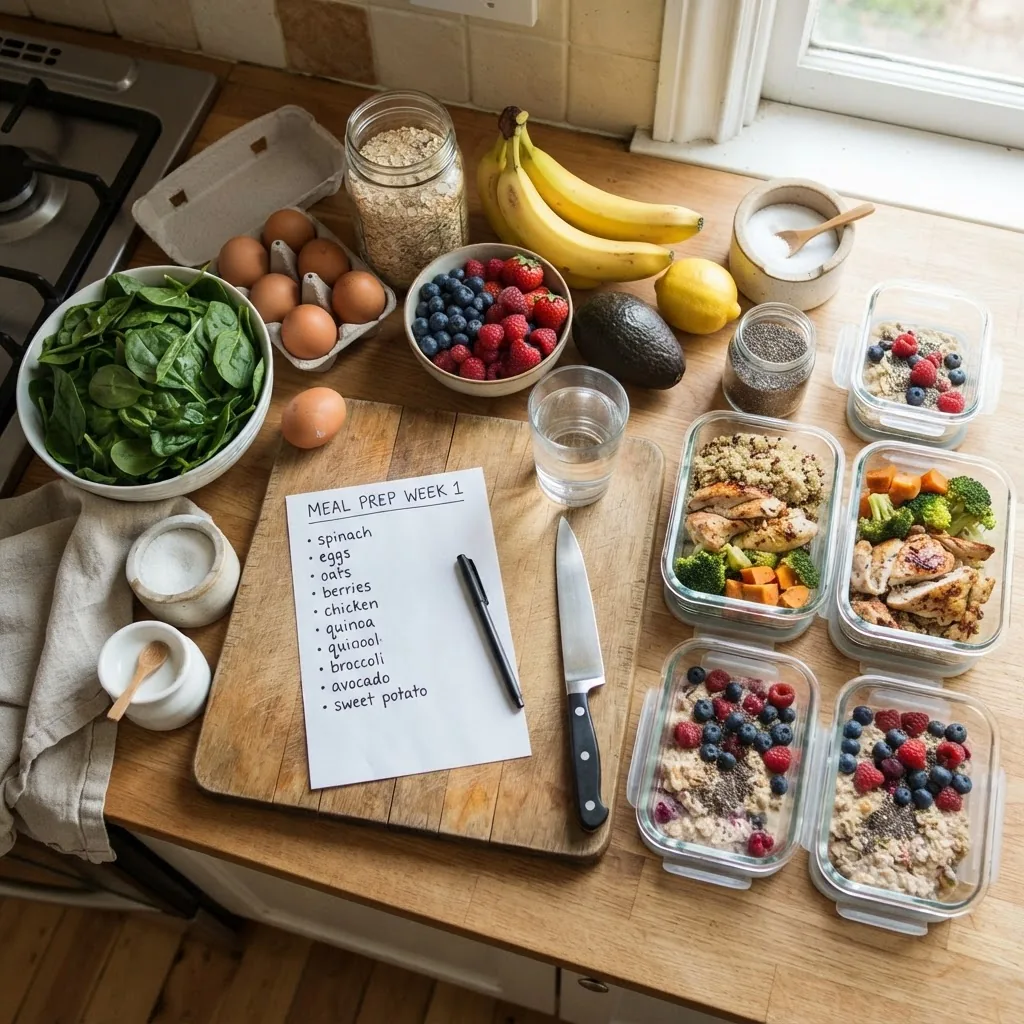
Planning is where most successful meal preppers win or lose. Below is a step-by-step numbered plan to design a weekly system that fits your schedule and fridge. Each step includes concrete timings and the internal resources to extend your plan.
-
Decide how many breakfasts to prep:
Choose target days—common options are 3, 5, or 7 breakfasts. I recommend starting with five weekday breakfasts. For a five-day plan, allocate 120–150 minutes on a weekend or split into two 60–90 minute sessions (Saturday morning and Sunday evening).
-
Pick your breakfast formats (mix variety):
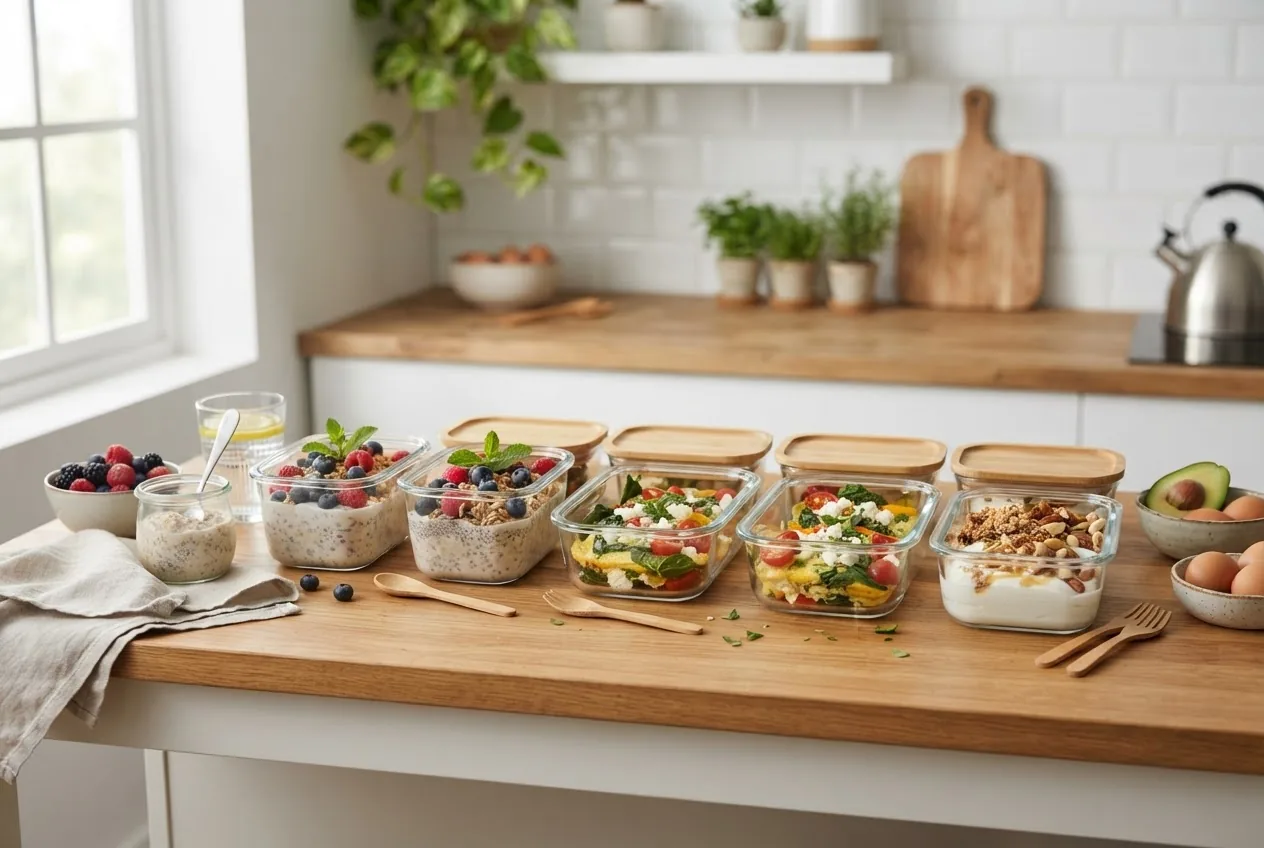
Rotate formats to avoid boredom and manage storage: for example, two days of overnight oats, two days of egg muffins, and one portable option like a breakfast burrito or smoothie pack. This mix balances fresh-fridge items and freezer-friendly meals.
-
Create a master shopping list and batch plan:
Write a list grouped by sections of the store and map ingredients to recipes. Use this week-by-week template: oats, chia, milk alternative, Greek yogurt, eggs (2 dozen for egg-batch), spinach (2 bags), bell peppers (3), berries (2 pints), bananas (7), whole-grain tortillas (10), black beans (2 cans), cooked chicken or cooked turkey sausage (optional), nuts, seeds.
balanced calorie meal plans and 600 calorie dinner recipes can help you balance overall day totals when you plan breakfast portions.
-
Schedule your cook block and workstation:
Clear 120–180 minutes and set a flow: fridge items first, oven items next, stovetop last, then cooling and packaging. Example timeline for a 150-minute block: 0–10 min unpack and preheat (oven 375°F / 190°C), 10–35 min chop and pre-cook (peppers, onions, cook quinoa), 35–60 min assemble and bake egg muffins, 60–80 min prepare overnight oats jars, 80–100 min assemble breakfast burritos and wrap for freezing, 100–120 min portion smoothies into freezer packs, 120–150 min label and stow.
-
Batch-cook common components:
Make bulk bases you reuse: 4 cups cooked quinoa, 6–8 cups sautéed greens/veggies, 2 cups cooked and cooled lean protein (chicken, turkey, tofu). Use a slow cooker for shredded chicken (4 hours on low) if you want hands-off protein prep.
weekly meal prep planning is useful when you combine breakfast with lunch/dinner batches.
-
Portion and pack with clarity:
Use 16–20 oz glass containers for bowls, 8–12 oz jars for overnight oats, and silicone muffin pans for egg muffins. Aim for 300–450 kcal per breakfast depending on needs; if you need help, consult balanced calorie meal plans as a starting reference.
-
Label everything clearly:
Write date made, reheating instructions, and “consume by” date (fridge: 3–4 days for egg dishes; freezer: up to 3 months for most items). Use masking tape and a permanent marker or pre-printed freezer labels.
-
Plan your rotation and reheating routine:
Decide which breakfasts you’ll eat from fridge vs freezer each weekday. Keep two fridge-ready options for the first three days and freeze the rest. Reheating sequence recommended: microwave (steam-wrap, 60–90 seconds), oven (350°F / 175°C for 8–12 minutes), air fryer (350°F / 5–7 minutes) depending on item.
For integrating evening meals, check nutritious dinner ideas and 600 calorie dinner recipes for balanced daily planning.
-
Create a reusable shopping and prep checklist:
Printable checklist example: Eggs (2 dozen), rolled oats (3 cups), chia seeds (1 cup), almond milk (1 quart), plain Greek yogurt (32 oz), frozen berries (2 bags), spinach (2 bags), bell peppers (3), onions (2), whole-wheat tortillas (10), cooked chicken (2 cups), black beans (2 cans), spices (paprika, cumin, salt, pepper), freezer bags, jars, labels.
-
Set a one-week review:
After your first week, note what you ate, what went stale, and what you skipped. Small adjustments (reduce a batch of a disliked item, add a sweeter oat mix, or increase protein) keep the system aligned to taste and waste reduction.
balanced calorie meal plans can help tune portion sizes during your review.
Transition: With planning done, gather the right ingredients and tools to execute efficiently.
Essential Ingredients and Tools for Easy Breakfast Meal Prep
Stocking the right pantry staples and kitchen tools is the single fastest way to speed up breakfast prep. Below are categories with recommended items and why they matter.
- Pantry staples: rolled oats, chia seeds, nut butter, canned beans, brown rice or quinoa, whole-grain tortillas, low-sodium broth base.
- Refrigerated essentials: eggs (2 dozen per week for family of two), plain Greek yogurt (32 oz), milk or dairy-free milk (1–2 quarts), fresh fruit (bananas, berries), leafy greens (spinach, kale).
- Frozen items: mixed berries (2 bags), edamame, hash-brown patties for quick sides—frozen produce is fast, affordable, and nutrient-retaining.
- Fresh regional picks (Texas nod): buy seasonal Texas produce like peaches (summer), sweet potatoes, and bell peppers—local farmer’s markets often carry these at peak flavor and price.
Kitchen tools that save time:
- Glass meal prep containers (8, 16, and 24 oz sizes) for portion control and easy reheating.
- Muffin pans and silicone liners for egg muffins and frittatas.
- Slow cooker (for hands-off protein prep) and Instant Pot (10–15 min pressure-cooked grains).
- Air fryer to crisp reheated burritos and egg muffins (350°F / 5–7 min).
- Good chef’s knife and cutting board; a food scale for accurate portioning.
- Freezer-safe bags and labels; mason jars for overnight oats.
affordable healthy foods like oats, frozen berries, and eggs anchor cost-effective prep.
Transition: Now that you have the tools and staples, let’s walk through the most reliable recipes and format ideas for make-ahead breakfasts.
Top Healthy Make-Ahead Breakfast Recipes and Ideas
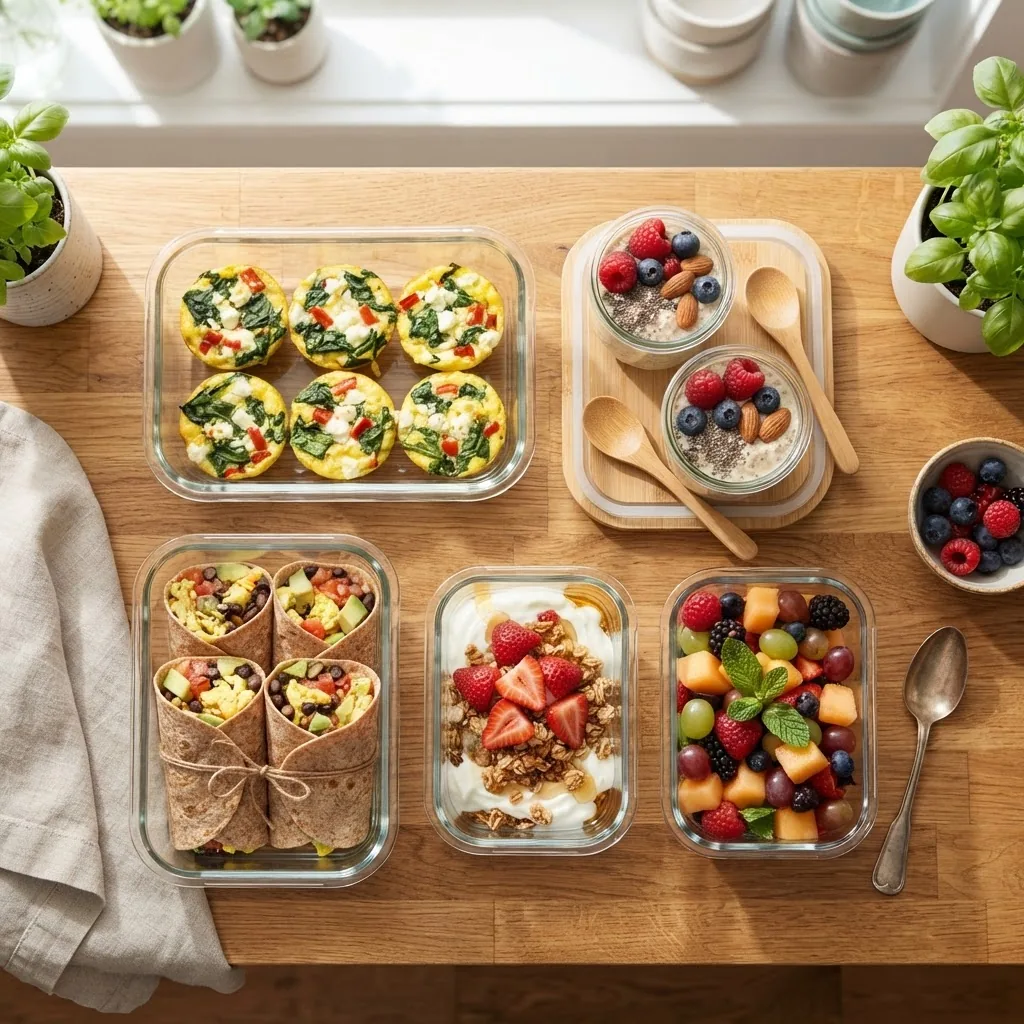
This section presents tested recipes and quick prep tips. Each entry includes batch size, cook time, storage life, and reheating advice.
-
Overnight Oats (serves 5):
Batch: 5 jars. Prep time: 10 minutes. Fridge life: 4–5 days.
Recipe: In each 12-16 oz jar combine 1/2 cup rolled oats, 1 tbsp chia seeds, 3/4 cup milk or milk alternative, 1/3 cup Greek yogurt (optional), and 1/2 cup berries or fruit. Sweeten with 1 tsp honey or maple syrup if desired.
Prep tips: Stir and top with fresh berries just before serving. For variety, rotate flavor bases: cinnamon-apple, cocoa-banana, or peach-cardamom (Texas peaches in season).
Diet swaps: Use dairy-free yogurt and plant milk for dairy-free needs. For gluten-free, confirm oats labeled gluten-free.
easy and healthy breakfast ideas offers further quick variations.
-
Egg Muffins / Mini Frittatas (batch: 12 muffins):
Batch: 12 muffins (two weeks of breakfasts for one person or a week for two). Active prep: 25–30 minutes. Bake: 18–22 minutes at 375°F (190°C). Fridge life: 3–4 days; freeze up to 3 months.
Walkthrough (practitioner walkthrough & timing): Preheat oven to 375°F. Whisk 10 large eggs with 1/2 cup milk (or plant milk), 1 tsp salt, and 1/2 tsp black pepper. Sauté 2 cups chopped spinach, 1 diced bell pepper, and 1/2 cup diced onion for 4–6 minutes until softened. Stir 1 cup cooked quinoa or diced cooked chicken into veggie mix. Spoon into greased or silicone-lined muffin tin (fill each cup ~3/4). Bake 18–22 minutes until center sets and edges are lightly golden. Cool 10 minutes before transferring to a rack; portion into containers.
Reheat: Microwave 60–90 seconds (covered); air fryer 350°F for 3–5 minutes to re-crisp.
Anecdote: I tested this batch with 12 muffins; labeling saved me two trips to the store because I could see what I had and avoided doubling an ingredient unnecessarily—small workflow wins add up.
-
Breakfast Burritos (freeze-ready, 6–10 burritos):
Batch: 8 burritos. Active prep: 30–40 minutes. Freeze life: 8–12 weeks.
Recipe: Scramble 12 eggs (or 3 cups egg whites), add 1 cup cooked black beans, 2 cups sautéed veggies, 1 cup cooked rice or quinoa, and 1 cup shredded reduced-fat cheese or dairy-free alternative. Portion 3/4 to 1 cup filling into whole-grain tortillas, fold tightly, wrap in foil, then slide into freezer bag—label date and contents.
Reheat: From frozen, unwrap foil and microwave on a microwave-safe plate for 90–120 seconds, flip, and heat additional 60–90 seconds. For crisper finish, air fry at 350°F for 6–8 minutes.
chicken meal prep recipes are a solid protein swap inside burritos.
-
Smoothie Freezer Packs (serves 5):
Batch: 5 packs. Prep time: 10–15 minutes. Freeze life: 2–3 months.
Build each pack in a labeled freezer bag: 1 cup frozen berries, 1 banana, 1 handful spinach, 2 tbsp nuts or seeds, 1/2 cup Greek yogurt (optional). In the morning, add 1–1 1/4 cups liquid and blend.
Tip: For extra protein, pre-portion 1 scoop protein powder into small reusable tins or measure into bags.
-
Greek Yogurt Parfait Jars (serves 5):
Batch: 5 jars. Prep time: 10–12 minutes. Fridge life: 3 days (add granola at service).
Layer 3/4 cup plain Greek yogurt with 1/2 cup berries and 2 tbsp chopped nuts; store with lids. Add granola or toasted oats at serving so texture stays crisp.
-
Protein Pancake Batter (freezer-friendly pancakes):
Batch: batter for 10 pancakes. Prep time: 15 minutes to mix, cook 2 min per side. Freeze cooked pancakes in stacks of 2 separated by parchment—freeze up to 3 months. Reheat in toaster or oven 350°F for 8–10 minutes.
-
Savory Breakfast Bowls (serves 5):
Batch: 5 bowls in 24-oz containers. Prep time: 40 minutes. Combine 1 cup cooked grain (quinoa or brown rice), 1/2 cup roasted sweet potato, 1/2 cup sautéed greens, 1/3 cup cooked beans or shredded chicken, and top with a soft-boiled egg when serving (cook eggs fresh or sous-vide then store).
-
Chia Pudding Cups (serves 5):
Batch: 5 cups. Prep time: 10 minutes. Fridge life: 4–5 days. Mix 3/4 cup chia seeds with 3 cups milk and sweetener, portion into jars and top with fruit.
-
Quick To-Go Options:
Keep hard-boiled eggs (7 days refrigerated), fresh fruit, and single-serve nut packets for mornings you need an ultra-fast backup.
-
Rotate and label flavors weekly:
Pick a theme each week—Mexican-inspired (burritos, huevos rancheros bowls), Mediterranean (yogurt, fruit, nuts), or Texan seasonal (peach overnight oats, sweet potato bowls). For more quick inspiration, view easy and healthy breakfast ideas.
Transition: With your recipes prepped, you need safe storage and effective reheating methods so your breakfasts stay great all week.
How to Store and Reheat Prepped Breakfasts Safely and Effectively
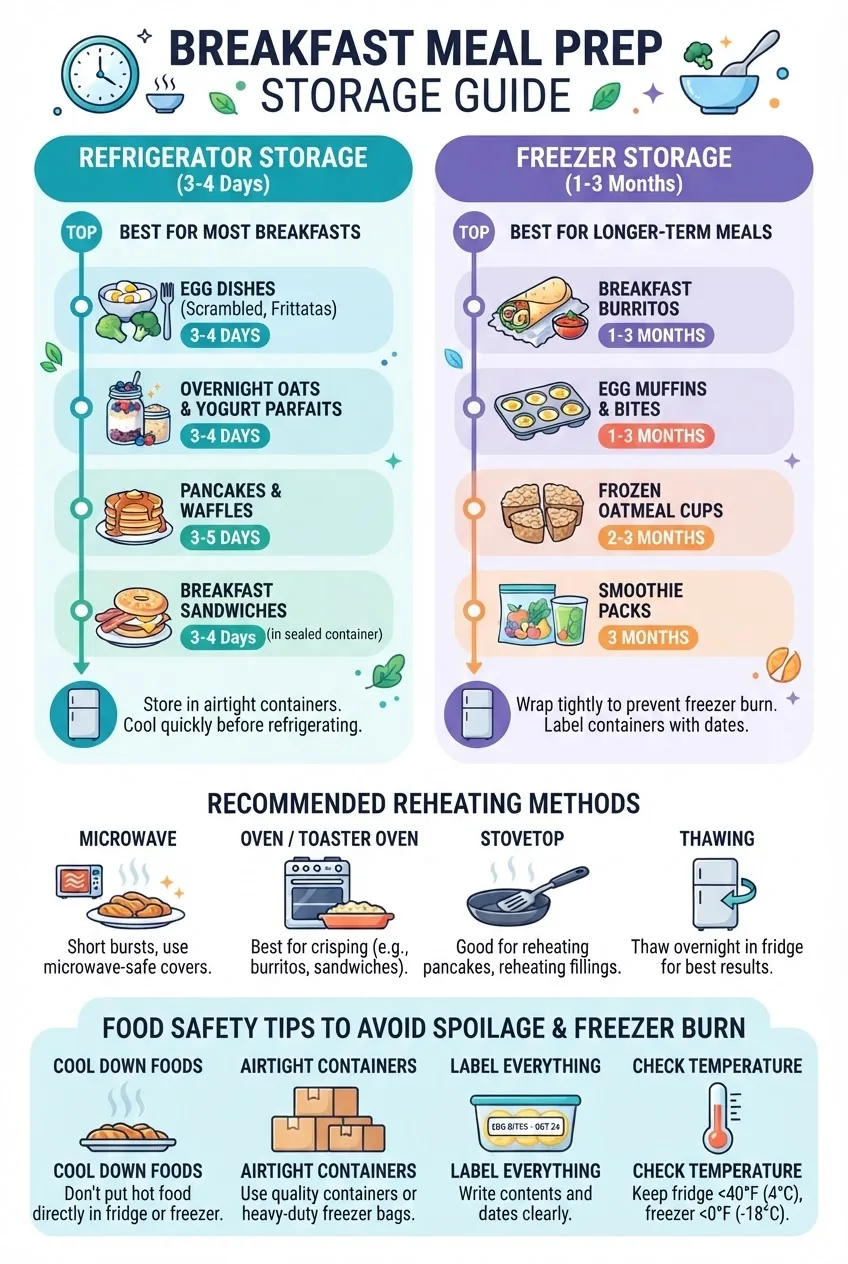
Food safety preserves flavor and prevents waste. Follow these steps and timeline thresholds, which align with authoritative guidelines.
-
Cool before refrigerating:
Allow hot items to cool to near room temperature (no more than 90 minutes) before sealing and placing in the fridge. Storing piping hot food raises refrigerator temperature and increases bacterial risk. For faster cooling, divide into shallow containers (1–2 inch depth).
-
Refrigerator vs freezer timing:
Follow these practical shelf lives: scrambled eggs and egg muffins—3–4 days refrigerated; overnight oats, yogurt parfaits—4–5 days; cooked grains and roasted vegetables—4–5 days; breakfast burritos (frozen): 8–12 weeks; smoothie freezer packs: 2–3 months. For regulatory reference on food storage, see the FDA food storage guidelines.
-
Avoid freezer burn:
Remove air with vacuum sealer or press out air from freezer bags. Wrap burritos in foil then into a labeled freezer bag. Use freezer-grade containers and keep temperatures at 0°F (-18°C) or below.
-
Thawing and reheating:
Safe thawing hierarchy: fridge thaw overnight, microwave defrost in short bursts, or cook from frozen per recipe instructions. Reheat egg dishes to 165°F (74°C) internal temperature. Use an oven or air fryer for texture restoration and microwaves for speed. When using microwave, cover with a damp paper towel to retain moisture and avoid sogginess.
-
Labeling and FIFO (first in, first out):
Always label with date and consume older items first. Keep a visible “eat-by” list on your fridge door if multiple family members access the freezer.
-
Food safety caveats and when to discard:
Discard any prepped food that smells off, shows discoloration, or has been left at room temperature more than 2 hours (1 hour if >90°F/32°C). When in doubt, throw it out—this is a standard food-safety principle echoed by public health authorities.
For more freezer strategies, see freezer-friendly meal prep ideas.
Transition: Not everyone has the same diet—here are practical swaps and adjustments to tailor your prep.
Tips for Customizing Healthy Breakfast Prep According to Dietary Needs and Preferences
Customize without sacrificing speed. Below are substitutions, example swaps, and balanced-composition notes to match common diets.
Protein, fiber, carbs balance: Aim for ~15–30 g protein, 5–10 g fiber, and a source of complex carbs per breakfast for sustained energy. Use lean proteins (eggs, Greek yogurt, cooked chicken), fiber-rich carbs (oats, quinoa), and healthy fats (nuts, avocado).
Diet-specific swaps and examples:
| Dietary Need | Ingredient Swap | Example Prep |
|---|---|---|
| Gluten-free | Use certified gluten-free oats, corn tortillas, or gluten-free wraps | Overnight oats with gluten-free oats; burrito in gluten-free wrap |
| Dairy-free | Replace Greek yogurt and milk with soy or almond yogurt/milk | Chia pudding with almond milk; dairy-free egg muffins |
| Vegetarian | Add beans, tofu scramble, or extra Greek yogurt for protein | Savory bowl with quinoa, black beans, roasted sweet potato |
| Low-carb / Keto | Replace grains with extra veggies and increase eggs/cheese | Egg muffin with spinach and sausage, served with avocado |
vegetarian dinner recipes and cheap vegetarian meals complement vegetarian breakfast choices and help keep variety.
Practical examples:
- Gluten-free overnight oats: ensure oats labeled GF; add 1/2 cup Greek-style coconut yogurt and top with toasted pecans.
- Dairy-free egg muffins: whisk 10 eggs with 1/2 cup unsweetened soy milk and 1 cup sautéed vegetables; bake as usual.
- Vegetarian high-protein bowl: 3/4 cup cooked quinoa + 1/2 cup black beans + roasted veggies + 2 tbsp pumpkin seeds.
Transition: Even with preparation, common problems arise—here’s how to troubleshoot them quickly.
Troubleshooting Common Challenges in Meal Prep Breakfast
Q: Preventing soggy prepped meals?
Answer: Store wet components separately (e.g., add granola at serving), fully cool hot foods before sealing, and use microwave steam covers when reheating to restore texture without making items soggy.
Q: Balancing nutrition across batches?
Answer: Include a protein source in each portion—egg, Greek yogurt, beans, or chicken—and add fiber via oats, fruit, or vegetables. If uncertain, follow the USDA portion cues noted in the 2023 USDA dietary report.
Q: Time management and flow issues?
Answer: I found batching similar tasks (chopping, then sautéing, then baking) and cleaning as you go removes friction; preheating early and using oven space fully (two muffin pans at once) cuts minutes per batch.
Q: Ingredient freshness problems?
Answer: Freeze portions of perishable produce if it won’t be used within 3 days. For leafy greens, store with paper towels to absorb moisture and maintain crispness.
Q: Batch size optimization?
Answer: Start smaller—prep 3 days of each item first. If you waste less than one portion per week, scale to five-day batches. My rule: don’t double a recipe until you’ve eaten one full batch twice.
Transition: For readers in Texas, there are local adjustments to make meal prep more seasonal and regionally convenient.
Incorporating Meal Prep Breakfast into Your Texas Lifestyle
Texas living favors seasonal, hearty produce and on-the-go lifestyles. Here are practical Texas-centric ideas to make meal prep fit regional tastes and ingredient availability.
- Local produce choices: Summer: fresh peaches and blackberries for overnight oats; fall/winter: sweet potatoes and citrus for bowls and parfaits. Seek farmer’s market tomatoes and peppers for salsas that brighten egg muffins.
- Regional proteins: Use rotisserie chicken or smoked turkey from local grocers as a quick protein for burritos and bowls. For a Texas twist, add a small amount of finely chopped smoked brisket to occasional bowls (portion control advised).
- On-the-go Texas mornings: Breakfast burritos and portable parfait jars travel well for drives or outdoor work. Wrap burritos tightly and keep in an insulated bag if you’ll eat within a few hours.
- Seasonal pantry swaps: Replace berries with canned peaches (no sugar added) or frozen fruit when in off-season to keep cost down and reduce waste.
A practical weekly Texas example (Day-by-day quick plan):
- Monday: Egg muffin + fresh peach slices
- Tuesday: Overnight oats with Texas peaches
- Wednesday: Breakfast burrito (frozen, reheated)
- Thursday: Smoothie with frozen berries and spinach
- Friday: Savory bowl with roasted sweet potato and shredded chicken
Transition: A final wrap-up helps you verify your setup and know when to ask an expert for help.
Conclusion: Making Healthy Breakfast Meal Prep Work for You Every Day
By committing 120–180 focused minutes each week, following the batch-cooking flow above, and using clear labeling and fridge/freezer rules, you can consistently eat balanced breakfasts that support energy and health goals. Small iterations—swap flavors, tweak portion sizes, and keep a short review each week—turn a one-time effort into a lasting habit. Start with modest batches, use the printable checklist below, and re-evaluate after the first two weeks to lock in what works for your schedule and taste.
Call to action: Start this weekend—pick three formats from the recipes above, print the shopping checklist, and time your first 150-minute session. You’ll save minutes every morning and eat better all week.
Before you start
- Time: Reserve a 120–180 minute block on weekend (or split into two 60–90 minute sessions).
- Skill level: Beginner-to-intermediate cook; basic chopping, oven use, and simple stove-top skills required.
- Tools: Glass containers, muffin tins, freezer bags, labels, chef’s knife, skillet, oven, and blender.
- Ingredients: Refer to the master shopping checklist in the Planning section above.
Step-by-step core workflow
-
Set up your workspace (0–10 min)
Clear counters, preheat oven to 375°F (190°C), lay out cutting board, containers, labels, and utensils. Place a trash bowl within reach—this saves walking time.
-
Prep wet and dry components together (10–35 min)
Wash fruit, chop vegetables (bell peppers, onions), rinse beans, and measure oats, chia seeds, and spices into small bowls. Cook grains in a rice cooker or Instant Pot (quinoa: 1 cup quinoa to 2 cups water, pressure cook 1 minute, natural release 10 minutes) so they finish near the time you need to assemble.
-
Sauté and cook proteins (35–60 min)
Sauté vegetables for egg muffins and burrito fillings for 6–8 minutes. If using shredded chicken from a slow cooker, check it’s fully cooked (internal 165°F). For a stovetop chicken quick-cook, slice thin and cook in a skillet 6–8 minutes until internal temp 165°F.
-
Assemble and bake egg muffins (60–85 min)
Whisk eggs (10 eggs), 1/2 cup milk, salt, and pepper. Fold in veggies and 1 cup cooked protein or quinoa. Pour into 12-cup muffin tin and bake 18–22 minutes at 375°F. Let cool 10 minutes to avoid condensation when storing.
-
Assemble overnight oats and parfaits (85–100 min)
Portion oats and chia pudding into jars: 1/2 cup oats, 1 tbsp chia, 3/4 cup milk. Seal and refrigerate. Layer yogurt parfaits leaving granola dry separately.
-
Assemble breakfast burritos and freeze (100–125 min)
Portion 3/4–1 cup filling into each tortilla, fold tightly, wrap in foil, then in freezer-safe bags. Label with date and reheating instructions. Use 3–4 burritos per meal if feeding more than one person.
-
Pack smoothie packs and quick cereals (125–140 min)
Place fruit and greens into freezer bags for each smoothie. Measure protein powder if using. Store in a single freezer drawer for easy access.
-
Label, rotate, and store (140–150 min)
Label containers with date and “eat-by” date. Place fridge-ready items front-most and freeze others. Make a meal plan for the week showing what to eat each day to prevent confusion.
Common mistakes and how to avoid them
I used to overcook egg muffins to be “safe” and ended with dry, rubbery cups—now I stop baking at 18 minutes and let the residual heat finish them while cooling. I once froze burritos without foil and had freezer burn; now I double-wrap and squeeze out air. I also learned that storing granola with yogurt jars makes it soggy—always add crunchy toppings at serving.
Checklist to verify your work
- All items labeled with date and reheating instructions.
- Fridge items placed front-forward for next 3–4 days; frozen items consolidated into one drawer.
- Protein present in every breakfast portion (eggs, yogurt, beans, chicken).
- Texture-preserving tactics applied (granola separate, cooled food before sealing).
- Weekly plan posted on fridge with day-by-day consumption schedule.
When to call in a professional
Call a registered dietitian or your healthcare provider if you have complex dietary needs (e.g., food allergies, medical conditions requiring precise macronutrient control). For detailed, personalized portion targets and clinical nutrition advice, consult an RDN—see resources at the Academy of Nutrition and Dietetics.