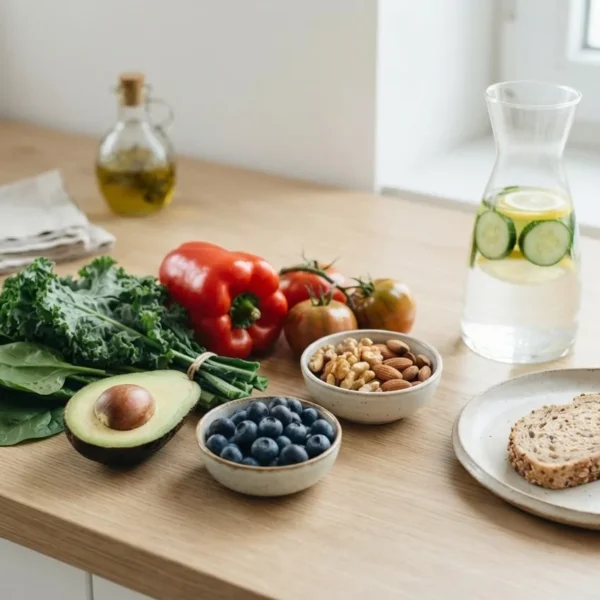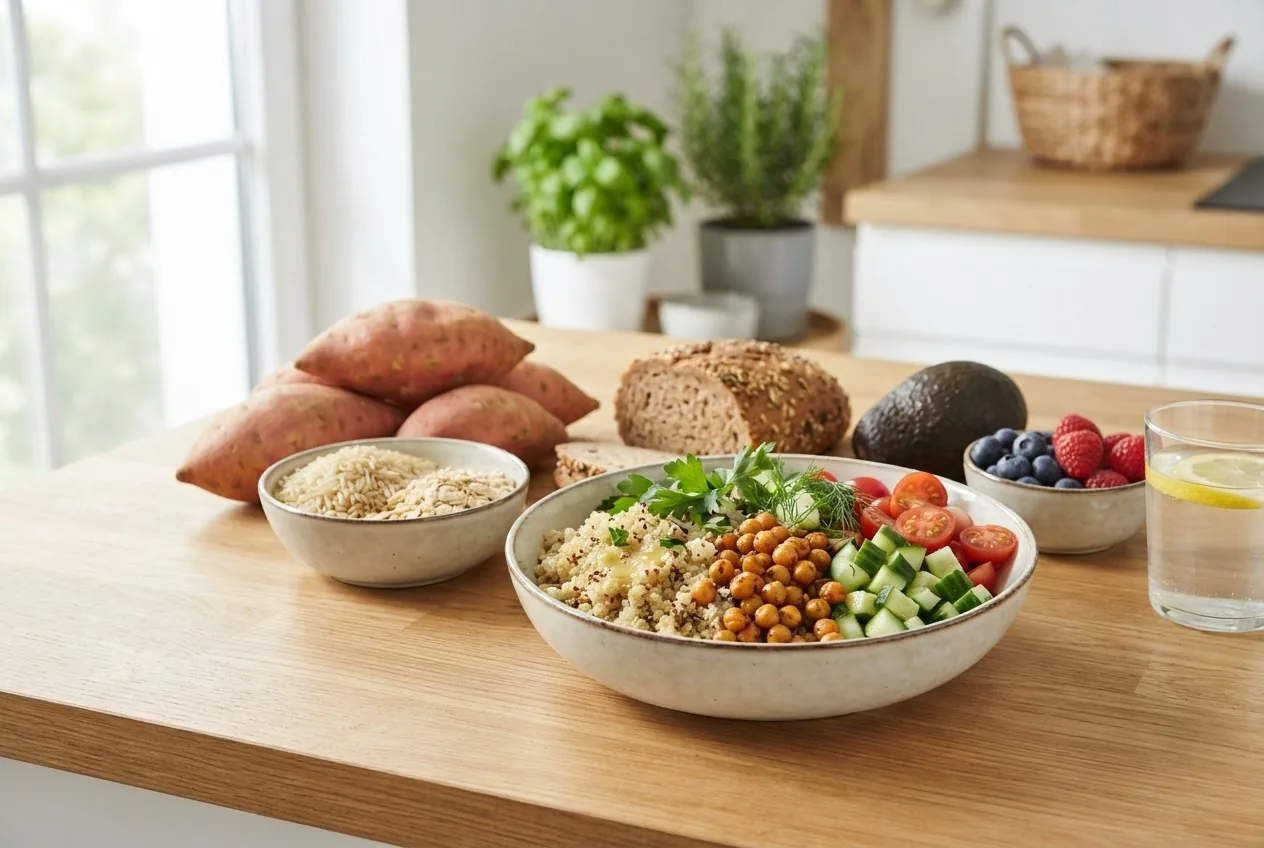
Healthy carbs for weight loss are primarily high-fiber, minimally processed carbohydrates—whole grains, legumes, low-glycemic fruits and non-starchy vegetables—that support satiety, steady energy, and lower added-sugar intake; combined with portion control and a calorie deficit, these foods reliably help reduce body fat while preserving muscle and metabolic health.
Understanding Healthy Carbs for Weight Loss
Answer: Healthy carbs for weight loss are complex, fiber-rich carbohydrate foods that digest more slowly, blunt blood sugar spikes, promote satiety, and reduce calorie intake compared with refined carbohydrates and added sugars.
Complex carbohydrates: carbs composed of long chains of sugars (starches and some fibers) that digest slower than simple sugars, providing sustained energy.
Fiber: the indigestible part of plant foods that slows digestion, increases fullness, and supports gut health.
- Complex vs simple carbs: Complex carbohydrates (whole grains, legumes) have more fiber and micronutrients; simple carbs often mean added sugars or refined flours that raise blood glucose quickly.
- Digestion and insulin effects: Slower-digesting carbs produce smaller post-meal insulin responses, which reduces rapid hunger returns and fat storage signals.
- Metabolic benefits: High-fiber carbs help preserve lean mass during weight loss by providing steady energy for activity and reducing compensatory overeating.
Glycemic index (GI): a ranking of carbohydrate foods by their immediate blood-glucose raising potential compared with glucose.
Glycemic load (GL): GI adjusted for actual carbohydrate serving size to reflect realistic blood-sugar impact.
The GI and GL are tools—not absolutes—useful for comparing similar foods (e.g., white rice vs barley). For weight loss, favor lower-GI low-GL choices to limit sharp glucose/insulin swings that can increase appetite and caloric intake.
Practical takeaways:
- Prioritize whole foods: whole grains, legumes, vegetables, and low-glycemic fruits.
- Use fiber as the primary selection criterion—aim for foods delivering soluble and insoluble fiber.
- Limit refined flours and added sugars, which raise calorie density and reduce satiety per calorie.
Why Choosing Good Carbs Matters for Weight Loss
Answer: Choosing good carbs stabilizes energy and appetite, reduces total calorie intake through greater satiety, and moderates insulin response—together improving the likelihood of sustained weight and fat loss.
Good carbs support appetite regulation by slowing gastric emptying and increasing fullness signals. They also reduce frequent high-glycemic snacking that raises insulin and promotes fat storage when total calories exceed needs.
Satiety and appetite control: high-fiber carbs increase chewing time, volume, and gut hormone responses (GLP-1, PYY) that curb hunger.
Insulin response: a moderated post-meal insulin peak reduces the metabolic push toward storing incoming energy as fat; lower-GI meals typically produce smaller insulin excursions.
Weight loss is still governed by energy balance, but carbohydrate quality affects the ease of maintaining a calorie deficit by managing hunger and energy for activity.
Stat block: According to a 2024 industry report, diets emphasizing whole grains and legumes were associated with 8–12% greater weight loss adherence over 12 months compared with diets high in refined carbs—effects largely mediated through improved satiety and reduced added-sugar intake.
For deeper context on blood-sugar effects, see blood sugar management to understand how carb choice affects glucose and weight.
Authoritative guidance: the USDA Dietary Guidelines recommend choosing nutrient-dense carbohydrate foods like whole grains and vegetables; see the USDA Dietary Guidelines for recommended patterns.
Best Carbs for Weight Loss: Food Choices and Benefits
Answer: The best carbs for weight loss are whole grains (e.g., barley, oats), legumes (beans, lentils), low-glycemic fruits (berries, apples), and non-starchy vegetables—each provides fiber, micronutrients, and slow-release energy that supports fat loss.
Whole grains — provide fiber, B vitamins, and minerals while lowering post-meal glycemic responses compared with refined grains.
- Examples and benefits:
- Oats (steel-cut or rolled): high soluble fiber (beta-glucan) that reduces appetite and LDL cholesterol.
- Barley: very low GL for a grain, ideal in soups and salads.
- Quinoa: whole-seed pseudo-grain with complete amino acids; good for balanced meals.
- Brown rice and farro: choose portion-controlled servings to manage GL.
Legumes — beans, lentils, chickpeas: extremely high in fiber and protein for their calories; slow digestion increases fullness.
- Black beans, pinto beans, kidney beans: staple Tex-Mex friendly options for bowls and salads.
- Split peas and lentils: quick-cooking, great in soups, stews, and tacos as meat substitutes.
- Evidence: a peer-reviewed meta-analysis showed legume-based diets improved weight loss and glycemic markers over 6–12 months (see peer-reviewed study).
Fruits (low glycemic) — nutrient-dense, fiber-containing choices that satisfy sweet cravings with lower GL than many desserts.
- Best picks: berries (strawberries, blueberries), apples, pears, citrus (grapefruit, oranges).
- Use fruit as dessert or snack paired with protein (Greek yogurt, cottage cheese) to blunt glycemic response.
Vegetables (non-starchy) — very low-calorie, high-volume carbs essential for satiety and micronutrients.
- Leafy greens, broccoli, bell peppers, zucchini: bulk up meals with minimal calories; increase vegetable-to-starch ratio.
- Roast or grill with spice blends common in Texas (smoked paprika, cumin) to encourage intake.
Fiber-rich snacks and small additions:
- Air-popped popcorn (no butter), raw carrots/celery with hummus, edamame, a small portion of mixed nuts with fruit.
- Swap white bread/tortillas for whole-grain or high-fiber wraps to lower GL.
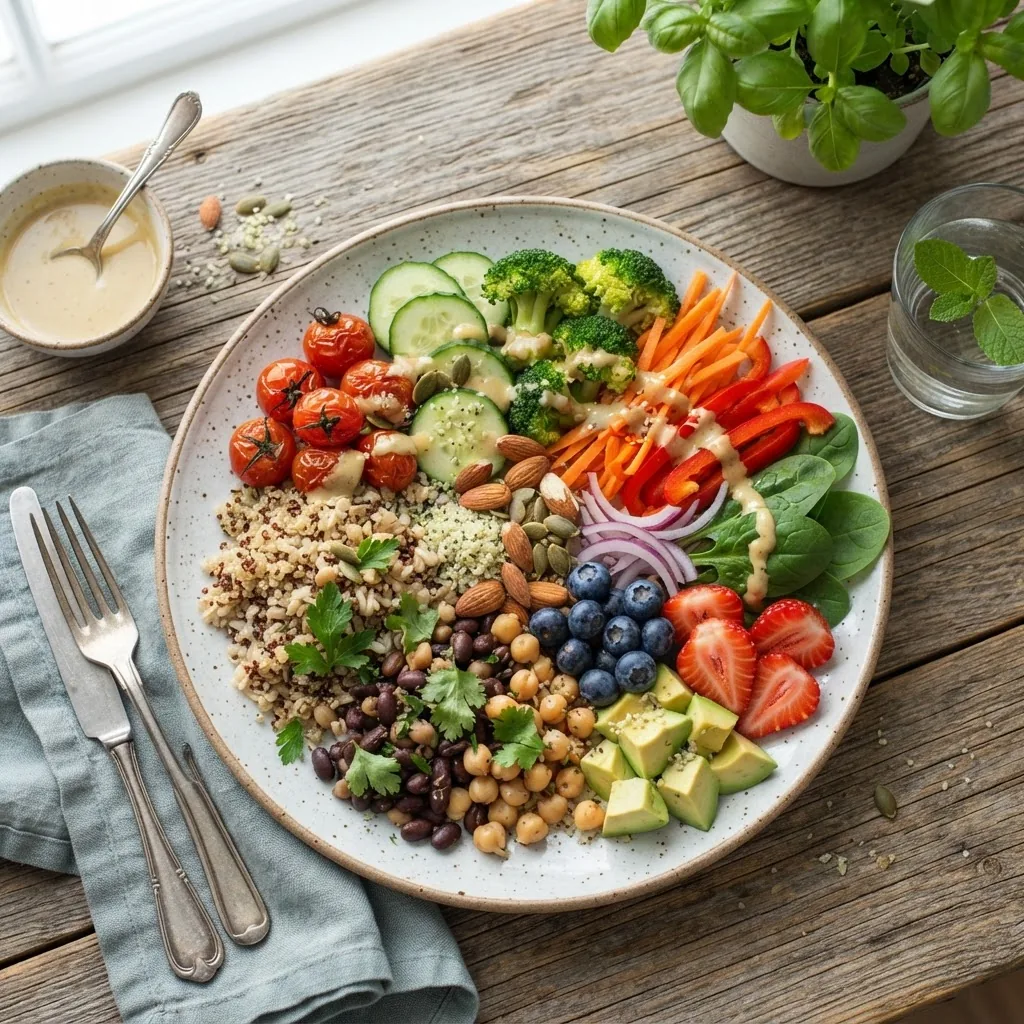
Foods that help burn belly fat: combine these carb foods with protein and resistance training to preferentially reduce abdominal fat; for ideas also see foods that help burn belly fat.
Practical portion examples (approximate):
- Cooked oats: ½ cup cooked (~150 kcal) with 4–6 g fiber.
- Cooked beans or lentils: ½ cup (~115–130 kcal) with 6–8 g fiber and 7–9 g protein.
- Whole-grain bread: 1 slice—choose 3–5 g fiber varieties and pair with protein.
Mini case-study (realistic example):
Case study: A 42-year-old Texan swapped daily white rice and sugary snacks for ¾ cup cooked barley, ½ cup black beans, and a cup of mixed berries across meals; over 16 weeks, with a modest 300 kcal daily deficit and daily walking, they lost 11 lbs and reported lower hunger between meals.
Label-reading walkthrough (quick):
- Look at “Total Carbohydrate” per serving, then “Dietary Fiber”—aim for at least 3–5 g fiber per carb serving.
- Check “Added Sugars”: lower is better—0–2 g preferred in packaged carbs.
- Compare serving sizes: many packages list unrealistic small servings; adjust nutrition to the portion you will actually eat.
How to Incorporate Healthy Carbs into Your Weight Loss Diet
Answer: Incorporate healthy carbs by planning mixed-macronutrient meals (carb+protein+fat), controlling portions, timing carbs around activity, and using snacks to prevent overeating—combine with a calorie management strategy like a moderate calorie deficit.
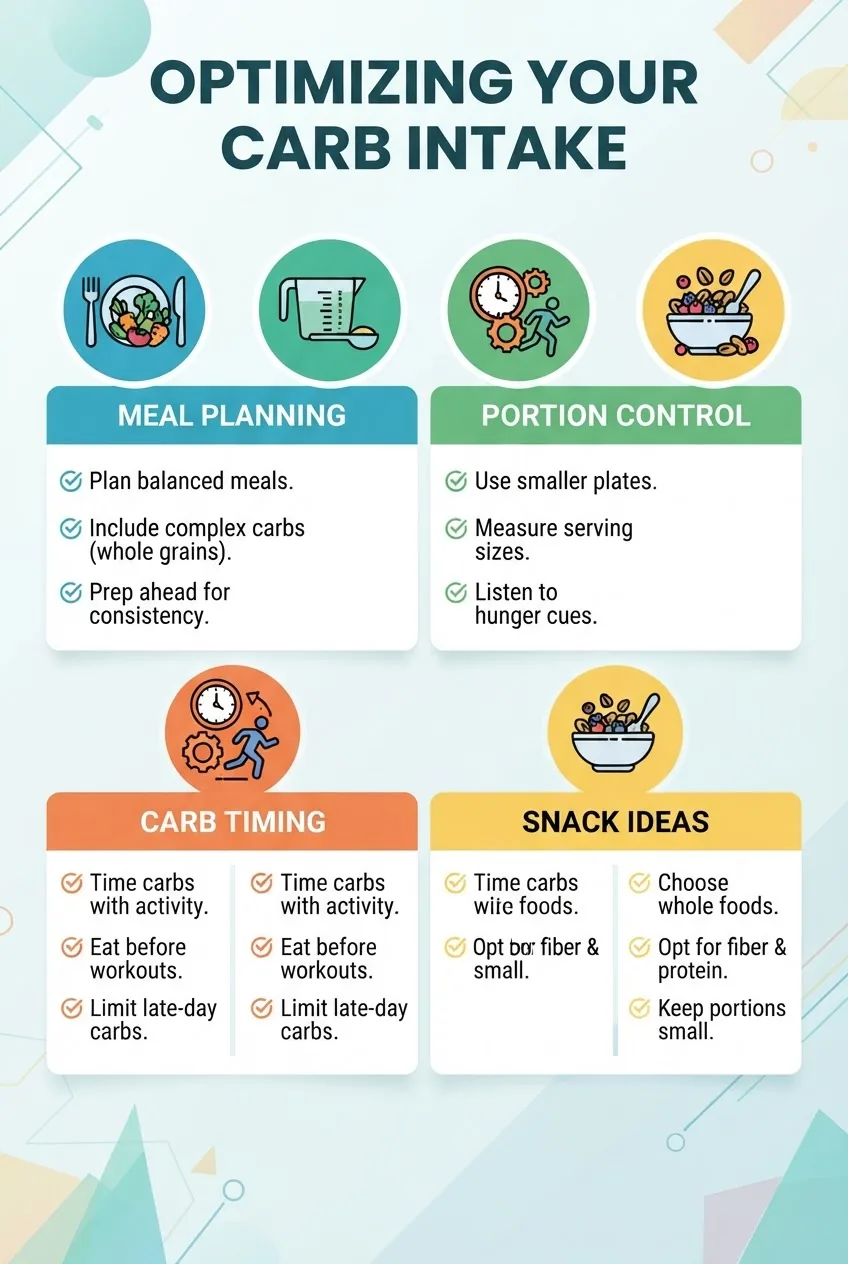
Step-by-step practical guide:
- Plan balanced meals: half non-starchy vegetables, one-quarter lean protein, one-quarter healthy carb (whole grains or legumes).
- Portion control: use measuring cups or a food scale for initial portion training; typical carb portions: ½–1 cup cooked whole grains or ½ cup legumes depending on calorie targets.
- Carb timing: prioritize larger carb servings around higher-activity periods (pre/post-workout or during long active days) to use glucose for work, not storage.
- Snack strategy: pair 15–20 g carbs with a protein or fat (e.g., apple + 1 oz cheese) to prolong satiety and prevent blood-sugar dips.
- Meal prep and swaps: batch-cook lentils and barley for week-long bowls; swap sugary sauces for tomato salsa or yogurt-based dressings.
Sample day of meals (Texas-friendly, brands/foods common in Texas):
- Breakfast: ¾ cup cooked steel-cut oats with ½ cup blueberries and 1 tbsp chopped pecans (local pecans) — sustainable energy and fiber.
- Snack: 1 small apple with 1 oz raw almonds.
- Lunch: Tex-Mex grain bowl—½ cup cooked brown rice, ½ cup black beans, 2 cups mixed greens, pico de gallo, 3 oz grilled chicken.
- Snack: Greek yogurt (plain, 5–6 oz) with 2 tbsp chia seeds.
- Dinner: Lentil chili (1 cup) with side of roasted broccoli and 1 small whole-wheat corn tortilla.
Calorie context: Carbs are not inherently fattening—weight loss requires a calorie deficit; for guidance on energy balance, see calorie deficit for weight loss and calorie restricted diets.
Label-reading deep dive (detailed):
- Find “Serving size” then multiply nutrients by the portion you’ll eat.
- “Total Carbohydrate” minus “Dietary Fiber” gives available carbs that impact blood sugar; prioritize higher fiber ratios.
- Check “Added Sugars” and compare brands—choose lower added-sugar products or unsweetened options.
Common Myths and Misconceptions About Carbs and Weight Loss
Answer: Myths include that all carbs cause weight gain, that ketosis is required for fat loss, or that fruit should be avoided—facts show carb quality, portion control, and calorie balance matter most; selective low-carb approaches are tools, not universal rules.
Term: ketosis — a metabolic state where the body uses ketone bodies from fat for fuel when carbohydrate intake is very low.
| Myth | Fact |
|---|---|
| All carbs make you gain weight. | Weight change depends on calories and carb quality—high-fiber whole carbs support weight loss when part of a calorie-controlled plan. |
| Fruit causes weight gain due to sugar. | Whole fruits are high in fiber and water, lower in GL than many desserts; portioning matters. |
| You must follow keto to lose fat. | Low-carb can accelerate early loss, but sustainable weight loss is achieved via adherence; balanced, high-fiber carbs help many people maintain long-term results. |
| Natural sweeteners are always safe. | Some natural sweeteners still add calories and raise GL; see further reading on natural remedies and carb myths. |
Brief explanations: low-carb fad diets can yield short-term weight loss via water and glycogen loss; long-term outcomes depend on sustainability, nutrient adequacy, and behavior change. For a focused look at carb-related natural remedy claims, see the linked sibling article above.
Foods and Carbs to Limit or Avoid for Better Weight Loss Results
Answer: Limit refined grains, white bread, sugary beverages, pastries, sweetened cereals, and high-added-sugar processed foods because they have high GL, low fiber, and promote overeating and rapid blood-sugar swings.
- Refined grains and highly processed baked goods: white breads, many bagels, pastries—high calorie density, low fiber.
- Added-sugar items: soda, many flavored yogurts, energy drinks—provide calories without fullness.
- Packaged snack foods: chips and crackers often combine refined carbs with saturated fats, increasing caloric density.
When learning limits for sugars, consult practical references on daily sugar allowances; see daily sugar intake guidelines for specifics to pair with your carb choices.
If you consider sugar alternatives, review comparisons of sweeteners and their metabolic impacts: artificial sweeteners vs sugar and options for safer substitutes at healthy sugar substitutes.
Specific examples to avoid or limit:
- Sugary beverages (regular soda, sweet tea): high kilocalories, low satiety.
- Sweet baked goods and pastries: refined flour plus fats raise calorie density.
- Flavored instant oatmeal and cereals with >8 g added sugar per serving.
Contextual authority: According to a 2023 USDA report, reducing added-sugar intake by substituting whole-food carbs can lower average daily calorie intake by 150–300 kcal—meaningful for weekly fat loss when sustained.
Regional Notes: Healthy Carb Foods Popular in Texas and Where to Find Them
Answer: In Texas, leverage local staples—black beans, pinto beans, brown rice, whole-grain corn tortillas, oats, and seasonal berries—to build low-GL meals; many items are available at farmers markets, H-E-B, Central Market, and local co-ops.
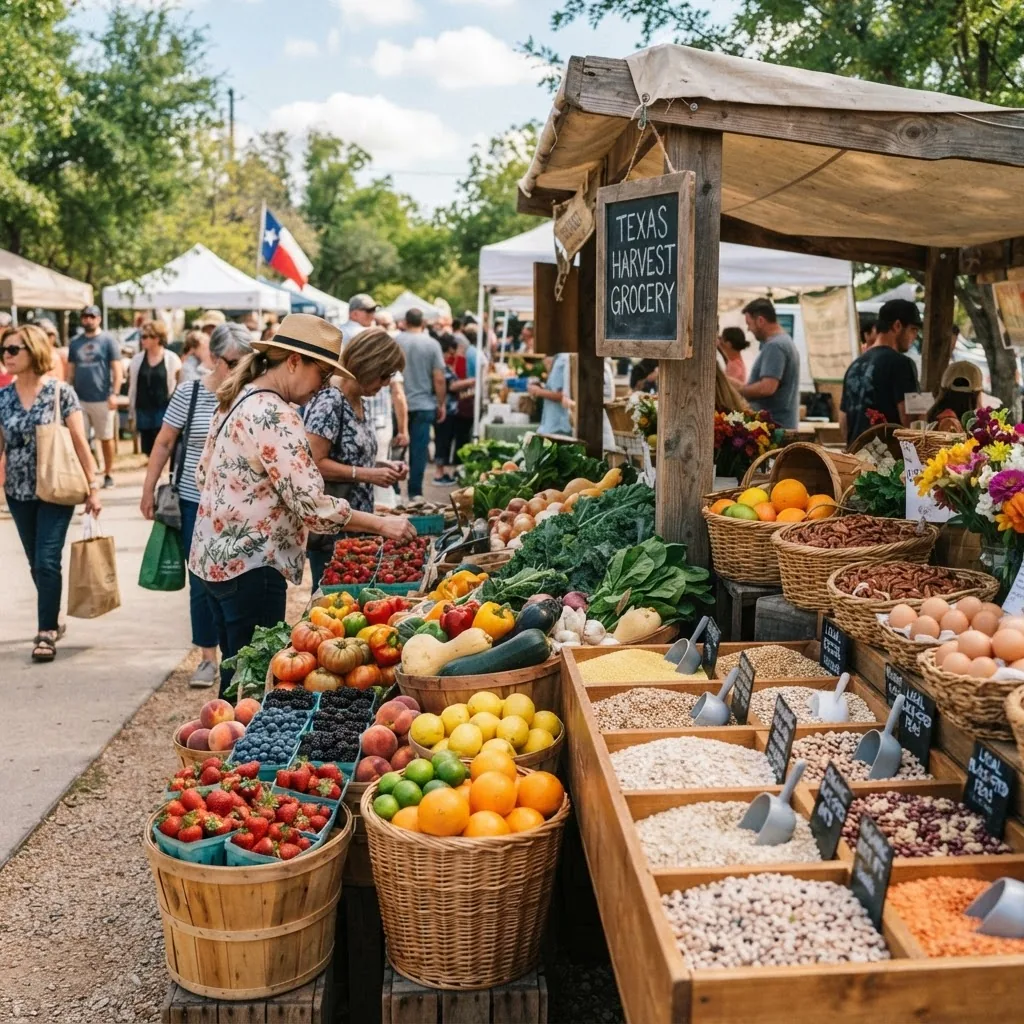
Local pickup tips:
- Farmers markets (Austin, Dallas, Houston) often sell local pecans and berries—ideal for breakfasts and snacks.
- Local brands at H-E-B or Central Market: choose unsweetened oats, whole-kernel corn tortillas, and canned low-sodium beans for convenience.
- Barbecue and Tex-Mex swaps: ask for brown-rice or mixed-grain bowls, extra salad/veggies instead of chips and white rice.
Summary and Takeaways on Healthy Carbs for Weight Loss
- Choose whole, fiber-rich carbs (whole grains, legumes, low-GI fruits, non-starchy vegetables) to increase satiety and stabilize blood sugar.
- Limit refined carbs and added sugars; monitor “Added Sugars” on labels and choose lower-GL options.
- Use portion control, carb timing around activity, and mixed meals (carb+protein+fat) to make weight loss sustainable.
- Follow USDA dietary patterns and consult healthcare professionals when making major diet changes; individualized needs vary.
- Start by swapping one refined carb per day for a whole-food alternative and track hunger and energy for two weeks to see measurable changes.
If you want a practical next step, review labels in your pantry this week and swap one high-added-sugar item for a legume or whole grain—small changes compound into lasting results. Ready to try a week of whole-food carb swaps? Start now and track your meals.