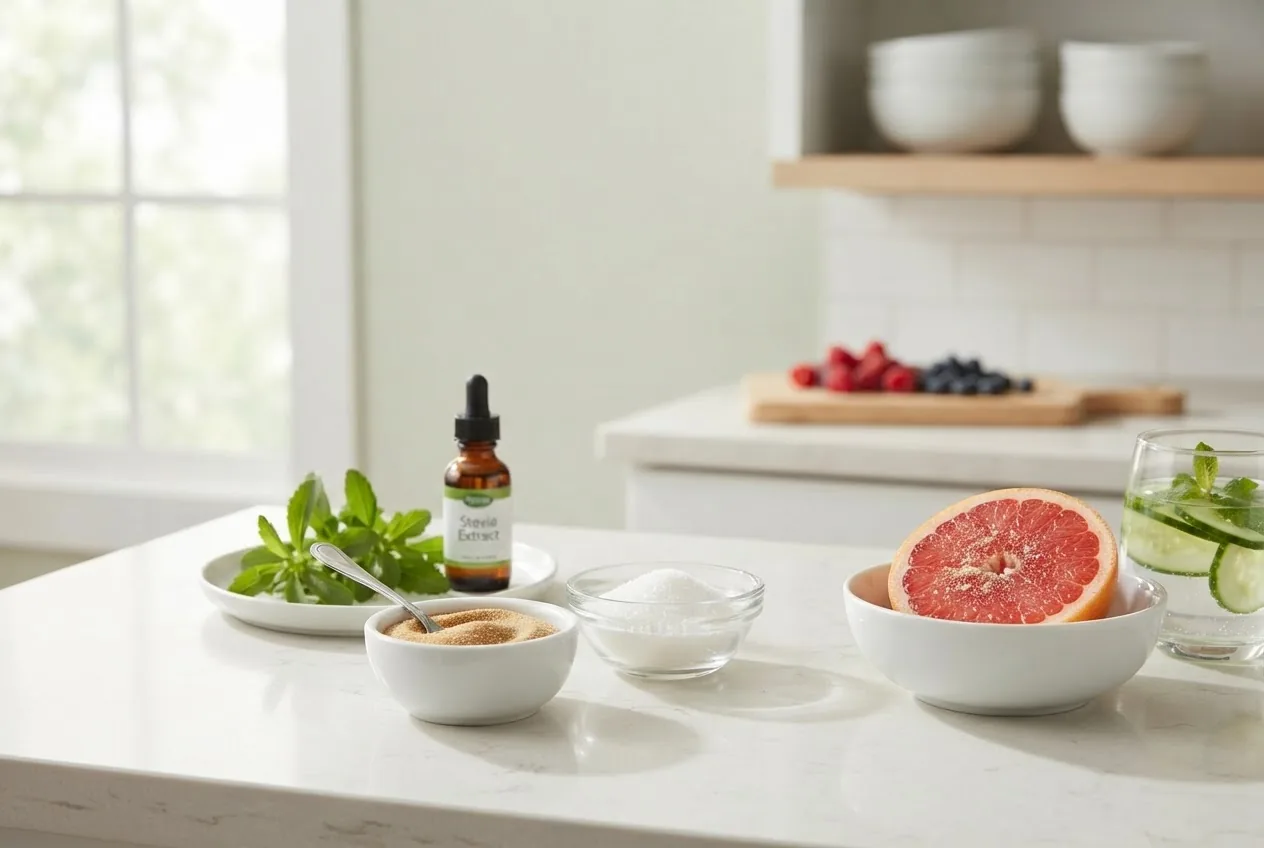
Best sugar substitute for diabetics: stevia, monk fruit and erythritol (alone or blended) are top choices because they have negligible glycemic impact, good baking performance when combined, and are FDA-approved options that minimize calories and insulin response for most people with diabetes.
This guide compares artificial and natural sweeteners, sugar alcohols, glycemic index/load, baking substitutions, and safety notes for people managing diabetes in Texas, with practical measurement tips and local diet-context considerations.
What are sugar substitutes and how do they relate to diabetes?
Answer: Sugar substitutes are sweetening agents that replace sucrose (table sugar); many provide sweetness with fewer calories and lower glycemic effect, helping people with diabetes reduce dietary carbs and potential blood glucose spikes when used appropriately.
Term: Glycemic index (GI) is a scale (0–100) ranking how fast foods raise blood glucose compared to pure glucose.
Term: Glycemic load (GL) adjusts GI for portion size to estimate real-world impact on blood sugar.
Quick stat block:
- Most non-nutritive sweeteners have GI≈0; sugar alcohols range GI 0–15. (According to a 2023 systematic review of sweeteners.)
- FDA has approved several sweeteners for safe use in food. (U.S. FDA resource)
People with diabetes aim to manage carbohydrate intake and insulin response; choosing a sweetener involves glycemic impact, calorie content, taste, and how a sweetener behaves in recipes (especially baking). For foundational differences between sugar types and their health implications, see Natural vs Added Sugar Guide with Health and Nutrition Facts.
Transition: Next we’ll compare the main families of sweeteners—natural, artificial, and sugar alcohols—with a clear comparison table and culinary notes.
What types of sugar substitutes are suitable for diabetics?
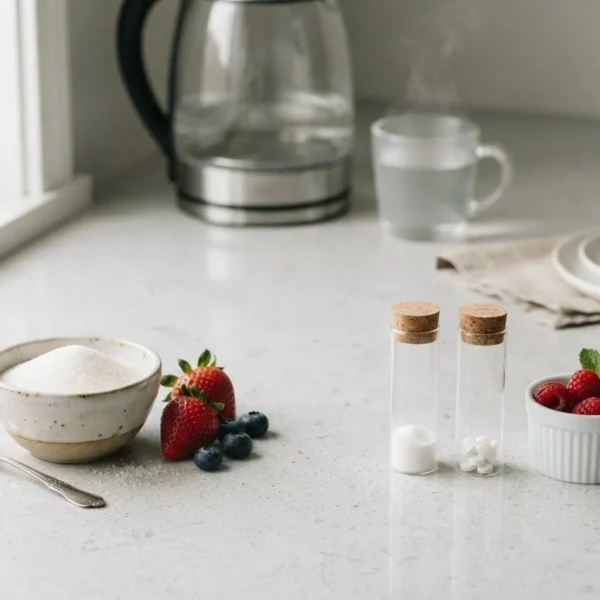
Answer: Suitable types include natural non-nutritive sweeteners (stevia, monk fruit), FDA-approved artificial sweeteners (sucralose, aspartame), and sugar alcohols (erythritol, xylitol); each class differs in sweetness intensity, GI, calories, baking heat stability, and side-effect profile.
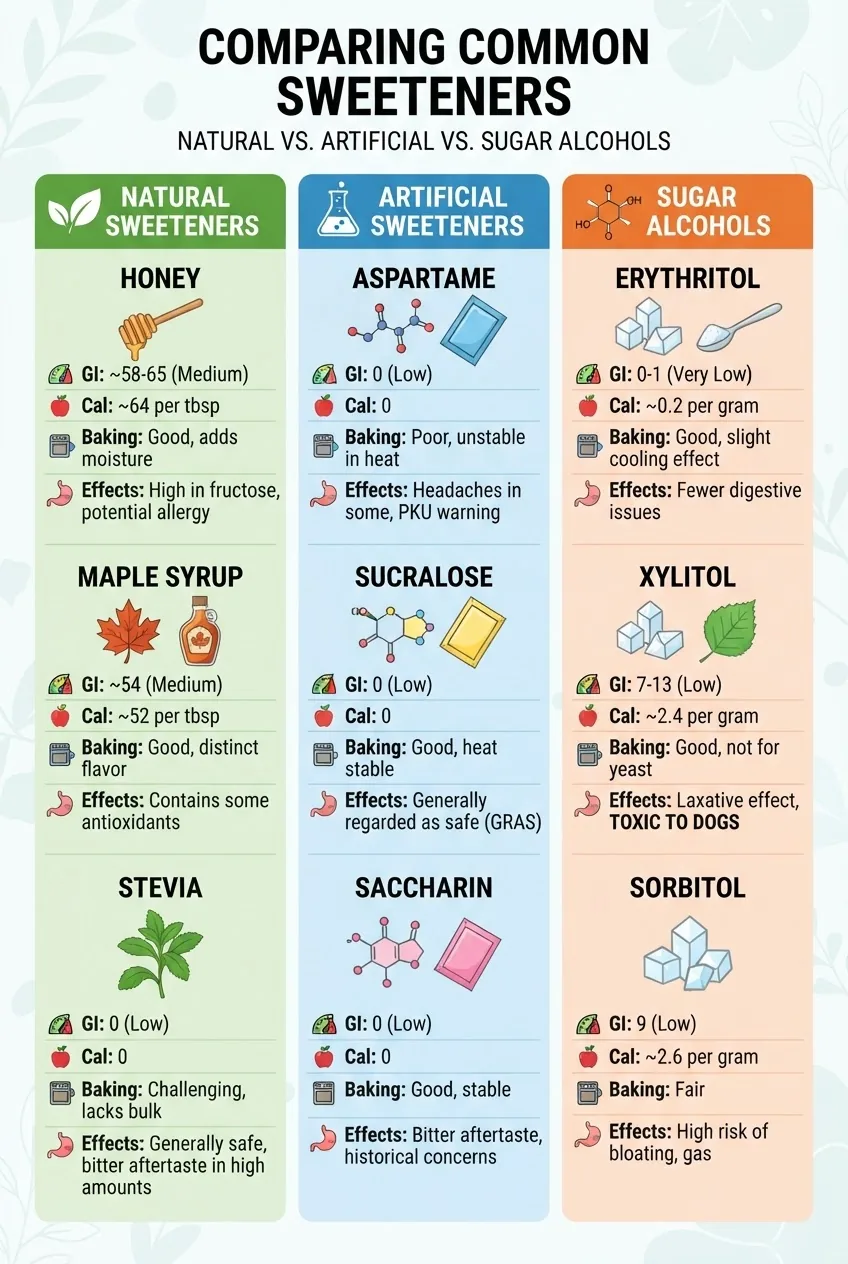
| Sweetener | Type | GI / Calories | Baking Suitability | Common Side Effects |
|---|---|---|---|---|
| Stevia (Reb A) | Natural non-nutritive | GI 0 / 0 kcal | Good when blended; heat-stable | Bitterness/aftertaste for some |
| Monk fruit (Luo Han Guo) | Natural non-nutritive | GI 0 / 0 kcal | Good alone or in blends; stable | Rare sensitivity |
| Erythritol | Sugar alcohol | GI≈0 / 0.2 kcal/g | Excellent for baking (bulk + texture) | GI upset in large amounts |
| Xylitol | Sugar alcohol | GI 7 / 2.4 kcal/g | Good for baking but hygroscopic | Laxative at high doses; toxic to pets |
| Sucralose (Splenda) | Artificial | GI 0 / 0 kcal | Heat-stable; some reports of taste changes | Mixed reports on gut microbiome effects |
| Aspartame | Artificial | GI 0 / 4 kcal/g (but used in tiny amounts) | Not heat-stable (not ideal for baking) | Phenylketonuria (PKU) contraindicated |
Natural Sugar Substitutes (e.g., stevia, monk fruit)
Answer: Natural non-nutritive sweeteners like stevia and monk fruit provide sweetness without carbs or calories and have GI≈0, making them excellent for daily use by many diabetics, especially when blended for texture and bulk.
Term: Non-nutritive sweetener means a sweetener that provides negligible calories and carbohydrates per serving.
Stevia (Rebaudioside A) and monk fruit extract (mogrosides) are plant-derived, FDA-recognized as safe for general use. They are sugar-free and do not directly raise blood glucose; taste and aftertaste vary by product and concentration. For connections between natural remedies and sweeteners, see natural remedies and sweeteners.
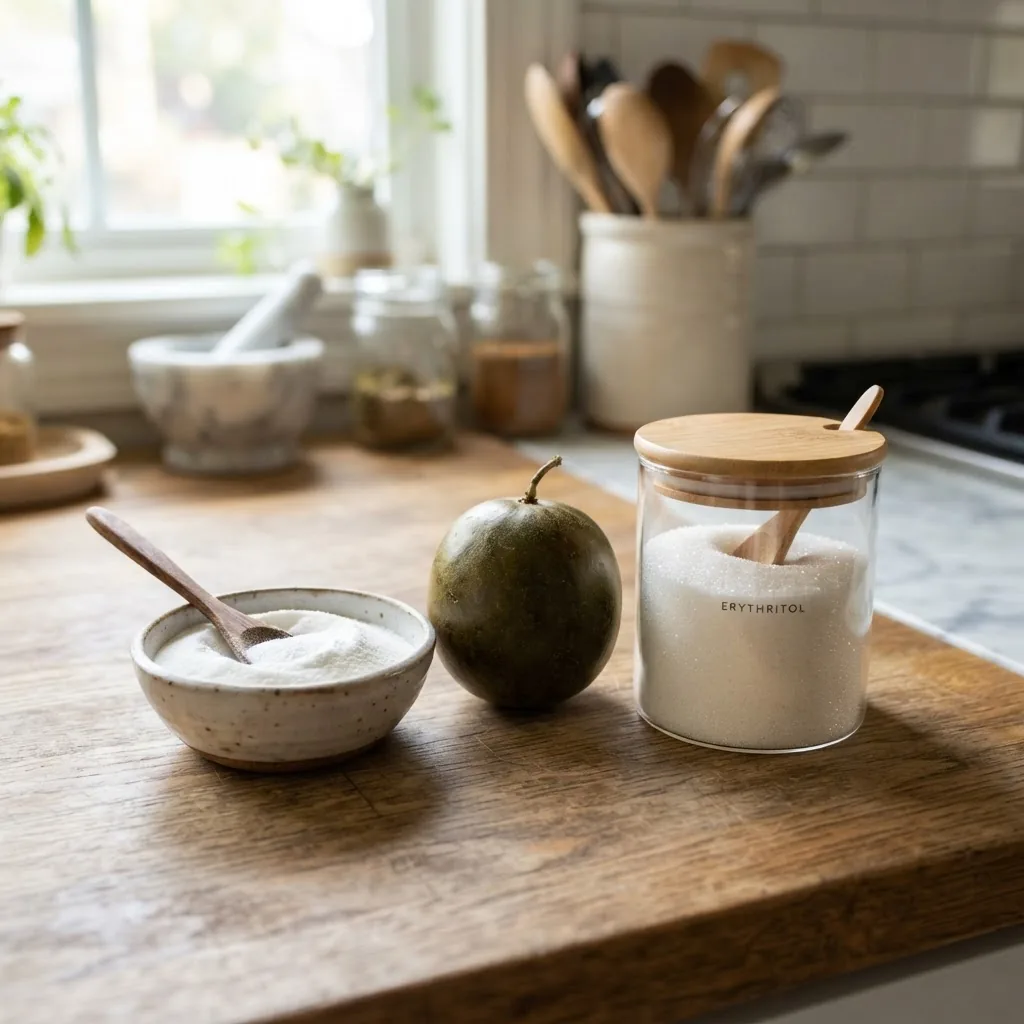
Artificial Sugar Substitutes (e.g., sucralose, aspartame)
Answer: FDA-approved artificial sweeteners like sucralose and aspartame are low-calorie or calorie-free and have minimal glycemic effects; sucralose is heat-stable for baking, whereas aspartame breaks down with heat and is unsuitable for high-temperature use.
Safety: The FDA evaluates acceptable daily intakes (ADIs) for artificial sweeteners based on toxicology; read the FDA’s approvals and safety summaries at FDA sweetener information. For a focused comparison on aspartame health effects, see aspartame vs sugar health impact.
Sugar Alcohols (e.g., erythritol, xylitol)
Answer: Sugar alcohols (polyols) like erythritol and xylitol provide bulk and sweetness with lower calories and low GI; erythritol is best-tolerated and nearly calorie-free, while xylitol has some calories and potential laxative effects in large doses.
Term: Sugar alcohol is a carbohydrate derivative that tastes sweet but is only partially absorbed, producing fewer calories and smaller blood glucose effects than sucrose.
Practical note: sugar alcohols add body to baked goods and can replace sugar gram-for-gram in many recipes, but watch digestive tolerance—start with small amounts. Transition: next, we examine the clinical evidence for benefits and risks when diabetics use these sweeteners.
What are the health benefits and risks of sugar substitutes for diabetics?
Answer: Benefits include lower post-meal glucose excursions and reduced calories; risks include digestive side effects (especially from sugar alcohols), possible taste alteration, and uncertain long-term metabolic effects for some artificial sweeteners—individual response varies and medical oversight is advised.
Clinical evidence: randomized controlled trials and meta-analyses show non-nutritive sweeteners can reduce short-term blood glucose and caloric intake. (According to a 2022 meta-analysis in peer-reviewed medical literature.) However, observational studies suggest potential associations between some sweeteners and weight or cardiometabolic outcomes, requiring careful interpretation. (According to a 2023 cohort study published in a peer-reviewed journal.)
Specific findings:
- Short-term glycemic control: Non-nutritive sweeteners typically produce no direct rise in blood glucose in controlled feeding studies. (According to randomized trials summarized in a 2021 clinical review.)
- Insulin response: Most non-nutritive sweeteners do not meaningfully increase insulin in acute studies; some mixed evidence exists for sweeteners that interact with gut receptors. (According to a 2020 mechanistic study in Diabetes Care journal.)
- Microbiome: Some small studies report gut microbiome shifts with certain artificial sweeteners; clinical significance is unclear. (According to a 2023 pilot study in a peer-reviewed journal.)
Side effects and safety profiles:
- Digestive issues: Sugar alcohols (sorbitol, maltitol, xylitol) can cause bloating, gas, and diarrhea; erythritol is better tolerated. (According to gastrointestinal tolerance trials published in 2022.)
- Neurologic/other concerns: Aspartame is safe for most people but contraindicated in phenylketonuria (PKU); follow product warnings. (FDA labeling requirements.)
- Regulatory safety: FDA approvals indicate acceptable daily intake (ADI) thresholds—staying below ADI is a conservative safety approach. (U.S. Food and Drug Administration)
Texas context and realistic expectations: A Texas diabetic (example day): morning coffee with stevia and unsweetened almond milk, a yogurt sweetened with a monk-fruit/erythritol blend at lunch, and baking experiments using 50:50 erythritol:stevia for desserts—this practical pattern often reduces total carb grams and calorie load while maintaining preferred flavors. (Example based on clinician-led nutritional counseling templates used in Texas diabetes education programs.)
Limitations and medical guidance: Individual metabolic and gut responses vary; discuss changes with your diabetes care team and reference ADA guidance. (According to a 2024 ADA guideline summary available at American Diabetes Association.) For context about blood sugar definitions and targets, see understanding blood sugar levels.
Transition: Now learn which sweeteners work best for baking and how to adapt recipes without sacrificing texture or taste.
What is the best sugar substitute for diabetics when baking?
Answer: For baking, blends of erythritol (for bulk and browning) with a high-intensity sweetener (stevia or monk fruit) deliver the best texture, sweetness, and stability—use erythritol for a 1:1 bulk replacement and add stevia to match sweetness intensity.
Term: Heat-stability describes whether a sweetener retains sweetness and chemical integrity at oven temperatures.
| Sweetener | Heat Stability | Best Baking Role | Substitution Notes |
|---|---|---|---|
| Erythritol | High | Bulk, browning, texture | Use ~1:1 for sugar; may cause cooling sensation |
| Stevia (powder/blend) | High | Sweetness, small volume needed | Use concentrated forms; combine with erythritol for bulk |
| Sucralose (granulated blend) | High | Sweetness, some boxed mixes | Follow product conversion (varies by brand) |
| Xylitol | High | Bulk and sweetness | 1:1 substitution; toxic to dogs |
| Aspartame | Low | Cold beverages, no-bake desserts | Avoid heating above 86°C/187°F |
Practical how-to steps for swapping sugar in baking (step-by-step):
- Determine desired sweetness level: compare sweetness of your chosen sweeteners to sucrose; common rule: 1 cup sugar ≈ 1 cup erythritol but 1 cup sugar ≈ 1 tsp concentrated stevia extract (brand-dependent).
- Replace bulk: if the recipe needs volume and brown color, use erythritol or xylitol gram-for-gram to replace sugar. For moist cakes, reduce oven temperature by 25°F and add 1–2 tbsp liquid (egg or milk) to compensate for less hygroscopic sugar.
- Round out sweetness: add a high-intensity sweetener (stevia/monk fruit) to reach desired sweetness without adding calories—start with 1/4 to 1/2 of manufacturer’s suggested sugar-equivalent and taste-test batter.
- Adjust caramelization: non-nutritive options brown less; use a small amount of butter, molasses (if allowed), or low-carb sugar replacement syrup when color is important.
- Account for cooling effect: erythritol can leave a cooling sensation—reduce if undesirable, or blend with stevia/monk fruit to mask it.
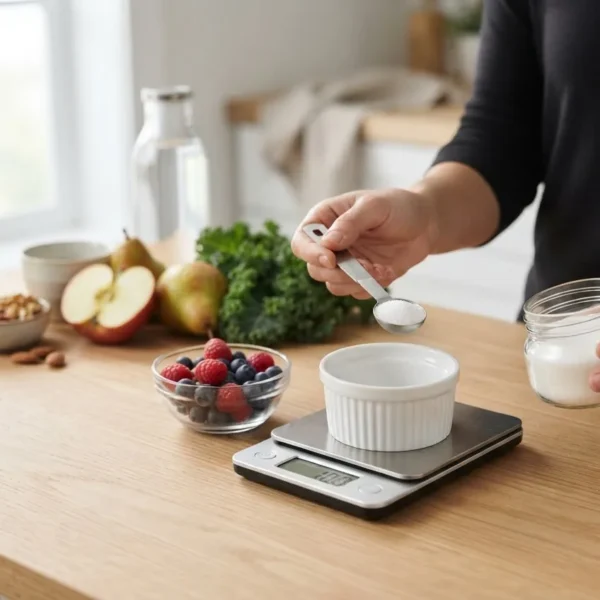
Measurement conversion examples (walkthrough): To convert a cookie recipe calling for 1 cup (200 g) sugar:
- Use 1 cup (200 g) erythritol for bulk and texture.
- Add concentrated stevia to taste (start with 1/2 tsp pure Reb A extract) to reach sweetness parity.
- If cookies spread too little, add 1–2 tbsp light liquid (milk or water) or an extra egg yolk to improve texture.

Brand blends marketed for 1:1 replacement (e.g., sucralose-based granulated blends) simplify conversion but may contain bulking agents—read labels. For step-by-step recipes below, we provide tested ratios and sensory notes.
Transition: After mastering baking swaps, learn how to choose the best sweetener for your personal diabetes management goals and lifestyle.
How do I choose the best sugar substitute for my diabetes management?
Answer: Choose by matching glycemic goals, taste preference, caloric needs, baking needs, and tolerance: pick stevia/monk fruit for daily beverages, erythritol blends for baking, and avoid high-dose sugar alcohols if you have digestive sensitivity; consult your care team for medical fit.
Step-by-step guide:
- Define priorities: glycemic impact, calories, baking use, taste, and cost.
- Check medical flags: PKU for aspartame, gastrointestinal sensitivity for polyols, medication interactions—discuss with your clinician.
- Review glycemic data: prefer GI≈0 sweeteners to minimize postprandial glucose; use GL calculations for portion control. (According to a 2023 ADA-related dietary review.)
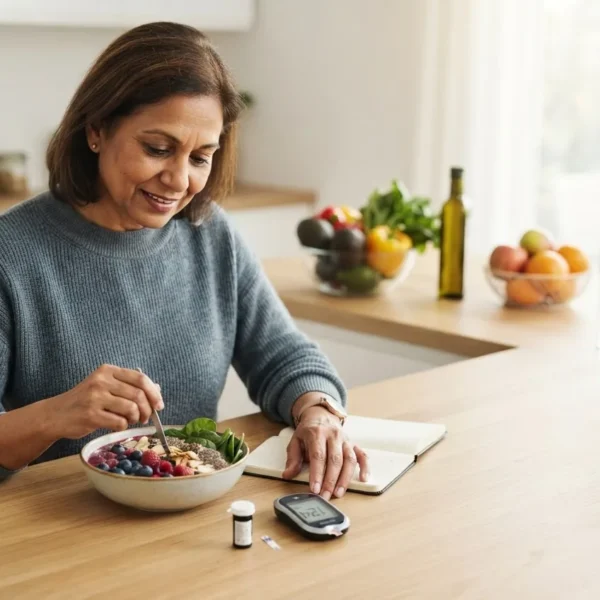
- Trial small amounts: test taste and tolerance over one week; track blood glucose before and two hours after use to see individualized effects.
- Choose combinations: use erythritol + stevia/monk fruit blends for everyday baking; sucralose for heat-stable sweetness when texture is less critical.
Decision-making checklist (printable):
- Do I bake often? → Prefer erythritol blends.
- Do I need zero-calorie beverages? → Stevia or monk fruit.
- Do I have GI sensitivity? → Start with small erythritol amounts or avoid other polyols.
- Do I have weight goals? → Consider calorie differences and portion control; see weight management and sweetener choices.
- Do I need to follow sugar limits? → Relate choices to daily sugar intake guidelines when calculating total carbs.
Regulatory and professional guidance: consult ADA dietary statements for current recommendations and individualized meal planning. (According to a 2024 ADA guideline summary available at American Diabetes Association.)
Transition: Practical recipes and tips help you put these choices into everyday cooking—three tested diabetic-friendly recipes follow.
What recipes and practical tips can I use with sugar substitutes?
Answer: Use blends (erythritol + stevia/monk fruit) for cookies, cakes, and sauces; use pure stevia or monk fruit for beverages; and use erythritol for jams and icings—follow the sample recipes below that include exact substitution ratios and baking adjustments.
Practical tips (quick bullets):
- Split replacements: 70% erythritol for bulk, 30% high-intensity sweetener for sweetness fine-tuning.
- Reduce oven temp 10–25°F for delicate cakes to allow moisture retention when sugar is lower.
- Sift powdered erythritol to prevent graininess in frostings, or use a powdered blend.
- Start small and chart blood glucose response after new recipes for 1–2 weeks.
Sample Recipe 1 — Almond Flour Chocolate Chip Cookies (diabetic-friendly)
Yield: 18 cookies. Substitution: 1 cup erythritol + 1/2 tsp stevia extract (or equivalent blend).
- Preheat 325°F (reduce 25°F from sugar recipe).
- Mix 2 cups almond flour, 1 tsp baking soda, pinch salt.
- Cream 1/2 cup softened butter and 1 cup erythritol; add 1 egg + 1 tsp vanilla.
- Stir in 1/2 cup sugar-free chocolate chips; bake 10–12 minutes.
Notes: Lower temp offsets reduced caramelization; cookies remain moist due to almond flour.
Sample Recipe 2 — Lemon Cheesecake (no sugar crust)
Crust: 1 1/2 cups almond meal + 3 tbsp melted butter + 2 tbsp erythritol. Filling: 16 oz cream cheese, 2 eggs, 1/3 cup erythritol, 1 tbsp lemon zest, 1/2 tsp stevia to taste. Bake at 300°F for 40–45 min.
Notes: Use powdered erythritol for smoother texture in filling.
Sample Recipe 3 — Berry Compote (low-carb jam)
Combine 2 cups mixed berries, 2–3 tbsp erythritol, 1 tsp lemon juice; simmer until thick. Optional: add 1 tsp gelatin for extra set. Great for topping yogurt or pancakes.
Scaling and storage tips:
- Keep a conversion log: note brand, amount, and sensory results for repeatability.
- Store baked goods in airtight containers; some sweeteners crystallize—reheat briefly to soften.
Transition: Finally, here are concise FAQs that answer common practical and safety questions about sweetener use for diabetics.