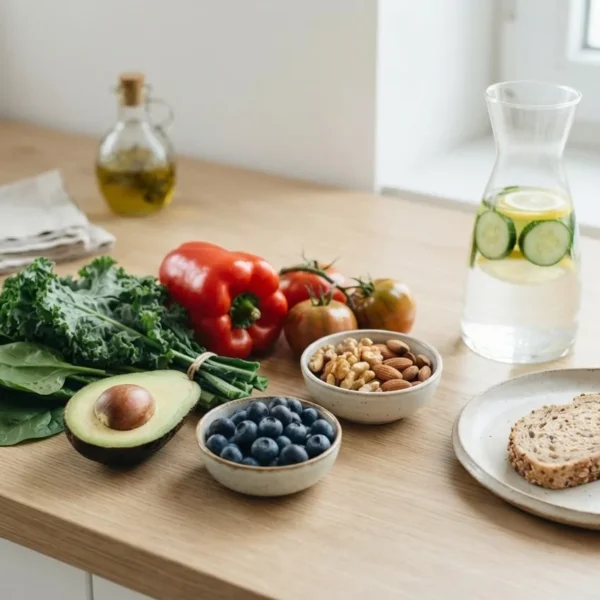

Do avocados have fiber? Yes — avocados are a high-fiber fruit: a medium Hass avocado provides roughly 9–10 grams of dietary fiber, supplying both soluble and insoluble types that support digestion, satiety, and metabolic health when included in a balanced diet.
Do Avocados Have Fiber? The Nutritional Facts
Answer: A single medium avocado contains about 9–10 grams of dietary fiber, making it one of the higher-fiber fruits; this fiber is a mix of soluble and insoluble forms and contributes significantly toward daily fiber goals.
Term: Dietary fiber is the indigestible parts of plant foods that pass through the gut to support digestion, blood sugar control, and satiety.
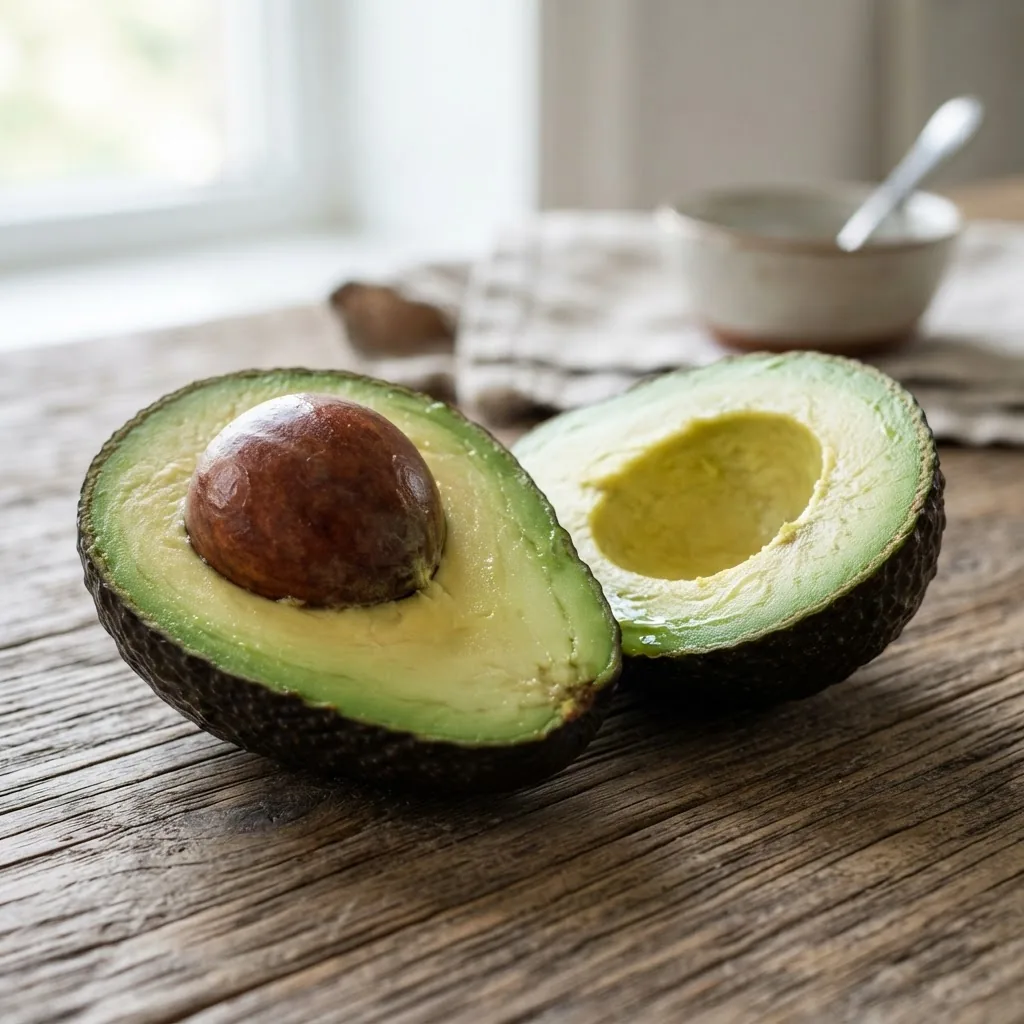
Below is a concise nutrition snapshot for a typical medium Hass avocado (approx. 150–170 g edible flesh). Values summarized from national nutrient data and peer-reviewed analyses.
- Dietary fiber: ~9–10 g per medium avocado (According to the 2023 USDA nutrient database: avocado, Hass)
- Total calories: ~230–260 kcal per medium avocado (According to a 2023 USDA nutrient database)
- Total fat: ~21–24 g, mostly monounsaturated fats (According to a 2023 USDA nutrient database)
- Protein: ~3–4 g per medium avocado (According to the 2023 USDA nutrient database)
- Key micronutrients: potassium, folate, vitamin K, vitamin E, and small amounts of magnesium and B vitamins (According to the 2023 USDA nutrient database)
Practical note: fiber values vary with avocado size and variety; Hass avocados (most common in U.S. markets, including Texas) typically provide the amounts above.
How to read that on a label: look at ‘Dietary Fiber’ grams per serving on packaged avocado products or serving-size notes; a whole avocado counts as multiple servings depending on the label serving size.
Transition: Next we break down the two main fiber types found in avocados and what each one does for your body.
Understanding the Types of Fiber in Avocados
Answer: Avocados contain both soluble and insoluble fiber—soluble fiber helps slow digestion and feeds gut bacteria, while insoluble fiber adds bulk and speeds intestinal transit; together they support regularity, blood-sugar moderation, and gut health.
Term: Soluble fiber dissolves in water and forms a gel-like substance; insoluble fiber does not dissolve and helps move material through the digestive tract.
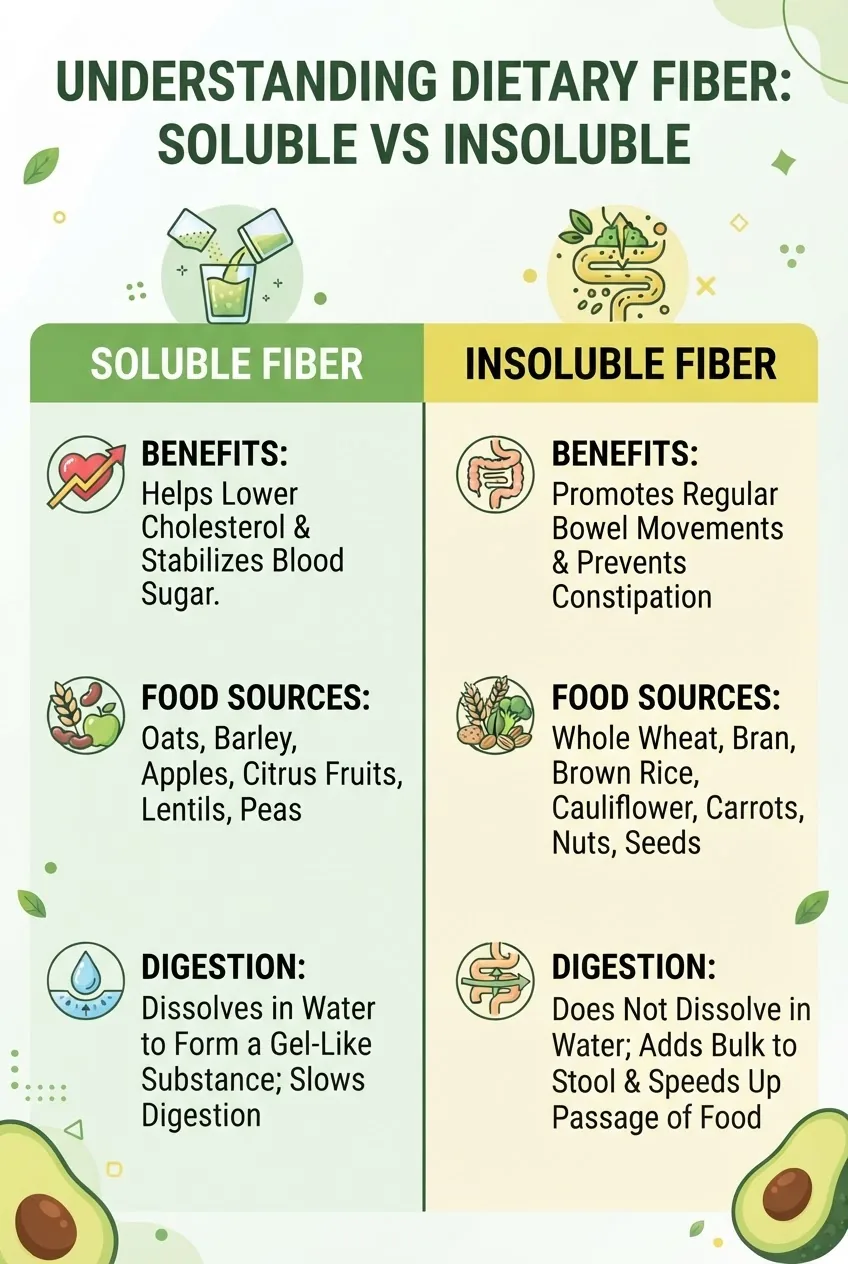
Comparison summary:
- Soluble fiber (small but meaningful portion in avocados): helps slow gastric emptying, blunts post-meal glucose spikes, and acts as a fermentable substrate for beneficial gut microbes.
- Insoluble fiber (majority of avocado fiber by weight): increases stool bulk, supports regular bowel movements, and prevents constipation.
- Synergy: the combination supports both short-term digestion (regularity) and longer-term metabolic and microbiome benefits (via fermentation and short-chain fatty acid production).
Short bullets on roles:
- Soluble fiber: lowers post-meal glycemic response; feeds saccharolytic bacteria.
- Insoluble fiber: improves stool consistency and transit time.
- Both: increase satiety and reduce overall calorie intake at subsequent meals.
Transition: With the fiber types clarified, learn how avocados fit into daily fiber goals and Texas-friendly meal planning next.
How Much Fiber Do You Need Daily and How Avocados Fit In
Answer: Most adults should aim for 25–38 grams of fiber daily (women 25 g, men 38 g as a general guideline); one medium avocado supplies roughly 9–10 grams, covering about 25–40% of a single day’s target depending on gender.
Term: Recommended daily fiber intake refers to average daily amounts advised for general health and varies by age and sex.
- Adult women: ~25 grams/day (According to the Academy of Nutrition and Dietetics 2023 guidance)
- Adult men: ~38 grams/day (According to the Academy of Nutrition and Dietetics 2023 guidance)
- Percent contribution from one medium avocado: ~25–40%
Practical context for Texans: fresh avocados are widely available year-round in Texas markets and pair well with local produce (e.g., tomatoes, peppers, leafy greens) to boost fiber intake without relying solely on processed fiber supplements.
Serving-size examples to reach daily fiber:
- Morning: 1/2 avocado on whole-grain toast = ~4–5 g fiber
- Lunch: avocado + mixed greens + beans = 10–15 g fiber total
- Snack: avocado salsa with raw veggies = 3–5 g fiber
Label walkthrough: if a packaged avocado product lists 3 g fiber per serving, two servings may equal one avocado—check grams per serving to get accurate counts.
Transition: Next we detail the health effects you can expect from avocado fiber, supported by scientific guidance and real-world studies.
Health Benefits of Fiber from Avocados
Answer: Fiber from avocados supports digestive regularity, increases satiety to aid weight control, helps lower LDL cholesterol, and moderates blood sugar responses—effects supported by scientific analyses and heart-health guidance.
Term: Satiety is the feeling of fullness after eating that reduces the desire to eat again soon.

Mechanisms and evidence:
- Digestive health: Insoluble fiber in avocados adds stool bulk and accelerates transit time; soluble fiber feeds beneficial gut bacteria, increasing production of short-chain fatty acids that support colon health (According to a 2021 review in a nutrition journal).
- Satiety and appetite control: The combination of fiber and healthy fats slows gastric emptying; randomized and observational studies show higher-fiber meals increase feelings of fullness and reduce calorie intake at subsequent meals (According to a 2019 systematic review of appetite studies).
- Cholesterol reduction: Soluble fiber helps lower LDL cholesterol by binding bile acids; heart organizations recommend dietary fiber as part of cholesterol-lowering strategies (According to the American Heart Association 2022 guidance).
- Blood sugar regulation: Mixed-fiber meals with avocados blunt post-meal glucose spikes and insulin responses compared with low-fiber, high-refined-carb meals (According to controlled meal studies summarized in a 2020 metabolic review).
- Gut microbiome support: Fermentable components of avocado fiber provide substrates for beneficial bacteria that produce short-chain fatty acids, supporting gut barrier function and anti-inflammatory signaling (According to a 2022 microbiome review).
Case evidence linked to avocado consumption: a 2013 cross-sectional analysis of NHANES data found avocado consumers had higher diet quality and favorable body-weight metrics compared with non-consumers (According to a 2013 NHANES analysis published in a peer-reviewed journal).
Practical implications for weight loss: because avocados supply both fiber and monounsaturated fats, they increase meal satisfaction; when portion-controlled and combined with lean proteins and whole grains, they can help reduce overall daily calorie intake without sacrificing nutrient density.
Diet trade-offs: avocado’s higher-calorie fat content means portions matter—pairing avocado with high-fiber, low-calorie vegetables and lean proteins maximizes benefits while controlling energy intake.
For heart health specifics see guidance from the American Heart Association (AHA) on dietary fiber and cardiovascular risk reduction (According to the American Heart Association 2022 guidance).
Transition: the next section addresses whether avocados are a meaningful protein source and how they compare to typical protein foods.
Is Avocado a Good Protein Source?
Answer: Avocados provide modest protein (~3–4 g per medium fruit) but are not a primary protein source; they are a complement to lean proteins rather than a replacement, and their protein is incomplete compared with animal sources.
Term: Complete protein contains all nine essential amino acids at sufficient levels; most plant foods (including avocados) are incomplete unless combined thoughtfully.
| Food | Protein (g per serving) | Calories per serving |
|---|---|---|
| Medium avocado | 3–4 g | 230–260 kcal |
| 100 g chicken breast (cooked) | ~31 g | 165 kcal |
| 1 oz almonds | 6 g | 160 kcal |
| 1 cup cooked lentils | 18 g | 230 kcal |
Context and calorie trade-off: avocados provide relatively low protein for the calories they deliver. For protein-focused goals, prioritize lean meats, dairy, legumes, or concentrated plant proteins, using avocados primarily for fiber and healthy fats.
plant-based protein sources like nuts
Transition: now we’ll show practical meal ideas showing how avocado fiber pairs with lean protein and healthy fats to support weight-loss plans, especially with Texas flavors and seasonal produce.
How to Incorporate Avocado Fiber into Your Lean Protein and Healthy Fats Diet
Answer: Use avocado in controlled portions alongside lean proteins and high-fiber vegetables to boost satiety and nutrient density—examples include avocado-topped grilled chicken salads, avocado with eggs and salsa, and bean-and-avocado bowls tailored to Texas flavors.
- Breakfast: Half an avocado with scrambled egg whites and pico de gallo — fiber plus lean protein to start the day.
- Lunch: Grilled chicken salad with mixed greens, 1/2 avocado, black beans, and lime vinaigrette — balanced fiber and lean protein.
- Dinner: Tacos with grilled fish or chicken, shredded cabbage, avocado slices, and salsa for a fiber-rich, lower-calorie plate.
- Snacks: Veggie sticks with avocado-yogurt dip or avocado on whole-grain crackers to add fiber between meals.
- Meal-prep tip: Portion avocado (half per meal) to control calorie intake while preserving fiber benefits; mash with lemon to prevent browning for make-ahead bowls.
- Cooking methods that preserve fiber: Eat raw or lightly mashed rather than fully pureed; avoid deep-frying or heavy creaming that adds calories without increasing fiber.
When calculating meal calories and macros, consult calorie details for fats: calories in healthy fats like avocado and compare with protein energy costs: protein calories explained.
For broader guidance on fat choices that complement avocado, see healthy fats for heart health and explore lean options in the lean protein food options for cutting guide.
Transition: after meal ideas, we’ll debunk common myths about avocado fiber and protein so you can make informed choices.
Common Myths and Facts About Avocados, Fiber, and Protein
Answer: Common misconceptions include claims that avocados are too fatty to be healthy or that they are a substantial protein source; facts show they provide significant fiber and healthy fats but only modest protein and no dietary cholesterol.
Myth vs Fact:
- Myth: Avocados are unhealthy because they’re fatty. Fact: Most fat in avocados is monounsaturated; paired appropriately, it supports heart health and satiety (According to the American Heart Association 2022 guidance).
- Myth: Avocados are a major protein source. Fact: They supply ~3–4 g protein per medium fruit, insufficient as a sole protein source for most diets.
- Myth: Avocados raise cholesterol. Fact: Avocados contain no dietary cholesterol and their fiber and fats can improve lipid profiles (According to the 2023 USDA nutrient database and AHA guidance).
Transition: finally, a concise summary and practical takeaways will help you use avocados effectively in balanced meal plans.
Summary: The Role of Avocado Fiber in a Balanced Diet
Answer: Avocado fiber is a meaningful contributor to daily fiber targets, promoting digestive regularity, satiety, and metabolic benefits; use avocados in controlled portions alongside lean proteins and whole foods for weight management and heart health.
Key takeaways:
- One medium avocado supplies ~9–10 g fiber (According to the 2023 USDA nutrient database).
- Avocado fiber includes both soluble and insoluble types, supporting gut health and blood-sugar control.
- Use avocados as a fiber-and-fat complement to higher-protein foods rather than a primary protein source.
- Portion control matters: balance avocado calories with lean proteins and vegetables for weight-loss goals.
Final practical CTA: Try swapping half an avocado into one meal per day this week and track fullness and hunger cues; consult a registered dietitian for personalized advice and to tailor portions to your goals (individual needs vary).
Sources & trust notes: Nutrition values cited from the 2023 USDA nutrient database. Heart and fiber guidance referenced from the American Heart Association, and intake recommendations from the Academy of Nutrition and Dietetics (According to respective 2022–2023 guidance). Individual results vary; consult a healthcare professional for personalized advice.