
Yes and no: can you get diabetes from eating too much sugar? Excess sugar alone does not directly cause diabetes; long-term high added-sugar intake can raise risk by promoting obesity, insulin resistance, and metabolic dysfunction that lead to type 2 diabetes in susceptible people.
What Is Diabetes and How Does It Develop?
Answer: Diabetes is a group of conditions marked by chronically elevated blood glucose levels caused by problems with insulin production, insulin action, or both; how it develops depends on type 1 or type 2 pathophysiology and interacting risk factors.
Diabetes: a chronic condition where the body cannot keep blood glucose (blood sugar) within a healthy range.
Insulin: a hormone from the pancreas that helps cells take up glucose for energy.
Pancreatic beta cells: the cells in the pancreas that produce and secrete insulin.
Type 1 diabetes is an autoimmune condition where immune-mediated destruction of pancreatic beta cells leads to absolute insulin deficiency; it usually appears quickly and is not caused by sugar intake. Type 2 diabetes arises from a progressive combination of insulin resistance (reduced tissue response to insulin) and relative beta cell failure; lifestyle, genetics, age, and environment shape onset.
Blood glucose regulation involves insulin-stimulated uptake of glucose into muscle and fat, suppression of hepatic (liver) glucose production, and pancreatic beta-cell response to rising glucose. When those systems fail, fasting and post-meal glucose rise, producing the diagnostic thresholds clinicians use.
For a practical primer on measuring glucose and diagnostic numbers, see blood sugar level overview.
Transition: Understanding these basic mechanisms is necessary before judging whether dietary sugar directly causes diabetes.
Does Eating Too Much Sugar Directly Cause Diabetes? Myth vs Reality
Answer: No single food causes diabetes by itself; eating too much sugar is correlated with higher diabetes risk primarily through its effects on weight, metabolic health, and insulin resistance rather than a direct causal pathway to pancreatic autoimmunity or beta-cell destruction.

Myth: “Sugar causes diabetes” is a widespread simplification. Reality: scientific evidence distinguishes correlation from causation. High added-sugar intake and frequent consumption of sugar-sweetened beverages are associated with increased type 2 diabetes risk in epidemiological studies, but the mechanisms are indirect and mediated by weight gain, increased visceral fat, and altered insulin sensitivity.
Major reviews and meta-analyses show consistent associations between sugar-sweetened beverage consumption and higher type 2 diabetes incidence even after adjusting for body mass index, suggesting independent effects from excess calories and metabolic inflammation—see the systematic review by Imamura et al. for evidence synthesis. Imamura et al., BMJ (systematic review).
Important distinctions:
- Causation vs correlation: Observational studies identify associations but cannot prove that sugar alone causes diabetes.
- Type-specific causes: Type 1 diabetes results from autoimmune beta-cell loss; sugar intake is not a cause.
- Role of calories and adiposity: Excess sugar adds calories that can drive weight gain, a major modifiable driver of insulin resistance and type 2 diabetes.
Clinical trial evidence shows that diets high in added sugars increase weight and adverse metabolic markers more consistently than they directly injure beta cells; randomized feeding trials tend to support sugar’s role in energy balance and cardiometabolic risk rather than direct autoimmune damage.
External guidance reflects nuance: the American Diabetes Association and the CDC recommend limiting added sugars to reduce cardiometabolic risk rather than citing sugar as the sole cause of diabetes.
Transition: To detect how sugar raises risk, we need to examine the indirect metabolic pathways that link high-sugar diets with diabetes.
How Excessive Sugar Intake Influences Diabetes Risk Indirectly
Answer: Excessive sugar raises diabetes risk indirectly by increasing total caloric intake, promoting weight gain (especially visceral/belly fat), worsening lipid profiles and chronic inflammation, and accelerating insulin resistance—processes that strain beta cells and precipitate type 2 diabetes.
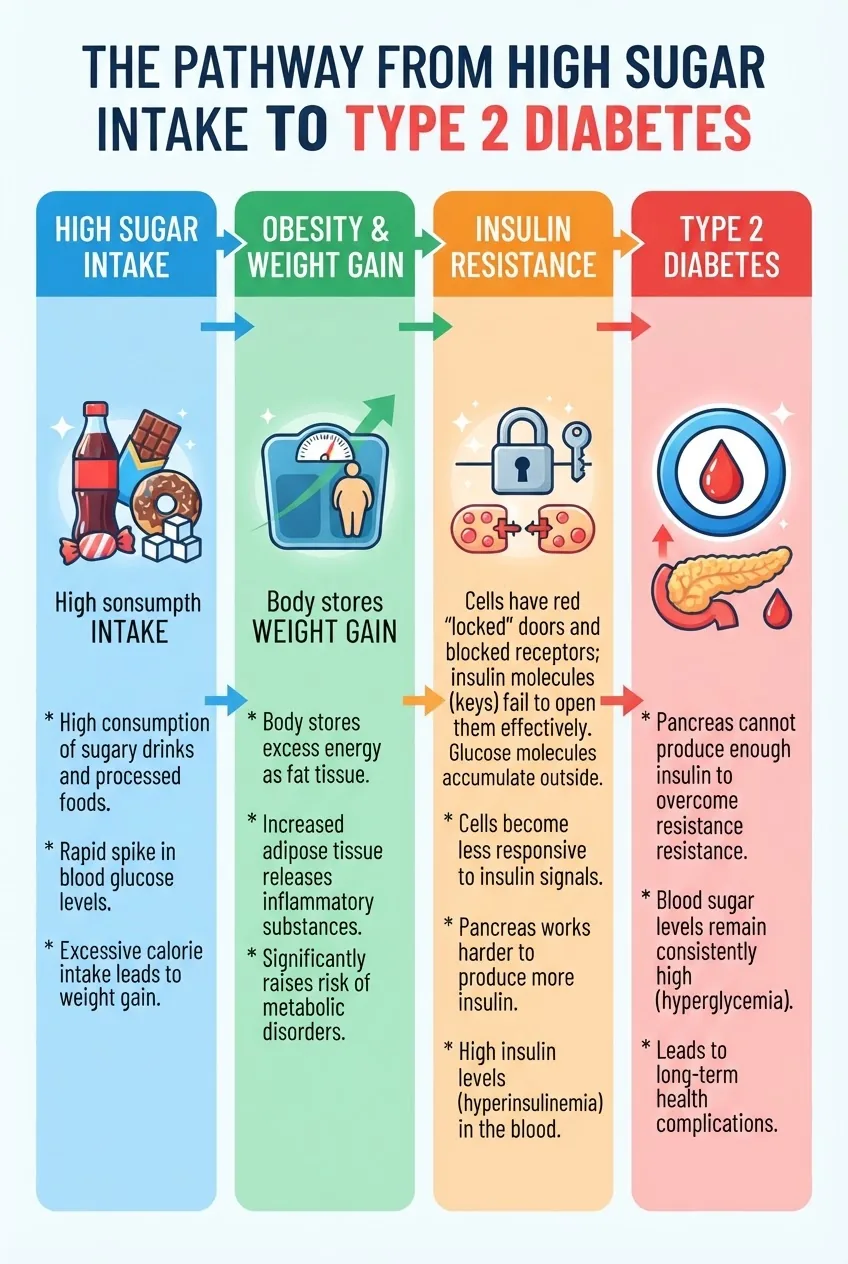
Mechanisms explained:
- Excess calories and adiposity: Added sugars increase energy density. When energy intake exceeds expenditure, adipose tissue expands—particularly visceral fat that releases inflammatory cytokines linked to insulin resistance.
- Insulin resistance development: Persistent high circulating glucose and free fatty acids impair insulin signaling in muscle and liver, requiring higher insulin secretion to maintain normoglycemia.
- Beta-cell stress and failure: Chronic high demand on pancreatic beta cells (glucotoxicity and lipotoxicity) can reduce their function and mass, moving a person from insulin resistance to overt type 2 diabetes.
Epidemiological evidence: large cohort studies show higher sugar-sweetened beverage intake predicts higher incident type 2 diabetes risk after adjusting for confounders; however, effect sizes are attenuated when accounting for body weight, indicating mediation. For policy and advice, weigh both direct and indirect impacts.
Practical connection to Texas: state dietary patterns that favor large portion sizes, frequent sugary beverages, and fast-food consumption align with the pathway above. According to a 2023 CDC Diabetes Report, diabetes prevalence and related risk factors differ by state, with many Southern states, including Texas, showing higher burdens of obesity and diabetes-related risk indicators CDC Diabetes Report (2023).
For related dietary strategies that target abdominal fat, see belly fat and diabetes risk.
Transition: The type of sugar consumed matters—natural food matrices behave differently than added sugars in processed foods.
Natural Sugar vs Added Sugar: Impact on Diabetes Risk
Answer: Natural sugars in whole foods (fruit, dairy) usually come with fiber, protein, and micronutrients that slow absorption and reduce diabetes risk, while added sugars in processed foods lead to rapid glucose rises, excess calories, and higher risk when consumed frequently.
Added sugar: sugars and syrups added during food processing or preparation, not naturally present in the food.
Key differences in a quick comparison:
| Feature | Natural sugar (fruit, milk) | Added sugar (sodas, sweets) |
|---|---|---|
| Food matrix | Contains fiber, water, vitamins | Refined, nutrient-poor |
| Glycemic effect | Slower glucose absorption | Rapid glucose spikes |
| Calories per volume | Lower satiety per calorie | High energy density, low satiety |
Lists: practical implications
- Choose whole fruits over fruit drinks to benefit from fiber and slower sugar absorption.
- Limit sugar-sweetened beverages and packaged sweets that contribute added sugar without satiety.
- For guidance on artificial sweeteners vs sugar, see aspartame vs sugar comparison.
Transition: To see how these dietary exposures translate into physiology, we need a closer look at insulin resistance and beta-cell dynamics.
Understanding Insulin Resistance and Its Role in Type 2 Diabetes Development
Answer: Insulin resistance is a condition where cells respond poorly to insulin’s signal to absorb glucose; sustained insulin resistance forces pancreatic beta cells to overwork, and eventual beta-cell dysfunction leads to type 2 diabetes in predisposed individuals.
Insulin resistance: reduced responsiveness of muscle, fat, and liver cells to insulin’s glucose-lowering effects.
Simplified metaphor: imagine insulin as a key and cell receptors as locks—when locks are rusty (insulin resistance), the key needs to be turned harder (more insulin) to open doors for glucose entry; over time the key-maker (beta cells) fatigues and produces less effective keys.
Pathophysiology details:
- Peripheral resistance: in muscle and adipose tissue, defects in insulin signaling reduce glucose uptake.
- Hepatic insulin resistance: liver continues to produce glucose despite high insulin, worsening fasting hyperglycemia.
- Beta-cell compensation and failure: initially beta cells hypersecrete insulin to maintain normal glucose; persistent metabolic stress (glucotoxicity/lipotoxicity) reduces beta-cell function and mass.
Measurement and clinical relevance: insulin sensitivity can be quantified via clamp studies or surrogate indices in research; clinically, rising fasting glucose and impaired glucose tolerance reflect failing compensation. Interventions that reduce visceral fat and improve muscle insulin sensitivity (weight loss, exercise) slow or reverse this progression.
Transition: Clinical and public-health guidelines translate this physiology into actionable dietary recommendations to prevent diabetes.
Current Medical and Dietary Guidelines on Sugar Intake for Diabetes Prevention
Answer: Major authorities recommend limiting added sugars as part of a balanced diet to reduce risk factors for type 2 diabetes; guidance emphasizes whole-food patterns, weight management, and reducing sugar-sweetened beverages rather than demonizing single foods.
Highlighted guideline points:
- American Diabetes Association: dietary advice focuses on individualized carbohydrate management, limiting added sugars, and prioritizing whole foods; see the ADA resources for specifics. American Diabetes Association official dietary guidelines
- CDC recommendations: track sugar-sweetened beverage intake and promote nutrition policies that lower population-level added sugar consumption. CDC Diabetes Report
- WHO and other bodies recommend limiting free sugars to less than 10% of total energy, with further benefit below 5%—this reduces cariometabolic risk factors linked to diabetes development.
Practical clinical points:
- Emphasize energy balance—reducing added sugar is most effective when paired with overall calorie reduction and physical activity.
- Prioritize whole grains, lean proteins, healthy fats, and fiber-rich vegetables and fruits over processed, sugary products.
- Monitor blood glucose changes when making dietary shifts; personalized nutrition is recommended for people with prediabetes or cardiometabolic risk.
For broader healthy habit recommendations and daily care guidance, see healthy lifestyle tips for diabetes care.
Transition: Translating guidelines into daily practice requires concrete, culturally relevant steps—below are practical tips tailored for typical American and Texas dietary patterns.
Practical Tips for Managing Sugar Intake and Reducing Diabetes Risk
Answer: Reduce added sugars by replacing sugar-sweetened beverages, reading labels, choosing whole fruits, controlling portion sizes, and pairing carbohydrate intake with protein and fiber—combine these with regular activity to lower diabetes risk.
Action steps:
- Swap beverages: replace sodas and sweet tea with water, sparkling water, or unsweetened iced tea—this removes a major source of added sugar without complex dieting.
- Read labels: aim to minimize foods where “sugar” (or syrups) are among the top three ingredients; prefer whole-food snacks.
- Portion control: reduce serving sizes of desserts and sweets; prefer fruit for dessert where practical.
- Meal composition: include protein and fiber with carbohydrate-containing meals to blunt post-prandial glucose spikes.
- Local habits (Texas context): be mindful of large drink sizes and sweetened sweet tea—request smaller sizes and no added syrup at restaurants.
Resources and substitutes:
- For clear numerical targets see daily sugar intake recommendations.
- When choosing non-nutritive sweeteners, review safety and metabolic effects; see best sugar substitutes for diabetics.
- For non-diet adjuncts and plant-focused approaches, consider alternative natural remedies for diabetes, but always discuss with a clinician.
Transition: Summarizing the evidence helps clarify the practical bottom line.
Summary: Can You Get Diabetes from Eating Too Much Sugar?
Answer: Eating too much sugar alone doesn’t directly cause diabetes, but habitual high added-sugar consumption raises risk by promoting obesity, insulin resistance, and metabolic stress that can precipitate type 2 diabetes in vulnerable individuals; type 1 diabetes is unrelated to dietary sugar.
Key takeaways:
- Sugar is neither a sole cause nor a benign factor—context matters: amount, food matrix, and total energy balance determine impact.
- Type 1 diabetes is autoimmune; dietary sugar is not a cause.
- Type 2 diabetes is multifactorial: sugar contributes mainly by increasing adiposity and worsening insulin sensitivity.
- Follow evidence-based recommendations: reduce added sugars, prioritize whole foods, manage weight, and consult healthcare providers for personal advice.
Final call to action: If you’re concerned about diabetes risk or sugar intake, discuss personalized screening and dietary plans with your clinician and use the practical guides above to start reducing added sugar today.