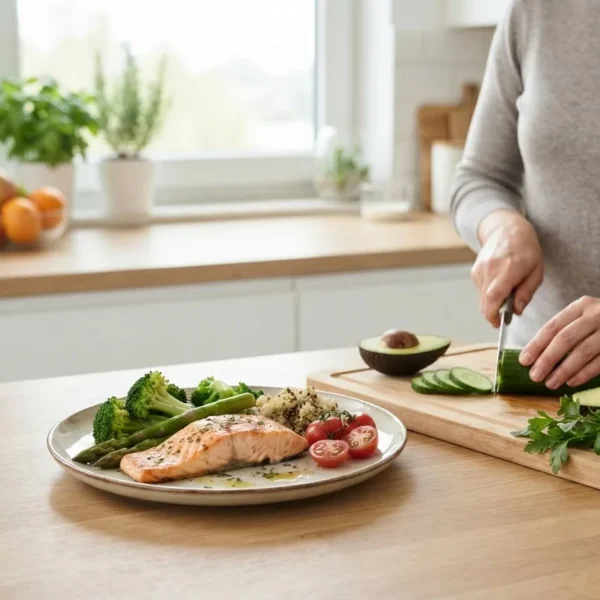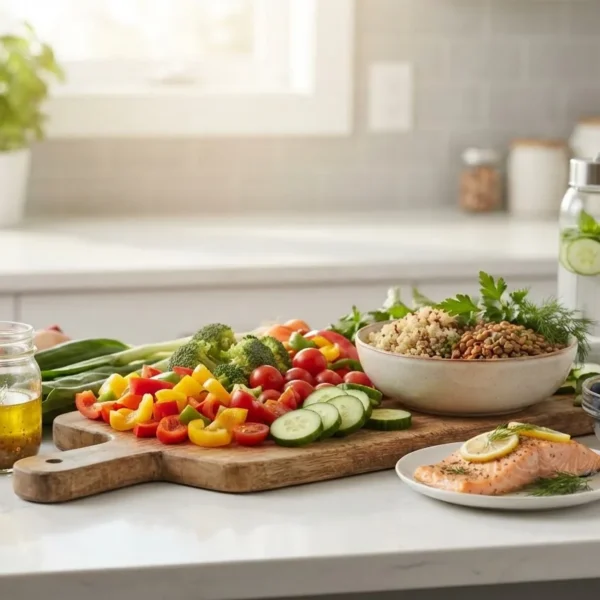
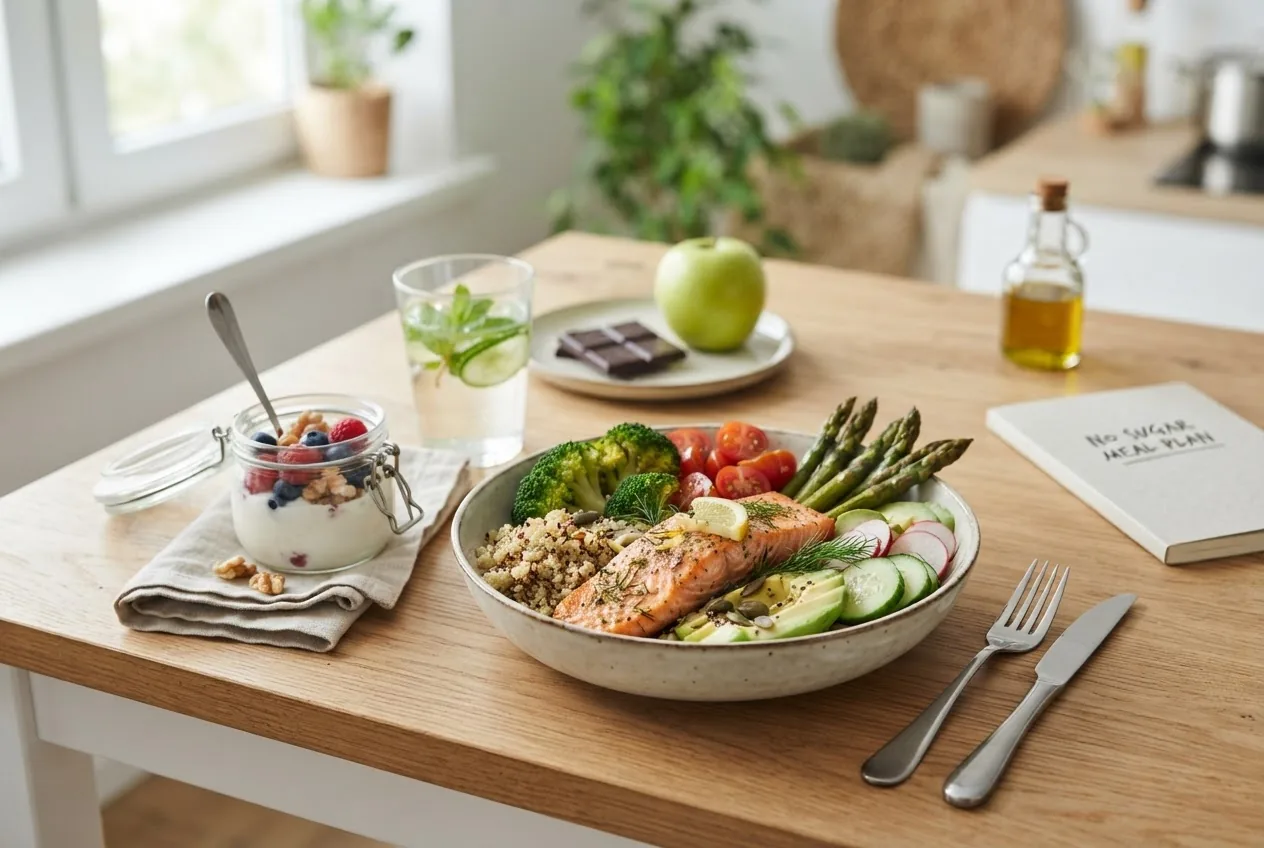
By the end of this hands-on guide you will have a complete, practical no sugar diet plan you can shop for, prep in a single weekend (3–4 hours), and implement across a full week. Skill level assumed: basic home cooking, grocery shopping familiarity, and willingness to read labels for 10–15 minutes per shopping trip.
This guide is written for readers in Texas who want actionable meal plans, exhaustive food lists sorted by category, label-reading training and step-by-step transition tactics to go sugar-free without guesswork.
Before you start
- Prerequisites: willingness to replace sweet processed foods, access to a grocery store or farmer’s market, basic cookware (skillet, baking tray, blender).
- Tools & materials: kitchen scale (0.1 oz/g precision), measuring cups and spoons, simple meal-planning notebook or printable template, refrigerator/freezer space, pantry organizers.
- Time investments: initial planning & shopping 1.5–3 hours; weekly meal prep 2–4 hours; daily breakfast/lunch assembly 5–15 minutes.
- Health caveat: consult a clinician if you have diabetes, are pregnant, breastfeeding, or on medication that could be affected by dietary change.
- Audit your current intake: For three days, write everything you eat and drink (include condiments). Measure serving sizes and highlight obvious sugar sources—sodas, sweetened yogurts, sauces. This baseline will tell you what to remove first.
- Decide your version: Choose strict “no added sugar” or a stricter “no sugar at all” (includes fruit concentrates). For most Texans wanting sustainable change I recommend “no added sugar” with controlled natural fruits (1–2 servings/day).
- Build a fridge-and-pantry list: Use the categorized food lists below. Remove top 10 high-sugar items from your pantry immediately and replace with shelf-stable, no-added-sugar alternatives.
- Learn label reading: Train to find sugar synonyms (sucrose, maltodextrin, cane juice solids). Practice with five packaged items at your next shop; use the label-reading step-by-step below.
- Plan three simple menus: Create 3 daily menus (weekday, quick-lunch, weekend) using the sample meal plans in this guide. Stick to proteins + vegetables + healthy fats + optional low-sugar fruit.
- Batch and prep: Cook 3–4 protein portions (3–6 oz each), roast a tray of vegetables, portion nuts and low-sugar fruit. Use glass containers with labels (date & meal) to speed weekday service.
- Swap and test substitutes: Replace one sugary item per week with a no-added-sugar version or a whole-food alternative (Greek yogurt plain + berries instead of flavored yogurt). Monitor cravings and adjust.
- Track non-scale wins: Log energy, sleep quality, cravings frequency and waist measurements weekly for 4 weeks.
- Iterate: After two weeks, revise meals for variety and add one new vegetable and one new spice each week to avoid monotony.
Transition sentence: Now that you have the high-level workplan and concrete first steps, the following sections give the full context, food lists, label guidance, multiple meal plans, and troubleshooting tactics you’ll need to follow a successful no sugar diet.
Introduction to the No Sugar Diet
A no sugar diet focuses on eliminating added sugars and, depending on your chosen strictness, reducing concentrated natural sugars. The goal is to lower daily sugar exposure to improve energy stability, reduce excess calories, and support body composition goals. Research links high added-sugar consumption with weight gain and cardiometabolic risks — according to a 2022 peer-reviewed meta-analysis on sugar intake and metabolic health (systematic review and meta-analysis, 2022).
Definitions matter: natural sugar vs added sugar are distinct. Natural sugars occur in whole foods (fruit, dairy), paired with fiber and nutrients. Added sugars are those added during processing or preparation (table sugar, syrups, sugar in sauces). For a deeper primer on this distinction see natural vs added sugar.
Benefits you can reasonably expect within 4–12 weeks: improved steady energy, fewer mid-afternoon crashes, modest weight reduction if calories fall, and often lower cravings for processed sweets. According to a 2023 USDA report on dietary patterns, reducing added sugars typically results in lower total daily calories and improved diet quality (USDA report, 2023).
This guide uses a practical, Texas-relevant lens: grocery-cooperative shopping lists for local farmer’s markets, porch-friendly produce that travels across long drives, and fast weeknight recipes that suit busy schedules while keeping sugar exposure minimal.
I will not focus on managing diabetes specifically, but if you have blood sugar concerns consult a clinician. For blood sugar protocol background see the resources at the American Diabetes Association: American Diabetes Association.
What Is Included and What to Avoid on a No Sugar Diet
Transition sentence: After understanding the purpose and benefits, the most actionable next step is a categorized list of what to eat and what to avoid—organized so shopping and prep are fast.
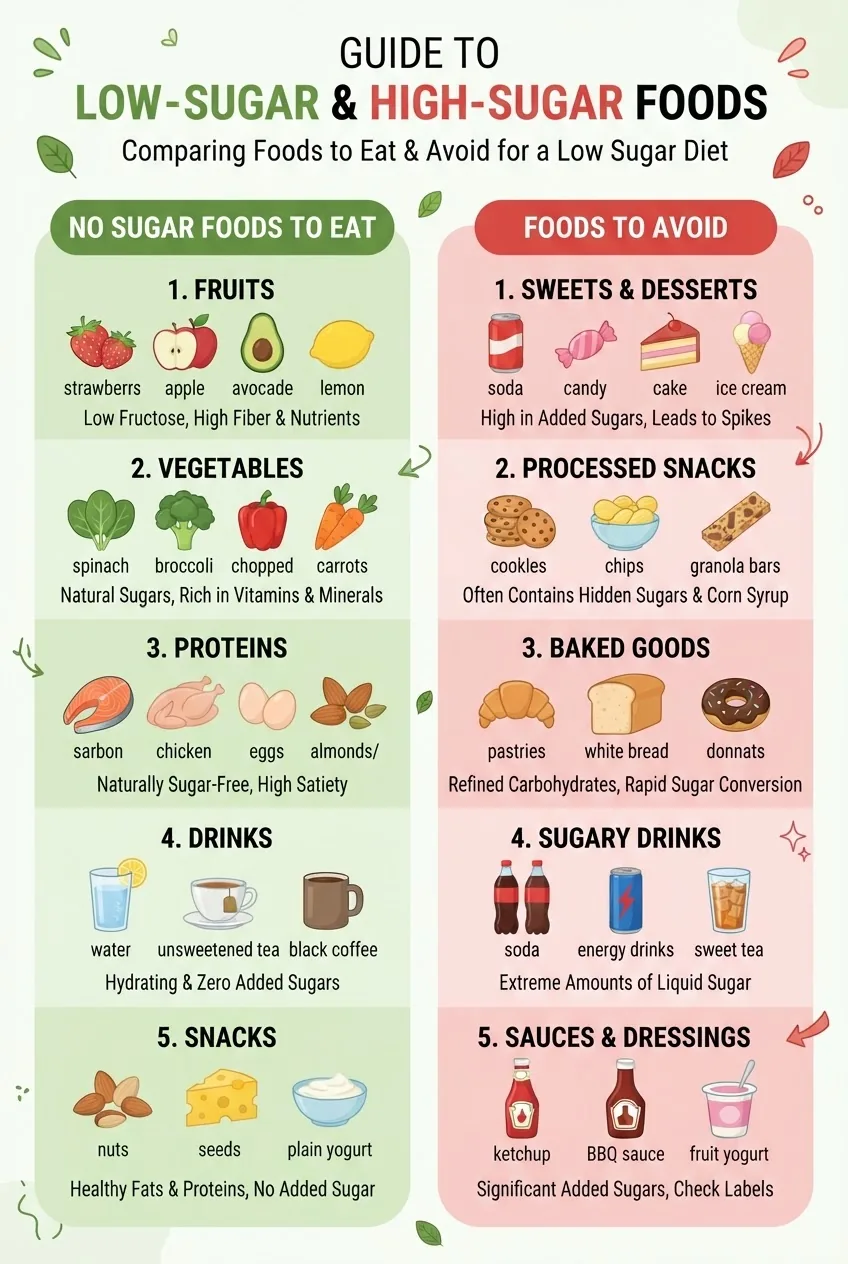
Zero or No-Added-Sugar Foods to Eat (day-to-day staples)
- Proteins: Chicken breast, turkey, grass-fed beef, canned wild salmon (no sugar added), eggs, plain Greek yogurt (unsweetened), tempeh, tofu.
- Vegetables: All non-starchy vegetables—leafy greens, broccoli, zucchini, bell peppers, asparagus, green beans, cabbage.
- Fats: Extra-virgin olive oil, avocado, olives, nut butters with no sugar, raw nuts (almonds, walnuts, pecans).
- Low-sugar fruits (limited): Berries (strawberries, raspberries, blackberries) in ½–1 cup servings, green apples (small), grapefruit (½), and avocado.
- Dairy & alternatives: Plain Greek yogurt, plain kefir, unsweetened almond or oat milk (check labels), aged cheeses.
- Pantry items: Canned tomatoes (no sugar), plain canned beans, brown rice, quinoa, olive oil-based dressings with no sugar listed, vinegars, herbs and spices.
- Beverages: Water, sparkling water, black coffee, unsweetened tea, homemade infused water (cucumber, mint, lemon slices).
Foods to Avoid or Minimize (hidden sugars included)
- Sugary drinks: Sodas, sweetened iced teas, many sports drinks, fruit juices (even 100% juice can spike intake).
- Sweet snacks & desserts: Cakes, cookies, pastries, candy—even “granola” bars and many protein bars often have added sugars.
- Condiments & sauces: Ketchup, many BBQ sauces, sweet chili sauces, teriyaki, some salad dressings—check labels.
- Processed & convenience foods: Canned soups, instant oatmeal flavored packs, some frozen meals and “low-fat” products that replace fat with sugar.
- Hidden sugar carriers: Bread (especially white and some “whole grain” labeled varieties), marinades, flavored yogurts, flavored nut spreads, flavored coffees and syrups.
Sugar free food examples and no added sugar definitions
A no added sugar diet allows foods that naturally contain sugar but avoids products with sugars listed in the ingredient list. Examples: plain canned tuna (no added sugar), plain oatmeal (no added flavor packs), and unsweetened applesauce (no sugar added label). To explore sugar substitutes and whether to allow them, see the “What Is Included…” links below.
If you’re evaluating artificial sweeteners like aspartame as an alternative, review safety and metabolic effects before regular use. See artificial sweeteners like aspartame for comparison and context.
For acceptable replacements in a no-added-sugar plan, review best sugar substitutes—use them sparingly and test how they affect cravings and appetite.
Sugar Free Diet vs Low Sugar Diet – What’s the Difference?
Transition sentence: Understanding the definitions helps you pick the plan that matches your goals—strict elimination or practical reduction.
| Feature | Sugar Free / No Added Sugar | Low Sugar Diet |
|---|---|---|
| Definition | Avoids foods with sugars added during processing; natural sugars in whole foods may be allowed. | Limits total sugar intake (added + natural) to a low daily threshold (e.g., 10–25g/day). |
| Flexibility | Moderate flexibility — allows whole fruits and plain dairy in most versions. | Higher flexibility—can include small servings of sugary foods while staying within grams limit. |
| Best for | People wanting to remove processed sweets and sauces and reduce cravings. | People tracking grams of sugar (e.g., athletes managing carbs, those easing off sweets slowly). |
Descriptive note: A strict sugar-free approach simplifies shopping (no sugar in ingredients) but may remove favorite items. A low sugar diet requires more tracking but can be easier socially. Choose the path you can sustain for 12+ weeks.
How to Read Food Labels to Identify Sugars
Transition sentence: Label reading is a core skill—the difference between a successful no sugar diet and accidental sugar reintroduction.
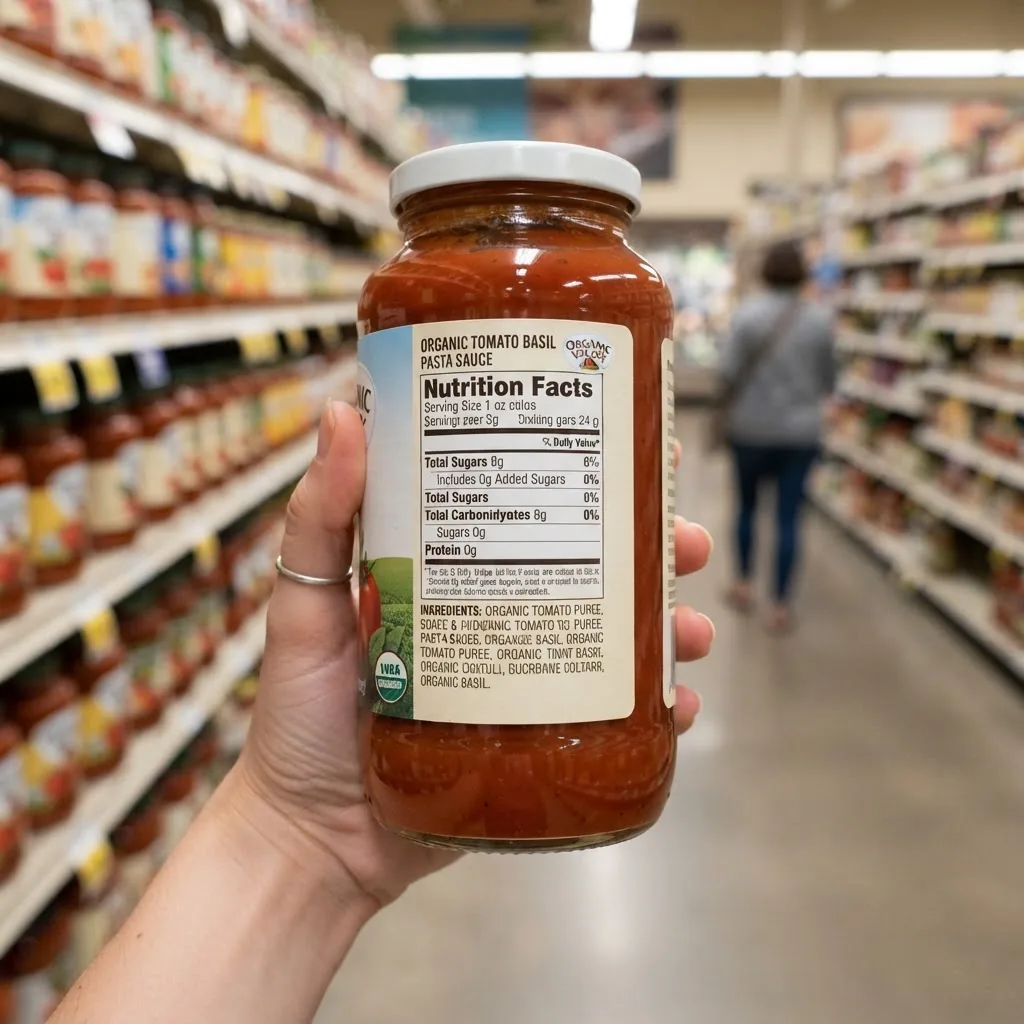
- Scan the Nutrition Facts Panel: Look first at the “Total Sugars” line and then at “Includes X g Added Sugars.” U.S. labels now display added sugars separately—anything >0g is worth questioning. If “Added Sugars” reads 0 g, confirm with the ingredient list.
- Check the ingredient list: Ingredients are listed by weight order. Any sugar synonym listed (see list below) indicates added sugar even if the nutrition panel shows low totals because of serving size tricks.
- Watch serving sizes: Compare the package serving size to what you actually eat. If a cookie package lists one cookie as a serving but you eat three, multiply the sugar amount accordingly.
- Identify sugar synonyms: Common names: sucrose, glucose, high-fructose corn syrup, corn syrup, cane sugar, evaporated cane juice, maltodextrin, dextrose, barley malt, fruit juice concentrate. If any are present, the product contains added sugar.
- Use thresholds: For a no-added-sugar target, allow 0 g added sugar per serving. For a low-sugar target, aim ≤5 g total sugar per serving for snacks and ≤10–15 g per meal.
- Compare similar products: Pick the lowest added-sugar option. For example, compare salad dressings: if one lists “sugar” and the other lists none, choose the latter or make your own vinaigrette (olive oil + vinegar + mustard).
Example screenshot description: Imagine a cereal box nutrition label: Total Sugars 8 g; Includes 6 g Added Sugars. Ingredient list shows “whole grain oats, cane sugar, honey.” That product is not no-added-sugar—swap for plain oats and add fresh berries.
Practical label-reading tip: Treat label scanning like checking road signs when driving—look for “Added Sugars” then confirm via ingredients. For a larger list of low-sugar packaged options see foods low in sugar.
External authority: For labeling rules and definitions of “added sugars,” consult the USDA and Food and Drug Administration guidance — for example, the USDA FoodData Central and FDA labeling updates (USDA/FDA resources, 2020–2023). See the USDA here: USDA.
Sample No Sugar Diet Meal Plans
Transition sentence: Below are three fully fleshed day plans you can adopt immediately; portions are listed to simplify shopping and prep.
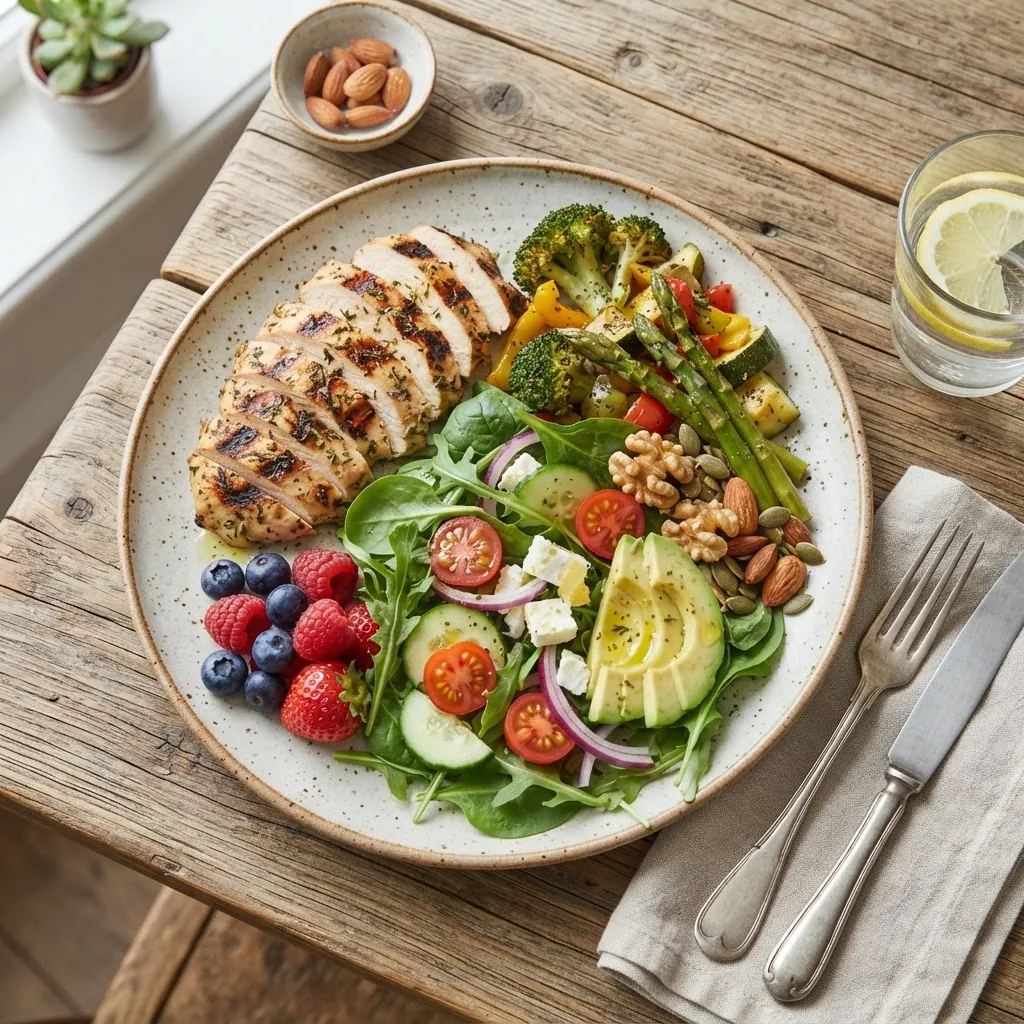
Day Plan A — Weekday Energy (approx. 1,800–2,000 kcal)
- Breakfast (7:00–8:00): 2 scrambled eggs (cooked in 1 tsp olive oil), 1 cup sautéed spinach, ½ avocado, and 1 small green apple. (Protein ~18–20g)
- Snack (10:00): 1 oz almonds (about 23 nuts).
- Lunch (12:30): Grilled chicken salad: 4–6 oz grilled chicken, 3 cups mixed greens, ½ cup cherry tomatoes, ¼ cup cucumber, 1 tbsp olive oil + vinegar dressing. Add 2 tbsp sunflower seeds. (Protein ~30–36g)
- Snack (15:30): Plain Greek yogurt (¾ cup) with ¼ cup raspberries.
- Dinner (18:30): Baked salmon 5 oz, 1 cup roasted broccoli, ½ cup cooked quinoa. (Protein ~30–35g)
- Evening option: Herbal tea or sparkling water with lime.
Day Plan B — Quick Lunch + Shift Work (approx. 1,600–1,900 kcal)
- Breakfast (grab-and-go 7:30): Smoothie: 1 scoop unsweetened protein powder, ½ cup unsweetened almond milk, ½ cup frozen berries, 1 tbsp natural peanut butter, water. (Blend 30–45 seconds.)
- Snack (10:30): 1 medium carrot + 2 tbsp hummus.
- Lunch (13:00): Mason jar bowl: 3 oz canned tuna (water), 1 cup mixed greens, ½ cup chickpeas (rinsed), ¼ cup diced bell pepper, 1 tbsp olive oil + lemon. (Prep 5 minutes)
- Snack (16:00): 1 small pear or ½ cup blueberries.
- Dinner (19:00): Stir-fry: 4 oz lean beef strips, 1 cup mixed stir vegetables, 1 tbsp soy sauce (check for no sugar), 1 tsp sesame oil. Serve over ½ cup cauliflower rice.
Day Plan C — Weekend Relaxed (higher veg, moderate carbs) (approx. 2,000–2,200 kcal)
- Breakfast (9:00): Omelette: 3 eggs, ¼ cup diced tomatoes, ¼ cup onions, 2 tbsp grated cheddar, side of sautéed mushrooms. (Cook 4–5 minutes)
- Snack (11:30): 1 oz walnuts.
- Lunch (13:00): Grilled turkey burger (5 oz patty) over lettuce wrap, side salad with olive oil and vinegar.
- Snack (16:00): Celery sticks + 2 tbsp almond butter.
- Dinner (19:30): Roast chicken thigh (6 oz), 1 cup roasted Brussels sprouts, ½ sweet potato (baked) — the sweet potato is optional for stricter plans.
Within these plans I intentionally add one lower-sugar fruit serving and emphasize whole-food fats and proteins to blunt cravings. For selections that also support fat loss, review foods tested for abdominal fat reduction in our companion guide: foods that help burn belly fat.
Tips and Strategies to Successfully Follow a No Sugar Diet
Transition sentence: The following numbered strategies are proven in practice to reduce slip-ups and simplify adoption.
- Plan one week at a time: Use the sample meal plans above and shop for exactly 7 breakfasts, 7 lunches, 7 dinners and 4–6 snacks. Label prepared containers with date and meal.
- Replace, don’t just remove: When you remove a sugary dessert, replace it with a satisfying swap—e.g., 2 tbsp ricotta with cinnamon and fresh berries (approx. 6–8 g sugar total).
- Gradual reduction if cravings are strong: If daily sugar currently exceeds 50 g, reduce 10–15 g per week until you reach your target. For detailed gram limits consult daily sugar intake recommendations.
- Batch-produce staples: Roast 4 cups of mixed vegetables, grill four 6-oz protein portions, and pre-portion 1-oz nut packs. Total prep time: 2–3 hours for a full week.
- Use spices to replace sweetness: Cinnamon, vanilla extract (pure), citrus zest, and warm spices reduce perceived need for sugar in breakfasts and snacks.
- Hydrate intentionally: Aim for 64–96 fl oz water daily depending on activity. Sometimes thirst is misinterpreted as sugar craving.
- Sleep and stress: Prioritize 7–8 hours sleep and stress management. Cortisol spikes increase sugar cravings—addressing sleep reduces impulsive snacking.
- Track non-food triggers: Keep a 2-week log of times you reach for sweets and note what triggered it (boredom, work stress, celebrations).
- Social tactics: Bring no-sugar dishes to events, or eat a balanced meal before social events to reduce temptation.
- Use community resources: Local farmer’s markets in Texas often have low-sugar preserves labeled; shop there for fresher, lower-sugar options.
- Consider supplements cautiously: Some use chromium or magnesium for cravings—consult a clinician first. For complementary natural approaches see natural diabetes remedies.
Effects and Benefits of a No Sugar Diet
Transition sentence: Many benefits are reported anecdotally and supported by research—expect improvements in energy, weight, and potential cardiometabolic markers.
Common benefits documented in nutrition literature include reduced total calorie intake, lower triglycerides, and decreased waist circumference in those who lower added sugar (peer-reviewed randomized controlled trials and cohort studies, 2018–2023).
Immediate effects (1–2 weeks): reduced daytime energy spikes and fewer cravings. Short-term (4–12 weeks): modest weight loss if calories fall, improved satiety on higher-protein meals, and possible improvements in blood lipid profiles (peer-reviewed studies, 2020–2023).
Caveats: Some people report transient headaches, low mood, or decreased exercise performance in the first 7–10 days; these typically resolve as the body adapts. If symptoms persist, consult your clinician.
Ingredients and Products to Avoid (Hidden Sugars)
Transition sentence: Hidden sugars lurk in surprising places—once you know the list of synonyms, they become easy to spot.
- Hidden sugar ingredient names: maltodextrin, dextrose, barley malt, glucose syrup, evaporated cane juice, brown rice syrup, fruit juice concentrate, molasses, sucrose, corn syrup solids.
- Common product culprits: flavored instant oats, “health” granola bars, pre-made marinades, canned tomato sauces with sugar, ready-made smoothies and shakes, low-fat dairy with added sweeteners.
- Practical rule: If a product lists any of the above in the first five ingredients, avoid it for a strict no-added-sugar approach.
Sugar Substitutes (Brief Overview)
Transition sentence: Substitutes can help transition, but they’re not a free pass—use them strategically.
Common options include stevia, monk fruit, erythritol, and sucralose/aspartame. They reduce caloric sugar exposure but some people find certain substitutes maintain sweet cravings. For an in-depth comparison see our internal resource on substitutes: best sugar substitutes. Use substitutes for occasional treats while you build whole-food habits.
Transition Strategies to a No Sugar Eating Plan
Transition sentence: Use a stepwise, 6-week strategy that reduces sugar gradually while increasing satisfying foods.
- Week 1–2: Remove sugary drinks and replace with sparkling water and coffee/tea without syrups.
- Week 3–4: Remove flavored yogurts, swap for plain Greek yogurt + cinnamon and berries.
- Week 5–6: Remove sweets and processed snacks; introduce satisfying fat+protein snacks (hard-boiled eggs, nuts, cheese).
- Long term: Re-assess every 4 weeks and add one new no-sugar recipe to rotation to maintain variety.
Common mistakes and how to avoid them
I often see people remove desserts but keep hidden sugars in condiments. I once switched to “sugar-free” salad dressing that used concentrated fruit juice—my clients gained nothing and still craved sweets. Avoidance: always read the ingredient list even when labels highlight “no sugar added.”
I’ve also watched people over-restrict and then binge. One practical fix: allow one planned low-sugar treat weekly to maintain sustainability and avoid rebound cravings.
Checklist — Verify your no sugar diet setup
- Pantry: top 10 sugary items removed and replaced.
- Labels: you can identify 10 sugar synonyms on sight.
- Meal plan: three daily menus ready and grocery list built.
- Prep: at least 2 hours of batch-cooked proteins/vegetables completed.
- Tracking: a simple log for cravings and non-scale wins is in use.
When to call in a professional
Call a registered dietitian or your primary care clinician if you have diabetes, are pregnant, breastfeeding, take medication for blood sugar or blood pressure, or if you experience persistent dizziness, fainting, or rapid mood changes during dietary transition. Use clinical support to tailor carb and medication timing precisely.
Conclusion and Encouragement for a Healthier Sugar-Free Life
You now have a hands-on roadmap: an audit method, label-reading workflow, exhaustive lists of what to eat and avoid, multiple day-by-day meal plans, transition strategy, and practical shopping and prep tips tailored for everyday life. Start small—replace one item this week, prep for two days, and build momentum. For ongoing gram-level guidance, review the daily sugar intake recommendations. If you’re ready to begin, print the checklist above and schedule a 3-hour weekend prep session—consistency for four weeks is the threshold where many people notice lasting benefits.