
Answer: Unsaturated vs saturated fats differ chemically and in health effects: unsaturated fats (liquid at room temperature) generally improve heart health and lower inflammation, while saturated fats (solid at room temperature) raise LDL cholesterol and cardiovascular risk when consumed in excess; balance and food sources matter for daily intake and practical swaps.
What are saturated and unsaturated fats and how do they differ chemically?
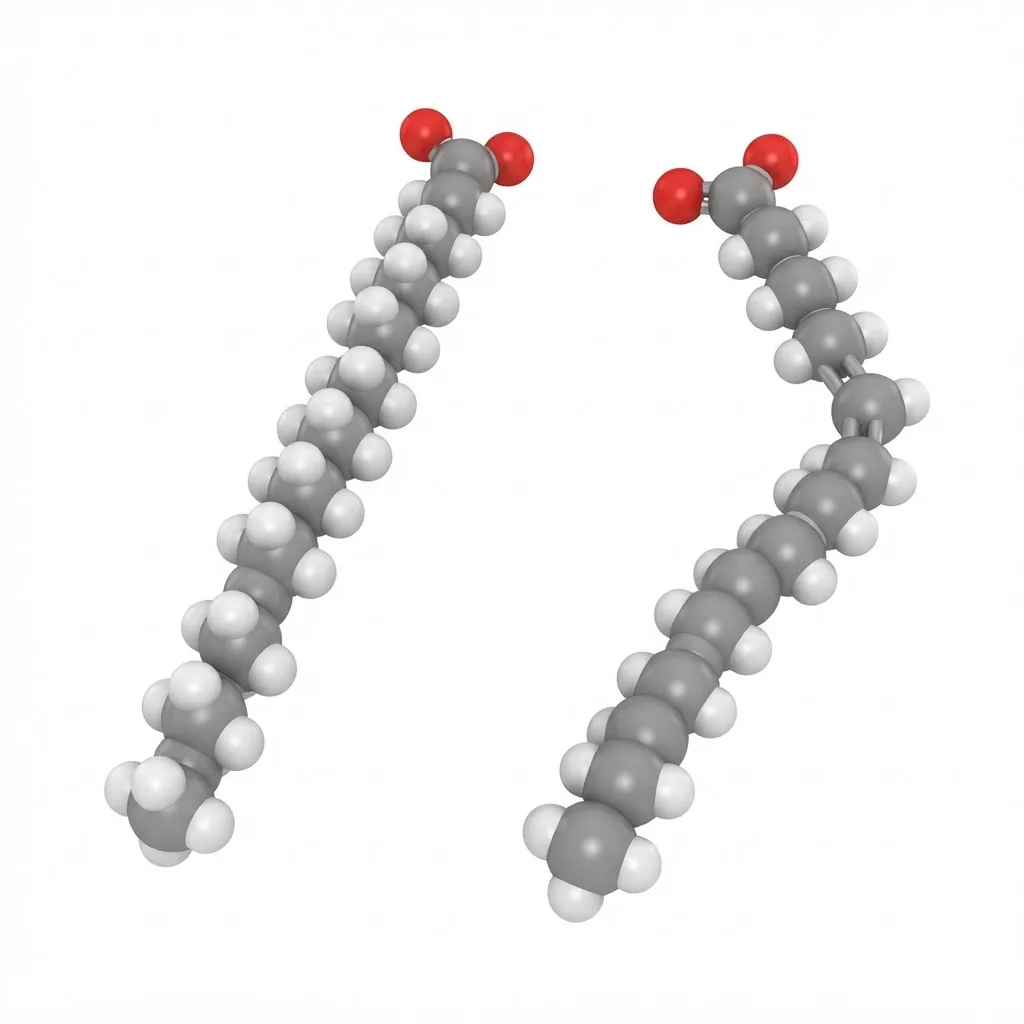
Answer: Saturated fats are fatty acids without carbon–carbon double bonds and are typically solid at room temperature; unsaturated fats contain one (monounsaturated) or more (polyunsaturated) double bonds, introducing kinks that make them liquid at room temperature.
Term: Lipids are a class of biological molecules that include fats and oils—molecules made primarily of fatty acid chains attached to a glycerol backbone.
Chemistry in plain language: saturated fatty acids have straight, tightly packed carbon chains (think “solid building blocks”), while unsaturated fatty acids have one or more double bonds that create bends or “kinks,” making them more flexible and fluid in membranes and at room temperature.
| Feature | Saturated fatty acids | Unsaturated fatty acids |
|---|---|---|
| Chemical bonds | No C=C double bonds | One or more C=C double bonds |
| Physical state at room temp | Usually solid | Usually liquid |
| Types | Saturated fatty acids (e.g., palmitic, stearic) | Monounsaturated (MUFA) and polyunsaturated (PUFA) |
| Biological role | Energy storage, structural roles when required | Cell membrane fluidity, precursors for signaling molecules (omega-3, omega-6) |
Monounsaturated fatty acids (MUFA) have a single double bond (e.g., oleic acid in olive oil); polyunsaturated fatty acids (PUFA) have multiple double bonds (e.g., omega-3 EPA/DHA in fish, omega-6 linoleic acid in vegetable oils). These structural differences affect melting point, oxidation risk, and metabolic effects.
Next: how those chemical differences translate to health effects and clinical guidance.
How do saturated and unsaturated fats affect health differently?
Answer: Saturated fats tend to raise LDL (“bad”) cholesterol and are linked to higher cardiovascular disease (CVD) risk when replacing unsaturated fats or healthy carbs; unsaturated fats lower LDL, can raise HDL, improve endothelial function, and reduce inflammation when used to replace saturated fats.
Major authoritative positions: the American Heart Association recommends replacing saturated fat with unsaturated fats to reduce CVD risk. American Heart Association guidance on fats (external) summarizes decades of evidence linking saturated fats to LDL cholesterol increases and higher risk.
Selected evidence and mechanisms:
- LDL and saturated fat: Saturated fatty acids increase LDL cholesterol production and slow LDL receptor-mediated clearance; higher LDL-C is a causal factor for atherosclerotic cardiovascular disease (ASCVD) — according to numerous randomized controlled trials and cohort studies cited by the AHA.
- Unsaturated fat benefits: Replacing saturated fat with MUFA/PUFA lowers LDL-C and often improves lipoprotein profiles and inflammatory markers — a consistent finding across meta-analyses and guideline reviews.
- Inflammation and insulin sensitivity: Omega-3 PUFAs (EPA/DHA) have anti-inflammatory effects and modest benefits for triglycerides; replacing refined carbs and trans fats with unsaturated fats can improve metabolic markers.
Stat block: Major observed effects
- Increased LDL cholesterol: saturated fats (consistent across trials)
- Reduced LDL cholesterol: replacing saturated with unsaturated fats (MUFA/PUFA)
- Raised inflammation and CVD risk: industrial trans fats pose highest risk
- Improved triglycerides and endothelial function: omega-3 PUFAs
Clinical nuance and ongoing debate: Some observational studies and selective meta-analyses have questioned the strength of the saturated fat–CVD link, but randomized feeding trials and guideline committees (AHA, USDA) emphasize replacement strategy—substituting unsaturated fats for saturated fats rather than simply lowering total fat without regard to replacement nutrient.
For interplay with blood sugar and metabolic disease, see research syntheses: USDA Dietary Guidelines summarize evidence about dietary patterns, and multiple NIH-funded trials discuss fat type and insulin sensitivity; see NIH resources for study summaries.
Transition: with health effects clear, the next section shows exact intake recommendations and how to calculate grams per day.
How much saturated and unsaturated fat should I eat each day?
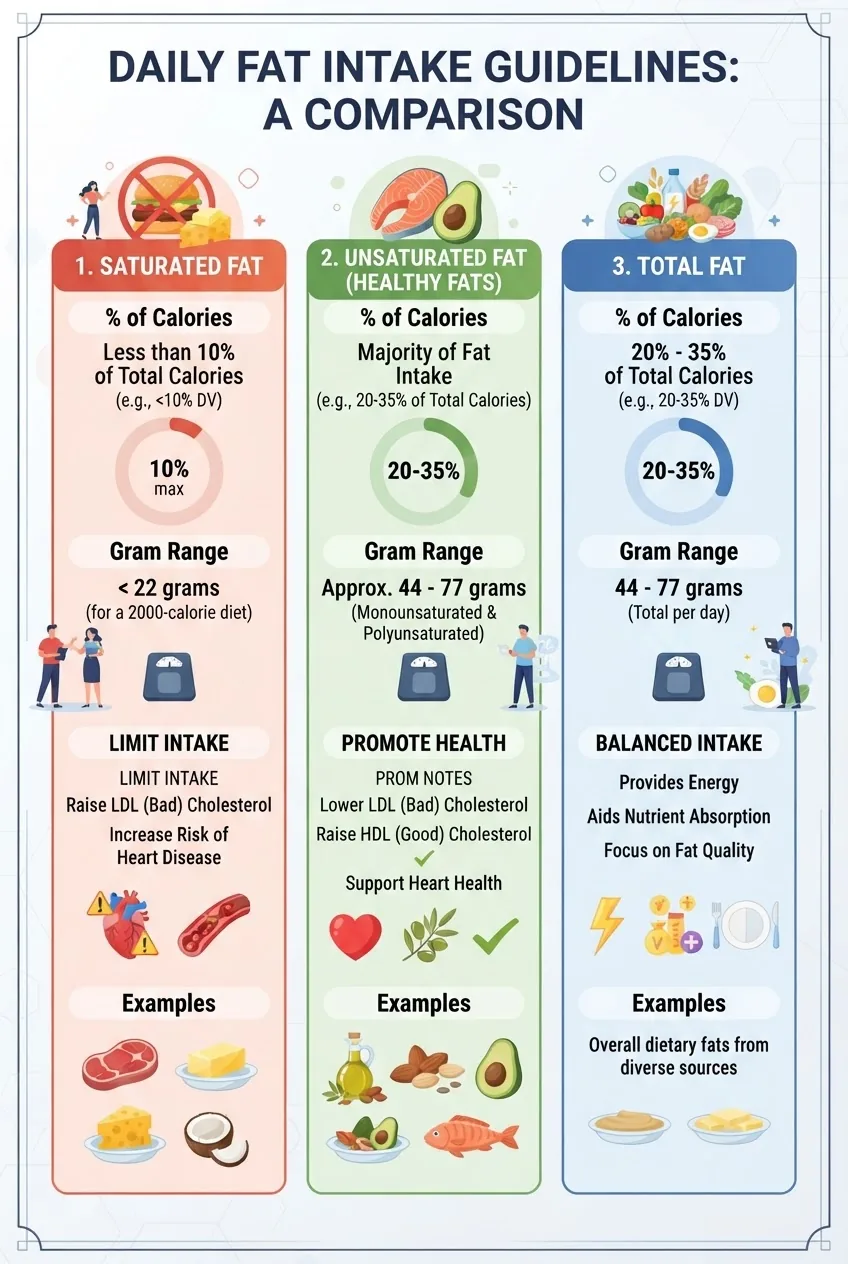
Answer: Most guidelines recommend limiting saturated fat to less than 6–10% of daily calories and keeping total fat between 20–35% of calories, prioritizing unsaturated fats (MUFA/PUFA) to replace saturated fat; calculate grams by converting calories to fat calories (fat = 9 kcal/g).
Numbered guideline summary (authoritative sources):
- American Heart Association: aim for saturated fat at no more than 5–6% of total calories for those needing lower cholesterol (external source): AHA recommendations.
- USDA Dietary Guidelines (2020–2025/2023 syntheses): recommend total fat 20–35% of calories and limiting saturated fats to <10% of calories, emphasizing replacement with unsaturated fats: USDA Dietary Guidelines.
- WHO and other bodies align with replacing saturated fats with polyunsaturated fats rather than reducing total fat indiscriminately (source type: global public health guideline review).
How to calculate fat grams per day — practical steps:
- Decide target calories per day (example: 2,000 kcal/day).
- Choose total fat % (e.g., 30% of calories → 0.30 × 2000 = 600 kcal from fat).
- Convert fat kcal to grams: divide by 9 (600 ÷ 9 ≈ 67 g total fat per day).
- Apply saturated fat cap: if saturated fat ≤7% of calories (AHA example): 0.07 × 2000 = 140 kcal → 140 ÷ 9 ≈ 15.5 g saturated fat/day.
Examples for common calorie targets (rounded):
| Calories/day | Total fat (30%) g/day | Saturated fat (≤7%) g/day | Saturated fat (≤10%) g/day |
|---|---|---|---|
| 1,500 kcal | 50 g | 12 g | 17 g |
| 2,000 kcal | 67 g | 15–16 g | 22 g |
| 2,500 kcal | 83 g | 19–20 g | 28 g |
Practical notes:
- These are population-level targets; individual needs vary by age, sex, activity, and medical conditions.
- For weight loss, see the sibling guide on recommended fat gram intake for weight loss.
- When lowering saturated fat, replace with whole-food unsaturated sources (olive oil, nuts, fatty fish) rather than refined carbs or added sugars.
Next: learn which everyday foods are richest in each fat type, including Texan diet examples and swaps.
What common foods are high in saturated or unsaturated fats?
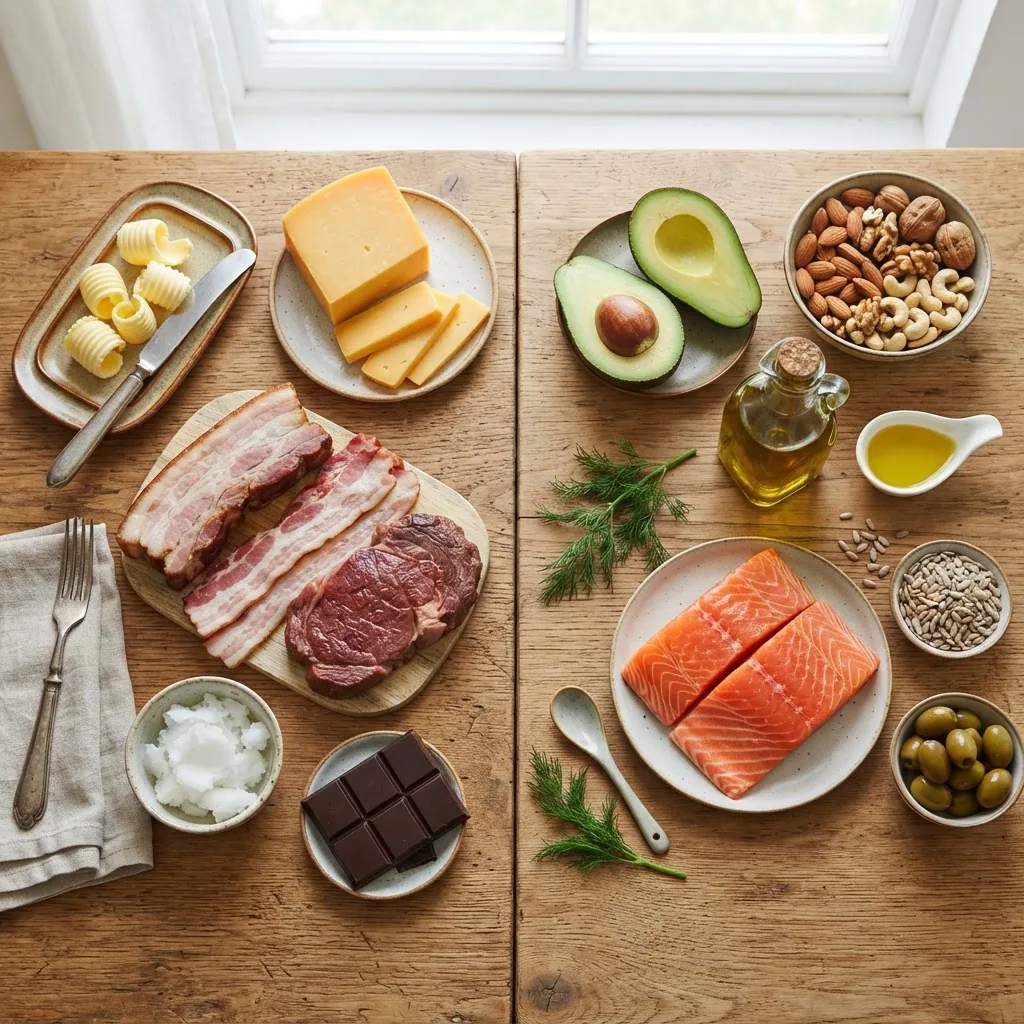
Answer: Foods high in saturated fat include fatty red meats, butter, cheese, and palm oil; foods high in unsaturated fat include olive oil, avocado, nuts, seeds, and fatty fish like salmon — many Texan favorites can be adapted by choosing lean cuts and unsaturated-oil-based preparations.
Below are categorized lists emphasizing American and Texas-relevant foods and simple swaps.
High in saturated fats
- Fatty cuts of beef and pork (brisket, ribeye, pork belly) — common in Texas barbecue.
- Full-fat dairy: butter, cheese (queso fresco, cheddar), heavy cream.
- Fried foods using palm oil or animal fat (fried chicken, traditional Tex-Mex fry-ups).
- Coconut and palm kernel products (used in some processed foods).
High in unsaturated fats
- Olive oil, canola oil, and avocado oil (use for dressings and cooking).
- Avocado (popular in Tex-Mex and salads).
- Nuts and seeds (pecans, almonds, walnuts) — pecans are regionally common in Texas desserts and snacks.
- Fatty fish: salmon, mackerel, sardines — available fresh or canned.
- Nut butters (peanut, almond) and olives.
Quick Texan meal examples and swaps:
- Swap brisket slices heavily trimmed and served with avocado salsa instead of queso-laden brisket sandwiches to reduce saturated fat and boost MUFA/PUFA.
- Use olive oil or avocado oil for grilling fajitas rather than lard or butter; choose grilled chicken or fish over fatty fried options.
- Replace full-fat queso with a light shredded cheese topping and a drizzle of olive oil–based chimichurri for flavor with healthier fats.
Next: how trans fats differ and why they are a distinct public-health target compared with saturated and unsaturated fats.
How do trans fats compare to saturated and unsaturated fats and what are their risks?
Answer: Trans fats (particularly industrial partially hydrogenated oils) are unsaturated fats chemically altered to be more solid; they raise LDL, lower HDL, and have a stronger, proven link to cardiovascular disease than saturated fats — public-health bodies recommend near-zero intake.
Overview: Trans fats include industrially produced partially hydrogenated oils and small amounts in some ruminant fats; industrial trans fats have no safe level of consumption according to many health authorities because of clear, high-magnitude risk increases for CVD.
| Feature | Saturated fats | Unsaturated fats | Trans fats |
|---|---|---|---|
| Source examples | Butter, cheese, fatty meat | Olive oil, nuts, fatty fish | Partially hydrogenated oils, some baked goods |
| Effect on LDL | Increase | Decrease (when replacing SFA) | Substantial increase |
| Effect on HDL | Variable | Often increase or neutral | Decrease (harmful) |
| Public-health stance | Limit intake; replace with unsaturated | Encouraged as replacement | Eliminate industrial trans fats |
Practical tip: check ingredient lists for “partially hydrogenated” oils and avoid packaged foods that list them. Many countries and the US FDA have virtually eliminated industrial trans fats from food supplies; remaining exposure often comes from imported foods, some bakery items, and frying oils used at scale.
Transition: with risks and sources clarified, here are step-by-step dietary strategies to balance fat intake every day.
How can I balance fat intake in my daily diet with practical meal planning tips?
Answer: Build each meal around lean proteins, vegetables, whole grains, and healthy fats: prioritize MUFA/PUFA (olive oil, avocados, nuts, fatty fish), limit saturated fat to guideline targets, avoid trans fats, and pair portion control with flavor-preserving swaps and Texan-friendly recipes.
Step-by-step how-to (practical and actionable):
- Start with a clear target: calculate calories and fat grams as shown earlier. Use a kitchen scale and nutrition labels to track for a week.
- Choose healthy cooking fats: use olive oil or avocado oil for sautéing and dressings; reserve butter for finishing small portions for flavor.
- Swap proteins wisely: select grilled chicken, turkey, or lean brisket trims; include fatty fish twice weekly for omega-3s.
- Use nuts and seeds as snacks/toppings: a small handful (1 oz) of pecans or almonds provides MUFA/PUFA and satiety without large saturated loads.
- Limit high-saturated foods: reduce processed meats, deep-fried items, and full-fat cheese portions.
- Flavor, not fat: boost flavor with herbs, citrus, chiles, and smoked paprika rather than heavy creams; Tex-Mex spice blends and salsas are effective.
- Read labels: choose products with no partially hydrogenated oils and lower saturated fat per serving.
Meal planning examples (daily blueprint for ~2,000 kcal with ~30% fat, saturated ≤7%):
- Breakfast: Greek yogurt (low-fat) topped with chopped pecans and berries; 1 tsp honey or cinnamon; black coffee. Swap idea: avocado toast on whole-grain bread with a drizzle of olive oil.
- Lunch: Grilled chicken salad with mixed greens, tomatoes, half an avocado, pumpkin seeds, and olive oil–vinaigrette.
- Snack: 1 oz almonds or a small apple with 1 tbsp peanut butter (prefer natural nut butter).
- Dinner: Baked salmon with roasted vegetables and a quinoa side; for Texan flavor, add a citrus-chipotle rub and cilantro garnish.
- Treats: If you want queso or brisket at an event, practice portion control: small tasting portions, pair with vegetables, and choose leaner sides.
Pairing fat reduction with sugar strategies: managing both saturated fat and added sugar supports heart and metabolic health; see the pillar page Natural vs Added Sugar Guide with Health and Nutrition Facts and use daily sugar intake recommendations when planning meals.
Additional resources for substitutes and metabolic support: consider healthy sweetener alternatives and read about best sugar substitutes for diabetics when lowering both sugar and saturated fat.
For targeted belly-fat reduction that considers macro balance, include guidance from belly fat burning foods and combine with portion control and activity.
Clinical caution: personalize changes with a healthcare provider, especially if you have lipid disorders, diabetes, or other chronic conditions; consult your clinician before large diet shifts.
Transition: clear answers to common myths and quick reference FAQs follow.
What are common myths and quick FAQs about saturated and unsaturated fats?
Answer: Myth-busting: saturated fat is not universally “good”—excess raises LDL and CVD risk; unsaturated fats are generally “good” when replacing saturated fats; trans fats are uniquely harmful. Read concise facts below for clarity and shopping tips.
Common myths—short answers
- Myth: All saturated fats are harmless. Fact: Certain saturated fats (e.g., palmitic acid) increase LDL and CVD risk when consumed in excess; replace with unsaturated fats where possible.
- Myth: Low-fat is always healthy. Fact: Low-fat processed foods often add sugar; focus on fat quality rather than only quantity.
- Myth: Coconut oil is a healthy exception. Fact: Coconut oil is high in saturated fat and raises LDL similar to other saturated fats; use sparingly.
End summary and CTA: balance unsaturated vs saturated fats by prioritizing MUFA/PUFA foods, limiting saturated fat to guideline percentages, avoiding trans fats, and combining fat choices with sugar control to protect heart and metabolic health. For personalized plans, consult a registered dietitian or your clinician and explore the practical resources linked above.