portion control for weight loss is a practical, evidence-backed approach many people use to reduce energy intake without extreme restriction. This guide explains the science, precise portion size recommendations, real meal-plan examples, and everyday techniques to make portion control a reliable tool for sustainable weight loss.
Understanding Portion Control for Weight Loss
Portion control describes how much food you choose to eat at one sitting — distinct from a formal dietary program. When applied deliberately, portion moderation helps manage total calorie intake, reduces overconsumption, and supports weight management by making it easier to maintain an energy deficit (calories consumed < calories expended).
At its core, portion control for weight loss leverages two complementary ideas: (1) adjusting the physical amount of food you eat per meal and (2) prioritizing lower-calorie-density foods to feel full on fewer calories. This approach keeps balanced nutrition intact while reducing excess energy.
Key concepts to understand up front:
- Calorie intake — Total calories consumed daily determine weight change over time; portion control modifies intake without necessarily forcing strict calorie counting.
- Calorie density — Foods high in water and fiber (vegetables, fruits, broth-based soups) are less calorie-dense, so larger portions can be eaten for fewer calories.
- Satiety — Feelings of fullness that influence how long you stay satisfied after a meal; portion size and macronutrient mix both affect satiety.
- Energy balance — Sustainable weight loss requires a persistent, moderate caloric deficit that portion control can help create and sustain.
Portion control is particularly valuable because it targets behavior: it supports consistent habit-building (plate management, mindful eating, and controlled serving sizes) rather than relying purely on willpower. By embedding these habits into your routine, you reduce the likelihood of overeating triggered by oversized packages, restaurant portions, or distracted eating.
When designing portion-controlled meals, it helps to think in practical serving units (cups, palm-sized protein portions, thumb-sized fats, fist-sized vegetables or whole grains) and to use tools for accuracy. Later sections provide precise portion size recommendations and visual cues to make this easy in daily life.
For background on the broader meaning of diet and how portion control fits under that umbrella, see this foundational resource: diet definition guide and requirements.
Transition: Now that you know why portion control matters, let’s examine the physiological mechanisms by which adjusting portion size affects weight loss.
How Portion Control Affects Weight Loss Physiology
Portion control promotes weight loss primarily by helping create and maintain a sustained caloric deficit — when calories consumed are less than calories burned. However, the physiological effects extend beyond a simple arithmetic of calories.
Below are the key mechanisms and their practical implications:
- Reduced energy intake — Smaller portions reduce total calories ingested per meal. When implemented consistently across meals and snacks, this cumulative reduction leads to weight loss.
- Satiety hormones and appetite regulation — Meals that have adequate protein and fiber stimulate satiety hormones (e.g., peptide YY, GLP-1) more effectively than low-protein, low-fiber meals. This reduces subsequent hunger and lowers the chance of snacking or overeating.
- Metabolic consequences — Moderate portion reduction typically does not lower resting metabolic rate significantly. Large, rapid calorie cuts can trigger metabolic adaptation; portion control aims for modest daily deficits to minimize this.
- Digestive rate and glycemic response — Smaller portions of carbohydrate at a meal can reduce postprandial blood sugar spikes and insulin response, helping stabilize appetite and reduce cravings later in the day.
- Behavioral reinforcement — Repeatedly practicing ideal portions rewires habitual cues (plate fullness, second-helping triggers). Behavioral changes complement physiological mechanisms by lowering the frequency of overeating episodes.
Practical subpoints to apply physiology to planning:
- Aim for protein at each meal: 20–35 g of protein per meal supports satiety and preserves lean mass during weight loss.
- Volume with low-calorie-density foods: Fill half your plate with non-starchy vegetables to increase meal volume and satiety while keeping calories low.
- Mind timing and frequency: Eating consistent meals and timed snacks prevents extreme hunger that leads to oversized portions.
- Moderate energy deficit: Target a deficit of 300–700 kcal/day (individualized) rather than extreme cuts to preserve metabolism and adherence.
Evidence and authority: According to a 2024 systematic review of portion-size interventions, reducing portion sizes was effective at decreasing short-term energy intake in free-living adults (source type: peer-reviewed literature summarized by a nutrition authority). For population context on obesity and the need for practical interventions, see CDC obesity data.
Transition: Understanding these physiological drivers helps when distinguishing technical terms — for example, “portion size” versus “serving size” — which is a common source of confusion.
Difference Between Portion Size and Serving Size
Many people confuse portion size and serving size; clarity helps you correctly apply portion control to packaged foods and restaurant meals.
| Term | Definition | Common Source | How it matters for weight loss |
|---|---|---|---|
| Serving size | Standardized amount listed on nutrition labels or dietary guidelines. | Food packaging, USDA dietary guidance. | Useful for tracking calories and nutrients; often smaller than what people actually eat. |
| Portion size | The amount you choose to eat at a meal or snack. | Your plate, restaurant dish, or home servings. | Directly determines energy intake; adjust to meet calorie goals. |
Short explanation: Nutrition labels and dietary guidelines use serving size as a standardized unit to report nutrient amounts. A portion size is what you actually serve or eat — and often exceeds the serving size on the label. For help understanding standardized values, consult the portion and serving size guide and recommended requirements.
Transition: With terminology clear, next we cover hands-on techniques you can use immediately to control portions effectively.
Practical Portion Control Techniques and Tips
- Measure once to learn. Use a food scale and measuring cups for 1–2 weeks to calibrate what “one portion” looks like for common foods. Record portion sizes; this builds an internal visual library.
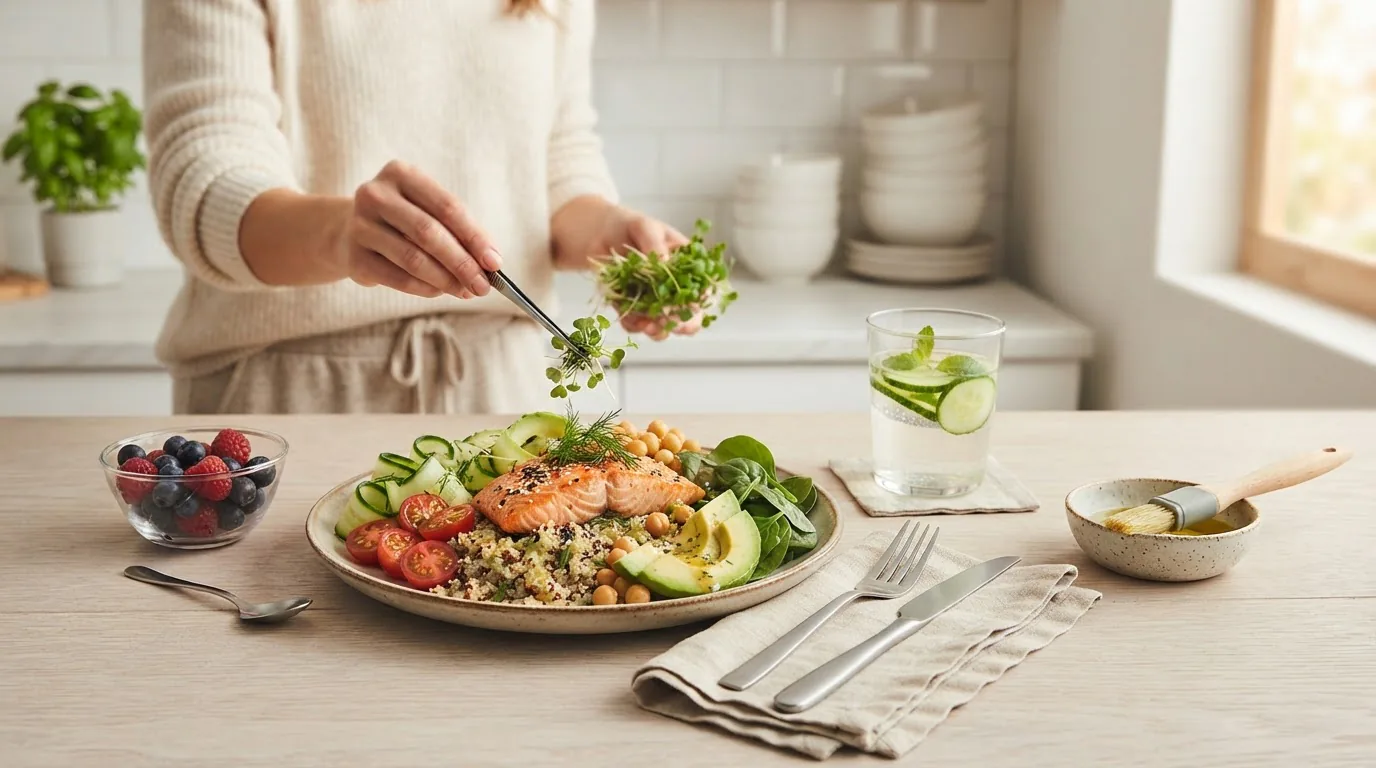
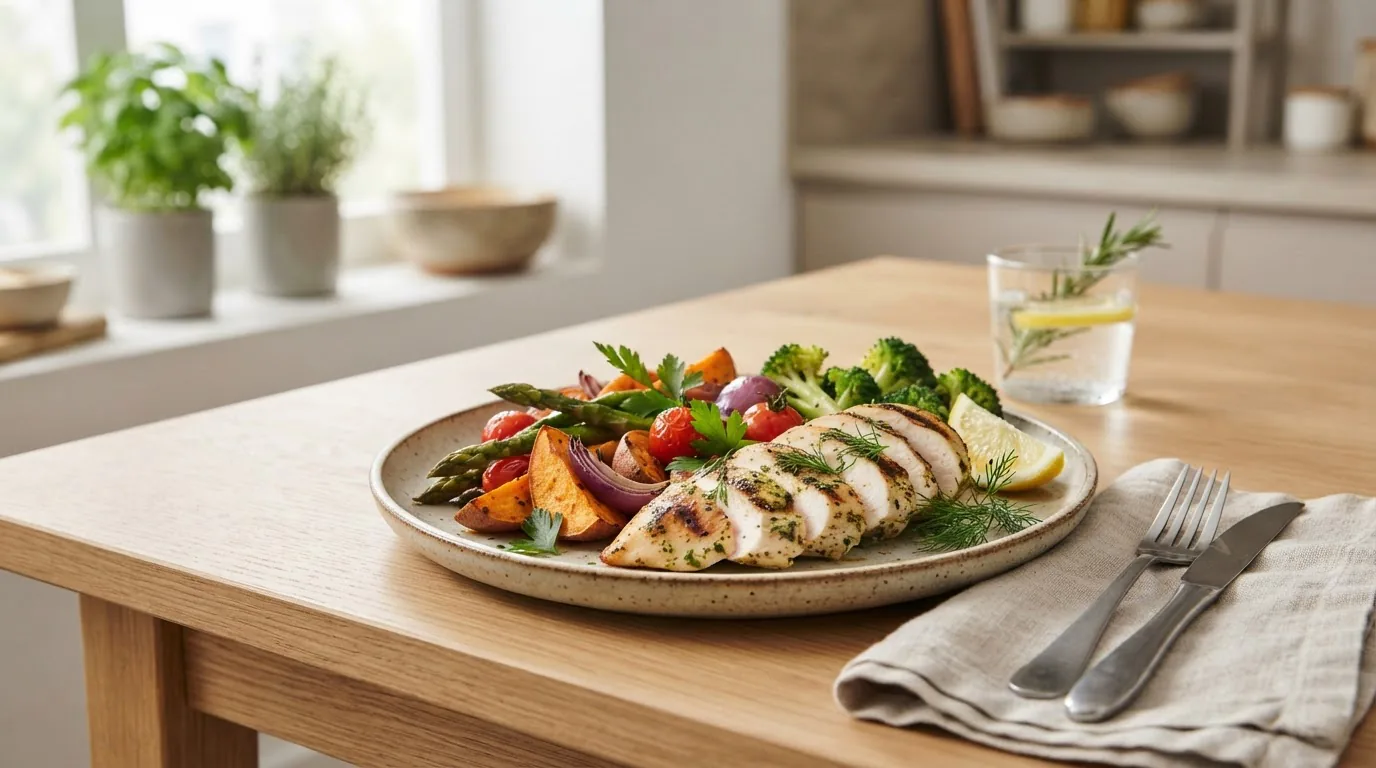
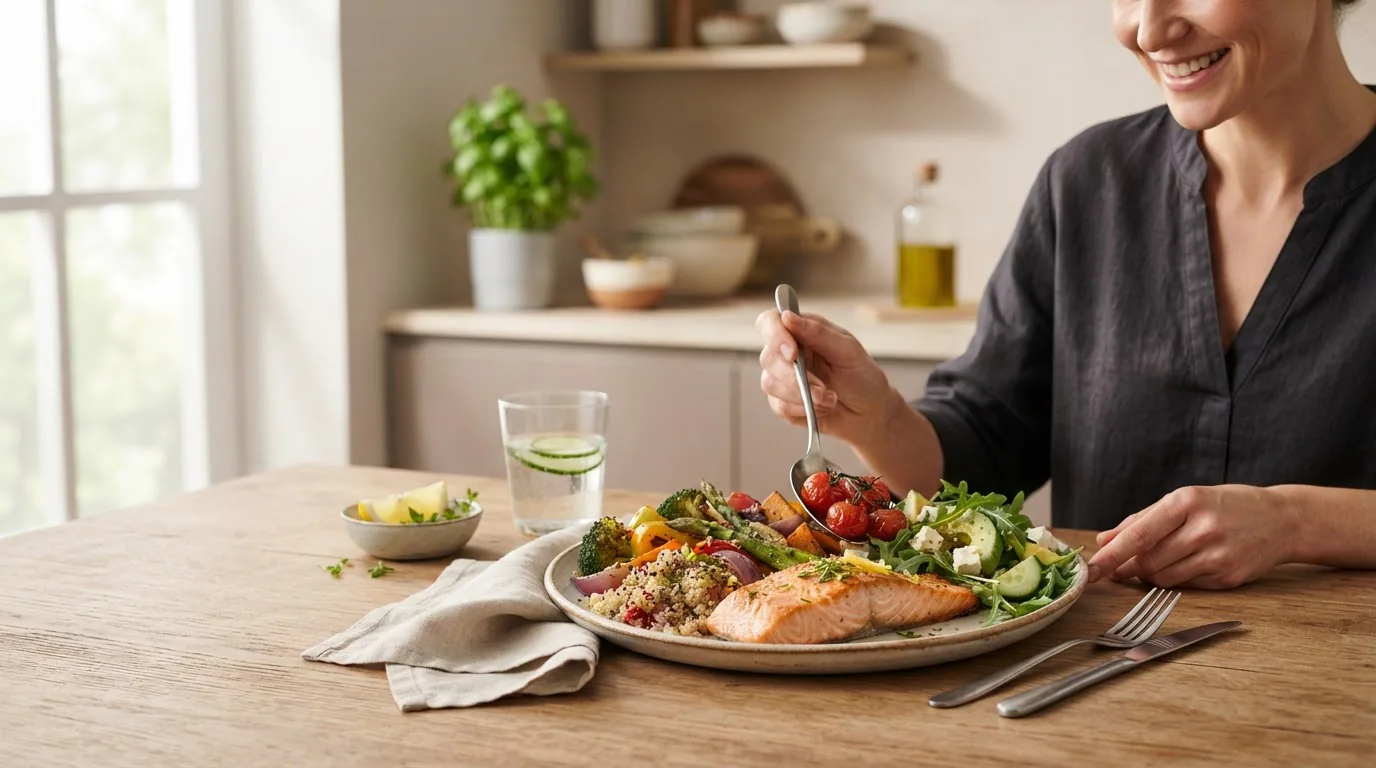
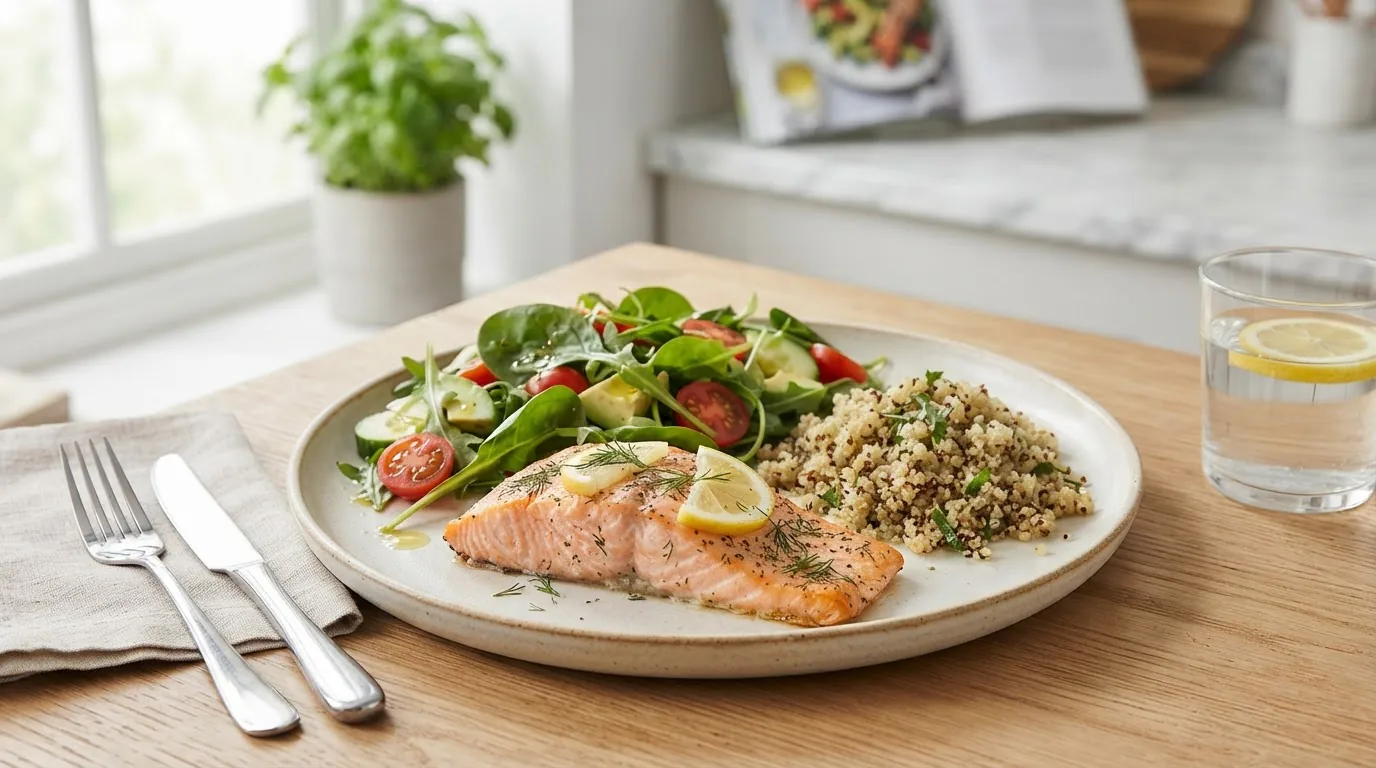
- Use the plate method. Fill half the plate with non-starchy vegetables, one-quarter with lean protein, and one-quarter with whole grains or starchy vegetables. This simple visual prevents oversized carbohydrate or fat portions.
- Adopt visual cues. Learn quick rules: a palm-sized protein, a fist for vegetables or whole grains, a thumb for fats, and a cupped hand for carbs like rice or pasta. These cues are portable and reduce reliance on measuring tools.
- Pre-portion snacks. Divide bulk snacks into single-serving bags or containers rather than eating from the package. This prevents mindless grazing and portion misestimation.
- Mindful eating practice. Eat without screens, chew thoroughly, and pause halfway through a meal for a hunger check. It takes ~15–20 minutes for fullness signals to reach the brain — pausing helps you avoid overeating.
- Control serving environment. Use smaller plates and bowls; place serving dishes off the table. Visual context influences perceived normal portion sizes.
- Use portion control tools. Keep a scale, measuring cups, and a portion-control plate in your kitchen. Consistent use in the early weeks builds durable habits.
- Prioritize protein and fiber. Build meals around lean protein, high-fiber vegetables, and modest complex carbs to maximize satiety per calorie.
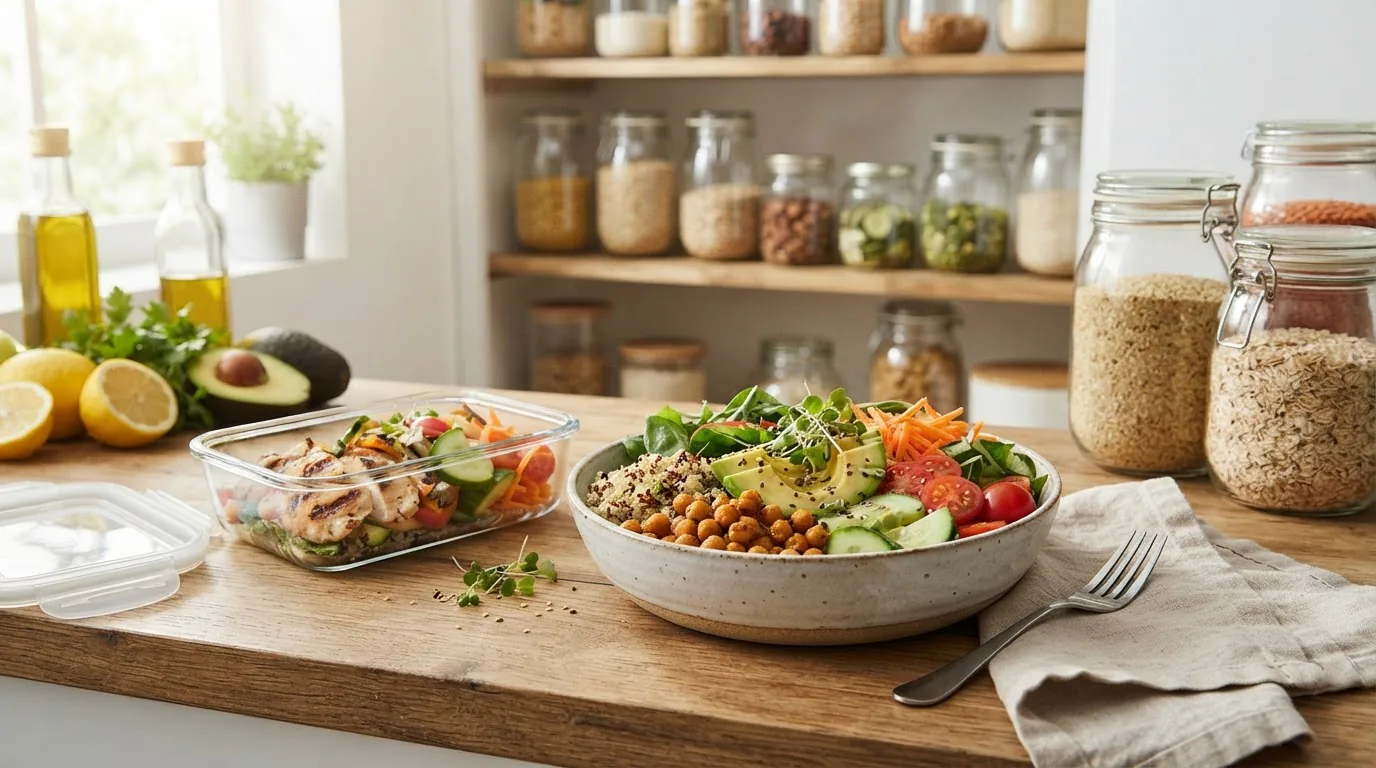
- Plan meals and batch-cook. Meal prepping with pre-portioned containers makes sticking to portions easier during busy days.
- Track for accountability. Use a food-tracking app for short-term assessment to ensure portions align with calorie goals; switch to intuitive portioning after habit formation.
- Handle restaurant portions strategically. Ask for a half-portion, share entrées, or immediately box half the meal to avoid overeating. Many restaurant servings equal 2–3 standard portions.
- Adjust portions for activity level. Increase portion sizes modestly on high-activity days to meet energy needs and support performance; reduce on low-activity days.
- Use deliberate plate composition. Start meals with a salad or broth-based soup to increase volume and reduce hunger-driven large main-course portions.
- Weigh progress and adapt: Track weight and energy levels for several weeks, then adjust portion sizes gradually if weight loss stalls or if energy is too low.
- Be compassionate and flexible. One larger meal won’t derail progress; return to planned portions at the next eating opportunity.
Practical measuring technique (how-to):
- Place a clean kitchen scale on a flat surface. Zero it with a container, then add the food to measure grams or ounces.
- Consult nutrition labels for serving weights; if none, use typical portion weights: 3–4 oz (85–113 g) cooked meat = palm-sized protein; 1 cup cooked grains = cupped hand.
- Record measurements for frequently eaten items so you can replicate portions without the scale over time.
Tools to incorporate right away: calibrated measuring cups and spoons, a digital food scale, portion-control plate, and shallow bowls to make portions look generous. Combining these tools with mindful eating and plate composition yields the best adherence.
Transition: Armed with techniques, you can design portion control meal plans that hit calorie and macronutrient goals while remaining satisfying.
Designing a Portion Control Diet Meal Plan for Weight Loss
Designing a portion control diet meal plan means setting a realistic daily calorie goal, balancing macronutrients, and defining portion sizes for each meal. Start by estimating your approximate energy needs (maintenance calories) and create a modest deficit (commonly 300–700 kcal/day) for steady weight loss. Remember to account for individual variability and activity level.
Key steps to design a plan:
- Estimate calorie target: Use a validated calculator or consult a professional; aim for a moderate deficit rather than extreme restriction.
- Set macronutrient ranges: Typical starting point: 25–30% protein, 30–40% carbohydrate, 25–35% fat — adjust based on personal preferences, performance needs, or metabolic response.
- Translate macros into portion sizes: Convert gram goals into food portions (e.g., 30 g protein ≈ 4 oz chicken breast). Tools like the macro meal planner and macronutrient requirements can help refine calculations.)
- Plan meal frequency and timing: Choose 3 meals with 1–2 snacks or 4–5 smaller meals based on hunger patterns; consistent timing supports appetite regulation.
- Create portion templates: Example plate templates for breakfast, lunch, dinner, and snacks make daily adherence simpler.
For a deeper discussion on how energy needs influence portion sizes, see the energetic diet plan and energy food requirements. Also, if you want a calorie-specific example that complements portion control techniques, review this 1400 calorie meal plan guide.
Sample portion control meal plan for a moderately active adult aiming ~1,600–1,700 kcal/day (example; personalize based on needs):
| Meal | Example | Portion guide | Estimated calories |
|---|---|---|---|
| Breakfast | Greek yogurt bowl with berries and oats | 3/4 cup nonfat Greek yogurt, 1/2 cup berries, 1/4 cup oats, 1 tbsp chopped nuts | ~350 kcal |
| Mid-morning snack | Apple + almond butter | 1 medium apple, 1 tbsp almond butter | ~180 kcal |
| Lunch | Grilled chicken salad | 3.5 oz (100 g) chicken, 3 cups mixed greens, 1/2 cup cherry tomatoes, 1/2 cup quinoa, 1 tbsp olive oil | ~450 kcal |
| Afternoon snack | Carrot sticks + hummus | 1 cup carrot sticks, 3 tbsp hummus | ~150 kcal |
| Dinner | Baked salmon, roasted vegetables, small baked potato | 4 oz salmon, 1.5 cups roasted non-starchy veg, 1 small potato (150 g), 1 tsp olive oil | ~470 kcal |
Notes on this plan:
- Protein is included at every meal to support satiety and preserve lean tissue.
- Vegetables add volume and fiber with low calories.
- Healthy fats are portioned modestly (1 tbsp oils, 1 tbsp nut butter) to control calorie density.
For downloadable planners that help you structure menus and portions week-to-week, check the meal planner printable and weekly menu requirements. To complement macro-based portioning, the macro meal planner and macronutrient requirements provides a worksheet-based method to convert macronutrient goals into food portions.
Also consider this resource for energy-focused portion adjustments: energetic diet plan and energy food requirements.
Important caution: These examples are illustrative. Individual calorie needs vary based on age, sex, baseline weight, activity, and health conditions. Consult a registered dietitian or healthcare provider to tailor portions. The Academy of Nutrition and Dietetics offers professional guidance on portioning and meal planning: Academy of Nutrition and Dietetics.
Transition: Knowing how to build meals is helpful, but actionable portion requirements by food group make daily decisions even easier — next we provide clear portion charts.
Portion Requirements by Food Group for Weight Loss
A practical portion-control system defines recommended portion sizes by food group so you can compose meals quickly. Below are general portion recommendations tailored for weight-loss contexts; adjust according to your calorie target and activity level.
Vegetables (non-starchy)
- Portion: 1 cup raw leafy greens or 1/2–1 cup cooked non-starchy vegetables per serving.
- Benefit: Very low calorie-density, high volume and fiber — fill half your plate with these to increase satiety.
Fruits
- Portion: 1 medium fruit or 1 cup chopped fruit.
- Note: Choose whole fruits over juice for fiber and better satiety.
Grains and Starchy Vegetables
- Portion: 1/2 cup cooked rice, pasta, or quinoa (about a cupped hand) or 1 small potato (120–150 g).
- Tip: Favor whole grains for fiber; monitor portions because these are calorie-dense relative to vegetables.
Protein (lean meats, fish, legumes)
- Portion: 3–4 oz cooked (85–113 g) per meal — roughly the size of your palm; plant proteins like lentils/beans: 3/4 cup cooked.
- Goal: Aim for 20–35 g protein per main meal for satiety and muscle preservation.
Dairy and Alternatives
- Portion: 1 cup milk or yogurt, 1.5 oz cheese (use sparingly due to concentrated calories).
- Choose lower-fat or portioned options as needed to meet calories.
Fats (oils, butter, nuts)
- Portion: 1 teaspoon to 1 tablespoon per serving depending on food (1 tbsp oil ≈ 120 kcal; a thumb-sized portion of nuts ≈ 1 oz).
- Tip: Use measured amounts; fats are calorie-dense and easy to overconsume by eye.
Sugary foods and treats
- Portion: Keep to small, predefined portions (e.g., 1 small square of dark chocolate or 1/2 cup sorbet) and place in separate dish to limit mindless second servings.
Portion Size Chart (common items)
| Food | Typical Portion | Visual cue | Approx. Calories |
|---|---|---|---|
| Cooked brown rice | 1/2 cup | Cupped hand | ~110 kcal |
| Cooked pasta | 1/2 cup | Cupped hand | ~100–120 kcal |
| Cooked chicken breast | 3 oz (85 g) | Palm-sized | ~140 kcal |
| Avocado | 1/4 medium | Thumb-sized | ~60–80 kcal |
| Olive oil | 1 tsp | Small spoon | ~40 kcal |
| Leafy greens | 1 cup raw | Fist | ~10–15 kcal |
For guidance on including diverse foods within portion limits, reference this resource: varied diet guide and requirements.
Visual learners may benefit from printable charts: balanced diet images and printable nutrition charts. For specific carbohydrate portion control strategies, see the CCHO diet guide for consistent carbs. To ensure vitamin coverage across chosen portions, consult the healthy food vitamin chart and vitamin requirements.
Authority note: Many of these portion benchmarks are consistent with USDA standards. For authoritative portion-size standards and dietary guidance, refer to the USDA Dietary Guidelines and related resources (source type: federal guidelines).
Transition: Even with clear portion rules, common challenges can derail practice — the next section covers those and practical fixes.
Common Portion Control Challenges and How to Overcome Them
People commonly struggle with portion distortion, emotional eating, inconsistent plating in restaurants, and misestimation of serving sizes. Below are practical problems and bulleted solutions you can use right away.
- Portion distortion — Problem: Normalized oversized portions at home or restaurants. Solution: Use a food scale initially, switch to smaller plates, and pre-portion meals immediately after serving instead of family-style eating.
- Emotional or stress eating — Problem: Eating triggered by emotions rather than hunger. Solution: Build non-food coping strategies (walks, deep breathing), keep tempting items out of immediate reach, and set mindful-eating checkpoints before automatic snacking.
- Social situations — Problem: Large shared platters and peer pressure to overeat. Solution: Offer to bring a lighter dish, eat a small snack before arrival, and adopt the “one plate” rule — no second servings unless truly hungry after 20 minutes.
- Restaurant portions — Problem: Entrées often equal multiple portions. Solution: Request half portions, share meals, or box half immediately to avoid finishing oversized servings.
- Portion misestimation — Problem: Misjudging portions by eye. Solution: Use measuring tools for the first few weeks and practice translating those measures into reliable visual cues (palm, fist, thumb).
- Lack of time for meal prep — Problem: Convenience foods lead to oversized portions. Solution: Batch-cook staple recipes and divide into single-serving containers; use quick, portion-controlled options like pre-portioned Greek yogurt, canned tuna, or pre-cut vegetables.
- Plate appeal and satisfaction — Problem: Smaller portions feel unsatisfying. Solution: Increase contrast and volume with colorful vegetables, herbs, and low-calorie sauces; slow down eating pace to heighten satisfaction.
Behavioral techniques that reinforce success:
- Keep a short food log for accountability.
- Set specific, measurable portion goals rather than vague intentions.
- Enlist a friend or family member to share portion-focused meals for social support.
Transition: To implement these strategies consistently, leverage tools and resources that simplify measuring and tracking portions.
Tools and Resources to Support Portion Control
- Food scale — Accurate and portable; essential for initial calibration of portion sizes.
- Measuring cups and spoons — Useful for cereals, grains, and oils where visual estimation fails.
- Portion control plates — Plates divided into sections for vegetables, protein, and carbs that simplify the plate method; see the detailed portion plate control guide and plate requirements for meals for instructions.
- Mobile apps — Apps that log food and scan barcodes speed up tracking; helpful short-term to learn portion amounts.
- Pre-portioned containers — Durable meal prep containers divided into compartments help maintain portions on busy days.
- Visual guides and printable charts — Hang charts on your fridge for quick reference; check the healthy diet worksheet and printable meal requirements for trackers.
- Nutrition education resources — Trusted resources like the USDA Dietary Guidelines and Academy of Nutrition and Dietetics provide validated reference points: USDA Dietary Guidelines, Academy of Nutrition and Dietetics.
Transition: Finally, here is a concise summary of best practices to make portion control sustainable and effective long-term.
Summary and Best Practices for Effective Portion Control
Portion control for weight loss is a behavior-centered strategy that reduces total calorie intake while preserving balanced nutrition. Key takeaways:
- Adopt the plate method: half non-starchy vegetables, quarter protein, quarter carbs.
- Measure initially with tools (scale, cups) to train visual portion cues.
- Prioritize protein and fiber to maximize satiety per calorie.
- Use portion-control plates, pre-portioned containers, and mindful eating to prevent overeating caused by oversized servings.
- Make modest, sustainable calorie deficits to avoid metabolic adaptation and hunger-driven lapses.
- Consult professionals when needed and use authoritative guidelines (USDA, Academy of Nutrition and Dietetics) for evidence-based targets.
Final note: Portion control is powerful but not a guaranteed standalone cure — pair it with consistent activity, sleep, and stress management. For personalized planning and potential medical considerations, consult a registered dietitian or healthcare provider.
Call to action: Start by measuring one commonly eaten meal this week, apply the plate method, and track how you feel — small, steady changes lead to lasting weight-loss success.
Frequently Asked Questions
What is portion control for weight loss?
Portion control for weight loss means deliberately choosing smaller, appropriately measured amounts of food at meals and snacks to reduce total calorie intake while maintaining balanced nutrition and satiety for sustainable weight loss.
How does portion control differ from calorie counting?
Portion control focuses on the physical amount you eat using visual cues and tools, while calorie counting tracks numerical calories. Portion control simplifies daily choices and often reduces the need for strict calorie logging.
How can I start a portion control diet meal plan at home?
Estimate a moderate calorie target, apply the plate method (half vegetables, quarter protein, quarter carbs), measure portions with a scale initially, and create weekly meal templates to standardize servings and simplify prep.
What tools help with effective portion control?
Useful tools include a digital food scale, measuring cups and spoons, portion-control plates, pre-portioned containers, and food-tracking apps for short-term learning and accountability.
How long does it typically take to see weight loss results from portion control?
With a consistent moderate calorie deficit, many people see measurable weight loss within 2–6 weeks; individual rates vary based on starting weight, activity, and adherence (source type: clinical guidance summary).
What should I do if I find portion sizes confusing or inconsistent?
Use a food scale and measuring cups for a short calibration period, learn visual cues (palm, fist, thumb), and rely on printable portion charts or apps until you can estimate accurately without tools.
Are portion control plates more effective than traditional plates?
Portion control plates provide visual structure that helps many people adhere to recommended plate composition and reduce oversized portions; effectiveness increases when combined with measuring and mindful eating.
How can I maintain portion control when eating out or at social events?
Strategies include ordering smaller portions, immediately boxing leftovers, sharing dishes, eating a small snack before arrival to avoid extreme hunger, and choosing vegetable-forward options to increase volume with fewer calories.