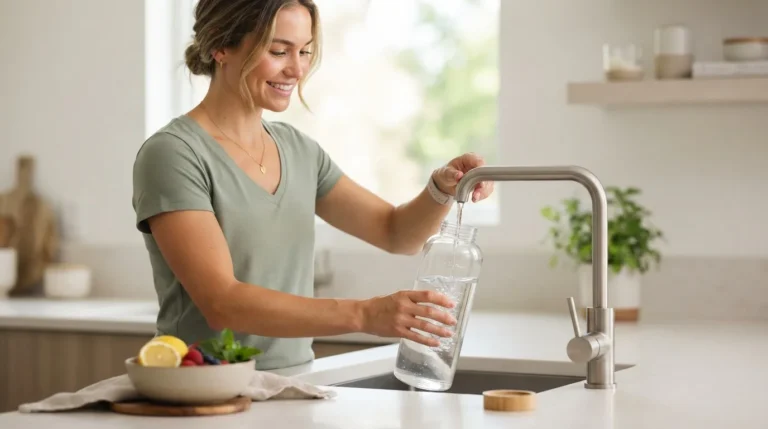

How much water should you drink a day is one of the most common health questions—this guide gives a science-based framework and an easy calculator method so you can estimate a personalized daily target based on age, weight, gender, activity and environment.
Understanding How Much Water You Should Drink Daily
Recommendations for water intake vary because hydration needs are individualized. Broad guidelines from health authorities provide useful benchmarks, but they are not one-size-fits-all. Below we explain the underlying science, present major authority recommendations, and show why a customized approach often works better than a fixed volume like “2 liters.”
First, hydration supports essential physiological functions: regulating body temperature, transporting nutrients, lubricating joints, and maintaining blood volume. The percentage of body weight accounted for by water differs by age and body composition; understanding that helps explain why fluid needs vary by individual.
body water percentage varies: infants have ~70–75% water, adult men ~60%, adult women ~50–55% (fat tissue contains less water). According to a 2004 U.S. National Academies report, average fluid needs were estimated using population-level intake data and practicality concerns (government health agency, 2004).
Major organizations give benchmark intakes to simplify public guidance. For example, the U.S. National Academies of Sciences, Engineering, and Medicine (NASEM) report (government health agency, 2004) published adequate intake (AI) estimates: about 3.7 liters/day total water for adult men and 2.7 liters/day for adult women, including water from food. The Mayo Clinic (medical institution, 2024) reiterates that “about 8 cups” is a general guideline but emphasizes variability by activity and climate. These authoritative recommendations provide a starting point rather than a strict requirement.
Why total water vs. plain water? Authorities count “total water” which includes water from beverages and food. On average, about 20–30% of daily water comes from food; the rest from drinking fluids (peer-reviewed review, 2019).
Understanding these principles helps you move from a generic number to a personalized plan. Next we’ll break down the main factors that influence your daily water intake so you can adjust benchmarks to your situation.
Transition: Now that you know why blanket numbers are limited, let’s look at the specific factors that change your daily fluid needs.
Factors Influencing Your Daily Water Intake
- Body weight and composition — Heavier people need more water to maintain blood volume and cellular hydration. A common formula multiplies body weight (kg) by ~30–40 mL/kg for baseline daily needs, but this is adjusted up for activity. Example formulas are detailed later in the calculator section.
- Age — Infants and children have higher water turnover per kilogram than adults; older adults may have blunted thirst response and different fluid distribution. Older adults should monitor intake deliberately rather than rely on thirst alone (academic gerontology review, 2021).
- Gender and body composition — Men typically require more total water due to greater lean body mass; women’s requirements vary with menstrual cycle, pregnancy, and breastfeeding. Pregnancy and lactation increase fluid needs (medical institution guidance, 2023).
- Activity level and exercise — Physical activity increases sweat losses. For moderate exercise, adding ~350–700 mL (12–24 oz) per 30–60 minutes of activity is a practical starting point; more is needed in hot conditions or intense training (sports medicine study, 2020).
- Environmental conditions — Hot, humid, or high-altitude environments raise fluid loss (environmental physiology review, 2018). Cold environments can also increase losses through respiratory water vapor.
- Dietary salt, protein, and fiber — High-salt or high-protein meals increase water needs. Fiber-rich diets require adequate fluids to prevent constipation.
- Health status and medications — Fever, vomiting, diarrhea, diuretics, and some psychiatric medications alter fluid and electrolyte balance. For illness-specific guidance see resources such as dehydration from diarrhea and recovery or consult a clinician.
- Alcohol intake and diuretics — Alcohol increases urine production and can cause net fluid loss; plan additional hydration around drinking. For physiological effects see alcohol and hydration effects.
- Beverage types — Not all drinks hydrate equally. Plain water, milk, and many low-sugar beverages are effective; caffeinated drinks count toward your intake but may have mild diuretic effects only at very high doses. For detailed beverage comparisons, see best hydrating beverages and best water types for hydration.
- Caffeinated drinks and coffee — Caffeine’s diuretic effect is minimal at typical consumption levels and caffeinated beverages count toward fluid intake. For deeper discussion, read does coffee count towards hydration.
- Pregnancy and breastfeeding — Increased plasma volume and milk production raise requirements; many guidelines recommend an additional 300–700 mL/day during pregnancy and lactation (obstetrics guidance, 2022).
- Special situations — illness and infants — Babies and toddlers have unique needs and risks; see infant dehydration symptoms for specifics.
Transition: Having reviewed the factors that shift fluid needs, let’s convert daily recommendations into common measurement units—ounces, liters, and glasses—so you can track intake practically.
How Many Ounces or Liters of Water Should You Drink a Day?
Translating liters into ounces and glasses helps turn targets into actionable goals. Below we explain unit conversions, give example targets, and provide a simple conversion table for everyday use.
Understanding units: 1 liter = 33.814 US fluid ounces. A typical “glass” is often considered 8 fl oz (about 240 mL), but glass sizes vary widely: many modern water bottles are 16–24 oz, and large reusable bottles may hold a liter or more.
For practical portion-size context see the 32 oz of water guide and compare to 2 liters daily hydration recommendations.
| Unit | Amount | Equivalent |
|---|---|---|
| Milliliters (mL) | 1000 mL | 1 liter |
| Liters (L) | 1 L | 33.814 US fl oz |
| US fluid ounces (fl oz) | 8 fl oz | ~240 mL (standard glass) |
| Common bottle | 16 fl oz | ~0.47 L |
| Common bottle | 32 fl oz | ~0.95 L |
Example conversion scenarios:
- Someone with a personalized target of 2.8 L/day should drink about 2.8 × 33.814 = 94.7 fl oz (~95 fl oz/day), which equals ~12 standard 8-oz glasses.
- If you prefer bottles: 95 fl oz ÷ 16 fl oz per bottle ≈ 6.0 of 16-oz bottles per day.
See the water bottle size chart and water glass serving sizes for common containers to aid tracking.
Recommended daily value percent: Nutrition labels in the U.S. don’t list a Daily Value (DV) for water; however, some wellness frameworks use a 2,000 kcal diet context and treat ~2.7–3.7 L as reference ranges (government dietary guidance, 2004). Use percent-of-target tracking in apps—e.g., drinking 48 fl oz toward a 96 fl oz goal is 50%.
Transition: With measurements clarified, let’s summarize the tangible benefits of meeting your daily fluid target.
Benefits of Drinking Enough Water Every Day
Staying well hydrated supports multiple aspects of health. Below are the principal benefits supported by clinical and observational studies.
- Supports cognitive function — Mild dehydration can impair concentration and short-term memory; studies show improved attention and mood with adequate hydration (peer-reviewed cognitive study, 2019). For more on hydration and energy, see hydration and energy levels.
- Enhances physical performance — Adequate hydration helps maintain endurance and strength during exercise; dehydration above 2% body mass can reduce performance (sports medicine review, 2020).
- Regulates body temperature — Water enables sweat production and heat dissipation during exertion and heat exposure (physiology review, 2018).
- Supports digestion and nutrient transport — Fluids help transport nutrients and prevent constipation.
- Maintains skin and mucous membrane health — Hydration contributes to skin turgor and comfort though topical care is also crucial.
- Assists kidney function and waste removal — Adequate intake reduces concentrated urine and may lower risk of kidney stones in susceptible individuals (clinical nephrology study, 2019).
- Helps manage appetite and weight — Drinking water before meals can reduce energy intake in some people; incorporated into weight loss strategies (clinical nutrition trial, 2018). For specific tactics see water intake and weight loss tips.
- Supports overall metabolic and cardiovascular health — Maintains blood volume and electrolyte balance when intake matches losses.
- Promotes oral health — Rinsing and saliva production depend on adequate hydration.
- Reduces risk of some acute conditions — Proper hydration reduces heat illness risk and may lower urinary tract infection risk in some cases (infectious disease observational study, 2020).
For an overview of water’s role in body processes see why water is essential. Transition: benefits are clear, but both too little and too much water carry risks—next we’ll cover how to recognize and avoid them.
Risks of Drinking Too Much or Too Little Water
Hydration is a balance. Underhydration (dehydration) and overhydration (hyponatremia) each have distinct signs, causes, and prevention strategies.
How to recognize dehydration (underhydration)
- Early signs: thirst, dry mouth, reduced urine output, fatigue, lightheadedness.
- Progressive symptoms: rapid heartbeat, low blood pressure, heat intolerance, confusion (clinical dehydration review, 2020).
- Severe cases: organ dysfunction, shock, particularly in infants, older adults, or people with comorbidities—seek urgent care.
- For a detailed list see side effects of dehydration.
- If dehydration occurs during illness, e.g., gastroenteritis, follow guidance in dehydration from diarrhea and recovery.
How to recognize overhydration (hyponatremia)
- Mechanism: excess water dilutes blood sodium, impairing cellular function—called hyponatremia (defined here on first use as low blood sodium concentration).
- Symptoms: nausea, headache, confusion, seizures in severe cases (clinical toxicology review, 2017).
- At-risk groups: endurance athletes who overconsume plain water without replacing electrolytes, persons with impaired kidney function, certain psychiatric conditions with polydipsia.
- For a deeper exploration see overhydration risks and the physiology described in related clinical guidelines.
- Popular trends like drinking a gallon of water daily may be safe for some but risky for others—context matters.
How to avoid both risks—practical steps:
- Calculate a personalized baseline (see calculator below) and adjust for activity and environment.
- Monitor thirst, but do not rely solely on it if you’re older or exercising intensely.
- Replace electrolytes during prolonged exertion (sports drinks with balanced sodium) rather than only plain water.
- Seek medical advice if you have conditions affecting fluids (kidney disease, heart failure) or take medications that alter fluid balance; consult emergency care for severe symptoms.
- For non-specialists who want a quick visual method, check urine color hydration indicators, but combine with personalized calculation and symptom awareness.
- Understand links between hydration and cardiovascular effects by reading about dehydration-related low blood pressure.
- Pay special attention to infants: see infant dehydration symptoms.
- If you experience abdominal pain potentially linked to fluids, review dehydration and stomach pain.
Note: fasting changes fluid needs and risks—consult water fasting safety considerations before attempting prolonged fasts.
Transition: After you understand risks and benefits, the easiest next step is to calculate your individualized target using a simple method—read on for the calculator and examples.
How to Use Our Water Intake Calculator for Personalized Guidance
This section describes a practical, stepwise calculator method you can use immediately. Remember the output is an estimate—use it as a planning tool and adjust for symptoms and circumstances. Calculator logic is based on weight-based formulas plus activity and environment adjustments, aligned with official intake frameworks (NASEM, Mayo Clinic) and sports hydration guidance.
Water intake calculator model (step-by-step)
- Start with body weight in kilograms (kg). To convert pounds to kg: divide lbs by 2.2046.
- Baseline: multiply weight (kg) × 30–35 mL/kg. Use 30 mL/kg for sedentary adults, 35 mL/kg for moderately active adults as a baseline. Example formulas are widely used in nutrition practice (clinical nutrition guidance, 2019).
- Add activity adjustment: for each 30 minutes of moderate exercise, add 350–700 mL depending on sweat rate and temperature (sports medicine guidance, 2020).
- Add environmental adjustment: add 250–500 mL/day in hot or humid climates; more at high altitudes (environmental physiology review, 2018).
- Special adjustments: add 300–700 mL/day if pregnant or lactating (obstetrics guidance, 2022). Add extra if consuming a very high-protein or high-fiber diet.
- Optionally subtract estimated water from food (commonly ~20–30% of total). If you prefer counting only beverages, subtract food-derived water to get a fluid-from-drinks target.
Step-by-step example walkthrough (two typical profiles):
Example 1 — Active adult
- Profile: 75 kg (165 lb) male, moderately active (45 min exercise/day), warm climate.
- Baseline: 75 kg × 35 mL/kg = 2625 mL (2.6 L).
- Activity add: 45 minutes → add 525–1050 mL (use 700 mL midpoint) = +700 mL → subtotal 3325 mL (3.3 L).
- Environment add: warm climate → +400 mL → subtotal 3725 mL (3.7 L).
- Food water: assume 25% from food → beverages needed = 3725 × 0.75 = 2794 mL (2.8 L) of drinks/day.
- Round for practicality: target ≈ 2.8–3.5 L/day total water, or ~95–120 fl oz/day depending on whether you count food water.
Example 2 — Sedentary older adult
- Profile: 60 kg (132 lb) female, sedentary, temperate climate.
- Baseline: 60 kg × 30 mL/kg = 1800 mL (1.8 L).
- No activity add. Environment add minimal → +150 mL → subtotal 1950 mL (2.0 L).
- Food water (25%): beverages needed = 1950 × 0.75 = 1463 mL (~1.5 L) of drinks/day.
- Practical target: ~1.5–2.0 L/day total water, with careful monitoring of thirst, urine output, and symptoms.
For alternative calculators and an interactive tool see the water intake calculator guide, which provides different formulas and quick conversions.
Tracking methods and follow-up:
- Use a phone app or a reusable bottle with volume markings to log intake.
- Record activity and environment to adjust daily targets—journaling helps refine your personal multiplier.
- Check practical outcomes: energy levels, exercise recovery, stool consistency. If you notice dizziness, persistent fatigue, or swelling, reassess intake and seek medical advice.
- Examples of apps and approaches: many hydration trackers let you set a daily fl oz target and log bottles; a simple spreadsheet with time stamps works well for behavior change (user-experience case study, 2022).
Transition: With a personalized number in hand, use practical behavior strategies to meet your goals consistently—next we provide tactical tips.
Practical Tips to Meet Your Daily Water Intake Goals
Meeting your daily fluid target is a habit-building exercise. Below are prioritized, actionable strategies you can implement immediately.
- Start your day with a glass of water (250–350 mL) to replace overnight losses and cue the habit.
- Carry a marked water bottle sized to your schedule (e.g., 32 oz bottle you refill twice) to make progress visible. See the water bottle size chart to choose a bottle.
- Use time-based reminders: drink a set amount each hour rather than waiting until thirst. Apps and phone alarms work well.
- Flavor plain water with citrus or cucumber if taste is a barrier; avoid high-sugar drinks most of the time.
- Drink a glass before meals to help appetite control and ensure consistent intake—this supports water intake and weight loss tips.
- Replace one sugary beverage with water per day to reduce sugar and increase hydration.
- Weigh yourself before and after long workouts to estimate sweat loss; add fluids equal to ~1.25 × weight lost to rehydrate properly (sports medicine guidance, 2020).
- Create environmental cues: hydrate after bathroom breaks, after meetings, or when you return home from outside.
- Track progress with a simple log: tally bottles consumed; visualize percent-of-target for motivation.
- When exercising for more than 60–90 minutes, include an electrolyte source (sports drink, or salty snacks plus water).
- For special populations (older adults, children), set scheduled drinks and avoid relying only on thirst.
- For more daily habit strategies, check 5 tips to stay hydrated and improve wellness.
Transition: To wrap up, we’ll answer common questions people ask about daily water intake in a concise FAQ section.
Frequently Asked Questions
Conclusion: Personalized hydration beats one-size-fits-all rules. Use a weight-based baseline, adjust for activity and climate, and track intake with simple containers and reminders. Consult a healthcare provider for conditions affecting fluid balance. Start by calculating your target using the steps above and aim for consistent, sustainable hydration—your energy, cognitive function, and physical performance will thank you. Ready to set your daily target? Try the calculation steps in this guide and begin logging your intake today.
Frequently Asked Questions
What is the recommended daily water intake for an average adult?
Average benchmarks: about 3.7 L/day total water for adult men and 2.7 L/day for adult women (U.S. National Academies, government health agency, 2004). These totals include water from food—individual needs vary by weight, activity and climate.
How does water intake differ between men and women?
Men typically require more total water due to greater lean body mass; NASEM estimated 3.7 L/day for men and 2.7 L/day for women (government health agency, 2004). Pregnancy, lactation, and body composition further adjust a woman’s needs.
Can drinking too much water be dangerous?
Yes—excessive intake can cause hyponatremia (low blood sodium), producing nausea, confusion, seizures in severe cases. Risk rises with rapid, large-volume drinking without electrolyte replacement (clinical toxicology review, 2017).
How do I calculate how much water I should drink based on my weight?
Convert lbs to kg (lbs ÷ 2.2046). Multiply kg × 30–35 mL/kg for baseline (30 for sedentary, 35 for active). Add activity and environment adjustments and subtract estimated food water if counting only beverages.
How many glasses of water per day should I drink to stay healthy?
“Glasses” vary, but using 8 fl oz (240 mL) per glass, typical ranges translate to ~8–15 glasses/day depending on weight, activity and climate—tailor using a weight-based calculator and personal needs.
What are signs that I am not drinking enough water?
Signs include increased thirst, dry mouth, low urine output, darker urine, fatigue, dizziness, and reduced exercise performance; severe dehydration causes confusion and fainting—seek care if severe (clinical dehydration review, 2020).
Does coffee or tea count toward daily water intake?
Yes—typical caffeinated beverages contribute to total fluid intake. Moderate caffeine does not cause meaningful fluid loss; count coffee and tea toward your daily water target (medical institution guidance, 2024).
How long does it take to see health benefits after increasing water intake?
Some benefits, like improved concentration and reduced headaches, can appear within 24–72 hours; longer-term outcomes like improved digestion, skin hydration, and kidney stone risk reduction may take weeks to months (peer-reviewed hydration studies, 2019).