How many ounces in a glass of water is the question behind many hydration habits. This guide explains common glass-size ounce equivalents, decodes the 8-glasses/64-oz rule, and gives practical serving suggestions so you can meet daily hydration goals with confidence.
Understanding How Many Ounces Are in a Glass of Water
People asking “how many ounces in a glass of water” are usually trying to translate a vague phrase into measurable servings. A few basic facts clarify the math and the language:
- Fluid ounce definition: A fluid ounce (fl oz) measures volume, not weight. In U.S. customary units one fluid ounce ≈ 29.57 mL. This is different from an ounce as a unit of weight (avoirdupois ounce).
- Glass vs. cup: A “cup” in U.S. cooking equals 8 fl oz. A “glass” is informal and varies widely—so asking “how much is a glass of water” always needs context (mug, tumbler, bottle).
- Practical serving size: When people say “a glass of water,” they often mean 8 fl oz (1 cup), but many household glasses are 10–16 fl oz or larger.
Here are quick examples to illustrate typical interpretations:
- Small juice glass = ~6 fl oz (180 mL)
- Standard measuring cup = 8 fl oz (240 mL)
- Typical kitchen tumbler = 12–16 fl oz (360–480 mL)
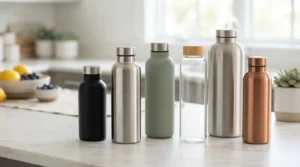
- Large insulated bottle = 20–32 fl oz (600–950 mL)
Understanding fluid ounces and standard serving sizes helps you translate vague recommendations—like “drink eight glasses”—into actionable, trackable amounts.
Next, we’ll compare common glass types and exact ounce equivalents so you can identify what your household vessels actually hold.
Common Glass Sizes and Their Ounce Equivalents
Glass size varies by design and purpose. The table below lists common household glass types with typical ounce equivalents and metric conversions to help you measure servings accurately.
| Glass Type | Typical Volume (fl oz) | Approx. mL | Common Use |
|---|---|---|---|
| Small juice glass | 6 fl oz | 180 mL | Juices, small servings |
| Measuring cup / 1 cup | 8 fl oz | 240 mL | Recipe cup, standard “glass” |
| Standard coffee mug | 10–12 fl oz | 300–360 mL | Coffee, mugs labeled 12 oz |
| Kitchen tumbler | 12–16 fl oz | 360–480 mL | Everyday drinking glass |
| Large tumbler / pint glass | 16–20 fl oz | 480–600 mL | Iced drinks, smoothies |
| Reusable water bottle (common) | 20–32 fl oz | 600–950 mL | On-the-go hydration |
| Sports bottle / half-liter | 16.9 fl oz | 500 mL | Common metric bottle size |
The prose below expands on these categories and how to use them for accurate tracking:
- Small glasses (6–8 fl oz) are useful when you want controlled portions—each counts roughly as three-quarters to one standard cup.
- Most kitchen tumblers fall in the 12–16 fl oz range. If you habitually use one of these, your “four glasses” may already exceed the 64-oz guideline.
- Bottles and insulated tumblers often show volume markings—match those labels to fl oz or mL to avoid guesswork. For bottle comparisons, see the note linking to water bottle sizes below.
For a detailed chart of commercial bottle sizes versus household glasses, check water bottle ounces and sizes.
Transition: Now that you can identify a glass’s volume, let’s translate the common “8 glasses a day” rule into ounces so you know exactly what people mean by that recommendation.
Breaking Down the “8 Glasses of Water a Day” Rule: How Many Ounces Is That?
The “8 glasses” rule is shorthand—here’s a step-by-step breakdown so you can convert it into exact fluid ounces and tailor it to your real glass sizes.
- Standard shorthand: 8 glasses × 8 fl oz per glass = 64 fl oz. This is the common U.S. interpretation (8 × 8 = 64).
- What “glass” often means: Many people assume a glass equals a measuring cup (8 fl oz), but household glasses frequently hold 12–16 fl oz, so eight of those would be 96–128 fl oz.
- How to calculate for your glass: Measure your own glass with a measuring cup or a kitchen scale (fill with water and note the mL). Then multiply that volume by 8 to see how many ounces “8 glasses” would actually be for you.
- Personalize the rule with a calculator: If you want a precise target, use a daily water intake calculator to convert body-weight-based recommendations into ounces and servings.
Why the short rule exists: The “8×8” rule (eight 8-ounce glasses) is simple and memorable, which helps people form a daily habit. But simplicity introduces inaccuracy if you don’t define “glass.”
Practical examples
- If your usual glass is 12 fl oz, eight glasses = 96 fl oz (≈2.8 L).
- If you use a 16 fl oz tumbler, eight glasses = 128 fl oz (≈3.8 L).
- If you rely on a 20 fl oz bottle, drinking four of those equals 80 fl oz—more than the 64-oz shorthand.
Transition: Converting “eight glasses” to ounces helps clarify habits, but is 64 oz the right daily target for everyone? The next section examines that question and the factors that change hydration needs.
Is 64 Ounces of Water a Day Enough? Factors to Consider
Short answer: sometimes—but not always. The 64-oz/day guideline is a reasonable baseline for many adults, but individual water needs vary by activity, climate, age, health, and diet.
Authoritative context: According to a 2024 National Academies report recommending water intake ranges for adults, average adequate intake is approximately 3.7 liters (125 fl oz) per day for men and 2.7 liters (91 fl oz) per day for women when counting all fluids and water from food (National Academies).
Key factors that change needs:
- Activity level: Exercise increases sweat losses. Add about 12–20 fl oz per 30–60 minutes of moderate exercise, depending on sweat rate.
- Climate: Hot or dry environments increase fluid loss; cold climates with heavy clothing can also raise needs.
- Health and medications: Fever, vomiting, diarrhea, certain medications, and conditions like kidney stones or urinary tract infections change requirements. See resources on dehydration causes and recovery and dehydration and low blood pressure.
- Age and physiology: Older adults can have blunted thirst signals and may need conscious drinking schedules.
- Dietary factors: High-protein or high-fiber diets may require more water; high-water-content foods reduce fluid needs.
Practical hydration checks (experience signals):
- Urine color: pale straw to light yellow usually indicates adequate hydration. For details, see hydration and urine color indicators.
- Thirst and body signals: while thirst is imperfect, frequent thirst, dark urine, dizziness, or dry mouth can indicate insufficient intake. For related symptoms in infants, see dehydration signs in infants.
Comparative metrics (for readers using metric measurements):
See the 2 liters of water hydration effects guide for a metric view of daily targets and how 2 L compares with 64 fl oz.
Balancing risks and benefits: Drinking far more water than needed can lead to hyponatremia in extreme cases. For guidance on high-intake approaches and their safety, review drinking a gallon of water daily and risks of overhydration.
Additional health-context resources: For physiology and why water matters, see water percentage in the human body and side effects of inadequate hydration.
Transition: After weighing factors, you may want to set your own per-glass serving to match goals. The next section helps you choose how much a glass should serve for different needs.
How Much Water Should a Glass Serve for Different Needs?
There’s no single “correct” glass size for everyone. Instead, choose serving sizes based on your goals and lifestyle. The steps below help you define a practical serving size and integrate it into daily routines.
- Decide your daily target. Use the 64-oz rule as a baseline or calculate personalized intake with your weight and activity level. For tailored math, try a how much water to drink daily.
- Measure your primary drinking vessel. Fill your usual glass or bottle using a kitchen measuring cup to confirm its fluid ounces.
- Set a serving size that makes frequent sipping easy. Examples:
- For convenience: 16 fl oz tumbler = 4 servings to reach 64 fl oz (if 64 fl oz is your goal)
- For habit-building: 8 fl oz cups = 8 servings
- For active days: larger bottles (24–32 fl oz) reduce refill frequency—2–3 bottles can meet many targets
- Adjust for special circumstances: pregnant or breastfeeding people often require more fluid; athletes increase intake during and after workouts; illness requires extra fluids for recovery—see dehydration causes and recovery.
Practical serving recommendations (how-to, actionable):
- If you want a simple schedule: use 8 × 8 fl oz cups, or 4 × 16 fl oz tumblers, whichever matches your routine.
- For weight-management contexts, smaller frequent servings (8–10 fl oz) can reduce bloating and help moderate intake while supporting appetite control; see water intake for weight loss.
- For travel or all-day carry: pick a bottle size (20–32 fl oz) you can refill a known number of times to hit your target.
Transition: Measuring and tracking are the easiest ways to ensure the serving sizes you select translate into actual intake. The next section lists accurate methods and tools.
Tips for Measuring and Tracking Your Water Intake Accurately
Accurate tracking turns vague goals into measurable habits. Use this checklist and tools to log fluid ounces reliably.
- Measure once and label. Fill each of your common glasses with a measuring cup, note the fl oz with a permanent marker or sticker, and keep that as your reference.
- Use bottles with printed volume markings. Many reusable bottles show mL or fl oz; choose these for predictable portions.
- Leverage simple apps and tools:
- Water-tracking apps (e.g., popular hydration trackers) let you log ounces quickly and send reminders.
- Smart bottle reminders and wearable hydration apps can sync intake across devices for busy schedules.
- A basic spreadsheet or a tally on your phone works well if you prefer low-tech tracking.
- Build routine checkpoints: e.g., drink one measured serving on waking, before each meal, mid-afternoon, and before bed to distribute intake evenly.
- Account for non-water fluids: fluids from soups, milk, tea, and many beverages count toward total intake. For a guide on beverage choices, see healthy beverages for hydration and hydrating beverages and rehydration options.
- Experience-based tip: measure a day of normal drinking to see current intake; then adjust by small increments (8–16 fl oz) to meet your target.
For daily habit-building and lifestyle strategies, review the tips to stay hydrated and improve wellness resource.
If you prefer working with larger bottles, see the 32 oz of water guide and hydration intake calculator for calculations and tracking tricks.
Transition: Even with good measurement methods, myths and misunderstandings about “glasses” and intake persist. The next section clears up common misconceptions.
Common Misconceptions About Glass Sizes and Water Intake
People often take simple hydration advice too literally. Below are common myths and factual corrections presented in myth vs. fact format.
Myth: “8 glasses = exactly 64 oz for everyone”
Fact: “8×8” assumes an 8 fl oz glass; many glasses are larger. Use measured vessel volumes rather than assuming all glasses are 8 fl oz.
Myth: “You must drink only plain water to be hydrated”
Fact: Many beverages and foods contribute to fluid intake. See does drinking coffee count as water? and hydrating beverages and rehydration options.
Myth: “More water is always better”
Fact: Excessive water can cause hyponatremia in extreme cases. Balance intake with needs and electrolyte status; for high-intake safety review water fasting rules and safety.
Myth: “All types of water hydrate equally”
Fact: Plain water hydrates effectively; mineral content varies but generally has minimal immediate effect on hydration. For differences in mineral water and benefits, see best water types for hydration and hydrating beverages and rehydration options.
Myth: “Soft drinks hydrate as well as water”
Fact: Sugary soft drinks provide fluid but may be less healthy overall; see healthy soft drink options for better alternatives.
For alternatives and rehydration strategies beyond plain water, consult the hydrating beverages and rehydration options guide.
Transition: With misconceptions cleared, here are practical serving suggestions to help you stay hydrated throughout the day without overcomplicating your routine.
Practical Serving Suggestions for Staying Hydrated Throughout the Day
Use simple, repeatable serving patterns that fit your daily routine. The tips below help distribute fluid intake sensibly and sustainably.
- Start your day with 8–12 fl oz on waking to replace overnight losses and kickstart metabolism.
- Drink one measured serving before each meal (8–16 fl oz) to aid digestion and distribute intake.
- Carry a refillable bottle sized to your schedule (e.g., 20–32 fl oz) and aim to refill it a set number of times.
- During exercise, follow sweat-rate estimates: add 12–20 fl oz per 30–60 minutes of moderate activity.
- Before bed, reduce heavy intake to avoid nocturia but have a small serving if thirsty.
- When sick, pace fluids frequently in small sips and use electrolyte solutions for vomiting/diarrhea—see dehydration causes and recovery.
- Choose beverages based on goals: plain water for basic hydration, electrolyte drinks for heavy sweating or illness, and low-sugar beverages for taste with fewer calories; see healthy beverages for hydration.
Experience-based example: If your target is 64 fl oz/day and you use a 16 fl oz tumbler, plan to finish four tumblers. Label the tumbler for “morning, before lunch, mid-afternoon, evening” to make it habit-driven.
Conclusion: Understanding the ounce capacity of your glasses, measuring once, and choosing a serving pattern that fits your lifestyle turns vague advice into realistic, healthful hydration practice. Start by measuring a few of your common vessels and mapping them to your chosen daily target.
Frequently Asked Questions
What does “how many ounces in a glass of water” typically mean?
It usually refers to the fluid-ounce volume of a drinking vessel. In U.S. terms, many assume a glass = 8 fl oz, but household glasses vary widely (6–20+ fl oz). Measure your actual glass with a measuring cup to know its precise ounce volume.
How many ounces is 8 glasses of water?
If each glass is the standard 8 fl oz, eight glasses = 64 fl oz. But if your glass holds 12–16 fl oz, eight glasses would equal 96–128 fl oz. Measure your serving size to convert accurately.
Is 64 oz of water a day enough for most people?
Sixty-four ounces can be a reasonable baseline for many but not universal. According to a 2024 National Academies report, adequate intake averages ~125 fl oz/day for men and ~91 fl oz/day for women when accounting for all fluids and food. Personal factors adjust needs.
How do I measure how much water is in my glass?
Use a liquid measuring cup: fill the glass with water and pour into the cup to read fl oz or mL. Alternatively, note the bottle’s labeled volume or weigh water (1 mL water ≈ 1 gram) to calculate the glass’s capacity.
How long does it take to drink 8 glasses of water a day?
Timing depends on glass size and routine. Spread eight 8 fl oz servings across waking hours (e.g., 1 on waking, 1 before each meal, mid-morning, mid-afternoon, evening) to comfortably finish in a day—usually within 12–16 waking hours.
What if I drink less than 64 oz of water daily?
Occasional lower intake is usually fine if diet and environment compensate. Chronic low intake can lead to dehydration symptoms and health effects; monitor urine color and thirst, and increase fluids if you experience dark urine, dizziness, or dry mouth.
Can different glass sizes affect hydration tracking accuracy?
Yes. Assuming a “glass” is 8 fl oz when yours holds 12–16 fl oz will overestimate actual servings. Measure each vessel and record its true fl oz to improve tracking accuracy and meet your hydration goals reliably.
Are all types of water equally hydrating?
Plain water, mineral water, and many beverages hydrate the body similarly. Electrolyte-containing drinks are better for heavy sweating or illness. Choose low-sugar options for routine hydration and electrolyte solutions when needed for rehydration.