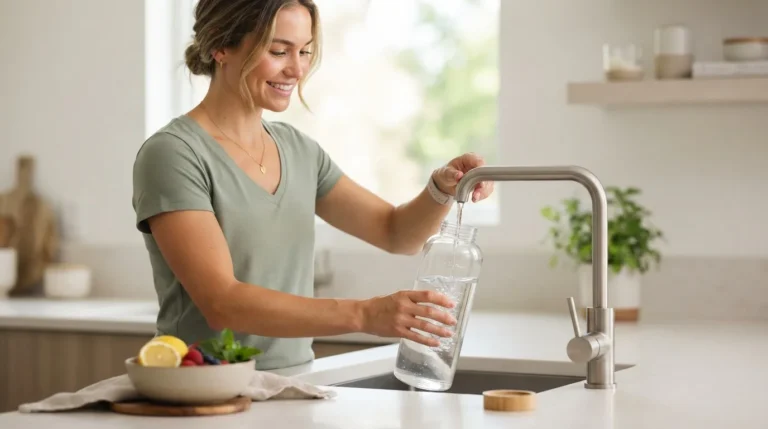

How much water to drink a day calculator gives a science-backed estimate of your daily fluid needs and a practical way to turn that number into a routine. This guide explains the formula, shows step-by-step examples by weight and activity, and helps you track intake with counters and charts.
Introduction to Water Intake and Its Importance
Understanding your daily water requirement starts with a clear estimate: how many ounces or liters your body needs each day to support normal physiology, activity and environmental demands. Adequate hydration affects energy, cognition, digestion, temperature regulation, and physical performance — functions collectively described under the broader hydration definition and health implications.
In the U.S., official guidance from the U.S. National Academies is commonly used as a baseline for recommended daily fluid intake for adults, while public health resources like the CDC hydration guidelines provide practical health-oriented messaging. For scientific context, review summaries such as the hydration review on PubMed give evidence-based background on hydration and health hydration science review.
Practical benchmarks like 2 liters of water hydration effects or a daily bottle count help people remember goals, but the most personalised estimates come from calculators tied to body weight and activity. Knowing the percentage of body water offers context for why weight matters; see percentage of water in the body for background.
Next, we’ll walk through the calculator concept and give step-by-step examples so you can compute your own daily target and translate it into cups, ounces, or liters.
Transitioning now to the concrete calculator explanation so you can use a formula or tool with confidence.
How Much Water to Drink a Day Calculator Explained
The core goal of a water intake calculator is to convert personal characteristics (primarily body weight) into a daily fluid target, then adjust for activity, climate, and special circumstances. Many tools use straightforward formulas: a base per-weight multiplier, plus additive allowances for exercise and heat.
Below is an easy-to-follow calculator process you can replicate in a spreadsheet or phone note. We include unit conversions (ounces, liters, cups) so you can track in the container sizes you already use.
- Record your body weight in pounds (lb) or kilograms (kg).
- Apply the base per-weight formula (see next section for several evidence-based formulas).
- Add adjustments: +12–16 fl oz (350–475 mL) per 30–60 minutes of moderate exercise; +10–20% for hot/humid climates; specific medical or pregnancy/lactation adjustments as needed.
- Convert total to preferred units (oz, cups, liters). 1 US cup = 8 fl oz; 1 fl oz ≈ 29.57 mL; 1 L = 33.814 fl oz.
- Use a counter or tracker to log intake (see tracking tools section).
Step-by-step calculation example (U.S. adult, moderate activity):
| Step | Calculation | Result |
|---|---|---|
| 1 | Person weight | 170 lb (77 kg) |
| 2 | Apply base formula: 0.5 fl oz per lb | 170 × 0.5 = 85 fl oz |
| 3 | Add activity: 45 minutes moderate exercise ≈ +12 fl oz | 85 + 12 = 97 fl oz |
| 4 | Convert to liters: 97 ÷ 33.814 | ≈ 2.87 L |
| 5 | Convert to cups: 97 ÷ 8 | ≈ 12.1 cups |
The example uses a common and simple per-weight multiplier (0.5 fl oz per lb). In the next section we present multiple validated formulas and sample calculations so you can choose the approach that fits your goals.
For related guidance and a complementary calculator approach, see water intake calculator and guidelines.
Transition: now that you know the calculator process, let’s detail the formulas and why weight is the primary driver.
The Formula for How Much Water to Drink Based on Weight
Formula for how much water to drink typically ties fluid need to body mass because water plays a role in tissue hydration and metabolism proportional to size. Below are widely used weight-based formulas, with pros and cons, plus sample calculations so you can pick one that suits your health goals.
Common weight-based formulas
- Half-an-ounce per pound (0.5 fl oz / lb): Simple and widely used. Multiply body weight in pounds by 0.5 to get fl oz/day. Pros: easy; cons: can under- or overestimate for extreme body sizes.
- 30–35 mL per kg: Metric alternative aligned with clinical nutrition practice. Multiply weight (kg) by 30–35 to get mL/day. Pros: commonly used in clinical settings; cons: may need adjustments for activity/climate.
- Water requirement per kg lean mass: More precise for people with high adiposity because lean mass holds most body water. Requires body composition data.
- U.S. National Academies reference intakes: Provide Adequate Intake (AI) values — approximately 3.7 L/day for men and 2.7 L/day for women from all beverages and food; useful as population baselines (U.S. National Academies water recommendations). These are not weight-specific but offer a practical floor.
Why weight matters: larger bodies generally have higher absolute water requirements because total body water scales with lean mass. Think of hydration as fuel: a bigger engine uses more coolant over the same run.
Sample calculations (three adult profiles):
| Profile | Weight | 0.5 fl oz/lb | 30 mL/kg | NASEM AI (for comparison) |
|---|---|---|---|---|
| Light adult | 120 lb (54 kg) | 60 fl oz ≈ 1.77 L | 54 × 30 = 1,620 mL ≈ 1.62 L | Women AI 2.7 L |
| Average adult | 170 lb (77 kg) | 85 fl oz ≈ 2.51 L | 77 × 30 = 2,310 mL ≈ 2.31 L | Men AI 3.7 L |
| Heavy adult | 220 lb (100 kg) | 110 fl oz ≈ 3.25 L | 100 × 30 = 3,000 mL = 3.0 L | Men AI 3.7 L |
Interpreting differences: formulas based on weight may yield lower or higher totals than the NASEM population AIs because NASEM includes population-wide intake from food and beverages and sets conservative targets. Use weight-based formulas for individualized targets, and NASEM AIs as cross-checks.
Clinical nuance: athletes, pregnant or breastfeeding individuals, older adults, or people with chronic conditions may need formula adjustments. For clinical reference, health professionals often prefer mL/kg approaches; for practical everyday use, many people find the 0.5 fl oz per lb rule easiest.
Cite clinical resources and guidelines when adjusting for medical issues; see the CDC hydration guidelines for general safety and special-population notes.
Transition: if weight loss is your goal, read the next section which adjusts formulas for weight-loss focused intake.
Variations of the Calculator: Weight For Water / Weight Loss Focused Intake
When the goal is weight loss, hydration can support appetite regulation and energy expenditure. A specific calculator variation helps you set a hydration target to support caloric control and metabolic health without overhydration.
Key strategies for weight-loss hydration:
- Use a slightly higher base multiplier to support clearer appetite signals and metabolic rate (e.g., 0.55–0.6 fl oz per lb).
- Time water before meals (250–500 mL about 30 minutes prior) to reduce meal intake for some people.
- Combine hydration with protein-rich meals and fiber to maximize satiety.
| Approach | Formula | Use Case |
|---|---|---|
| Conservative (general weight loss) | 0.55 fl oz per lb | Daily support, mild appetite control |
| Higher (active weight loss plan) | 0.6 fl oz per lb | People exercising frequently during calorie deficit |
| Meal-timed strategy | +250–500 mL 30 min before main meals | Short-term intake timing to reduce meal calories |
Comparison example for a 170 lb person:
- Standard formula: 170 × 0.5 = 85 fl oz (≈ 2.5 L)
- Weight-loss conservative: 170 × 0.55 = 93.5 fl oz (≈ 2.76 L)
- Weight-loss higher: 170 × 0.6 = 102 fl oz (≈ 3.02 L)
For deeper strategies on using water during a slimming plan, see water intake for weight loss.
Transition: once you have a target for the day, tracking it reliably matters — the following section covers counters and tools.
Water Intake Counters and Tracking Tools
Water intake counters and trackers simplify the routine of hitting targets. Tools range from basic journal methods to smart bottles that sync with phone apps. Choose a method you’ll consistently use: simplicity beats sophistication if it increases adherence.
- Smart water bottles — Pros: automatic sipping reminders and exact logged volume; Cons: cost and charging. Recommended for tech-savvy users who want passive tracking.
- Phone apps (e.g., water trackers that allow custom targets and reminders) — Pros: highly configurable; Cons: notification fatigue. Use with Do Not Disturb schedules if needed.
- Manual counters — Methods: tick marks on a reusable bottle, tally on a note app, or a paper chart. Pros: zero tech cost and highly visible; Cons: manual logging needed.
- Spreadsheet
Recommended tools and short reviews (user-focused):
- Smart bottle brands (multiple market options): Great for passive tracking and gentle reminders; verify battery life and leak-proof design before purchase.
- Mobile apps (iOS/Android): Choose apps that allow ounces and liters, integrate with health apps if desired, and support custom reminders timed around your schedule.
- Simple reusable bottle with calibrated markings: Most affordable and durable; buy bottles stamped with ounce/mL marks for easy visual tracking.
Practical tip: if you plan to increase intake for weight loss, use a tracker that allows custom daily goals and pre-meal reminders to reinforce meal-timed strategies.
Transition: after picking a tool, learn how to interpret and apply your calculator results day-to-day in the next section.
How to Use Your Water Intake Calculator for Best Results
After calculating a target with a drinking water calculator, apply the number with a simple workflow: translate it into containers, schedule intake windows, and use physical indicators to fine-tune. Below are practical steps and a daily chart template you can use immediately.
- Confirm your preferred unit (fl oz, cups, liters). Convert your calculated total into that unit for easier tracking.
- Break the total into practical servings — e.g., 8–12 evenly spaced drinks across waking hours or a combination of bottles and cups. Use a personal schedule: morning, pre-lunch, afternoon, pre-workout, post-workout, evening.
- Map to common container sizes for convenience. water bottle size chart and ounces and standard water glass ounces and servings are useful references.
- Use external physical indicators alongside the calculator: thirst, urine color, and frequency. For urine cues, compare against clinical guidance in urine color hydration indicators.
- Adjust for activity and weather: add 8–16 fl oz (250–475 mL) per 30–60 minutes of exercise and consider percent increases for hot/humid days (10–20%).
- If results seem unusually high, follow the steps below to validate and safely adjust.
Daily water intake chart (simple schedule example):
| Time | Serving | Size |
|---|---|---|
| Wake | Start hydration | 12 fl oz (1.5 cups) |
| Mid-morning | Top-up | 8 fl oz (1 cup) |
| Pre-lunch | Boost | 8–12 fl oz |
| Afternoon | Routine sips | 16 fl oz bottle fill |
| Pre-/post-workout | Extra | 12–24 fl oz depending on duration |
| Evening | Finish | 8–12 fl oz |
What to do if your calculator result seems too high
- Re-check inputs: confirm you used pounds vs kilograms and correct multipliers.
- Compare against NASEM AIs as sanity check: U.S. National Academies water recommendations provide a population baseline.
- Gradually work up to the target: increase daily intake by 8–16 fl oz per day each few days rather than making a sudden jump.
- Consult a healthcare provider if you have heart, kidney, or electrolyte-related conditions — calculators are estimates, not medical prescriptions.
Learn more about physical hydration indicators like urine color at urine color hydration indicators.
For guidance on common portion volumes and how they fit into a daily target, see 32 oz of water intake guidelines.
Convert and confirm bottle sizes with the water bottle size chart and ounces.
Transition: understanding external and personal factors that influence your numbers will help you use the calculator safely and accurately.
Factors Influencing Your Water Intake Needs
Calculator outputs are estimates; many variables influence real needs. Consider the following factors and how to adjust your target accordingly.
- Activity level: Exercise increases losses. Add roughly 8–16 fl oz (250–475 mL) per 30–60 minutes of moderate activity and more for endurance sports. Athletes often need individualized plans based on sweat rate and intensity.
- Climate: Hot or humid conditions increase sweat and fluid needs; consider a 10–20% increase on hot days. High altitude can also increase fluid needs.
- Age: Older adults can have reduced thirst perception and may require reminders to drink; children’s needs are calculated differently and should reference pediatric guidelines.
- Health conditions: Fever, vomiting, diarrhea, kidney disease, heart failure, or electrolyte disorders change requirements. Acute losses — e.g., diarrhea — often require targeted rehydration strategies; see dehydration causes and recovery from diarrhea.
- Medications and substances: Diuretics, some psychiatric medications, and alcohol affect balance. For alcohol’s effects, see alcohol’s impact on hydration.
- Pregnancy and breastfeeding: Increased needs; typically add ~300–700 mL/day depending on lactation and clinician guidance.
- Dietary composition: High-protein, high-fiber, or high-salt diets may require modestly more water. Foods contribute to total intake; around 20% of water intake often comes from food in mixed diets.
- Illnesses and special protocols: During fasting or strict refeeding, follow established protocols for safe fluid and electrolyte management; see water fasting safety rules.
- Infants and young children: Require age-specific guidance; if monitoring at-home, review dehydration signs in infants.
Clinical and public-health signals: dehydration can lead to lowered blood pressure in some people; for more on clinical complications, see dehydration and low blood pressure. Severe fluid losses or failure to replace electrolytes can produce serious outcomes that require medical treatment.
For choices about water quality and mineral content, see best water types and mineral benefits and for beverage alternatives hydrating beverages and rehydration choices.
If you experience abdominal symptoms related to hydration, read dehydration-related stomach pain.
Transition: having covered key variables, next we address common myths and the most frequently asked questions people have about hydration calculations.
Common Myths and FAQs About Water Intake Calculations
Misinformation about hydration is widespread. Below are common myths, evidence-based corrections, and quick clarifications so you can rely on your calculator results.
- Myth: Everyone needs “8 glasses” a day. Fact: The “8×8” rule is an easy mnemonic but not individualized. Use a weight-based calculator or NASEM AIs for tailored guidance. For context on standard benchmarks, review drinking a gallon of water daily health overview.
- Myth: Coffee and tea don’t count toward hydration. Fact: Plain coffee and tea contribute to daily fluids; caffeine causes mild diuresis but beverages still add net water. See coffee counted as water intake for details.
- Myth: More water always equals better health. Fact: Excessive drinking can lead to hyponatremia (water intoxication). Use a calculator and avoid extreme volumes without medical guidance; see water intoxication and overhydration risks.
- Myth: Thirst is always a late sign of dehydration. Fact: Thirst is a valid cue for many people, though older adults may have blunted thirst. Use thirst plus urine color as practical indicators (urine color hydration indicators).
- Myth: Sugary or caffeinated soft drinks hydrate as well as water. Fact: They provide fluid but may introduce calories or diuretic effects; choose healthier alternatives when possible (healthy soft drink alternatives).
For beverage choices that support hydration without unwanted calories, review healthy hydration beverage options.
Transition: now that common myths are clarified, learn practical tips to make your calculator results actionable every day.
Practical Tips to Stay Hydrated Using Your Calculator Results
Apply your calculated target with straightforward habits that fit daily life. These practical strategies make reaching your goal realistic and repeatable.
5 tips to stay hydrated and improve wellness
- Schedule hydration windows tied to daily events (wake, pre-meal, during commute, pre/post-workout, evening). This builds consistency and distributes intake.
- Carry a marked bottle that matches your daily goal; refill milestones encourage progress and make tracking easy.
- Time water before meals (250–500 mL ~30 minutes prior) if using hydration to support appetite control during weight-loss efforts.
- Use reminders or a smart bottle if you forget to sip — set gentle alarms rather than intrusive notifications.
- Pair hydration with other habits (take a sip after every bathroom break or after brushing teeth) to lock it into routine.
- Monitor urine color and frequency as real-time feedback; adjust intake when color darkens or output declines.
- When traveling or in new climates, briefly increase your target and monitor for symptoms of over- or under-hydration.
- If you have underlying conditions, check targets with your clinician before making major changes.
Transition: to wrap up the guide, we summarize the main takeaways and encourage responsible use of calculators to personalize hydration.
Conclusion: Using a Water Intake Calculator for Personalized Hydration
A how much water to drink a day calculator offers a fast, evidence-informed estimate based primarily on body weight, with sensible adjustments for activity, climate, and special conditions. Use a clear formula (0.5 fl oz per lb or 30 mL per kg), add allowances for exercise and heat, and translate totals into containers you use daily.
Track with a simple counter, monitor physical indicators (thirst and urine color), and treat the calculator result as a personalized starting point, not a fixed prescription. When in doubt—especially with health conditions—consult a healthcare professional for individualized guidance.
Start by calculating your target today, convert it into cup or bottle fills, and try one habit from the Practical Tips list. Small, consistent changes are how long-term hydration becomes effortless.
Frequently Asked Questions
What is a how much water to drink a day calculator?
A how much water to drink a day calculator estimates your daily fluid needs by applying a weight-based formula, then adds adjustments for activity, climate, or special conditions. It converts the result to practical units (oz, cups, L) so you can set a personalized daily goal and track intake.
How do I calculate how much water to drink based on my weight?
Convert weight to pounds or kilograms, then apply a formula such as 0.5 fl oz per lb or 30 mL per kg. Add about 8–16 fl oz per 30–60 minutes of exercise and adjust for heat or health conditions; convert to liters or cups for day planning.
What is the best formula for daily water intake?
There isn’t a single “best” formula; common choices are 0.5 fl oz per lb for simplicity or 30–35 mL per kg for clinical accuracy. Use 0.5 fl oz/lb for easy daily tracking and mL/kg when more precision is required.
How does my activity level affect how much water I should drink?
Exercise increases fluid losses; add roughly 8–16 fl oz (250–475 mL) per 30–60 minutes of moderate activity. For prolonged or intense workouts, tailor intake to sweat rate and include electrolyte replacement as needed.
How long does it take to see benefits after drinking more water?
Many people notice improved energy and clearer urine within 24–48 hours of increasing intake; cognitive and digestive benefits may follow within days. Clinical improvements for skin or performance can take weeks depending on baseline hydration.
What do I do if my water intake calculator results seem too high?
First verify inputs (lb vs kg). Compare the result to NASEM AIs as a sanity check, then increase intake gradually (8–16 fl oz extra every few days). Consult a healthcare provider before large or rapid changes, especially with health conditions.
Does coffee count toward my daily water intake?
Yes—plain coffee contributes to total fluid intake. Although caffeine causes mild diuresis, beverages like coffee and tea still provide net water and can help meet daily hydration goals when consumed in moderation.
How accurate are hydration calculators and can I rely on them for health?
Hydration calculators give evidence-based estimates but are not medical diagnostics. They are useful starting points; use physical indicators (thirst, urine color) and consult clinicians for medical conditions or if large deviations are needed.