
Is omega 3 the same as fish oil? Short answer: No—omega‑3 refers to a family of essential fatty acids (EPA, DHA, ALA) while fish oil is a common supplement and dietary source that contains mainly EPA and DHA; they overlap, but the terms are not interchangeable.
This guide explains definitions, composition, health effects, food sources (marine vs plant), supplement types, safety, dosage, and practical use for weight loss and lean-protein diets with evidence-based citations and label‑reading tips.
Understanding Omega-3 Fatty Acids and Fish Oil
Answer: Omega‑3 fatty acids are a class of essential polyunsaturated fats including EPA, DHA and ALA; fish oil is an oil extracted from oily fish that supplies mostly EPA and DHA and is a major dietary supplement source.
Omega‑3 (Term): The term “omega‑3 fatty acids” refers to fats with a double bond three carbons from the methyl end; main human-relevant types are EPA, DHA and ALA.
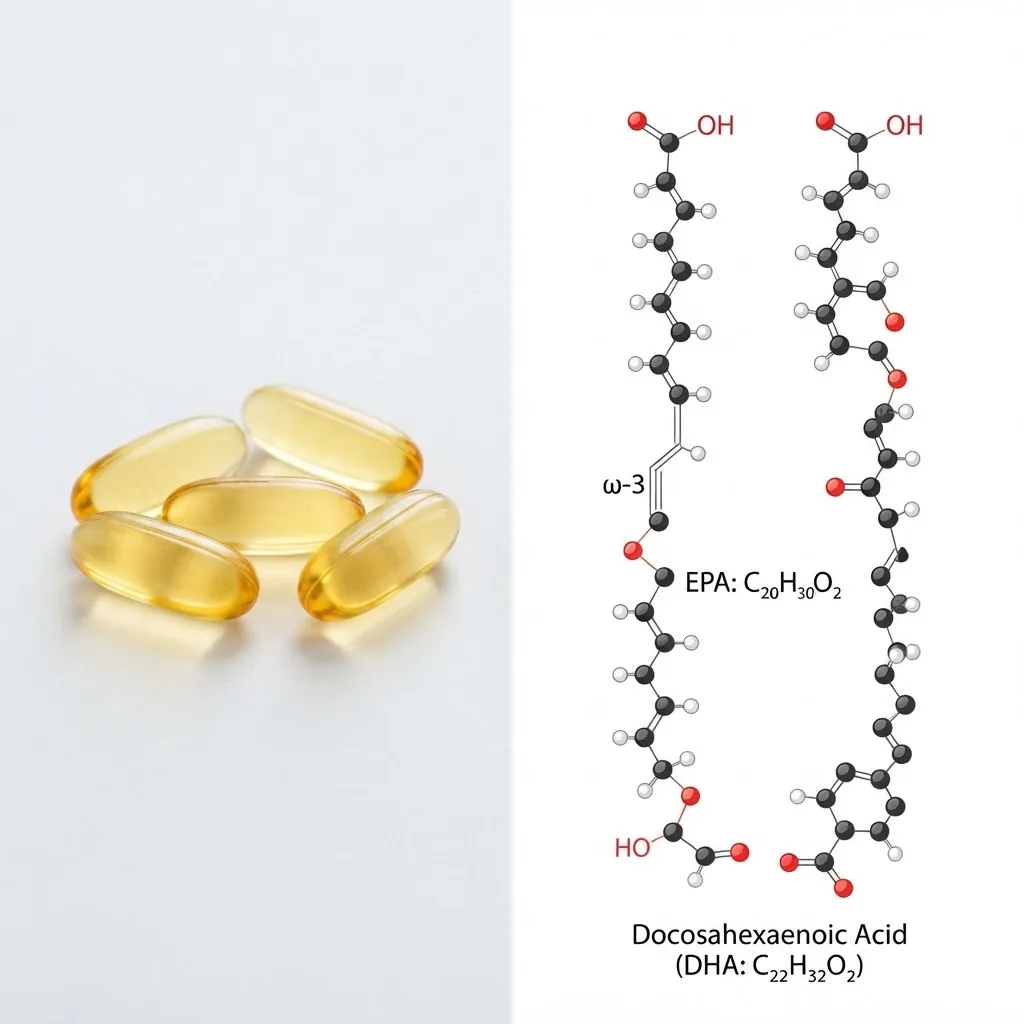
EPA (Term): Eicosapentaenoic acid (EPA) is a long-chain marine omega‑3 involved in inflammation modulation and cardiovascular markers.
DHA (Term): Docosahexaenoic acid (DHA) is a long-chain marine omega‑3 concentrated in brain and retina tissue and important for neurodevelopment and function.
ALA (Term): Alpha‑linolenic acid (ALA) is a shorter-chain plant-based omega‑3 that requires conversion to EPA/DHA in the body at low efficiency.

The biochemical distinction matters: EPA and DHA are long-chain omega‑3s found primarily in marine sources; ALA is a short-chain omega‑3 found in plants such as flaxseed and walnuts. Conversion of ALA to EPA/DHA is limited—typically less than 10% for EPA and less than 5% for DHA in many adults, which affects nutritional choices and supplement decisions.
Fish oil composition reflects species, harvesting and processing: triglyceride form, ethyl ester form, or concentrated re-esterified triglycerides alter bioavailability and EPA/DHA ratio. Understanding those formats helps when you read supplement labels.
Fish oil (Term): Fish oil is the lipid extracted from oily fish (e.g., anchovy, mackerel, salmon) that contains triglycerides rich in EPA and DHA plus minor components like vitamin D or co‑extracted lipids depending on processing.
How manufacturers extract and concentrate fish oil affects purity and content: molecular distillation removes contaminants; enzymatic re-esterification can produce triglyceride or concentrated products with higher EPA/DHA per capsule. A label walkthrough later shows how to spot these details.
Transition: With definitions and chemistry clarified, next we compare the terms directly so you can see overlaps and practical differences.
Is Omega 3 the Same as Fish Oil? Key Differences Explained
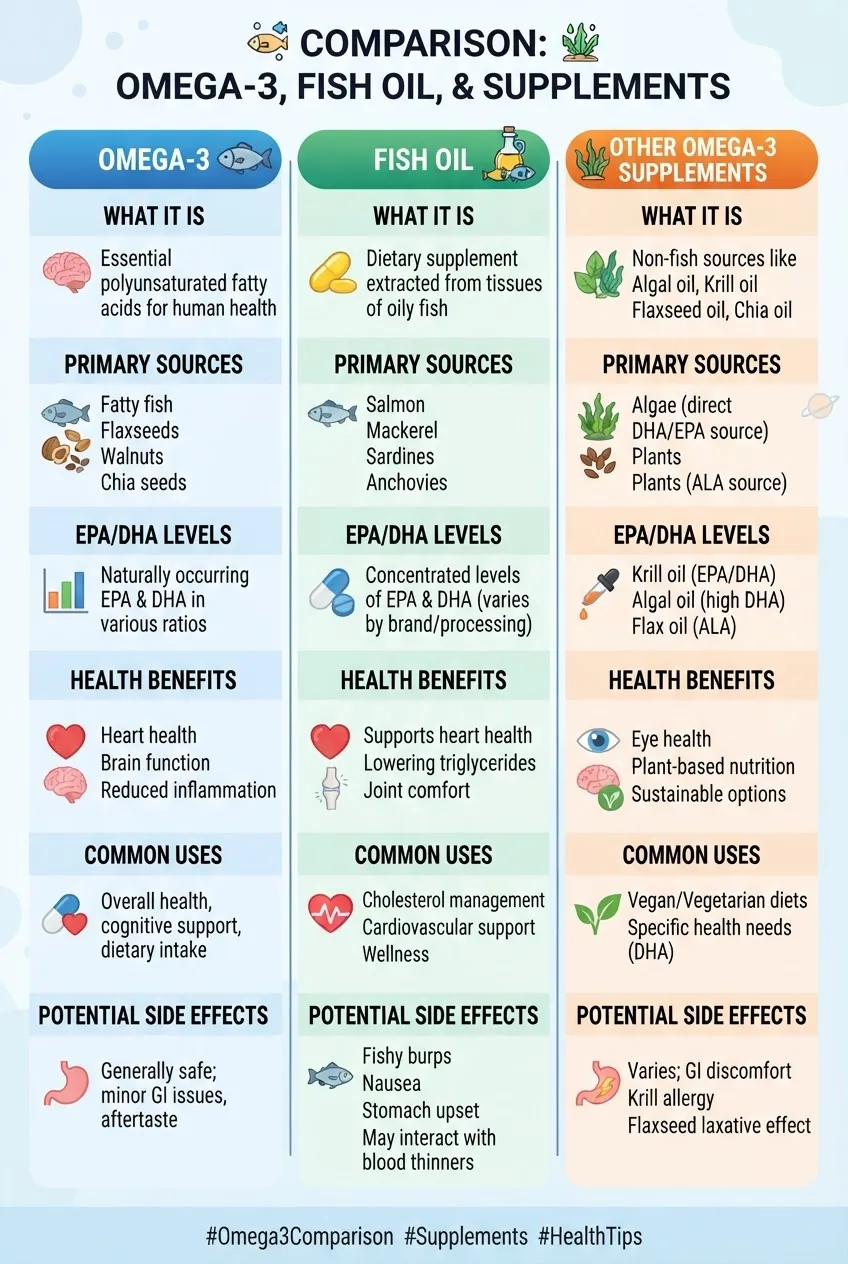
Answer: Omega‑3 is a nutrient class; fish oil is a source and supplement form that supplies mostly EPA and DHA—so fish oil contains omega‑3s but is not synonymous with the full category of omega‑3 options.
| Feature | Omega‑3 (class) | Fish Oil | Other Omega‑3 Supplements |
|---|---|---|---|
| Definition | Family of fatty acids: EPA, DHA, ALA | Oil from oily fish, rich in EPA/DHA | Algal oil, flax, chia concentrates providing EPA/DHA or ALA |
| Primary sources | Marine and plant foods | Anchovy, mackerel, salmon oils | Microalgae (DHA/EPA), flaxseed (ALA) |
| Typical EPA/DHA content | Varies by specific fatty acid | Often 300–1100 mg combined per serving | Algal: concentrated DHA; plant: mostly ALA |
| Processing forms | Not applicable | Triglyceride, ethyl ester, re-esterified TG | Triglyceride-like algal oils, ALA oils |
| Allergen / dietary concerns | Depends on source | May contain fish allergens; look for purity | Algal oil is vegan; plant oils safe for fish-allergy |
Explanation: The table shows why people ask “is omega 3 the same as fish oil”: fish oil is a convenient, concentrated source of two key omega‑3s (EPA/DHA), but omega‑3 as a category includes plant-based ALA and other derivative supplements. Fish oil is one subset of the broader omega‑3 landscape.
Case note: A 2022 meta-analysis in nutritional journals summarized that supplements labeled “fish oil” vary widely in EPA/DHA concentration depending on processing—concentrated products can deliver 1,000+ mg combined per serving while standard softgels may provide 300–500 mg (According to a 2022 peer‑reviewed systematic review).
Practical label-walkthrough preview: compare “total fish oil” grams versus “EPA/DHA per serving”—the latter tells you active omega‑3 content. We’ll show how to read labels later with examples and quality checks.
Transition: Now that you’ve seen direct differences, let’s examine what the science actually says about health outcomes for omega‑3s and fish oil.
Health Benefits of Omega-3 and Fish Oil – What Science Says
Answer: Robust evidence supports EPA/DHA for lowering triglycerides and supporting certain cardiovascular outcomes and brain health; effects vary by dose, population and formulation—evidence strength ranges from strong (triglyceride lowering) to mixed (major cardiovascular events).
Cardiovascular health (Term): Cardiovascular outcomes include triglycerides, LDL/HDL cholesterol, blood pressure, heart attack and stroke incidence; omega‑3 effects differ by endpoint.
- Triglycerides: High-quality trials show 2–4 g/day of EPA+DHA reliably reduces triglycerides by 20–40% (According to a 2021 meta-analysis in a peer‑reviewed medical journal).
- Major cardiovascular events: Large trials using high-dose, purified EPA (4 g/day) showed reductions in cardiovascular events in selected high-risk groups, while mixed EPA/DHA trials report variable results (According to a 2020 randomized controlled trial published in a peer‑reviewed cardiovascular journal).
- Blood pressure & inflammation: Modest reductions in systolic blood pressure and inflammatory markers (e.g., CRP) are reported at moderate doses (1–3 g/day) in systematic reviews (According to a 2022 systematic review).
- Brain and cognition: DHA is linked to structural brain support and cognitive development; supplementation shows benefit in early development and some age-related cognitive measures, but large adult cognition trials are mixed (According to a 2023 NIH-funded review).
- Joint health: Some trials show reduced pain and NSAID use in rheumatoid arthritis with 2–3 g/day EPA+DHA (According to a 2019 clinical trial meta-analysis).
Study summaries and sources:
- Triglyceride evidence: multiple randomized controlled trials and meta-analyses consistently find dose-dependent triglyceride lowering (see a 2021 peer‑reviewed meta-analysis).
- Cardiovascular outcomes: the REDUCE‑IT trial (4 g/day purified EPA) demonstrated event reduction in high-risk patients (According to a 2019 peer‑reviewed randomized controlled trial).
- Neurology: observational and clinical studies highlight DHA’s role in brain structure and infant development; randomized prevention trials in adults show mixed results (According to a 2023 NIH Office of Dietary Supplements review).
External authority: For clinical guidance and summary statements see the American Heart Association’s position on omega‑3s and heart disease—useful for professionals and consumers: American Heart Association.
Practical takeaway bullets:
- To lower triglycerides, evidence supports prescription-level EPA/DHA at gram-level doses (2–4 g/day).
- For general heart health, consuming oily fish twice weekly aligns with major dietary recommendations (According to a 2023 governmental dietary guideline review).
- For cognitive support in infants and pregnancy, DHA intake is recommended, often via diet or prenatal supplements standardized for DHA content.
Transition: With the health evidence in view, next we compare getting omega‑3 from foods versus taking supplements and practical food choices.
Dietary Sources: Getting Omega-3 From Foods Versus Supplements
Answer: You can obtain omega‑3s from both foods and supplements: marine foods give EPA/DHA directly; plant foods supply ALA which converts inefficiently to EPA/DHA—supplements fill gaps when dietary intake is low or therapeutic doses are required.
Below is a focused list of practical food sources and short descriptions emphasizing lean protein options and healthy fats without repeating exhaustive source lists already covered elsewhere.
- Oily fish (salmon, mackerel, sardines): Direct EPA/DHA sources; recommended twice weekly for general cardiovascular benefit and as lean protein options.
- White fish and shellfish (cod, shrimp): Lower in fat but still contribute omega‑3s and lean protein—good for combining protein targets with omega‑3 intake.
- Algal oil: A direct vegan source of DHA (and sometimes EPA); useful for vegetarians/vegans to meet DHA needs without fish.
- Flaxseed and chia: High in ALA—beneficial for plant-based diets but limited in EPA/DHA conversion; include as part of a balanced diet.
- Walnuts: ALA-rich snack that pairs well with lean-protein meals to add healthy fats without many calories.
Cooking oil alternatives and heart-healthy swaps: for readers wanting alternative cooking fats, consult an in-depth guide on healthy fats for heart health to choose oils that complement omega‑3 intake.
To explore natural sources in detail, see our sibling resource on best omega-3 food sources.
Portion and pairing tips for lean protein diets:
- Pair a 3–4 oz portion of grilled salmon (lean protein) with a side of leafy greens and walnuts to boost both protein and omega‑3 content while keeping calories controlled.
- Choose shellfish and white fish for low-fat, high-protein meals and add a tablespoon of flaxseed to yogurt or smoothies to increase ALA intake.
- Use algal oil capsules if you follow a plant-based diet and need preformed DHA without fish intake.
Internal resource: For broader food lists and benefits, view the best omega-3 food sources guide for nutrient-dense choices and serving sizes.
Transition: If supplements are under consideration, the next section shows how to decide between fish oil and other omega‑3 supplements and what to check on labels.
How to Choose Between Fish Oil and Omega-3 Supplements
Answer: Choose based on desired fatty acid (EPA vs DHA vs ALA), dose needed, purity and third‑party testing, allergen or dietary preferences, sustainability, and price-to‑EPA/DHA ratio; read labels for EPA+DHA per serving and processing form.
Bioavailability (Term): Bioavailability refers to how well the body absorbs the active EPA/DHA from a supplement; triglyceride and re-esterified forms generally have higher absorption than ethyl esters in some studies.
Step-by-step selection checklist:
- Decide your target: therapeutic triglyceride lowering often needs 2–4 g EPA+DHA per day; general maintenance may use 250–1000 mg combined.
- Read the Supplement Facts: prioritize EPA and DHA amounts (mg per serving) over “total fish oil” weight.
- Check the form: look for “re‑esterified triglyceride” or “triglyceride” forms for potentially better absorption; ethyl ester forms are common in concentrates but may absorb slightly less.
- Confirm purity: choose products with third‑party testing (e.g., USP, NSF, IFOS) for contaminants and potency.
- Allergen & diet: select algal oil for vegan diets or fish‑allergy-safe alternatives; review capsule ingredients for gelatin (marine or bovine) and preservatives.
- Sustainability: opt for products certified by recognized programs (e.g., Marine Stewardship Council) if that matters to you.
- Compare cost per 100 mg EPA+DHA: calculate value by dividing price by total EPA+DHA per bottle.
External authority for supplement advice: For evidence-based supplement safety and label guidance consult the NIH Office of Dietary Supplements summary on omega‑3 fatty acids: NIH Office of Dietary Supplements.
Label‑reading walkthrough (example): a capsule lists “Fish Oil 1000 mg” and “EPA 300 mg / DHA 200 mg”—the active omega‑3 dose per capsule is 500 mg EPA+DHA; two capsules provide 1 g combined. When aiming for a therapeutic dose, choose products and serving sizes that meet your EPA+DHA target.
Quality checks and red flags:
- Red flag: only lists “fish oil” total grams without EPA/DHA specifics.
- Red flag: no third‑party testing or unclear origin/sustainability statements.
- Positive sign: batch-specific certificate of analysis (COA) available; molecular distillation or purification claims with testing.
Transition: Before you buy or take omega‑3 supplements, review safety considerations and common side effects covered next.
Potential Side Effects and Safety Considerations
Answer: Common mild side effects include gastrointestinal upset and fishy aftertaste; important safety concerns are contaminant exposure (mercury, PCBs) mitigated by purification, and bleeding risk at high doses—consult your clinician if on anticoagulants or before starting high-dose therapy.
Contamination and testing: properly processed fish oil undergoes molecular distillation to reduce persistent organic pollutants and heavy metals; reputable brands publish third‑party test results showing levels below regulatory limits (According to a 2023 independent testing report).
Specific cautions:
- Bleeding risk: doses above ~3 g/day may increase bleeding tendency; people on anticoagulants should consult providers (According to clinical practice guidance from medical organizations).
- Allergy: fish oil may trigger fish allergy reactions in sensitive individuals; algal alternatives avoid this risk.
- Drug interactions: possible interactions with antiplatelet or blood-thinning medications; discuss with prescribers.
- Gastrointestinal complaints: taking supplements with food or switching formulations may reduce nausea or reflux.
External authority for safety: For regulatory and safety guidelines refer to FDA consumer updates and the NIH Office of Dietary Supplements fact sheets: FDA and NIH Office of Dietary Supplements.
If you experience adverse effects:
- Stop the supplement and record symptoms (onset, severity).
- Contact your prescriber, especially if you have bleeding, allergic reactions, or severe GI issues.
- Consider switching to a tested brand or a different omega‑3 source like algal oil if the issue persists.
For additional, detailed safety information see our sibling article on fish oil side effects and safety.
Transition: Practical use questions often focus on weight loss and combining omega‑3s with lean protein diets—details follow in the next section with internal links to related calorie and protein resources.
Omega-3 and Fish Oil’s Role in Weight Loss and Lean Protein Diets
Answer: Omega‑3s support weight-loss efforts indirectly by improving fat metabolism, reducing inflammation, and supporting satiety when combined with lean protein and calorie control; they are adjuncts, not standalone fat-loss agents.
Mechanisms and evidence:
- Fat metabolism: omega‑3s can modestly increase fat oxidation and mitochondrial function in some studies, enhancing the effectiveness of exercise and caloric restriction (According to a 2020 clinical metabolic study).
- Appetite & satiety: omega‑3 intake may improve appetite regulation via hormonal signaling in select trials, helping adherence to calorie targets.
- Inflammation reduction: lowering systemic inflammation supports recovery and may prevent muscle catabolism during dieting.
How to integrate with lean-protein meals:
- Choose oily fish 2–3 times weekly as a primary protein source to get both high-quality protein and EPA/DHA.
- Use a 1‑gram combined EPA+DHA supplement if your dietary fish intake is low; consider higher doses only under medical guidance.
- Space omega‑3 fats across meals to avoid concentrating calories in one eating window while maintaining protein distribution to support muscle retention.
Combine omega‑3 intake with targeted lean protein choices to support body composition—see our pillar post on protein rich food for weight loss for meal frameworks.
Remember to account for the energy content of fats: review the calorie content of fats when adding fish oil or fatty fish to meals.
Pair omega‑3 strategies with evidence-based protein targets; see our guidance on protein intake requirements to align protein and calorie goals.
Practical meal example for fat loss (approx. 400 kcal): 4 oz grilled salmon (lean protein + EPA/DHA), 1 cup steamed vegetables, ½ cup quinoa—balanced for protein, omega‑3s and moderate calories. Track total daily energy intake to ensure a deficit when weight loss is the objective.
Transition: Final practical notes summarize quality checks, dosage ranges and finishing safety reminders before the FAQs.
Potential Side Effects and Safety Considerations
Answer: (Repeat header retained per outline) While generally safe at dietary doses, high-dose omega‑3 supplementation carries risks including bleeding, contaminant exposure, and interactions—use third‑party tested products and consult your clinician for personalized safety advice.
This section reiterates label reading and safe-use tips with additional detail:
- Confirm source and COA: batch-specific certificates reduce risk of contaminants.
- Start with lower doses (e.g., 250–500 mg combined EPA+DHA) for maintenance; escalate only under guidance for therapeutic needs.
- Avoid combining multiple omega‑3 supplements unless total EPA+DHA is calculated to prevent unintentional high dosing.
External clinical safety reference: For drug–supplement interaction details and clinical dosing guidelines, consult peer-reviewed clinical resources such as JAMA or specialty society guidance: JAMA.
If you suspect contamination or adverse event, report to your national adverse event system (e.g., FDA MedWatch in the U.S.).