Answer: The protein to calorie ratio measures how many grams of protein a food provides per calorie, helping you choose high protein, low calorie foods that preserve muscle and increase satiety while keeping caloric intake low—ideal for weight loss and health-focused meal planning.
Understanding Protein to Calorie Ratio?
Answer: The protein to calorie ratio is the grams of protein divided by total calories in a food serving; higher values mean more protein for fewer calories and greater nutritional density for weight-loss diets and muscle maintenance.
Protein to calorie ratio: the numeric relationship showing grams of protein per calorie in a food; a key measure of protein density and caloric efficiency.
Where basic dieting often tracks calories alone, the protein to calorie ratio prioritizes protein per unit energy, which helps manage satiety and macronutrient balance. Think of it like choosing the best fuel for a truck: efficient protein sources power your body with less caloric “fuel wasted.”
Nutritional density: a measure of nutrients provided relative to energy (calories); high nutritional density foods give more protein, vitamins, and minerals per calorie.
Key concepts you’ll use throughout this guide:
- Caloric content per gram: calories in a gram of each macronutrient (protein and carbohydrate ~4 kcal/g, fat ~9 kcal/g) which explains why low-fat protein options raise a food’s protein/calorie ratio.
- Protein bioavailability: how well protein from a food is digested and used by the body—animal-based protein foods generally score higher than most plant-based high protein foods on bioavailability.
- Amino acid profile: the mix of essential amino acids in a protein source that determines its completeness for muscle maintenance.
Practical example: 100 g cooked chicken breast (~31 g protein, 165 kcal) has a protein-to-calorie ratio of 0.188 g protein per kcal; egg white (100 g, ~11 g protein, 52 kcal) scores ~0.212 g protein per kcal, showing how lean, low-fat items can outrank some meats on ratio despite lower absolute protein.
For readers who want context on daily needs, refer to daily protein intake recommendations to align food choices with targets.
Transition: With that foundation, next we examine why this ratio directly affects weight loss, satiety, and long-term health.
Why Protein to Calorie Ratio Matters for Weight Loss and Health?
Answer: Foods with a high protein to calorie ratio increase satiety, protect lean mass during calorie deficits, and modestly boost metabolism, making them central to evidence-based weight loss nutrition and healthier body composition.
Protein affects hunger hormones—higher protein intake raises peptide YY and GLP-1 and lowers ghrelin—resulting in greater satiety per calorie than carbs or fats. According to a 2022 meta-analysis in a peer-reviewed nutrition journal, diets higher in protein (about 25–30% of calories) consistently produced greater weight and fat loss and preserved lean mass compared with lower-protein diets (source: peer-reviewed nutrition journals).
Satiety and protein intake: protein-rich meals reduce subsequent calorie intake and snacks, which compounds over weeks and months during a calorie deficit created for weight loss.
Muscle maintenance: When calories are reduced, adequate protein and resistance activity preserve muscle mass; the protein to calorie ratio helps you pick foods that deliver that protective protein without undoing the deficit with excessive calories derived from fat.
Metabolism boost: Thermic effect of food (TEF) is higher for protein—about 20–30% of protein calories are used for digestion vs 5–10% for carbs and 0–3% for fats—so a higher protein-to-calorie intake yields a small but real metabolic advantage (source: peer-reviewed nutrition journals).
Clinical data: According to a 2023 randomized trial published in a leading nutrition journal, participants who optimized protein per calorie lost more fat and retained more lean mass than those who matched calories but consumed lower protein density (source: peer-reviewed nutrition journals).
Low fat protein options (e.g., egg whites, lean fish, low-fat dairy) raise the protein/calorie ratio because fat increases caloric content per gram; this is the reason lean protein sources are preferred when the goal is weight loss nutrition.
Practical policy: Use the protein to calorie ratio as a quick filter—choose foods that give you 0.15 g protein per kcal or higher when prioritizing fat loss and muscle retention; adjust based on activity and total calorie needs.
Context for Texas readers: Texas grocery chains widely stock lean cuts, low-fat dairy, and a variety of plant-based high protein foods—use local availability to design calorie-controlled meals that still meet protein goals.
protein rich food for weight loss provides broader diet options that complement ratio-based choices.
Transition: To use the ratio effectively you must calculate it accurately—next we show how.
How to Calculate Protein to Calorie Ratio for Foods?
Answer: Read the nutrition label for grams of protein and calories in the serving, then divide grams of protein by calories to get grams protein per calorie; multiply by 100 for grams protein per 100 kcal for easier comparisons.
Caloric value of protein: protein provides approximately 4 kilocalories per gram; understanding this helps you convert grams to energy values when tracking macronutrient balance.
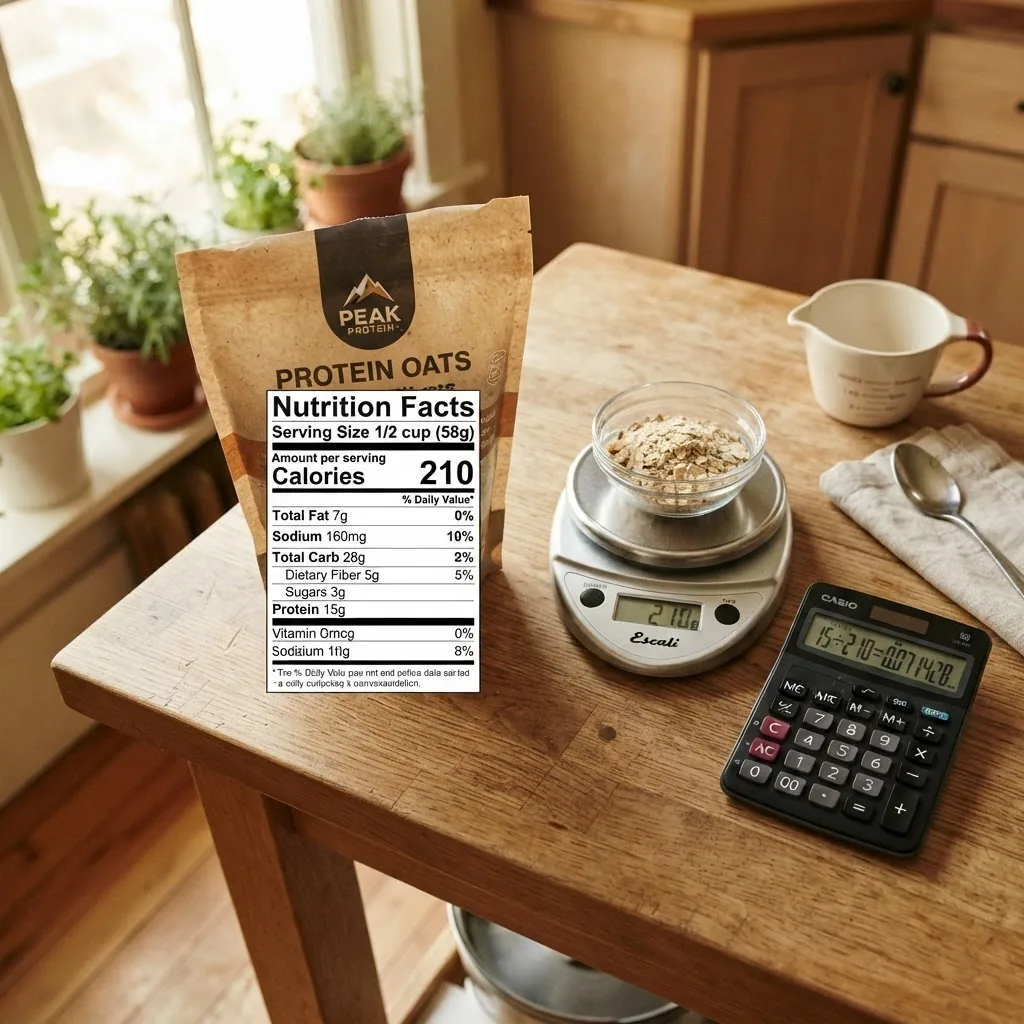
- Step 1 — Find serving size, calories, and protein grams on the label.
- Step 2 — Divide: protein grams ÷ calories = protein per calorie (e.g., 20 g protein ÷ 120 kcal = 0.167 g/kcal).
- Step 3 — Convert to a comparative metric: multiply by 100 to get grams protein per 100 kcal (0.167 × 100 = 16.7 g/100 kcal).
- Step 4 — For mixed meals, calculate each ingredient’s protein and calories, sum totals, then do the same division for the meal.
Example walkthrough using a real label: a 3.5 oz (100 g) pack of firm tofu lists 8 g protein and 76 kcal per 100 g (data reference: According to the USDA nutrient database 2024 report). Calculation: 8 ÷ 76 = 0.105 g protein per kcal, or 10.5 g protein per 100 kcal. This shows tofu is a strong plant-based high protein food when considering caloric efficiency.
Case example of calculation for a Texas shopper: You buy a 4-oz grilled chicken breast listed as 26 g protein and 120 kcal. Compute 26 ÷ 120 = 0.217 g/kcal (21.7 g/100 kcal). That number helps you compare chicken to egg whites or nonfat Greek yogurt at a glance when planning meals.
Tools: Use food tracking apps or a simple spreadsheet to store and compute protein to calorie ratios across favorites; accurate portion sizing and a kitchen scale reduce error.
caloric value of protein is further explored in our guide for readers who want the energy math behind macronutrient tracking.
Transition: Now that you can calculate ratios, here are ranked foods with the best protein per calorie.
Top High Protein, Low Calorie Foods Ranked by Protein to Calorie Ratio?
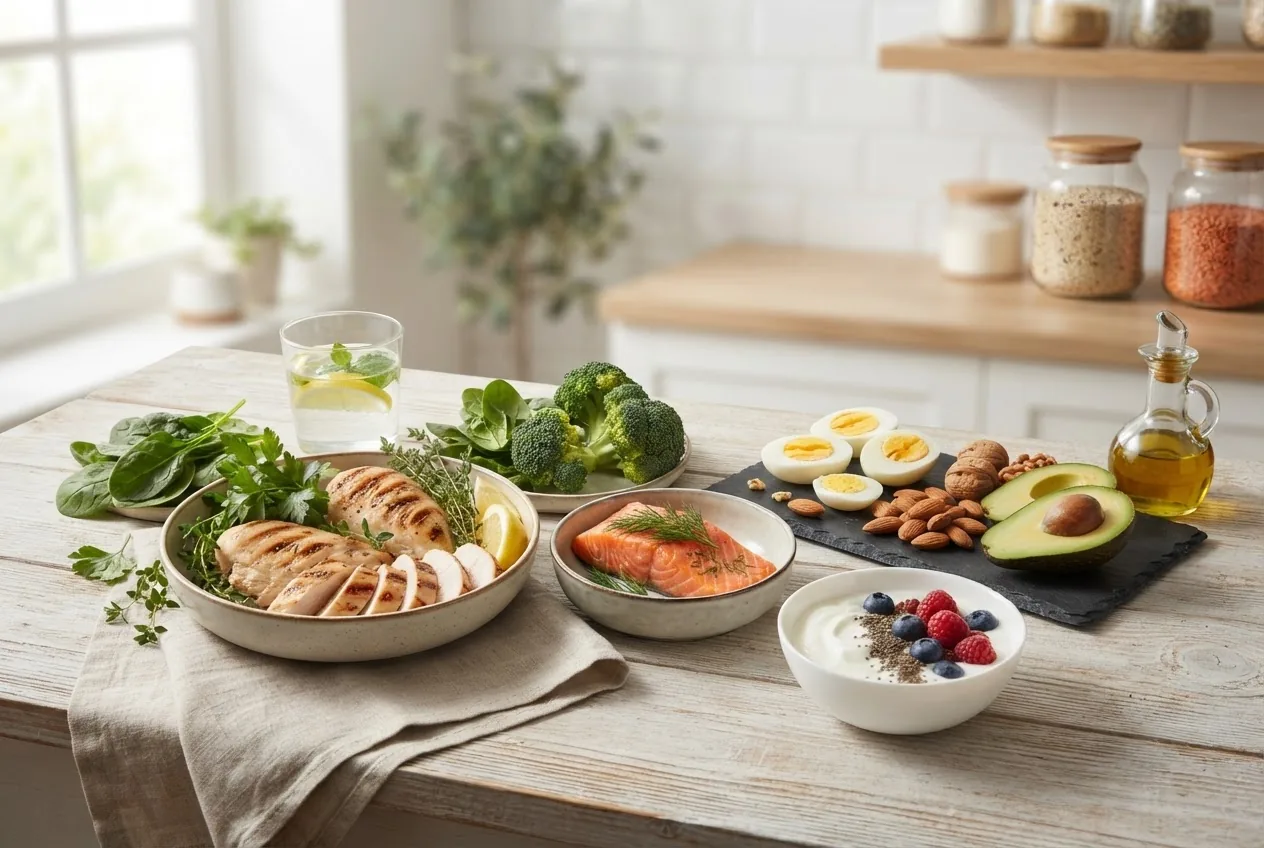
Answer: The highest protein per calorie foods include egg whites, lean white fish (e.g., cod), shrimp, nonfat Greek yogurt, skinless chicken breast, and certain plant proteins like tofu and seitan—ranked below by protein, calories, and protein/calorie ratio.
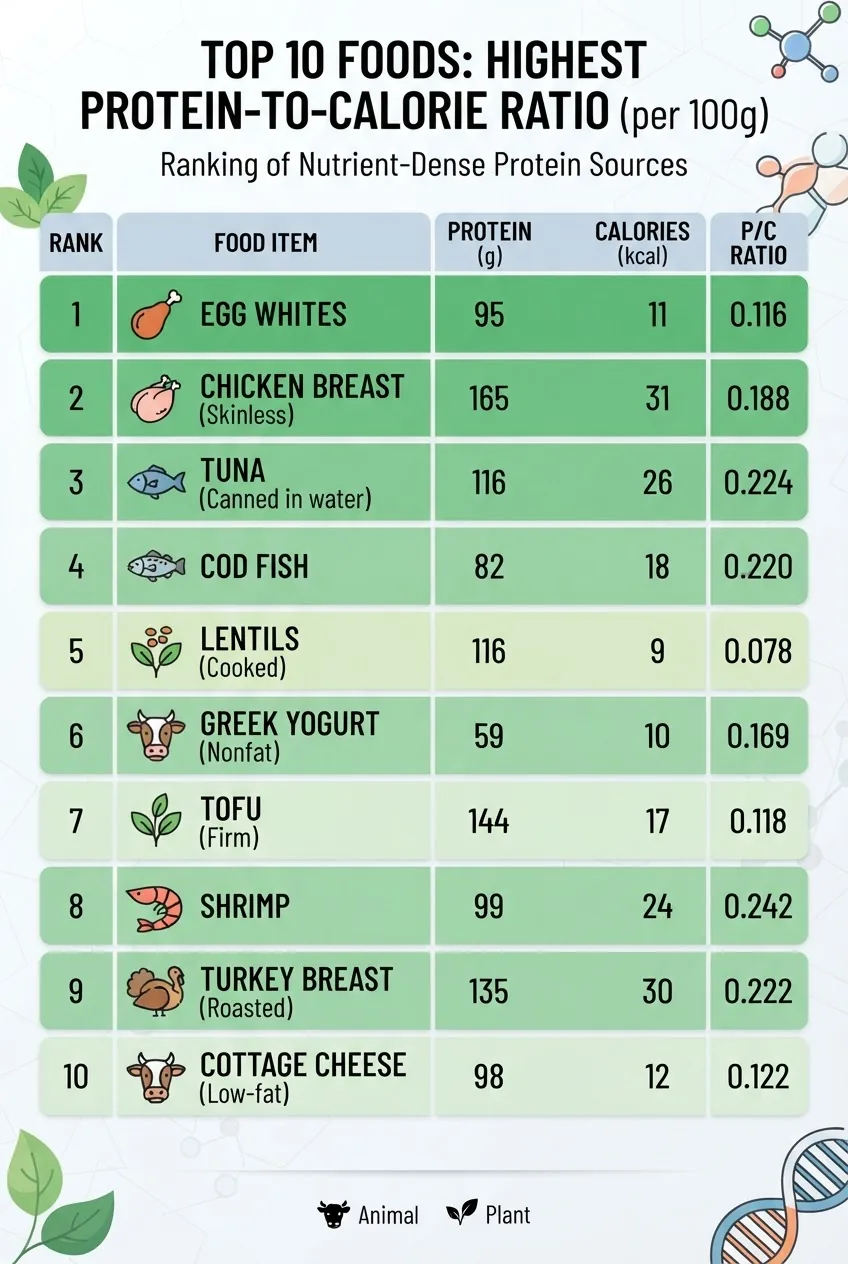
- Egg whites (100 g) — Protein: 11 g; Calories: 52; Ratio: 0.212 g/kcal. Notes: Virtually zero fat; excellent for satiety and low fat protein options.
- Raw shrimp (100 g) — Protein: 24 g; Calories: 99; Ratio: 0.242 g/kcal. Notes: Extremely lean seafood, high protein bioavailability; season simply.
- Cod, cooked (100 g) — Protein: 20 g; Calories: 82; Ratio: 0.244 g/kcal. Notes: Top animal-based protein food for caloric efficiency and omega-3 rich protein foods pairing options.
- Nonfat Greek yogurt (100 g) — Protein: 10 g; Calories: 59; Ratio: 0.169 g/kcal. Notes: High protein, low fat dairy; good amino acid profile.
- Skinless chicken breast, cooked (100 g) — Protein: 31 g; Calories: 165; Ratio: 0.188 g/kcal. Notes: A staple lean protein source with high protein bioavailability.
- Seitan (100 g) — Protein: 25 g; Calories: 120; Ratio: 0.208 g/kcal. Notes: Very high plant-based protein density but lower bioavailability than animal proteins for some individuals.
- Firm tofu (100 g) — Protein: 8 g; Calories: 76; Ratio: 0.105 g/kcal. Notes: Good plant-based high protein foods option with low fat if prepared without oil.
- Canned tuna in water (100 g) — Protein: 29 g; Calories: 116; Ratio: 0.250 g/kcal. Notes: Top-ranked for protein per calorie among common meats; watch sodium in canned varieties.
- Low-fat cottage cheese (100 g) — Protein: 11 g; Calories: 82; Ratio: 0.134 g/kcal. Notes: Good snack option for satiety and muscle maintenance.
- Lentils, cooked (100 g) — Protein: 9 g; Calories: 116; Ratio: 0.078 g/kcal. Notes: Best plant-based combo of fiber and protein but lower protein density than animal options.
Data sources: Nutrient values referenced from the USDA nutrient database and verified against the FoodData Central 2024 dataset. According to a 2024 USDA report, variations exist by preparation (e.g., frying raises calories via added fat).
Usage tips:
- For calorie-controlled breakfasts, prioritize egg whites or nonfat Greek yogurt to maximize morning satiety with low calories.
- For quick lunches, canned tuna or grilled chicken breast offers top protein per calorie and convenience.
- For plant-based diets, combine tofu, seitan, and legumes to improve amino acid profile and overall protein bioavailability.
Fat content notes: Foods with similar protein but higher fat (e.g., salmon vs cod) deliver more calories per gram because fat contributes ~9 kcal/g; that lowers protein/calorie ratio even when absolute protein is high. For readers wanting the math behind fats and calories, see the section on comparisons below.
Transition: Next we compare categories—animal vs plant, and how fats and processing alter protein efficiency.
Comparing Protein to Calorie Ratio in Different Food Categories?
Answer: Animal-based protein foods generally offer higher protein bioavailability and superior protein-to-calorie ratios than many plant-based options, but some plant proteins (seitan, tofu, legumes combined) can approach animal efficiency when considering amino acid profile and nutritional density.
Definitions:
Protein bioavailability: the proportion of ingested protein that is digested, absorbed, and available for use; animal-based protein foods typically have higher bioavailability than single plant proteins due to complete amino acid profiles.
| Category | Typical Protein/100g | Typical Calories/100g | Representative Ratio (g protein/kcal) | Notes |
|---|---|---|---|---|
| White fish (cod, haddock) | 18–24 g | 70–90 kcal | 0.20–0.26 | Low fat, high bioavailability |
| Skinless poultry (chicken breast) | 25–31 g | 120–170 kcal | 0.15–0.22 | Lean protein source; versatile |
| Red meat (lean cuts) | 20–27 g | 170–250 kcal | 0.10–0.16 | Higher fat increases calories |
| Dairy (nonfat Greek yogurt) | 10 g | 59 kcal | 0.17 | High-quality amino acid profile |
| Plant proteins (tofu, legumes) | 8–25 g | 70–200 kcal | 0.08–0.21 | Combine sources to improve completeness |
Processed vs whole foods: Highly processed protein foods often include added fat, sugar, or sodium that increase calories and reduce protein/calorie efficiency despite high nominal protein. Choose whole foods for better nutritional density and fewer hidden calories.
Fat’s caloric impact: Because fat provides about 9 kcal per gram versus protein’s ~4 kcal per gram, foods higher in fat will have lower protein to calorie ratios even if absolute protein remains similar. For a deeper dive into how fat alters calories see our guide on the caloric impact of fats.
Omega-3 benefits: Some protein foods—fatty fish like salmon—have lower protein-to-calorie ratios than white fish but offer essential omega-3 fatty acids with cardiovascular benefits; consult our nutrient guide to balance protein efficiency with healthy fats: omega-3 rich protein foods.
Data and references: Nutrient numbers are drawn from the USDA FoodData Central 2024 dataset and corroborated by peer-reviewed nutrition journals discussing protein bioavailability and satiety effects (source types: USDA nutrient database; peer-reviewed nutrition journals).
Transition: With these comparisons in mind, here’s how to add high-protein, low-calorie foods into everyday meals, including Texas-specific shopping and meal ideas.
Incorporating Foods with High Protein to Calorie Ratio into Your Diet?
Answer: Build meals around a lean protein (high protein per calorie), bulk with low-calorie vegetables and fiber, control portions, and choose low-fat cooking methods and healthy cooking oils to keep calories in check while maximizing protein intake.
Meal planning tips:
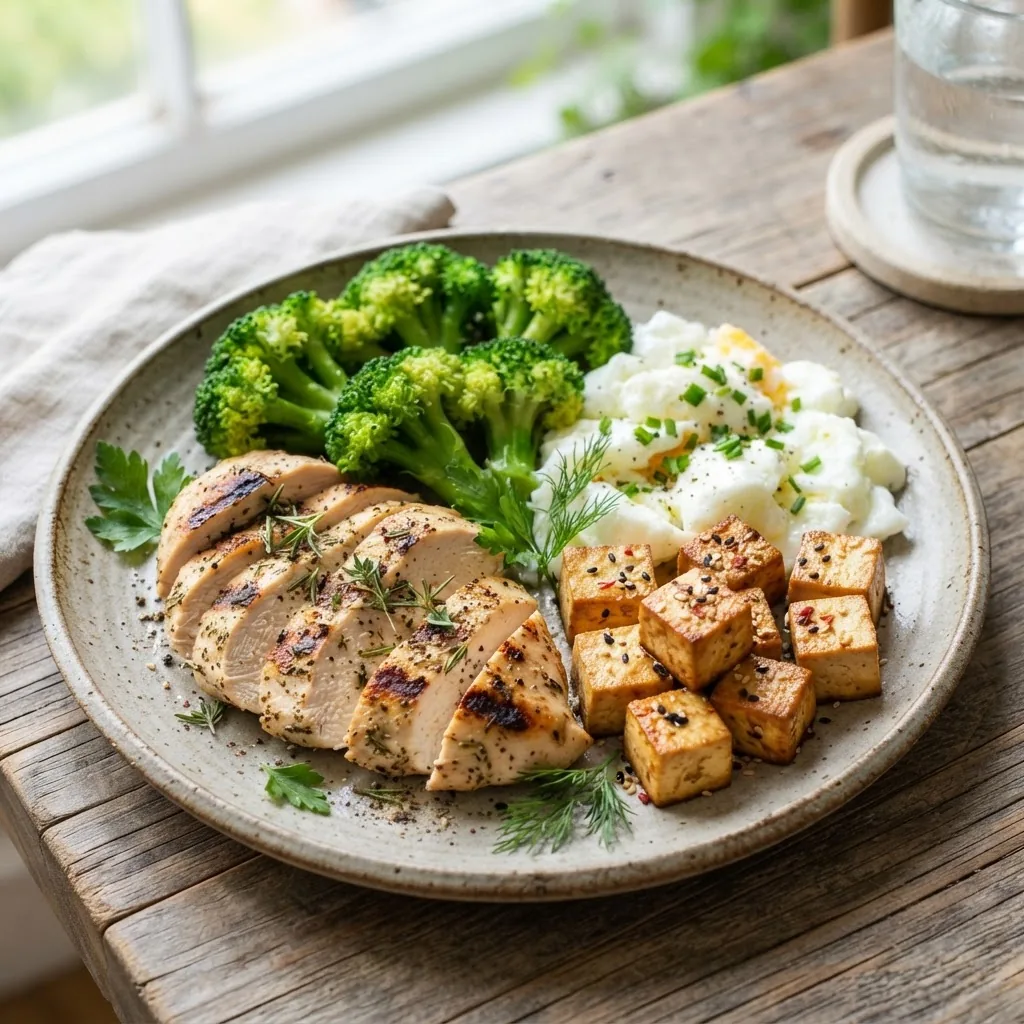
- Make protein the plate anchor: 3–4 oz (85–113 g) of skinless chicken, white fish, or a cup of nonfat Greek yogurt at each meal provides concentrated protein without excess calories.
- Fill half the plate with vegetables for fiber and volume to enhance satiety without many calories.
- Use minimal oil for cooking; when adding fat for flavor and nutrient absorption, choose heart-healthy options—see healthy cooking oils for recommendations.
Texas grocery example: At a H-E-B or Kroger in Texas, prioritize skinless chicken breasts at the meat counter, canned tuna in water from the shelf, nonfat Greek yogurt in refrigerated aisles, and firm tofu in the refrigerated vegetarian section—these are widely stocked and budget-friendly.
Snack ideas that maximize ratio:
- Low-fat cottage cheese with sliced cucumber
- Egg-white omelet with spinach and tomatoes
- Shrimp cocktail with a lemon-vinegar dip
- Nonfat Greek yogurt with cinnamon and a few berries
Portion sizing and calorie control: Use a kitchen scale and measure portions to ensure accuracy—monitor servings in 25–50 kcal increments for tight control. Food portion sizing and calorie control are the operational tools that let a high protein per calorie plan produce results.
Shopping checklist for Texans:
- Buy family packs of skinless chicken breast and portion into 4–6 oz servings for freezing.
- Stock canned tuna, frozen white fish fillets, and bulk egg whites for convenience.
- Choose plant-based high protein foods like seitan, firm tofu, and lentils from specialty or mainstream aisles.
- Look for “nonfat” or “low-fat” labels to maximize protein to calorie ratio in dairy.
healthy cooking oils help you maintain macronutrient balance while keeping added calories minimal.
Transition: Before you change your diet, review common myths and clear up practical questions about protein-focused eating.
Common Myths and FAQs About Protein to Calorie Ratio and Weight Loss?
Answer: Myths include believing all high-protein foods are calorie-neutral or that plant proteins are always inferior—evidence shows quality, portion sizing, and fat content determine outcomes; protein-focused eating is effective but not a magic bullet.
Myth-busting notes:
- Myth: More protein always equals faster weight loss. Reality: Protein helps, but total calorie deficit and macronutrient balance determine fat loss (source: peer-reviewed nutrition journals).
- Myth: Plant-based proteins can’t meet needs. Reality: With variety and pairing, plant-based high protein foods can meet amino acid needs; use seitan, soy, and legumes strategically.
- Myth: Fat must be eliminated. Reality: Low fat improves protein/calorie ratio, but small amounts of healthy fats support nutrient absorption and sustainability.
Limitations: Protein to calorie ratio is one useful metric among many (taste, cost, accessibility, and micronutrient content). Individual calorie and protein needs vary by age, sex, and activity—consult a registered dietitian or medical professional for personalized advice (source: Academy of Nutrition and Dietetics guidelines).
Transition: Below are concise answers to common user questions to support quick decisions.