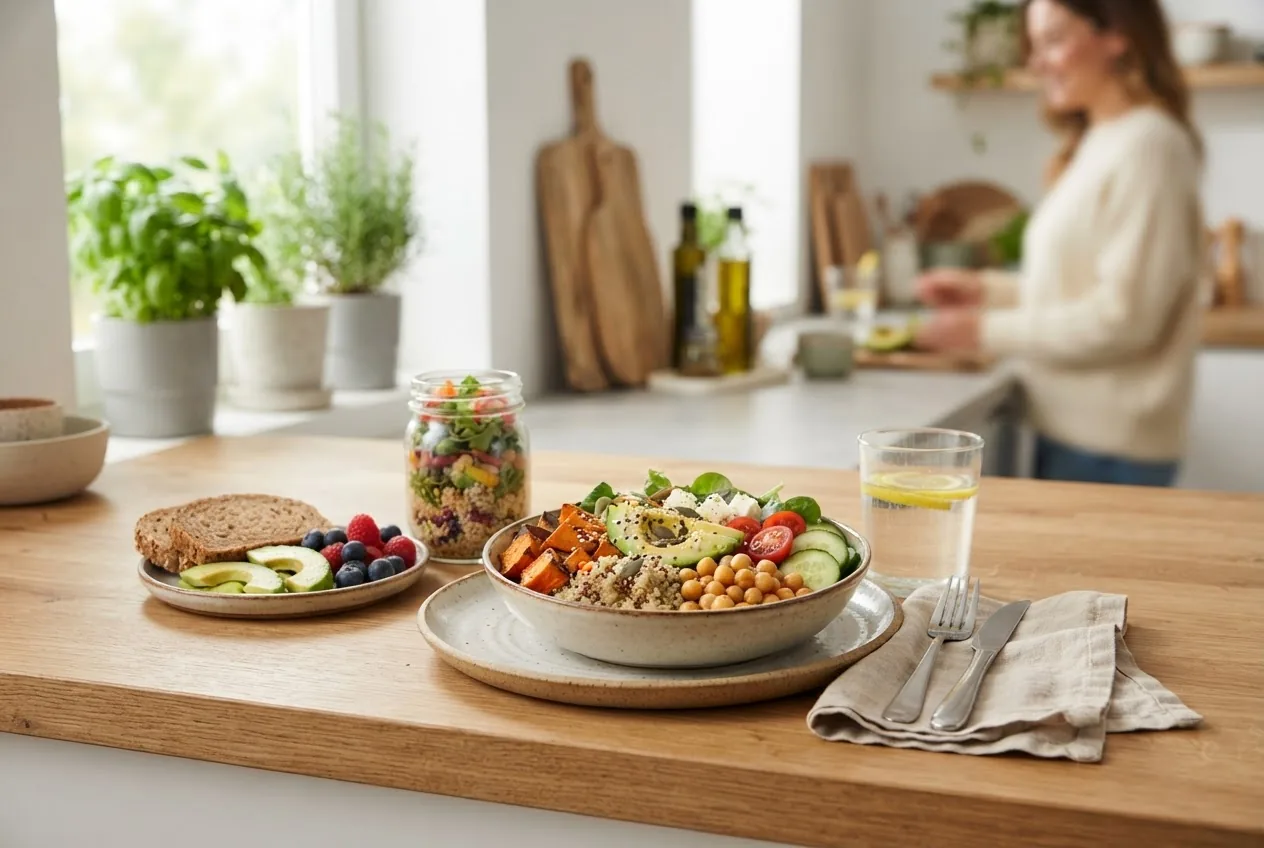
Lunch ideas: By the end you’ll have a ready-to-use weekly lunch plan, ten fast recipes for home and work, and a repeatable meal-prep routine you can complete in 90 minutes on a Sunday. Skill level: beginner to confident home cook; no specialist equipment required.
This hands-on guide tells you exactly what to buy, how long steps take, and which containers and settings to use so your midday meals are simple, healthy, and Texas-friendly.
Before you start
- Essential tools: insulated lunch bag, 3-4 BPA-free meal prep containers (24–32 oz), glass mason jars (16–24 oz), digital food thermometer, sharp chef’s knife, cutting board, medium nonstick skillet, sheet pan, and a rice cooker or 6-quart Instant Pot.
- Pantry staples: extra-virgin olive oil (2 tbsp/day), low-sodium canned beans (2–3 cans), quinoa or brown rice (2–3 cups dry), whole-grain wraps, nuts/seeds, Dijon mustard, apple cider vinegar.
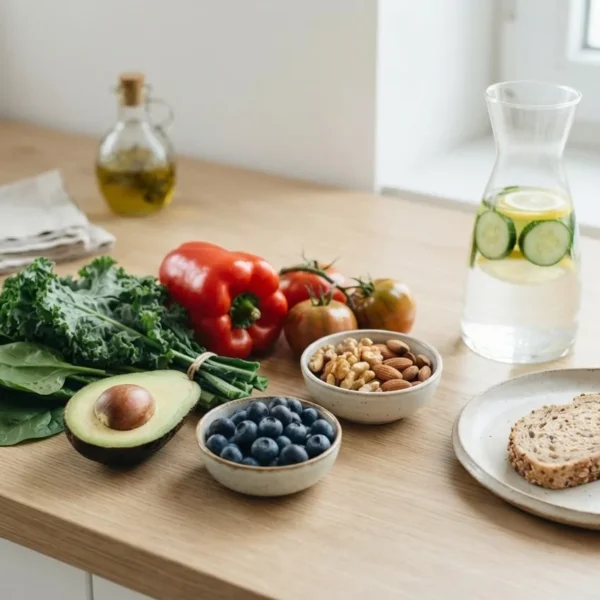
- Fresh basics: 1–2 heads of leafy greens, 2–3 seasonal Texas fruits (apples, peaches, or pears depending on season), 2 chicken breasts, 1 block of firm tofu, cherry tomatoes, cucumber.
- Time blocks: plan one 90-minute batch-cook session and two 15-minute midweek top-ups.
-
Define your goals and boundaries (10 minutes)
Decide what “easy” means for you: no-cook, 10–15 minute reheats, or 30-minute stovetop builds. Note any allergies, refrigeration limits at work, and whether you need microwave-friendly meals. This step prevents wasted shopping and leftover tosses.
-
Shop with purpose (30–45 minutes)
Use a single-sheet shopping list organized by fridge, produce, pantry, and proteins. Buy a mix of whole foods and a couple of convenience items (rotisserie chicken or pre-cooked grains) to save 20–30 minutes later.
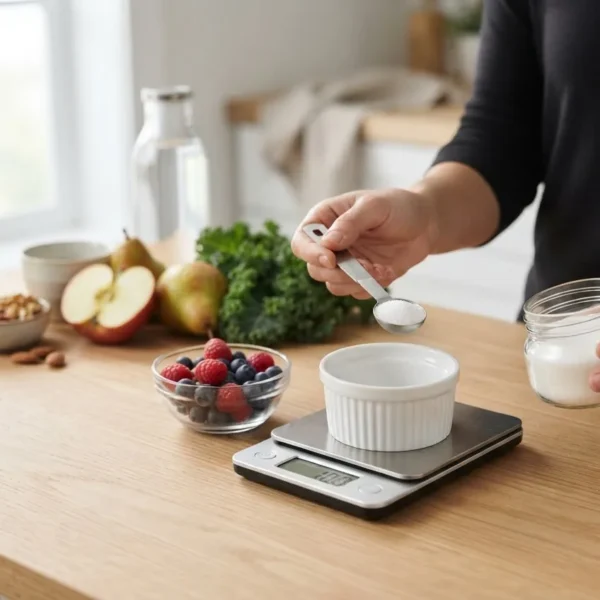
Example: for a week of lunches for one working adult, buy 2 boneless chicken breasts (12–14 oz each), 1 lb extra-firm tofu, 1 bag quinoa (16 oz), 4 apples, 1 pint cherry tomatoes, 1 head romaine, 1 bunch cilantro, 1 jar of low-sodium black beans.
-
Batch cook base components (40 minutes)
Cook grains, roast or grill protein, and chop durable veggies in one session. Set oven to 425°F, roast chicken breasts (20–22 minutes) or seasoned tofu cubes (18–20 minutes). Cook quinoa 1 cup dry to 3 cups cooked (12–15 minutes simmer). Cooling: move cooked food into shallow containers to cool to under 70°F within 2 hours.
-
Assemble five lunch templates (20 minutes)
Create modular lunches that mix and match bases, proteins, and dressings so you can vary flavors fast. Label containers with the day of week and reheating instructions if needed.
-
Pack and store correctly (10 minutes)
Use insulated bags with small frozen gel packs for a 4–6 hour safe window; refrigerate at <40°F when possible. Reheat proteins to 165°F with a digital thermometer. Discard perishable foods left above 40°F for more than 2 hours (1 hour above 90°F).
yummiest healthy recipes guide
Why Healthy and Easy Lunch Ideas Matter
A practical midday meal fuels focus, stabilizes blood sugar, and reduces late-afternoon snacking. A balanced lunch—combining protein, fiber, and healthy fats—supports steady energy for the rest of the workday. According to a 2024 industry report on workplace nutrition, adults who plan lunches report 23% fewer unhealthy snacking episodes weekday afternoons.
The American Heart Association emphasizes balanced meals with vegetables, lean protein, and whole grains for heart health; pairing that guidance with simple, quick recipes makes sustained good habits realistic.
Practical benefits: saving money, controlling ingredients, and feeling more in control of midday energy. This is especially useful for Texans juggling long commutes, variable office kitchen access, or hot summers that demand hydrating choices.
Transition: With the why clear, next we cover the essentials of what a balanced lunch contains.
Key Nutritional Components for a Balanced Lunch
A balanced lunch includes predictable macronutrients: protein, carbohydrates (preferably complex), and healthy fats. Fiber and vitamins from vegetables and fruit add satiety and micronutrient density. Hydration matters; include a water bottle or a hydrating fruit. Portion control keeps total intake appropriate without counting calories.
Macronutrients explained: Protein (20–30 g per meal for most adults) supports cognition and muscle maintenance; include lean meats, fish, legumes, dairy, or tofu. Carbohydrates (30–60 g) from whole grains, starchy vegetables, or legumes provide sustained fuel. Fats (10–20 g) from olive oil, avocado, nuts, or seeds help nutrient absorption and fullness.
Fiber target: aim for 6–10 grams per lunch from vegetables, beans, or whole grains. Micronutrients: a varied plate with dark leafy greens, colorful vegetables, and a fruit delivers vitamins A, C, potassium, and folate.
Use USDA MyPlate principles for visual portioning: half the plate vegetables and fruit, one-quarter lean protein, and one-quarter grains. For a technical reference, see the USDA guidance below.
U.S. Department of Agriculture (MyPlate) nutrition guidelines provide portion visuals and simple frameworks for adults with varied activity levels.
Hydration and timing: drink 8–12 oz of water with your lunch to help digestion and avoid mistaking thirst for hunger. Caveats: individuals with specific dietary needs, diabetes, or renal issues should consult a clinician for tailored macronutrient targets.
Transition: Now that you know the building blocks, here are quick home recipes and templates you can make tonight.
Quick and Easy Lunch Ideas to Make at Home
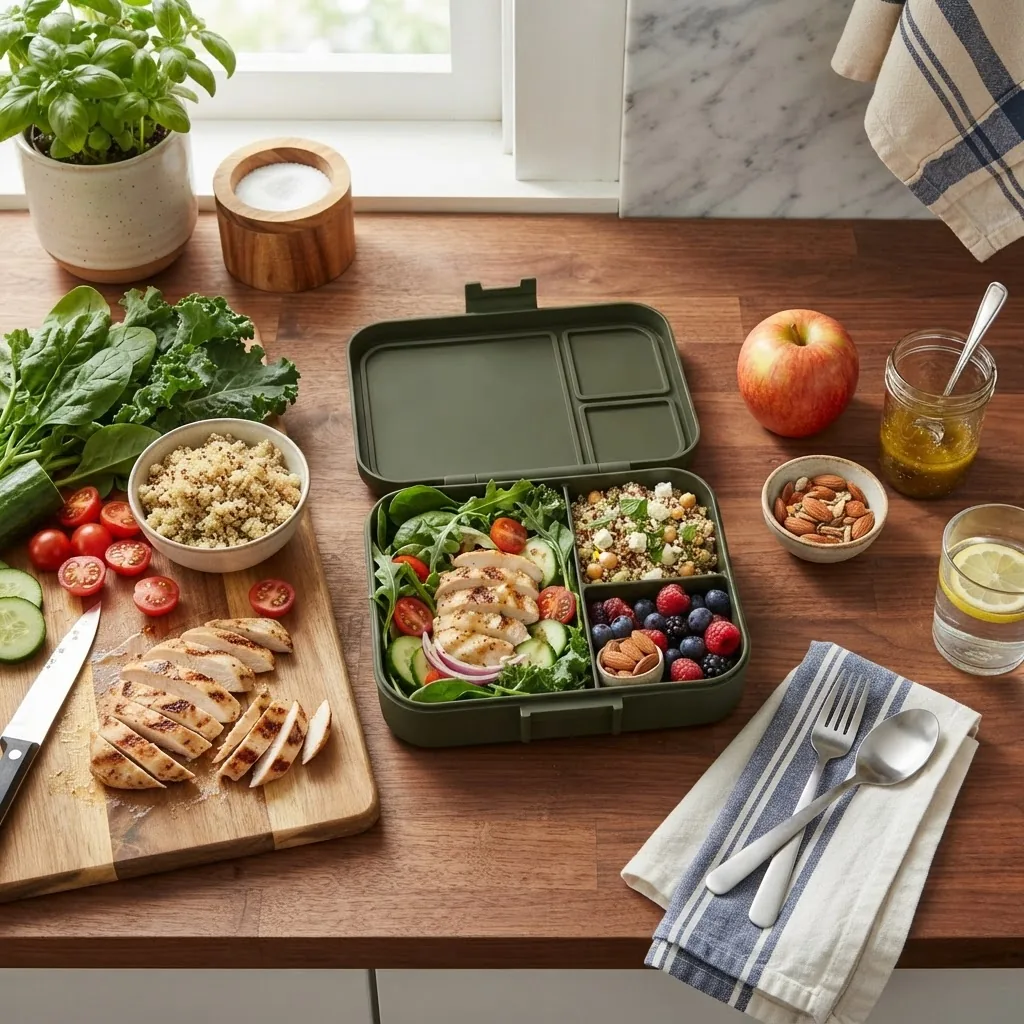
- One-bowl Quinoa Power Lunch — Cook 1 cup quinoa yields ~3 cups cooked; top 1 cup quinoa with 4 oz grilled chicken, 1 cup baby spinach, 1/4 cup cherry tomatoes, 1 tbsp pumpkin seeds, and 1 tbsp olive oil + lemon. Ready in 20 minutes if quinoa is pre-cooked.
- Tex-Mediterranean Mason Jar Salad — Layer dressing (1 tbsp) on jar bottom, then cucumbers, chickpeas (1/2 cup), roasted peppers, 2 oz feta, and 2 cups mixed greens. Shake when ready. Makes 2 lunches; lasts 3–4 days refrigerated.
- Sheet-Pan Fajita Bowl — Roast sliced bell peppers and onions with 8 oz sliced chicken, 1 tsp chili powder, 20 minutes at 425°F. Divide over 2 cups brown rice. Add avocado (1/4 each) when serving.
- Open-Faced Avocado + Turkey Wrap — Whole-grain toast or wrap, 3 oz deli turkey, mashed 1/2 avocado, arugula, and hot sauce. No reheating needed; assemble in 5 minutes.
- Greek Yogurt Protein Plate — 1 cup plain Greek yogurt, 1/4 cup granola, 1/3 cup berries, 1 tbsp chopped almonds, drizzle honey. Portable and refrigerator-stable for work with a cold pack.
- Black Bean & Corn Salad — 1 can drained black beans, 1 cup frozen corn (thawed), 1/2 cup diced red pepper, cilantro, lime juice, and 1 tbsp olive oil. Make 3 servings; lasts 3–4 days refrigerated.
- Quick Pesto Pasta with Cherry Tomatoes — Toss 1.5 cups cooked whole-grain pasta with 2 tbsp jarred pesto, 1 cup halved cherry tomatoes, 2 oz shredded rotisserie chicken. Ready in 10 minutes.
- Tofu Stir-Fry Bento — Sear 6 oz firm tofu cubes (8–10 minutes) with 2 cups mixed vegetables, 1 tbsp low-sodium soy sauce, serve over 3/4 cup cooked brown rice.
- Loaded Sweet Potato — Bake medium sweet potato 45–50 minutes at 400°F or microwave 6–8 minutes. Top with 1/2 cup black beans, salsa, and 1 tbsp Greek yogurt.
- Ham, Apple & Cheddar Salad — 3 oz sliced lean ham, 1 cup mixed greens, 1/2 apple sliced, 1 oz cheddar, 1 tbsp walnuts, vinaigrette. Assembles in 5 minutes.
Trade-offs note: pre-cooked grains and rotisserie chicken save time but can raise cost and sodium—swap low-sodium options and cook your own when you can. For plant-based variations or dinner crossovers, see the following resources.
quick vegetarian dinner recipes
Transition: Next we adapt these for work and on-the-go packing constraints.
Healthy Lunch Ideas for Work and On-the-Go
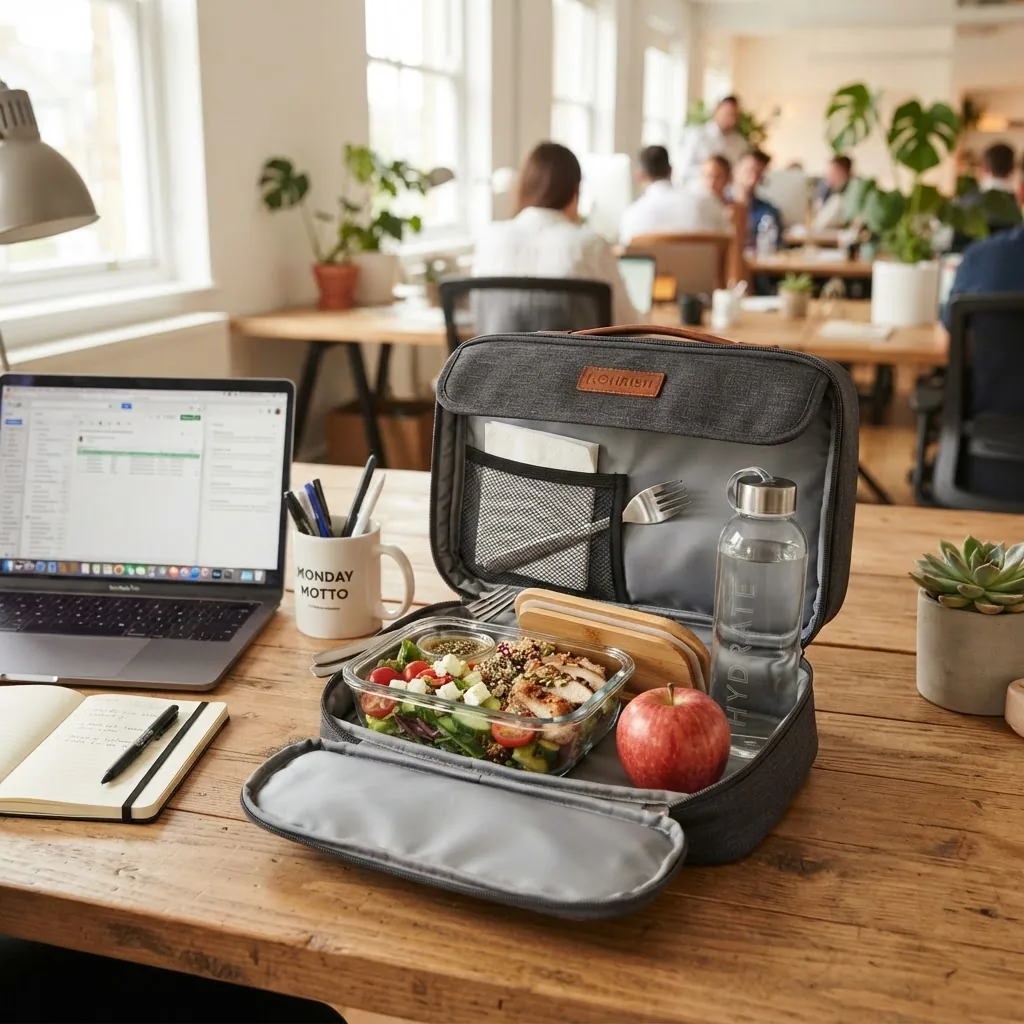
- Chilled Grain Salad Jar — Layer 1/2 cup cooked farro, 1/3 cup edamame, 1/4 cup chopped cucumber, 1 tbsp vinaigrette. Keeps chilled 4–6 hours with gel pack.
- Cold Noodle Box — 1.5 cups cooked soba, 3 oz shredded rotisserie chicken, julienned carrots, sesame dressing. Eat cold; no reheating needed.
- Protein-Packed Snack Bento — 2 hard-boiled eggs, 1/4 cup hummus, veggie sticks, 1 small whole-grain pita. Assembly: 5–7 minutes.
- Salad with Hot Protein on the Side — Keep dressing separate. Pack chilled salad and a thermos of 4 oz warm grilled salmon; combine at lunch.
- Wrap and Roll — Whole-grain wrap, 3 oz turkey, lettuce, shredded carrot, light mayo. Wrap tight in foil to prevent leaks.
- Simple No-Cook Mezze Box — Olives, cherry tomatoes, sliced cucumber, feta, and whole-grain crackers. No refrigeration for 3–4 hours in cool weather.
- Mason Jar Overnight Oats (Savory Version) — 1/2 cup oats, 1/2 cup milk, 1/4 cup cottage cheese, chopped scallions, salt. Eat cold for a change from sweet oats.
- Leftovers Smart Pack — Use leftover baked chicken or sheet-pan veggies; portion into 24–32 oz containers with a side salad and dressing on the side.
- Snack-Focused Pack — For light lunchers: Greek yogurt, a small banana, 1 oz mixed nuts, and carrot sticks. Under 10 minutes to assemble.
- Cold Seafood Salad — 3 oz canned tuna in water (drained), 1 tbsp light mayo, celery, lemon, over greens. Portable and high-protein.
Workplace tips: choose leakproof containers, insulated bags, and include a small frozen gel pack if refrigeration is unreliable. For more ideas tuned to office routines, see additional resources below.
Transition: To reliably eat these lunches all week, learn a repeatable meal-prep routine next.
Meal Prep Strategies for Stress-Free Lunches All Week
-
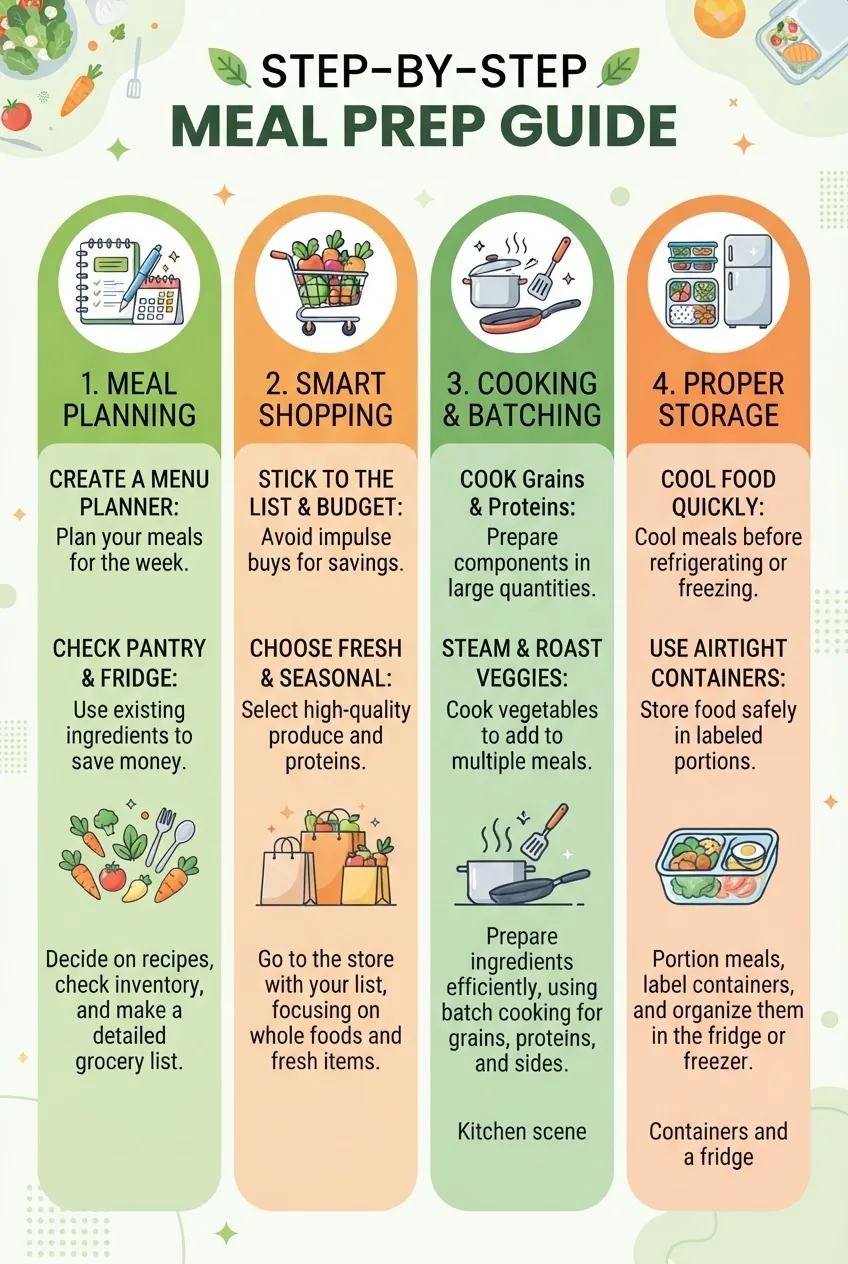
Plan two templates and three proteins (15 minutes)
Choose two meal templates (grain bowl, mason-jar salad) and three proteins that reheated or chilled well (grilled chicken, baked tofu, canned tuna). Write a shopping list based on portions for five lunches: 20–24 oz protein total, 2–3 cups cooked grains, and 8–10 cups mixed vegetables.
-
Batch-cook grains and proteins together (40–45 minutes)
Preheat oven 425°F. Roast 2 boneless skinless chicken breasts (20–22 minutes depending on thickness) and 1 lb cubed tofu (18–20 minutes) on separate sheet pans to avoid cross-contact. Simultaneously cook 1.5 cups dry brown rice (yields ~4.5 cups) in rice cooker (setting: brown rice). Cool components on shallow pans for no more than 90 minutes to reach refrigeration-safe temperature.
-
Portion and label (10–15 minutes)
Divide cooked items into 24–32 oz containers: 1 cup cooked grain + 4 oz protein + 1–1.5 cups vegetables per container. Label with date and reheating instruction (e.g., “Microwave 90 sec—stir—check 165°F”). Use clear lids so you see freshness at a glance.
-
Store strategically (5 minutes)
Place meals intended for midweek consumption (Mon–Wed) at eye level in refrigerator; freeze meals for later in airtight freezer bags for up to 2–3 months. Reheating frozen meals: thaw overnight in the refrigerator, then reheat to 165°F.
-
Midweek refresh (15 minutes)
On Wednesday, prepare a 15-minute refresh: wash extra greens, slice a fresh fruit, and make a quick dressing. Swap one prepped meal for a quick no-cook option to avoid palate fatigue.
Food safety and best practices: always cool hot foods to below 70°F within 2 hours and below 40°F within 4 hours; reheat to 165°F internal temperature. For meal-prep benefits research and frameworks see the Journal of Nutrition for evidence linking consistent meal patterns and improved dietary quality.
Journal of Nutrition offers peer-reviewed studies on meal timing and preparation benefits.
Transition: For local flavor, here’s how to adapt lunches with Texas ingredients.
Incorporating Local Texas Ingredients into Your Lunches
Using seasonal Texas produce keeps lunches fresh, supports local markets, and reduces cost. Spring: asparagus, strawberries, and baby greens. Summer: peaches, tomatoes, okra. Fall: sweet potatoes, pears, squash. Winter: citrus and kale.
Examples of adaptations: swap peaches for apples in salads during July–August, or use Texas-grown corn in black bean salads; add a few sprigs of cilantro from a local farmers’ stand to brighten a grain bowl. Seek sustainably sourced proteins at local butcher shops or choose frozen wild-caught fish when fresh options are limited.
Recipe twist: make a “Texas Ranch Bowl” — 1 cup cooked farro, 4 oz grilled chicken seasoned with 1 tsp chili powder and 1/2 tsp smoked paprika, 1/2 cup roasted corn, 1/2 cup chopped cherry tomatoes, cilantro, and 1 tbsp lime vinaigrette.
Transition: Now we’ll spotlight healthy spins on familiar classics.
Lunch Recipes Spotlight: Healthy Variations on Classic Dishes
| Classic Dish | Healthy Variation | Swap & Why |
|---|---|---|
| Club Sandwich | Open-faced whole-grain toast with turkey, avocado, and tomato | Swap white bread for whole grain, reduce mayo, add avocado for healthy fats and fiber |
| Caesar Salad with Croutons | Romaine + grilled salmon + light Caesar made with Greek yogurt | Use Greek yogurt to reduce saturated fat and increase protein |
| Pasta Alfredo | Whole-wheat pasta with blended cauliflower sauce and sautéed mushrooms | Adds veggies, lowers caloric density, keeps creaminess |
| Fried Rice | Brown rice stir-fry with extra veggies and 1 egg, cooked in 1 tsp oil | Reduce oil, boost veggies and protein |
| Tuna Melt | Tuna on open whole-grain English muffin, light cheese, tomato slices | Reduce cheese, use open-faced format to cut refined carbs |
| Chicken Caesar Wrap | Grilled chicken + kale + lemon-tahini in a whole-grain wrap | Swap romaine for kale for more fiber; tahini gives healthy fats |
For readers tracking calories alongside healthy swaps, you can explore 400 calorie meal ideas as a companion resource.
Transition: Little adjustments make lunches more enjoyable and nutrient-dense—here are practical tips.
Tips for Making Your Lunches More Enjoyable and Nutritious
- Rotate proteins weekly — prevents boredom and spreads micronutrient intake (e.g., chicken week, fish week, plant week).
- Use bright condiments sparingly — salsa, hot sauce, and fresh herbs add flavor without high calories.
- Include one crunchy element — 1 tbsp seeds or 1 oz nuts adds texture and satiety.
- Balance temperature and textures — pair warm grains with chilled salad for contrast that feels satisfying.
- Mindful portions — pack 3/4 cup grains, 4 oz protein, and 1–2 cups vegetables per lunch for most adults.
- Prep a small, tasty dressing — 1 tbsp olive oil + 1 tbsp vinegar lasts the week and prevents overdressing.
- Keep a stash of emergency staples — canned beans, whole-grain crackers, and nut butter keep you fed if plans change.
- Pair lunch with a balanced dinner — explore wholesome dinner options in this resource: 500 calorie dinner recipes.
Transition: Below are concise FAQs to answer the most common lunchtime questions.