

Unhealthy foods are calorie-dense, nutrient-poor items high in added sugars, saturated fats, trans fats, and refining; limiting them—especially sugary drinks, fried foods, and processed meats—reduces obesity, heart disease, and metabolic risk and improves long-term health when replaced with whole, nutrient-dense choices.
Understanding Unhealthy Foods: What Are They and Why Limit Them?
Answer: Unhealthy foods deliver many calories with few vitamins, minerals, fiber, or beneficial fats; they promote weight gain, raise LDL cholesterol and inflammation, and increase risk for heart disease, stroke and metabolic disorders when consumed frequently.
Unhealthy foods: items high in added sugars, saturated fats, trans fats, refined grains, and sodium, and low in essential nutrients (vitamins, minerals, fiber).
Unhealthy foods are defined by nutrition quality and calorie density rather than single ingredients: a product that supplies lots of energy (kcal) per bite but few micronutrients or fiber is nutrient-poor. Calorie density refers to calories per gram; energy-dense foods make it easier to exceed daily needs without satisfying hunger.
Term: Processed foods are foods altered from their natural state for safety or convenience; ultra-processed refers to industrial formulations with additives, flavorings, and little intact whole food.
According to a 2023 national nutrition survey report, diets high in processed, sugary, and fried foods are associated with higher rates of obesity and heart disease in U.S. adults (source: government nutrition survey report).
Health impacts in concise data points:
- Higher intake of added sugar and saturated fat correlates with increased cardiovascular risk (According to a 2023 American Heart Association advisory).
- Diets heavy in ultra-processed foods are linked to higher obesity prevalence (According to a 2022 epidemiological analysis report).
- Excess sodium and processed meats increase hypertension and colorectal cancer risks (According to a 2021 national health dataset analysis).
Transition: With that definition and quick evidence, next is a concrete junk food list so you can spot common offenders at a glance.
The Junk Food List: Common Unhealthy Foods to Avoid or Limit
Answer: The most common junk foods to avoid or limit are sugary drinks and snacks, fried fast foods, processed meats, sweet baked goods, candy, chips, and many ready-to-eat ultra-processed meals because they are high in added sugar, saturated and trans fats, sodium, and refined carbs.
-
Sugary drinks (soda, sweetened teas, energy drinks):
High in added sugar and liquid calories that don’t satiate; a single 12-oz soda can exceed the daily recommended free sugar limit for many adults.
-
Packaged sweets and candy:
Concentrated sources of added sugars and calories with minimal nutrients or fiber.
-
Fast-food fried items (fries, fried chicken, breaded sandwiches):
Often high in saturated and trans fats, salt, and refined carbs; frying raises calorie density and promotes post-meal insulin spikes when combined with starches.
-
Processed meats (hot dogs, bacon, deli meats):
Linked to higher cardiovascular and certain cancer risks, and frequently high in sodium and saturated fat.
-
Sweet baked goods (donuts, pastries, cakes):
Contain added sugars, refined flour, and often trans fats from partially hydrogenated oils or high amounts of butter and shortening.
-
Chips and savory packaged snacks:
Calorie-dense, often made from refined starches or oils, with high sodium and little satiety value.
-
Ice cream and sugary frozen desserts:
Concentrated dairy fat and sugar; portion control is often poor in single-serve tubs shared at home.
-
Instant noodles and boxed macaroni-and-cheese:
Ultra-processed, high in refined carbs, sodium, and often made with powdered fats and flavor enhancers.
-
Sweetened breakfast cereals and granola bars:
Marketed as “healthy” but many are high in added sugar and refined grains; read labels for sugar grams per serving.
-
Commercial salad dressings, sauces, and condiments:
Often hidden sources of sugar, refined oils, and sodium that turn otherwise healthy meals into high-calorie options.
Each junk food type contributes through one or several mechanisms: added sugars supplying empty calories, saturated/trans fats promoting dyslipidemia, refined carbs flooding insulin, and sodium raising blood pressure.
Practical quick-check: if a product’s ingredient list starts with sugar, refined flour, or an unrecognizable chemical, treat it as an occasional food, not a daily staple.
Transition: below we compare the worst offenders to help answer which single food category is the unhealthiest and why people debate it.
What Is the Unhealthiest Food? Insights and Controversies
Answer: There is no single unhealthiest food for everyone; top candidates are items with high added sugar, saturated fat, and industrial trans fats — such as sugared sodas, deep-fried fast foods, and partially hydrogenated snacks — because they combine rapid caloric load and harmful biochemical effects.
Debate exists because “unhealthiest” depends on quantity, frequency, and an individual’s baseline health; an occasional slice of pie differs from daily multiple sodas.
Term: Trans fats are industrially produced fats formed by partial hydrogenation; they raise LDL (“bad”) cholesterol and lower HDL (“good”) cholesterol and are considered highly harmful even in small amounts.
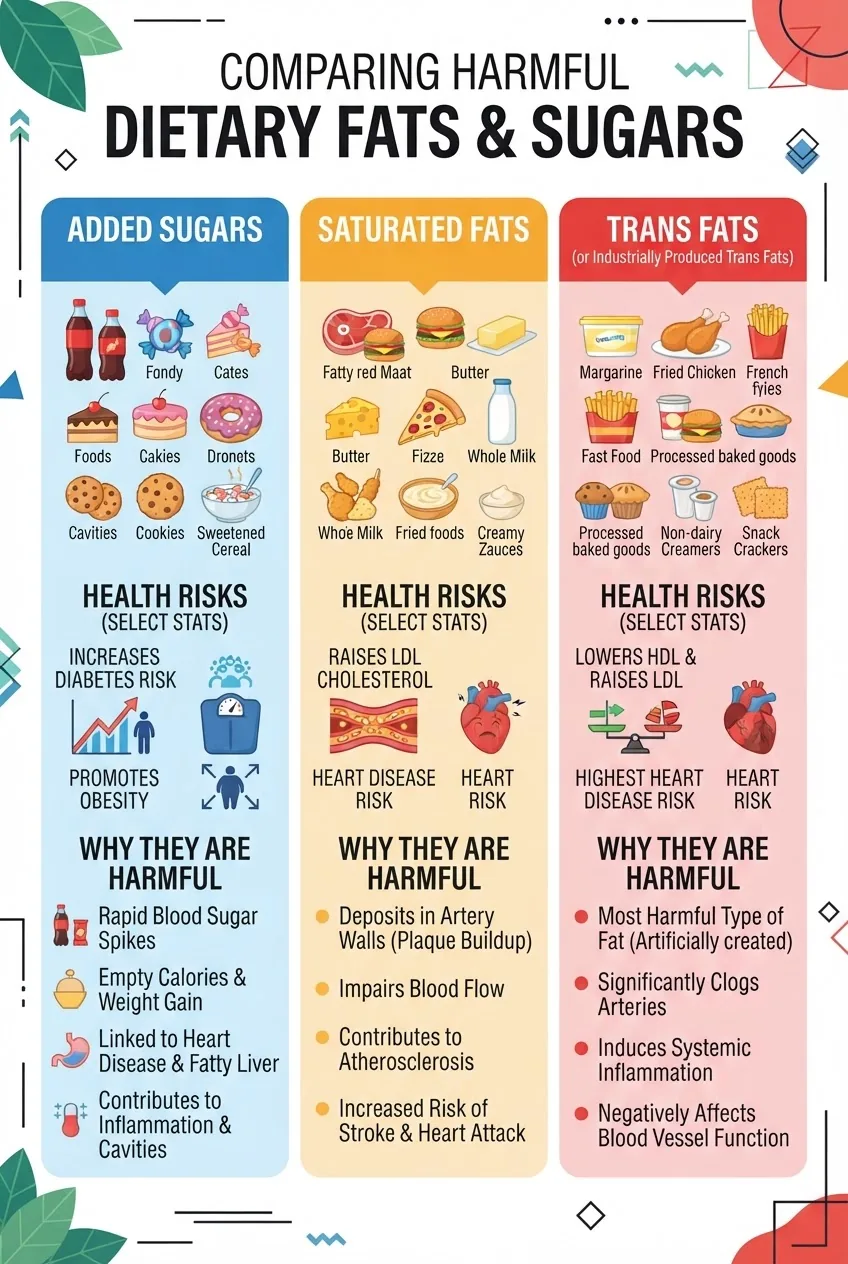
| Food Category | Key Features | Primary Health Risks |
|---|---|---|
| Added-sugar foods (sodas, candy, sweet baked goods) | High in fructose/sucrose, little fiber, rapid absorption | Weight gain, dental decay, increased triglycerides |
| Saturated fat-rich foods (fatty cuts, full-fat dairy, butter) | High in saturated fatty acids, increases LDL | Elevated LDL cholesterol, greater cardiovascular risk |
| Trans fat-containing foods (some margarine, fried fast foods) | Industrial fats, inflammatory effects | Higher heart disease risk, adverse lipid profile |
| Ultra-processed meals (ready meals, instant noodles) | High sodium, additives, refined carbs | Obesity, hypertension, metabolic syndrome |
To illustrate the controversy: some experts single out sugar-sweetened beverages as the worst population-level driver because they add calories without satiety; others emphasize trans fats because of their direct causal link to cardiovascular deaths. For biochemical nuance, see the 124 Blood Sugar Level Guide and Diabetes Count Overview on how sugar excess interacts with metabolic pathways for disease risk.
According to a 2024 public health analysis, high consumption of sugar-sweetened beverages and ultra-processed foods predicted larger increases in population-level obesity rates (source type: 2024 public health analysis report).
Transition: understanding why added sugar and saturated fat change biology explains much of the “unhealthiest” debate — the next section dives into mechanisms and practical guidance around sugar types and fats.
How Added Sugar and Saturated Fat Make Foods Unhealthy?
Answer: Added sugars and saturated fats increase disease risk by promoting excess calorie intake, insulin resistance, raised LDL cholesterol, and inflammation; distinguishing added vs natural sugars and choosing healthier fats reduces these harms.
Added sugar: sugars added during processing or preparation; natural sugar: sugars occurring naturally in whole foods like fruit and milk.
Refer to the Natural vs Added Sugar Guide with Health and Nutrition Facts for an in-depth breakdown of sugar types and label reading.
The metabolic mechanics:
- Added sugars (especially fructose) are rapidly absorbed and metabolized in the liver, promoting de novo lipogenesis (fat synthesis) and raising triglycerides — pathways linked to fatty liver and dyslipidemia (According to a 2022 metabolic research review).
- Saturated fats raise LDL cholesterol by affecting hepatic LDL receptor activity and lipoprotein production; chronic elevation in LDL accelerates atherosclerosis (According to a 2023 cardiology advisory from the American Heart Association American Heart Association).
- Trans fats cause inflammation and adverse lipid changes even at low intake and are associated with higher coronary heart disease risk (According to a 2021 dietary-fat consensus report).
Practical label-reading data points:
- Check “Added sugars” grams per serving; the AHA recommends limiting added sugars to no more than 6 tsp (25 g) daily for many women and 9 tsp (38 g) for many men (According to a 2023 American Heart Association guidance).
- Look for saturated fat grams and percent daily value (%DV); lower is better if replacing with unsaturated fats.
- Verify “partially hydrogenated oils” in ingredients to avoid trans fats even where labels claim “0 g trans fat” per serving due to small-serving rounding.
For alternatives and the effects of sweeteners, see a balanced discussion of sugar substitutes and their effects and guidance on best sugar substitutes.
A caution: individual response varies — genetics, activity, and baseline metabolic health shape how added sugar and saturated fat affect a person. Always consult a healthcare professional for tailored advice (disclaimer: individual health circumstances vary).
Transition: now compare healthy and unhealthy choices side-by-side with practical swaps you can make daily.
Healthy and Unhealthy Foods: Making Smarter Choices
Answer: Smarter choices favor whole, minimally processed foods — vegetables, fruits, whole grains, lean proteins, legumes, nuts, seeds, and sources of unsaturated fats — while limiting refined grains, sugary items, and processed meats; swap-focused planning yields immediate benefits.

Term: Nutrient density is the amount of vitamins, minerals, fiber, and beneficial compounds per calorie; nutrient-dense foods deliver more health value per calorie.
| Unhealthy Choice | Healthier Swap | Why it helps |
|---|---|---|
| Soda or energy drinks | Sparkling water with fruit or iced unsweetened tea | Cuts added sugars and empty calories, improves hydration and satiety |
| French fries | Roasted sweet potato wedges or air-fried vegetables | Lower saturated/trans fat, more fiber, and vitamins |
| Packaged snack cakes | Greek yogurt with berries and nuts | Adds protein, fiber, and healthy fats to reduce cravings |
| Processed deli meat sandwich | Grilled turkey or chicken with whole-grain bread and veggies | Lower sodium and saturated fat, more nutrients |
Include targeted swaps that match Texas food culture: replace heavily sauced brisket sandwiches with leaner grilled chicken tacos topped with pico de gallo and avocado, favoring portion-controlled whole grains like corn tortillas and adding beans for fiber.
For foods that actively support fat loss and improved metabolic health, reference the foods that burn belly fat suggestions to complement your swaps.
Transition: after choosing smarter options, knowing what to limit and practical portion guidance helps keep improvements consistent and measurable.
Foods to Limit for Better Health: Practical Guidelines and Portion Tips
Answer: Limit sugary beverages, processed snacks, fried foods, processed meats, and large portions of refined grains; use portion control, frequency rules, and label checks to reduce weekly intake and support weight and metabolic goals.
Practical steps to limit unhealthy foods:
- Set frequency rules: Treat fried fast foods and sugary desserts as once-weekly treats rather than daily staples; batch-cook healthier options to avoid convenience traps.
- Portion control: Use plate method (half nonstarchy vegetables, quarter lean protein, quarter whole grains) and measure packaged foods with a food scale for two weeks to recalibrate serving sizes.
- Label literacy: Compare “per serving” grams of added sugar and saturated fat; avoid items where one serving contains >10% of daily value for saturated fat or >20 g added sugar.
- Swap strategy: Replace one daily sugary item (e.g., morning pastry) with a protein-rich alternative to reduce daily calorie and sugar load.
- Plan for social eating: At restaurants, choose grilled options, request sauces on the side, and split high-calorie sides to halve energy intake per person.
To align sugar-limiting behavior with formal recommendations, review the daily sugar intake guidelines for targets and tracking strategies.
For weight-loss context, limiting high-calorie, low-nutrient foods supports a sustainable calorie deficit for weight loss while preserving nutrition.
Example portions to follow:
- Soda: 0–4 oz per day; ideal replacement: zero.
- Fried entree: limit to one shared small portion per week.
- Sweet dessert: 3–4 oz portion once or twice weekly, not daily.
- Snack chips: 1 oz (about a small handful) when chosen; pair with protein or fiber to reduce overconsumption.
Transition: limiting foods works best when combined with lifestyle habits—meal planning, cooking methods, label-reading and mindful eating—especially within Texas food culture where barbecue and Tex-Mex are common.
Lifestyle and Eating Habits to Support Limiting Unhealthy Foods
Answer: Adopt meal planning, cook at home using healthier methods (grilling, roasting), practice mindful eating, read labels, and adapt regional recipes to be lower in added sugar, saturated fat, and sodium to sustainably limit unhealthy foods.
Real-world Texas case example:
A Houston family swapped twice-weekly fast-food dinners for a weekend grilled salmon taco night using corn tortillas, charred vegetables, and a homemade yogurt-lime sauce, reducing weekly processed meat and fried food intake while keeping familiar flavors.
Meal planning checklist:
- Plan 2–3 protein-centered dinners per week with vegetables and whole grains to reduce reliance on convenience foods.
- Prep snacks (cut veggies, hummus, hard-boiled eggs) to prevent impulse purchases of chips or candy.
- Swap high-sugar condiments for herb-based salsas and avocado sauces to preserve flavor without added sugar.
Nutrition label walkthrough (step-by-step):
- Start with serving size — confirm how many servings you’d actually eat.
- Check calories per serving and multiply if you plan to eat multiple servings.
- Scan “Added sugars” grams and total sugar; prefer items with ≤5 g added sugar per serving for everyday foods.
- Review saturated fat grams and %DV; aim for foods contributing less than 10% of calories from saturated fat daily (Refer to USDA and AHA frameworks: USDA Dietary Guidelines, American Heart Association).
- Check ingredient list for partially hydrogenated oils or long lists of chemical additives.
If you want complementary strategies beyond food choices, consider exploring natural remedies for diabetes alongside lifestyle changes, and consult healthcare providers to ensure safety.
Transition: the final section summarizes key takeaways and encourages a stepwise plan you can start this week.
Conclusion
Answer: Limit foods high in added sugars, saturated and trans fats, and refined starches; prioritize whole foods and practical swaps, practice portion control, read labels, and adopt sustainable meal and lifestyle habits to reduce disease risk and improve health.
Key takeaways:
- Focus on nutrient density and reduce calorie-dense, nutrient-poor items.
- Limit sugary drinks, fried fast foods, processed meats, and ultra-processed ready meals.
- Use portion control, frequency rules, and label literacy to make measurable progress.
- Adapt local favorites with healthier techniques to maintain cultural food enjoyment.
For further reading and targeted guides on sugar, fats, and calorie strategies, explore our related guides linked throughout this article and consult a registered dietitian for personalized plans. Start today by swapping one high-sugar or high-saturated-fat item for a whole-food alternative at your next meal.