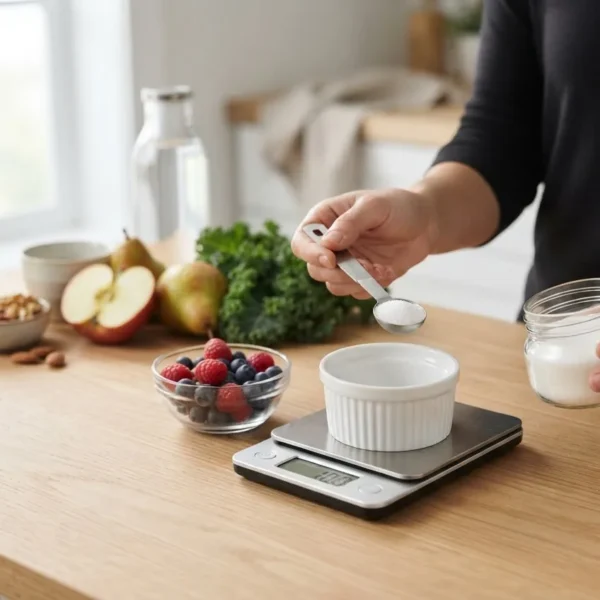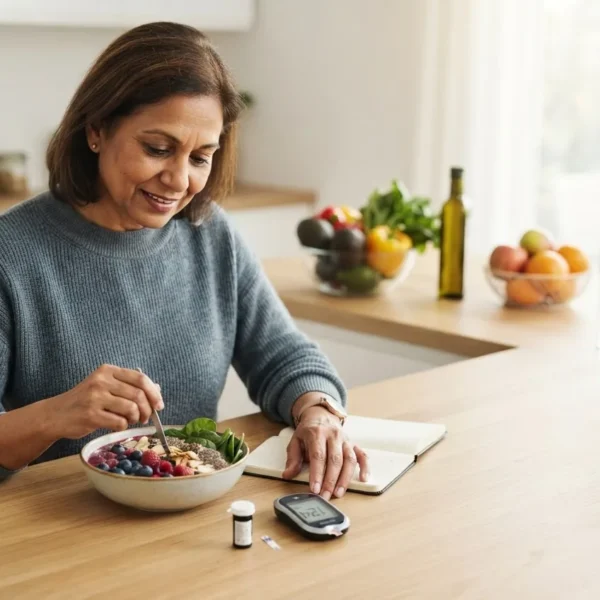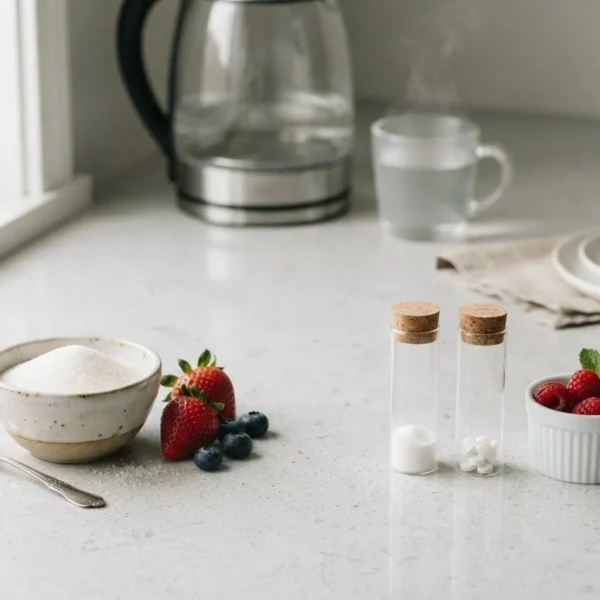
The best sugar substitute depends on your goal: for lowest blood sugar impact and few calories choose erythritol or stevia; for all‑purpose baking choose erythritol blends; for minimal processing and natural taste choose small amounts of raw honey or maple when not managing blood sugar. Experiment responsibly by use case.
Introduction to Sugar Substitutes
Straight answer: Sugar substitutes are ingredients that replace table sugar (sucrose) to provide sweetness with fewer calories, lower glycemic effect, or different functional properties for cooking and beverages.
Term: Sugar substitute — an ingredient used in place of sucrose to sweeten food or drink, ranging from natural plant extracts to synthetic high-intensity sweeteners.
This section explains why people choose sugar replacer options and how to weigh natural vs artificial sweeteners. Use the Natural vs Added Sugar Guide with Health and Nutrition Facts as a foundational resource on added sugar concepts.
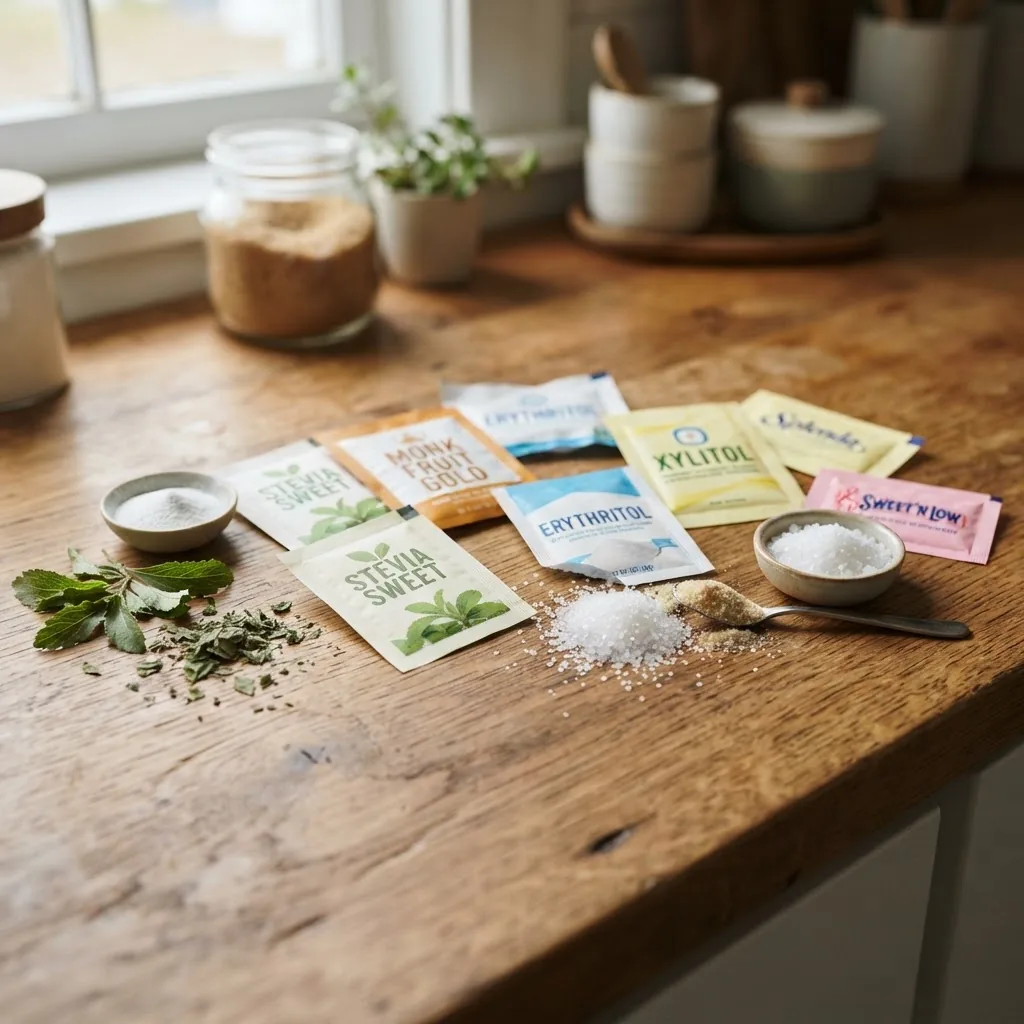
Common reasons to replace sugar include reducing calories, managing blood glucose, lowering dental risk, limiting added sugar intake, and meeting diet preferences (keto, low-carb). Substitutes vary by sweetness intensity, calorie content, glycemic index, and cooking performance.
Practical everyday examples: use natural sweeteners when you want a more “sugar-like” flavor in coffee; use high-intensity artificial sweeteners for beverages and low-calorie packaged foods; use sugar alcohols and erythritol blends for baking where bulk and browning matter.
Transition: next we quantify the health reasons people swap sugar and the data behind those choices.
Why Consider Sugar Substitutes for Health?
Straight answer: Replace or reduce sugar to lower excess calorie intake, reduce blood glucose spikes, and decrease long-term risks such as obesity and tooth decay; substitutes offer varied benefits depending on type and use.
Term: Glycemic index — a scale that ranks carbohydrate foods by how much they raise blood glucose within two hours after eating; lower GI indicates a smaller blood-sugar impact.
Stat block
- According to a 2024 industry report, global average added sugar consumption remains above WHO recommendations in many high-income countries (per capita intake estimated at 60–80 grams/day).
- According to a 2023 public health survey report, diets high in added sugar are linked to increased obesity and dental caries rates in adults and children.
- According to a 2023 FDA safety report, approved non-nutritive sweeteners have acceptable daily intakes established for safety reviews.
Replacing sugar lowers the energy density of foods and can help with weight management when overall calories are reduced. For people with diabetes or insulin resistance, sugar alternatives that are low GI or non-nutritive help blunt post-meal glucose rises.
Practical trade-offs: many low-calorie sweeteners change taste (aftertaste), and some sugar alcohols cause digestive issues in sensitive people. Evaluate calories, glycemic response, taste, and functionality (baking vs beverages) when choosing a sugar replacement.
For guidance on safe per-day consumption levels, consult the daily sugar intake recommendations and read about the caloric content of sugar.
Transition: next we list and describe the main types of sugar substitutes so you can compare natural and artificial options at a glance.
Types of Sugar Substitutes Explained
Straight answer: Sugar substitutes fall into natural sweeteners (plant extracts, sugar alcohols, and minimally processed sweeteners) and artificial or high-intensity sweeteners (synthetic, non-nutritive), each with unique properties for taste, calories, and cooking use.
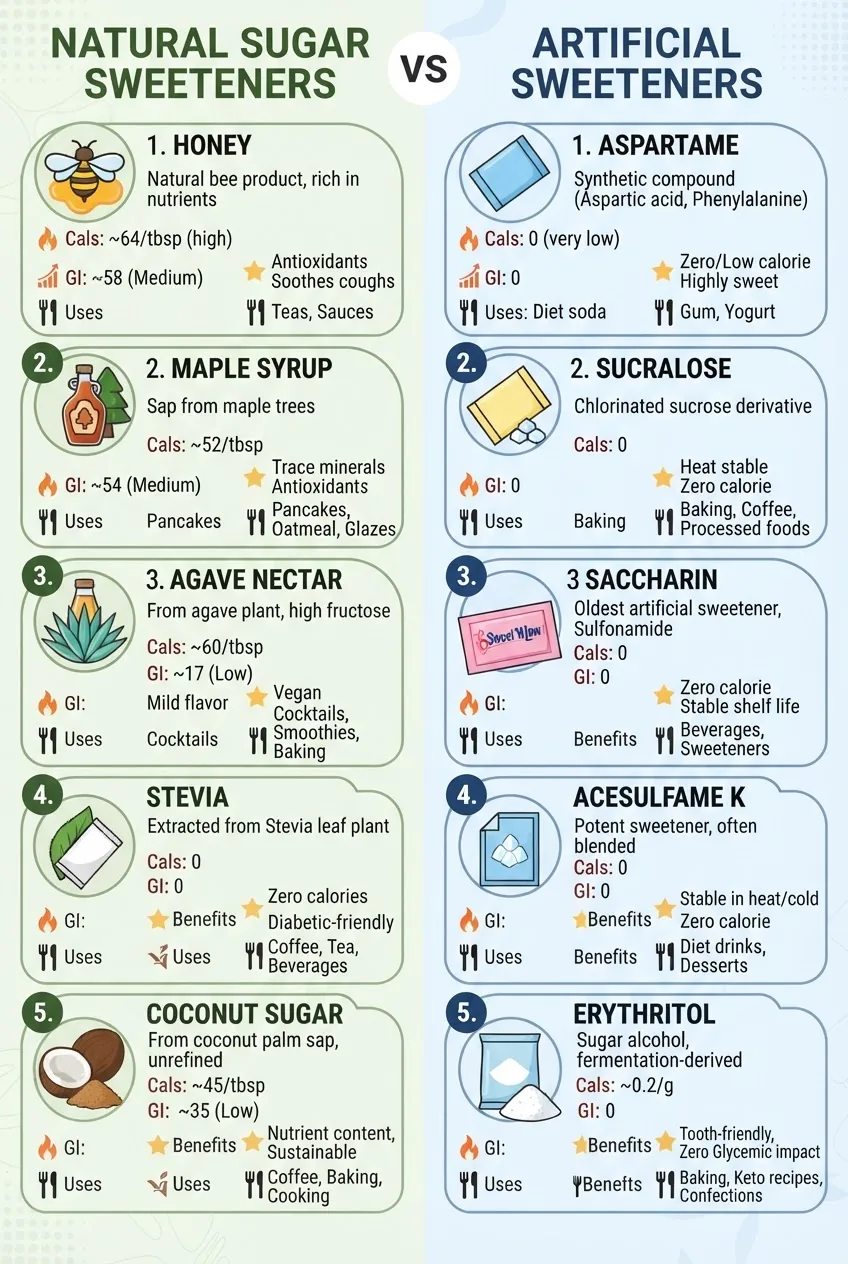
- Natural sugar sweeteners: Plant-based or minimally processed options such as stevia, monk fruit, erythritol, xylitol, and raw honey; tend to have lower calories or lower glycemic impact than sucrose, though some (like honey) contain calories and raise blood sugar.
- Sugar alcohols (polyols): Molecules like erythritol and xylitol provide bulk similar to sugar with fewer calories; erythritol is largely non-glycemic and low-calorie, while xylitol has moderate calories and dental benefits but can cause digestive issues in excess.
- High-intensity natural sweeteners: Stevia and monk fruit extracts are intensely sweet with negligible calories; they are used in small amounts or blended with bulking agents for tabletop and beverage uses.
- Artificial sweeteners: Synthetic non-nutritive sweeteners such as aspartame, sucralose, saccharin, and acesulfame potassium offer high sweetness with near-zero calories; regulatory bodies set acceptable daily intake levels.
- Novel blends and bulkers: Commercial products combine erythritol, oligosaccharides, and high-intensity sweeteners to mimic sugar’s bulk and browning for baking.
Transition: the next two subsections compare specific natural and artificial sweeteners in tabular form so you can quickly scan calories, glycemic index, benefits, and common uses.
Natural Sugar Sweeteners Overview
Straight answer: Natural sweeteners vary from zero-calorie extracts (stevia, monk fruit) to low-calorie sugar alcohols (erythritol) and caloric but less-processed options (raw honey, maple); choose based on glycemic needs and cooking function.
Term: Erythritol — a sugar alcohol with about 0.2 calories per gram that is mostly absorbed but not metabolized, producing minimal blood sugar effect.
| Sweetener | Calories (per tsp) | Approx Glycemic Impact | Benefits | Common Uses |
|---|---|---|---|---|
| Stevia (leaf extract) | ~0 | Negligible | Zero calories, plant-based, ADA-friendly | Drinks, tabletop, some baking blends |
| Monk fruit (luo han guo) | ~0 | Negligible | Natural extract, no calories, clean sweet taste | Beverages, tabletop, blended sweeteners |
| Erythritol | ~0.6 | Very low | Bulk sugar alternative, good baking properties, minimal glycemic effect | Baking, cooking, tabletop blends |
| Xylitol | ~2.4 | Low–moderate | Dental benefits, sugar-like bulk | Gum, baking (moderate use) |
| Raw honey / maple syrup | ~20–25 | Moderate–high | Minimal processing, flavor, antioxidants in small amounts | Cooking, dressings, flavoring when calories allowed |
Notes: stevia and monk fruit are often blended with erythritol or other bulking agents to improve mouthfeel; erythritol provides sugar-like bulk and browning but can cool the mouth slightly in large amounts; xylitol is toxic to pets (especially dogs).
Transition: compare the main artificial sweeteners and safety notes next.
Artificial Sweeteners Overview
Straight answer: Artificial sweeteners (aspartame, sucralose, saccharin, acesulfame-K) are high-intensity, nearly zero-calorie sweeteners used widely in diet beverages and tabletop products; regulatory bodies have evaluated safety but debate about long-term effects continues.
Term: Aspartame — an artificial sweetener about 200 times sweeter than sugar, metabolized into small amounts of phenylalanine, aspartic acid, and methanol; people with phenylketonuria (PKU) must avoid it.
| Sweetener | Sweetness vs Sugar | Calories | Notes / Safety | Common Uses |
|---|---|---|---|---|
| Aspartame | ~200x | ~0 (very low) | Not heat-stable for prolonged baking; avoid in PKU. aspartame vs sugar for a deeper comparison. | Soft drinks, tabletop packets (non-baking) |
| Sucralose | ~600x | ~0 | Heat-stable for baking; some studies examine gut-microbiome effects. FDA has approved for general use. FDA high-intensity sweeteners page. | Baked goods, beverages, tabletop |
| Saccharin | ~300–500x | ~0 | Older safety concerns largely resolved; some metallic aftertaste. | Diet drinks, tabletop |
| Acesulfame potassium (Ace-K) | ~200x | ~0 | Often blended with other sweeteners to mask aftertaste; FDA-approved. | Beverages, baked goods in blends |
Regulatory perspective: the FDA evaluates high-intensity sweeteners and sets acceptable daily intakes; follow those limits and consult professionals if pregnant or with health conditions.
Transition: based on the evidence above, next section interprets research to recommend the healthiest sugar substitutes for common goals.
Healthiest Sugar Substitutes: Evidence-Based Recommendations
Straight answer: For lowest glycemic impact and fewer calories choose stevia, monk fruit, or erythritol; for baking choose erythritol blends; for overall “natural” preference use small amounts of raw honey or maple where appropriate and not diabetic.
Below are numbered recommendations matching different health priorities with the evidence base cited.
- For blood sugar control: Choose non‑nutritive sweeteners (stevia, monk fruit) or erythritol; randomized trials show minimal postprandial glucose effect with these agents (see peer-reviewed analyses). Peer-reviewed review on non-nutritive sweeteners.
- For weight management: Replacing sugar with low-calorie sweeteners can reduce energy intake short-term; evidence shows modest weight improvements when part of a calorie-controlled plan (randomized and cohort evidence).
- For baking and texture: Use erythritol-based blends to maintain bulk and browning; count on a ~1:1 substitution if using commercial erythritol blend products, but expect slight cooling effect.
- For natural preference: Use monk fruit or stevia extracts blended with erythritol; raw honey or maple syrup can be used sparingly for flavor when not managing glucose strictly.
- For dental health: Xylitol reduces cavity risk in topical use (gum, lozenges) but is caloric and toxic to pets; use with caution households with animals.
Evidence caveats: long-term observational studies yield mixed results on artificial sweeteners and cardiometabolic outcomes; randomized trial data are stronger for short‑term metabolic effects. Always review safety statements like “According to a 2023 FDA safety report…” and consult healthcare professionals for personal risks.
Transition: next we recommend specific picks and stepwise guidance for particular needs such as diabetes, coffee, or baking.
Best Sugar Substitutes for Specific Needs
Straight answer: Match substitute to use: stevia/monk fruit for beverages, erythritol blends for baking, erythritol/xylitol for bulk where calories matter, and sucralose/aspartame for low-calorie beverages (consider safety and taste).

How-to steps for common use cases plus quick tips follow.
How to replace sugar in coffee, tea, and beverages
- Choose stevia or monk fruit for near-zero calories and minimal glycemic effect; start with 1/4–1/2 packet and adjust to taste.
- If you prefer taste closer to sugar, use erythritol or erythritol-stevia blends 1:1 for granulated feel; note erythritol can produce a cooling sensation at high doses.
- If using artificial sweeteners like sucralose in hot beverages, be aware of individual taste sensitivity and taste-test small amounts first.
How to replace sugar in baking and cooking
- Use erythritol blends formulated for baking (1:1 replacement) to keep volume and browning similar; expect slightly less moisture retention.
- For recipes requiring fermentation or caramelization, retain some sugar or use partial sugar substitution (e.g., 50% sugar + 50% erythritol) since non-nutritive sweeteners don’t feed yeast.
- Adjust liquid and browning steps: add a small extra egg white or moisture binder if texture is dry, and bake slightly longer to encourage browning when sugar content is reduced.
How to use substitutes for weight loss and calories
- Track overall calories — replacing sugar with a low-calorie sweetener reduces sugar calories but not necessarily overall food palatability or portion size.
- Combine sweetener swaps with a calorie-deficit plan for effective weight loss (see related guides on calorie deficit and meal planning).
- Prefer whole-food strategies (fruit, spices) to reduce reliance on sweeteners where possible.
Quick tips per use case:
- Coffee: start with stevia or monk fruit blends; use erythritol for sugar-like texture.
- Baking: use erythritol blends designed for baking for best texture and browning.
- Diabetes-friendly meals: prioritize non-nutritive sweeteners and sugar alcohols with minimal glycemic effect.
For a focused diabetes resource, consult the best sugar substitute for diabetics.
Transition: next two subsections list best picks specifically for diabetics, separated by natural and artificial options.
Best Natural Sugar for Diabetics
Straight answer: The best natural options for diabetics are stevia, monk fruit, and erythritol because they have negligible glycemic effect; use raw honey and maple only sparingly if blood sugar control is less strict.
Term: Low glycemic index sweeteners — sweeteners that cause little or no rise in blood glucose levels after ingestion.
- Stevia — zero-calorie plant extract that does not raise blood sugar; useful in beverages and many recipes when blended (blood sugar level guidelines).
- Monk fruit — zero-calorie natural extract with minimal glycemic impact; often blended for improved texture.
- Erythritol — a sugar alcohol with negligible blood glucose effect and good bulk properties for baking.
Complement natural sweetener selection with broader strategies such as medication, diet, and lifestyle interventions found in natural remedies for diabetes.
Best Artificial Sweetener for Diabetics
Straight answer: For diabetics seeking artificial options, sucralose and aspartame are commonly used because they provide intense sweetness with negligible carbohydrate load; choose based on taste, heat stability, and personal tolerance.
- Aspartame — very sweet, low calorie, not heat-stable; avoid if you have PKU; suitable for cold beverages and tabletop use.
- Sucralose — heat-stable and suitable for baking; some individuals report aftertaste or prefer blends to mask it.
- Blended formulations — combining Ace-K, sucralose, and other sweeteners often improves taste and reduces aftertaste.
Clinical guidance: consult professional sources like the American Diabetes Association for individualized advice on artificial sweetener use with diabetes.
Transition: next we address common safety concerns and myths to help you weigh risks objectively.
Common Concerns and Myths About Sugar Substitutes
Straight answer: Common myths include that all artificial sweeteners cause cancer, weight gain, or metabolic harm; evidence is nuanced — regulatory bodies approve many sweeteners, but long-term and microbiome effects are areas of ongoing research.
Below are myth vs fact bullets addressing frequent worries and clarifying the evidence with citations.
- Myth: Artificial sweeteners cause cancer in humans. Fact: High-quality regulatory reviews (FDA) and many epidemiological studies have not confirmed causal links at approved intakes; some older animal studies used doses far above human exposure. (Regulatory review summary: FDA).
- Myth: Sugar substitutes always help with weight loss. Fact: Replacing sugar can reduce calories, but weight outcomes depend on overall diet and behavior; some observational studies show associations with weight gain possibly due to compensatory eating, while randomized trials show modest short-term benefits (see peer-reviewed literature). Peer-reviewed review.
- Myth: “Natural” equals safe for everyone. Fact: Natural sweeteners like xylitol can be toxic to pets and raw honey raises blood sugar; natural doesn’t automatically mean safe for specific conditions like diabetes or pregnancy.
- Myth: Sweeteners cause severe gut harm in everyone. Fact: Some studies report microbiome shifts with certain sweeteners at high doses, but human data at normal consumption levels are inconsistent; more research is needed.
- Myth: Sweet n Low (saccharin) is universally dangerous. Fact: Saccharin was once linked to bladder cancer in rodents at very high doses; subsequent reviews and regulations deem it safe at approved intakes.
Safety caveats and recommendations: follow acceptable daily intake guidance, watch for digestive symptoms with sugar alcohols, avoid aspartame if you have PKU, consult your healthcare provider if pregnant, breastfeeding, or managing chronic disease.
Transition: now practical steps to choose and adopt substitutes safely and effectively.
How to Choose and Use Sugar Substitutes Safely and Effectively
Straight answer: Choose based on your primary goal (blood sugar control, calorie reduction, baking performance), start small, monitor symptoms and blood glucose if diabetic, and prefer blends for taste and function in recipes.
Step-by-step tips and best practices follow.
- Define your goal: Weight loss, diabetes management, or simply reducing added sugar — this determines whether to prioritize non-nutritive sweeteners, sugar alcohols, or partial sugar reduction.
- Read labels: Check ingredients for bulking agents, hidden sugars (maltodextrin), and sugar alcohols that may cause GI symptoms.
- Start gradually: Replace sugar in one use-case first (e.g., coffee) to assess taste and tolerance; substitute 25–50% in recipes initially to judge texture.
- Monitor effects: Track blood glucose if diabetic and note digestive responses; keep a food log for two weeks to evaluate appetite and cravings.
- Use blends for baking: For 1:1 baking replacement, choose commercial erythritol blends labeled for baking; otherwise, reduce expectations for browning and moisture.
- Watch doses: Respect acceptable daily intake where applicable and avoid excessive use of sugar alcohols to prevent GI distress.
- Combine with broader diet changes: Replace sugar while increasing fiber, protein, and whole foods for sustainable outcomes.
- Consult professionals: Talk with a registered dietitian or physician for personalized guidance if you have diabetes, pregnancy, or other medical concerns.
Transition: final section synthesizes key takeaways and encourages careful experimentation matching personal goals.
Conclusion: What Is the Best Sugar Substitute for You?
Straight answer: There is no single “best” sugar substitute — choose stevia, monk fruit, or erythritol for lowest glycemic impact; use erythritol blends for baking; consider personal taste, health goals, and safety when deciding.
Summary of key takeaways:
- For blood sugar control: stevia, monk fruit, erythritol.
- For baking bulk and browning: erythritol blends (or partial sugar retention).
- For natural preference: small amounts of raw honey or maple when calories and glucose control allow.
- For beverages: stevia and monk fruit for zero-calorie choices; sucralose/aspartame for flavor preference but check safety notes.
Experiment responsibly: try single substitutions, monitor effects, and consult your healthcare provider for diabetes or pregnancy. For practical next steps, test stevia or monk fruit in beverages and an erythritol blend in a simple baking recipe to compare results.
Call to action: Start by swapping sugar in one daily habit (coffee or cereal) for two weeks, track outcomes, and adjust toward the substitute that matches your taste, health goals, and cooking needs.