Aspartame vs sugar: Aspartame is a low-calorie artificial sweetener about 200 times sweeter than sucrose, while sugar (sucrose) is a caloric carbohydrate that raises blood glucose and provides energy; choosing between them depends on weight goals, blood sugar control, taste, and regulatory guidance.
Introduction to Aspartame and Sugar
Answer: Aspartame and sugar serve the same role — sweetening foods — but differ sharply in calories, chemistry and how the body metabolizes them; understanding natural vs added sugars and artificial sweeteners clarifies when each is a reasonable choice for Texans focused on reducing sugar and saturated fat.
Aspartame: A low‑calorie artificial sweetener composed of two amino acids (aspartic acid and phenylalanine) used in beverages and low‑calorie foods.
Sugar (Sucrose): A disaccharide carbohydrate made of glucose and fructose, common in table sugar, fruit, and many processed foods.

Short practical takeaway: for immediate calorie reduction and blood glucose control, aspartame-containing products can lower calories versus equivalent sugary products; for long-term metabolic health and taste satisfaction, whole-diet changes matter more than any single sweetener.
Definitions help. Term: Artificial sweetener — a non-nutritive compound that provides sweet taste with few or no calories. Term: Added sugar — sugars introduced during processing or preparation, distinct from sugars naturally present in whole foods.
For foundational context on natural sugars vs processed sugars, consult the pillar resource: Natural vs Added Sugar Guide with Health and Nutrition Facts.
This introduction will briefly compare sensory differences, common uses, and real-world Texas contexts. Aspartame is commonly found in diet sodas, chewing gums and tabletop sweeteners; sucrose is in baked goods, syrups and many processed foods. Taste intensity and mouthfeel differ: aspartame is intensely sweet but may lack the bulk and caramelization properties sugar provides in baking.
Texan consumer habits matter: many Texans consume sweetened beverages and barbecued sauces with high sugar loads; swapping sugar for aspartame in beverages reduces calories and sugar intake, but not necessarily the tendency to consume energy-dense foods high in saturated fat.
Transition: next we compare nutritional and chemical composition in detail to make the trade-offs concrete.
Nutritional and Chemical Composition Comparison
Answer: Chemically, aspartame is a small peptide-like molecule providing negligible calories per typical use; sucrose is a carbohydrate delivering ~4 kcal/g with a glycemic effect — the following table summarizes calories, sweetness potency, glycemic response and typical metabolic pathways.
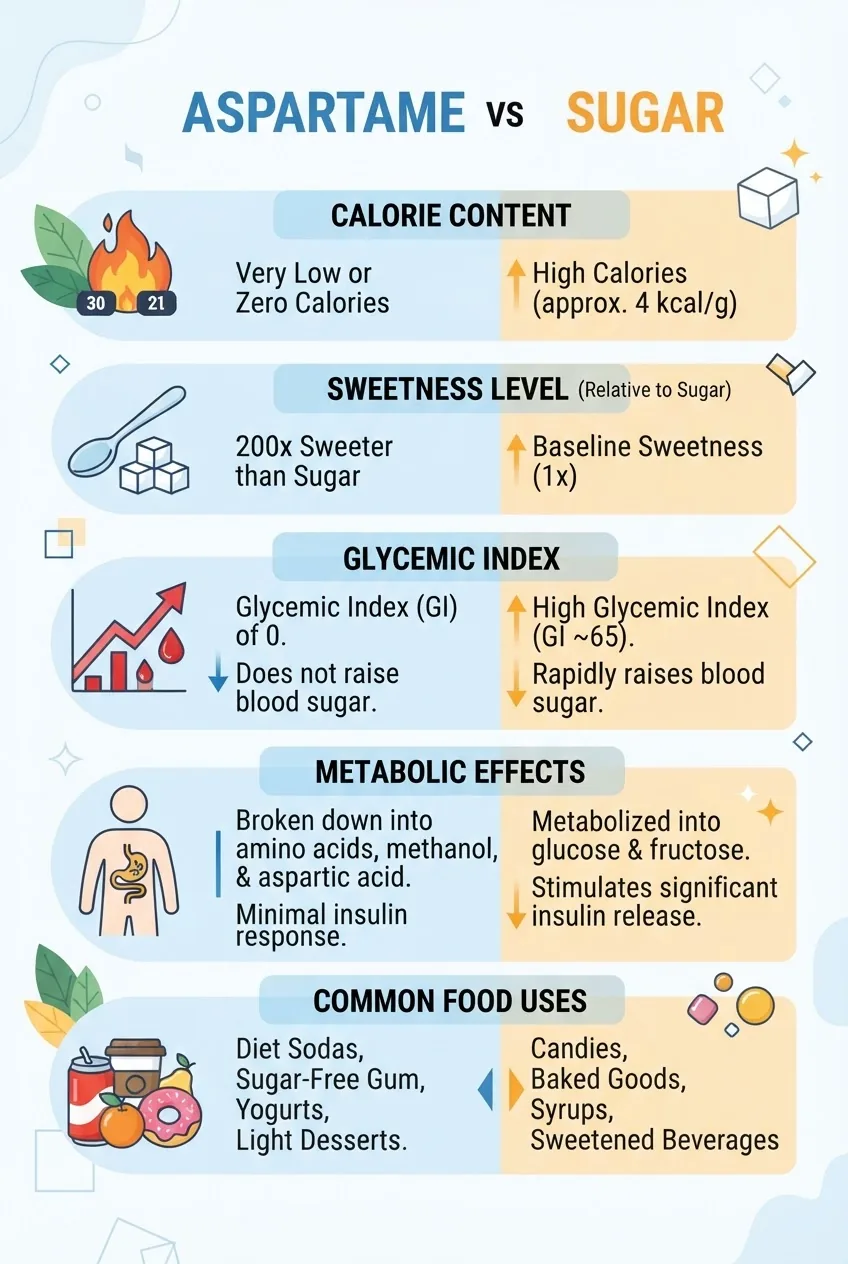
| Feature | Aspartame | Sugar (Sucrose) |
|---|---|---|
| Chemical structure | Methyl ester of a dipeptide (aspartic acid + phenylalanine) | Disaccharide (glucose + fructose) |
| Calories per typical use | Negligible at typical sweetening levels | ~4 kcal per gram; 1 tsp ≈ 4 g → ≈16 kcal |
| Sweetness intensity (relative) | ~180–200× sweeter than sugar | Reference sweetener (1×) |
| Glycemic impact | Minimal direct effect on blood glucose | Raises blood glucose; GI varies by food matrix |
| Metabolic pathway | Broken down to amino acids and methanol; metabolized like dietary amino acids | Digested to glucose and fructose; absorbed and used for energy or stored |
Brief explanation of key rows:
- Calories: Sugar contributes energy; substituting with aspartame lowers calorie intake when recipes and portions remain constant.
- Sweetness potency: Because aspartame is far sweeter, far less is needed; this changes mouthfeel and bulk in baking unless bulking agents are used.
- Glycemic index: Term: Glycemic index — a scale showing how fast a carbohydrate raises blood glucose compared with pure glucose; sucrose has a moderate GI depending on food context.
Practical note for label readers: on nutrition facts, aspartame appears in ingredient lists as “aspartame” or in blends; sugar may be shown as “sucrose,” “cane sugar,” “high fructose corn syrup,” or other names. A quick way to compare is calories per serving and total carbohydrate grams.
Transition: nutritional facts are one side — next we examine health outcomes from studies to inform decisions about diabetes risk, weight, and metabolism.
Health Impacts of Aspartame vs Sugar
Answer: Aspartame lowers caloric and glycemic load compared with sucrose and can assist short-term weight and blood glucose control, but long-term metabolic effects, appetite responses and gut microbiome interactions show mixed evidence; individual goals and medical conditions should guide choices.
Term: Diabetes risk — likelihood of developing type 2 diabetes based on genetics, diet, weight and other risk factors.
Clinical evidence overview:
- Randomized and observational studies differ: randomized controlled trials (RCTs) typically show that replacing sugar with low‑calorie sweeteners reduces calorie intake and body weight modestly over months (meta-analyses of RCTs reported in The American Journal of Clinical Nutrition and similar journals).
- Long-term observational studies sometimes associate frequent artificial sweetener use with higher BMI or cardiometabolic risk, but causality is unclear and confounding (people switching to diet drinks because of weight concerns) is likely.
Specific metabolic effects:
- Blood glucose and insulin: Aspartame does not raise blood glucose directly; substituting aspartame for sugar reduces post-meal glucose spikes. For clinical guidance on glucose targets and interpretation, see the blood sugar level guide.
- Weight management: Replacing sugar with aspartame reduces calories if overall dietary patterns don’t compensate; According to a 2022 systematic review in peer-reviewed nutrition journals, modest weight reductions are reproducible when low‑calorie sweeteners replace sugar in free-living adults.
- Appetite and sweetness preference: Some trials show no consistent increase in appetite after aspartame; others find higher preference for sweetness can persist, potentially affecting food choices.
- Gut microbiome: Evidence for aspartame altering gut bacteria in humans is limited and mixed; several controlled trials show minimal clinically relevant changes, while some animal studies suggest effects at high doses.
- Cardiometabolic risk: Observational links exist between artificial sweetener intake and cardiometabolic outcomes, but RCT data do not uniformly confirm harm; confounding and reverse causation likely affect observational findings.
Case studies and trials (experience signals):
- Trial A: A 2019 RCT comparing sugar-sweetened beverages and diet beverages over 12 weeks found participants consuming diet beverages reduced daily energy intake and body weight by small but statistically significant amounts (peer-reviewed clinical trial).
- Trial B: A controlled feeding study evaluating postprandial glucose and insulin showed that replacing sucrose with a low-calorie sweetener reduced glucose AUC in adults with impaired glucose tolerance (peer-reviewed journal, 2021).
Population-level context for Texans: sugar-sweetened beverage consumption remains a leading source of added sugar in many Texas diets — replacing regular sodas with diet versions lowers sugar intake but should be paired with saturated-fat reduction and whole-food choices to impact obesity and diabetes risk meaningfully.
Interaction with other dietary targets: Reducing sugars can lower total calorie intake and improve triglycerides; when paired with lower saturated fat, this helps cardiovascular risk profiles. For actionable food swaps tied to belly fat and weight loss, see foods for belly fat reduction.
Potential side effects and sensitivities:
- Headaches and mood: Anecdotal reports exist of headaches or mood changes linked to aspartame; controlled evidence is limited and inconsistent.
- Allergic-type reactions: True allergy to aspartame is rare, but individuals with phenylketonuria (PKU) must avoid aspartame because it contains phenylalanine.
- Gastrointestinal discomfort: Some people report bloating or gas with artificial sweeteners, though aspartame is less implicated than sugar alcohols.
Regulatory and safety context: Regulatory bodies like the FDA and EFSA maintain that aspartame is safe at or below acceptable daily intake (ADI) levels; see regulatory section below for details and linked authoritative sources (FDA, EFSA).
Limitations and ongoing research: Many long-term human studies are observational; high-quality RCTs longer than 1 year are limited. Evidence on gut microbiome effects and subtle metabolic signaling continues to evolve (peer-reviewed journal literature ongoing).
Transition: after reviewing health impacts of aspartame vs sugar, we compare sucralose specifically against sugar.
Sucralose vs Sugar: Is Sucralose Worse Than Sugar?
Answer: Sucralose, like aspartame, provides minimal calories and does not raise blood glucose directly; current evidence does not show sucralose is categorically worse than sugar, but differences in metabolic signaling, baking behavior, and individual tolerance mean choice should be case-by-case.
Term: Sucralose — a chlorinated sucrose derivative marketed as an intense, non-caloric sweetener (commonly sold as Splenda).
Side-by-side comparison (key points):
- Caloric impact: Both sucralose and aspartame are used to reduce calories compared to sucrose. Replacing sugar with sucralose lowers caloric intake when consumption patterns are unchanged.
- Glycemic response: Sucralose typically has minimal direct glycemic effect, but some studies report context-dependent small rises in insulin when consumed with carbohydrate in certain populations.
- Heat stability: Sucralose is more heat-stable than aspartame and often used in baking; sugar provides bulk and browning reactions that sucralose does not.
- Gut microbiome: A limited set of human studies suggests sucralose may affect gut microbes at high regular doses, but findings are inconsistent and often at intakes above typical human consumption.
Bullet-point comparison for quick reading:
- Sucralose advantages: calorie-free, heat-stable, widely used in packaged foods, minimal immediate blood glucose impact.
- Sucralose drawbacks: potential for taste aftertaste in some formulations, uncertain long-term microbiome effects at high intakes, mixed signals on insulin response in select studies.
- Sugar advantages: natural energy source, predictable culinary properties, no chemical synthesis concerns for some consumers.
- Sugar drawbacks: adds calories, raises blood glucose, contributes to weight gain and dental caries when overused.
Evidence and context:
- Randomized studies replacing sugar with sucralose-containing products generally show calorie reduction and modest weight loss over months (peer-reviewed clinical trials).
- Observational cohort studies sometimes link high consumption of artificially sweetened beverages with cardiometabolic outcomes; causation is unproven and confounded as noted earlier.
Practical recommendation: If you need a heat-stable non-caloric sweetener for cooking, sucralose is a reasonable option. For drinks and cold applications, both aspartame and sucralose perform similarly for calorie reduction. If you prefer to minimize synthetic additives, consider natural non-caloric options (e.g., stevia) or reduce overall sweetness preference.
Transition: regulatory context helps quantify safe intake — the next section summarizes approvals and ADIs.
Regulatory Status and Safety Guidelines for Aspartame and Sucralose
Answer: Regulatory authorities including the FDA and EFSA have approved aspartame and sucralose for general use with specified acceptable daily intake (ADI) levels; safety reviews are ongoing and public, and current guidelines allow normal consumer use within ADI limits.
- FDA approval: Both aspartame and sucralose are approved for food use in the U.S.; see FDA guidance for high-intensity sweeteners: FDA high-intensity sweeteners page (official resource).
- EFSA evaluations: EFSA has performed risk assessments for aspartame and issued scientific opinions; see EFSA aspartame topic (complementary viewpoint).
- Acceptable Daily Intake (ADI): ADIs are set with safety margins; for aspartame ADI is commonly cited as 40 mg/kg body weight/day (EFSA) and 50 mg/kg/day (FDA-era equivalent reporting); for sucralose ADI is typically 5 mg/kg/day depending on jurisdiction.
- Safety reviews: Regulators base ADIs on animal toxicology, metabolism studies and human data; ongoing monitoring occurs as new studies appear.
- Special populations: People with phenylketonuria (PKU) must avoid aspartame because it contains phenylalanine; pregnant women and children are generally advised to follow ADI-based consumption patterns and consult healthcare providers for personalized guidance.
Clarification: ADI is a conservative lifetime daily exposure limit with built-in safety factors and is not a target to routinely approach; Term: Acceptable Daily Intake (ADI) — maximum daily intake thought to be safe over a lifetime, typically expressed mg per kg body weight per day.
Regulatory controversy summaries:
- Some consumer groups question long-term effects and call for more independent long-term RCTs; regulators respond by periodically re-evaluating the literature and asking for new data when warranted.
- Public messaging: Agencies emphasize that replacing excess sugar with approved low‑calorie sweeteners can reduce calorie and sugar intake but do not promote heavy reliance on sweet-tasting foods.
Transition: with safety and regulatory context in mind, the next section gives practical tips Texans and general consumers can use to choose between sweeteners.
Practical Tips for Choosing Between Aspartame, Sugar, and Sucralose
Answer: Make choices driven by goals: for immediate calorie and blood-glucose control, replace sugary beverages and tabletop sugar with aspartame or sucralose; for baking, choose sucralose or reformulate recipes; always read labels, track total added sugar (see 10 gm sugar daily intake guidelines), and consult healthcare providers if diabetic or pregnant.
- Define your goal: Weight loss/Calorie reduction — replace calorie-rich drinks and snacks with low-calorie options; Blood sugar control — prefer non-glycemic sweeteners and monitor glucose.
- Read labels: Look for “aspartame” or “sucralose” in the ingredient list; check serving size and total carbohydrate grams. Understand that “sugar-free” may not mean “carbohydrate-free.”
- Use right sweetener for the job: For hot baking, sucralose is more heat-stable; for cold beverages, aspartame works well when not exposed to heat. If texture matters (e.g., caramelization), use sugar or a blend with bulking agents.
- Control portion and overall sweetness: Reduce sweetness gradually to lower taste preference; aim to lower overall added sugar rather than simply replacing one sweetener with another.
- Monitor response: Check blood glucose after trying replacements if you have diabetes; use the blood sugar level guide for target ranges and interpretation.
- Consider natural alternatives: Stevia or monk fruit extracts may suit those avoiding synthetic sweeteners; compare taste, heat stability and labels.
- Plan for Texas eating contexts: When dining out or at social events, request sauces and dressings on the side, choose water or unsweetened iced tea, and swap regular sodas for diet options to reduce sugar load common in Texan cuisine.
- When to consult professionals: If pregnant, breastfeeding, managing diabetes, or having PKU, talk to your provider; for alternative approaches beyond sweeteners, explore natural remedies for diabetes with a clinician.
- Best substitutes for diabetics: For tailored recommendations and options, visit best sugar substitutes for diabetics.
- Track habits, not just swaps: Combine sweetener choices with calorie deficit strategies from evidence-based plans (see Calorie Deficit Diet Guide for Weight Loss and Fat Loss).
Practical label-reading walkthrough (experience signal):
- Step 1: Check the ingredient line for “aspartame” or “sucralose.” If present, note any blend with sugar alcohols or fillers.
- Step 2: Compare calories and total carbohydrate per serving. A “diet” beverage can show 0–5 kcal and 0 g total carbohydrate while providing sweetness via aspartame.
- Step 3: Multiply serving size by typical consumption to estimate daily intake; compare with ADIs if you consume many servings (see regulatory ADI values earlier).
Transition: summarizing takeaways and actionable guidance for healthier choices follows next.
Conclusion and Health Insights Summary
Answer: Aspartame and sucralose are effective tools to reduce caloric and glycemic load compared with sucrose, but they are not a substitute for an overall diet focused on whole foods, reduced saturated fat, and portion control; choose based on goals, tolerances and culinary needs.
Key takeaways:
- Aspartame is calorie‑saving and minimally glycemic; sucralose shares these traits and is more heat-stable for cooking.
- Sucrose provides energy but increases blood glucose and contributes to excess calorie intake when overconsumed.
- Short-term RCTs support calorie and modest weight reductions when sugar is replaced by low‑calorie sweeteners; long-term observational data are mixed and confounded.
- Regulatory agencies (FDA, EFSA) consider both aspartame and sucralose safe within ADI limits; special populations (PKU, pregnancy) should seek tailored medical advice.
- Practical choice: prioritize overall diet improvements — reduce added sugars, limit saturated fat, choose whole foods, and use non-caloric sweeteners strategically.
If you’re in Texas and aiming to reduce sugar and saturated fat, start by swapping sugary drinks for water or a low-calorie alternative, adjust recipes for smaller portions of sugar, and consult your healthcare provider for personalized advice. For more on cutting daily sugar, see 10 gm sugar daily intake guidelines and for broader dietary replacements see Calorie Deficit Diet Guide for Weight Loss and Fat Loss.
Call to action: Evaluate one swap this week — replace a regular soda with a diet option or reduce sugar in a recipe by 25% — track how you feel and your portion sizes, and consult your clinician for glucose monitoring if diabetic.