

A calorie restricted diet for weight loss reduces daily energy intake below maintenance to create a sustainable calorie deficit that produces steady fat loss while maintaining nutrient density and metabolic health. This approach emphasizes portion control, macronutrient balance, and lowered sugar and saturated fat for long-term results rather than rapid, extreme cuts.
What Is a Calorie Restricted Diet for Weight Loss?
Answer: A calorie restricted diet for weight loss is a planned reduction in daily caloric intake below an individual’s maintenance level to produce weight loss while preserving health through balanced macronutrients and nutrient-dense foods.
Calorie restriction: limiting daily energy intake (calories) below usual needs to create a negative energy balance that yields weight loss.
This dietary strategy focuses on lowering total calories modestly—commonly 10–30% below maintenance—so fat stores are mobilized while lean mass and essential nutrient status are preserved. The mechanism relies on energy balance: when energy intake falls below energy expenditure, the body uses stored fat (and potentially some lean tissue) for fuel. Unlike extreme diets that severely restrict food groups, a calorie restricted diet emphasizes portion control, reduced added sugars and saturated fats, and increased nutrient density (foods high in vitamins, minerals, fiber, and protein per calorie).
Key distinctions of this approach include meal planning to hit a consistent caloric target, attention to macronutrients—adequate protein to protect muscle, moderate healthy fats, and carbohydrates adjusted for activity—and behavioral strategies that support adherence. The plan also considers metabolic measures like Basal Metabolic Rate (BMR) to set realistic calorie goals tailored to the individual.
This article explains how calorie restriction works, step-by-step planning, comparisons with very low calorie diets, benefits backed by research, common challenges, and the specific role of sugar reduction in improving outcomes.
Transition: Understanding the core concept leads to the physiology underpinning weight loss; the next section explains how calorie restriction produces measurable changes in metabolism and hormones.
How Does a Calorie Restricted Diet Work?
Answer: It works by creating a calorie deficit—consuming fewer calories than you expend—so the body shifts from storing energy to mobilizing fat for fuel; hormonal and metabolic changes (including ghrelin and leptin adjustments) regulate appetite and energy use.
Calorie deficit: the net difference between calories consumed and calories expended; sustained deficits drive weight loss.
Basal metabolic rate (BMR): the number of calories your body needs at rest to support basic physiological functions like breathing and circulation.
A practical example: if your BMR is 1,400 kcal/day and your typical daily activity burns an extra 600 kcal, your maintenance calories are about 2,000 kcal. Creating a daily deficit of 300–500 kcal (e.g., eating 1,500–1,700 kcal) will generally produce 0.5–1 pound (0.2–0.45 kg) of weight loss per week in many adults, assuming adherence and stable activity. Calorie deficit size, individual metabolic rate, and composition of the diet determine how much of the lost weight is fat versus lean tissue.
Hunger and satiety hormones adjust during calorie restriction. Ghrelin (a hunger hormone) usually rises with energy restriction, increasing appetite; leptin (a satiety hormone produced by fat tissue) declines as fat mass decreases, potentially reducing satiety. These hormonal responses contribute to increased hunger and make long-term adherence challenging. Strategies like prioritizing protein, fiber, and volume-rich vegetables can blunt ghrelin spikes and support fullness.
Metabolic adaptation—an often-feared effect—refers to reductions in energy expenditure beyond what weight loss alone predicts (reduced BMR, non-exercise activity thermogenesis). Moderate calorie restriction with resistance training and sufficient protein can minimize loss of lean mass and attenuate metabolic adaptation.
For technical clarity: metabolic adaptation: a reduction in energy expenditure that occurs with weight loss, often driven by decreased body mass and hormonal shifts, which can slow further weight loss.
Clinical context and authority: calorie deficit and its physiological consequences are well-documented in nutrition science; for general guidelines on safe weight loss ranges and calorie targets, consult government resources such as CDC guidance on losing weight and the USDA dietary recommendations at DietaryGuidelines.gov.
Transition: With physiology established, designing a plan requires practical steps—next we outline how to build a calorie restricted diet that’s effective and sustainable.
Designing a Calorie Restricted Diet Plan for Effective Weight Loss
Answer: Design a plan by calculating maintenance calories and BMR, choosing a modest deficit (usually 300–700 kcal/day), setting protein targets, balancing macronutrients, using portion control and meal timing, and prioritizing nutrient-dense foods and sugar reduction for sustainability.
Portion control: managing serving sizes to meet calorie targets without compromising nutrient needs.
- Step 1 — Establish baseline: calculate BMR and maintenance calories.
Use a validated BMR equation (Mifflin-St Jeor) or a reliable metabolic calculator. As a rule of thumb, confirm with tracking: log intake and weight for 1–2 weeks to estimate maintenance. For accuracy, consult a registered dietitian or use metabolic testing when available.
- Step 2 — Choose an appropriate calorie deficit.
Target a 10–25% reduction from maintenance for most adults: typically 300–700 kcal/day. Larger deficits increase risk of lean mass loss and metabolic adaptation. Clinical scenarios (obesity with comorbidities) may require supervised programs.
- Step 3 — Set macronutrient and protein targets.
Aim for adequate protein to preserve muscle: roughly 1.2–1.6 g/kg bodyweight/day (higher for older adults or those doing resistance training). Balance remaining calories between carbohydrates and fats based on preference, activity level, and blood sugar goals.
- Step 4 — Prioritize nutrient density and reduce sugar and saturated fat.
Fill most calories with vegetables, legumes, lean proteins, whole grains, fruits (mindful of portions for higher-sugar fruits), nuts, seeds, and healthy fats (olive oil, avocados). Limit foods high in added sugars and saturated fat to improve metabolic outcomes and satiety.
- Step 5 — Apply portion control and simple plating strategies.
Use visual portion cues (half plate vegetables, quarter plate protein, quarter plate starch/whole grain) or kitchen scales for initial calibration. Track meals using food diaries or apps to ensure the calorie target is met consistently.
- Step 6 — Create practical meal plans and sample day.
Example 1,600 kcal day (moderately active adult): Breakfast — Greek yogurt with berries and 1 tbsp nuts (350 kcal). Lunch — grilled chicken salad with mixed greens, quinoa (450 kcal). Snack — apple and 1 tbsp peanut butter (200 kcal). Dinner — baked salmon, roasted vegetables, small sweet potato (600 kcal). Adjust portions to meet calorie target.

- Step 7 — Combine diet with resistance training and activity.
Resistance training preserves lean mass, helps maintain resting energy expenditure, and supports body composition changes. Include at least 150 minutes of moderate aerobic activity weekly plus two resistance sessions per week.
- Step 8 — Monitor, adjust, and prioritize sustainability.
Weigh weekly, reassess energy needs as weight changes, and adjust calories gradually. If weight loss stalls, review intake accuracy, activity, sleep, stress, and medical factors.
Practical tips for everyday adherence:
- Cook at home and batch-prep meals to control portions and ingredients.
- Use higher-protein breakfasts to reduce mid-morning overeating.
- Swap sugary beverages for water or unsweetened drinks to cut empty calories.
- Include fiber-rich foods (vegetables, legumes, whole grains) to increase satiety per calorie.
Behavioral and local-context tip: in Texas culinary culture—where portion sizes and calorie-dense comfort foods are common—focus on smaller plate sizes, choose leaner proteins (grilled chicken, fish), and enjoy regional flavors (spices, salsas) that add taste without added sugar. Incorporate local produce to improve nutrient density.
Resources and authoritative guidance: for recommended macronutrient distributions and portion sizes consult the Academy of Nutrition and Dietetics and USDA resources such as DietaryGuidelines.gov and local registered dietitians for individualized plans.
Transition: After setting a practical plan, many readers will wonder how this differs from more extreme approaches—next we compare calorie restriction to Very Low Calorie Diets (VLCD).
Comparing Calorie Restricted Diet vs Very Low Calorie Diet (VLCD)
Answer: A calorie restricted diet reduces calories moderately (typically 300–700 kcal deficit) and emphasizes balanced nutrients; a VLCD provides very low energy (often <800 kcal/day), is medically supervised, yields rapid weight loss but carries higher risks of nutrient deficiency, gallstones, and metabolic disturbance.
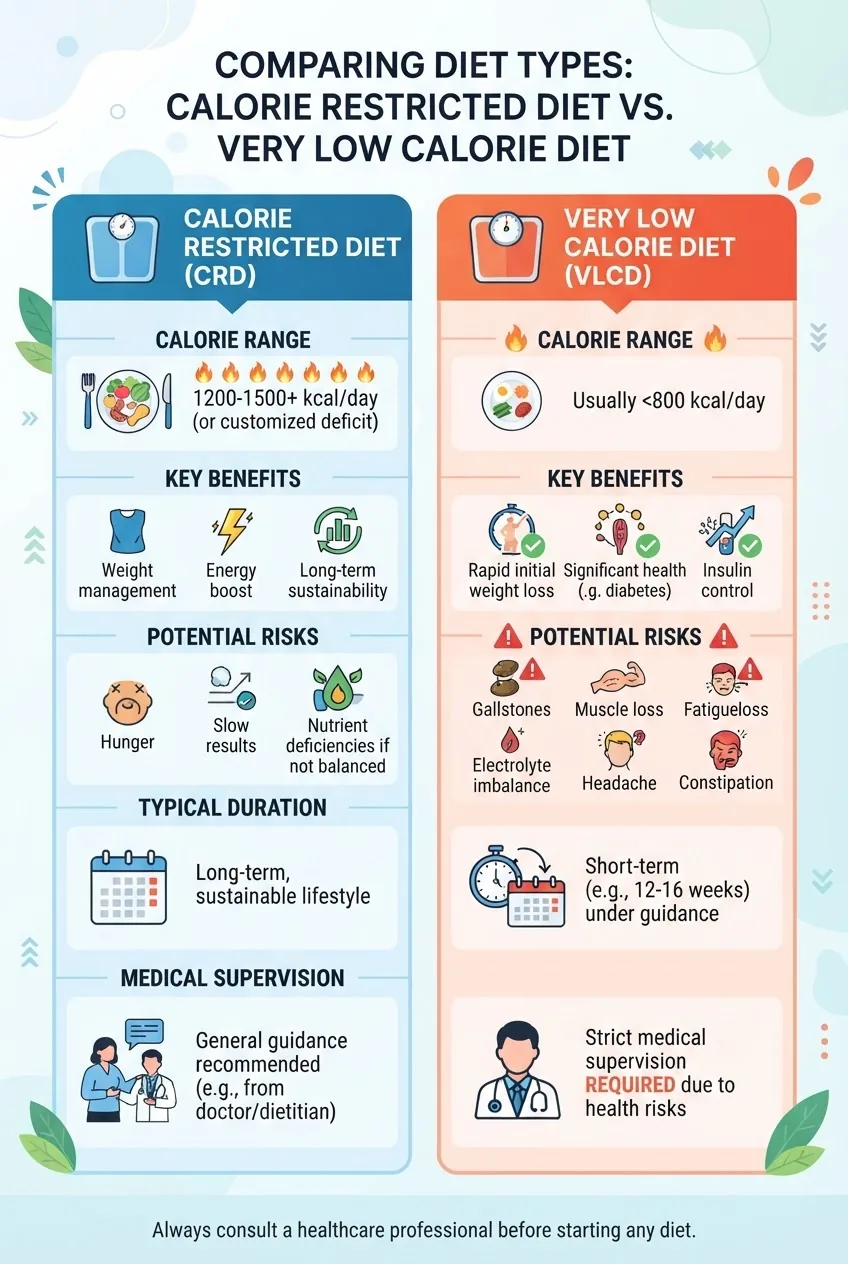
| Feature | Calorie Restricted Diet | Very Low Calorie Diet (VLCD) |
|---|---|---|
| Typical calorie range | ~1,200–1,800 kcal/day depending on sex, size, activity | Usually <800 kcal/day |
| Duration | Long-term adjustable; months to years | Short-term (weeks) with medical oversight |
| Supervision | Often self-managed or RD-guided | Required medical supervision (physician, RD) |
| Weight-loss speed | Moderate, sustainable | Rapid initial loss, higher rebound risk |
| Risks | Potential nutrient gaps if poorly planned; metabolic adaptation | Electrolyte imbalance, gallstones, muscle loss, cardiac risks |
Explanation: VLCDs can be effective in rapid body weight reduction for severe obesity and must be medically supervised—medical organizations outline patient selection, monitoring, and refeeding. For most adults seeking gradual, sustainable weight loss and improved metabolic health, a moderate calorie restricted diet is safer and easier to maintain long-term. For VLCD medical frameworks and safety, refer to guidance from recognized organizations such as the American Diabetes Association when diabetes is present, and consult a physician.
Transition: Understanding the relative safety and outcomes leads naturally to the evidence-backed benefits of the moderate calorie restricted approach.
Benefits of the Calorie Restricted Diet for Weight Loss
Answer: Benefits include steady weight reduction, improved metabolic markers (blood sugar, lipids), reduced fat mass, potential longevity effects in some studies, and better cardiovascular health when combined with reduced sugar and saturated fat intake.
- Sustained weight reduction. Moderate calorie restriction produces steady, maintainable weight loss without extreme hunger in many people, improving adherence over months (evidence from long-term dietary intervention trials; see peer-reviewed randomized trials).
- Improved blood sugar level management. Calorie reduction lowers fasting glucose and insulin resistance in overweight adults; this helps with blood sugar level management and can reduce diabetes medication needs in some cases (clinical studies; see ADA summaries).
- Reduced visceral and total fat mass. Targeted calorie deficits preferentially reduce fat stores over time, particularly when combined with resistance training, improving cardiometabolic risk profiles (peer-reviewed research).
- Better lipid and blood pressure profiles. Lower calorie intake and reduced saturated fat intake often translate to improved LDL cholesterol and blood pressure in controlled studies (meta-analyses of dietary interventions).
- Preservation of lean mass with protein and exercise. When paired with adequate protein and resistance work, calorie-restricted plans preserve muscle, maintaining function and basal metabolic rate.
- Potential longevity and metabolic health benefits. Long-term calorie restriction in animal models shows lifespan effects; human studies suggest improved markers of aging and cardiometabolic health, though evidence on lifespan in humans is still emerging (systematic reviews; see 2022–2024 literature).
- Support for diabetes-related health outcomes. Weight loss via calorie restriction can lower HbA1c and improve insulin sensitivity; this complements other interventions and aligns with some natural diabetes remedies that focus on lifestyle modification.
Evidence and authority: randomized controlled trials and systematic reviews document the cardiovascular and glycemic improvements from reduced-calorie diets; for practitioners and patients, government guidelines and medical organizations provide safe targets and monitoring protocols (see CDC, USDA, ADA links above).
Transition: Despite benefits, patients often face challenges—next we list common obstacles and solutions to improve adherence and outcomes.
Potential Challenges and How to Overcome Them
Answer: Common challenges include increased hunger, plateaus, nutrient shortfalls, and psychological strain; overcome them with protein-rich meals, resistance training, periodic plan adjustments, nutrient-focused food choices, and behavior strategies like meal planning and tracking.
Hunger management: Calorie reduction increases ghrelin and can raise appetite. Combat this by prioritizing high-protein meals, fiber, and water-rich vegetables; schedule regular meals and include snacks if needed to prevent extreme hunger that leads to overeating.
Plateauing: Weight-loss plateaus occur due to metabolic adaptation or decreased adherence. Address plateaus by reassessing calorie estimates (weighing/ tracking), increasing non-exercise activity, adjusting calories slightly, or cycling calorie targets briefly to reset appetite and adherence.
Nutrient deficiencies and meal monotony: Ensure nutrient density—varied vegetables, whole grains, legumes, lean proteins, dairy or fortified alternatives, nuts, seeds—and consider a multivitamin if dietary gaps are likely. Consulting a registered dietitian reduces risk.
Psychological factors and social environment: Social meals, stress eating, and restrictive mindsets can undermine progress. Use flexible dieting principles (planned indulgences), habit substitution (walk after dinner), and support groups or counseling when needed.
Adherence strategies backed by evidence:
- Self-monitoring: daily or weekly weight logs and meal tracking improve outcomes.
- Goal setting: set specific short-term targets (e.g., 4-week changes) and celebrate non-scale victories (clothing fit, energy).
- Plan for relapses: create a rapid re-entry plan after an indulgent period (48-hour reset focusing on hydration, protein, veggies).
Transition: Among the behavioral levers, managing sugar intake offers one of the highest returns on reduced-calorie strategies—next we detail how reducing sugar amplifies calorie restriction effects.
Role of Sugar Reduction in Enhancing Calorie Restricted Diet Outcomes
Answer: Reducing added sugars lowers empty calories, stabilizes blood glucose and insulin, reduces cravings and appetite spikes, and increases room in the calorie budget for nutrient-dense foods—improving satiety and long-term adherence.
Satiety: the feeling of fullness after eating that reduces the likelihood of further consumption; high-protein and high-fiber foods improve satiety more than sugary, calorically dense items.
Added sugars contribute energy with minimal nutrient value; when replaced with protein, fiber, or healthy fats, overall satiety and nutrient intake improve. Cutting sugar-containing beverages alone can reduce caloric intake by hundreds of calories per day. For practical sugar guidance, match calorie reduction goals with targeted sugar cuts—example: replacing a 12-oz soda (~140 kcal, mostly added sugars) with water saves calories and reduces glycemic spikes.
Distinguishing sugar types: understand natural versus added sugars to maintain nutrient balance and avoid unnecessary restrictions. See the natural vs added sugar guide for a full framework on which sugars to prioritize limiting and why.
For daily intake specifics, consult resources on recommended sugar limits; see the companion article on daily sugar intake recommendations to align added-sugar limits with your calorie goals.
Artificial sweeteners and substitutes: using non-nutritive sweeteners (NNS) can reduce calories in beverages and some foods, but their effects on appetite and long-term weight are mixed. For head-to-head comparisons, consult the artificial sweeteners vs sugar piece and the healthy sugar substitutes resource for options appropriate for diabetics or calorie reduction.
Practical steps to reduce sugar while sustaining calorie restriction:
- Eliminate sugar-sweetened beverages; replace with water, sparkling water, or unsweetened tea.
- Read labels—choose foods with no or minimal added sugars per serving.
- Use whole fruit in place of desserts for fiber and micronutrients, but account for fruit calories in your budget.
- Replace sugary condiments with herbs, spices, vinegar, or mustard to cut hidden sugars.
- When sweetness is desired, consider low-calorie sweeteners moderately and test their effect on cravings personally.
Evidence and resources: randomized trials and meta-analyses show that lowering added sugar improves weight and cardiometabolic markers; for clinical recommendations, review government guidelines and peer-reviewed nutrition literature. For practical comparisons of sweetener options and their caloric impact, see calories in sugar and related articles in this series.
Transition: After improving diet quality and reducing sugar, maintaining weight loss becomes the next priority—here are actionable strategies to sustain progress long-term.
Tips for Maintaining Weight Loss and Healthy Lifestyle Beyond the Diet
Answer: Maintain weight loss by gradually increasing calories to a sustainable maintenance level, keeping higher protein and activity levels, using behavior strategies (tracking, planning, mindful eating), and preventing relapse with structured habits and social support.
- Gradual transition to maintenance. Increase calories slowly (50–100 kcal/week) while monitoring weight to find your new maintenance. Rapid increases often lead to regain.
- Keep protein and resistance training. Sustained higher-protein intake plus regular resistance exercise help preserve lean mass and resting metabolic rate, making long-term maintenance easier.
- Monitor and adjust. Weekly weigh-ins, food logs, or periodic dietitian check-ins detect small gains early when they are easiest to reverse.
- Practice mindful and flexible eating. Allow planned treats and social eating; use portion control and savoring techniques rather than strict bans.
- Maintain physical activity habit. Aim for consistent daily movement plus structured exercise; non-exercise activity thermogenesis (NEAT) is a major driver of energy expenditure.
- Plan for setbacks. Create a short relapse plan (48–72 hour reset) that re-establishes structure, hydration, and protein-rich meals, and resume tracking immediately.
- Behavioral supports. Leverage habit stacking (attach a new healthy habit to an existing one), social support groups, or coaching to maintain motivation.
Real-life example (experience signal): Sara, a 42-year-old teacher in Texas, used a 500 kcal/day deficit with a 1.4 g/kg protein target and twice-weekly resistance training; over 6 months she lost 26 pounds, preserved strength, improved fasting glucose, and maintained weight for 12 months by increasing maintenance calories slowly and keeping a weekly meal-prep routine. Her plan emphasised local produce, reduced sugary sweet tea, and used small-plate portioning to fit regional cuisine preferences.
Authority and safety reminder: calorie restriction is not appropriate for pregnant women, people with certain medical conditions, or those with current or past eating disorders; consult a healthcare provider before starting significant energy restriction. For clinical safety frameworks and monitoring, consult professional guidance such as the American Diabetes Association and government resources like the CDC.