

By the end of this guide you’ll have a precise, day-to-day routine to manage care for diabetic needs: meal templates, exercise schedules, monitoring checklists, and when to call your clinician. Expect to build this plan in 2–4 weeks and maintain it ongoing; skill level required: basic health literacy and willingness to track numbers and habits.
Before you start
- Wearable or handheld blood glucose meter (BGM), test strips, and a logbook or app (e.g., mySugr, Glucose Buddy).
- Access to recent labs: last A1C, fasting glucose, lipid panel, blood pressure readings.
- Kitchen scale, measuring cups, and a basic food journal (paper or app).
- Comfortable shoes for walking; resistance band or light dumbbells (5–15 lbs).
- Access to primary care provider or endocrinologist contact and pharmacy for medication refills.
-
Step 1 — Learn the basics: identify what “care” covers
Understanding Care for Diabetic Patients
Diabetes mellitus is a chronic condition characterized by elevated blood glucose caused by insufficient insulin production or insulin resistance. Effective diabetes management blends daily self-care (food, activity, monitoring) with periodic medical oversight to reduce complications such as heart disease, neuropathy, retinopathy, and kidney disease.
Think of blood sugar control like “balancing a budget”: calories/carbs are income, insulin and activity are expenses. Keep daily glucose fluctuations within a planned range to reduce long-term loss (complications).
Key objectives of care:
- Maintain blood glucose targets (commonly fasting 80–130 mg/dL; 1–2 hour post-meal <180 mg/dL; A1C goal often <7% for many adults — adjust per clinician).
- Prevent acute events (hypoglycemia <70 mg/dL; hyperglycemia >250 mg/dL may need urgent review).
- Reduce cardiovascular risk by managing lipids, blood pressure, and saturated fat intake.
According to the 2023 ADA Standards, individualized targets are essential; discuss yours with your clinician. According to a 2023 CDC report, roughly 11% of U.S. adults have diagnosed diabetes, reinforcing the need for practical self-care strategies.
Patient scenario: Jane, 52, Type 2 diabetes, started logging pre- and post-prandial values twice daily and reduced evening snacks; within 8 weeks her average fasting glucose dropped from 145 to 118 mg/dL and her A1C decreased 0.4% after 3 months (lab-confirmed).
-
Step 2 — Build sustainable daily habits
Essential Healthy Lifestyle Tips for Diabetes Care
Transition: Once you understand the goals, the next step is to embed sustainable habits. Below are prioritized, actionable changes ordered by impact and feasibility.
- Plan balanced meals daily. Use a plate method: 1/2 non-starchy vegetables, 1/4 lean protein (3–4 oz cooked), 1/4 whole grains or starchy vegetables. Target 30–45 g carbs per meal for many adults; adjust per clinician.
- Limit added sugars and watch saturated fats. Replace sugary drinks with water, unsweetened tea, or sparkling water. Swap butter-heavy spreads for plant oils. Aim for saturated fat <7–10% of total calories if you have elevated LDL or heart disease risk.
- Prioritize daily movement. Walk briskly 30–45 minutes a day, five days weekly, or split into 10–15 minute bouts. Add resistance training 2–3 times weekly for 20–30 minutes.
- Create a simple weight plan. Aim for a 500 kcal/day deficit to lose ~1 lb/week; monitor with a weekly weigh-in, not daily obsession. Use a calorie tracking app or a structured meal plan.
- Schedule glucose checks. Test fasting, before meals, and 1–2 hours after major meals during adjustments. Keep a log for two weeks after major changes.
- Improve sleep and stress actions. Target 7–8 hours of sleep; practice 10 minutes nightly of relaxation (deep breathing or progressive muscle relaxation).
- Medication adherence routine. Use a pillbox and set phone reminders; confirm understanding of doses, timing, and injection technique if using insulin.
- Regular preventive care. Annual A1C, lipid panel every 6–12 months, eye exam yearly, foot exam every visit; vaccinate per CDC guidance.
- Adopt practical meal-prep habits. Cook twice weekly, pre-portion meals into containers with measured carbs, and keep a stash of 10–15 low-carb snacks for hypoglycemia prevention.
- Use technology to simplify tracking. Pair a BGM with a logging app, consider continuous glucose monitoring (CGM) if recommended by your clinician for real-time trends.
Links to further reading and tools:
foods to reduce belly fat can support gradual, maintainable weight loss when combined with calorie restriction and exercise.
Also consider gradual habit stacking: add a 10-minute midday walk after meals starting three times a week, then increase frequency and duration every 2 weeks.
-
Step 3 — Choose diabetes-supporting foods with clear rules
Dietary Strategies to Support Diabetes Management
Transition: Diet is the single daily influence you can control most. Apply these evidence-based strategies and track effects on glucometer readings.
Core principles:
- Prefer whole foods: vegetables, legumes, whole grains, lean proteins, nuts, and seeds.
- Carb awareness: track grams per meal and aim for consistency day-to-day to match medication/insulin dosing needs.
- Emphasize fiber: 25–35 g fiber daily slows glucose absorption and improves satiety.
Glycemic index and glycemic load
Glycemic index (GI) ranks how quickly a food raises blood glucose on a 0–100 scale; glycemic load (GL) adjusts GI for portion size. Choose lower-GI foods (whole oats, lentils, most non-starchy vegetables). Use GI/GL primarily to fine-tune choices, not as an absolute rule.
Natural sugar vs added sugar
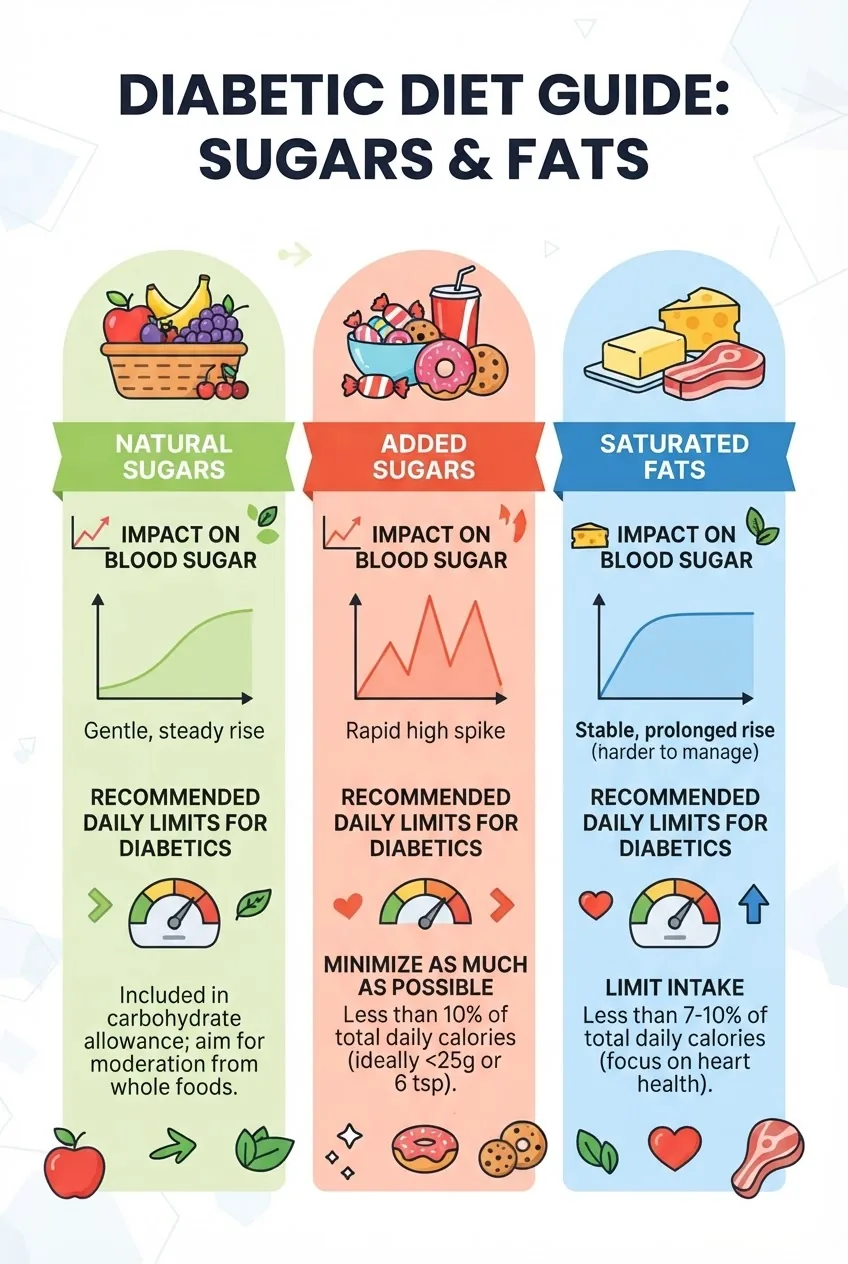
Understand the distinction: natural sugars occur in whole fruit and milk, while added sugars are syrups, table sugar, and caloric sweeteners. Whole fruit contains fiber, water, and micronutrients that blunt glucose spikes.
Practical swaps and rules
- Swap sweetened beverages for water or unsweetened tea—each 12 oz soda contains ~35–40 g added sugar.
- For desserts, choose a 1/2 serving (e.g., 1/2 slice) and pair with protein to blunt post-meal rise.
- Limit saturated fat: target under 7–10% of daily calories if LDL is elevated; choose olive oil, nuts, and fatty fish instead of butter and fatty red meats.
Category Examples Effect on blood sugar Recommended limit Natural Sugars Whole fruit, milk Slower rise due to fiber/protein 2–3 servings fruit/day, focus on whole fruit Added Sugars Sodas, candies, syrups Rapid blood glucose spikes Minimize; use daily sugar intake guidelines when planning Saturated Fats Butter, high-fat dairy, fatty cuts Worsens insulin resistance and cardiovascular risk Keep <7–10% calories if high LDL/heart disease Quick rules for meals: measure carbs in grams; pair 30–45 g carbs with 15–30 g protein and 7–14 g fat to reduce post-meal peaks. Use a 2-hour post-meal check to test effects and adjust next meal.
Further reading on sugar limits and sweetener choices:
artificial sweeteners vs sugar — review pros/cons and test personal tolerance.
best sugar substitutes for diabetics for healthier swap ideas.
Evidence note: Multiple clinical nutrition studies show excess added sugar raises cardiometabolic risk; for a peer-reviewed perspective see this review (open access): dietary sugars and health review.
-
Step 4 — Build an exercise plan that lowers glucose
Exercise and Physical Activity Recommendations for Diabetics
Transition: Movement is medicine — it directly increases insulin sensitivity and reduces post-prandial spikes. Design sessions you will actually do.

How-to weekly schedule (practical)
- Start with aerobic exercise: 30–45 minutes brisk walking or cycling, 5 days/week at 50–70% max heart rate (estimate: 220 – age = max HR; multiply by 0.5–0.7).
- Add resistance training: 2 sessions/week, 8–10 exercises covering major muscle groups, 2–3 sets of 8–12 reps using bodyweight or 8–15 lb dumbbells; rest 48 hours between sessions.
- Include brief post-meal walks: 10–15 minutes after meals to reduce post-prandial glucose spikes — particularly after the largest meal of the day.
- Monitor glucose around exercise: Check before exercise if on insulin or sulfonylurea; if <100 mg/dL, eat a 15–20 g carb snack before moderate exercise. If >250 mg/dL with ketones, avoid strenuous exercise until managed.
Examples and progressions
Week 1–2: 10–15 minute walks after breakfast and dinner. Week 3–6: increase to 30 minutes brisk walk midday or 45 minutes 5x/week. Month 3+: add resistance days and interval walking (2 minutes brisk/2 minutes easy, repeat).
Practical tools: use a pedometer or phone to set a 7,000–10,000 step goal initially; add 500 steps/week to progress. Track perceived exertion or heart rate if you have a wearable.
Clinical note: Resistance training improves insulin sensitivity for 24–48 hours post-session; combine both modalities for best glycemic control. For safety, keep an emergency snack (15 g carbs) and wear identification stating diabetes status when exercising alone.
-
Step 5 — Monitor, record, and communicate
Monitoring and Medical Care Essentials
Transition: Measurement turns actions into controlled variables. Monitor consistently and bring clear data to your clinical visits.
Daily monitoring protocol (example for insulin-managed patients): test fasting, pre-meals, 1–2 hours post-meal, and bedtime for two weeks after major changes. For non-insulin-treated Type 2 diabetes, test fasting and a 2-hour post-largest meal 3–5 days/week while adjusting diet/exercise.
Practical glucose monitor use: Clean fingertips, use strip code if required, record date/time, trend, and any notes (meal, exercise). If using CGM, export 14-day reports for clinic visits.
understanding blood sugar levels helps interpret readings and set individualized targets.
Medication adherence and monitoring
- Set alarms for all medications; place a 30-minute buffer reminder for injectable insulin to plan meals.
- Review side effects and hypoglycemia risk with each new prescription; keep a printed medication list for clinic visits.
- Refill medications at least 7–10 days before running out to avoid missed doses.
Preventive checks and foot care
- Annual comprehensive foot exam; daily self-check for cuts, blisters, or color changes. Wash feet daily and moisturize, but avoid between toes.
- Yearly dilated eye exam and kidney function tests (urine albumin-to-creatinine ratio and eGFR) per ADA guidance.
When to contact your provider right away: persistent fasting glucose >250 mg/dL, repeated readings <70 mg/dL, ketones present with hyperglycemia, or signs of infection. According to the 2023 ADA Standards, urgent review is needed for recurrent severe hypoglycemia or glucose variability unresponsive to behavioral strategies.
-
Step 6 — Address stress, sleep, and mental health
Managing Stress, Sleep, and Mental Health in Diabetes Care
Transition: Emotional health and sleep are biological levers that modify insulin sensitivity and behavior.
Stress raises cortisol and can raise blood glucose for hours. Sleep deprivation (less than 6 hours nightly) increases insulin resistance and appetite for high-carb foods.
Actionable daily routine:
- Sleep: aim for 7–8 hours; set lights-off 30 minutes earlier gradually until target is met. Keep bedroom dark and cool.
- Stress breaks: 10 minutes of box breathing (4-4-4) mid-afternoon, and 10 minutes of guided progressive muscle relaxation at bedtime for two weeks to assess effect on fasting glucose.
- Mild-to-moderate CBT-based strategies: schedule worry time (15 minutes/day) and use problem-solving steps to address specific barriers to self-care.
- Social support: join a local or online group for accountability — peer support improves adherence.
For complementary approaches, read about natural remedies for diabetes to understand supportive—not substitutive—options.
Evidence and caution: Some herbal supplements can interact with prescription meds and cause hypoglycemia; consult your clinician. According to a 2022 clinical review, mindfulness practices modestly reduce A1C when practiced regularly (see linked studies for details).
-
Step 7 — Troubleshoot common obstacles
Common Challenges and Troubleshooting Diabetes Care
Transition: Problems will arise — here are specific recognition cues and immediate steps, presented as FAQs and actions.
What to do for low blood sugar (hypoglycemia)
If reading <70 mg/dL: follow the 15-15 rule — consume 15 g fast carb (4 oz juice or 3–4 glucose tablets), wait 15 minutes, recheck; repeat if <70 mg/dL. Once >70 mg/dL, eat a small snack if next meal >1 hour away.
What to do for high blood sugar (hyperglycemia)
For readings >250 mg/dL: recheck in 1 hour; if persistent and symptoms (nausea, vomiting, abdominal pain) or ketones present, contact provider or go to ER. Adjust hydration and avoid additional carbs.
Diet slip-ups
Missed plan? Don’t self-punish — resume the plan at the next meal, test more frequently for 24–48 hours to recalibrate insulin/carb matching, and record the event to identify triggers.
Adherence obstacles
Set micro-goals (e.g., two vegetable-based meals this week), enlist a buddy, or simplify by prepping 4 grab-and-go balanced meals each weekend.
Motivational strategy: Use short-term measurable goals (weekly weight, 14-day glucose averages) and celebrate small wins to sustain behavior change. If persistent problems occur, seek a diabetes educator for medication adjustment and skills training.
-
Step 8 — Implement a maintenance and escalation plan
Conclusion and Encouragement for Long-Term Diabetes Care Success
Transition: After building skills, move to maintenance with clear triggers for escalation.
Maintenance actions:
- Monthly self-audit: review glucose logs, weight, and medication adherence. Adjust small steps monthly rather than large swings.
- Quarterly clinician check-ins for medication adjustments and yearly full review including A1C and complications screening.
Summary takeaways: consistent monitoring, measured diet adjustments (focus on natural vs added sugars and lower saturated fat), regular exercise (aerobic + resistance), sleep/stress management, and timely medical follow-up are the pillars of sustained diabetes care. According to a 2023 ADA Standards summary, integrated lifestyle plus medical management yields the best outcomes.
Final patient vignette: Carlos, 60, used the plate method, added two 15-minute post-meal walks, and began resistance bands twice weekly. Over 4 months: weight down 9 lbs, fasting glucose average dropped 30 mg/dL, and A1C improved from 8.3% to 7.4% (lab). These are achievable, measurable changes with consistent effort.
Disclaimer: individual responses vary; always consult your provider before changing medications or starting new exercise regimens.
Common mistakes and how to avoid them
I’ve seen several recurring errors in clinical practice:
- Over-correcting high glucose with extra insulin without rechecking: I watched one patient double their usual correction dose and then suffer severe hypoglycemia; instead, correct modestly and recheck in 1 hour.
- Skipping meal carb counts after a “good” morning: Another patient rewarded themselves with a large carb dinner and spiked—consistency at each meal prevents surprises.
- Neglecting sleep and blaming diet: Poor sleep raised nightly glucose for one patient despite diet adherence; sleep improvement reduced fasting glucose by 15–20 mg/dL.
Checklist — verify your care for diabetic plan
- Logged glucose readings for 14 days and exported results for your clinician.
- Established meal templates (measured carbs and protein at each meal).
- Exercise plan: 150–225 minutes/week aerobic + 2 resistance sessions.
- Medication schedule with reminders and pillbox or injection training.
- Foot and eye check appointments scheduled per guideline.
- Emergency plan for hypoglycemia with quick carbs and notes accessible.
When to call a professional
- Repeated readings <70 mg/dL or >300 mg/dL despite home adjustments.
- Symptoms of infection, unexplained weight loss, persistent nausea/vomiting, or ketonuria.
- Difficulty fitting medication into life, frequent adherence lapses, or major mood changes.
External authoritative resources: American Diabetes Association for standards of care; CDC for prevalence and prevention resources; and clinical literature summaries such as this peer-reviewed review: dietary and metabolic impacts on diabetes (PMC).