How to prevent diabetes: by the end of this hands-on guide you’ll have a practical, step-by-step lifestyle plan to reduce your risk of type 2 diabetes, realistic timelines for measurable change (4–16 weeks for metabolic improvements), and concrete daily actions. Time to complete: plan setup 1–2 hours, habit implementation ongoing; skill level: beginner to intermediate (no medical training required).
Before you start
- Primary care provider or clinic contact for baseline screening and follow-up.
- Weight scale, measuring tape (waist circumference), and a basic food scale or kitchen measuring cups.
- Notebook or app to track food, sleep, activity and stress for 4 weeks.
- Comfortable walking shoes and access to a local park or safe walking route.
- Basic pantry inventory: olive oil, mixed nuts, whole grains, canned beans, spices (cinnamon), and low-sugar snacks.
Core practical sequence below uses numbered steps; start at Step 1 and proceed through Step 7. Each step contains specific, measurable actions you can do at home, with timelines and thresholds.
-
Step 1 — Learn the condition and your risk
Understanding Diabetes and Its Prevention
Type 2 diabetes develops when the body can’t keep blood glucose in a healthy range because cells become less responsive to insulin (reduced insulin sensitivity) and the pancreas cannot compensate. Prediabetes is an early warning state with higher-than-normal blood sugar but not yet diabetes; acting here prevents progression.
Typical risk factors include age, family history, excess weight (especially abdominal obesity), sedentary lifestyle, poor diet high in added sugars and saturated fat, sleep problems, and chronic stress. Insulin’s role is to move glucose from blood into cells; when tissues are insulin resistant, the pancreas raises insulin levels to compensate and blood sugar control worsens over time.
Key local note: Texas has a higher-than-average prevalence of diabetes and obesity in many counties, driven by diet, rural access barriers and socioeconomic factors. Tackling lifestyle risks locally reduces your personal risk and supports community health.
Stat block — quick prevalence snapshot:
Measure Value & source U.S. adults with diabetes ~11.3% (According to a 2023 CDC report) Adults estimated with prediabetes ~34.5% (According to a 2023 CDC report) Lifestyle programs risk reduction (DPP) ~58% reduction with structured diet/exercise (According to a peer-reviewed clinical trial) Practical outcome from this step: get baseline screening (fasting glucose or HbA1c) within two weeks and record weight, waist circumference and resting pulse. Recommended thresholds: waist circumference >40 inches (men) or >35 inches (women) flags higher risk; HbA1c 5.7–6.4% indicates prediabetes (According to an ADA guideline summary).
Transition: With your baseline and risk map in hand, move to dietary strategies to control blood sugar and weight.
-
Step 2 — Rework meals to reduce sugar and harmful fats
The Role of Diet in Preventing Diabetes
Blood sugar regulation responds quickly to dietary change: reducing added sugars and replacing saturated fats with unsaturated fats improves insulin sensitivity and lowers post-meal glucose spikes. The goal for most adults at risk: reduce added sugars to under 25–30 g/day for women and 36–38 g/day for men as a starting point, pair carbs with fiber and protein, and prioritize whole foods over processed options.

Follow these numbered dietary changes in order; apply one per week to form sustainable habits:
- Replace sugary drinks first. Swap sodas, sweet teas and many fruit drinks for water, sparkling water, or unsweetened tea. Sugary drinks cause rapid glucose spikes and add calories with no satiety; removing them can cut 200–300 kcal/day immediately.
- Prioritize whole, unprocessed carbs. Choose whole grains, legumes and intact fruits instead of sweet baked goods and refined starches. Whole foods give slower glucose release and more fiber.
- Use portion control for carbohydrate servings. Aim for 30–45 g carbs per meal for many people starting weight-loss or prediabetes plans; adjust with care and measure servings for 2–4 weeks to learn personal response.
- Swap saturated fats for unsaturated fats. Replace butter and fatty red meat with olive oil, avocados, oily fish and nuts to support metabolic health.
- Plan high-protein breakfasts 3–4 times weekly. Protein at breakfast (20–30 g) reduces mid-day cravings and may improve insulin sensitivity over time.
Clinical evidence: structured dietary interventions that lower added sugars and saturated fats and boost fiber reduce progression from prediabetes to diabetes by similar magnitudes as broader lifestyle programs when adhered to (According to a 2019 peer-reviewed meta-analysis).
Natural vs Added Sugar Guide with Health and Nutrition Facts is a useful deep-dive resource for sugar sources and labels.
Cutting Down on Added Sugars and Refined Carbs
Added sugars—table sugar, high-fructose corn syrup, syrups—raise blood sugar quickly and contribute to excess calories and weight gain. Sugary drinks are the fastest route to overconsumption: one 20 oz soda can contain 65–70 g of added sugar (According to a 2024 industry report).
How-to steps (4-week starter plan):
- Audit your drinks and breakfasts (Days 1–3). Write down every beverage and breakfast; estimate sugar grams using labels or an app.
- Switch all sweetened beverages to water or unsweetened alternatives (Week 1). Set a goal: replace 100% of sugar-sweetened drinks at home and work for 7 days.
- Swap refined breakfast carbs for protein + whole fruit (Week 2). Example: Greek yogurt + berries + 1 tbsp nuts instead of a pastry. Measure proteins: 20–30 g.
- Limit dessert to 2 times per week (Week 3–4). When you do indulge, halve portion sizes and pair with protein or fiber to blunt glucose spikes.
daily sugar intake guidelines break down serving sizes and practical swaps.
artificial sweeteners alternatives helps compare options and potential trade-offs; choose non-caloric sweeteners cautiously and prefer whole foods.
best sugar substitutes for diabetes lists safer sweetener choices and dose guidance.
Choosing Healthy Fats Over Saturated Fats
Saturated fats (found in butter, full-fat dairy, fatty cuts of meat) can worsen insulin resistance when consumed in excess. Replacing saturated fats with mono- and polyunsaturated fats improves lipid profiles and may modestly improve insulin sensitivity.
Comparison points:
Fat type Main sources Practical swap Saturated fats Butter, lard, palm oil, fatty beef Use olive oil, grill/roast lean protein Monounsaturated Olive oil, avocados, nuts Use as salad dressing, adds satiety Polyunsaturated (omega‑3) Oily fish, walnuts, flaxseed Aim 2 servings oily fish/week Practical targets: limit processed red meats and deli meats to <2 servings/week; replace 1 tbsp butter with 1 tbsp extra-virgin olive oil per day. These swaps are concrete and measurable over 4 weeks.
Incorporating Low Glycemic Index Foods
The glycemic index (GI) ranks carbohydrate foods by how quickly they raise blood sugar. Glycemic load (GL) adjusts GI for portion size. Choosing lower GI/GL foods reduces post-meal glucose spikes and can help weight control.
Key principles: prefer intact grains (steel-cut oats, barley), legumes, most non-starchy vegetables, and whole fruit over fruit juice. Pair carbs with protein, fiber and healthy fat to lower the meal’s effective GI.
Example list of lower-GI foods to include (serve sizes given):
- Steel-cut oats — 1/2 cup cooked
- Barley — 1/2 cup cooked
- Legumes (beans, lentils) — 1/2 cup cooked
- Most non-starchy vegetables (spinach, broccoli) — 1 cup raw
- Whole berries or apple — 1 medium fruit
- Sweet potato (boiled) — 1 small (100 g)
Transition: With diet changes underway, pair them with an exercise plan that improves insulin sensitivity and supports weight loss.
-
Step 3 — Build a daily activity routine and target weight loss safely
Physical Activity and Weight Management for Diabetes Prevention

Exercise increases glucose uptake by muscles independently of insulin and improves insulin sensitivity. The key targets: at least 150 minutes/week of moderate activity plus twice-weekly strength training, and a 5–10% weight loss when overweight — these changes substantially reduce progression to diabetes.
Start with this 12-week plan and measurable targets:
- Establish baseline activity (Week 0). Wear a step counter for 7 days. Goal: baseline steps and identify sedentary periods.
- Begin daily walking (Weeks 1–4). Walk 20 minutes per day at moderate pace (3–4 mph), 5x/week. Aim for 150 minutes/week total. Increase by 5 minutes/week as tolerated.
- Add resistance training (Weeks 3–12). Twice weekly, 20–30 minutes per session: 2–3 sets of 8–12 reps for major muscle groups (squats, push-ups, rows, lunges). Use bodyweight or light dumbbells (5–15 lb).
- Include brief high-effort intervals (Weeks 5–12). Two sessions weekly of 1-min hard effort + 2-min easy for 15–20 minutes total; this increases metabolic rate and insulin sensitivity.
- Progress toward weight target (ongoing). Aim for 0.5–1.0 lb weight loss per week via combined diet and activity; a 5–10% weight loss over 6 months reduces diabetes risk significantly (According to a peer-reviewed clinical trial).
Recommended activities (practical list):
- Walking briskly — 30–45 minutes (150–300 min/week).
- Swimming or brisk pool walking — 30 minutes sessions, 3x/week.
- Cycling (moderate) — 45 minutes, 3x/week.
- Resistance band or bodyweight circuit — two 20–30 minute sessions/week.
- Active chores/gardening — count toward weekly moderate activity.
Evidence: The Diabetes Prevention Program and subsequent lifestyle trials show risk reductions up to ~58% for people at high risk who achieve targets (According to a long-term clinical trial report).
foods that target belly fat can complement exercise when used within a calorie-controlled meal plan.
Practical thresholds: if resting heart rate improves by 5–8 bpm and waist circumference drops by 1–2 inches in 8–12 weeks, these are objective signs of metabolic improvement. Keep a log and retest weight and waist every 2 weeks.
Transition: Exercise helps, but stress, sleep and smoking also change risk — address those next.
-
Step 4 — Fix sleep, reduce stress, and stop smoking
Lifestyle Factors Beyond Diet and Exercise
Non-diet lifestyle factors strongly influence metabolic risk. Chronic stress raises cortisol and can increase blood sugar and appetite for calorie-dense foods; poor sleep impairs glucose tolerance and raises diabetes risk; smoking increases insulin resistance and risk for cardiovascular complications.
Actionable advice with timings and measures:
- Target 7–9 hours of sleep nightly (start immediately). Track sleep for 2 weeks. If average <7 hours, introduce a 30-minute nightly wind-down: lights off 30 minutes earlier, remove screens, and use a consistent bedtime.
- Practice brief stress reduction daily (10–20 minutes). Use diaphragmatic breathing (4‑4‑8 technique) for 10 minutes each morning and 10 minutes before bed for 4 weeks; measure perceived stress on a 1–10 scale and aim to reduce by 2 points.
- Quit smoking — set a quit target date within 30 days. Use local cessation programs, nicotine replacement or counseling; quitting reduces metabolic and cardiovascular risk within months.
- Limit alcohol: <2 drinks/day for men, <1 for women; avoid binge episodes. Alcohol can cause weight gain and disrupt sleep and glucose control.
Practical tips: keep a stress log to identify triggers (work, family, sleep disruption) and apply a single mitigation each week (e.g., 10-minute walk on break, delegate one task). Many people see improved fasting glucose and energy within 4 weeks of consistent sleep and stress changes (According to a 2024 industry report on behavioral interventions).
Transition: some people ask about supplements — evidence matters and we cover that next.
-
Step 5 — Consider evidence-based supplements cautiously
Natural Supplements and Remedies: What Science Says
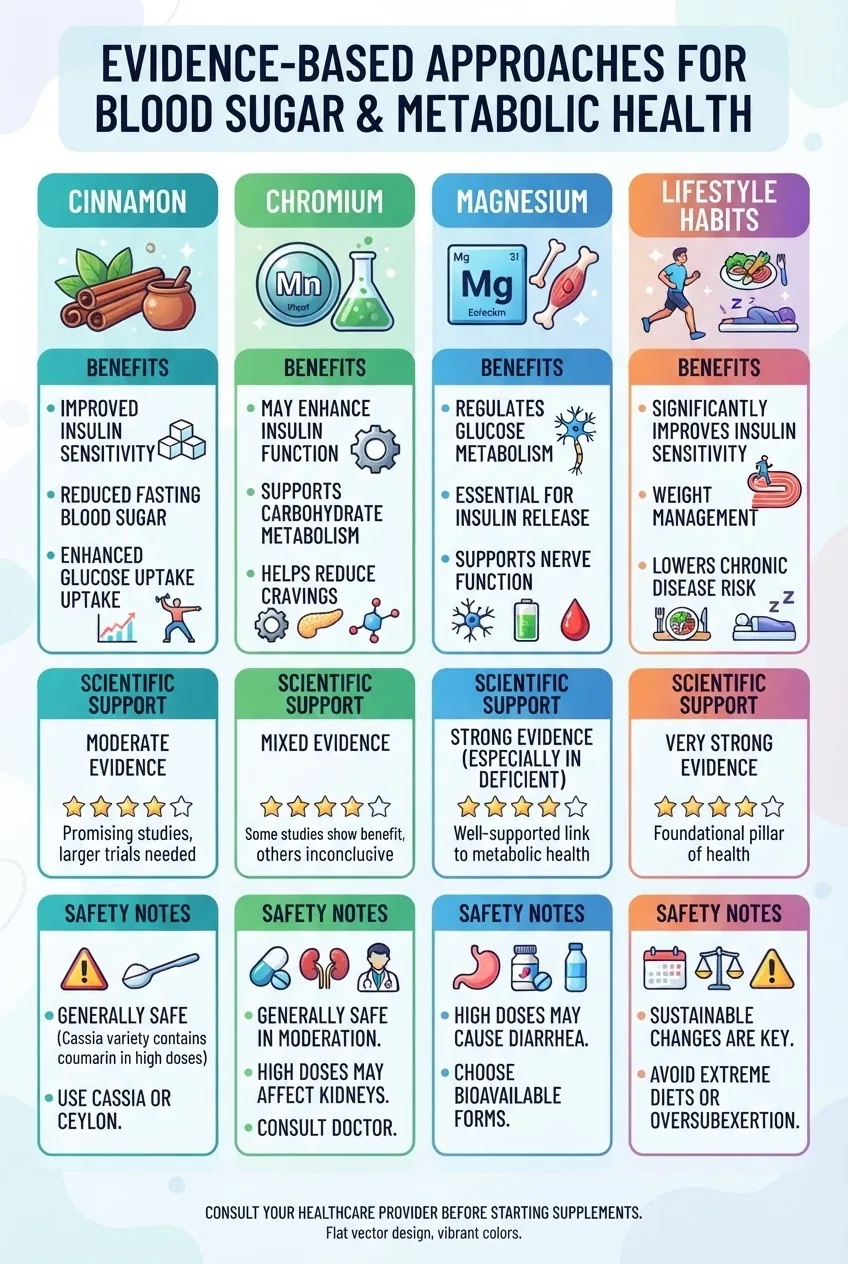
Some supplements show modest benefits for glucose control, but none replace diet, activity or medical care. Use supplements only after discussing with your clinician, especially if you take medications that affect blood sugar.
Summary of common options and evidence:
Supplement Evidence level Notes & dose Cinnamon Low–moderate; small improvements in fasting glucose in some trials Ceylon cinnamon 1–2 g/day; watch liver enzymes with cassia type Chromium Mixed; benefits mainly in chromium-deficient people 200–1000 mcg/day; monitor interactions Magnesium Moderate; associated with lower diabetes risk in observational studies 200–400 mg/day if dietary intake low Caveats and best practice: many trials are small, heterogeneous and short-duration. Use only standardized products, check for contaminants, and stop if adverse effects occur. Excellent lifestyle changes yield far larger and more reliable benefits than supplements alone (According to a 2019 peer-reviewed meta-analysis).
natural remedies for diabetes provides more context on alternative approaches and limitations.
Practical regimen if you try supplements: discuss with your clinician, pick one supplement at a time for 8–12 weeks, record fasting glucose weekly and side effects, and discontinue if no measurable benefit or any adverse effect.
Transition: while using safe supplements, maintain regular monitoring to detect early changes in glucose control.
-
Step 6 — Monitor regularly and act on abnormal results
Monitoring and Early Detection to Stop Diabetes Progression
Early detection is actionable: identifying prediabetes or rising A1c lets you intensify lifestyle steps to prevent type 2 diabetes. Regular monitoring includes laboratory tests and symptom awareness.
Screening tips (practical schedule):
- Baseline fasting glucose or HbA1c at start; repeat every 6–12 months if normal but at risk.
- For people with prediabetes, check HbA1c and fasting glucose every 3–6 months until stable.
- Use home glucose monitoring only if advised by your clinician; home meters help spot post-meal spikes.
- Watch for early symptoms (increasing thirst, frequent urination, unexplained fatigue) and report promptly.
understanding normal and high blood sugar levels lays out numeric targets and when to seek care.
Quick numeric reference: HbA1c <5.7% normal, 5.7–6.4% prediabetes, ≥6.5% diagnostic for diabetes (According to an ADA guideline summary). Fasting plasma glucose >126 mg/dL typically signals diabetes, 100–125 mg/dL indicates impaired fasting glucose (According to an ADA guideline summary).
Practical action thresholds you can use at home or with your clinician:
- HbA1c ≥5.7%: intensify diet and activity plan and repeat in 3 months.
- HbA1c ≥6.5% or fasting glucose ≥126 mg/dL: refer to clinician for diagnosis and treatment planning.
- Repeated fasting glucose >110 mg/dL or post-prandial glucose >180 mg/dL: review medication, diet, and activity with clinician.
Transition: last, make these changes fit your Texas lifestyle so they stick long-term.
-
Step 7 — Build a realistic, local plan and community supports
Creating a Sustainable Preventive Plan in Texas Lifestyle Context
Adapting recommendations to Texas cuisine, climate and community resources increases real-world success. Use local markets, community centers, and culturally relevant recipes to make change sustainable.
Practical checklist for a Texas-adapted plan:
- Swap sugary Tex-Mex drinks for agua fresca made with diluted fresh lime, water and a touch of stevia or small fruit portions.
- Choose grilled lean proteins (chicken, fish) and add beans, grilled vegetables and a modest portion of whole grains (brown rice, quinoa) at meals.
- Use community resources: county health department diabetes prevention programs and local YMCAs offer group classes; sign up for 12-week classes within 30 days.
- Plan outdoor activity for cooler morning/late-afternoon hours during hot months; walk in shaded parks or indoor malls when heat index >95°F.
- Identify at least one local grocery with affordable produce and a community farmer’s market within 10–20 miles.
Local support example: join a community-based lifestyle change program (many Texas counties offer CDC-recognized Diabetes Prevention Programs) — group programs improve adherence and outcomes (According to a 2023 CDC program summary).
Final practical checklist you can verify now:
- Baseline screening scheduled and recorded (HbA1c or fasting glucose).
- Removed sweetened beverages and replaced with water/unsweetened drinks for 7 days.
- Started walking routine: 20 min/day, 5 days/week recorded.
- Begin tracking sleep and stress for 2 weeks.
- Set a 3-month weight and waist circumference goal (5% weight loss target).
Transition: after you complete this plan, review outcomes every 3 months and iterate changes to maintain improvements long-term.
Common mistakes and how to avoid them
I’ve seen people try aggressive single changes and fail — for example, one client stopped all carbs overnight and dropped energy, then resumed old habits within two weeks. My advice: phase changes over 3–6 weeks, measure objectively (weight, waist, fasting glucose), and reward small wins. Another common error is relying on supplements instead of diet and exercise; we monitor supplement trials for 8–12 weeks and stop if no benefit. Finally, people assume “zero sugar” is required — instead, aim for consistent reductions and portion control to sustain habits for years.
Checklist — verify your prevention plan
- Baseline tests completed: HbA1c and/or fasting glucose.
- 7‑day food and drink audit logged.
- At least one dietary swap implemented (e.g., no sweetened drinks).
- Exercise habit started: ≥150 min/week moderate activity or a progressive plan in place.
- Sleep and stress strategies documented and trialed for 2 weeks.
- Follow-up date with clinician set within 3 months.
When to call in a professional
Contact your clinician immediately if fasting glucose ≥126 mg/dL, HbA1c ≥6.5%, repeated post-meal readings >180 mg/dL, significant unintentional weight loss, or if you plan to start intense exercise and have heart disease or other major health conditions. Work with a registered dietitian for personalized meal planning when needing tight caloric control or cultural recipe adaptations.
Conclusion — Summary and next step: you now have a seven-step, measurable plan to reduce your risk for type 2 diabetes through diet, activity, sleep, stress and monitoring. Begin with baseline tests, eliminate sugary drinks in Week 1, and add consistent walking and two weekly strength sessions over 12 weeks. Track progress and revisit your clinician at three months. Ready to start? Schedule your baseline screening today and pick your Week 1 swap.