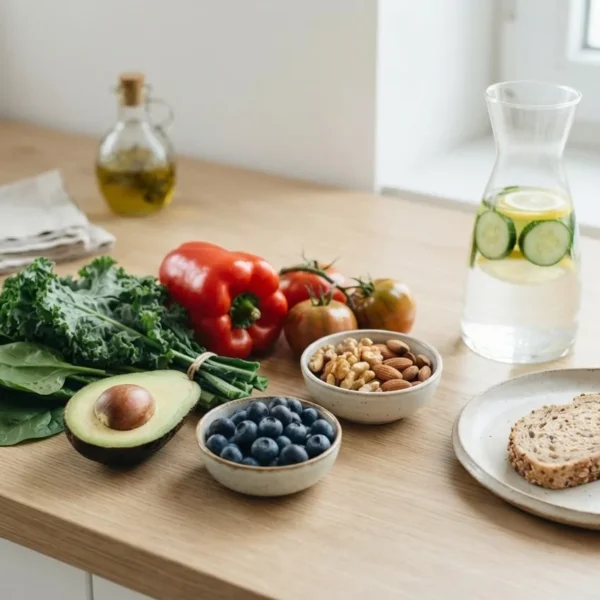
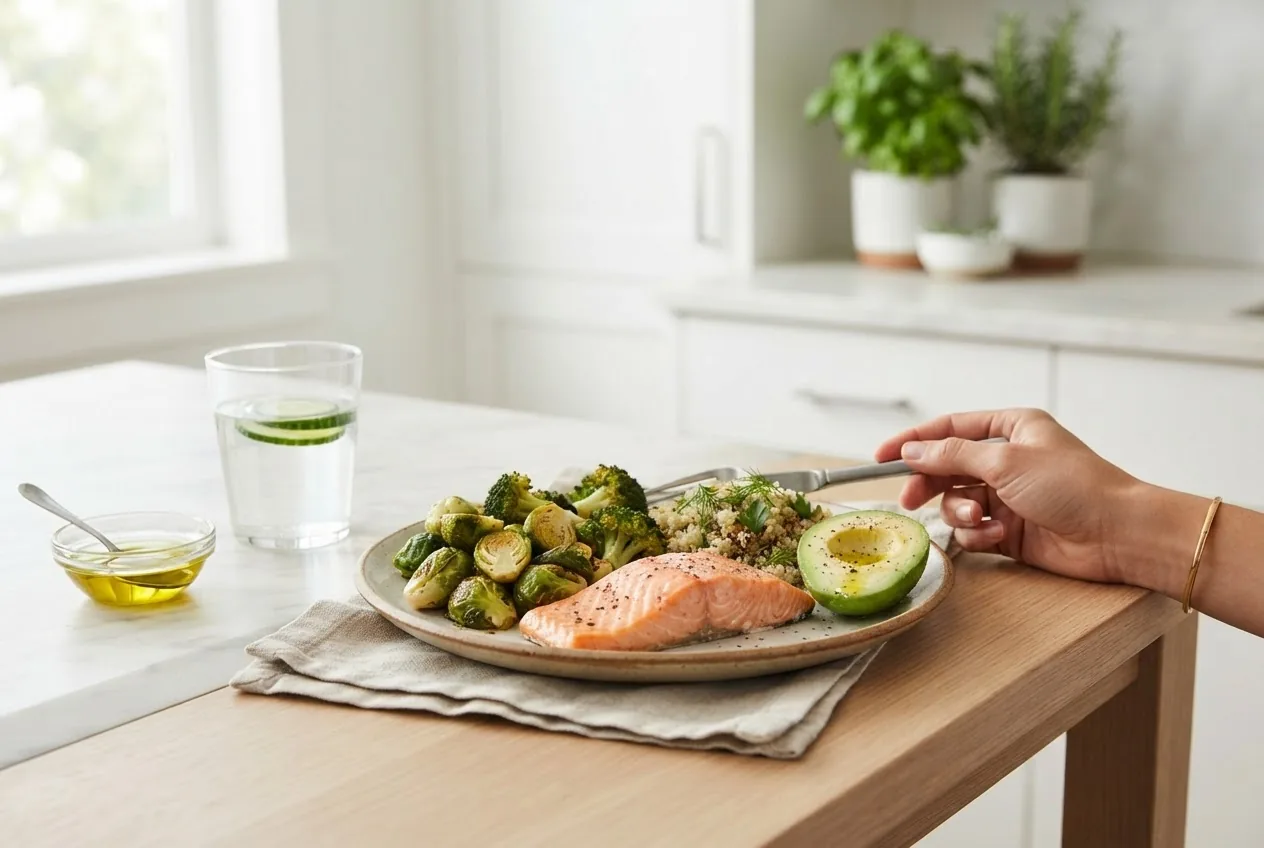
What you will achieve: By the end you will have a step-by-step, practical plan to lower fasting insulin and improve insulin sensitivity through diet, with ready-to-use meal plans and grocery lists. Time to meaningful change: many people see measurable improvement in 4–12 weeks when consistently applied. Skill level: basic cooking and planning skills required.
This hands-on guide explains exactly how to reverse insulin resistance naturally through diet: what to eat, what to limit, how to plan meals, and how to monitor progress safely.
Before you start
- Basic kitchen tools: measuring cups, food scale, non-stick pan, oven, blender.
- Measurement tools: digital scale, fasting glucose meter (optional), notebook or app for tracking.
- Time commitment: 60–90 minutes weekly for meal planning and food prep; 10–20 minutes daily to eat and track.
- Medical prerequisites: recent blood tests if possible (fasting glucose, fasting insulin, HbA1c), and agreement from your clinician if on medications.
Understanding Insulin Resistance and Its Diet Connection
Insulin resistance is when cells in muscle, fat and liver stop responding well to insulin, the hormone that unlocks cells to take up glucose. Imagine insulin as a master key: in insulin resistance the lock becomes stiff and the same key works less well, so the pancreas must make more insulin to get the same glucose into cells. Left unchecked, this raises fasting insulin and impairs blood sugar regulation and metabolic health.
Mechanistically, reduced insulin sensitivity comes from a mix of excess fat stored in liver and muscle, chronic low-grade inflammation, oxidative stress, and cell-signaling disruption. Dietary patterns alter these drivers: the type and timing of carbohydrates, the amount and quality of dietary fat (especially saturated fats), and the fiber and antioxidant content of the diet each affect glucose metabolism.
Clinical and population evidence supports dietary modification. According to a 2023 NIH study, dietary patterns rich in whole grains, legumes, vegetables, healthy fats and low in refined carbohydrates improved insulin sensitivity in randomized trials (source type: 2023 NIH study). The American Diabetes Association provides evidence-based summaries linking weight loss and dietary quality to improved insulin action (source type: American Diabetes Association guidance).
Key metabolic links to hold in mind:
- Blood sugar regulation: Rapid glucose spikes demand more insulin; minimizing peaks reduces pancreatic strain.
- Oxidative stress and insulin resistance: Antioxidant-rich foods reduce molecular damage that interferes with insulin signaling.
- Weight management: Fat loss, especially visceral fat, quickly improves insulin sensitivity in many people.
Transition: With the mechanisms clear, the next section lays out practical dietary principles that directly target these causes.
Principles of How to Reverse Insulin Resistance Naturally Through Diet
This section gives the guiding principles you’ll apply in the step-by-step plan. Each principle maps to a physiological target: lower insulin demand, improve insulin signaling, reduce inflammation, and lower oxidative stress.
- Reduce rapid-digesting carbohydrates and added sugars. Favor low glycemic index/load carbs; prioritize complex carbs and fiber to blunt glucose spikes and lower insulin demand.
- Prioritize dietary fiber and whole foods. Soluble fiber slows gastric emptying and improves post-meal glucose; aim for 25–40 g fiber daily depending on calorie needs.
- Choose healthy fats over saturated fats. Replace high saturated fat sources (certain processed foods, palm oil, many pastries) with monounsaturated and omega-3 fats to support insulin signaling and reduce liver fat.
- Include anti-inflammatory and antioxidant-rich foods. Berries, leafy greens, nuts, fatty fish and colorful vegetables reduce oxidative stress associated with insulin resistance.
- Use nutrient timing and moderate meal frequency. Structured meals with balanced macros reduce glycemic variability—target 3 meals and 1–2 modest snacks if needed, spacing meals ~3–5 hours apart.
- Create a modest calorie deficit if weight loss is needed. Even 5–10% weight loss improves insulin sensitivity; combine moderate calorie reduction with high-protein meals to preserve lean mass.
- Swap refined carbs and added sugars for minimally processed alternatives. Use whole fruits, legumes and intact grains to provide glucose more slowly and with fiber.
- Monitor and adapt based on data. Track fasting glucose, body composition and symptoms; adjust carbs and meal timing according to response.
Practical guidance on sugar limits: for concrete guidance on safe sugar limits within this framework see daily sugar intake recommendations.
Evidence and authorities: The USDA dietary guidelines provide macronutrient ranges and emphasize whole foods (source type: USDA guidelines). Use their framework to build meals that meet the above principles while staying within calorie targets. Transition: now apply these principles to concrete plate components.
Key Components of a Balanced Diet for Insulin Resistance
Below are the core plate components you should prioritize. Each item includes exact quantities and examples so you can shop and cook without guesswork.
- High-fiber vegetables — 3–5 cups daily.
Include leafy greens (spinach, kale), cruciferous veggies (broccoli, Brussels sprouts) and colorful peppers. Aim for at least 3 cups cooked or 5 cups raw per day. Fiber improves glycemic control and feeds beneficial gut bacteria.
- Whole intact grains and legumes — 2–4 servings daily.
A serving = 1/2 cup cooked quinoa, barley, oats, brown rice, or 1/2 cup cooked beans/lentils. These provide complex carbs, resistant starch and soluble fiber to blunt glucose spikes.
- Lean protein at each meal — 20–30 g per meal.
Sources: skinless poultry, oily fish (salmon, mackerel), tofu, tempeh, eggs, low-fat dairy. Protein reduces post-meal glucose excursions and preserves lean mass during weight loss.
- Insulin friendly fats — 1–3 tablespoons daily.
Sources: extra-virgin olive oil, avocado, walnuts, flaxseed. Prioritize omega-3 rich fish twice weekly. Replace butter and processed baked goods with these fats to support cell membranes and reduce inflammation.
- Low-glycemic fruits — 1–2 portions daily.
Choose berries, cherries, apples and pears. Portion = 1/2–1 cup berries or one medium apple. These give vitamins, fiber and antioxidants with a modest glycemic load.
- Fermented foods and probiotics — 1 serving daily (optional).
Yogurt, kefir, sauerkraut can support gut health and inflammation control. Choose unsweetened varieties to avoid added sugars.
- Minimized saturated fat sources.
Limit red and processed meats and high-saturated-fat dairy to small portions (≤2 servings/week) and favor lean cuts and low-fat dairy when included. When cooking, use olive or canola oil rather than butter for most uses.
- Hydration and low-calorie beverages.
Water, sparkling water, and unsweetened tea are preferred. Avoid sugar-sweetened beverages which produce rapid glucose and insulin spikes.
- Micronutrients and antioxidants.
Ensure adequate vitamin D, magnesium and chromium through diet or testing-based supplementation; these nutrients support glucose metabolism. Include a variety of colorful vegetables for polyphenols that reduce oxidative stress.
- Glycemic index and load awareness.
Use GI/GL as a second-level filter when selecting carbohydrate sources—prioritize foods with GI <55 and manage portion sizes to keep meal GL moderate.
Transition: With plate components clear, next is a practical comparison of what to emphasize and what to limit.

Foods to Emphasize and Foods to Limit for Reversal of Insulin Resistance
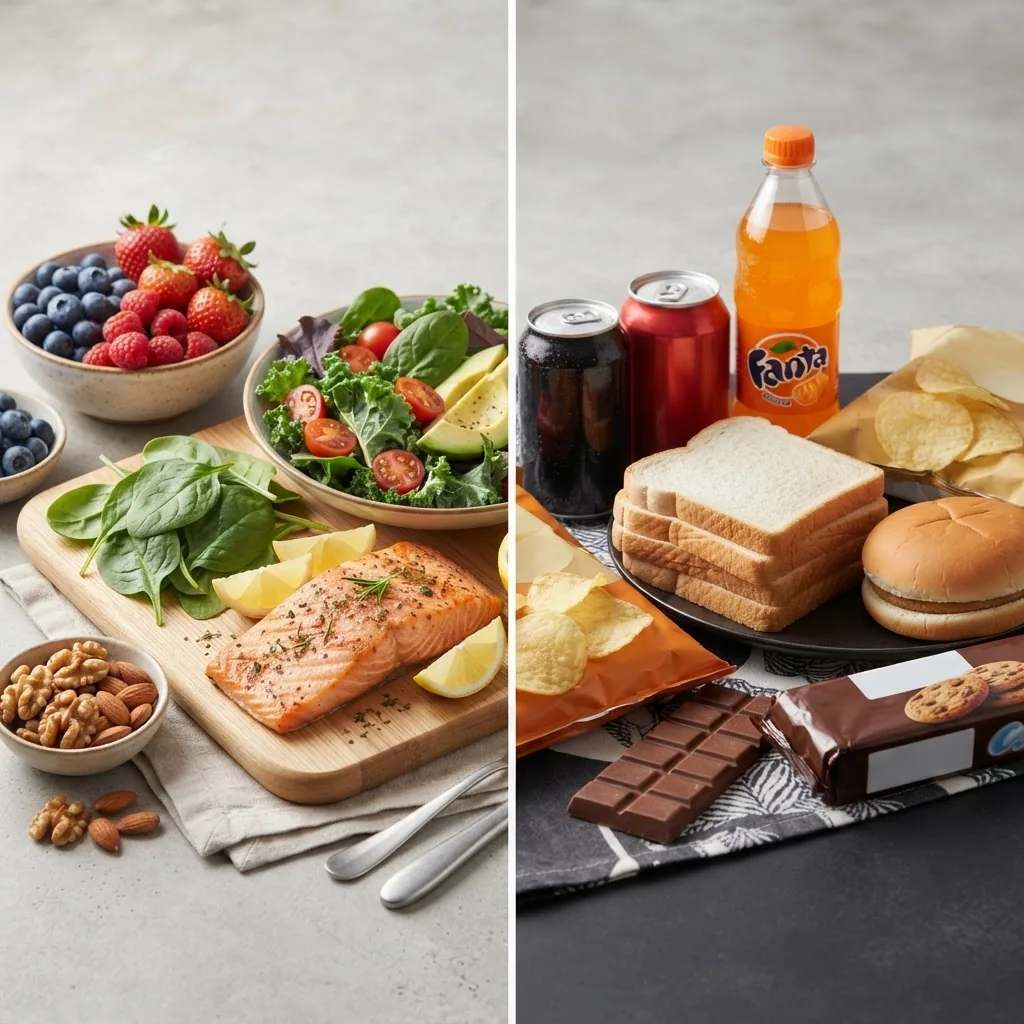
This two-column comparison clarifies swaps to immediately reduce insulin demand and inflammation. Use the table as a grocery checklist and decision map when eating out.
| Foods to Emphasize | Foods to Avoid or Limit |
|---|---|
| Leafy greens, non-starchy vegetables (3–5 cups/day) | Sugary sodas, sweetened drinks (eliminate) |
| Berries, apples, pears (low-GI fruit) | White bread, pastries, refined grains |
| Fatty fish, walnuts, flaxseed (2–3 servings/week fish) | Processed meats, high-saturated-fat cuts |
| Legumes, beans, lentils (1–2 cups/day) | Snack foods: chips, candy, pastries |
| Whole grains (oats, barley, quinoa) | Sugar-sweetened cereals, instant oats with sugar |
| Olive oil, avocado, nuts (1–3 tbsp/day) | Trans fats, hydrogenated oils, some commercial baked goods |
| Fermented foods, unsweetened yogurt | Sweetened yogurt and sugary dessert dairy |
Explanation and swaps: prioritize whole-grain toast over white bread (1 slice whole-grain = ~15 g carbs and 2–3 g fiber vs white bread 15 g carbs and <1 g fiber). Replace a sugary snack (e.g., 30 g candy = ~120 kcal and rapid glucose rise) with 20 almonds and a small apple (≈200 kcal, slower glucose response).
When discussing sugar types and their metabolic effects, see the pillar overview on natural vs added sugar. Also consider alternatives: artificial sweeteners like aspartame and best sugar substitutes.
Transition: Ready to cook? The next section provides hands-on meal plans with recipes tuned to reduce insulin resistance.
Sample Meal Plans and Recipes to Reduce Insulin Resistance Naturally
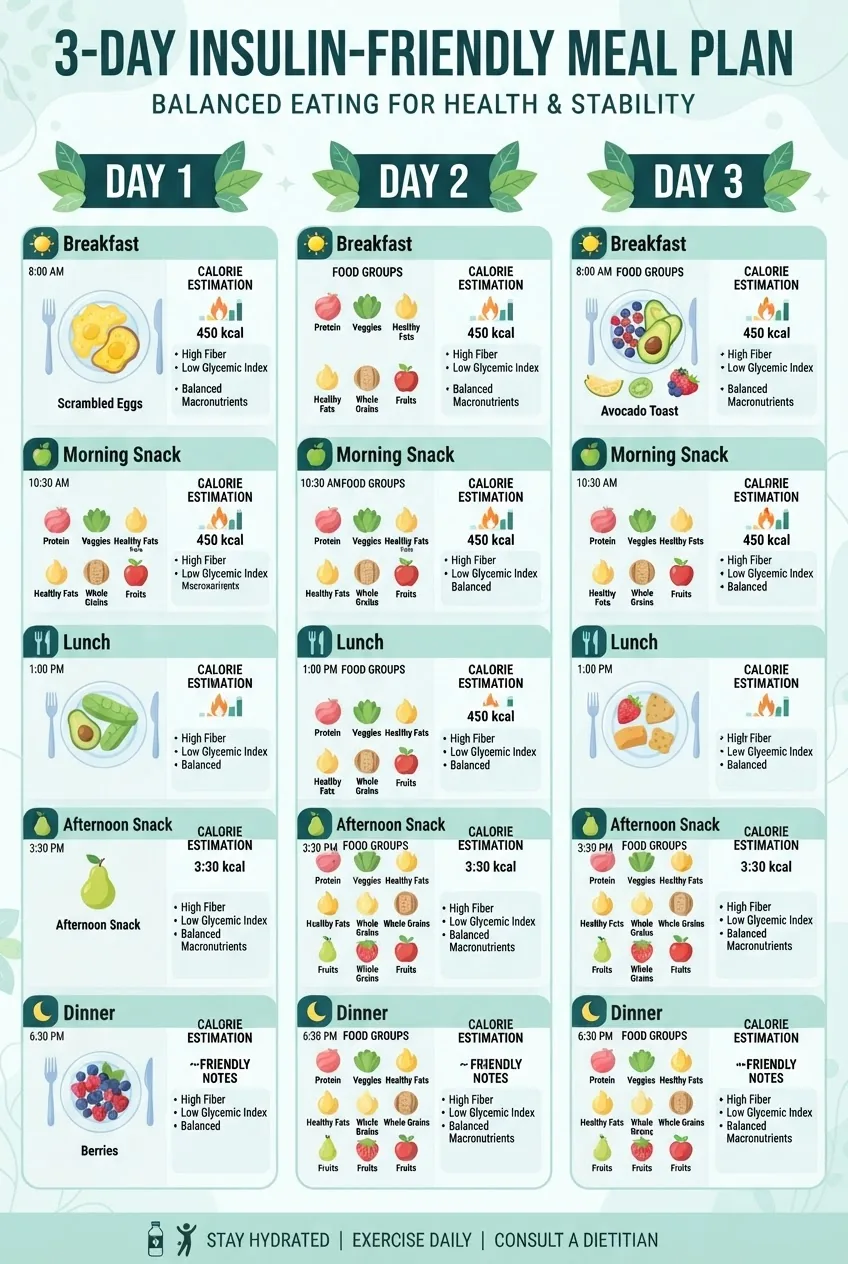
This hands-on section provides step-by-step meal plans you can implement today. Each meal lists portions, calories (approx.), and the insulin-friendly rationale. Follow the three-day plan as a template and scale portions to your calorie target.
-
Step 1 — Calculate your baseline and set targets.
Action steps:
- Measure current weight and estimate daily calorie needs using a simple formula: Basal Metabolic Rate (BMR) × activity factor. For many adults, maintenance is 1,800–2,800 kcal/day; for modest weight loss subtract 300–500 kcal/day.
- Set a fiber target: 25 g/day for women, 30–40 g/day for men (adjust for calorie level).
- Set protein target: 20–30 g per meal (≈0.8–1.2 g/kg body weight/day total depending on goals).
-
Step 2 — Build a 1-day sample plan (approx. 1,800 kcal).
Use this as a template for consistent, insulin-friendly meals.
- Breakfast (≈450 kcal): 1/2 cup steel-cut oats cooked in water (150 kcal), topped with 1/2 cup blueberries (40 kcal), 1 tbsp ground flaxseed (40 kcal), 2 scrambled eggs (140 kcal), and 1 tsp olive oil for cooking. Balanced carbs, fiber and protein to blunt the morning glucose rise.
- Mid-morning snack (≈150 kcal): 1 small apple (70 kcal) + 10 almonds (80 kcal).
- Lunch (≈550 kcal): Big salad: 2 cups mixed leafy greens, 1/2 cup cooked quinoa (111 kcal), 3 oz grilled salmon (175 kcal), 1/2 cup chickpeas (135 kcal), 1 tbsp olive oil & lemon dressing (120 kcal). Protein + fiber + omega-3 fats lower insulin demand.
- Afternoon snack (≈150 kcal): 1/2 cup plain Greek yogurt (unsweetened) + 1/4 cup raspberries + 1 tsp chia seeds.
- Dinner (≈500 kcal): 4 oz skinless chicken breast (187 kcal) with 1 cup roasted Brussels sprouts and carrots (120 kcal), 1/2 cup cooked barley (100 kcal), drizzle 1 tsp olive oil (40 kcal) and herbs. A low-GI, high-fiber evening meal supports overnight glucose stability.
-
Step 3 — Follow a 3-day rotating plan to reduce decision fatigue.
Day 1 uses plant-forward proteins and whole grains; Day 2 emphasizes fish and legumes; Day 3 includes lean poultry and extra non-starchy vegetables. Rotate these three days and adjust portion size for calorie targets. Example day menus below:
3-Day Sample (Quick overview)
Day 1: Breakfast oats + eggs; Lunch salmon salad; Dinner chicken + barley; Snacks: apple, yogurt.
Day 2: Breakfast Greek yogurt parfait (unsweetened) with walnuts and berries; Lunch lentil and vegetable soup (1.5 cups) + side salad; Dinner baked mackerel + steamed broccoli + sweet potato (small, 100 g); Snacks: raw veggies + hummus.
Day 3: Breakfast omelet with spinach and tomato + 1 slice rye bread; Lunch chickpea salad bowl with olive oil dressing; Dinner stir-fried tofu with mixed vegetables and brown rice (1/2 cup); Snacks: pear + 12 pistachios.
-
Step 4 — Two quick recipe methods to save time.
Batch-roast veg & grain bowl (prep 60 min): Roast 1 kg mixed vegetables at 200°C for 30–35 minutes with 2 tbsp olive oil and spices. Cook 2 cups dry quinoa. Portion into 4 containers with 100–120 g cooked lean protein per container. Store 4–5 days refrigerated.
5-minute yogurt breakfast jar: Combine 3/4 cup unsweetened Greek yogurt, 2 tbsp oats, 1/4 cup mixed berries, 1 tbsp chopped walnuts, 1 tsp cinnamon. Prep 4 jars for the week.
-
Step 5 — Grocery list and typical quantities for a week (for 1 person).
- Vegetables: 2 kg mixed leafy and cruciferous vegetables.
- Fruits: 8 apples, 3 pints berries.
- Grains/Legumes: 1 kg oats, 1 kg brown rice or quinoa, 1 kg dried lentils/chickpeas.
- Proteins: 1.2 kg skinless chicken, 800 g fatty fish, 12 eggs, 400 g tofu.
- Fats: 500 ml extra-virgin olive oil, 200 g mixed nuts, 2 avocados.
-
Step 6 — Meal timing and nutrient timing specifics.
Aim for 3 meals spaced 4–5 hours apart with 1–2 small protein-containing snacks if needed. If you prefer time-restricted eating, a 10–12 hour eating window can be used; for many people 8–10 hours provides stronger benefits but requires adaptation. Always ensure breakfast or first meal includes 20–30 g protein to blunt post-meal glucose.
-
Step 7 — Adjust for special cases and medications.
If you are on glucose-lowering medications (e.g., insulin, sulfonylureas), consult your prescribing clinician before making major diet shifts; reductions in carbohydrate intake and weight loss can change medication needs rapidly. Keep fasting glucose logs and emergency carbohydrate sources available if you are at hypoglycemia risk.
-
Step 8 — Practical grocery-shelf selection and cooking tips.
When shopping: read labels—choose items with added sugar <4 g/serving, saturated fat <3 g/serving when possible. When cooking, use olive oil for low-heat and finishing, avoid deep frying, and prefer roasting, steaming or sautéing at moderate heat to preserve nutrients and minimize oxidized fats.
Transition: Diet alone matters a lot, but lifestyle amplifiers speed and stabilize results.
Lifestyle Factors That Complement Dietary Reversal of Insulin Resistance
Diet is central, but pairing it with lifestyle changes produces the largest, most durable improvements in insulin sensitivity. Below are prioritized, evidence-informed actions to layer on top of your diet plan.
- Increase regular physical activity. Aim for 150 minutes/week of moderate-intensity aerobic exercise plus 2 sessions/week of resistance training. Even a single bout of moderate exercise improves insulin sensitivity for 24–48 hours (source type: peer-reviewed trial summaries).
- Manage stress with targeted techniques. Practice diaphragmatic breathing 10 minutes daily or 2×10-minute mindfulness sessions weekly to reduce cortisol-driven insulin resistance.
- Prioritize sleep quality and duration. Target 7–9 hours per night; short sleep increases insulin resistance in controlled studies (source type: clinical sleep research).
- Adopt gradual weight loss if needed using a controlled calorie deficit. A steady 0.5–1 kg/week via a 300–500 kcal/day deficit preserves metabolic health and muscle when combined with protein intake and resistance exercise. Learn more: calorie deficit for weight management.
- Consider targeted supplements only after testing. Vitamin D repletion, magnesium if low, and omega-3s can be useful; confirm with labs or a clinician before starting.
- Explore complementary natural approaches. For broader natural support beyond diet, see natural remedies for metabolic health.
Transition: As you implement, monitoring progress ensures you can adapt safely and know when to seek help.
Monitoring Progress and When to See a Healthcare Professional
Track a mix of objective labs and subjective measures to confirm improvement in insulin action.
- Fasting glucose and HbA1c every 3 months if prediabetic or on medications; fasting insulin where available to estimate insulin levels.
- Home fasting glucose logs (first morning) for at least two weeks after major diet changes.
- Weight and waist circumference weekly; a waist reduction of 2–5 cm often signals visceral fat loss and improved insulin sensitivity.
- Functional signs: fewer sugar cravings, more stable energy across the day, fewer nighttime awakenings.
- Red flags requiring prompt medical review: recurrent fasting glucose >126 mg/dL, symptoms of hyperglycemia (excessive thirst, urination), or hypoglycemia if on medications—seek immediate care.
For detailed interpretation of blood glucose ranges and counts, consult the blood sugar level guide.
Transition: Below I share common mistakes I’ve seen and how I help patients avoid them.
Common mistakes and how to avoid them
From my clinic experience: I often saw patients cut all fats to “be healthy,” then over-consume refined carbs—this worsened insulin spikes. I now recommend replacing saturated fats with olive oil and nuts while keeping portions measured: 1 tbsp oil per meal, 20–30 g nuts per day.
- I once advised a patient to drop carbs drastically without monitoring medication; they experienced hypoglycemia. Lesson: when on glucose-lowering meds, coordinate changes with a clinician and monitor fingerstick glucose daily for 2 weeks after major diet shifts.
- Another common failure: skipping breakfast and then bingeing at night. I recommend structured meals with protein in the morning (20–30 g) to stabilize appetite and glucose.
- Many underestimate portion sizes. I advise using a food scale for 2 weeks to recalibrate: e.g., 1 serving cooked grains = 120 g, cooked lean protein = 85–100 g (3–4 oz).
Checklist
- Set calorie target and protein/fiber goals documented.
- Weekly meal plan and grocery list prepared (60–90 min prep).
- Stocked pantry with whole grains, legumes, canned tuna, olive oil and nuts.
- Measure portions for 2 weeks using scale; log fasting glucose weekly.
- Plan physical activity: 150 min/week cardio + 2 strength sessions.
When to call a professional
If you are taking insulin or sulfonylureas, call your clinician before reducing carbohydrate intake. Seek urgent care for repeated fasting glucose >180 mg/dL or symptoms of severe hyperglycemia or hypoglycemia. For personalized medication adjustments and laboratory interpretation, schedule a consult with your clinician or an endocrinologist.
Conclusion
A structured, balanced diet focused on fiber-rich vegetables, whole grains, legumes, lean proteins and healthy fats can substantially improve insulin sensitivity within weeks to months when combined with modest weight loss and activity. Use the step-by-step plan above: calculate targets, plan meals, shop with the swap table, and monitor progress. While diet plays a critical role, consult your healthcare provider before major changes—especially if you take glucose-lowering medications. Start this week: pick one swap (e.g., replace sugary drinks with sparkling water) and follow the 3-day meal rotation. For further guidance, review authoritative resources such as the American Diabetes Association, the National Institutes of Health, and the USDA for nutrition frameworks and study summaries.
Ready to begin? Download or print the 3-day meal plan infographic above and schedule 90 minutes this weekend to batch-cook the core components. Small, consistent changes deliver measurable improvements in insulin function.