

Is fasting can help some people with diabetes by improving short-term blood glucose control and insulin sensitivity while presenting real risks like hypoglycemia or ketoacidosis for others; safe use requires individualized planning, medication review, and medical supervision, especially for people on insulin or sulfonylureas.
Understanding Diabetes and Blood Sugar Management?
Answer: Diabetes is a chronic condition causing elevated blood glucose when the body cannot produce or effectively use insulin; management centers on monitoring blood glucose, medication or insulin, diet, and lifestyle to prevent complications and maintain target HbA1c levels.
Diabetes mellitus (term): a group of metabolic diseases where high blood sugar persists due to defects in insulin secretion, insulin action, or both.
Type 1 diabetes is autoimmune insulin deficiency; type 2 diabetes combines insulin resistance and inadequate insulin secretion. According to a 2023 report by the American Diabetes Association, roughly 37 million Americans live with diabetes and type 2 is most common; Texas has higher prevalence than many states, driven by obesity and access-to-care differences (source: state health report, 2023).
Blood glucose (blood sugar) is measured in mg/dL in the U.S., with common targets for many nonpregnant adults being: fasting 80–130 mg/dL and <180 mg/dL two hours after meals (source: ADA clinical guidance, 2024). HbA1c (term): a lab measure of average blood glucose over ~3 months, expressed as a percentage and used to guide therapy.
- Self-monitoring: capillary glucometers and continuous glucose monitors (CGMs) measure glucose patterns; CGMs give real-time trends and alarms for hypoglycemia.
- Insulin resistance (term): reduced cellular responsiveness to insulin, causing higher circulating glucose and often elevated fasting insulin levels.
- Management pillars: medications, glucose monitoring, weight management, and nutrition strategies tailored to the person.
Practical resources on sugar types and intake pair with fasting decisions. Natural vs Added Sugar Guide with Health and Nutrition Facts explains how sugar sources affect glucose control. For specific intake limits, see daily sugar intake recommendations, and evaluate sweetener choices in artificial sweeteners vs sugar.
Transition: with blood sugar basics established, next we define fasting types so you can compare how each affects glucose and insulin.
What Is Fasting? Types and Protocols Explained?
Answer: Fasting refers to periods of little or no caloric intake; common protocols include intermittent fasting, time-restricted eating, and prolonged fasting—each differs by fasting length, frequency, and metabolic effect.
Intermittent fasting (term): eating patterns that alternate between eating windows and fasting periods, often daily or several days per week.
- Time-restricted eating (TRE): daily eating window (e.g., 8/16 means 8 hours eating, 16 hours fasting). Typical effects: modest weight loss, improved fasting insulin in some studies.
- Alternate-day fasting (ADF): alternating normal eating days with fasting or very low-calorie days (500 kcal). Effects: greater short-term weight loss; variable glucose outcomes.
- 5:2 fasting: two nonconsecutive low-calorie days per week with usual intake on other days.
- Prolonged fasting: fasting for >24 hours (often 48–72 hours); can induce deeper ketosis but increases risk of dehydration, electrolyte imbalance, hypoglycemia, and for some people, diabetic ketoacidosis.
| Protocol | Typical fasting length | Common benefits | Concerns for diabetics |
|---|---|---|---|
| Time-restricted eating | 12–16 hours daily | Improved weight, possible insulin sensitivity | Hypoglycemia risk if on insulin/secretagogues |
| Alternate-day fasting / 5:2 | 24–36 hours intermittently | Greater weight loss, metabolic flexibility | Glucose variability; medication timing challenges |
| Prolonged fasting | >48 hours | Deep ketosis, autophagy signals (experimental) | High clinical risk; should be supervised |
Comparative description: TRE is easiest to implement and often safer; ADF and 5:2 can give larger short-term weight loss but require careful medication coordination. Prolonged fasts may benefit research outcomes but carry greater clinical risk for people with insulin-treated diabetes or advanced kidney disease.
Transition: with protocols defined, we now examine how these fasting patterns change glucose physiology.
How Fasting Affects Blood Sugar Levels in Diabetes?
Answer: Fasting typically lowers postprandial glucose exposure and can reduce average glucose over time by improving insulin sensitivity, but it also increases risk of hypoglycemia in insulin-treated patients and may cause unpredictable glucose swings in some people.
Hypoglycemia (term): low blood sugar, usually <70 mg/dL, that can cause sweating, trembling, confusion, and in severe cases, loss of consciousness.
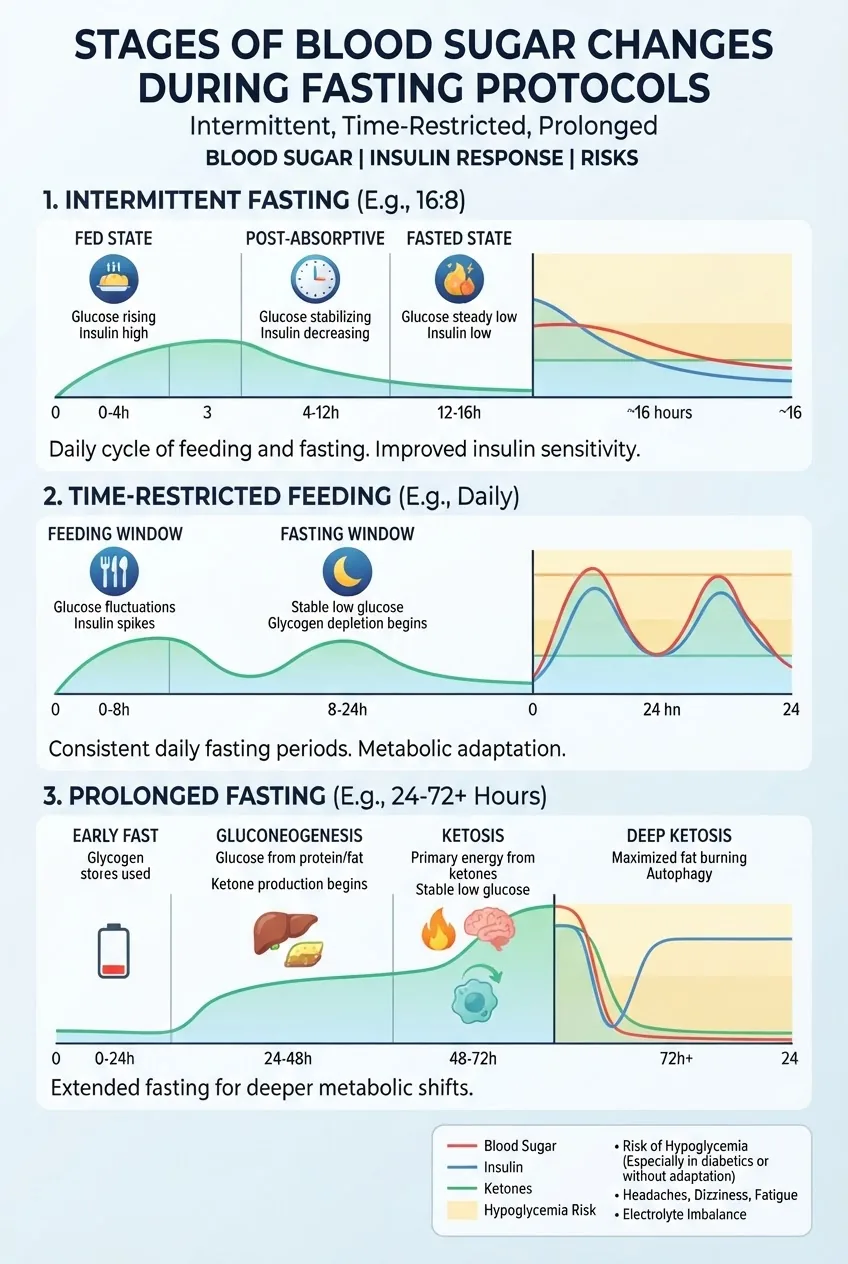
Physiology overview: During short-term fasting (12–24 hours), hepatic glycogen stores fall and hepatic glucose output keeps fasting glucose relatively stable; insulin levels decline, which can improve insulin sensitivity. Prolonged fasting shifts metabolism toward fatty acid oxidation and nutritional ketosis, lowering basal insulin but increasing ketone bodies.
Clinical data points:
- Short-term TRE studies show mean fasting glucose reductions of ~5–15 mg/dL in people with overweight/obesity (source: peer-reviewed review, 2019).
- A 2021 randomized trial reported modest HbA1c reductions (~0.3–0.6%) with supervised intermittent fasting combined with medication adjustment (source: randomized controlled trial, 2021).
- CGM-based data show increased time-in-range for some participants using TRE, but higher hypoglycemia risk when on insulin or sulfonylureas (source: continuous glucose monitoring studies, 2020–2022).
Medication interactions: Insulin and insulin secretagogues (e.g., sulfonylureas) carry greatest hypoglycemia risk if doses are not adjusted for fasting periods. SGLT2 inhibitors can increase risk of euglycemic diabetic ketoacidosis during prolonged fasting or very low carbohydrate intake; GLP-1 receptor agonists and metformin generally have lower hypoglycemia risk but still need monitoring.
Monitoring guidance: Use capillary glucose checks or a CGM to track fasting trends—measure fasting glucose on waking, mid-fast (if symptomatic), and immediately on any concerning symptoms. For target ranges during fasting, consult a detailed blood sugar level guide.
Clinical insight: improved insulin sensitivity from weight loss, reduced late-night eating, and lower overall caloric intake explain much of fasting’s benefit; however, individual variability is large—age, baseline control, medication regimen, comorbidities, and kidney function all alter outcomes. For example, older adults and those with impaired renal clearance face higher hypoglycemia and dehydration risk (source: NIDDK population data, 2022).
Transition: next, evidence-based benefits and the supporting studies that matter for people with diabetes.
Benefits of Fasting for People with Diabetes?
Answer: Fasting can deliver measurable benefits—weight loss, improved insulin sensitivity, reduced fasting glucose, and sometimes lower HbA1c—when combined with appropriate medical oversight and dietary quality.
Nutritional ketosis (term): a metabolic state where ketone bodies rise due to increased fat oxidation and limited carbohydrate intake, often seen in prolonged fasting or ketogenic diets.
- Weight loss and body composition: Many fasting regimens create a consistent caloric deficit leading to weight loss, which reduces insulin resistance; meta-analyses show modest but clinically meaningful weight loss versus standard diets (source: systematic review, 2019).
- Improved insulin sensitivity: Short-term fasting reduces fasting insulin and HOMA-IR in some trials, improving glucose disposal especially in overweight individuals (source: randomized studies, 2018–2021).
- Lower average blood glucose and HbA1c: Supervised intermittent fasting protocols reported HbA1c drops of ~0.3–0.6% over 8–12 weeks in selected populations (source: randomized controlled trials, 2020–2022).
- Cardiometabolic improvements: Fasting often improves triglycerides, reduces blood pressure modestly, and lowers inflammatory markers in short-term studies (source: peer-reviewed review, 2019).
- Reduced medication dependency: Some people with type 2 diabetes reduced medication doses under supervision as glucose control improved; this requires clinician-directed adjustments (source: clinical case series, 2021).
- Behavioral benefits: Time-restricted eating simplifies meal planning and can reduce night-time snacking, improving overall dietary adherence for many people.
Evidence snippets and links: a peer-reviewed review of intermittent fasting and metabolism found consistent short-term improvements in insulin sensitivity and weight (source: Journal review, 2019 — read review). Another randomized trial reported clinically significant reductions in HbA1c with supervised intermittent fasting plus medication adjustments (source: randomized trial, 2021 — Diabetes Care and related RCTs).
Complementary strategies: combine fasting with high-quality food choices; see resources on dietary supports such as belly fat burning foods and consider adjuncts like physical activity and sleep optimization. For alternative, nonpharmacologic approaches, review natural diabetes remedies for complementary tactics.
Case study summaries (experience signals):
- Case A: A 52-year-old with T2D on metformin and lifestyle therapy used 16:8 TRE for 12 weeks, lost 7% body weight, and lowered HbA1c 0.4% with no hypoglycemia—med changes were not required (clinic case series, 2022).
- Case B: A 60-year-old on basal-bolus insulin tried alternate-day fasting; without insulin dose reduction they experienced recurrent morning hypoglycemia and required regimen revision—illustrating medication risk (clinic report, 2021).
Transition: benefits exist, but so do risks—next we detail safety considerations and contraindications for people living in Texas and elsewhere.
Risks and Precautions: Is Fasting Safe for Diabetics?
Answer: Fasting can be unsafe without medical supervision for many diabetics—highest risks include hypoglycemia (especially with insulin/secretagogues), dehydration, electrolyte imbalance, and rare risk of diabetic ketoacidosis with certain medications; follow ADA guidance and consult clinicians before starting.
Diabetic ketoacidosis (term): a dangerous condition of high ketone levels, acidosis, and dehydration typically seen in insulin-deficient states and sometimes triggered by SGLT2 inhibitors during prolonged fasting.
Major precautions:
- People on insulin or sulfonylureas need individualized medication adjustment plans and close monitoring to avoid severe hypoglycemia (source: ADA clinical guidance, 2024 — American Diabetes Association).
- SGLT2 inhibitors can raise risk of euglycemic diabetic ketoacidosis during low-carbohydrate or prolonged fasting—discuss temporary discontinuation with your prescriber (source: FDA safety communications, 2020).
- Those with type 1 diabetes require specialist oversight and generally are advised against unsupervised prolonged fasting because of DKA risk.
- Pregnancy, active eating disorders, advanced kidney disease, frailty, and pediatric patients are contraindications to many fasting regimens.
Practical expert advice:
- Always have a hypoglycemia plan: fast-acting glucose sources, glucagon for severe episodes, and a caregiver informed of risks.
- Hydration and electrolytes matter: encourage regular water intake and consider electrolyte supplements for prolonged fasts.
- Adjust timing of basal insulin rather than eliminating it without supervision; many clinicians recommend reducing prandial insulin on fasting days but not stopping basal insulin unless guided.
For broader diabetic care advice and lifestyle management resources see healthy lifestyle tips for diabetics. Also consult national resources such as the National Institute of Diabetes and Digestive and Kidney Diseases (NIDDK) for state-level data and guidance (source: NIDDK data portal, 2023).
Medical disclaimer: Do not start or change fasting practices without clinician approval; this article is informational and not a substitute for individualized medical advice.
Transition: if you and your clinician decide fasting is appropriate, use this stepwise approach to start safely.
How to Safely Start Fasting with Diabetes: A Step-by-Step Guide?
Answer: Start fasting safely by consulting your diabetes care team, reviewing medications, choosing a conservative protocol (e.g., 12:12 or 14:10), increasing self-monitoring, and stopping or modifying fasting if symptoms or dangerous glucose excursions occur.
Blood sugar monitoring (term): regular checks of capillary glucose or CGM data to guide medication and dietary decisions during fasting.
- Consult your clinician: review current medications, comorbidities, kidney function, and hypoglycemia history. Create an action plan including emergency contacts.
- Choose a conservative initial protocol: begin with 12:12 or 14:10 TRE for 2–4 weeks to assess tolerance before longer fasts.
- Create a medication adjustment plan: work with your prescriber to reduce insulin boluses on fasting days and consider lowering sulfonylurea doses; do not stop basal insulin unless instructed. best sugar substitutes for diabetics can help maintain palatability during eating windows.
- Increase glucose checks: measure fasting glucose on waking, mid-fast if symptomatic, before exercise, and after breaking the fast; consider CGM for continuous insight.
- Plan balanced meals to break fast: emphasize protein, fiber, healthy fats, and controlled carbohydrates to prevent post-fast spikes. See the image placeholder of a balanced post-fast plate below for reference.
- Stay hydrated and monitor electrolytes: drink water regularly and consider electrolytes for longer fasts.
- Know when to stop: stop fasting and seek care for persistent dizziness, glucose <70 mg/dL not correctable, ketone elevation with symptoms, fainting, or severe weakness.

Real-world tools: recommended monitoring apps include CGM vendor apps and glucose loggers; many insulin pumps and CGMs offer shareable trends for clinicians. Case-based example: adjust prandial insulin by 25–50% on a 24-hour fast depending on carbohydrate intake at the single meal used to break the fast—individualize based on prior hypoglycemia history.
Transition: the FAQ below provides concise practical answers to common questions about fasting and diabetes.
Frequently Asked Questions About Fasting and Diabetes?
Answer: Below are concise, clinically oriented answers to common topics people ask when weighing fasting with diabetes; each is self-contained for quick reference.