

Losing weight pre diabetes is a practical, evidence-based pathway to lower your blood sugar and cut diabetes risk. By the end of this guide you will have a 12-week action plan, a sample weekly meal-and-exercise plan, and the monitoring steps required to aim for a 5–10% body-weight loss; skill level: beginner to practical self-coach.
Before you start
- Recent lab results: fasting glucose, A1C (within 3 months), or an OGTT report.
- Scale, tape measure, and a simple food-tracking app (set to kcal).
- Basic home BP cuff and a glucometer if advised by your clinician.
- Comfortable shoes for walking and a resistance band for strength work.
- Medical clearance from your primary care provider if you have cardiovascular disease or take glucose-lowering medication.
- Confirm diagnosis and baseline numbers: Gather fasting glucose, A1C, weight, waist circumference, medications and family history. Aim to record A1C and fasting glucose so you can compare 3-month changes; target A1C drop of ≥0.3% per 3 months is a reasonable early indicator of improvement (individual response varies).
- Set a realistic weight and blood-sugar target: For most people with prediabetes, aim for 5–10% body weight loss over 6 months as a priority; this goal aligns with major prevention trials that reduced progression risk substantially. Set weekly mini-goals (0.5–1.0 lb / 0.25–0.5 kg per week).
- Create a 500 kcal/day calorie deficit: Calculate maintenance calories (multiply body weight in kg by 24 for an estimate), then subtract 500 kcal/day for ~1 lb/week loss. Track intake with a food app and re-check maintenance at 6–8 week intervals.
- Design a low-glycemic, balanced meal pattern: Prioritize vegetables, whole grains with low glycemic index, lean protein, healthy fats and controlled portions of starchy carbs. Limit added sugars and refined carbs; use fiber to blunt glucose spikes.
- Build an exercise routine for glucose control: Start with 150 minutes/week of moderate aerobic activity (brisk walking 30 minutes, 5 days/week) plus two 20–30 minute sessions of resistance training weekly. Add short 10-minute walks after meals to blunt post-meal glucose rises.
- Prioritize sleep, stress management and habit design: Aim for 7–9 hours nightly, practice a 5–10 minute evening wind-down, and add one stress-reduction practice (deep breathing, brief mindfulness, or yoga) 3–5 times/week.
- Monitor and iterate weekly: Track weight weekly, waist circumference monthly, and fasting glucose or SMBG as advised. Adjust caloric intake by 100–200 kcal increments if rate of loss stalls for 3+ weeks.
- Use medical and community resources: Enroll in a diabetes prevention program (DPP) if available, consult a registered dietitian for meal plans, and review medication options with your clinician if lifestyle measures are insufficient.
Transitioning into the deeper evidence and practical steps: below we unpack what prediabetes is, whether it can be reversed, why weight matters, and precise tactics to lose weight safely while improving blood sugar.
Understanding Prediabetes and Its Connection to Weight
Prediabetes means blood sugar levels are higher than normal but not yet in the diabetes range. Diagnostic thresholds commonly used are fasting plasma glucose 100–125 mg/dL, A1C 5.7%–6.4%, or a 2-hour OGTT 140–199 mg/dL. These ranges identify insulin resistance and elevated risk of progressing to type 2 diabetes.
Think of insulin like a key that unlocks cells to absorb sugar; in insulin resistance the key fits less well, so more insulin — and often more circulating sugar — is needed. Excess body fat, especially abdominal fat, increases inflammation and worsens insulin resistance. That’s why weight and fat distribution strongly link to blood sugar prediabetic levels.
Key terms you’ll see throughout: borderline diabetic is a colloquial phrase sometimes used interchangeably with prediabetic; medically we use the specific lab ranges above. Insulin resistance refers to reduced cellular response to insulin and is the central mechanism behind prediabetes and progression to type 2 diabetes.
Prevalence context: according to a 2023 CDC report, an estimated 96 million U.S. adults have prediabetes based on blood sugar or A1C criteria; many are unaware of their status (“According to a 2023 CDC report…”). In Texas, state-level surveillance (2022 state health report) showed rates similar to national averages with higher burdens in counties with obesity prevalence above 35% (“According to a 2022 Texas state health report…”). These public-health statistics underline why community-targeted, realistic weight-loss strategies matter.
Next we’ll address the vital question many people ask: can you reverse prediabetes, and what counts as reversal?
Can You Reverse Prediabetes? Facts and Myths
What reversal means—and what it doesn’t
“Reversing prediabetes” usually means lowering fasting glucose and A1C back into normal ranges (fasting <100 mg/dL; A1C <5.7%) and removing the immediate elevated risk for type 2 diabetes. This can happen with lifestyle change, weight loss, and sometimes medications, but it is not a permanent “cure” without continued maintenance.
Evidence from landmark prevention trials
Structured lifestyle interventions have produced strong results: the Diabetes Prevention Program (DPP) showed a 58% reduction in progression to type 2 diabetes with a 7% weight loss target and 150 minutes/week activity over 3 years (“According to the Diabetes Prevention Program clinical trial, 2002 clinical trial…”). Many real-world DPP translations report durable benefits when participants maintain weight loss and healthy habits.
Myths to avoid
- Myth: weight loss alone always “cures” prediabetes. Reality: weight loss is the most impactful single lifestyle factor, but blood-sugar control also depends on diet quality, activity patterns, sleep and medications when indicated.
- Myth: fasting is the only effective approach. Reality: several regimes (calorie restriction, Mediterranean-style diets, modest carb reduction) can work; sustainability matters more than a single method.
- Myth: supplements alone reverse prediabetes. Reality: supplements have limited evidence and should be adjuncts only; discuss with your clinician.
For readers curious about botanical or non-standard approaches, see this discussion of natural remedies for diabetes and prediabetes.
Clinical practice and guidelines: the American Diabetes Association recommends lifestyle intervention as first-line therapy for people with prediabetes, and the CDC supports structured DPP programs for high-risk adults (“According to the ADA Standards of Care 2024…” and “According to a 2023 CDC program guidance…”).
Transition: now that we understand reversibility boundaries, next we quantify why weight loss itself is such a powerful lever and what targets matter for risk reduction.
Why Losing Weight is Crucial for Managing Prediabetes
Weight loss reduces insulin resistance, lowers circulating glucose and triglycerides, and decreases inflammatory markers. Even modest weight loss produces measurable improvements in blood sugar control and metabolic health.
| Weight Loss (% of body weight) | Typical Glycemic Effect | Reported Risk Reduction |
|---|---|---|
| 3–5% | Improved fasting glucose, reduced post-meal spikes | ~30% lower progression risk in some cohorts (“According to a 2016 cohort analysis…”) |
| 5–7% | Decreased A1C by ~0.3–0.5% | ~50–58% reduction in progression (DPP data) |
| >10% | Larger metabolic shifts; possible medication reduction | Greater and more durable risk reduction (“According to multiple clinical trials, 2000–2020…”) |
Practical numbers to use:
- A 5–10% body-weight reduction (for example, 10–20 lb for a 200-lb adult) is a proven, achievable target that meaningfully lowers diabetes risk (“According to the Diabetes Prevention Program, 2002 clinical trial…”).
- Reduce waist circumference by ≥5 cm as an intermediate goal; abdominal fat correlates with insulin resistance.
- Expect measurable A1C improvements within 3 months of weight loss; track A1C every 3 months initially.
Limitations and variability: individual response varies by genetics, baseline insulin secretion, medication use, and adherence. Weight loss is necessary but not always sufficient — combine diet, activity, sleep and stress reduction for best outcomes.
Transitioning to the tactical: the section below gives a hands-on, stepwise plan for losing weight specifically tailored to people with prediabetes.
Effective Weight Loss Strategies Specifically for Pre Diabetics

- Start with accurate measurement: Record weight, body fat if available, waist circumference (measure at the top of the hip bone). Log three days of typical food intake (two weekdays, one weekend day). Use these to set baseline calories.
- Calculate and implement a safe calorie deficit: Estimate maintenance kcal = body weight (kg) × 24 (sedentary baseline). Subtract 500 kcal/day for ~1 lb/wk weight loss. If you weigh 90 kg, maintenance ≈ 2160 kcal; set target ≈1660 kcal/day. Adjust after 4–6 weeks based on progress.
- Choose a sustainable macronutrient distribution: Typical starting split: 40% carbs, 30% protein, 30% fat (by calories). Prioritize protein at 0.8–1.0 g/kg body weight to preserve lean mass during weight loss; older adults may need 1.0–1.2 g/kg. For a 90 kg adult, aim for 72–90 g protein/day.
- Prefer low-glycemic carbohydrates and fiber: Replace refined carbs with whole grains (barley, steel-cut oats, quinoa), legumes, non-starchy vegetables and low glycemic fruits (berries, apples). Fiber target: 25–35 g/day. Pair carbs with protein and fat to reduce post-meal glucose peaks.
- Time activity around meals: Walk 10–15 minutes after main meals to blunt postprandial glucose. For example: a 15-minute brisk walk after lunch and dinner reduces post-meal spikes and supports caloric burn.
- Use resistance training to improve insulin sensitivity: Two to three weekly sessions, 20–40 minutes, multi-joint exercises (squats, rows, push-ups, step-ups) with 8–12 reps × 2–3 sets. Rest 48 hours between sessions for the same muscle group.
- Implement high non-exercise activity thermogenesis (NEAT): Add 2000–3000 extra steps/day above baseline (use a pedometer); standing desks, household chores and pacing during calls help close daily energy gaps without intense workouts.
- Monitor hunger and cravings with structured meals and snacks: Eat protein-rich breakfasts (20–30 g protein) to reduce mid-day cravings; plan 2–3 balanced snacks if needed (Greek yogurt with berries, small handful of nuts).
- Use portion control tools: Plate method: half non-starchy vegetables, quarter lean protein, quarter whole grain/starchy carb. Pre-portion higher-calorie foods (nuts, cheese) into 1-oz servings to prevent unintentional overconsumption.
- Prioritize consistency over perfection: Use a 80/20 adherence rule — aim to follow your plan 80% of the time and allow flexible choices 20% of the time. This increases long-term sustainability.
- Apply behavioral techniques: Use implementation intentions (“If-then” plans), habit stacking (attach new behavior to an existing one), stimulus control (remove high-sugar triggers from kitchen), and social accountability (join a group or use a coach).
- Track progress weekly and troubleshoot plateaus: If weight loss stalls for 3+ weeks, reassess food logs, reduce intake by 100–200 kcal/day or add two 10-minute daily walks. A plateau often reflects slow metabolic adaptation or hidden calories.
- Consider structured programs when you need support: CDC-recognized DPP programs, clinic-based intensive lifestyle interventions, or referral to a registered dietitian improve adherence and outcomes (“According to CDC DPP implementation reviews, 2018–2023…”).
- Address medications and medical causes: If you take medications that promote weight gain (e.g., some antipsychotics, insulin, sulfonylureas), discuss alternatives with your clinician. Rule out hypothyroidism or other endocrine causes if weight loss is unusually difficult.
Practical linkouts to deeper resources:
foods that help burn belly fat
calorie deficit diets for sustainable weight loss
Transitioning to specific dietary choices that support the above steps: the next section lists foods to include and avoid, sample meals and substitution ideas tailored for prediabetes weight loss.
Dietary Guidelines for Losing Weight with Prediabetes
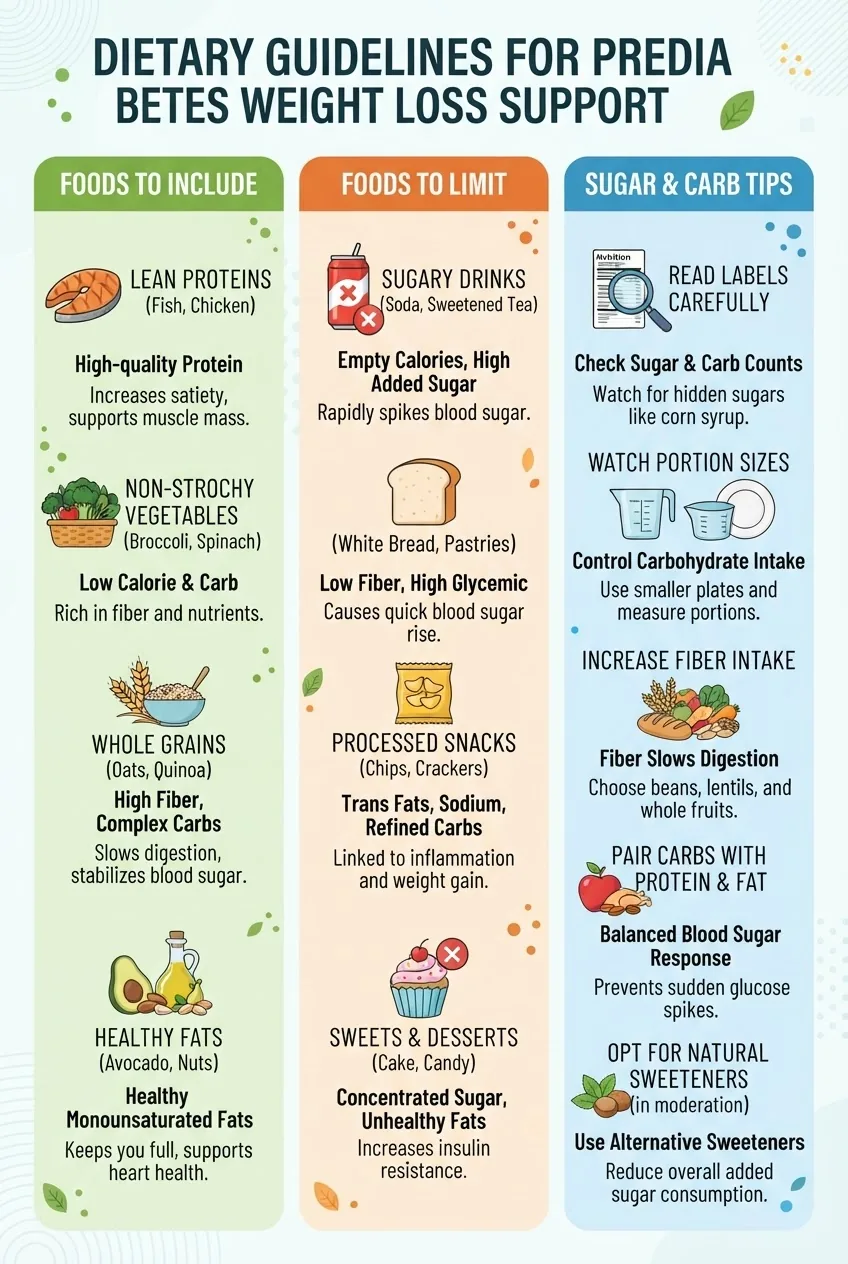
A practical diet for weight loss with prediabetes balances a calorie deficit with food quality that stabilizes blood glucose. Below are clear food categories and examples.
Foods to include (daily choices)
- Non-starchy vegetables: leafy greens, broccoli, bell peppers — fill half your plate.
- Legumes and pulses: lentils, chickpeas — 1/2 to 1 cup servings, 3–5 times/week.
- Whole grains with low GI: steel-cut oats (1/2 cup dry), barley, quinoa — 1/2 to 1 cup cooked per serving.
- Lean protein: chicken breast (3–4 oz), fish (3–4 oz), tofu — aim 20–30 g protein per meal.
- Healthy fats in moderation: olive oil (1 tbsp), avocado (1/4–1/2 fruit), nuts (1 oz).
- Low glycemic fruits: berries (1/2–1 cup), apple (1 medium) paired with protein or fat.
Foods to limit or avoid
- Added sugars and sugar-sweetened beverages — replace with water, seltzer, or unsweetened tea.
- Refined grains and pastries — swap for whole-grain versions and limit to occasional treats.
- High-saturated-fat processed foods — choose lean cuts and cook with unsaturated oils.
- Large portions of starchy carbs — control to 1/2 cup cooked servings if weight loss is the goal.
To understand recommended sugar types and reduction strategies, review the natural vs added sugar guide with health and nutrition facts.
For daily sugar caps and how they translate into real food, see our daily sugar intake recommendations.
If you use sweeteners, compare options with careful context: artificial sweetener options like aspartame and best sugar substitutes for prediabetics.
Sample daily menu (approx. 1,600 kcal for a 90 kg adult targeting ~500 kcal deficit)
- Breakfast (approx. 350 kcal): 3/4 cup steel-cut oats cooked with water, stirred in 1/2 cup berries and 1 scoop whey or plant protein (~20 g protein).
- Mid-morning snack (150 kcal): 1 small apple + 10 almonds.
- Lunch (approx. 450 kcal): Large salad (3 cups mixed greens), 3 oz grilled chicken, 1/2 cup cooked quinoa, 1 tbsp olive oil vinaigrette.
- Afternoon snack (150 kcal): Greek yogurt (plain, 3/4 cup) with cinnamon.
- Dinner (approx. 500 kcal): 4 oz baked salmon, 1 cup roasted non-starchy vegetables, 1/2 cup sweet potato.
Practical cooking tips: batch-cook lean proteins and legumes once weekly, use spices and acid (lemon, vinegar) to boost flavor without added sugar, and pre-portion snacks into single-serve bags to avoid overeating.
Transition: diet is necessary but not sufficient — the next section covers sleep, stress, and daily activity habits that multiply the effect of weight loss for blood sugar control.
Lifestyle Habits Beyond Diet That Support Weight Loss and Blood Sugar Control
Weight loss is most sustainable when supported by sleep, stress management, regular movement and behavior change methods. Below are actionable routines you can adopt with precise timings and methods.
Sleep quality (target 7–9 hours nightly)
- Set a consistent bedtime and wake time — keep within a 30-minute window even on weekends.
- Wind-down routine: 30 minutes before bed, dim lights, silence screens, do 5–10 minutes of relaxation breathing (4-6-8 seconds pattern).
- If sleep is fragmented or less than 6 hours regularly, expect worsened insulin resistance and greater hunger-regulating hormone disruption (“According to a 2020 sleep and metabolic health review…”).
Stress management (5–15 minutes daily)
- Choose one practice: breathwork (5 minutes), progressive muscle relaxation (10 minutes), or brief guided mindfulness (10–15 minutes).
- Track perceived stress weekly; if stress is chronically high, consider counseling or cognitive-behavioral interventions that show benefits for weight and glycemic control (“According to 2019 behavioral health studies…”).
Physical activity details
- Cardio: 150 minutes/week moderate (e.g., brisk walking at 3–4 mph), or 75 minutes/week vigorous. Break into ≥10-minute bouts if needed.
- Resistance: 2 sessions/week, 6–8 exercises covering major muscle groups, 8–12 reps per set.
- Post-meal walking: 10–15 minutes after eating reduces postprandial glucose spikes — aim for routine after two main meals daily.
Behavioral modification tactics
- Use stimulus control: remove sugary snacks from visible locations; keep water accessible.
- Meal planning: spend 60–90 minutes weekly planning and batch-cooking to avoid impulsive choices.
- Social accountability: join a group (DPP or community exercise class) or use a friend for weekly check-ins.
Monitoring blood sugar at home: if advised by your clinician, check fasting glucose weekly and post-meal glucose 1–2 hours after meals occasionally to detect spikes. SMBG data helps adapt meal timing and carbohydrate choices.
Transition: monitoring and medical oversight set safety thresholds and give you objective feedback; next we outline what to watch and when to seek help.
Monitoring Progress and When to Seek Medical Advice
Regular, objective tracking lets you know whether your plan is working and whether medical adjustments are needed.
- Weight: measure weekly at the same time of day, recorded to nearest 0.1 kg or 0.1 lb; expect ~0.25–0.5% body-weight loss per week for safe progress.
- Waist circumference: measure monthly; >40 inches (men) or >35 inches (women) indicates elevated metabolic risk.
- Blood tests: A1C every 3 months until stable, then every 6–12 months. Fasting glucose every 3–6 months as needed.
- blood sugar levels guide for prediabetics
- Clinical checkup: annual comprehensive reviews with lipid panel, liver tests, and blood pressure; adjust meds as weight changes.
- Seek urgent medical attention if you experience symptoms of hyperglycemia (excessive thirst, frequent urination, blurred vision) or hypoglycemia (shakiness, sweating, confusion) when taking glucose-lowering drugs.
External authoritative guidance: review ADA recommendations on prediabetes management at American Diabetes Association and CDC DPP program resources at CDC Diabetes Prevention. (“According to ADA Standards of Care 2024…” and “According to a 2023 CDC program guidance…”)
Transition: next we address common challenges you will face and specific, practical solutions based on clinical and coaching experience.
Addressing Common Challenges in Losing Weight with Prediabetes
Problem: weight loss plateau
Solution: Confirm accurate food logging for 7 days, increase NEAT by 1,500–2,000 steps/day, or reduce daily intake by 100–200 kcal. Reassess macronutrient balance and prioritize protein to protect lean mass. If no change after 4 weeks, consult a registered dietitian.
Problem: strong sugar cravings
Solution: Pair a small, structured sweet with protein (e.g., 1 small square dark chocolate + 1 oz nuts), delay 10 minutes and re-evaluate craving intensity; practice “urge surfing” for 5–10 minutes to reduce impulse-driven eating. Replace habitual triggers (remove desserts from the home) and plan satisfying lower-sugar options.
Problem: low motivation or social pressure
Solution: Use short-term micro-goals (4-week targets), enlist a workout buddy, and use “if-then” plans (“If I’m invited to a party, then I’ll bring a low-sugar dish”). Consider a structured DPP or commercial program for accountability.
Problem: exercise intolerance or joint pain
Solution: Swap high-impact activity for low-impact options: water aerobics, cycling, or brisk walking. Use a gradual ramp-up: 10 minutes per day adding 2 minutes every 3 days until you reach 30 minutes.
Transition: the final sections summarize common mistakes I see in practice, a checklist to verify your plan, and guidance on when to bring in a professional.
Common mistakes and how to avoid them
I regularly see people under-estimate liquid calories; one client lost less than expected until we logged drinks and discovered 400 kcal/day in daily lattes. Fix: track beverages and switch to black coffee or unsweetened alternatives.
I often observe overly restrictive short-term diets that cause rebound binges; one patient followed an extreme 800 kcal plan and regained weight quickly. Fix: aim for 500 kcal deficit and include regular protein and fiber to preserve satiety.
I’ve seen clients ignore post-meal activity; a simple 10-minute walk after dinner cut one client’s postprandial glucose by measurable amounts. Fix: schedule a 10–15 minute walk after two meals daily.
Checklist — verify your plan
- Baseline labs (A1C, fasting glucose) recorded within 3 months.
- Calorie target set (maintenance −500 kcal/day) and logged.
- Weekly weight and monthly waist circumference tracking in place.
- Exercise plan: 150 min/week moderate + 2 strength sessions/week scheduled.
- Sleep routine set (7–9 hours) and stress practice scheduled 3–5 times/week.
- Naive sugar reduction: removed sugar-sweetened beverages; checked “hidden” sugars in condiments and drinks.
- Professional support identified (DPP, RD, clinician) if needed.
When to call in a professional
- If fasting glucose or A1C worsens despite 3 months of consistent lifestyle change.
- If you’re taking glucose-lowering medication and experience hypoglycemia during weight loss.
- If you have complex medical conditions (cardiovascular disease, advanced kidney disease) — coordinate care with specialist input.
- If weight loss stalls for 6 months despite consistent adherence — consider endocrine evaluation and medication options.
Conclusion: Losing weight pre diabetes is the most evidence-based, practical strategy to reduce your risk of type 2 diabetes. Aim for a 5–10% weight loss with a 500 kcal/day deficit, regular physical activity (150 min/week), and lifestyle supports (sleep, stress management). Track A1C and fasting glucose every 3 months, use structured programs when helpful, and consult healthcare professionals when progress stalls or medication adjustments are needed.
Ready to start? Download your weekly meal-and-exercise plan from the checklist above, enroll in a DPP program near you, or schedule a visit with a registered dietitian. Take the first 7-day step now: log three days of food and measure your baseline numbers; small consistent steps produce durable results.