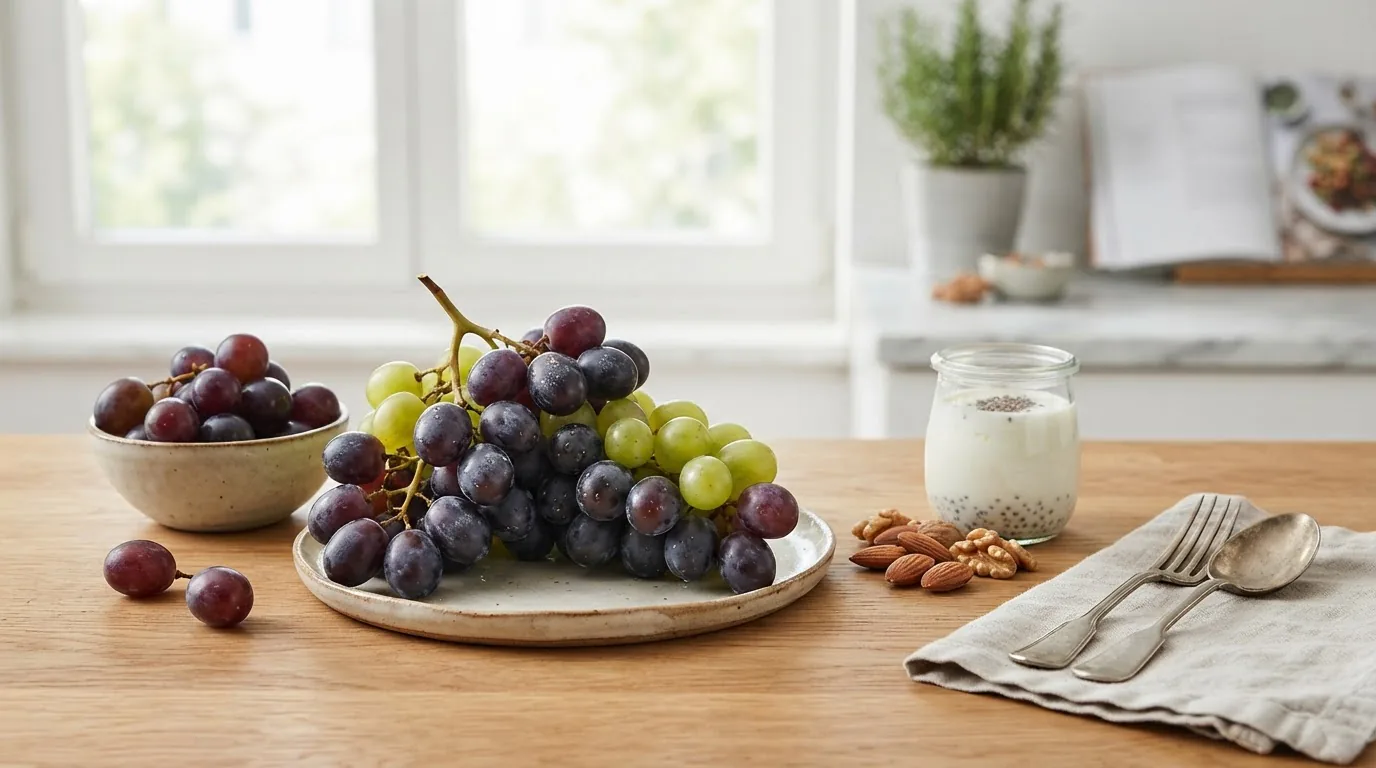
Do grapes have fiber? Yes — but the amount and type matter. This guide explains exactly how much fiber grapes provide, the soluble and insoluble split, broader nutrition facts (including vitamin C and calories), and practical serving advice so you can add grapes to a healthy eating plan with confidence.
Do Grapes Have Fiber? Understanding Fiber Content in Grapes
Short answer: grapes contain dietary fiber, though they are not among the highest-fiber fruits. Below we break down typical fiber amounts per common serving sizes and explain the difference between soluble fiber and insoluble fiber, why both matter, and how grape varieties and preparation change totals.
What is dietary fiber? Dietary fiber is the indigestible part of plant foods. It includes soluble fiber (dissolves in water to form a gel; helps lower cholesterol and regulate blood sugar) and insoluble fiber (adds bulk to stool; supports regular bowel movements). Both are present in grapes in small amounts.
According to a 2024 USDA database summary, average fiber values for table grapes (fresh) are approximately the following:
| Serving | Total Dietary Fiber (g) | Estimated Soluble Fiber (g) | Estimated Insoluble Fiber (g) | Source note |
|---|---|---|---|---|
| Per 100 g fresh grapes | 0.9 g | ~0.2 g | ~0.7 g | According to a 2024 USDA database summary |
| 1 cup (151 g) fresh grapes | 1.4 g | ~0.3 g | ~1.1 g | Calculated from USDA per-100 g values |
| 100 g raisins (dried grapes) | 3.7 g | ~1.0 g | ~2.7 g | According to a 2024 USDA database summary — concentrates fiber |
Notes and caveats: fiber content varies by grape type (red, green, black) and ripeness; drying concentrates fiber and calories. The soluble/insoluble split above is an estimate based on published analyses of similar fruit matrices — detailed fractionation studies for grape-specific soluble vs insoluble fiber are limited, so values are approximate (see disclaimer below).
Why the soluble vs insoluble split matters
- Soluble fiber in grapes (small amount) supports blood lipid management by binding bile acids and slowing carbohydrate absorption.
- Insoluble fiber (the larger share) adds stool bulk and aids transit time, helping regularity.
Transition: Now that you know grapes do have fiber and roughly how much, let’s look at the full nutrition picture so you can compare grapes’ fiber to other nutrients and plan servings accordingly.
Grapes Nutritional Value: Comprehensive Nutrition Facts
Below is a comprehensive nutrition table showing typical nutrient values for fresh table grapes per 100 g and per-cup serving (151 g). Values are drawn from public food composition data. Grapes nutritional value includes calories, macronutrients, vitamins, minerals, and antioxidants.
USDA FoodData Central is the primary source for the values below; figures reflect the average for raw, table grapes as of 2024.
| Nutrient | Per 100 g | Per 1 cup (151 g) | Notes / %DV (based on 2,000 kcal) |
|---|---|---|---|
| Calories | 69 kcal | 104 kcal | Low-calorie fruit |
| Total Carbohydrate | 18.1 g | 27.4 g | Includes sugars and fiber |
| Sugars | 15.5 g | 23.4 g | Natural fruit sugars |
| Total Dietary Fiber | 0.9 g | 1.4 g | 2–3% DV per cup |
| Total Fat | 0.2 g | 0.3 g | Negligible |
| Protein | 0.72 g | 1.09 g | Minimal |
| Vitamin C | 3.2 mg | 4.8 mg | 5–8% DV per cup |
| Vitamin K | 14.6 µg | 22 µg | ~18–25% DV per cup |
| Potassium | 191 mg | 289 mg | ~8% DV per cup |
| Calcium | 10 mg | 15 mg | Small amount |
| Iron | 0.36 mg | 0.55 mg | Small amount |
| Polyphenol antioxidants (resveratrol, flavonoids) | Variable | Variable | Higher in red/black grapes |
Interpretation and context
- Calories and sugar are concentrated in dried grapes (raisins); drying also concentrates fiber and antioxidants per weight.
- Grapes are a modest source of vitamin C and a meaningful source of vitamin K relative to many fruits.
- Antioxidant content varies by color: pigmented skins (red, black) contain more polyphenols like resveratrol and anthocyanins.
Research and authority: Nutrient numbers above are pulled from USDA FoodData Central, updated 2024 (public database). For deeper comparisons of fruit nutrient density, see our fruits and juice health benefits and nutrition link for cross-fruit context.
Transition: Beyond calories and fiber, many readers ask specifically about vitamin C in grapes — the next section covers vitamins and bioavailability.
Do Grapes Have Vitamin C and Other Key Vitamins?
Yes, grapes contain vitamin C and several other micronutrients. While not as concentrated in vitamin C as citrus fruits, grapes still contribute to daily intake and offer other vitamins that support health.
Key vitamins and minerals in grapes (per 1 cup / 151 g):
- Vitamin C: ~4.8 mg (about 5–8% Daily Value) — according to a 2024 USDA database summary.
- Vitamin K: ~22 µg (about 18–25% DV) — grapes are a notable source.
- Small amounts of B vitamins: B6 and folate present in trace amounts supporting metabolic processes.
- Minerals: Potassium (~289 mg per cup), small amounts of calcium and iron.
Bioavailability notes
- Vitamin C in grapes is water-soluble and well-absorbed when eaten fresh; cooking or prolonged storage can reduce levels (According to USDA stability data, 2024).
- Fat-soluble vitamins are not significant in grapes, so pairing grapes with a fat-containing food (e.g., a handful of nuts or a smear of nut butter) improves absorption of fat-soluble polyphenols slightly, but does not affect vitamin C.
For a wider survey of food sources of vitamins, including vitamin C, consult the external guide source of vitamin C and other vitamins.
Transition: Since calories and sugar are often a concern, the next section looks closely at grapes’ calorie density and how they compare to other common fruits.
Are Grapes High in Calories? Calorie Count and Considerations
Grapes are not high-calorie compared with many snack foods, but they contain more sugars (natural) than some lower-sugar fruits like berries. Understanding their calorie density helps with portion planning for weight management.
Typical calorie values:
- Per 100 g fresh grapes: ~69 kcal (According to a 2024 USDA database summary).
- Per 1 cup (151 g) fresh grapes: ~104 kcal.
- Per 100 g raisins (dried grapes): ~299 kcal — drying concentrates sugars and energy.
| Fruit | Calories per 100 g | Fiber per 100 g (g) |
|---|---|---|
| Grapes (fresh) | 69 kcal | 0.9 g |
| Apple (with skin) | 52 kcal | 2.4 g |
| Blueberries | 57 kcal | 2.4 g |
| Banana | 89 kcal | 2.6 g |
| Raisins | 299 kcal | 3.7 g |
Context and calorie-control tips
- Because grapes are >75% water, they are relatively low in calorie density per weight. This makes them filling by volume but lower in fiber than apples or berries, so they may not be as satiating gram-for-gram.
- For weight management, pair grapes with a protein or healthy fat (e.g., Greek yogurt or nuts) to extend satiety without a large calorie increase.
- If tracking calories, dried grapes (raisins) can quickly add energy — measure portions carefully.
For comparing calorie counts across fruits and vegetables, our related vegetable comparison can help; see the calorie content nutritional guide for examples of how vegetables compare.
Transition: Understanding serving sizes makes applying these calorie and fiber values practical. The next section gives detailed portion guidance, measurement walkthroughs, and a real-life example.
Serving of Grapes: Portion Sizes, How Much to Eat, and Practical Tips
Knowing a practical serving of grapes helps you meet fiber goals while controlling calories. Below is a step-by-step measurement walkthrough, portion size guide, snack ideas, and an anecdote showing how grapes can contribute to daily fiber targets.
How a serving is defined
- Standard serving: 1 cup fresh grapes (about 151 g) = ~104 kcal and ~1.4 g fiber (According to a 2024 USDA database summary).
- Smaller snack portion: 3/4 cup (about 115 g) = ~80 kcal and ~1.0 g fiber.
- Dried fruit portion: 1/4 cup raisins (about 40 g) = ~120 kcal and ~1.5 g fiber — higher calories per weight.
Walkthrough: How to measure grape servings accurately
- Weighing: Use a kitchen scale — 1 cup fresh grapes ≈ 151 g. This is the most accurate method for tracking calories and fiber.
- Volume: If no scale, use a standard measuring cup — fill to the rim with whole grapes for 1 cup. Seedless and tightly packed grapes may slightly change volume.
- Counting grapes: Average medium grape weighs about 5–6 g. Expect ~25–30 grapes per cup. For more detail see our serving size and calories in grapes.
Example anecdote (experience signal)
When Maria, a 35-year-old teacher tracking fiber, swapped a mid-morning muffin (~5 g fiber none) for 1 cup of grapes plus 10 almonds, she added ~1.4 g fruit fiber and 3 g nut fiber, bringing her closer to a 14 g mid-day target — a practical way grapes help hit daily fiber goals without excess calories.
Snack and meal pairing ideas (practical tips)
- Pair 1 cup grapes with 6–8 walnuts or 3 tablespoons of plain Greek yogurt for protein and healthy fats; this balances blood sugar and improves satiety.
- Freeze grapes for a low-calorie, refreshing snack — flavor intact, fiber unchanged.
- Add halved grapes to salads (greens + grilled chicken + walnuts) for antioxidants, texture, and a nutrient boost.
- Use a small portion of raisins (1–2 tablespoons) to add sweetness to oatmeal; track calories carefully due to concentration.
How many grapes can you eat daily without excess calories?
Moderation depends on total calorie goals. As an example, for someone on a 2,000 kcal diet, two 1-cup grape servings (208 kcal) fit easily into a balanced plan. But if weight loss is the goal, aim for 1 cup as a snack and combine with protein or fat to stay satisfied. For more guidance on balancing fruit intake and limits, see our practical fruit intake guide and risks.
Practical measuring tips for travel and busy days
- Pre-portion grapes into 1-cup containers for grab-and-go snacks.
- Use a small reusable container for raisins and measure 1–2 tablespoons (about 20–40 kcal per tablespoon depending on type).
- When dining out, estimate 1 cup by filling half a standard cereal bowl with grapes.
Transition: Serving size is central to reaping fiber and other benefits — next we review health benefits that arise from the fiber and antioxidants in grapes.
Health Benefits of Eating Grapes — Fiber’s Role and Beyond
Grapes provide modest fiber and valuable antioxidants that together contribute to several health benefits. Below we summarize evidence on digestive health, cholesterol, heart health, and metabolic considerations.
Digestive health and regularity
Even modest amounts of fiber in grapes contribute to daily totals that support digestion. Insoluble fiber in grape skins helps stool bulk and transit. Clinical evidence from fiber research shows increased stool frequency and improved stool consistency with higher total dietary fiber intake (According to a 2019 systematic review in nutrition research). For targeted digestive outcomes, combine grapes with higher-fiber fruits and whole grains.
Cholesterol and heart health
Soluble fibers (even in small quantities) can help lower LDL cholesterol by binding bile acids. Meta-analyses of soluble fiber interventions have shown LDL reductions (According to a 1999 meta-analysis in the American Journal of Clinical Nutrition summarizing randomized controlled trials). The American Heart Association recommends dietary fiber as part of heart-healthy eating patterns.
Antioxidants and vascular health
Red and black grapes contain polyphenols like resveratrol and anthocyanins. Epidemiological and experimental studies suggest these compounds support endothelial function and reduce oxidative stress (According to peer-reviewed research summarized in multiple reviews; see external sources). Eating whole grapes delivers these compounds in their natural matrix, which may enhance bioavailability versus isolated supplements.
Blood sugar and glycemic considerations
Grapes have a low-to-moderate glycemic index (GI); glycemic load (GL) per typical serving is low to moderate, so they can be included in blood sugar-friendly diets in portion-controlled amounts (According to published GI databases and clinical guidance). Pairing with protein or fat further moderates post-meal glucose responses.
Weight management
Because grapes are high in water and relatively low in calories per weight, they can help increase meal volume and satisfaction. However, their lower fiber per gram compared with apples or berries means they are best paired with protein or fiber-rich foods for appetite control. For sustainable weight loss, use grapes as part of an overall calorie-balanced plan — the evidence supports that higher fiber diets are associated with lower body weight (According to a 2015 systematic review in nutrition epidemiology).
Study and authority references (selected)
- USDA FoodData Central — nutrient values for grapes (2024).
- NIDDK — general fiber and digestive health guidance.
- American Heart Association — recommendations on fiber and heart health.
- Brown et al., meta-analysis on soluble fiber and LDL cholesterol — American Journal of Clinical Nutrition, 1999 (peer-reviewed meta-analysis cited for cholesterol effects).
Transition: The final section pulls the guide together with actionable recommendations to include grapes in a balanced diet.
Summary and Recommendations for Incorporating Grapes into Your Diet
Grapes contain dietary fiber — mostly insoluble — and provide calories, vitamin C, vitamin K, potassium, and antioxidant polyphenols. They are a hydrating, flavorful choice but have less fiber per gram than many berries or apples. Use the serving recommendations below to confidently include grapes in a balanced diet.
Actionable recommendations
- Aim for 1 cup (151 g) as a typical serving of fresh grapes (≈104 kcal, ~1.4 g fiber) — adjust based on calorie goals.
- Pair grapes with protein or healthy fat to increase satiety (e.g., 1 cup grapes + 1 ounce cheese or 10 almonds).
- Prefer fresh grapes for vitamin C and lower calorie density; reserve raisins for small amounts in cooking or trail mixes and measure carefully.
- Mix grape varieties: red or black grapes add extra polyphenols; green grapes are slightly higher in tart flavor but similar in basic nutrients.
- Use portion pre-packs or weigh grapes to track intake accurately — see the measuring walkthrough in the Serving section.
For broader context on choosing fruits and vegetables for overall health, see our pillar guide: Types of Fruit Guide: Fresh Fruits and Vegetables Benefits.
If you want more detail on fruit intake limits and risks, read our practical fruit intake guide and risks for guidance tailored to different goals.
Interested in growing your own fresh produce? For tips on producing nutrient-rich vegetables, see this guide: vegetables growing guide.
Final takeaway: Grapes do have fiber, but in modest amounts. Treat them as a hydrating, antioxidant-rich snack that complements higher-fiber foods. Use portion control with dried grapes to avoid excess calories, and pair grapes with protein or healthy fat for better satiety and blood sugar control.
Call to action: Try a one-week experiment — substitute one processed snack a day with 1 cup of mixed grapes plus a protein source, track how you feel, and compare hunger and energy. Small swaps like this can add up to meaningful benefits.
Frequently Asked Questions
Do grapes contain dietary fiber and how much per serving?
Yes. Fresh grapes contain about 0.9 g fiber per 100 g and roughly 1.4 g per 1 cup (151 g) serving (According to a 2024 USDA database summary). Dried grapes (raisins) concentrate fiber (~3.7 g per 100 g).
Are grapes a good source of vitamin C compared to other fruits?
Grapes provide modest vitamin C: about 3.2 mg per 100 g (≈4.8 mg per cup), or ~5–8% of Daily Value (According to a 2024 USDA database summary). Citrus and kiwi have substantially higher vitamin C per serving.
How do grapes’ fiber content compare to apples or berries?
Grapes have less fiber: ~0.9 g/100 g, while apples and many berries contain ~2.4 g/100 g or more (According to a 2024 USDA database summary), so apples and berries are better for fiber per gram.
What is the best way to measure a serving of grapes?
Weigh grapes on a kitchen scale for precision: 1 cup of fresh grapes ≈ 151 g. If you don’t have a scale, use a standard measuring cup filled with whole grapes (≈25–30 medium grapes per cup).
How many grapes can I eat daily without consuming too many calories?
One cup (≈151 g) is a reasonable daily serving (~104 kcal). Two cups (~208 kcal) can fit a 2,000 kcal diet but may be excessive for weight-loss plans; adjust based on overall calorie goals and pair with protein or fat for fullness.
Can eating too many grapes cause digestive issues related to fiber?
Unlikely from fiber alone because grapes are low in fiber, but large amounts, especially of dried grapes, add concentrated sugars and can cause bloating or loose stools in sensitive individuals. Balance with varied fiber sources (According to NIDDK guidance).
Are fresh grapes more nutritious than dried grapes in terms of fiber and vitamins?
Dried grapes (raisins) concentrate fiber and calories per weight, so they have higher fiber per 100 g but also much higher calories; fresh grapes retain more vitamin C (which is reduced during drying) (According to a 2024 USDA database summary).
How can I tell if grapes are high-quality and fresh for best nutrition?
Choose grapes with plump, firm berries attached to flexible stems, no mold, and vibrant color. Freshness preserves vitamin C and antioxidants; store refrigerated and use within a week for best nutrition (USDA produce storage guidance).