By the end you’ll have a complete clean living meal plan framework tailored to balanced nutrition: macros, micronutrients, sample meals, and a 30-day rotation you can implement in 1–3 hours of planning per week. Time required: initial setup 2–3 hours, weekly maintenance 60–90 minutes. Skill level: beginner to intermediate home cook.
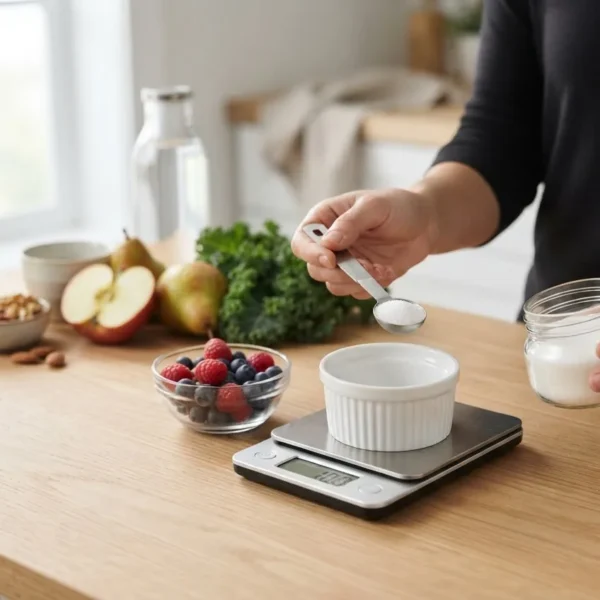
- Basic kitchen tools (measuring cups, food scale, containers)
- Access to a local grocery or farmers market
- Simple tracking method (notebook, spreadsheet, or app)
- Willingness to avoid packaged and highly processed items
What Is a Clean Living Meal Plan and Why It Matters
Clean living meal plan refers to an eating approach that centers on unprocessed or minimally processed foods, prioritizes whole ingredients, and removes industrial additives, refined sugars, and ultra-processed convenience products. It matters because food quality affects energy, metabolic health, and long-term disease risk.
Core elements that define this plan:
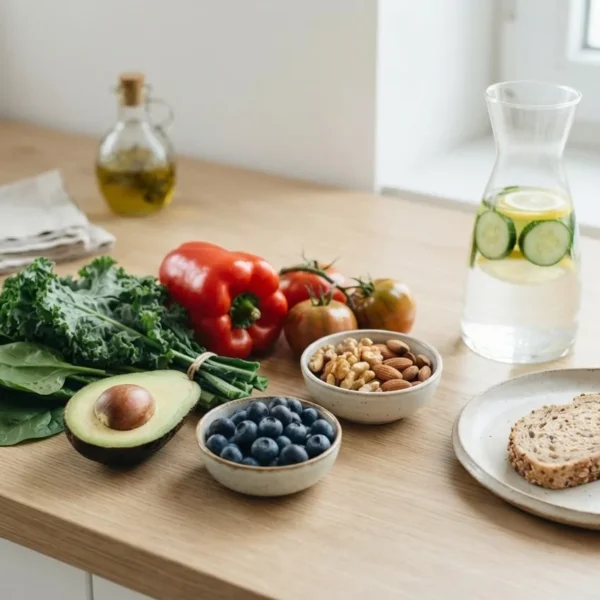
- Whole foods first: vegetables, fruits, whole grains, legumes, nuts, seeds, lean proteins, and healthy fats.
- No processed food diet menu standards: avoid packaged foods with long ingredient lists, added industrial oils, high-fructose corn syrup, and artificial preservatives.
- Ingredient literacy: read labels for single-ingredient or obviously named ingredients (e.g., “chicken” not “chicken flavor”).
Health outcomes commonly associated with prioritizing unprocessed foods include improved blood lipids, better weight management, and more stable blood glucose. According to a 2023 USDA report on dietary patterns, shifting calories toward nutrient-dense, minimally processed foods aligns with recommended dietary patterns for chronic disease prevention. For implementation, a clean eating program is less a rigid diet and more a structured set of choices and cooking patterns that form a sustainable lifestyle.
Transitioning from understanding to practice requires balancing macronutrients and micronutrients, which the next section addresses in detail.
Principles of Balanced Nutrition in a Clean Eating Plan
This section lays out the foundational principles you’ll use to assemble every meal in your clean living meal plan. These are practical rules, not theory, and map directly to plate-building and grocery decisions.
- Prioritize nutrient density — choose foods that deliver more vitamins, minerals, fiber and protein per calorie. Nutrient density helps you meet micronutrient goals without excess energy. For evidence-based guidance, see the USDA dietary guidelines.
- Balance macronutrients each meal — aim for a reliable per-meal target: 25–35 g protein, 30–50 g carbohydrates (focus on whole grains and vegetables), and 10–18 g healthy fats for most adults. This distributes protein and stabilizes blood sugar across the day.
- Include fiber-rich vegetables and whole foods — 3–5 servings of vegetables per day and 2–3 servings of fruit supports gut health and satiety.
- Choose lean food sources — lean proteins (skinless poultry, legumes, fish) and minimally processed dairy or fortified plant alternatives reduce saturated fat while delivering amino acids and micronutrients.
- Use portion control with a simple visual method — half the plate vegetables, one-quarter lean protein, one-quarter whole grain or starchy vegetable, plus a thumb-sized portion of healthy fat (olive oil, avocado, nuts).
- Plan for micronutrient balance — rotate sources of iron (legumes, lean red meat), calcium (dairy, fortified plant milk, leafy greens), iodine (seafood, iodized salt), vitamin D (sun exposure, fatty fish), and B12 (animal foods or fortified foods/supplements).
- Limit added sugars and ultra-processed items — swap sugary snacks for whole fruit and replace packaged desserts with yogurt + fruit or a small portion of dark chocolate.
- Hydration and meal timing — drink 24–36 oz (700–1,100 mL) water between meals and follow a meal frequency that matches your schedule (3 meals + 1 snack is a common clean eating program format).
- Mindful cooking and seasoning — use herbs, citrus, vinegar, and minimal added salt to enhance food without relying on premade sauces that often contain additives.
- Track and adjust — log meals for 2 weeks, then adjust portion sizes and food choices based on energy, hunger, and any weight or lab goals.
When teaching clients I reference foundational concepts from the pillar that explain why these rules work.
For data context behind recommended macro splits and dietary patterns, consult peer-reviewed evidence on processed foods and population health:
- Academy of Nutrition and Dietetics meal planning resources for practitioners and consumers.
- Relevant peer-reviewed reviews on processed foods and health outcomes.
dietary factors and healthy eating stats
Transition: now that you understand the principles, the next section walks you through planning a balanced clean meal step by step, with practical timings, quantities, and a case example.
How to Plan a Balanced Clean Living Meal – Step-by-Step Guide
Follow these practical steps to build a reproducible weekly workflow for your clean food menu plan. Steps below are written as actions you will perform; each numbered step starts with a bolded action phrase.
- Inventory your kitchen and remove temptations. Spend 20–30 minutes: throw out or donate items you will not use (sugary drinks, snack cakes, instant noodles). Keep a separate drawer for seasonings and whole-grain staples. Label one shelf for meal-prep containers.
- Set daily macro and calorie targets. Use the per-meal targets from the principles: for most adults, set daily protein 90–120 g, carbohydrates 150–250 g, fats 45–70 g, and calories 1,800–2,400 depending on sex, age, and activity. Track for two weeks and adjust by ±10% if energy or weight changes undesiredly.
- Choose lean protein sources for the week. Pick 3–4 proteins to rotate: chicken breast (120 g cooked = ~35 g protein), salmon fillet (100 g cooked = ~22 g protein + healthy fats), canned black beans (1 cup = ~15 g protein + fiber), Greek yogurt (170 g = ~17 g protein). Buy quantities for 3–4 servings per protein to rotate across days.
- Plan vegetables and whole grains by color and fiber. Select 6 vegetable types (leafy greens, cruciferous, orange veg, peppers, onions, squash) and 2 whole grains (brown rice, quinoa). Aim for 3 cups cooked vegetables/day and 2–3 servings whole grains/day (1 serving = ½ cup cooked grain).
- Map each meal to macro targets. Create a simple table (or spreadsheet) with breakfast, lunch, dinner, snack and assign per-item macros. Example per meal target: 30 g protein / 40 g carb / 12 g fat. Use food labels or a database to confirm values.
- Create 3 breakfast templates and 4 lunch/dinner templates. Templates speed prep. Examples: Breakfast A = Greek yogurt + ½ cup oats + 1 cup berries + 1 tbsp walnuts. Lunch template = 3 oz grilled chicken + 1 cup mixed greens + ½ cup quinoa + 1 tbsp olive oil. Dinner template = 4 oz salmon + 1 cup roasted vegetables + ¾ cup sweet potato.
- Schedule grocery shopping and batch-cook sessions. Shop twice weekly if fresh produce matters: Saturday morning and Wednesday evening. Batch cook proteins for 2–3 days: roast 1.8–2 kg (4–4.5 lb) chicken breasts for the week, bake 6 salmon fillets, cook 4 cups dry quinoa. Total batch-cook time: 90–120 minutes per session.
- Portion and store meals. Use 3-compartment containers: half for vegetables (raw or roasted), quarter for protein (3–5 oz cooked), quarter for grains/starchy veg. Label with date and reheating instructions. Refrigerate 3–4 days; freeze extras up to 3 months.
- Map micronutrients to food choices. Example mapping for one day: iron — noon salad with ½ cup lentils + 1 cup spinach (add vitamin C source like orange slices to improve absorption); calcium — Greek yogurt at breakfast + kale at dinner; vitamin D — two servings of fatty fish per week or fortified milk daily. This step ensures you meet vitamin/mineral needs across the week.
- Test and refine using a 7-day trial. After one week, evaluate energy, hunger, sleep, and bowel function. If energy dips midday, add 10–15 g protein to lunch or increase complex carbs at breakfast. Adjust spices and preparation methods to avoid boredom.
- Case example: Texas office worker day plan. Sarah, a 35-year-old teacher in Austin wants steady energy for a 9–5 schedule. Daily targets: 1,900 kcal, 100 g protein, 200 g carbs, 60 g fat. Her day: Breakfast — 170 g Greek yogurt + ½ cup oats + ½ cup blueberries + 1 tbsp chia (30 min prep once weekly). Lunch — 4 oz grilled chicken, 1 cup mixed greens, ½ cup quinoa, 1 tbsp olive oil. Snack — apple + 1 oz almonds. Dinner — 4 oz baked salmon, 1 cup roasted broccoli, ¾ cup sweet potato. She batch cooks on Sunday and Wednesday (total 2 hours).
- Refine for dining out and social events. Before leaving, review menu for lean options: grilled proteins, vegetable sides, and ask for sauces on the side. For Texas BBQ or tacos, choose lean smoked turkey, grilled fish, or bean-based fillings and load with salsas, pico de gallo, and grilled vegetables.
- Document your rotation and inventory. Maintain a simple rotation list: Protein rotation (chicken, salmon, tofu, beans), Veg rotation (spinach, broccoli, bell pepper, carrot), Grain rotation (brown rice, quinoa), Fat rotation (olive oil, avocado, walnuts). Update weekly to ensure variety and micronutrient coverage.
Example meal mapping for a lunch plate (target 30 g protein / 40 g carbs / 12 g fat): 100 g cooked chicken (31 g protein), ½ cup cooked quinoa (20 g carbs), 1 cup steamed broccoli (6 g carbs, 3 g protein), 1 tbsp olive oil (14 g fat). Micronutrients covered: iron (broccoli + quinoa), vitamin C (raw pepper), B vitamins from quinoa and chicken.
Common mistakes and how to avoid them
I’ve watched people make the same errors when switching to a clean diet plan:
- Failing to plan for snacks: I saw a client reach for chips when mid-afternoon hunger hit; the solution was prepacking 1 oz nuts + fruit so they didn’t choose processed snacks.
- Overcomplicating recipes: Someone tried five new recipes in week one and burned out; start with 3 templates and perfect them before expanding.
- Ignoring portion sizes: Several people assumed “clean” meant unlimited — track one week to calibrate serving sizes against goals.
Checklist before you call it done
- Every meal template has a protein, vegetable, whole-grain/starchy element, and healthy fat.
- Weekly grocery list covers those templates for 7 days plus 2 snack choices.
- Macros and calories calculated for your daily targets and documented.
- Meal prep slots scheduled (two sessions per week, 60–120 minutes each).
- Leftovers labeled and storage rules (3–4 days refrigeration; freeze long-term).
When to call in a professional
If you have chronic health conditions (diabetes, kidney disease, pregnancy, severe food allergies) consult a registered dietitian or physician before making major dietary shifts. For personalized macro targets tied to clinical labs, schedule a 60-minute RD session or medical consult.
Transition: with planning steps complete, below are specific clean foods you can rely on for everyday breakfast, lunch, and dinner.
Clean Foods to Include for Everyday Breakfast, Lunch, and Dinner
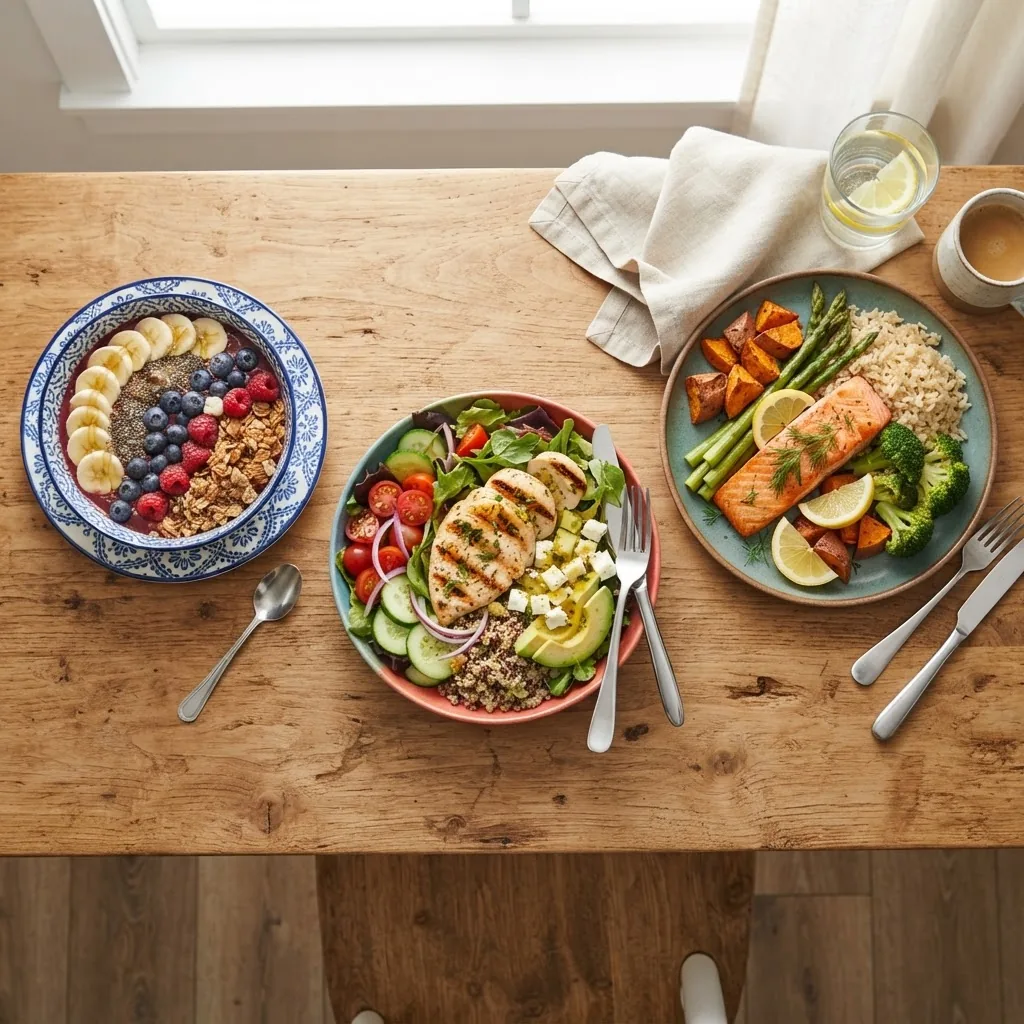
Below are categorized lists of clean, unprocessed and lean food choices you can mix-and-match. This fuels nutrient-dense meals and supports satiety.
Breakfast (choose one item from each column)
| Protein | Carb / Grain | Produce / Fiber | Healthy Fat |
|---|---|---|---|
| Greek yogurt (170 g) | Rolled oats (½ cup cooked) | Berries (½–1 cup) | Chia seeds (1 tbsp) |
| Eggs (2 whole) | Whole-grain toast (1 slice) | Spinach / tomato | Avocado (¼–½ medium) |
Lunch (plate-building examples)
- Lean protein: 3–4 oz grilled chicken, 4 oz firm tofu, 1 cup chickpeas
- Vegetables: 2 cups mixed greens + 1 cup roasted veg
- Whole grain/starch: ½ cup cooked brown rice or ¾ cup roasted sweet potato
- Fat/sauce: 1 tbsp olive oil or 2 tbsp hummus
Dinner (complete meal ideas)
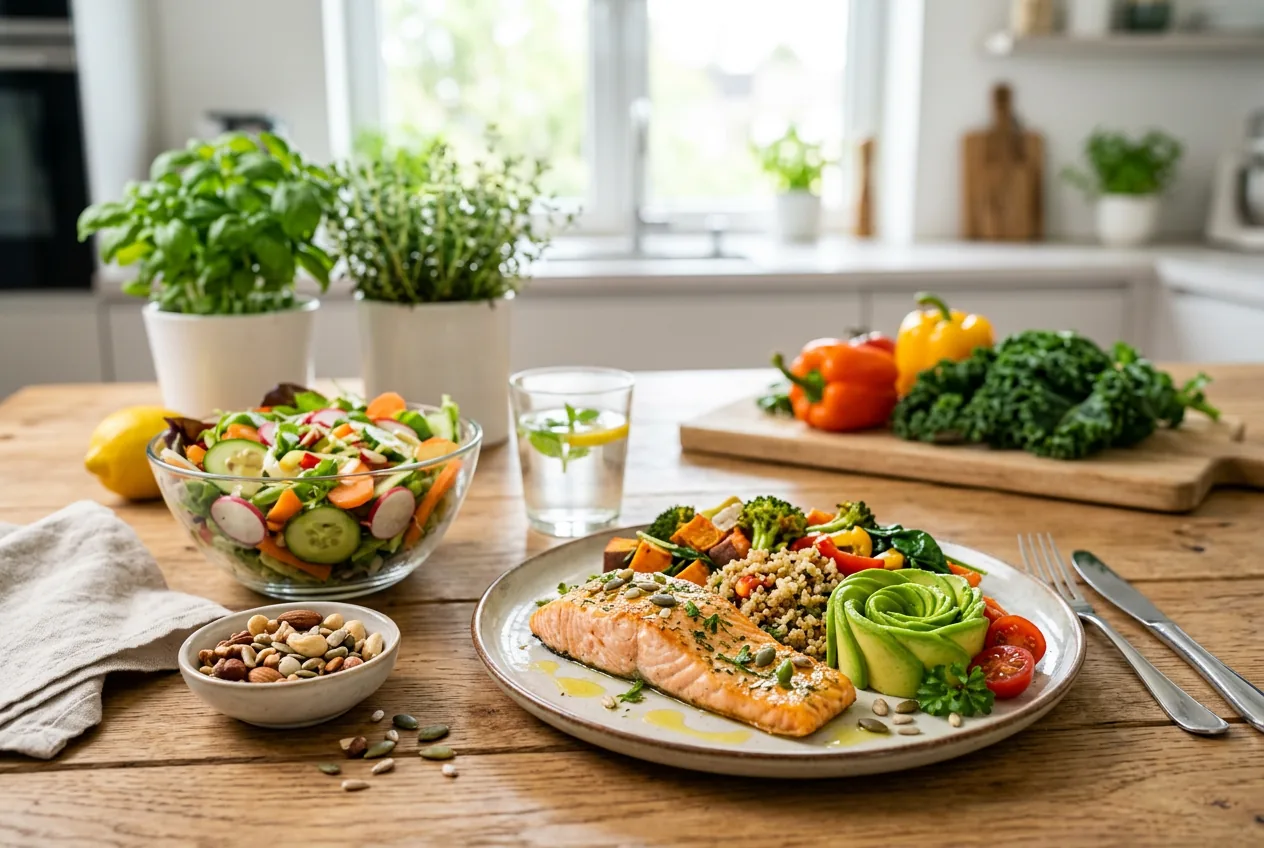
- Grilled salmon (4 oz) + 1 cup quinoa + 1.5 cups steamed broccoli + lemon and herbs
- Turkey chili made with canned no-salt-added tomatoes, beans, peppers (1.5 cups) + mixed greens
- Stir-fry with shrimp (4 oz), 2 cups mixed vegetables, ¾ cup brown rice, minimal sauce
Lean food examples you can rely on weekly: chicken breast, turkey lean cuts, salmon, cod, canned tuna (in water), eggs, low-fat dairy, tempeh, tofu, lentils, edamame, black beans, quinoa, farro, steel-cut oats, sweet potatoes, and a wide rotation of vegetables and whole fruits.
nutritious foods for clean eating
Transition: with daily foods selected, the next section lays out a practical 30 day framework you can rotate and personalize.
Sample 30 Day Clean Eating Meal Plan Framework
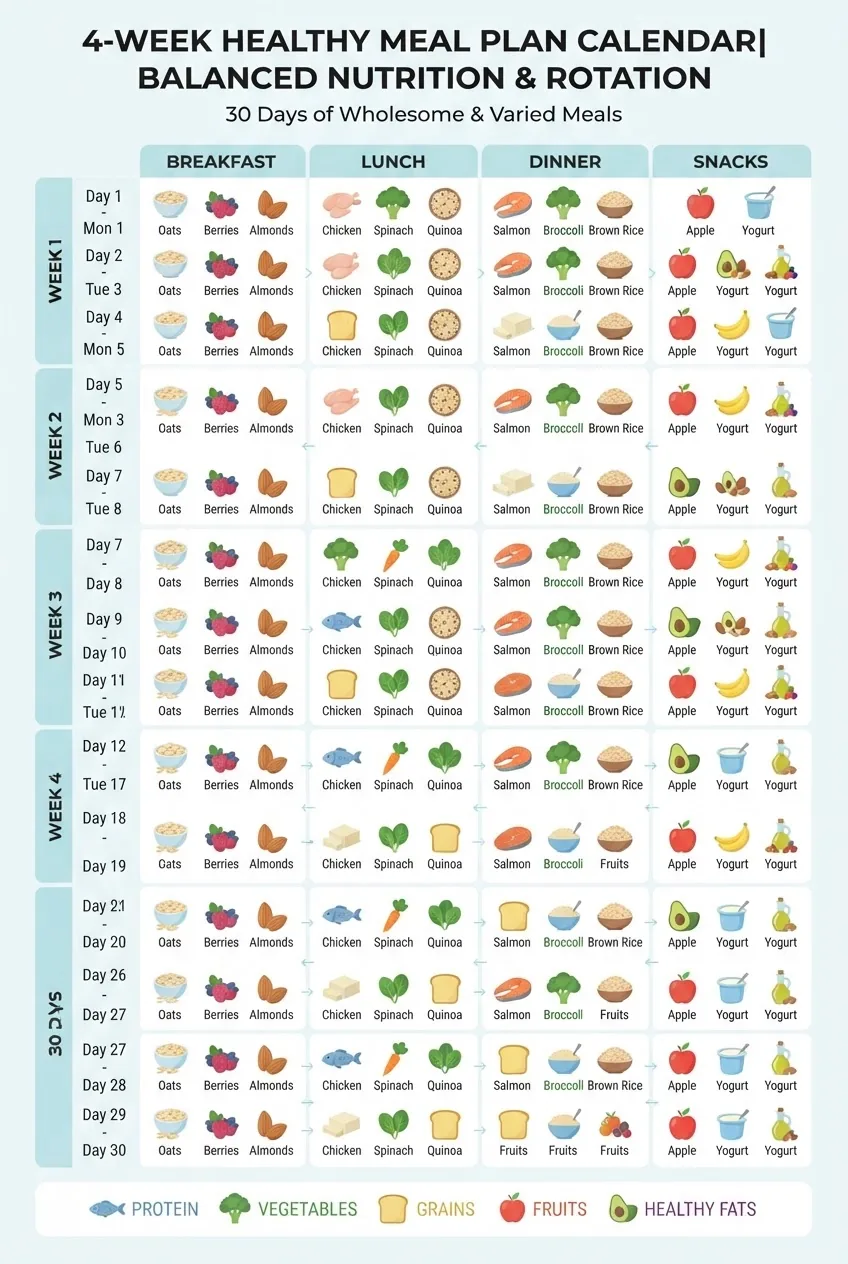
This is a high-level framework for 30 days that emphasizes rotation, variety, and nutrient coverage rather than prescriptive recipes. Use the templates below and swap proteins/vegetables weekly. Each week follows a consistent template to simplify shopping and prep.
| Week | Breakfast Template | Lunch Template | Dinner Template | Snack Options |
|---|---|---|---|---|
| Week 1 (Days 1–7) | Greek yogurt + oats + berries + nuts | Grilled chicken bowl (quinoa, greens, veg) | Baked salmon + roasted veg + sweet potato | Apple, 1 oz almonds, carrot sticks + hummus |
| Week 2 (Days 8–14) | Veggie omelet + whole-grain toast | Black bean salad with brown rice | Turkey chili + mixed greens | Greek yogurt cup, berries, small banana |
| Week 3 (Days 15–21) | Smoothie (spinach, protein, fruit, oats) | Tofu stir-fry + brown rice | Grilled shrimp tacos (corn tortillas, slaw) | Handful of walnuts, orange, cucumber slices |
| Week 4 (Days 22–30) | Overnight oats or chia pudding | Lentil soup + side salad | Roast chicken + root veg + kale | Rice cakes + natural peanut butter, pear |
Rotation strategy: pick one protein from your list each day and avoid repeating the same protein more than twice per week; rotate grains every 2–3 days; vary vegetables daily by color. This reduces micronutrient gaps and keeps meals interesting. For additional weekly menus that complement this 30-day structure, see weekly options.
weekly healthy clean eating menus
Sample grocery shopping cadence for the 30-day framework:
- Weekly core shop (proteins, whole grains, pantry staples)
- Midweek fresh shop (leafy greens, berries, herbs)
- Monthly bulk purchases (nuts, seeds, frozen vegetables)
Transition: even well-planned programs hit snags. The next section addresses common barriers and practical fixes for life in Texas and similar everyday contexts.
Common Challenges and Solutions When Following a Clean Living Meal Plan
Below are frequent issues people hit and direct, actionable solutions I use with clients.
- Challenge: Time constraints for meal prep. Solution: batch-cook proteins on Sunday (90 minutes) and a 30-minute midweek refresh. Use frozen vegetables to save chopping time.
- Challenge: Dining out or social events. Solution: scan menus beforehand, choose grills/steamed options, request dressings/sauces on the side, and prioritize vegetables and lean proteins.
- Challenge: Budget concerns. Solution: buy seasonal produce and bulk grains, prioritize cheaper protein sources like eggs, canned fish, beans, and rotate with costlier items weekly.
- Challenge: Taste fatigue. Solution: rotate herbs and spices (cilantro, cumin, smoked paprika), prepare 3–4 sauces (salsa, tahini-lemon, chimichurri) to vary flavors without processed ingredients.
- Challenge: Family preferences or picky eaters. Solution: keep one “flex” night per week where family favorites are adapted with whole-food swaps (e.g., whole-grain pasta, lean ground turkey, extra vegetables).
Caveats: strict clean living can be restrictive. For specific nutrient needs or clinical conditions consult a professional. According to a 2024 industry report on dietary adherence, gradual changes and template-based planning improve long-term success rates.
Transition: sustainment is where many plans fail — below are durable strategies for long-term success.
Tips for Sustaining a Clean Living Meal Plan Long Term
Sustaining this lifestyle comes down to habits, variety, and measurable routines. These tips keep you on track and make clean eating a default choice.
- Rotate foods every 7–10 days to ensure micronutrient diversity and avoid palate fatigue. Keep at least 3 proteins, 6 vegetables, and 2 grains in your rotation matrix.
- Schedule consistent meal-prep blocks: 90 minutes on Sunday and 30–60 minutes midweek. Protect these times on your calendar like an appointment.
- Use portioned containers and labeling: mark date and macro approximations (e.g., “L: 32g P / 45g C / 14g F”) so you can quickly pick meals that meet targets.
- Practice mindful eating: take 15–20 minutes per meal, chew thoroughly, and stop when 80% full to avoid overeating.
- Plan for transitions and travel: pack non-perishables like nut butter packets, canned tuna, and whole-grain crackers; research restaurants with clean options ahead of time.
- Track outcomes quarterly: weigh or measure every 4 weeks, review energy and labs with a professional, and adjust macros by 5–10% as needed.
optimal wellness through diet and exercise
For long-term adherence and safety, reference the Academy of Nutrition and Dietetics for meal-planning best practices and consult primary care for lab monitoring when making large dietary shifts.
Trust signal: Before changing your diet significantly, talk with a qualified healthcare provider. According to the USDA dietary guidelines and clinical reviews, tailoring to individual needs prevents nutrient gaps and supports long-term health.
Final transition to wrap-up: use the checklist below to confirm your plan is ready to implement and sustainable.
Final implementation checklist
- Weekly templates for all meals exist and match macro targets.
- Meal prep schedule and grocery cadence are fixed on calendar.
- Rotation list covers proteins, vegetables, grains, and fats for 30 days.
- Emergency clean snack list prepared for travel or busy days.
- Plan to consult a dietitian for special diets or clinical concerns.
When to call a professional: If you have complex medical needs (renal disease, pregnancy, pediatric concerns), rapid unexplained weight changes, or persistent digestive symptoms, schedule a registered dietitian or physician within 2 weeks for tailored guidance.
Conclusion: You now have a step-by-step route from understanding the clean diet plan to implementing a sustainable, balanced, unprocessed food diet plan: principles, practical steps, food lists, a 30-day framework, and troubleshooting. Start with a 7-day trial, refine weekly, and scale to a 30-day rotation. Ready to begin? Block two hours this weekend to complete the “Inventory + Batch-cook” steps and set up your first week.