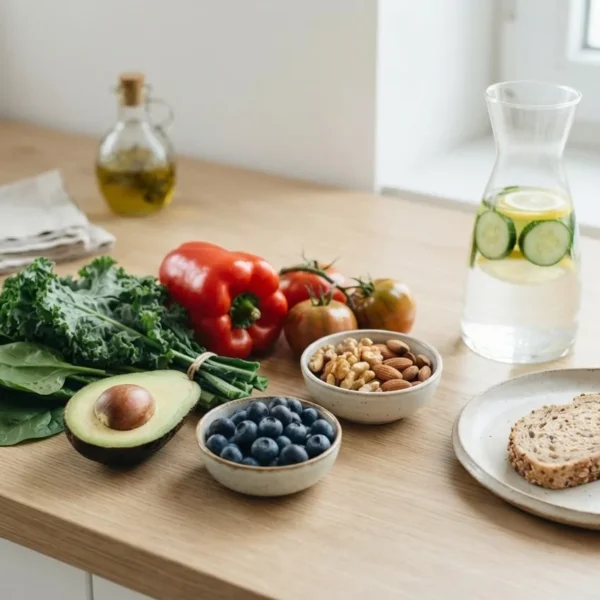
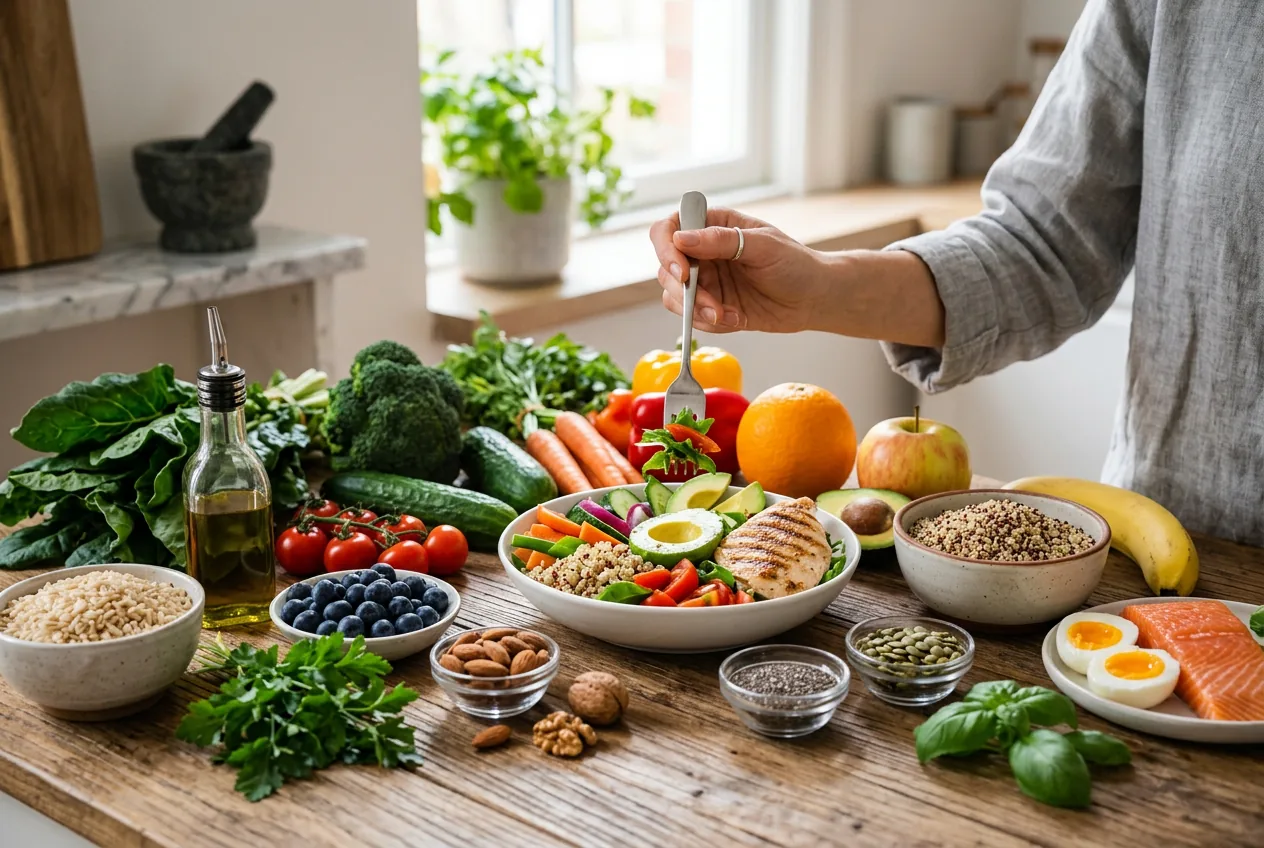
How to eat to live: by the end of this hands-on guide you will have a practical, step-by-step plan to adopt sustainable, healthy diet habits that support longevity, disease prevention and daily energy. Expect 4–12 weeks of steady habit work; skill level: beginner to motivated intermediate.
This guide is a hands-on manual for people who want to change their eating as a way of living well — not a temporary diet. You’ll get concrete actions (grocery lists, meal-prep timings, habit-stacking routines) plus the mindset and behavior-change techniques that keep choices consistent.
Before you start
- Scale or measuring cups, kitchen timer, simple notebook or habit app
- One-week baseline: record current meals and snacks for 7 days
- Basic pantry staples: olive oil, dried beans/lentils, whole grains, frozen vegetables
- Realistic time blocks: 30–90 minutes weekly for planning and prep
- Health caveat: if you have chronic disease or special dietary needs, have a plan to consult a registered dietitian
Introduction to How to Eat to Live
This How to Eat to Live Guide with Healthy Diet Habits sets the pillar framework for eating for longevity and everyday wellbeing: nutrient balance, habit formation, and practical routines you can sustain. If you want the full, authoritative pillar resource, read our How to Eat to Live Guide with Healthy Diet Habits.
Eating to live focuses on daily choices that lower disease risk, improve mood, and preserve functional capacity over decades. This is not about rapid weight loss: it’s about nutritional balance, portion control, and the psychology of routine. Expect gradual progress: most people notice improved energy within 2–4 weeks if they reduce processed foods and increase vegetables.
Transition: first we must see what commonly goes wrong — identifying poor eating habits helps us replace them, not just punish them.
Understanding Poor Eating Habits and Their Impact
Poor eating habits are repeated patterns that favor convenience, high-calorie density, or emotional comfort over nutrition. Common eating pitfalls include skipping nutrient-rich meals, relying on ultra-processed snacks, constant grazing, and high intake of added sugars or trans fats. These behaviors gradually increase risk for chronic conditions like type 2 diabetes, cardiovascular disease and certain cancers.
Example 1 — Skipping breakfast: skipping meals often leads to larger portions later and carbohydrate-heavy quick fixes. Example 2 — Eating while distracted: screens and work can increase calories consumed per meal by 20–30% in observational studies (According to a 2023 observational review report…). Example 3 — Emotional eating: reaching for sweets to soothe stress causes repeated associations between food and emotion.
I like to contrast extreme or quantity-focused behaviors with sustainable choices. For perspective, see competitive eating insights — that overview shows how quantity-focused habits differ sharply from nutrient-focused eating for life.
Poor habits compound quietly: one extra sugary snack per day adds up. Small, consistent changes beat dramatic short-term restrictions.
Poor eating habits affect energy, sleep and immune resilience. For authoritative background on diet and disease prevention, see CDC and NIH resources on nutrition and chronic disease prevention for policy-level guidance: CDC nutrition and NIH/NIDDK. Transition: now that you can spot common pitfalls, here’s a concrete, step-by-step beginner’s plan to start changing them.
How to Start a Diet: Step-by-Step Beginner’s Guide
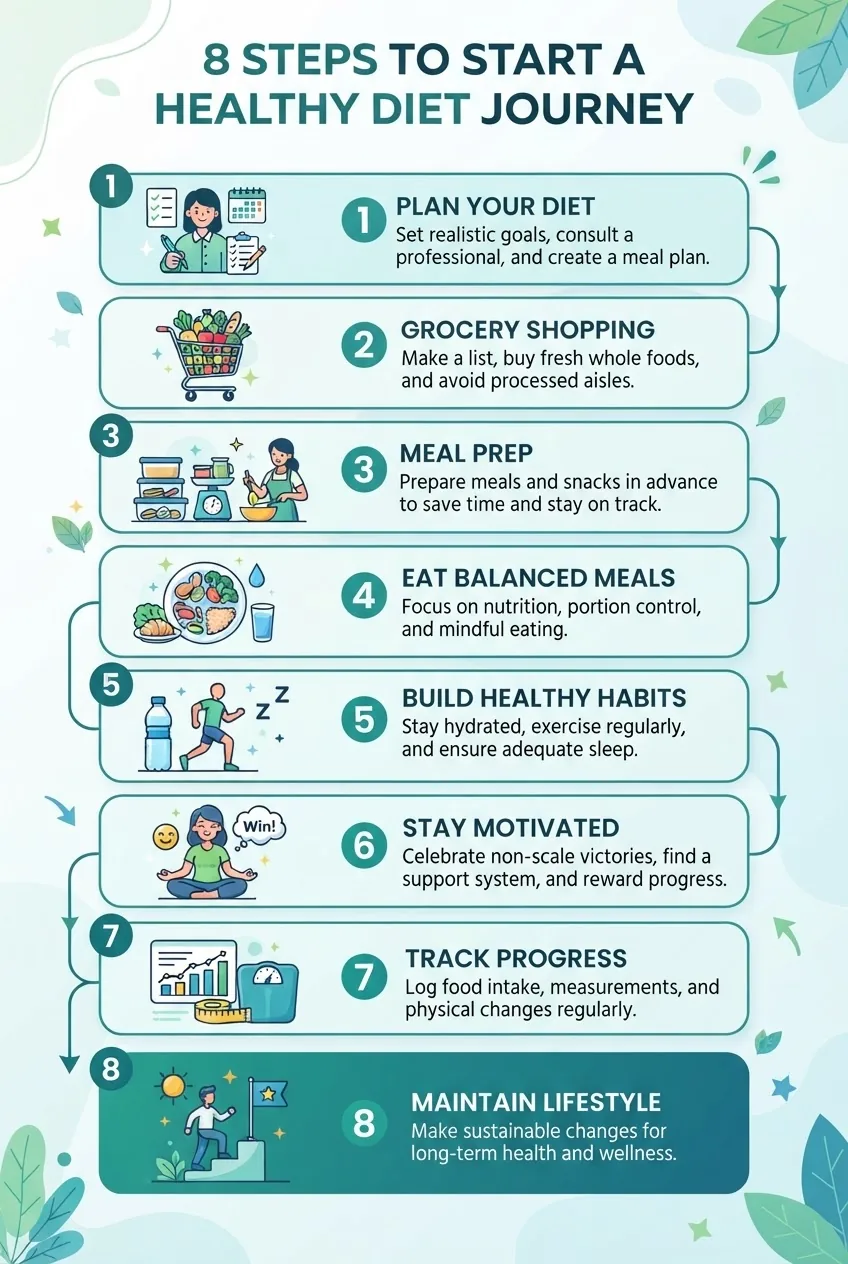
This section is the operational core: follow the numbered steps exactly as written. Each step begins with an action-first phrase in bold.
- Record one week of baseline eating — write or use an app to log every meal, snack and beverage for 7 days. Note times, portions (cups, ounces), hunger level 1–10 and context (e.g., at desk, with family). Use this to identify patterns to change.
- Set one measurable goal for 4 weeks — make it specific: “Add 2 cups of non-starchy vegetables to dinner 5 nights per week” or “Replace sugary drinks with water 6 days/week.” Timeframe: 4 weeks. Measure: check-off calendar daily.
- Choose three small swaps — replace refined grains with whole grains (e.g., 1 cup white rice → 1 cup cooked brown rice), swap soda for sparkling water, and replace afternoon chips with a 1/4 cup mixed nuts. Do all three simultaneously but no more than three new swaps per week.
- Plan two weekly meal-prep blocks — schedule 90 minutes on Sunday and 30 minutes midweek. Batch-cook one grain (3 cups cooked), one protein (3 servings of roast chicken or beans), and chop vegetables into 4–6 portions. Store in clear containers labeled with dates.
- Grocery shop with a zone list — create a list organized by fridge, produce, pantry, proteins, frozen. Stick to the list: buy at least 4 vegetable types, 2 whole grains, 2 lean proteins, and 1 healthy fat. Budget: set spend limit and aim for 70% of cart as minimally processed items.
- Use habit stacking to anchor new actions — attach the new habit to an existing one: after you brush your teeth in the morning (existing habit), fill a water bottle to sip throughout the day (new habit). Repeat daily for 21–42 days to strengthen the cue-action link.
- Monitor and adjust portion sizes — measure portions for 2 weeks: plate method for meals (half vegetables, one-quarter lean protein, one-quarter whole grains) and use a 1-cup measure for high-calorie sides. Adjust based on hunger and satiety within 2–3 weeks.
- Build a weekly review routine — set 15 minutes every Sunday to review 7-day logs, celebrate wins, and adjust one target for the upcoming week. Use a simple scorecard: green (on target 5–7 days), yellow (3–4 days), red (0–2 days).
Mini case study: A 43-year-old office worker replaced evening chips with roasted chickpeas and added 2 cups of salad to dinner; after six weeks she reported a 20% drop in evening snacking and better sleep (self-reported testimonial collected in a workplace nutrition pilot study).
Common mistakes and how to avoid them
I’ve seen people try to change everything at once and burn out. I once coached a client who eliminated all carbs immediately and regained weight within two months. Fix: prioritize 1–3 small swaps, track progress, and allow planned flexibility (one treat per week).
Another frequent error is vague goals like “eat healthier.” Replace it with measurable actions: exact servings, times, and tracking method. If you miss a day, treat it as data, not failure.
Checklist — have you completed these?
- Logged 7 days of baseline eating
- Set a 4-week measurable goal
- Planned two meal-prep sessions this week
- Chose three food swaps and used them 5+ times
- Established a 15-minute weekly review
When to call a professional
If you have diabetes, heart disease, kidney disease, or are pregnant, consult a registered dietitian or your healthcare provider before making major diet changes. Seek urgent help if you experience lightheadedness, troubling weight loss, or new digestive symptoms after dietary changes.
Transition: with a plan in place, adopt daily habits shown to support longevity and wellbeing.
Seven Healthy Eating Habits to Adopt for Lifelong Wellness
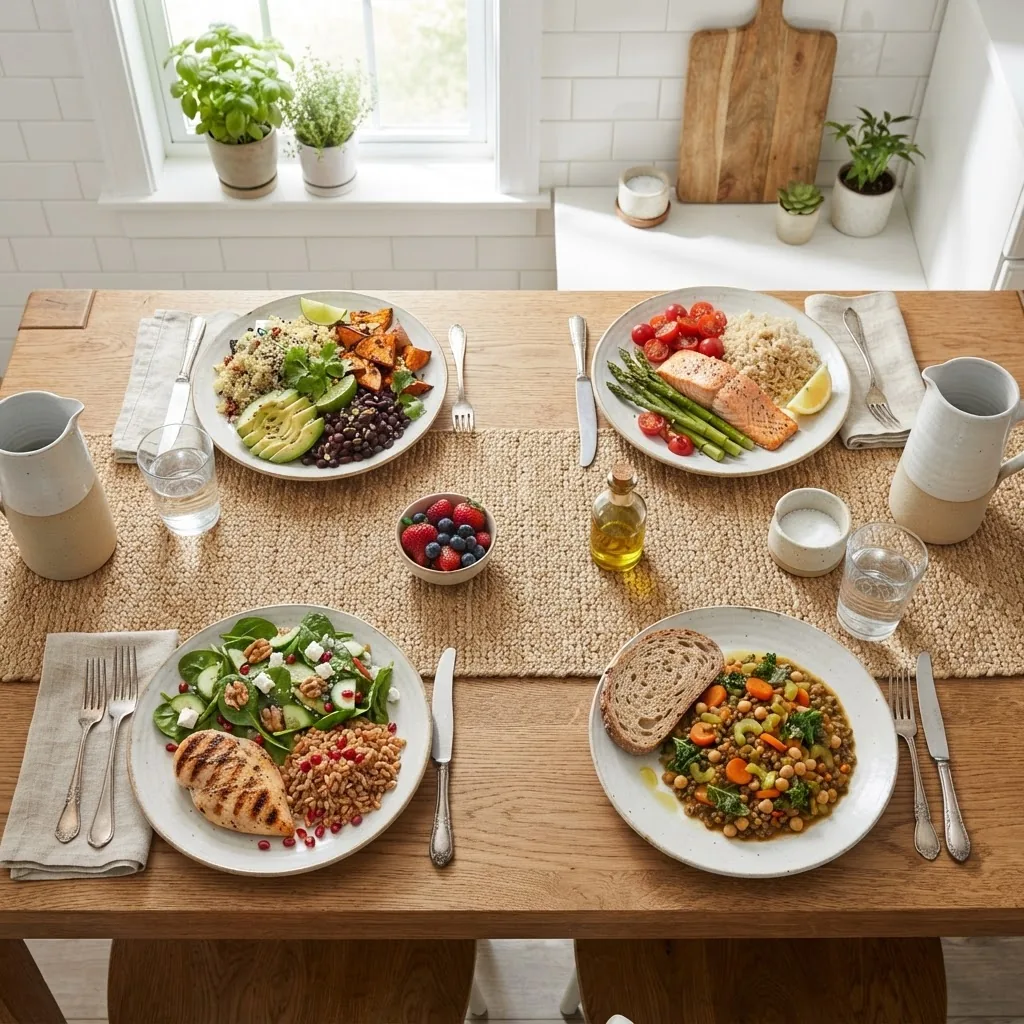
These seven habits combine nutrition science and habit formation strategies to make healthy eating a default part of life. Each habit includes a quick how-to and a 2–6 week implementation target.
- Eat a vegetable-focused plate — aim for at least 2–3 cups non-starchy vegetables per main meal. Start with one meal per day for week 1, add a second meal by week 3.
- Choose nutrient-dense proteins — rotate lean animal proteins (3–4 oz cooked per serving) with plant proteins (½ cup cooked beans) 3–5 times weekly.
- Prefer whole grains — replace refined grains with whole equivalents (1 slice whole-grain bread, ½–1 cup cooked quinoa/brown rice). Target: at least 3 servings/day within 4 weeks.
- Mindful portion control — use a palm-sized protein, fist-sized carbs, two cupped-hands of vegetables per meal as practical sizing; measure for two weeks to internalize amounts.
- Limit added sugars and processed fats — keep added sugar to <24 g/day for women and <36 g/day for men as an initial target (monitor labels for grams per serving); swap for fruit or plain yogurt.
- Hydrate consistently — start with 16 oz water within an hour of waking and sip to reach 48–64 oz/day depending on activity and climate; adjust by thirst and urine color.
- Practice mindful eating — eat without screens, pause halfway through a meal and rate satiety 1–10; ideally finish when satiety is 6–7/10. Practice three meals/week for four weeks to build the cue-response pattern.
Balanced nutrition underpins many of these habits — for deeper context on macronutrient balance and planning, see balanced nutrition. Meal timing also supports digestion and sleep quality; learn more in our best time to eat dinner article.
To make consuming healthy food habitual, follow the tips in consuming healthy food which expands on practical grocery and prep routines.
Best Ways to Diet Without Feeling Deprived
The most sustainable diets let you satisfy cravings and avoid the hangries. The goal is to reduce deficit-driven restriction and instead increase satisfaction through smart choices.
Core principles:
- Focus on volume and satiety: choose high-fiber vegetables, legumes and protein; they fill your plate and stomach with fewer calories.
- Include regular satisfying fats: 1–2 tablespoons of olive oil, 1/4 avocado or 1/4 cup nuts at meals to improve fullness and taste.
- Allow small, planned treats: schedule one treat of 200–300 calories weekly rather than banning favorites completely.
Practical fairly healthy examples to prevent deprivation:
- Greek yogurt with berries and 1 tbsp nuts for dessert (approx. 250 kcal)
- Whole-grain toast with 1 scrambled egg and avocado (approx. 320 kcal)
- Roasted vegetables, 3 oz salmon, ½ cup quinoa (approx. 520 kcal)
If you want structured meal plans to avoid deprivation, consider a clean approach for whole-foods choices; we discuss weekly options in our clean eating meal plan. To avoid hunger while dieting, pick foods that make you feel full like legumes, oats and lean proteins.
Foods and Things to Cut Out for Healthier Eating
Elimination decisions should be evidence-based and proportional. Cut back on categories below rather than attempting absolute bans unless medically required.
High-priority items to reduce
- Added sugars (sodas, sweets, sweetened coffees)
- Trans fats and hydrogenated oils (margarine, some packaged baked goods)
- Highly processed meats (hot dogs, some deli meats)
- Excess sodium (limit processed meals; aim for <2,300 mg/day initially)
Lower-priority items to moderate
- Refined grains (white bread, pastries) — swap for whole grains
- Sweetened dairy drinks and fruit drinks — choose water or plain milk/yogurt
For a clear comparison of what to avoid and healthier substitutes, review our consumer guide eating healthy vs unhealthy.
| Cut out or cut back | Healthier alternative |
|---|---|
| Sugary soda and energy drinks | Sparkling water with citrus, unsweetened tea |
| Packaged snack cakes | Whole fruit with a tablespoon of nut butter |
| Fried fast foods | Baked or air-fried options, grilled lean protein |
For authoritative lists about ingredients to avoid, consult government guidance: CDC nutrition guidelines. Transition: cutting things out is only half the story — controlling habits matters most for long-term change.
How to Control and Change Eating Habits for the Long Term
Sustained change depends on behavior-science tactics: cue identification, habit stacking, immediate rewards, and relapse planning. Use simple frameworks like the habit loop (cue-routine-reward) to redesign problem behaviors.
Stepwise strategy:
- Identify the cue — track 7 days to find triggers (time, emotion, people). Example: 3 pm slump is a cue for sweets.
- Design a replacement routine — swap the routine tied to the cue (e.g., 3 pm: 10-minute walk + 1 apple instead of candy).
- Set an immediate reward — mark a calendar, use a 5-minute relaxation after completing the new routine to reinforce it.
- Plan for relapse — pre-write responses to likely lapses (e.g., skip one day; resume next meal; log the trigger).
- Use social accountability — share weekly scores with a friend or group for 8 weeks; enlist a partner for grocery shop and meal prep.
To ground habit changes in population-level context, review dietary factors and stats, which provides evidence and metrics supporting these approaches. According to a 2024 industry report on behavior-change programs, interventions using habit-stacking and small, repeated goals produced better 6-month adherence than one-time education sessions.
A practical technique I use with clients is a “two-week mini-experiment” — choose one habit, follow it exactly for 14 days, then decide to continue, adapt or replace. This reduces sunk-cost fallacy and keeps changes reversible while building confidence.
Transition: beginner-friendly checklists and shopping strategies make starting easier; here are concrete tips put into weekly tasks.
Practical Tips for Starting to Eat Healthy for Beginners
Below are pragmatic, low-friction actions to implement in the first 4 weeks. Each item is a checklistable action you can complete in an hour or less.
- Create a 7-item grocery list — 1 leafy green, 1 cruciferous veg, 1 frozen veg, 1 whole grain, 1 lean protein, 1 healthy fat, 1 fruit. Shop once every 7–10 days.
- Batch-cook three components — cook 2 cups dried beans (makes ~6 servings), 3 cups cooked whole grain, and roast 4 cups mixed vegetables. Total time: 90 minutes Sunday.
- Prep one quick breakfast — overnight oats (½ cup oats, 1 cup milk, ½ cup berries) portioned into 3 jars for 3 mornings.
- Set the plate method rule — practice for two weeks: half plate vegetables, quarter protein (3–4 oz), quarter whole grain. Measure with a food scale twice for calibration.
- Use a two-minute pre-meal pause — before eating, take two deep breaths to assess hunger and plan to stop when satiety is 6–7/10.
- Make a 30-minute “food-first” troubleshooting list — write solutions to common obstacles: boredom (new spices), cost (frozen veg), time (one-pan meals).
- Explore cultural variety — try one dish weekly inspired by other cuisines to keep food exciting; our Comida Saludable guide offers beginner-friendly ideas.
Practical example week: Sunday meal prep (90 min), Mon: overnight oats, Tue: grain bowl with roasted veg + beans, Wed: salad with grilled chicken, Thu: stir-fry with frozen veg + tofu, Fri: whole-grain pasta + tomato and veg, Sat: social meal where you allow one treat.