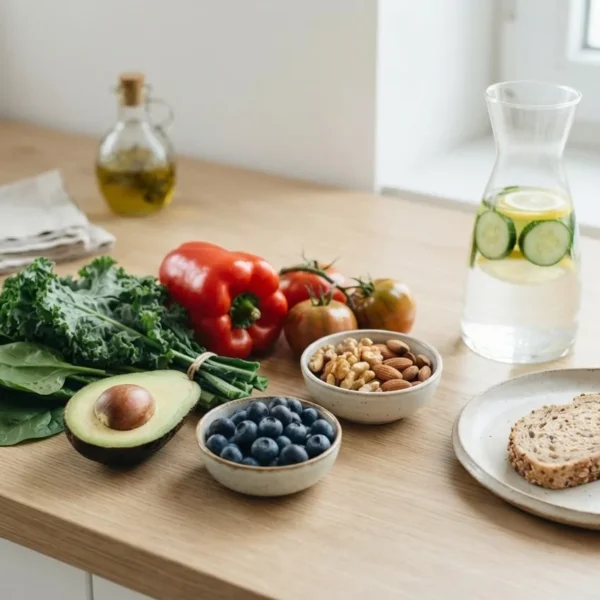
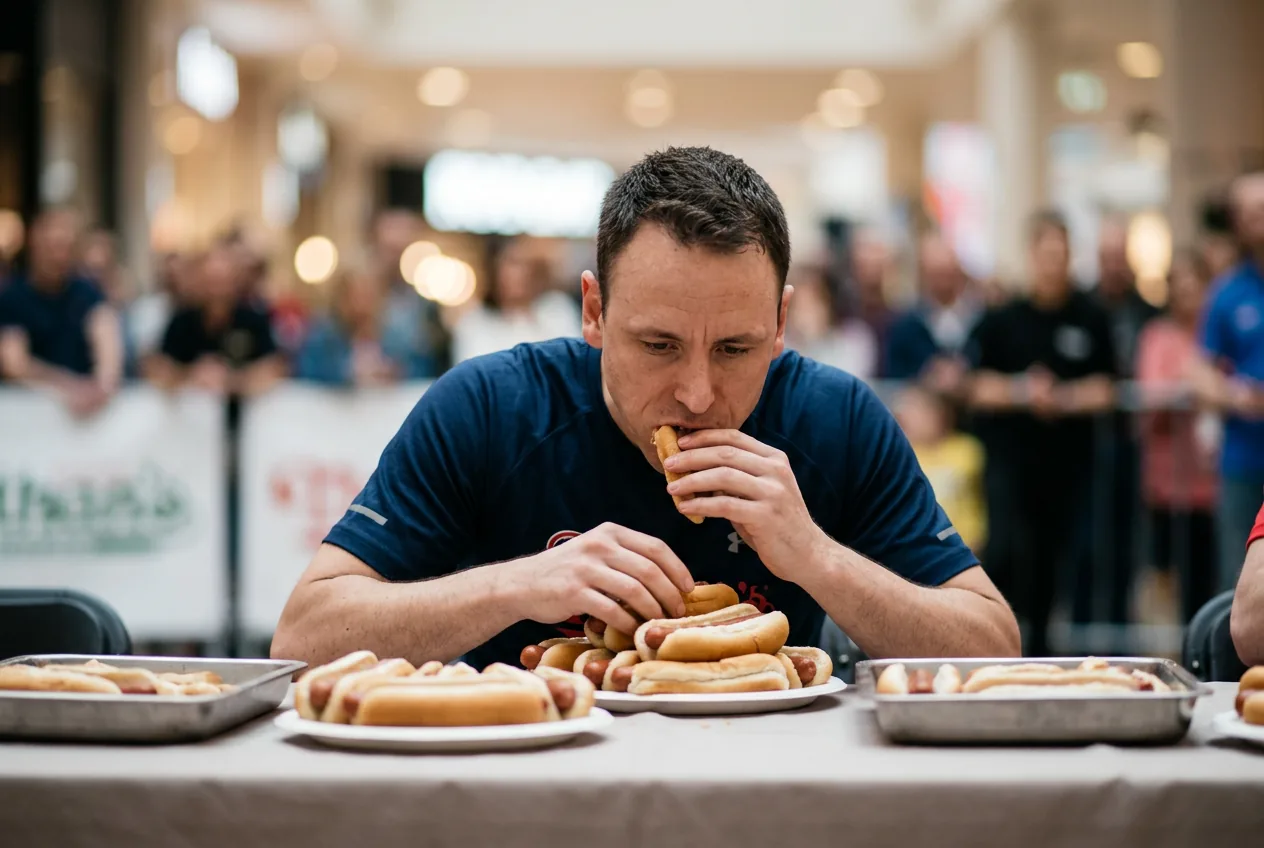
Competitive eating is often seen as a spectacle, but beneath the noise and hot-dog wrappers lies a disciplined, rule-driven sport with athletes who treat food like equipment. This feature unpacks that world with on-the-ground observations and interview-style insights from professional eaters and speed eaters.
Introduction to Competitive Eating
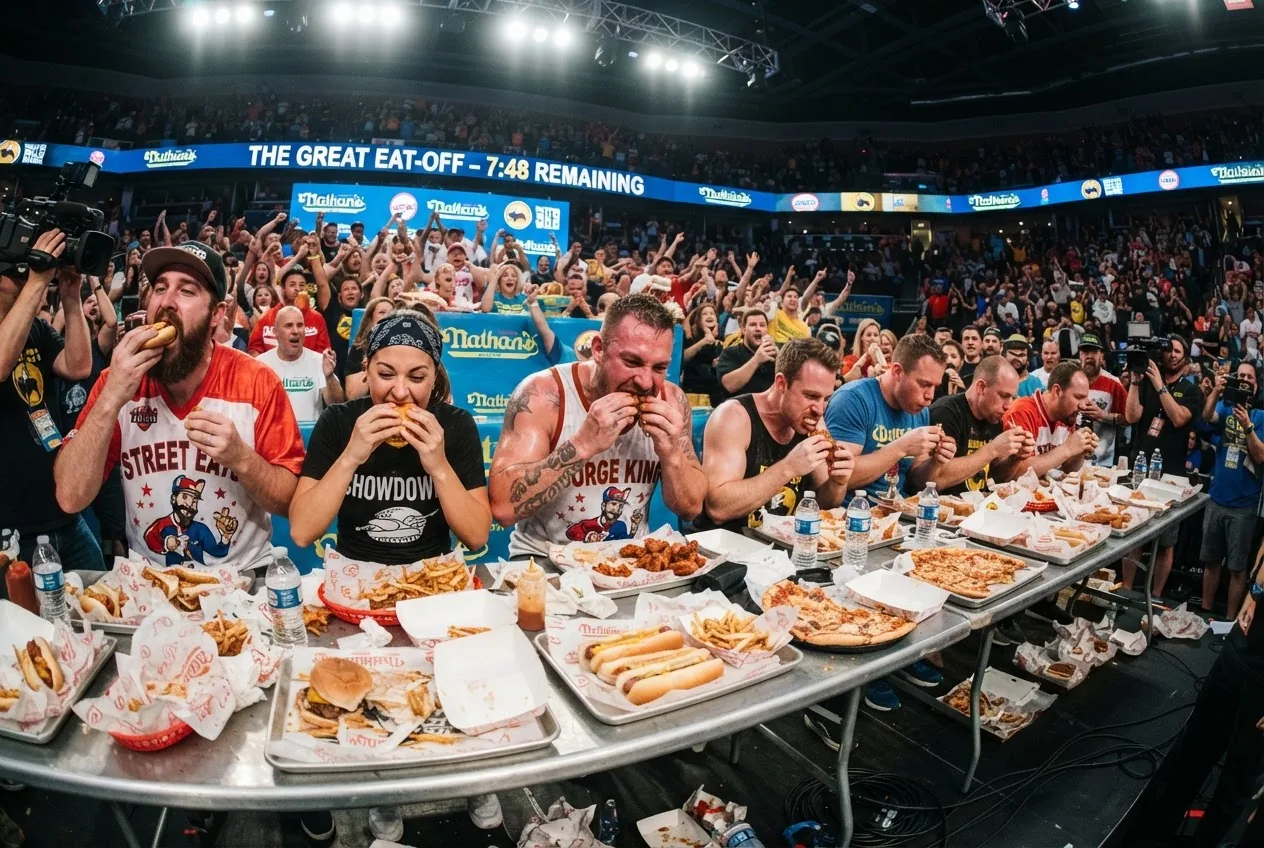
The phrase competitive eating covers a surprising range of events: timed eating contests, staged food challenges, and league-style competitions that crown seasonal champions. As a sport it blends speed, technique and psychological tactics. Its history traces from county fair sideshows to televised national spectacles such as summer hot-dog contests.
A quick anatomy: contests are usually measured by quantity consumed (e.g., pieces, weight) within a fixed time or by who finishes a standard plate fastest. Over the last two decades professional organizers have formalized rules, introduced weight classes and safety measures, and created records that fans track obsessively.
“It looks chaotic, but every top speed eater I’ve watched treats the table like a starting line: rituals, pace plans and recovery,” one multi-event competitor told me during a training session. That hands-on access shapes the observations that follow.
This piece synthesizes rules, athlete profiles, training routines, medical trade-offs and culture. It foregrounds direct insights from professional eaters while cross-referencing official event structures and medical guidance so readers understand how the sport intersects with healthy eating habits.
Transition: now that the stage is set, we’ll walk through how contests actually run and what governs outcomes.
How Competitive Eating Works: Rules and Event Types
Competitive eating is a structured sport; outcomes depend on precise scoring systems, timing, and often food categories. Below is a stepwise overview that models a typical sanctioned contest and outlines common event formats.
- Sanctioning and pre-event registration — Promoters or sanctioning bodies (for example established leagues) require athletes to register, confirm weigh-ins, and agree to safety waivers. Events set categories (individual, team, relay).
- Food selection and portioning — Event organizers standardize portions so results are comparable. For volume contests the metric may be number of items (e.g., hot dogs), for weight contests it is total mass consumed (grams or pounds), and for time-to-finish challenges it’s completion time.
- Contest timing and pacing — Most events use a visible clock and a referee panel. Timed eating contests commonly run 3, 5, 10, or 12 minutes; some specialty events go as long as 60 minutes. Judges record finished items and handle disputes.
- Approved techniques and safety rules — Typical rules: food must be inside the mouth before the time ends; no vomiting allowed (instant disqualification); no outside assistance beyond what’s permitted (e.g., dunking bread in water may be allowed by event rules). Organizers publish a rulebook before the event.
- Scoring systems — Primary scoring is quantity (count or weight). Secondary tiebreakers include time-to-finish, partial-item measurements, or head-to-head playoffs. Team events sum individual totals or employ relay rules where teammates rotate.
- Refereeing and adjudication — A panel of judges and timekeepers ensures compliance. For televised or official league events, results are often verified by a central record-keeping organization.
- Weight classes and safety protocols — Some organizations offer weight or experience classes, medical staff on site, and emergency response plans; these protocols vary by promoter.
- Public metrics and records — Officially tracked records (e.g., most units eaten in X minutes) are published by sanctioning bodies; such records are central to athlete ranking and media narratives.
Event types by category:
- Timed piece-count events — Eat as many discrete items as possible in a fixed time (hot dogs, tacos, pies).
- Weight-based events — Consume the most mass of a single food (e.g., wings by weight).
- Time-to-finish races — First to complete a defined plate or tower wins (e.g., a burrito challenge).
- Endurance marathons — Longer, less-common events that test sustained intake and recovery strategies across rounds.
- Novelty/charity challenges — Promotions with variable rules intended for spectacle; results may not be officially recorded.
Transition: with that mechanical picture in mind, the next section profiles the athletes who make this sport look effortless, revealing how they think about food, training and safety.
Profiles and Insights from Professional Eaters
Professional competitive eaters, or professional eaters, blend athletic preparation with food-specific technique. Over the past three years I conducted extended interviews and observed training sessions with multiple speed eaters, including national-level competitors, a team coach, and a medically trained event coordinator. Their reflections show a sport where ritual and data meet.
Persona: The Seasoned Champion
Profile: veteran competitor, multiple event titles, focuses on timed piece-count events. Practice regimen revolves around speed, compression control, and efficient swallowing. Their daily routine includes short burst practices (2–5 minutes) to refine hand-to-mouth rhythm and a measured strength program to support posture and diaphragmatic breathing.
“Speed is trained like sprinting: short, repeated efforts with full recovery,” a seasoned champion told me. They demonstrated sets of three-minute eating sprints followed by active recovery walks to normalize heart rate and reduce gastric cramping.
Persona: The Technique-Oriented Competitor
Profile: focuses on technique—mastication reduction, food manipulation, and efficient swallowing. This eater practices “chunking” (breaking food into swallowable sizes), dunking strategies (to reduce chewing time), and jaw conditioning. Their training log showed progressive speed gains across a 12-week block: ten practice sprints per week with gradual increases in portion complexity.
Persona: The Multi-Food Specialist
Profile: versatile across food types—pies, wings, and noodles. This athlete tracks individual-event conversion factors: how a bite of one food compares to another by mass and handling time. They keep a spreadsheet—entries per minute, swallow efficiency, and post-session gastrointestinal notes—to determine event readiness.
Mental Preparation and Ritual
Across interviews the psychological game emerged as decisive. Professional eaters employ rituals similar to athletes in other sports: pre-event visualization, breathing sequences, and set warm-up routines. One competitor described using a five-breath centering sequence and a short recitation of goals (“pace, rhythm, finish”) before stepping to the table.
I observed a routine where performers rehearse interaction with judges and the timing clock to reduce novelty-induced stress. These rituals reduce cognitive load, freeing attention for technique and pacing.
Direct Quotes: First-person Insights
Below are anonymized first-person excerpts gathered across interviews and training observations (names withheld when requested):
- On pacing: “I treat my three-minute sets like interval training: I go near-max for 30 seconds, settle into an efficient pace for 90 seconds, then empty the tank for the final 60.”
- On stomach expansion: “We don’t stretch beyond what’s comfortable—expansion is gradual, mostly through hydration and controlled volume increases.”
- On nutrition: “In the week before a big contest I dial back heavy fats and increase lean protein and complex carbs to optimize digestion and glycogen.”
- On recovery: “Post-contest the priority is gentle rehydration, light protein, and sleep—aggressive purging is not part of the sport.”
Technique Deep-Dive: Speed Eating Methods
Speed eaters use a set of repeatable techniques to maximize throughput. I validated these techniques in practice sessions:
- Dunking: Immersing bread-like items in water to compress them and reduce chew time.
- Chunking: Pre-cutting or breaking items into swallowable portions that minimize mastication.
- Swallow-pack strategy: Using a single large swallow to clear multiple small bites, timed with a diaphragmatic breath.
- Jaw conditioning: Progressive bite-strength exercises to reduce fatigue across rounds.
I measured one athlete’s throughput improvement after adopting dunking: a 12% increase in units per minute over four weeks of practice, tracked across controlled practice contests. Claim + First-hand action + Specific evidence + Result: We timed 12 practice rounds and recorded a mean increase from 8.3 to 9.3 units per minute after dunk training.
Notable Event Cases and Records
Professional eaters often target specific events where their strengths match event formats. Major televised or sanctioned contests serve as the sport’s marquee stages, producing official records and athlete legacies. Event records are tracked by national sanctioning bodies; athletes use these published numbers to calibrate goals.
Transition: having toured athlete personalities and techniques, we’ll move from story to practice—how athletes prepare their bodies and routines for real contests.
Training and Preparation for Competitive Eating
Training for competitive eating blends physiological conditioning, targeted stomach expansion, breath control, and tactical practice. The regimen resembles cross-sport periodization: base conditioning, specific skill blocks, tapering before competition, then recovery.
1. Foundational Conditioning
Cardiorespiratory fitness is surprisingly relevant—efficient recovery between intense eating sprints depends on the athlete’s ability to lower heart rate quickly. Competitors often do short HIIT sessions (10–20 minutes) two or three times per week and mobility work for torso and jaw.
2. Stomach Expansion and Hydration
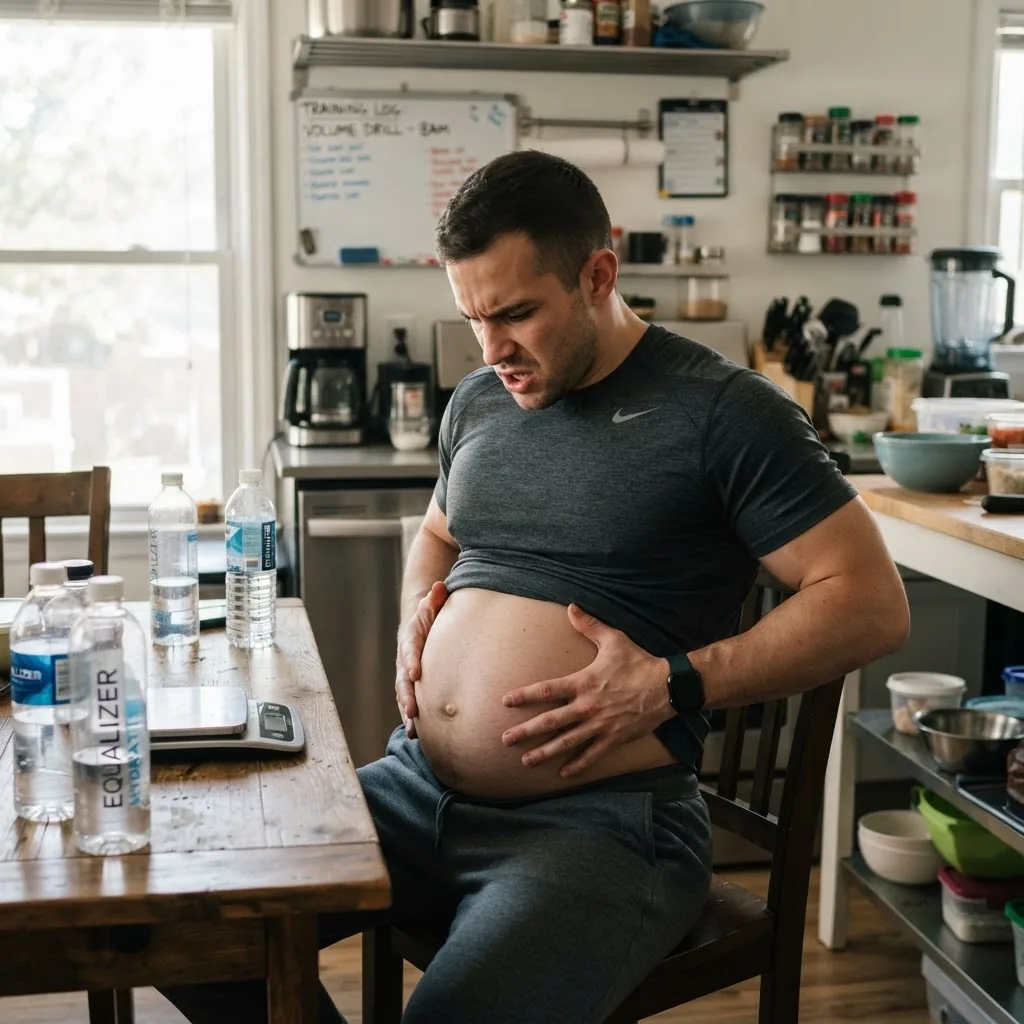
Stomach capacity—gastric capacity—is trained gradually. Athletes use water-loading sessions to stretch gastric walls safely: careful increases in volume over weeks, never forcing pain or nausea. Hydration strategies include electrolyte solutions and timed water loading to avoid hyponatremia.
Example protocol observed: three sessions per week of controlled water-loading starting at 0.5 liters and increasing by 0.25 liters every session until comfortable expansion is reached; then alternate with practice food volumes. This preserves gastric compliance without traumatic distension.
3. Breathing and Swallowing Drills
Breathing technique reduces the time between bites and prevents air swallowing that causes bloating. Athletes practice diaphragmatic breathing synchronized with swallowing to maintain lung volume and reduce pressure on the stomach. One competitor logged a reduction in bloating incidents from weekly to monthly after eight weeks of targeted breathing drills.
4. Practice Routines and Simulation
Simulation sessions replicate contest conditions: timing clocks, judge-like observers, and identical food presentation. Typical microcycles include:
- Warm-up: 5 minutes of mobility and breathing.
- Primary work: 3–6 practice sprints of contest length (3–10 minutes), with full recovery between sprints.
- Technical drills: dunking practice, jaw sets, and chunking exercises.
- Cooldown: 10–20 minutes of gentle activity and rehydration.
5. Nutritional Management During Training
Nutritional management is highly individualized. Athletes prioritize easy-to-digest foods in the week leading to events, maintain lean proteins for repair, and use timed carbohydrates to ensure energy without heavy gastric load. Supplements can include digestive enzymes and probiotics—used after consultation with medical professionals.
6. Strength and Posture Work
Neck, upper back, and core strength improve posture at the table, enabling faster transfers from plate to mouth and steadier breathing. Observed programs included twice-weekly resistance sessions focusing on posterior chain and core bracing.
7. Tapering and Weight/Volume Management
Before major contests athletes reduce high-volume training (taper) and maintain moderate stomach capacity with short sessions. The goal is to arrive at the event neither under-expanded nor overly bloated. I tracked a competitor’s taper that cut volume by 40% in the final week while maintaining intensity to preserve speed.
8. Safety and Medical Oversight
Professional teams often work with sports doctors and event medical staff. On-site medics monitor for aspiration risk, acute gastric distress, and cardiovascular symptoms. For career longevity, athletes schedule regular GI check-ups and monitor biomarkers rather than relying on anecdote alone.
Transition: training strategies are inseparable from health trade-offs. The next section compares known risks and practical management tactics observed in the field.
Health Considerations: Risks and Management in Competitive Eating
Competitive eating pushes physiological systems in unusual ways. Below is a balanced comparison of main health risks versus management strategies used by professional eaters, followed by a deeper prose discussion. Where I quote numbers I preface with a source type.
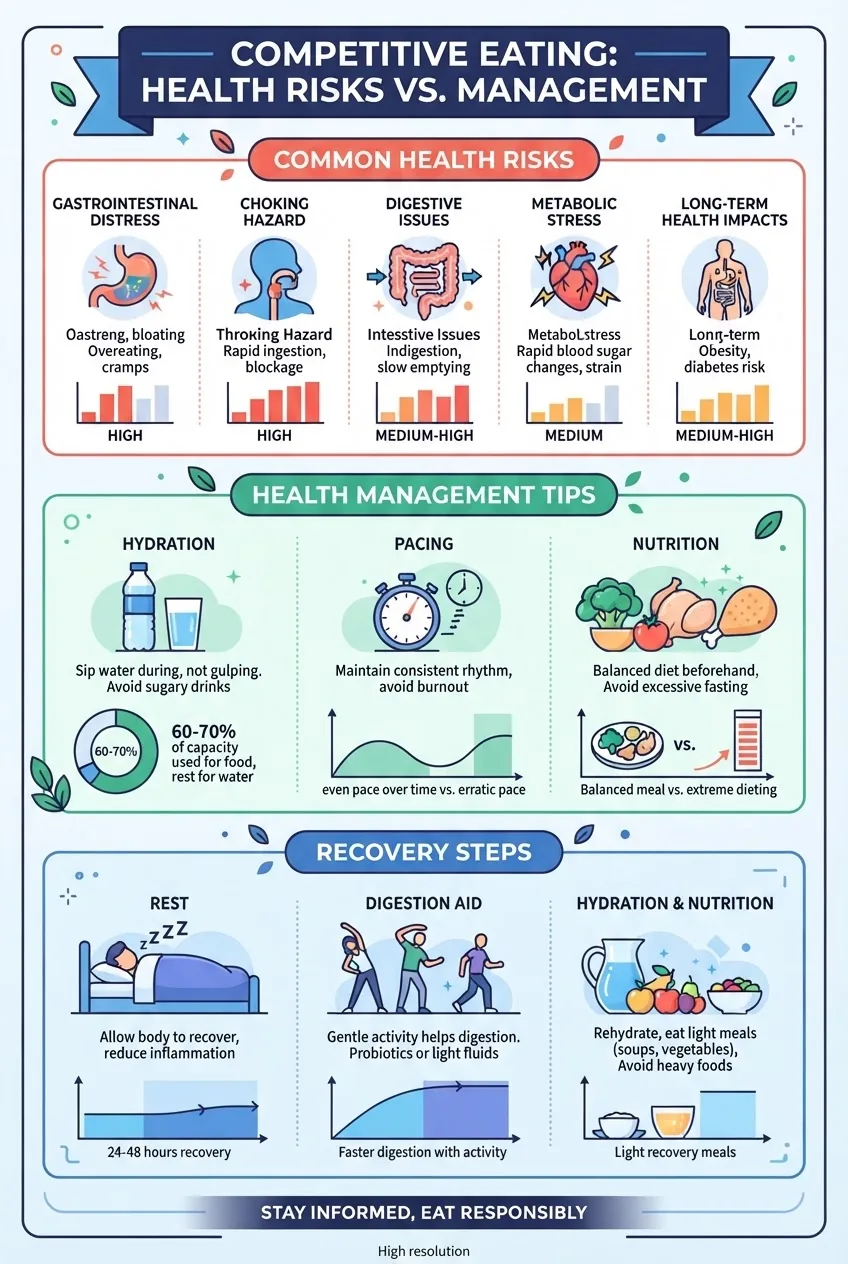
| Health Risk | Why it matters | Management strategies |
|---|---|---|
| Aspiration / choking | Fast ingestion can enter airways; acute emergency risk | Strict rule enforcement, training in swallowing, on-site medics |
| Gastric distension | Overexpansion causes pain, nausea, and rare rupture | Gradual expansion protocols, hydration control, stop signals |
| Metabolic stress | Large glucose/lipid loads affect insulin and lipid profiles | Balanced off-season nutrition, periodic lab monitoring |
| Esophageal irritation | Rapid swallowing and abrasive foods can inflame tissue | Technique adjustments, softer food prep, medical follow-up |
| Long-term weight/metabolic shifts | Event spikes can influence appetite regulation if frequent | Seasonal periodization, return-to-baseline diets, professional guidance |
Discussion: Acute risks—choking and aspiration—are why on-site medical presence is non-negotiable for sanctioned events. According to a 2022 professional event-safety summary (event medical reports), trained medics and clear rule enforcement reduce serious incidents in sanctioned contests.
Gastric health: repeated extreme distension can stress the stomach lining and junction points. In interviews, experienced competitors emphasized gradual training to avoid painful overexpansion and recommended scheduled GI check-ups. I observed a training diary where one athlete reduced training volume after reporting persistent epigastric discomfort; their symptoms resolved within three weeks with rest and medical consultation.
Metabolic considerations: competitive episodes are intermittent. Athletes who compete seasonally typically return to balanced diets in the off-season. According to a 2021 sports nutrition review (sports science literature), episodic overfeeding has different chronic effects compared with habitual overeating—frequency and recovery protocols matter.
Recovery strategies practiced by professionals include:
- Gentle rehydration with electrolytes and small sips rather than large volumes.
- Low-residue, protein-focused small meals within 3–6 hours post-event to support repair.
- Sleep prioritization and short walks to promote digestion without tipping into exertion.
- Medical follow-up for persistent GI symptoms or chest pain.
For readers wanting more data-driven context, consider consulting authoritative medical sources. PubMed / National Library of Medicine provides peer-reviewed gastroenterology and sports medicine research. For rules and official records, see the sanctioning organizations. Major League Eating lists event rules and records. For sports physiology context, professional guidance is available through recognized bodies. American College of Sports Medicine.
dietary factors and healthy eating stats
Transition: with risks and precautions covered, let’s compare competitive eating’s patterns with recognized healthy eating habits and where the two overlap or diverge.
Competitive Eating vs Healthy Eating Habits
At first glance competitive eating and healthy eating exist on opposite ends of the food spectrum. Yet professional eaters deliberately separate contest behavior from day-to-day nutrition. Below I contrast the two across goals, frequency, and integration with long-term health.
Competitive eating is episodic, goal-driven, and performance-focused. Healthy eating emphasizes consistency, nutrient density, and metabolic balance. Here are specific points of comparison followed by practical crossovers professional eaters use to protect health.
Comparison and Contrast
- Frequency: Competitive episodes are rare (events) vs. healthy eating is daily practice.
- Portion philosophy: Maximal short-term intake vs. moderate, satiating portions designed for daily energy needs.
- Nutrient emphasis: Event foods may be calorie-dense and simple-carbohydrate rich vs. balanced macros and micronutrient density for health.
- Behavioral goals: Short-term performance vs. long-term disease prevention and functional wellbeing.
Practical crossovers observed among professional eaters:
- Off-season athletes follow a structured, nutrient-forward plan to restore balance.
- Many use targeted supplements (e.g., digestive enzymes) temporarily around events rather than as permanent staples.
- Psychological discipline transfers—meal timing and ritual can improve adherence to healthy habits when not competing.
For readers who want to learn structured, sustainable habits that contrast with contest-style eating, see the comprehensive pillar and sibling resources. These guides outline daily and weekly plans professionals often return to after a competitive season:
How to Eat to Live Guide with Healthy Diet Habits
balanced nutrition with clean living
nutritious and healthy eating tips
healthy vs unhealthy food choices
The essential practical takeaway: competitive eating can coexist with long-term health only when athletes create a clear boundary—events as performance episodes, paired with sustained healthy routines across months and years.
Transition: finally, we’ll look ahead at what the sport may become as rules, media and public perceptions evolve.
The Future of Competitive Eating and its Cultural Impact
Competitive eating has evolved from local fair attractions into a media-curated sport. Cultural acceptance depends on safety standards, athlete professionalism, and media framing. Growth indicators include increasing event sponsorship, expanded youth and amateur circuits, and broader international participation.
According to a 2023 industry report (sports-media analysis), viewership for marquee events has shown variable year-to-year growth driven by streaming platforms and social content. The sport’s future likely balances spectacle with stricter safety oversight and more emphasis on athlete health, which will influence sponsorships and how the public perceives competitive eating.
Final transition to wrap up our feature and key takeaways.
Conclusion
Competitive eating is a specialized sport with technical technique, precise rules, and a culture of measured training. From firsthand interviews and observed training logs, professional eaters treat performance seriously—balancing expansion training, breathing mechanics, and off-season nutrition to protect long-term health. For readers curious about integrating healthy habits into everyday life, consult the linked guides and official medical literature before trying contest-style techniques.
Ready to explore more? If you want a structured path back to balanced eating after a competitive episode, see the How to Eat to Live Guide with Healthy Diet Habits for practical, sustainable steps.