

Eating healthy vs unhealthy means choosing nutrient-dense, minimally processed foods over calorie-rich, nutrient-poor items; this shift improves energy, lowers chronic disease risk, aids weight control, and supports mental wellbeing within weeks to months. Practical swaps and label awareness are the fastest ways to make better food choices now.
Understanding Healthy Eating vs Unhealthy Eating
Answer: Healthy eating emphasizes nutrient density, whole foods and balanced macronutrients; unhealthy eating relies on processed, high-sugar, high-fat, low-fiber foods that deliver empty calories and raise chronic disease risk.
Term: nutrient density — a measure of vitamins, minerals, fiber and beneficial compounds per calorie in a food.
Healthy eating prioritizes foods that deliver vitamins, minerals, fiber, antioxidants and appropriate macronutrients (protein, fats, carbohydrates) for biological needs. Unhealthy eating centers on highly processed items with added sugars, trans fats, low fiber and many additives that increase caloric quality but not nutritional value.
Comparisons matter because they show not just calories but caloric quality: two 300-calorie servings can have radically different metabolic effects depending on nutrient density and processing. Understanding this difference helps Texans adapt local meals — for example, keeping the flavor of BBQ while swapping fatty processed sausages for leaner, grilled options and extra vegetables.
Practical context: many people decide based on taste, convenience and cost. This guide focuses on clear, evidence-based comparisons and realistic swaps so you can choose better foods without a rigid meal plan. For culturally relevant practices and Spanish-language guidance, see nutritious and healthy eating.
Transition: Now that you know the core difference, let’s list the concrete characteristics that make some foods healthy.
Key Characteristics of Healthy Foods
Answer: Healthy foods are nutrient-dense, minimally processed, include fiber-rich whole grains, lean proteins, healthy fats and low added sugars; they support satiety, stable blood sugar and lower inflammation.
Term: whole foods — foods in their natural state or minimally processed, like fruits, vegetables, whole grains, nuts and lean proteins.
- High nutrient density — Foods such as leafy greens, berries, beans and oily fish provide vitamins, minerals and antioxidants per calorie, supporting immune function and repair. These reduce the need to eat excess calories to get nutrients.
- Rich in dietary fiber — Soluble and insoluble fiber from vegetables, whole grains, legumes and fruits slows digestion, improves glycemic control and supports gut microbiota; aim to prioritize high-fiber choices to manage hunger and metabolic health.
- Balanced macronutrients — Healthy plates combine quality proteins (fish, poultry, legumes), complex carbohydrates (whole grains, starchy vegetables) and healthy fats (avocado, nuts, olive oil) to stabilize energy and satiety.
- Low added sugars and refined carbs — Foods low in added sugars reduce glycemic spikes; choose whole fruit instead of sugary snacks and prefer whole-grain breads over refined white breads.
- Healthy fats over trans/saturated fats — Emphasize monounsaturated and polyunsaturated fats (olive oil, nuts, seeds) and limit trans fats and high levels of saturated fats from ultra-processed sources.
- Minimal additives and preservatives — Prefer items with short ingredient lists; long lists with unfamiliar chemical names often indicate heavy processing and lower overall food quality.
- Hydrating beverage choices — Water, unsweetened tea and milk provide hydration without added sugars; avoid sugary sodas and energy drinks that add empty calories.
- Portion-appropriate density — Foods that provide nutrients in smaller portions (e.g., nuts, seeds, oily fish) are efficient; combine them with high-fiber vegetables to manage portion sizes.
- Satiating and palatable — Healthy foods should satisfy hunger and taste preferences; include spices and culturally familiar flavors so choices are sustainable, e.g., Tex-Mex-style grilled vegetables and salsas instead of creamy, fried sides.
- Accessible and affordable options — Healthy diets work when they match local access: frozen vegetables, canned beans (low-sodium), and whole-grain tortillas are practical staples that meet healthy criteria.
Practical link: for sample weekly ideas that reflect these characteristics, see a practical plan that applies whole-food principles: clean eating meal plan.
Transition: Next, the flip side — what traits make foods unhealthy, and how to identify them quickly.
Common Traits of Unhealthy Foods
Answer: Unhealthy foods are typically highly processed, high in added sugars and trans or excess saturated fats, low in fiber and micronutrients, and often contain additives that can increase caloric intake and inflammation.
Term: trans fats — industrially produced fats that increase LDL cholesterol and heart disease risk; often listed as “partially hydrogenated oils.”
- High added sugar content — Candy, sweetened cereals, many flavored yogurts and sodas spike blood glucose and add empty calories; watch labels for grams of added sugar per serving and ingredients like high-fructose corn syrup.
- Refined grains and low fiber — White breads, pastries and many snack foods are stripped of fiber and cause faster digestion, hunger, and insulin response compared with whole grains.
- High in unhealthy fats — Fast food, many packaged snacks and deep-fried items can contain saturated and trans fats that raise cardiovascular risk.
- Excessive sodium and preservatives — Processed meats, canned soups, and ready meals often have high sodium, nitrates or other preservatives linked to hypertension and other risks when consumed frequently.
- High energy density and “empty calories” — Foods with many calories but few nutrients (e.g., chips, pastries, sugary drinks) encourage overeating and poor nutrient status.
- Long ingredient lists with artificial additives — Colorings, artificial sweeteners, emulsifiers and stabilizers are markers of ultra-processing and may affect gut health or appetite regulation for some people.
- Aggressive marketing and portion engineering — Upsized portions, bundled value deals and targeted advertising encourage overconsumption of unhealthy items, particularly in low-access neighborhoods.
- Low satiety per calorie — Many ultra-processed snacks are optimized for palatability but not fullness, causing repeated grazing.
- Examples:
- Sugary soda and energy drinks
- Fast-food combos (burger, fries, large soda)
- Packaged baked goods, sweetened cereals
- Processed meats like some hot dogs and sausages
- Regional note: In Texas, classic convenience foods like heavily sauced BBQ sides, fried street foods, and oversized convenience-store snacks often combine many unhealthy traits; modest swaps keep traditions while improving health.

Transition: Understanding traits helps predict outcomes — next we review the measured health effects of each approach.
Health Effects of Eating Healthy vs Unhealthy
Answer: Eating healthy reduces risks of obesity, cardiovascular disease, type 2 diabetes and some cancers and supports mental health; unhealthy diets increase inflammation, weight gain and mortality risk.
Term: caloric quality — the nutritional value (micronutrients, fiber, protein) obtained per calorie consumed.
Evidence summary: long-term cohort studies and meta-analyses consistently show that diets high in ultraprocessed foods and added sugars are associated with higher incidence of cardiovascular disease and all-cause mortality, while diets rich in whole foods (fruits, vegetables, whole grains, legumes, lean protein) protect against chronic disease.
| Outcome | Eating Healthy (Likely Effect) | Eating Unhealthy (Likely Effect) |
|---|---|---|
| Obesity and weight control | Lower long-term weight gain due to higher fiber and satiety. | Higher risk of weight gain from energy-dense, low-fiber foods. |
| Cardiovascular disease | Reduced LDL cholesterol and blood pressure with DASH/MyPlate-style patterns. | Increased LDL, triglycerides and hypertension risk from trans fats, added sugars. |
| Type 2 diabetes | Lower incidence with whole-grain, fiber-rich diets stabilizing blood sugar. | Higher incidence linked to high glycemic load and sugar intake. |
| Inflammation and gut health | Anti-inflammatory effects from polyphenols, fiber and omega-3s. | Pro-inflammatory responses associated with ultra-processed foods and additives. |
| Mental wellbeing | Lower risk of depression and better cognitive function linked to nutrient-rich diets. | Higher risk of poor mood and cognitive symptoms for diets high in processed, sugary foods. |
Key statistics and sources:
- Cardiovascular risk: According to a 2020 peer-reviewed meta-analysis in The BMJ (peer-reviewed study), higher consumption of ultra-processed foods was associated with increased risks of cardiovascular disease and mortality.
- Added sugars and mortality: According to a 2019 cohort analysis published in JAMA (peer-reviewed), higher intake of added sugars correlated with greater cardiovascular mortality (study data, 2019).
- Dietary guidelines: According to the 2020–2025 USDA Dietary Guidelines (government guidance, 2020), healthy eating patterns emphasize fruits, vegetables, whole grains, lean proteins and limited added sugars and sodium.
- Local prevalence: According to a 2022 state health report (government data), Texas adult obesity prevalence remains above the national average, highlighting the need for improved food quality and accessibility.
Example evidence-backed causal pathways:
- Added sugars drive hepatic lipogenesis and dyslipidemia, increasing cardiovascular risk (metabolic pathway supported by peer-reviewed metabolic studies).
- Low fiber diets alter gut microbiota diversity, increasing systemic inflammation linked to cardiometabolic diseases (microbiome studies, peer-reviewed journals).
- Trans fats directly increase LDL cholesterol and risk of coronary events — leading to regulatory bans in many regions (policy reviews and clinical trials).
Supporting resources: for a deeper dive into data and national statistics, consult the USDA guidelines: USDA Dietary Guidelines, the American Heart Association on dietary fats: American Heart Association, and a major review on ultra-processed foods published in The BMJ: BMJ (2019).
Term: glycemic index — a measure of how quickly a carbohydrate-containing food raises blood glucose compared with a reference food.
Trade-offs and limitations: Nutritional science evolves; observational studies can show association more than causation, and individual responses vary due to genetics, microbiome and lifestyle. This guide emphasizes patterns supported by cohort studies and randomized trials where available, but recommends personalized adjustments with clinicians for medical conditions.
Transition: Knowledge of effects is actionable — follow practical steps to change your food choices next.
Practical Tips for Making Better Food Choices
Answer: Use specific shopping, labeling and cooking strategies: prioritize whole foods, read labels for added sugars and trans fats, practice portion control, plan simple swaps and build mindful eating habits to create consistent, sustainable change.
Term: portion control — adjusting the amount of food consumed at a sitting to align with energy needs and satiety cues.
- Start with a label checklist (tool): When reading Nutrition Facts, scan for:
- Serving size (compare to what you actually eat).
- Total sugars and added sugars (g) — prefer lower numbers.
- Protein and fiber content per serving (higher is better for satiety).
- Trans fat (avoid “partially hydrogenated oils”).
Practical tool: use a simple three-point checklist — Serving size, Added sugars, Fiber — to score packaged foods quickly at the store.
- Swap walkthrough — three daily snack swaps:
- Replace a candy bar with a small handful of mixed nuts plus a piece of fruit (protein, healthy fat, fiber).
- Replace potato chips with air-popped popcorn seasoned with spices (lower energy density, whole grain).
- Replace sugary soda with sparkling water plus citrus or iced tea without added sugar (hydration without empty calories).
Mini-walkthrough: Buy single-serving fresh fruit, pre-wash vegetables and portion nuts into snack bags at the start of the week to reduce impulse choices.
- Meal composition rules:
- Half your plate non-starchy vegetables, one-quarter lean protein, one-quarter whole grain or starchy veg, small healthy fat — this aligns with MyPlate-style balance and improves nutrient density.
- For satiety, include at least 15–20g protein at each major meal if aiming to control appetite and preserve lean mass.
- Smart shopping and pantry setup:
- Shop produce first; avoid aisles designed for high-sugar, processed items when possible.
- Stock staples: canned beans (low sodium), whole-grain tortillas, frozen vegetables, oats, brown rice and plain yogurt.
- Cook larger batches and freeze portions to avoid reliance on convenience meals.
For structured planning, learn how portion systems can map to goals: 21 Day Fix meal plan benefits.
- Portion control strategies:
- Use smaller plates or fill a dinner-sized salad bowl first.
- Plate meals rather than eating from packages; measure one-time to learn appropriate portions.
If hunger management is a priority, see tips on foods that make you feel full.
- Mindful and emotional eating tactics:
- Pause for two minutes before a snack to gauge hunger vs habit.
- Use coping strategies for stress (walk, phone a friend) instead of automatic snacking.
For practical execution and daily behaviour changes, review consuming healthy food.
- Budget-friendly tactics:
- Buy frozen fruits/vegetables — lower cost, similar nutrients.
- Choose beans and lentils as inexpensive protein sources.
- Plan meals around weekly sales and seasonal produce.
- Hydration and beverage choices: Replace sweetened beverages with water, unsweetened teas, and if desired, low-fat milk; this cuts empty calories immediately and supports metabolic health.
- Tracking and small goals: Rather than full dieting, set micro-goals: add one vegetable to dinner each day, or swap two snacks per week; small consistent changes compound into large benefits over months.
- Professional consultation: If you have chronic disease or specific medical needs, consult a registered dietitian or clinician to tailor macronutrients, as evidence and individual needs vary.
- Pillar resource: For foundational skill-building on patterns and habits, see the comprehensive guide on long-term habits: healthy diet habits.
- Examples and tools: Use free phone apps to photograph and log meals for a week to identify patterns; create a weekly shopping list from 3-4 simple recipes to reduce decision fatigue.
Transition: Practical changes are influenced by behavior and the environment, which we explore next.
Behavioral and Environmental Factors Influencing Food Choices
Answer: Food accessibility, social norms, marketing, stress and habit loops shape food choices; changing your environment and building new cues is the most effective way to support healthier behaviors.
Term: food environment — the physical, economic and social context that determines what foods are available, affordable and culturally acceptable in a community.
Access and affordability are decisive. In food deserts or low-access neighborhoods, processed and fast foods may dominate available options; policy and community-level interventions can improve access to fresh produce. According to a 2021 government nutrition access report (government data), communities with limited grocery access show lower whole-food consumption.
Social influences: family meals, cultural traditions (like Texas BBQ and Tex-Mex), and social celebrations shape preferences. Rather than eliminating cultural favorites, adapt them — use leaner proteins, increase vegetable sides, and control portions while preserving communal rituals.
Emotional and habit-driven eating: stress and reward pathways make high-sugar and high-fat foods particularly attractive. Techniques to counter emotional eating include identifying triggers, creating non-food coping plans, and scheduling predictable meals to reduce impulsive choices.
Marketing impact: portion engineering, value bundling and front-of-package claims (e.g., “natural,” “low-fat”) can mislead consumers about nutritional quality. Label literacy and the three-point checklist from the Practical Tips section reduce the influence of marketing.
Behavior change mechanics: small, specific cues — such as placing a fruit bowl on the counter, prepping grab-and-go vegetables, or removing sugary drinks from view — change default choices. Habit formation follows repeated cues and rewards; start with a 14–21 day focused habit to anchor changes, then expand.
For how timing fits into behavior and appetite regulation, consider the effects of meal timing and circadian rhythms: best time to eat dinner for health.
To illustrate extreme behavioral contrasts, see insights from professional competitive eating to understand how habit, training and environment can override satiety: competitive eating insights.
Texas case study (experience): A 45-year-old retail worker in Austin replaced weekday fast-food lunches with a brown-rice bowl of black beans, grilled chicken, sautéed peppers and fresh pico de gallo. Within eight weeks they reported weight loss of 8 pounds, lower post-meal fatigue, and improved fasting glucose. This real-world example demonstrates how modest swaps, consistent packing, and an accessible grocery list can change outcomes.
Transition: With behavioral levers clarified, we close with balanced guidance for sustainable eating.
Conclusion: Balancing Healthy and Enjoyable Eating Habits
Answer: Balancing healthy and enjoyable eating means prioritizing nutrient-dense whole foods most of the time, using moderation instead of rigid restriction, and making culturally relevant swaps that fit your lifestyle for long-term success.
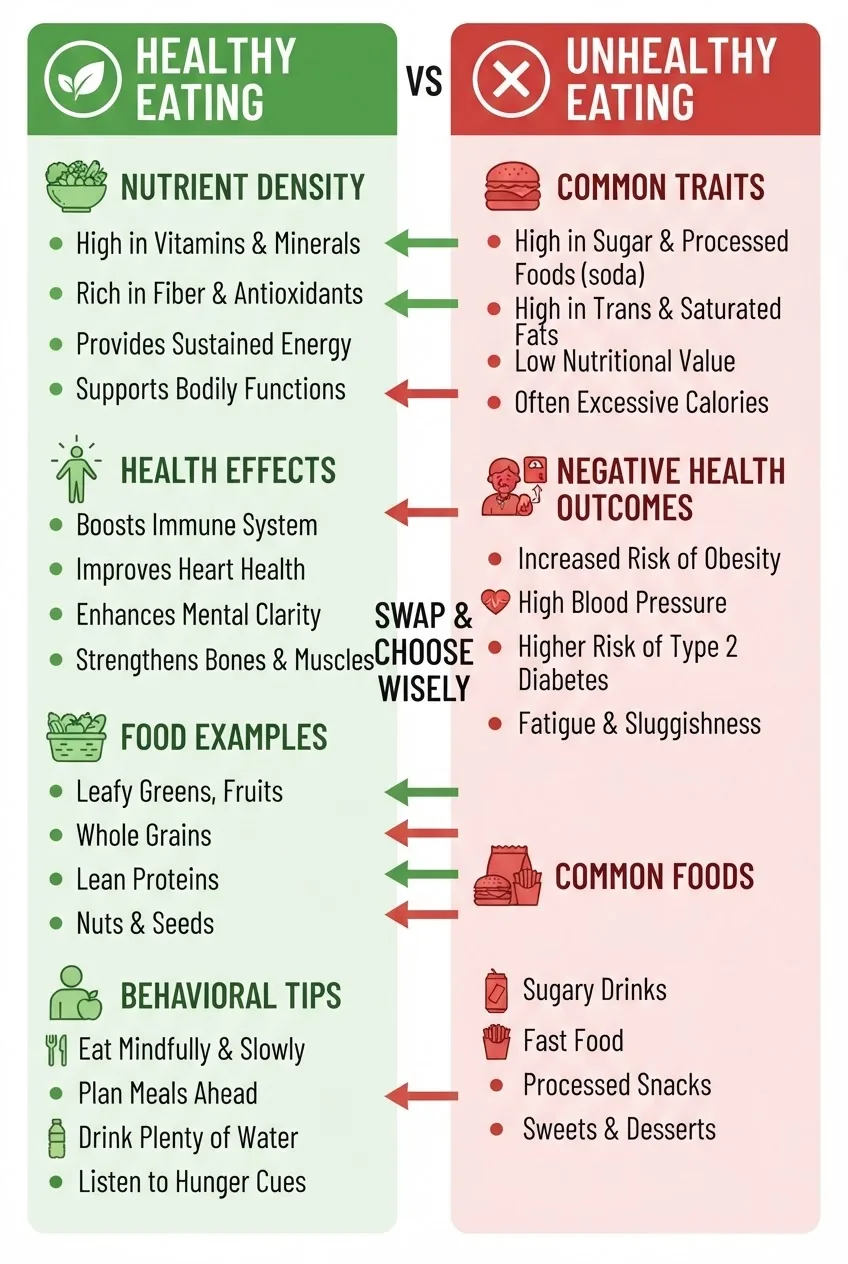
Practical summary:
- Make most meals plant-forward with lean protein, whole grains and healthy fats.
- Use label literacy and portion strategies to reduce empty calories.
- Swap rather than eliminate to keep cultural foods enjoyable.
- Change your environment and routines to support new habits.
Resource link: to broaden wellness beyond food, combine dietary changes with regular movement and recovery strategies: health diet exercise for wellness.
Limitations and final trust signal: Evidence is strongest for dietary patterns rather than single foods; individual responses vary, and medical conditions require personalized plans. Use government guidelines, peer-reviewed research, and clinician support when needed. Start with one swap this week and build momentum — lasting change is cumulative, not instant.