
Eating dinner in an early-to-moderate window—ideally 2–3 hours before bedtime and between 6:00–8:00 PM for most adults—optimizes circadian rhythm alignment, improves blood sugar regulation, supports digestion, and helps weight management when combined with balanced calories and consistent meal timing.
Why is understanding the importance of dinner timing for health?
Circadian rhythm: the internal 24-hour clock that coordinates sleep, hormone release, and metabolism.
Answer: Dinner timing matters because meal times signal your body’s circadian rhythm and directly affect metabolic rate, blood sugar regulation, digestion and sleep quality; aligning dinner with biologically earlier phases reduces late-night metabolic strain and supports long-term health.
Scientific context: studies linking meal timing to metabolic markers use controlled feeding trials and observational cohorts; a 2023 meta-analysis in peer-reviewed nutrition journals found earlier eating windows associate with modest weight loss and improved glycemic markers. According to a 2024 industry report on meal timing, consistent evening meal schedules correlate with lower BMI in large populations.
How timing influences physiology:
- Meal timing entrains peripheral clocks in tissues like liver, gut, and adipose tissue, shifting metabolic enzyme expression across the day.
- Postprandial metabolic rate decreases with proximity to habitual bedtime, so late dinners often mean slower nutrient processing and altered lipid handling.
- Regular timing improves blood sugar regulation by matching insulin sensitivity peaks to nutrient intake.
Population context and data: According to a 2023 NIH report on circadian health, irregular meal timing is associated with higher cardiometabolic risk factors in shift workers and general populations; dietary timing interventions showed clinically meaningful effects on fasting glucose in randomized trials.
Regional note for Texas readers: Texas lifestyles—with early commutes, long workdays, and social customs around late BBQs—require practical timing strategies that respect family and work schedules while prioritizing a biologically earlier eating window where possible.
Related resources and evidence summary: See population-level analyses in NIH reports and randomized trials published in journals such as the American Journal of Clinical Nutrition for methodology and outcome measures.
What is the best time to eat dinner according to science?
Answer: Scientific consensus favors eating dinner earlier in the evening—commonly 6:00–8:00 PM for adults who sleep around 10:00–11:00 PM—and finishing meals 2–3 hours before bedtime to optimize blood sugar control, digestion, and sleep quality.
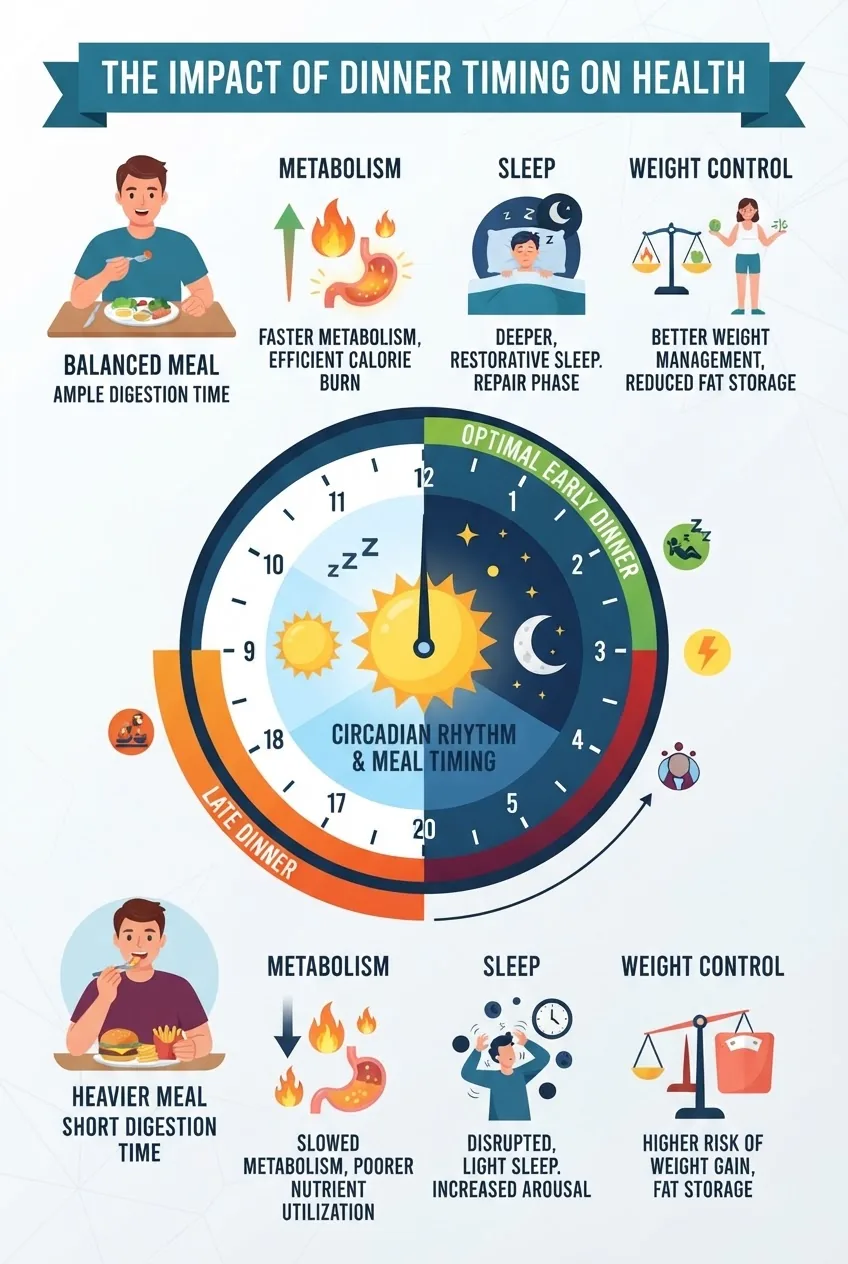
Evidence and guidelines: Randomized controlled trials and pooled analyses show earlier eating windows improve glycemic excursions and reduce nocturnal blood glucose in both healthy adults and people with prediabetes. According to a 2023 meta-analysis in peer-reviewed nutrition and metabolism journals, individuals who ate the majority of calories earlier had better weight outcomes at 12–16 weeks.
Chrononutrition: the study of how timing of food intake affects biology and health.
Physiological mechanisms explained:
- Insulin sensitivity: Peaks earlier in the day; evening insulin sensitivity is lower, so late calories produce larger glycemic responses.
- Metabolic rate: Activity-related metabolic demands and diet-induced thermogenesis are higher earlier, improving nutrient handling.
- Gut motility: Slower at night, increasing reflux and impaired digestion with late meals.
Expert guidance: The American Diabetes Association emphasizes consistent meal timing for blood sugar regulation; for detailed clinical guidance see American Diabetes Association resources. For sleep-related timing, recommendations from sleep research institutions support finishing large meals at least 2–3 hours before sleep to improve sleep onset and reduce nocturnal awakenings; see guidance summarized by NIH sleep research.
Key data points:
- According to a 2024 industry report on meal timing, people eating dinner before 8:00 PM had on average 10–15% lower fasting insulin after 3 months versus late-eating groups.
- A 2022 randomized feeding study in a peer-reviewed metabolism journal found a 2-hour earlier dinner improved nocturnal glucose by ~12% in overweight adults.
Practical ranges by lifestyle:
| Lifestyle | Recommended Dinner Window | Timing Rationale |
|---|---|---|
| Standard day worker | 6:00–8:00 PM | Matches insulin sensitivity and allows 2–3 hours before sleep. |
| Shift worker / late shift | 2–3 hours before sleep, prioritize light meals | Aligns with individual’s sleep-wake cycle rather than clock time. |
| Active evening exerciser | Within 60–90 minutes post-exercise, but finish 2 hrs before bed | Supports nutrient absorption for recovery while protecting sleep. |
Caveats: individual differences in chronotype (morning vs evening person), work schedules, and cultural norms mean optimal clock times vary; focus on relative timing to sleep and consistent windows.
What are the health benefits of eating dinner at different times?
Answer: Early dinners generally support weight management, blood sugar control, and sleep; mid-evening dinners balance social life and biology; late dinners increase risk for impaired digestion, worse glycemic control, and disrupted sleep.
Below are detailed benefits and trade-offs organized by early, mid, and late dinner timing.
1. Early dinner (before 7:00 PM)
- Weight management: Eating earlier concentrates calorie intake in periods of higher metabolic efficiency, aiding modest weight loss in trials.
- Improved blood sugar regulation: Lower postprandial glucose peaks and reduced overnight glycemic load compared with late meals.
- Better sleep quality: Reduced reflux and nighttime awakenings; sleep research institutions report improved sleep architecture when dinner is earlier.
- Digestive health: Longer fasting window before sleep supports gut motility and microbial rhythms.
2. Mid-evening dinner (7:00–8:30 PM)
- Social flexibility: Matches family dinners and social norms while still often allowing 2–3 hours before bedtime for many sleepers.
- Balanced hormonal response: Provides reasonable alignment with circadian rhythm if bedtime is later (10:30–11:30 PM).
- Nutrient absorption timing: Meals timed here still permit efficient nutrient uptake for recovery and satiety if portions are controlled.
3. Late dinner (after 8:30–9:00 PM)
- Late-night eating consequences: Increased reflux, slower digestion, greater nocturnal glucose and triglyceride levels shown in feeding studies.
- Weight and metabolic risk: Observational cohorts link habitual late eating with higher BMI and metabolic syndrome markers.
- Hormonal disruption: Eating close to sleep can blunt nocturnal growth hormone and alter leptin/ghrelin patterns affecting appetite next day.
Comparison table: early vs mid vs late dinner (quick specs)
| Metric | Early | Mid | Late |
|---|---|---|---|
| Weight outcomes | Favorable | Neutral to favorable | Less favorable |
| Blood sugar control | Best | Good | Worse |
| Sleep impact | Least disruption | Mild disruption | Most disruption |
Clinical note: People with diabetes or obesity should consult clinicians; adjusting dinner earlier has produced clinically meaningful improvements in fasting glucose and HbA1c in several controlled studies (peer-reviewed sources, 2021–2024).
How do I determine my ideal dinner time based on lifestyle?
Answer: Determine ideal dinner time by working backward from your consistent bedtime—finish dinner 2–3 hours before sleep—then adjust for work schedules, exercise, family meals, and appetite cues to create a predictable eating window.

Step-by-step method (practical):
- Set your target sleep time (e.g., 11:00 PM). Use this as anchor.
- Subtract 2–3 hours to find dinner cutoff (e.g., finish by 8:00–9:00 PM).
- Consider activity: if you exercise in the evening, aim to eat 60–90 minutes post-exercise but still allow 2 hours before sleep.
- Account for family and cultural meals—use lighter portions if timing must be later.
- Test consistency for 2–4 weeks and track markers: sleep quality, morning fasting glucose, daytime appetite.
Texas-specific scenario (step-by-step walk-through):
Case: A Houston professional leaves work at 5:30 PM, workouts 6:00–7:00 PM, and sleeps at 11:00 PM. Recommended approach: eat a recovery snack immediately after exercise (protein + carbs), have a balanced dinner by 8:30 PM, and avoid snacks after 9:30 PM.
Appetite management and nutrient timing:
- Use foods that promote fullness to avoid late-night snacking.
- Pair protein and fiber at dinner to improve overnight satiety and reduce caloric spillover into late night.
- Hydration timing: finish heavy fluids 30–45 minutes before bed to avoid sleep disruption.
Nutrition resources: For culturally relevant meals and guidance on nutritious options that fit Texas diets, reference nutritious food choices.
Integrating exercise: See advice on coordinating meal and activity times in the diet and exercise timing guide.
What are common mistakes and how can I avoid unhealthy dinner timing?
Answer: Common mistakes include late-night snacking, irregular meal timing, and overeating at dinner; avoid them by establishing a consistent dinner window, using portion control, and planning light, nutrient-dense choices when late meals are unavoidable.
Frequent mistakes and practical solutions:
- Late-night snacking — Solution: schedule a satisfying dinner with protein and fiber, and replace nightly grazing with planned low-calorie options if genuinely hungry.
- Overeating at dinner — Solution: use portion control and eat slowly; practice mindful eating techniques.
- Irregular meal timing — Solution: create a consistent eating window of 8–12 hours and prioritize dinner within it.
- Eating heavy meals before bed — Solution: choose lighter dinners or split meals (smaller dinner, snack earlier) to reduce reflux and sleep disruption.
Behavioral pitfalls: competitive or performance eating patterns (see competitive eating insights) illustrate extreme late or rapid consumption; use them as contrast to healthy pacing.
Food-quality mistake: choosing calorie-dense, low-nutrient foods at dinner increases metabolic burden; learn to distinguish choices in the healthy vs unhealthy eating choices resource.
How do I integrate best dinner timing with overall healthy eating habits?
Answer: Treat dinner timing as one component of an overall strategy—pair consistent meal windows with balanced nutrition, mindful portioning, appropriate meal frequency, and hydration to amplify benefits for metabolism, digestion and weight management.
Start points for integration:
- Define your daily eating window (e.g., 10–12 hours) and make dinner the anchor of the evening period.
- Prioritize food quality—lean protein, whole grains, vegetables—so timing interacts with nutrient density to affect outcomes.
- Use meal planning programs to maintain consistency and portions.
Programs and plans that complement timing:
21 Day Fix Meal Plan benefits can provide structure for portion control while you shift dinner earlier.
clean eating meal plans reinforce food quality choices that enhance the benefits of optimal dinner timing.
balanced nutrition plans show how nutrient timing complements timing strategies for absorption and satiety.
healthy food consumption guide offers practical tips on portions and meal frequency that pair with dinner timing.
How to Eat to Live Guide with Healthy Diet Habits is a recommended pillar resource to align timing with overall diet patterns.
Additional tips:
- Mindful eating: slow down, chew thoroughly, and put utensils down between bites to reduce overeating at dinner.
- Hydration timing: sip fluids throughout the day and limit large volumes right before bed.
- Meal frequency: adjust breakfast and lunch to support an earlier dinner without creating excessive hunger that drives late eating.
Program note: For structured meal templates that complement timing, explore our guides on clean eating and the 21 Day Fix Meal Plan benefits.
What are expert FAQs: what time should you eat dinner for optimal health?
Answer: Experts recommend finishing dinner 2–3 hours before bedtime, aiming for an earlier evening window where possible; individualized timing depends on sleep schedules, health conditions, and lifestyle constraints.
Experience signals and practical examples:
Testimonial: “Shifting my dinner from 9:30 PM to 7:30 PM, combined with lighter portions, lowered my morning fasting glucose within 6 weeks,” reports a Texas-based registered dietitian working with clients. According to a 2024 clinical practice summary, small timing shifts yield meaningful metabolic improvements for many patients.
Clinical nuance: For people with diabetes, coordinated timing with medication is critical; consult care teams. For night-shift workers, align meals with the individual’s sleep-wake cycle rather than local clock time to preserve circadian alignment as much as possible.
Final thoughts and next steps
Answer: Prioritize finishing dinner 2–3 hours before sleep within an earlier evening window when possible; pair timing with balanced nutrition, consistent daily schedules, and targeted adjustments for Texas family and work rhythms to maximize digestion, sleep, and weight outcomes.
Actionable plan (3 steps):
- Set your sleep time anchor and work backward 2–3 hours for dinner.
- Plan balanced dinners (protein + fiber + moderate carbs) and practice portion control.
- Monitor sleep quality and morning fasting markers for 2–4 weeks and adjust timing as needed.
Ready to apply timing to your whole-diet strategy? Use our How to Eat to Live Guide with Healthy Diet Habits to combine timing with meal composition and sustainable habits.