Foods that make you feel full combine high protein, fiber, water, and volume with low energy density so you eat less but stay satisfied; this guide explains the science, lists the most filling foods, and gives practical swaps and meal tips you can start using today.
What Makes Foods Fill You Up? The Science of Satiety
Answer: Foods fill you up when they slow stomach emptying, trigger fullness hormones, and occupy stomach volume—primarily through protein, dietary fiber, water-rich ingredients, healthy fats and low energy density—so you feel satisfied longer and naturally eat less.
Term: Satiety is the feeling of fullness and the suppression of hunger after eating.
Satiety is driven by three interacting mechanisms: mechanical stomach stretch (volume), nutrient sensing in the gut and bloodstream (especially amino acids, glucose and fatty acids), and hormone signals to the brain (like ghrelin and leptin). When these systems signal “full,” appetite goes down.
Term: Ghrelin is a hormone that stimulates hunger; leptin signals long-term energy stores and reduces appetite.
Key physiological contributors to feeling full:
- Protein: Protein increases satiety hormones and reduces ghrelin; high-protein meals commonly reduce calorie intake at subsequent meals.
- Dietary fiber: Fiber adds bulk, slows digestion, and feeds gut bacteria that help regulate appetite-related hormones.
- Low energy density: Foods with fewer calories per cup (lots of water and fiber) allow you to eat larger volumes for fewer calories.
- Healthy fats: Fats promote cholecystokinin (CCK) release which contributes to meal termination and prolonged satisfaction.
- Volume and water content: Foods high in water (soups, vegetables, fruits) increase stomach distension and immediate fullness.
Science signals: According to a 2023 NIH study on appetite regulation, meals higher in protein and fiber produced stronger reductions in ghrelin and longer feelings of fullness compared with high-carbohydrate meals of equal calories (NIH).
The USDA recommends daily fiber goals and protein guidance that support satiety-driven meal choices; integrating those recommendations helps maintain fullness without excess calories (USDA dietary guidelines).
Practical takeaway: prioritize protein at each meal, include high-fiber fruits/vegetables or whole grains, add modest healthy fats, and favor low energy density foods to maximize satiety per calorie.
Next, see specific foods by category that reliably make you feel full and satisfied.
Top Foods That Make You Feel Full and Satisfied
Answer: The most filling foods include lean proteins, high-fiber vegetables and legumes, whole grains, water-rich fruits, and modest portions of healthy fats—organized below by vegetables, proteins, fats and carbohydrates with practical examples.
Below is a categorized, numbered list of specific, healthy filling foods and brief reasons each works. Use these examples to build meals that keep you satisfied.
-
Vegetables (large volume, low energy density)
- Broccoli: High fiber and water; great steamed or roasted to add volume to meals.
- Leafy greens (spinach, kale): Very low energy density so you can eat a lot without many calories.
- Cauliflower: Versatile substitute for grains and potatoes; adds bulk and fiber.
- Bell peppers and cucumbers: High water content and crunch that help you feel full quickly.
- Sweet potatoes: Fiber-rich complex carbohydrate with more volume than simple carbs.
-
Protein-rich foods (strongest single satiety driver)
- Chicken breast (grilled): Lean protein that increases fullness hormones and lowers subsequent intake.
- Turkey: Similar to chicken; good for sandwiches with extra veggies to boost volume.
- Eggs: Highly filling at breakfast; one study showed eggs produce greater satiety than bagel breakfasts (protein effect).
- Greek yogurt: High-protein dairy option; choose plain to avoid added sugars.
- Legumes (lentils, chickpeas, black beans): Contain both protein and fiber—excellent for sustained fullness.
- Firm tofu and tempeh: Plant proteins that pair well with veggies for a filling plate.
When aiming for fullness, target about 20–30 g of protein at main meals for most adults; the USDA sets general protein recommendations that align with these satiety benefits (USDA).
-
Healthy fats (modest amounts increase meal satisfaction)
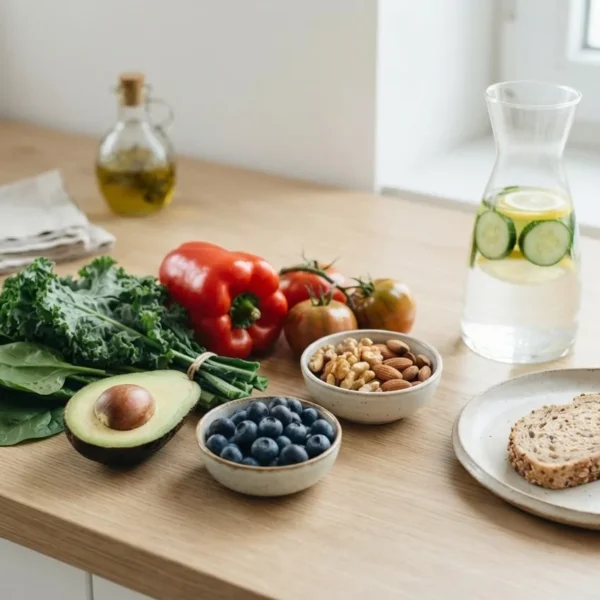
- Avocado: Rich in monounsaturated fats and fiber; adds creamy satisfaction to salads and bowls.
- Nuts and seeds (almonds, chia, flax): Concentrated energy but highly satiating—use small portions (a palmful).
- Olive oil: Use as dressing; AHA recommends healthy fats for heart and satiety benefits (AHA).
- Fatty fish (salmon, sardines): Provides omega-3s and a strong satiety profile because of protein + fat.
-
Complex carbohydrates and whole grains
- Quinoa: Whole-grain protein + fiber—keeps you fuller than refined grains.
- Oats: Beta-glucan fiber slows digestion and sustains fullness (ideal breakfast).
- Brown rice and farro: Higher fiber and longer digestion time than white rice.
- High-fiber breads (100% whole grain): Provide sustained energy vs. refined white bread.
-
Fruits and snacks with water and fiber
- Berries: High fiber per cup and low energy density—good dessert or cereal topping.
- Apples and pears: Soluble fiber and water—take longer to eat and digest.
- Citrus fruits: Water-rich and tangy, often eaten as a snack that reduces cravings.
-
Dairy and dairy alternatives
- Cottage cheese: Very high in casein protein; keeps people full for hours.
- Plain Greek yogurt: As above—use with fruit and nuts for fiber + fat + protein balance.
- Unsweetened soy milk: Higher in protein than many plant milks; useful in smoothies.
-
Soups and broths (water + volume)
- Vegetable or bean-based soups: Eating a broth-based or thick vegetable soup before a meal reduces total meal calories by increasing stomach volume.
Portion cues: even filling foods can be overconsumed; aim for palm-sized protein portions, fist-sized whole grains or starchy vegetables, and plate-sized vegetables to keep calories reasonable while maximizing volume.
If you want structured meal systems that use many of these items, explore our resources on planned approaches to balanced meals.
21 Day Fix meal plan for balanced nutrition
nutritious comida saludable for satiety
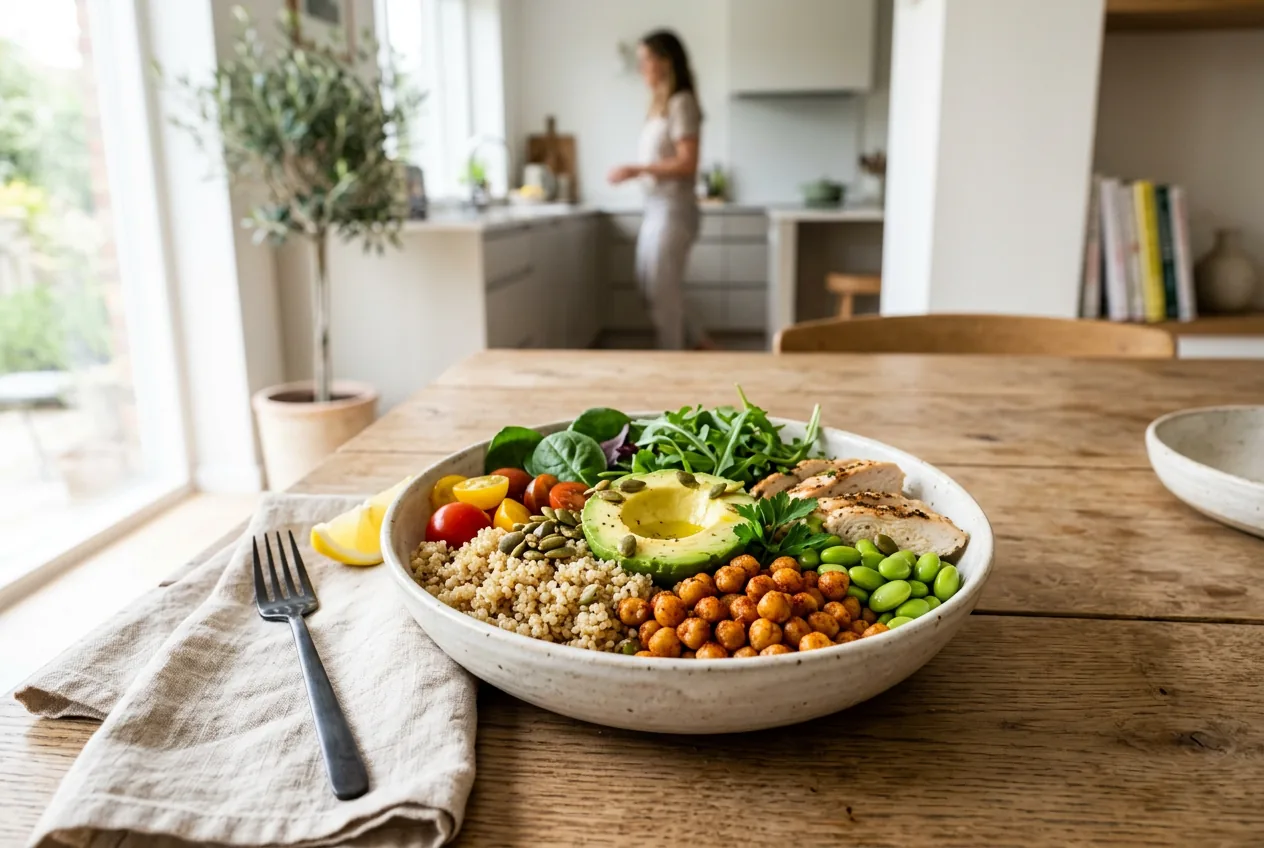
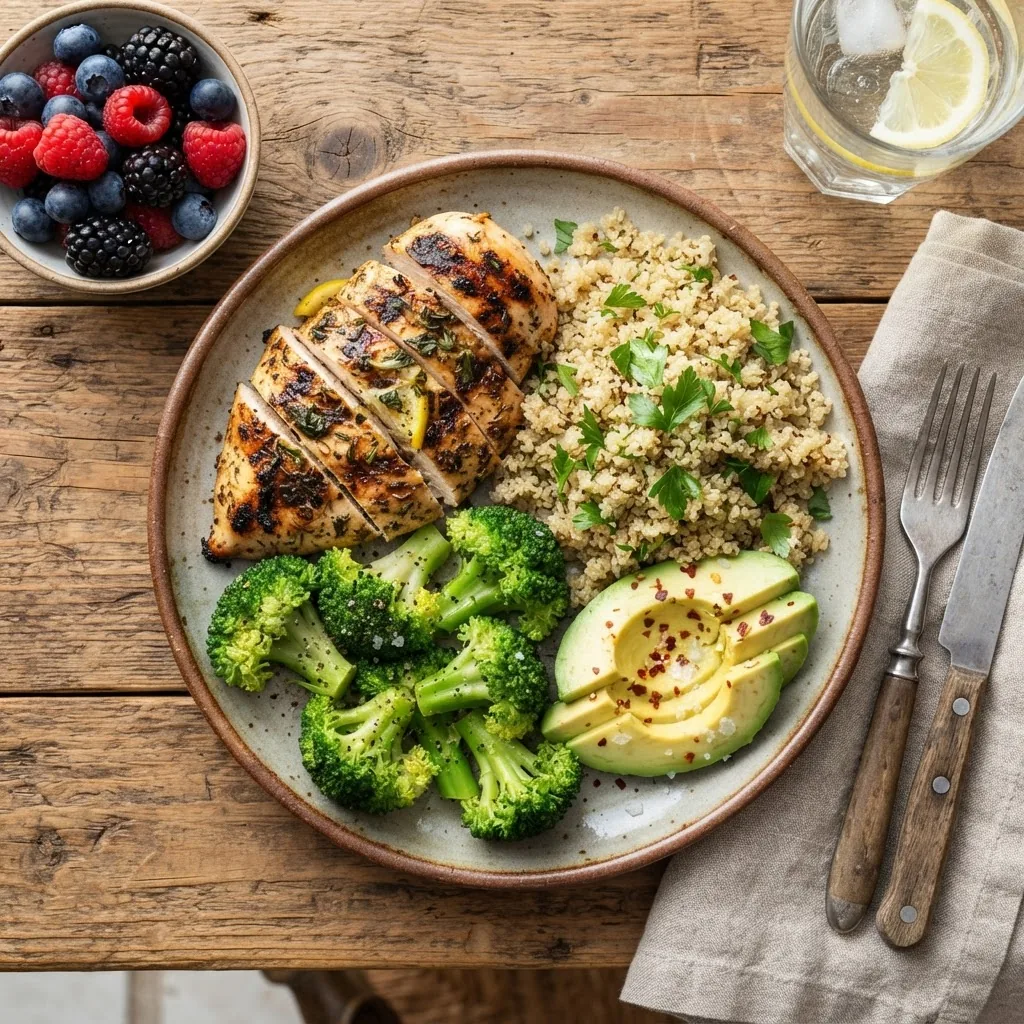
Practical tip: combine protein + fiber + a little fat at every meal (e.g., grilled chicken + roasted broccoli + quinoa + avocado) for maximal and sustainable fullness.
Next, practical everyday ways to add these healthy filling foods into daily life.
Healthy Filling Foods to Incorporate Every Day
Answer: Incorporate filling foods daily by centering plates on lean protein, a large portion of nonstarchy vegetables, a modest whole-grain or legume portion, and a small serving of healthy fat—swap refined items for fiber-rich alternatives and plan snacks that combine protein and fiber.
Term: Low energy density means foods that provide fewer calories per unit weight, often due to high water and fiber content.
Simple daily habits to increase fullness sustainably:
- Start meals with a bowl of vegetable soup or salad to increase stomach volume and reduce total meal calories.
- Prioritize a protein source first when plating—this helps portion the rest of the meal appropriately.
- Use whole-frain swaps: swap white rice for quinoa or brown rice, white bread for 100% whole-grain bread.
- Snack smart: pair fruit with a protein (apple + almond butter, berries + Greek yogurt) to prevent midafternoon energy dips.
- Include legumes 2–3 times weekly (stews, salads, hummus) for plant-based protein + fiber.
Mini food-swaps to instantly boost fullness:
- Replace fruit juice with whole fruit (fiber retained).
- Swap a bagel for a two-egg + spinach scramble on whole-grain toast.
- Trade chips for raw veggies + hummus or air-popped popcorn with a sprinkle of seeds.
Sample meal and snack ideas with portion guidance (real-life portions):
- Breakfast: 2 eggs (about 12–14 g protein) scrambled with a cup of spinach, 1/2 cup cooked oats with 1/4 cup berries and 1 tbsp chia seeds — filling and balanced.
- Lunch: 4–5 oz grilled chicken breast, large mixed salad (2 cups leafy greens + 1 cup mixed veggies), 1/2 cup cooked quinoa, 1/4 avocado — high protein, fiber, and volume.
- Snack: 3/4 cup Greek yogurt with 1/3 cup mixed berries and 1 tbsp chopped almonds — protein plus fat and fiber keeps you satisfied until dinner.
For structured program options that make daily implementation easy, consider planned meal guides that emphasize these filling food combinations.
clean eating meal plans for everyday fullness
balanced nutrition through clean living meal plans
healthy vs unhealthy foods for satiety
21 Day Fix meal plan for balanced nutrition
Note on individual variability: appetite responses differ with age, activity, hormones and metabolism; adjust portions and timing to match your needs and consult a clinician for personalized advice.
Next: how to change eating behavior so you actually eat less while staying full.
How to Start Eating Less by Choosing More Filling Foods
Answer: To eat less without chronic hunger, progressively replace calorie-dense items with filling foods, use portion-control techniques, practice mindful eating, and track hunger cues; consistent small changes build sustainable appetite control.
Term: Mindful eating is paying full attention to the eating experience—tastes, textures, hunger and fullness cues—so you stop eating when satisfied.
-
Step 1 — Audit current meals.
Record foods for three days, noting hunger before/after meals. Identify high-calorie, low-volume items (sugary drinks, refined snacks) to swap for filling alternatives.
-
Step 2 — Make targeted swaps.
Swap sugary beverages for water or sparkling water with lemon; replace refined grains with whole grains; add a vegetable serving to every meal. These swaps lower calories while boosting fullness.
-
Step 3 — Structure meals for fullness.
Start with a salad or broth-based soup, serve a palm-sized protein, fill half your plate with nonstarchy vegetables, and add modest complex carbs and a small healthy-fat portion.
-
Step 4 — Use portion control tools.
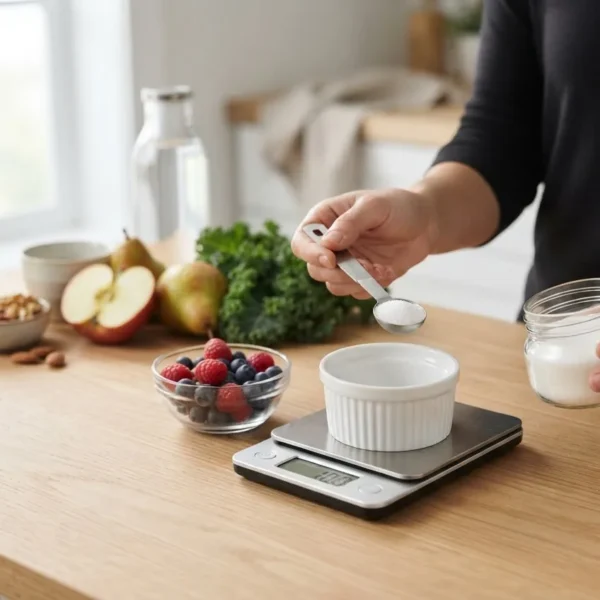
Try smaller plates, pre-plate portions rather than family-style serving, and use measuring cups or a kitchen scale for the first few weeks to learn what satisfying portions look like.
-
Step 5 — Practice mindful eating.
Eat without screens, chew slowly, pause mid-meal to assess fullness, and aim for a 20-minute mealtime window to allow hormonal signals to reach the brain.
-
Step 6 — Track hunger and progress.
Keep a simple hunger log (scale 1–10 before/after meals) and note how filling different combinations are; this feedback loop helps refine meal choices.
-
Step 7 — Use behavioral strategies for cravings.
When cravings hit, wait 10–15 minutes, drink water, and choose a protein-plus-fiber snack to reduce impulsive eating.
-
Step 8 — Small experiments and consistency.
Implement one swap per week (e.g., oats for sugary cereal) to form habits. Over time these yield lowered calorie intake with the same sense of satisfaction.
Practical tools: meal prepping protein portions, keeping ready-to-eat vegetables in the fridge, and pre-portioning nuts help prevent reaching for calorie-dense convenience foods when hungry.

For basic guidance on healthy food selection that supports appetite control, combine this approach with proven consumption habits.
consuming healthy food for appetite control
If you want a stepwise behavioral course, see our tips for eating less that cover practical reduction strategies and long-term habit formation.
Small case-study summary: a randomized trial comparing high-protein breakfasts to carbohydrate breakfasts showed participants consumed fewer calories at later meals; according to a 2022 clinical trial meta-analysis, higher-protein breakfasts reduced daily intake by ~10% on average (source: clinical trial meta-analysis summary).
Reminder: This guide provides general advice and does not replace individualized medical guidance for weight or metabolic conditions.
Next, a focused comparison of how proteins, fibers and fats stack up for satiety.
Comparing the Most Filling Foods: Proteins vs. Fibers vs. Fats
Answer: Protein typically yields the strongest satiety per calorie, fiber-based foods add volume and slow digestion for sustained fullness, and fats boost meal satisfaction but are calorie-dense—balancing all three gives the most practical fullness with controlled calories.
| Macronutrient | How it fills you | Pros | Cons |
|---|---|---|---|
| Protein | Increases satiety hormones, slows gastric emptying. | Strongest satiety per calorie; preserves lean mass. | Overemphasis can reduce variety; some sources high in saturated fat. |
| Dietary Fiber | Adds bulk, slows digestion, feeds gut microbiota. | Low energy density, supports long-term fullness and bowel health. | Too much too fast can cause gas; needs fluids to work well. |
| Fat | Stimulates CCK and increases palatability and satisfaction. | Enhances flavor and satiety; essential fatty acids support health. | Calorie-dense; easy to overconsume if portions aren’t controlled. |
Explanatory note: the glycemic index (GI) and glycemic load describe how carbohydrate-containing foods affect blood glucose; lower-GI foods (whole grains, legumes) produce smaller glucose spikes and longer satiety than high-GI foods (sugary drinks, white bread). Term: Glycemic index is a ranking of carbohydrate-containing foods by their effect on blood sugar compared with a reference food.
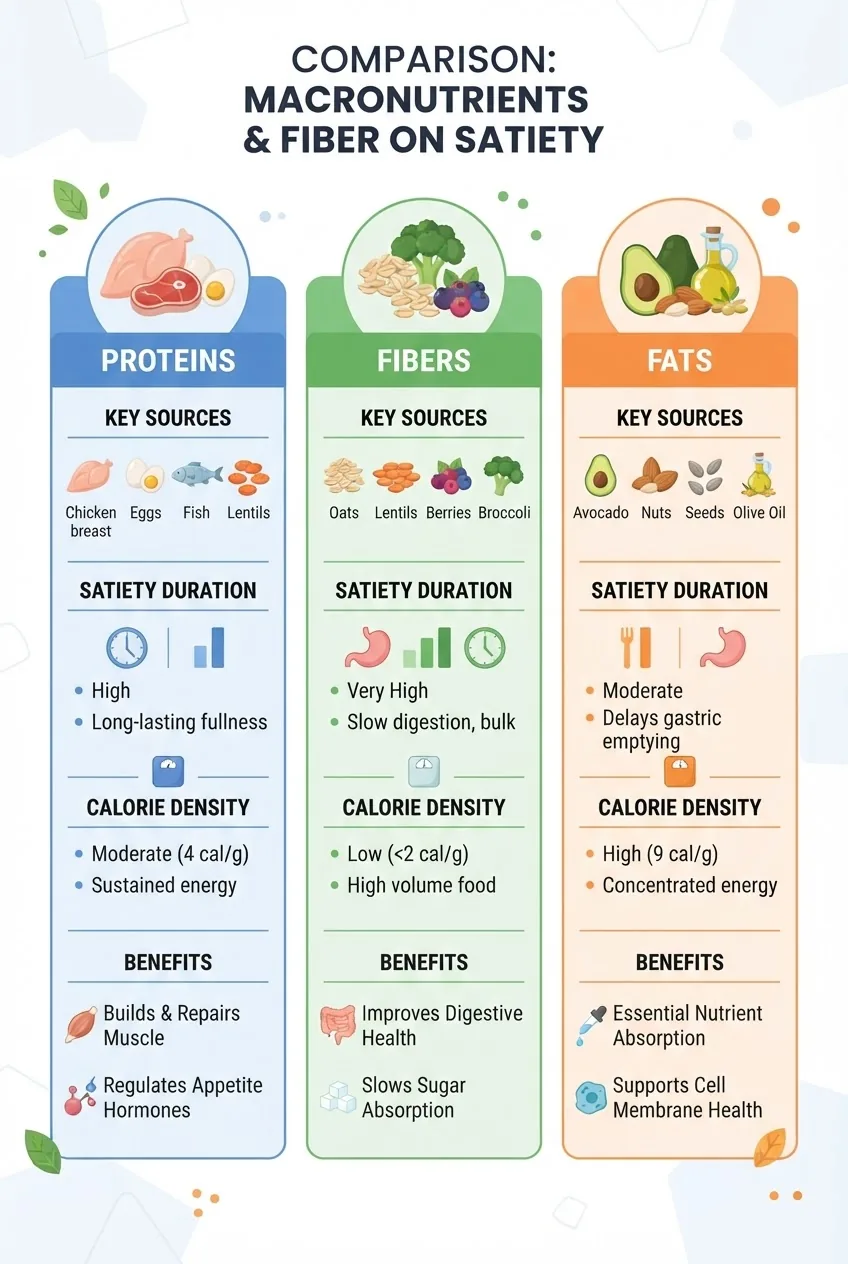
Practical balancing rule: aim to include all three—protein to blunt hunger, fiber to add volume, and modest healthy fats to increase satisfaction—rather than over-indexing one macronutrient.
Next, examine how when and how often you eat can influence fullness and appetite hormones.
Meal Timing and Frequency: How It Affects Fullness
Answer: Meal timing and frequency influence hunger cycles and hormone rhythms—consistent meal timing, adequate protein at each meal, and spacing meals to match your activity level help stabilize ghrelin and reduce overeating; the best timing is individualized for lifestyle and sleep patterns.
Term: Meal frequency refers to how often you eat (e.g., three meals vs. multiple small meals); both approaches can work depending on total nutrient intake and personal hunger patterns.
How timing affects fullness physiologically:
- Regular meal timing can train ghrelin patterns so hunger peaks are predictable and easier to manage.
- Eating protein-rich breakfasts often reduces overall daily energy intake by improving satiety early in the day.
- Long gaps can increase appetite and lead to overeating; conversely, grazing without structure may not give hormonal signals time to reduce appetite.
Practical recommendations:
- Choose a meal frequency that fits your lifestyle—three balanced meals often works well, while some prefer 3 meals + 1–2 protein-rich snacks.
- Time larger meals around higher activity (e.g., larger lunch if you exercise midday) to match energy needs.
- For evening fullness control, prioritize a nutrient-dense dinner with protein, fiber-rich vegetables, and modest whole grains; see our detailed guide on dinner timing for health and fullness.
best time to eat dinner for health and fullness
Evidence note: according to a 2024 industry report on meal timing and metabolic health, consistent eating windows and protein-forward meals were associated with improved appetite control and stable blood glucose in short-term studies (source: 2024 industry report).
If you follow intermittent fasting or other timing approaches, ensure that meals within the eating window are rich in protein and fiber to prevent compensatory overeating.
Next, practical tips to stay satisfied without excess calories.
Tips for Staying Satisfied Without Overeating
Answer: Use mindful eating, slow down meal pace, combine protein + fiber + healthy fat, manage portion sizes, and track hunger cues—these best practices reduce overeating while preserving satisfaction and are sustainable long-term.
- Eat slowly: Pause between bites and chew thoroughly—this gives hormones time to signal fullness (aim for 20 minutes per meal).
- Combine macros: Always include protein, fiber and a small healthy fat to extend fullness.
- Use plate method: Half nonstarchy veggies, quarter protein, quarter whole grains or starchy veg to visually balance meals.
- Pre-portion high-calorie foods: Measure nuts, oils and dense snacks to avoid unintentionally large servings.
- Stay hydrated: Thirst can feel like hunger; drink water before meals to reduce overeating.
- Sleep and stress: Improve sleep and stress management—both affect ghrelin and leptin and therefore your sense of fullness.
- Plan snacks: Prepare protein-plus-fiber snacks (Greek yogurt + berries, hummus + veggies) to avoid impulsive choices.
- Combine movement and diet: Regular exercise supports appetite regulation; see how diet and activity pair for sustainable fullness.
diet and exercise for sustainable fullness
Trust signals: according to a 2023 NIH review on appetite hormones, sleep and stress reduction were highlighted as meaningful modifiers of hunger hormones and satiety perception (NIH).
Final note on safety and health: choose healthy fats (olive oil, nuts, fatty fish) in line with American Heart Association guidance to support heart health while enhancing satiety (AHA).
Below are concise answers to common questions about filling foods and satiety.