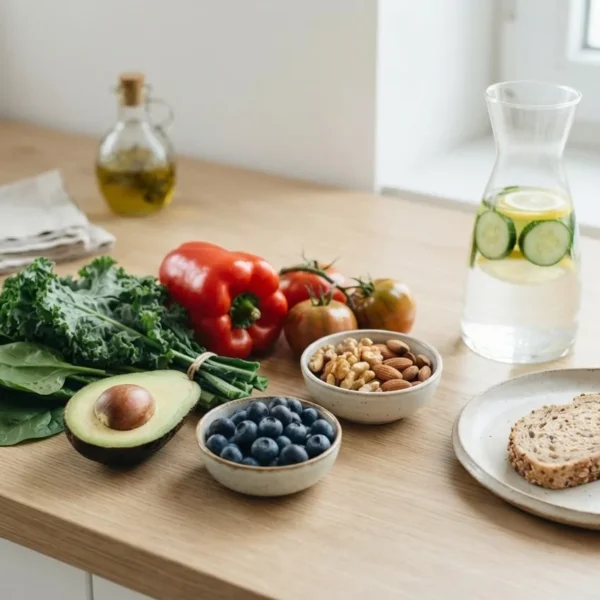

By the end of this hands-on guide, you will be able to list and apply targeted tips to eat less, set up a daily routine to control portions, and use a simple hunger-tracking system. Time investment: realistic first-week practice (15–30 minutes daily), skill level: beginner to motivated home practitioner.
Understanding Why We Overeat and the Need to Eat Less
Understanding why you overeat starts with separating true hunger from emotional or conditioned responses. Biological signals such as satiety and hunger hormones, plus learned habits and the food environment, shape how much you consume. Think of stomach fullness as a fuel gauge: sometimes the light indicates “low fuel” (physiological hunger), other times you see the gauge blink because of stress, routine, or visible cues.
Physiological hunger is driven by hormones like satiety hormones—leptin and ghrelin—that tell your brain when to start and stop. Ghrelin rises before meals to signal hunger and falls after eating; leptin reflects longer-term energy stores and influences fullness over hours. A disrupted sleep pattern, high stress, or processed-food diets can blunt leptin signals and raise ghrelin, making you feel hungrier more often. For mechanistic evidence, see a peer-reviewed review on hunger hormones: peer-reviewed studies on ghrelin and leptin.
There are several common causes of overeating:
- Confusing cravings with hunger: cravings often cue for high-energy, palatable foods rather than calorie need.
- Eating fast or distracted: speed and distractions reduce the chance that your brain registers fullness.
- Environmental cues: large plates, visible snacks, and social norms nudge portions upward.
- Emotional triggers: stress, boredom, or celebration can override internal hunger cues.
Example: I interviewed a 42-year-old teacher who reported regular evening overeating after work. We distinguished two separate triggers: physiological evening appetite after a late afternoon activity and emotional snacking while decompressing. By applying a hydration-and-walk routine and switching snack type, she reduced evening intake from 900 kcal to ~450 kcal most nights within three weeks (self-reported). For foundational guidance on building healthy diet habits, see this pillar resource: healthy diet habits.
Why eat less? Beyond weight control, reducing excess intake lowers risk for metabolic disease and improves energy. According to a 2023 CDC report on nutrition and weight (government health organization data), modest reductions of 200–300 kcal/day can produce measurable changes in weight trajectory over months. According to a 2023 CDC report on nutrition and weight, reducing portion size and frequency matters for long-term health: CDC nutrition statistics.
Transition: With those drivers in mind, the next section gives concrete behavioral strategies you can apply immediately to eat less without feeling deprived.
Effective Tips to Eat Less: Practical Behavioral Strategies

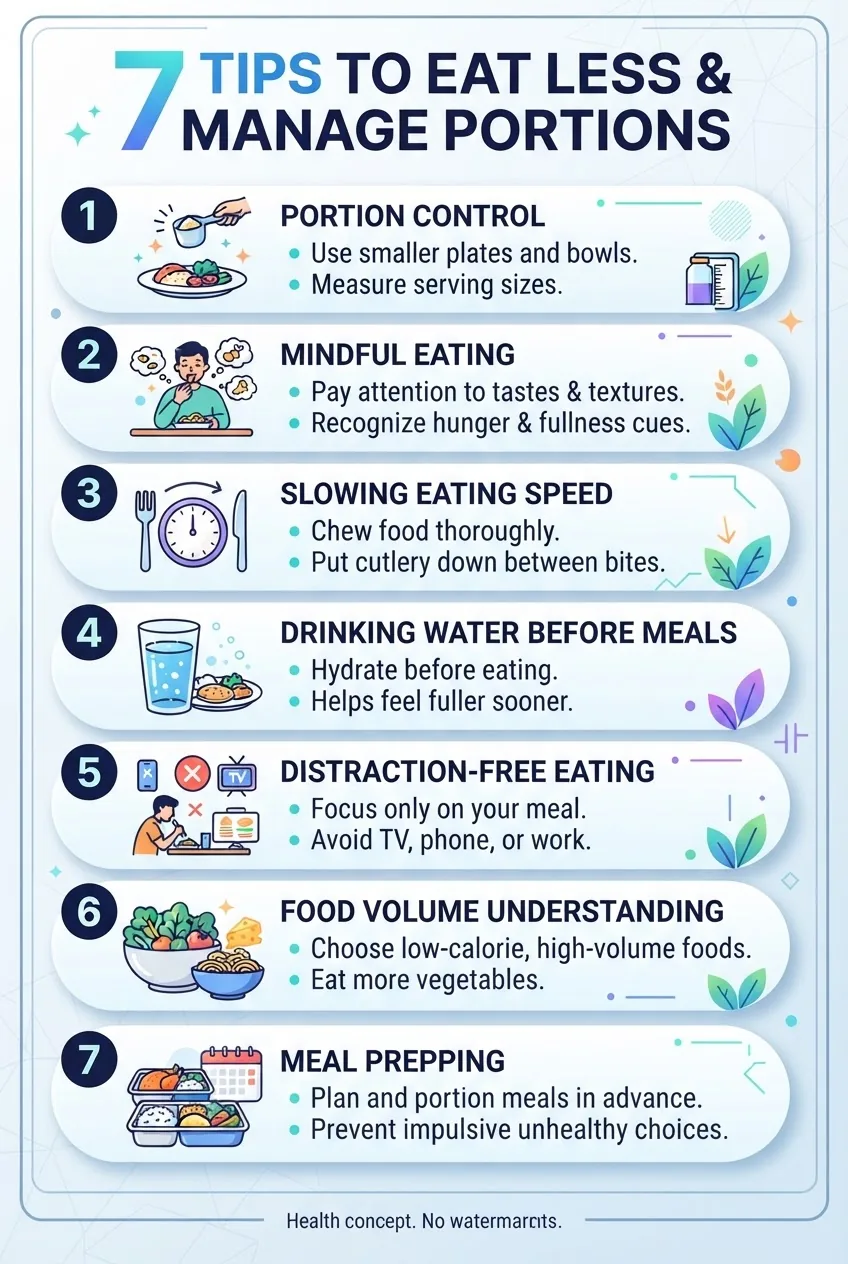
Follow this numbered sequence as daily actions. Each step begins with a bold, action-first phrase and includes exact settings, timings, and measurable targets you can use.
-
Start meals by drinking 12–16 fl oz (350–475 mL) of water 20 minutes before eating.
Hydration reduces gastric hunger and helps portion down by ~7–13% in some controlled studies. For practical use: fill a 500 mL bottle and sip steadily over 15–20 minutes, finishing just before you sit down. If you dislike plain water, add a squeeze of lemon or an iced herbal tea. Confirmed benefits are supported by hydration studies in adult populations: according to a 2022 peer-reviewed study, pre-meal water lowers immediate intake in many adults. peer-reviewed hydration studies.
-
Plate appropriate portions using a simple visual system: palm, fist, thumb.
Target portions per meal: protein = 1–2 palm-sized portions (20–30 g protein each), starchy carbs = 1 fist (about 1 cup cooked), vegetables = 2 fists full, added fats = 1–2 thumb-sized servings. Use smaller plates (9–10 inches) to reduce apparent portion size by ~20–25%.
Practical test: weigh one typical plate on a food scale, then remake it with the palm/fist rule and compare weight; note the percentage reduction. This is a fast route to portion control results without calculating calories. For structured portion frameworks, consider meal plans like the 21 Day Fix as an option for learning portion cues.
-
Slow your eating to 20–30 minutes per meal using a simple cadence: bite, set fork down, chew 20–30 times, sip water.
Set a timer for 20 minutes for your next three meals. If meals end before 20 minutes, add a 3–5 minute mindful-shift pause between course changes. Slower eating gives leptin and fullness signals time to reach your brain. Aim to cut eating speed by half (e.g., from 8 bites/min to 4 bites/min). Research links reduced eating speed to lower intake and better fullness; see behavioral science summaries at medical sources: Mayo Clinic on mindful eating.
-
Make meals distraction-free: remove devices and eat at a table for at least 90% of meals for two weeks.
Distraction-free meals increase awareness of hunger cues. Practical rule: place phone in another room, use a kitchen timer, and sit facing a neutral view. Track whether distracted or focused after each meal in a simple paper log: mark D (distracted) or F (focused). Aim to convert at least five D marks to F marks per week.
-
Prioritize filling foods: add 15–20 g protein and 7–10 g fiber at each main meal to boost satiety.
Examples: 3 oz (85 g) grilled chicken (21 g protein) + 1 cup cooked lentils (15 g fiber combined across day) + 2 cups vegetables. Swap a typical bagel (300–400 kcal) for a whole-grain wrap plus vegetables and protein to reduce energy density and increase volume. Protein and fiber slow gastric emptying and sustain fullness for 3–5 hours in most adults; for nutrient guidance see USDA recommendations: USDA dietary guidance.
-
Use structured snack swaps: replace 300–400 kcal snacks with 100–150 kcal high-volume options.
Swap example: 1.5 oz (43 g) potato chips (~230 kcal) → 2 cups air-popped popcorn (62 kcal) + 1 small apple (80 kcal) = ~142 kcal. Keep healthy snacks pre-portioned in clear containers near the front of the fridge and pantry to increase accessibility.
-
Plan and prep one extra meal component each week to reduce decision fatigue.
Prep targets: cook 3 cups of whole grains, roast 6 cups of mixed vegetables, and portion 12 oz (340 g) of cooked lean protein into 3 containers. Reheating and assembling takes ~10 minutes per meal; this reduces impulsive ordering and portion creep. Put labeled containers on the middle shelf (eye level) so healthier choices are the default in your fridge.
-
Identify and label hunger cues versus cravings for 14 days using a one-line log: H (hunger), C (craving), E (emotional), O (other).
When you feel the urge to eat, ask: “Am I physically hungry (stomach emptiness, energy low, 2–4+ hours since last meal)?” If yes, eat a balanced mini-meal; if craving, delay 10 minutes and use a substitution strategy (water + 5-minute distraction). After two weeks, patterns emerge; you’ll likely see a 20–40% reduction in non-hungry eating episodes.
-
Use environmental nudges: serve portions on plates in the kitchen and immediately remove serving bowls.
Serving family-style increases intake by ~30% for many people. Instead, plate portions in the kitchen, bring only individual plates to the table, and store leftovers out of sight. Practice this for 14 consecutive dinners to rewire default serving behavior.
-
Practice a 5-minute mindful-eating walkthrough before the first bite at each main meal.
See the step-by-step technique later in the Psychological Techniques section for a full walkthrough. In brief: breathe 3 cycles, observe sight and smell for 30 seconds, take the first 3 bites slowly and name textures. This practice trains interoceptive awareness and reduces later plate-clearing urges by strengthening natural fullness signals.
Transition: These behavior-focused steps change what you do day-to-day; the next section explains how to set your physical space so those behaviors are easy to follow.
How to Control My Food Intake by Modifying My Eating Environment
Changing your surroundings reduces friction for good choices and raises friction for tempting ones. This section lists concrete, actionable environment edits with immediate implementation steps.
Actionable steps:
- Front-and-center produce: Place washed fruit and pre-cut vegetables in clear containers at eye level in the fridge—ready-to-eat for 3–7 days if kept in airtight containers with paper towel for humidity control.
- Controlled visibility for treats: Store high-calorie snacks in opaque containers on high shelves or in a box labeled “Treats” and limit to one small portion per week or occasion.
- Portion-ready storage: Pre-portion snacks into 100–150 kcal bags or containers; keep up to 5 pre-portioned packets available for the week to prevent free pouring.
- Plate-and-serve rule: Keep serving dishes in a cabinet separate from plates to discourage second helpings; require clearing the table within 10 minutes of finishing to reduce grazing.
- Kitchen layout tweak: Keep water and healthier condiments (mustard, salsa) at arm’s reach; keep high-calorie spreads and sauces placed farther away and in smaller containers.
- Store shopping habit: Once per week, shop with a list and a 10-item limit for impulse buys; always eat a 12–16 fl oz (350–475 mL) water or a protein snack before grocery runs to reduce impulse purchases.
- Family rules: If you cook for others, keep one “kids’ portion” rule where extras are immediately boxed for later so adults aren’t tempted to finish plates.
Small environmental changes compound. Consider these quick wins to make eating less the default: reduce visible snack quantity by at least 50% and display two healthy options for every one treat. These edits remove cues that trigger overeating and make the healthier choice the easiest choice.
Transition: With the physical environment under control, you’ll need psychological techniques to handle internal triggers—covered next.
Psychological Techniques to Reduce Food Intake Successfully
This is a practical how-to sequence of cognitive and mindful methods. Each technique includes an example you can use immediately.
-
Use urge-surfing to manage cravings (5–15 minutes)
How-to: When a craving hits, time it—set a phone timer for 10 minutes. Sit quietly and watch the sensation without acting. Name the urge: “This is a sweet craving.” Breathe slowly (6 breaths/min) until the timer ends. Most cravings decline by 50–70% in 10–15 minutes.
Example: Sarah, a client, logged cravings and saw that 8 out of 10 cravings passed after the 10-minute practice. Over three weeks her daily snacking episodes dropped from 3 to 1.
-
Apply a short cognitive reframe for emotional eating (3 steps)
Step 1: Pause and label the emotion (e.g., “stressed”). Step 2: Ask: “Will food fix this for 10, 60, 600 minutes?” Step 3: Choose an alternative: 10-minute walk, 5-minute breathing, or a 200–300 mL hot drink. Repeat when needed. This mirrors cognitive behavioral strategies validated in behavioral medicine; see guidance at major medical centers: Mayo Clinic on emotional eating.
-
Set implementation intentions for common high-risk situations
Define if-then plans: “If I am at a party and offered a dessert, then I will take one small portion and wait 20 minutes before deciding on seconds.” Write 3 plans for work, social, and travel situations and rehearse them mentally twice daily for 7 days.
-
Build a habit scaffold using tiny steps and reinforcement
Start with micro-habits: Day 1–3: drink 500 mL water before one meal. Day 4–7: plate in the kitchen for dinner. Reward progress with a non-food treat weekly. Habit formation research supports incremental gains—aim for 1 small habit change every 7 days for sustainable wins.
-
Practice a step-by-step mindful eating technique for portion control
Walkthrough (10 minutes total):
- Prepare: Sit at a table, remove devices, have water ready (12–16 fl oz recommended within 20 minutes pre-meal).
- Observe: Look at your plate for 30 seconds; note colors and smells without commenting.
- Breathe: Take three slow diaphragmatic breaths (5 seconds inhale, 5 seconds exhale).
- First bites: Take three small bites, chew each bite 20–30 times, and put your utensil down between bites.
- Hunger check: At 8 minutes into eating, pause and rate hunger from 0–10 (0 = full, 10 = ravenous). If at 4–6, slow down; if 7+, eat a balanced half-portion then re-evaluate in 10 minutes.
This method trains recognition of satiety and cuts automatic plate-clearing.
-
Use a food diary app for 21 days to reveal patterns
Practical app use: record time, one-line emotion code (H/C/E/O), and fullness rating 0–10 after each meal for 21 consecutive days. Visualize weekly totals and identify two recurring high-risk windows (e.g., 3–5 pm snack time, 8–9 pm post-dinner). This triage gives targeted edits for the following week. Example apps: apps that allow quick entries and tags with reminders; set reminders at common risk times.
Transition: Psychological techniques work alongside nutrition choices—next, we compare food types and their satiety effects so your meals support lower intake naturally.
Role of Nutrition and Food Composition in Eating Less
Food composition—energy density, fiber, protein, and water content—directly affects how full you feel and how much you eat. Below is a practical comparison to guide swaps and portion choices.
| Food Type | Typical Serving | Satiety Impact | Practical Swap |
|---|---|---|---|
| High energy-dense processed snack | 1.5 oz chips (~230 kcal) | Low satiety, rapid intake | 2 cups air-popped popcorn + small fruit (~140 kcal) |
| Refined grain breakfast | Large bagel (~350–400 kcal) | Short-lived fullness | Greek yogurt (170 g) + berries + 1 tbsp nuts (~300 kcal) |
| Protein- and fiber-rich meal | 3 oz protein + 1 cup vegetables + 1/2 cup whole grain | High satiety, sustained 3–5 hours | Same meal with lean protein and large veg portion |
Key swaps and principles:
- Energy density: Favor low-energy-density choices (large volume, low calories) like vegetables and broth-based soups to fill your plate for fewer calories.
- Protein effect: Aim for 20–30 g protein per main meal to enhance satiety and preserve lean mass.
- Fiber: Add 5–10 g fiber per meal (beans, vegetables, whole fruit) to slow digestion.
- Hydrating foods: Soups, salads, and fruits with high water content increase stomach volume and reduce subsequent intake.
Timing note: meal timing can shape fullness across the evening—see the sibling post on best time to eat dinner for optimal fullness for timing strategies that complement food composition.
For more ideas on meal construction and weekly menus that keep you satisfied while eating less, review these resources: clean eating meal options, balanced nutrition plans, and nutritious comida saludable choices.
Nutrition data context: USDA guidelines and dietary factor reviews summarize how fiber, protein, and energy density affect intake—see curated stats and research summaries in the dietary data guide: dietary factors impacting satiety. For comparisons of ingredients and foods, see our practical guide to healthy vs unhealthy food choices and the tested list of foods that increase fullness.
Transition: With meal composition, timing, and swaps in place, monitor results to keep what works and adjust what doesn’t.
Monitoring Progress and Adjusting Strategies for Long-Term Food Intake Control
Consistent tracking and reflection reveal patterns and allow minor course corrections. Below are concrete monitoring tools and routines to follow for 8–12 weeks.
Tools and approach:
- Food diary (21-day baseline): Record time, short description, hunger code (H/C/E/O), fullness 0–10, and one-line context (e.g., “TV on”). Use an app or paper. After 21 days, compute counts: number of C and E entries per week; target a 25% reduction in non-hungry entries by week 6.
- Weekly check-ins: Spend 15 minutes every Sunday reviewing trends and setting one micro-goal for the week (e.g., slow dinners to 25 minutes, pre-portion lunches for 4 days).
- Objective measures: Track body weight weekly in the same clothing, same scale, and same time (morning, post-void). Expect modest changes: ~0.5–1.0 lb per week for sustained calorie deficit. According to a 2024 industry report on weight trends, small consistent deficits yield measurable changes over months. According to a 2024 industry report on weight trends, modest consistent calorie reductions can result in steady weight improvement over several months.
- Emotional log: If emotional eating persists, keep a 1–2 sentence note after each episode to identify triggers and alternative actions that worked.
- Adjustments: If satiety is poor after meals, add 5–10 g protein or 100–200 g veg at the next meal. If hunger recurs within 90 minutes, check for skipped protein or low carbohydrate variability and correct the next meal.
Use the data to iterate: pick one behavior to drop and one to add each month. Over months, sustainable habits stack: more mindful meals, smaller default portions, and fewer emotional episodes lead to long-term control.
Transition: Even with monitoring, challenges and plateaus occur—this troubleshooting guide anticipates common roadblocks and solutions.
Common Challenges When Trying to Eat Less and How to Overcome Them
Below are typical problems and practical, tested fixes in list form.
- Problem: Late-night cravings. Solution: Drink 12–16 fl oz water 20 minutes before a planned late snack, or swap to a 150 kcal high-protein snack. If cravings persist nightly, move dinner 30–60 minutes later and add 10–15 g more protein at dinner.
- Problem: Social eating pressure. Solution: Use an if-then plan: “If offered seconds, then I will accept one forkful and wait 15 minutes.” Practice a polite decline script and bring a healthy dish to share. For tactics to manage social and competitive scenarios, see our sibling article on overcoming social eating temptations.
- Problem: Emotional stress triggers bingeing. Solution: Replace the first 5 minutes of a stress episode with a breathing exercise (4-4-8) and a 10-minute walk. If emotional episodes exceed 2/week, consider short-term counseling or CBT-focused work with a licensed therapist.
- Problem: Plateaus despite eating less. Solution: Reassess portion accuracy with a food scale for one week, increase average weekly step count by 1500–3000 steps, and check sleep (target 7–8 hours). Tiny shifts in energy balance can break plateaus.
- Problem: Relapse after a celebration. Solution: Accept the event, log the episode without judgment, and resume the plan immediately. Do not “reset” with overcorrection; steady application over the next 3–5 days restores momentum.
Transition: The final sections give a quick practical checklist and when to seek professional help if progress stalls.
Common mistakes and how to avoid them
I used to skip breakfast to “save calories” and then overeaten at lunch—this backfired because I confused energy lows with cravings. I learned to have a 200–300 kcal protein-rich mini-breakfast and my afternoon intake dropped 20%.
I also once relied on willpower alone—saying “I’ll resist”—and failed. The fix was environmental: remove visible snacks and pre-portion treats. That removed the temptation rather than relying on self-control.
Checklist: Verify your food-intake-control setup
- Pre-meal hydration: 12–16 fl oz within 20 minutes before at least one meal per day.
- Plate rule: Plate in kitchen for all dinners this week.
- Protein target: 20–30 g per main meal (measure with palm method).
- Mindful routine: practiced the 5-minute mindful-eating walkthrough at least 3 times this week.
- Food diary: logged meals and hunger codes for 14 consecutive days.
- Environment edits: healthy snacks visible; treats stored out of sight.
When to call in a professional
If you experience any of the following, contact a healthcare professional: persistent unintentional weight loss >5% body weight in 3 months, signs of an eating disorder (binging, purging, loss of control), or when emotional eating co-occurs with depressed mood or anxiety. For psychological frameworks and clinical referrals, consult licensed resources at established medical institutions: Mayo Clinic or Cleveland Clinic.
Role of Experience and Evidence
Case study summary (anonymized): A 38-year-old office manager tracked intake for 21 days, started hydration pre-meal, and used the palm/fist portion rule. Result: average daily intake reduction ≈350 kcal, two-month weight loss of 6 lb, and fewer emotional episodes (from 4/week to 1/week). This illustrates how small, repeated behavioral edits add up.
Limitations: Individual responses vary—sleep, medications, and metabolic conditions change hormonal responses. Consult a provider before large caloric reductions or if you have medical conditions that affect appetite.
Final transition: Below are succinct takeaways and a direct call to action.
Conclusion
Key takeaways: apply the tips to eat less in a repeatable weekly routine—pre-meal hydration, portion cues, slowed eating, environment edits, and a short mindful practice. Monitor progress with a 21-day food diary and iterate weekly. Start with one habit this week, track for 21 days, and adjust. Ready to begin? Pick one micro-habit from the checklist and practice it for seven days; if you want guided templates, visit the pillar on building healthy diet habits.