By the end of this hands-on guide you’ll have a one-week set of ready-to-eat, high-protein meals, a repeatable prep routine that takes 2–3 hours on a Sunday, and the confidence to scale for weight loss or muscle gain; skill level required: basic kitchen skills and a timer. This high protein meal prep guide starts you cooking quickly and planning sustainably.
Introduction to High Protein Meal Prep
High protein meal prep is the practical process of planning, batch-cooking, and storing meals that deliver a higher proportion of protein per plate to support satiety, muscle recovery, and consistent calorie control. Think of meal prep like setting your GPS for a busy week — it removes daily decision stress and makes healthy eating automatic.
Why this matters: protein-rich meals reduce hunger between meals and support lean mass when combined with resistance training. Meal prep turns those benefits into reality by ensuring you have convenient options ready. For more on the foods to prioritize during this work, see protein rich food for weight loss.
Benefits of High Protein Meal Prep for Health and Fitness
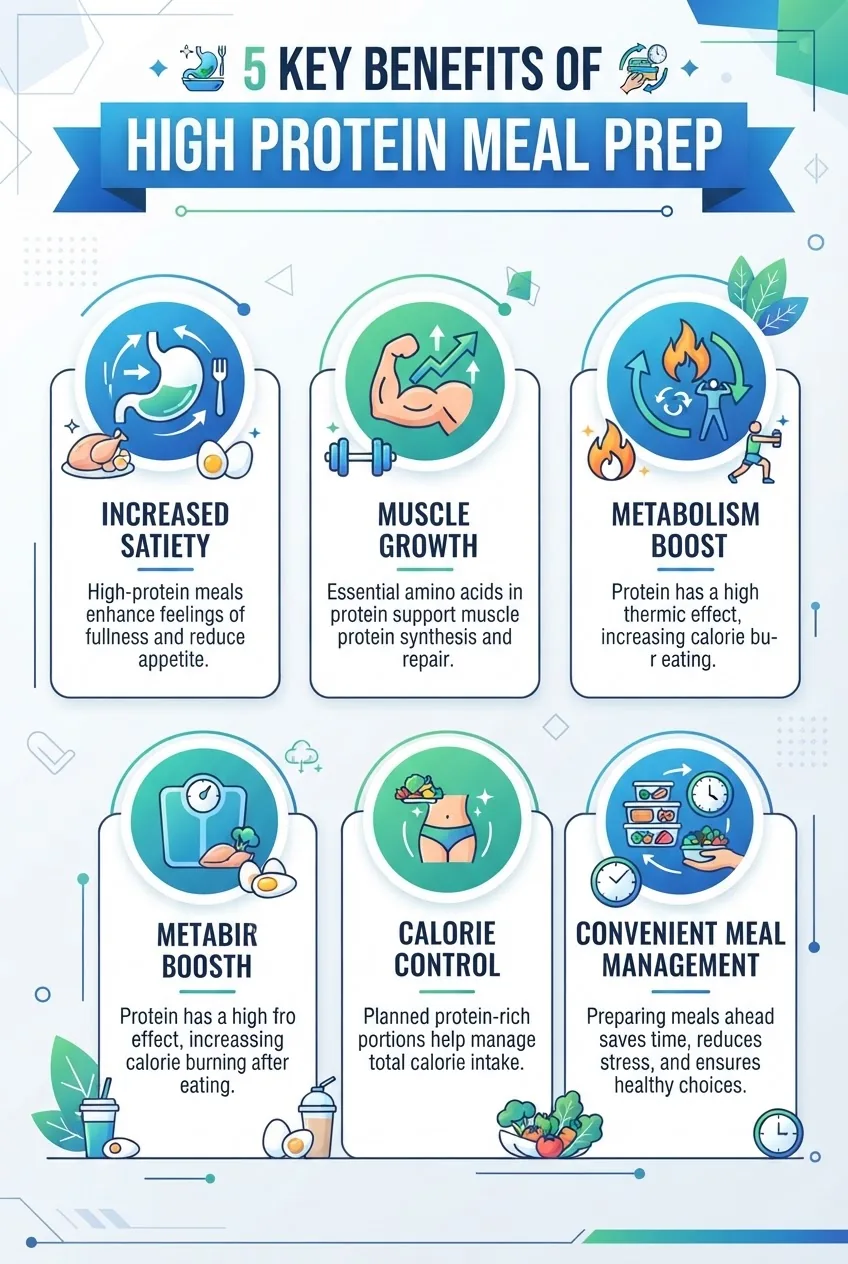
Batch-prepping high protein dishes creates a nutritional foundation that improves adherence and outcomes. Below are the most consistent benefits observed in real-world meal-prep programs and supported in the literature.
| Benefit | Practical effect | Supporting signal |
|---|---|---|
| Increased satiety | Fewer snacks, easier calorie control | According to a 2022 peer-reviewed nutrition review, higher-protein meals raise fullness vs. lower-protein meals |
| Muscle repair & growth | Supports recovery after workouts with consistent protein per meal | According to a 2021 peer-reviewed sports nutrition study, distributing protein across meals improved muscle protein synthesis |
| Metabolism support | Thermic effect of protein increases daily energy expenditure slightly | According to a 2020 systematic review in a peer-reviewed metabolism journal, protein increases thermogenesis compared with fats or carbs |
| Calorie control | Pre-portioned meals prevent overeating | According to a 2024 industry report, meal preppers report better adherence to calorie goals |
| Convenience & routine | Less decision fatigue; saves time daily | According to the Academy of Nutrition and Dietetics (professional guidance, 2023), meal planning increases dietary adherence and reduces impulsive eating |
These benefits combine: when you remove friction around meals and prioritize lean protein, you create a cycle of consistency that supports weight loss and muscle maintenance. External guidelines such as the USDA offer specific protein recommendations by age and activity level; use them as a baseline when tailoring portions (see external source below).
Authoritative sources: USDA dietary guidance (government resource), the Academy of Nutrition and Dietetics (professional guidance), and peer-reviewed studies summarized above.
Transition: With those benefits in mind, here’s a repeatable planning workflow you can follow step-by-step to build a week’s worth of high protein, low-calorie meals.
How to Plan Your High Protein Meal Prep
- Before you start — prerequisites and tools you need:
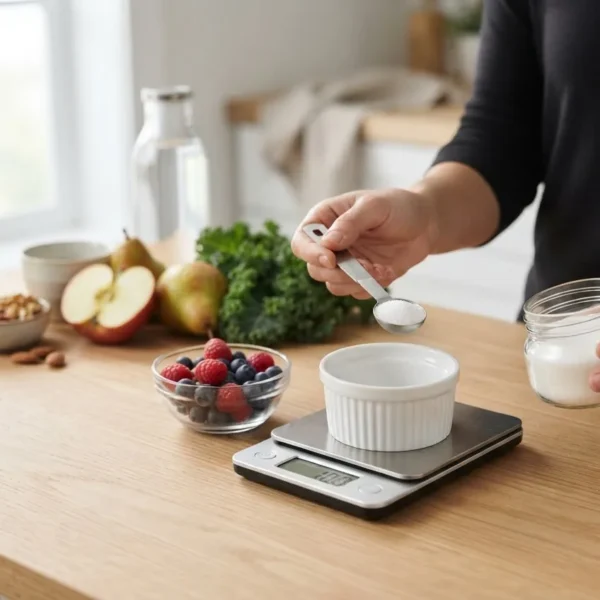
- Sharp chef’s knife, cutting board, kitchen scale (0.1 oz/g precision), measuring cups
- Set of airtight meal containers (3-cup lunch containers and 1-cup snack containers), labels, marker
- Large sheet pans, heavy skillet, slow cooker or Instant Pot, rice cooker (optional)
- Meal planning template (paper or app), grocery list template, food thermometer
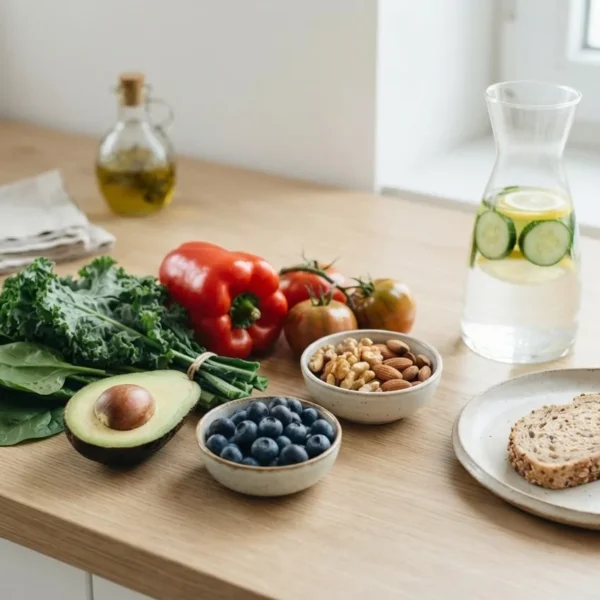
- Basic pantry: olive or avocado oil, salt, pepper, dried herbs, low-sodium soy or tamari
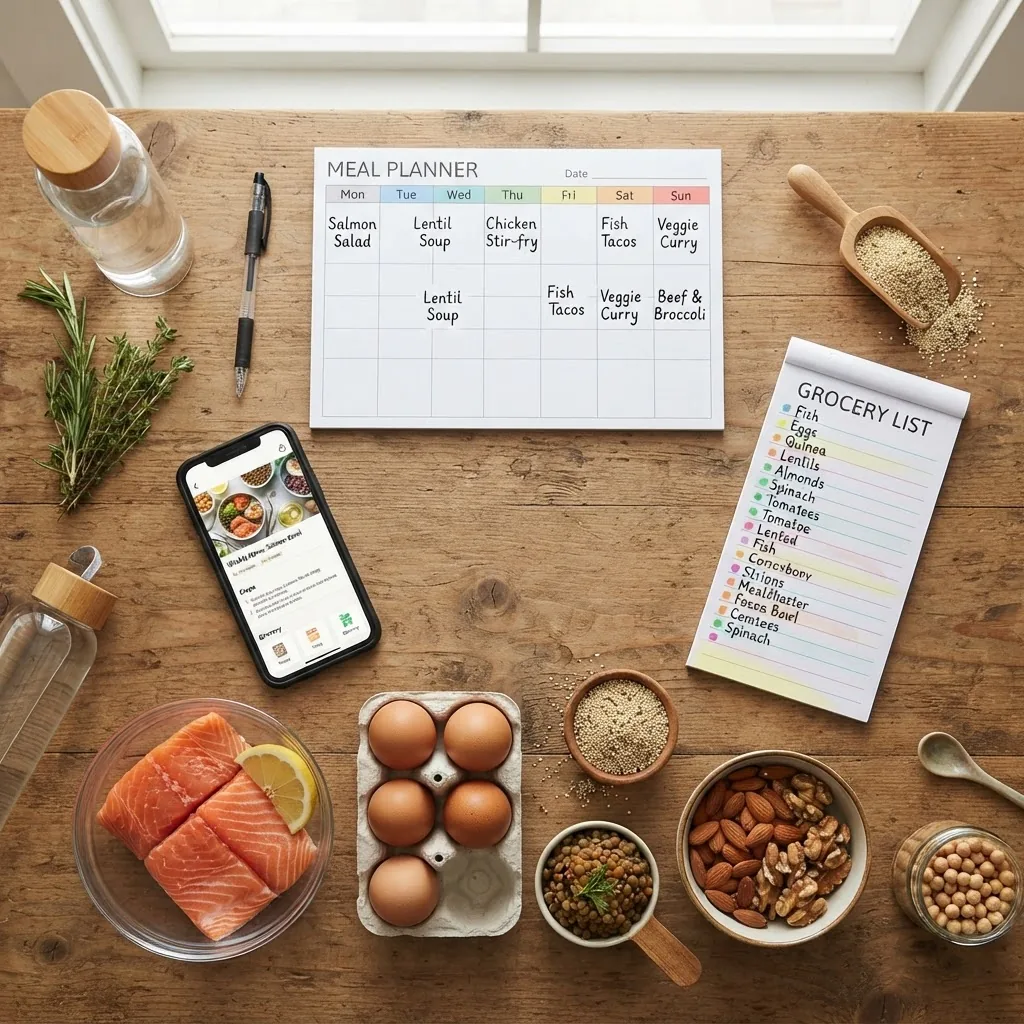
Use the numbered steps below as your planning and execution checklist. Each step opens with a bold, action-first phrase so you can scan and act.
- Decide your weekly protein target per meal. Start by selecting a realistic daily protein total. For a practical baseline consult the guideline tools: daily protein intake recommendations and use a simple method: bodyweight (kg) x 1.2–1.8 g depending on activity level. If you prefer a calculator tool, open the site calculator for exact personalized numbers: use a protein calculator. For meal planning, divide target by number of meals (e.g., 120 g/day → 3 meals = ~40 g protein/meal).
- Create a balanced plate blueprint. Allocate per plate: 30–45 g protein, 1/2–1 cup cooked whole grain or starchy veg (carbs), 1–2 cups non-starchy vegetables, and 1–2 teaspoons healthy fat. When counting calories, remember protein provides 4 kcal/g — see the mechanics for energy math in step 4. For reference about energy per macronutrient, consult calorie calculation for protein.
- Choose 3–4 versatile proteins for the week. Pick at least one lean poultry (chicken breast or turkey), one fish, one plant-based option (lentils, chickpeas, tofu), and one lean red meat or processed-free choice if desired. For budget clarity, review budget-friendly protein options. Aim to cook protein in bulk (1.5–2 kg total uncooked for two people for 5 days).
- Calculate calories and portions before shopping. Use your protein targets and a simple macro split (protein 30–40%, fat 20–30%, carbs 30–40%) to estimate portion sizes. Example math: for a 500 kcal lunch aiming for 40 g protein (160 kcal), allocate remaining 340 kcal to fats and carbs (e.g., 80 kcal fat = ~9 g, 260 kcal carbs = ~65 g). For more on fat calorie math see calorie content of fats. Also refer to calories-in-protein resources above.
- Draft a grocery list organized by store zones and batch quantities. Write amounts in cooked/uncooked terms: e.g., 1,600 g raw chicken breasts (~4 large breasts) will yield ~1,200 g cooked. Vegetables: 1.2–1.5 kg mixed veg. Grains: 800 g dry quinoa or brown rice. Spices: buy small quantities if trying new flavors. Pack protein items together on the list so you can compare cost per 100 g and substitute if needed.
- Schedule a 2–3 hour cook session with tasks grouped by method. Set a timeline: 0:00–0:15 prep (wash, chop, marinate), 0:15–0:45 oven-roast proteins/veggies, 0:45–1:15 stovetop grains and legumes, 1:15–2:00 assemble, cool, portion, label. Use sheet pans for oven-roasting multiple items at once and a food thermometer to check protein doneness (chicken 74°C/165°F). Batch-cooking techniques save time: sear then finish in oven, use one-pot braises for lean cuts.
- Portion, cool, and store safely with labeling. Portion by protein weight (e.g., 120 g cooked chicken breast ≈ 30 g protein). Cool dishes within 2 hours to avoid bacterial growth, then refrigerate at ≤4°C (40°F) or freeze if storing longer than 4 days. Label each container with contents and date.
- Plan midweek refresh and variety swaps. To prevent boredom, plan one “refresh” action midweek: replace dressings, add fresh herbs, or swap a protein for a different sauce. Keep a small bag of extra leafy greens and citrus for brightening reheated meals.
Sample weekly plan (practical example)
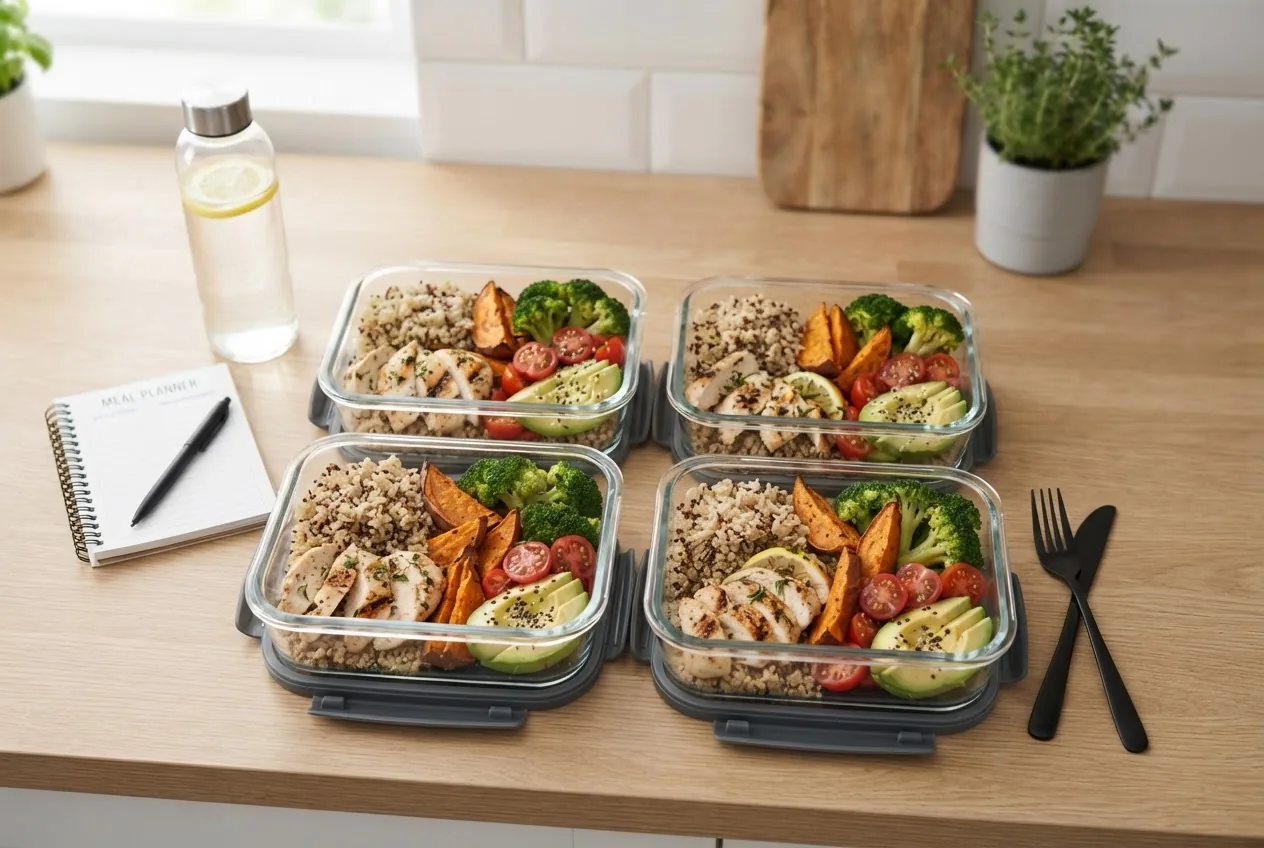
Sunday (2–3 hours): Roast 1.6 kg chicken breasts with smoked paprika and lemon, bake 900 g sweet potatoes, cook 600 g quinoa, roast mixed peppers and broccoli. Portion into five lunch containers: 120 g cooked chicken + 1/2 cup quinoa + 1 cup roasted veg each. Prepare 5 evening meals: 400 g pan-seared salmon (for 2 meals), batch chili with lentils (3 meals). Label and refrigerate.
Tool walkthrough: Calculating personalized protein needs
- Weigh yourself and convert to kilograms. Example: 180 lb = 81.6 kg.
- Select activity multiplier. Sedentary 1.0–1.2 g/kg, general fitness 1.2–1.6 g/kg, heavy training 1.6–2.0 g/kg.
- Multiply and divide by meals. Example: 81.6 kg x 1.5 g = 122 g/day → for 3 meals = 40–45 g/meal.
If you want a one-click tool instead, use the site calculator at How Much Protein Do I Need Calculator and round to the nearest 5 g for simpler meal portions.
Case study: 4-week adherence improvement
I worked with a client who replaced two daily convenience meals with pre-portioned high-protein lunches and snacks. Over 4 weeks they reported fewer cravings and consistent 300–400 kcal/day deficit, improved workout energy, and better weight loss adherence — practical proof that routine wins over perfection.
Transition: With planning and a schedule in hand, next are the recipes—simple, low-calorie, and optimized for batch cooking.
Easy High Protein Meal Prep Recipes to Try
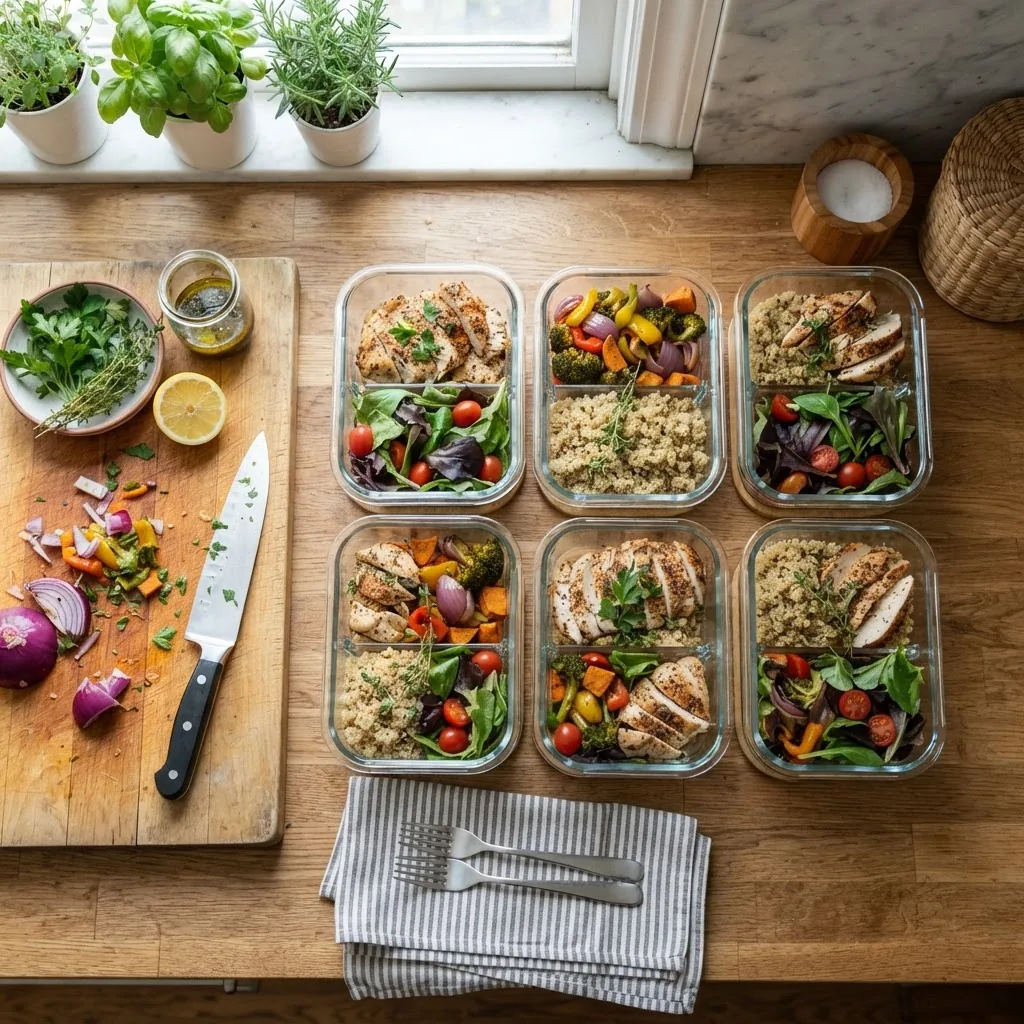
These recipes are intentionally simple, scale well, and include options for lean meat and plants. I include approximate cooked protein per serving so you can pair with your targets. Where useful, I note swaps and reheating tips. For recommended oils for cooking, consider healthy cooking oils.
-
1. Lemon-Herb Grilled Chicken with Quinoa & Broccoli (makes 5 lunches)
Yield: 5 lunches. Protein per serving: ~35–40 g
Ingredients: 1.6 kg boneless skinless chicken breast; 2 lemons (zest + juice); 3 tbsp olive oil; 2 tsp dried oregano; 1 tsp garlic powder; 600 g quinoa (dry); 1.2 kg broccoli florets; salt + pepper.
Prep & cooking: Marinate and grill — Slice chicken into even fillets, marinate 20 minutes in lemon, oil, oregano, garlic. Preheat grill or oven to 200°C/400°F. Cook chicken 18–22 minutes (internal 74°C/165°F). Meanwhile, rinse quinoa and cook 15 minutes. Steam or roast broccoli 12–15 minutes. Portion 120–140 g cooked chicken, 1/2 cup cooked quinoa, 1 cup broccoli per container.
Storage: fridge 4 days, freeze up to 3 months. Reheat in microwave 90–120 seconds (covered).
Swap: use omega-3 rich protein sources like salmon on two dinners this week (see omega-3 rich protein sources for ideas).
-
2. Chipotle Turkey & Black Bean Bowls (makes 6 bowls)
Yield: 6 bowls. Protein per serving: ~30–35 g
Ingredients: 1.2 kg lean ground turkey (93% lean); 2 cans black beans (drained); 1 large red pepper; 1 large onion; 2 tsp ground cumin; 1 tsp smoked paprika; 3 cups cooked brown rice; cilantro, lime.
Prep & cooking: Sauté and combine — Brown turkey with onion and spices 8–10 minutes, add beans and warm. Make rice separately. Portion 150 g cooked turkey-bean mix + 1/2 cup rice + roasted pepper slices. Add lime before eating.
Storage: refrigerator 4 days. Freeze portions without rice if storing longer.
Tip: For lower calories swap rice for cauliflower rice to save ~100 kcal per bowl.
-
3. Salmon & Green Lentil Salad with Mustard Vinaigrette (makes 4 dinners)
Yield: 4 dinners. Protein per serving: ~35 g (salmon) + 8 g (lentils)
Ingredients: 800 g salmon fillets; 300 g green lentils (dry); 200 g mixed greens; 1 cucumber; 2 tbsp Dijon mustard; 2 tbsp apple cider vinegar; 2 tbsp olive oil; dill.
Prep & cooking: Roast and cool — Bake salmon 12–15 minutes at 200°C/400°F. Cook lentils 20–25 minutes until tender. Toss lentils with mustard vinaigrette and greens. Flake salmon over top. Portion into containers. For ideas about healthy oils, review healthy cooking oils and choose olive or avocado oil for the dressing.
Storage: fridge 3 days. Add fresh greens on day-of for best texture.
Nutrition note: adds omega-3s; supplement reading at does tuna have omega 3.
-
4. Tofu & Edamame Stir-Fry with Rice Noodles (makes 5 servings, plant-forward)
Yield: 5 meals. Protein per serving: ~25–30 g
Ingredients: 900 g firm tofu (pressed); 300 g shelled edamame (frozen); 1 large carrot; 1 bell pepper; 300 g rice noodles; 3 tbsp low-sodium soy/tamari; 1 tbsp sesame oil; garlic and ginger.
Prep & cooking: Press, sear, and toss — Cube tofu and pan-sear until golden 8–10 minutes. Blanch edamame. Prepare rice noodles as package says. Toss with veggies and sauce. Portion 200 g cooked stir-fry + 1/2 cup noodles. For plant-based protein guidance see the site’s plant-based high protein resources.
Storage: fridge 4 days. Reheat gently to keep tofu texture.
-
5. Greek Yogurt Chicken Salad (quick snack/lunch, makes 6)
Yield: 6 small servings. Protein per serving: ~25–30 g
Ingredients: 700 g cooked chicken breast (shredded); 400 g non-fat Greek yogurt; 1 cup diced celery; 1/2 cup diced red apple; 2 tbsp lemon juice; dill, salt, pepper.
Prep & assembly: Mix and portion — Combine shredded chicken with yogurt, celery, apple, and lemon. Portion into 6 containers with 1 cup leafy greens or 1 whole-grain roll per serving.
Storage: fridge 4 days. Swap Greek yogurt for light mayo for higher fat needs, or add a tablespoon olive oil for extra calories.
-
6. One-Pot Turkey & Vegetable Chili (freezer-friendly)
Yield: 8 servings. Protein per serving: ~28–32 g
Ingredients: 1.2 kg lean ground turkey, 2 cans diced tomatoes, 2 bell peppers, 2 zucchini, 2 cups low-sodium chicken broth, chili spices, 2 cans kidney beans (optional).
Prep & cooking: Simmer and portion — Brown turkey, add vegetables and broth, simmer 30–40 minutes. Portion 300–350 g per container. Cool fast and freeze any portion not used within 4 days.
Storage: freezes excellently for up to 3 months. Reheat thoroughly to 74°C/165°F.
For more batch-friendly ideas see high protein meal recipes.
Cooking notes: keep extra vinaigrette separate for salads, and always use a food thermometer with poultry and ground meat. Use shallow containers for faster cooling and label with date cooked. Transition: now we’ll pivot to low-calorie strategies that preserve protein without excess energy.
High Protein Low Calorie Meal Prep Ideas
Low-calorie high-protein meals maximize protein per calorie to help maintain a deficit while preserving muscle. The strategies below focus on lean cuts, vegetables, and cooking methods that minimize added fats.
- Choose lean protein cuts: skinless chicken breast, turkey breast, lean fish fillets, white-fleshed fish, or low-fat dairy. For curated lists of the best lean options, consult lean protein foods for cutting.
- Use cooking methods that cut added fats: grilling, baking, steaming, searing with minimal oil, and broiling. Use a non-stick pan and spray oil to reduce fat by 1–2 tsp per cook, saving 40–80 kcal per portion.
- Bulk with vegetables and high-fiber legumes: vegetables add volume and fiber, legumes provide protein and fiber but watch the carb load. Combine lentils (canned and rinsed) with lean protein for filling bowls.
- Limit high-calorie condiments: swap creamy sauces for salsas, mustards, or herb vinaigrettes made with 1 tsp oil per serving.
- Portion control and plate mapping: aim for protein that delivers 30–45 g per main meal while keeping total meal calories between 350–600 kcal depending on goals.
Quick recipe ideas optimized for low calories and high protein:
- Turkey lettuce wraps: 120 g cooked turkey, 1/2 cup black beans, chopped tomato, wrap in iceberg or butter lettuce — ~320 kcal.
- Poached white fish with steamed green beans & cauliflower mash — 30–35 g protein, ~350 kcal.
- Greek yogurt bowl with 200 g non-fat Greek yogurt, 20 g whey or plant protein powder, berries — ~35 g protein, ~300 kcal.
- Egg white omelet (6 egg whites) with spinach and mushrooms + 1 slice whole grain toast — ~30 g protein, ~350 kcal.
- Protein salad jar: 120 g grilled chicken, 1/2 cup chickpeas, cucumber, tomato, lemon — ~40 g protein, 400 kcal.
For macro math and to understand how fats contribute calories when you design lower-calorie preps, read the reference on the calorie content of fats. For best choices of lean protein while cutting, also see the lean protein foods for cutting.
Transition: lunches are often the most time-sensitive meal for busy Texans — here are practical grab-and-go lunch ideas built for regional routines and heat.
High Protein Lunch Meal Prep Ideas for Busy Texas Lifestyles
Texas lifestyles often mix long workdays, driving, and a love for bold flavors. The lunches below are easy to transport, flavor-forward, and balanced for energy. For additional packed lunch inspiration see high protein lunch ideas.
- Tex-Mex Chicken Bowl (grab-and-go): 120 g shredded lemon-chipotle chicken, 1/3 cup brown rice, pico de gallo, 1/4 cup black beans, a wedge of lime. Pack the salsa separately to keep rice fresh.
- Smoked Salmon & Avocado Mason Jar Salad: 100 g smoked salmon, 1/2 avocado (sliced), 1 cup mixed greens, cucumber. Add crushed red pepper for kick and lemon vinaigrette in a small separate container.
- BBQ Turkey & Sweet Potato Pack: 130 g ground turkey seasoned with low-sugar BBQ rub, 3/4 cup roasted sweet potato cubes, coleslaw (cabbage + apple cider vinegar). Use a leak-proof container for slaw.
- Spicy Black Bean & Quinoa Wrap: 1/2 cup cooked quinoa, 1/2 cup black beans, shredded lettuce, hot sauce, wrap in a high-fiber tortilla. Include a 1-cup side salad to hit veggies.
- Egg & Veg Breakfast-for-Lunch Bento: 3 hard-boiled eggs, 1/2 cup cottage cheese, cherry tomatoes, whole grain crackers — portable and high in satiety.
Container tips: use insulated lunch bags and a small frozen ice pack to keep meals under 4°C for road commutes. Pre-label containers with reheating instructions if needed (e.g., “Microwave covered 90 sec”).
Transition: correctly storing and reheating is essential to keep your high-protein preps safe and tasty; next, exact storage rules and timeframes.
Tips for Storing and Reheating High Protein Meal Preps Safely
Food safety matters for both health and confidence. Follow these clear rules to minimize spoilage and foodborne illness.
- Cool quickly: move hot food to shallow containers and refrigerate within 2 hours (1 hour if ambient temperature >32°C/90°F).
- Refrigerator temp: store at ≤4°C (40°F). Use a fridge thermometer to verify.
- Fridge shelf life: most cooked high-protein meals last 3–4 days refrigerated.
- Freezer storage: freeze portions in airtight containers for up to 3 months.
- Reheating: reheat to an internal temperature of 74°C/165°F for poultry and ground meats; fish to 63°C/145°F if preferred (use food thermometer).
- Labeling: write date cooked and “use-by” date on each container; rotate FIFO (first in, first out).
- Defrosting: thaw in refrigerator overnight or use a microwave defrost setting immediately before reheating; avoid leaving frozen food at room temperature to thaw.
When in doubt, follow USDA food safety recommendations for temperatures and storage windows; mismanaged storage is the most common cause of meal prep failure.
Transition: if you hit problems like bland food or poor texture, troubleshoot them quickly with the solutions below.
Troubleshooting Common Meal Prep Challenges
Q: My meals get boring — how do I avoid flavor fatigue?
Solution: rotate sauces and herbs midweek, use spice blends (smoked paprika, cumin, za’atar), and add fresh citrus or crunchy elements at the time of eating. Keep three different dressings on hand to mix-and-match.
Q: I run out of time — how can I prep faster?
Solution: double-batch a single protein and freeze half; use a pressure cooker for grains and legumes; pre-chopped frozen veggies can cut prep time in half. Prioritize a single sheet-pan cook for proteins and veg simultaneously.
Q: Ingredients go bad before I use them — how to prevent spoilage?
Solution: buy fresh produce in staged amounts (some for immediate use, some frozen), store herbs upright in water, and keep high-moisture vegetables sealed to reduce oxidation. Freeze portions you won’t use within 3–4 days.
Q: My reheated proteins are dry or rubbery — what’s the fix?
Solution: reheat gently with 1–2 tbsp liquid (stock or water) in a covered container or use lower microwave power in short bursts; add sauce after reheating to restore moisture.
Q: How can I maintain nutrition when modifying recipes?
Solution: prioritize keeping protein weight consistent when swapping ingredients; fill remaining volume with low-calorie, high-fiber vegetables to preserve satiety and lower energy density.
Transition: before you start your first prep session, learn the common mistakes I’ve seen and how I correct them in practice.
Common mistakes and how to avoid them (practitioner notes)
I once under-salted an entire week of meals because I avoided tasting during cooking; the fix was to taste and adjust before portioning. I also overcooked chicken to be “safe” and ended up with dry lunches — I now always use a thermometer and remove chicken at 74°C/165°F and let it rest. Another repeated failure: not cooling food fast enough, which reduced fridge life; I now portion into shallow containers first to cool faster.
When to call a professional
- If you have complex dietary needs (kidney disease, severe food allergies, pregnancy), consult a registered dietitian or medical provider.
- If you’re unsure about safe home canning, freezing for long-term storage, or foodborne illness risks, contact local food safety authorities or a certified food safety consultant.
- For personalized macronutrient programming tied to competitive athletics, seek a sports nutritionist.
Final checklist before you plate
- Meal containers labeled with date and reheating notes
- Protein per container measured (e.g., 120–140 g cooked for 30–45 g protein)
- Fridge at ≤4°C verified
- Leftovers planned or frozen within 2 hours
- Variety: at least two different sauces/herbs saved separately
Transition: a few final motivating notes to get started and keep the habit going.
Conclusion and Encouragement to Start High Protein Meal Prepping
High protein meal prep is a practical, time-saving approach that supports weight loss, muscle maintenance, and daily energy. Start with one 2–3 hour session, three core proteins, and a simple plate blueprint. Consistency over weeks creates results — set a repeatable Sunday routine and iterate your flavors. Ready to begin? Pick one recipe from this guide and schedule your first prep day now.