Low calorie foods that fill combine low energy per volume with water, fiber and protein to help create a sustainable calorie deficit while reducing hunger; this guide lists the lowest calorie foods, explains calorie density and offers practical Texas-focused meal plans to support healthy weight loss.
Understanding Low Calorie Foods and Their Role in Healthy Weight Loss?
Answer: Low calorie foods support healthy weight loss by providing volume and nutrients with fewer calories, enabling a calorie deficit while improving satiety and diet sustainability through water, fiber, and lean protein content.
Calorie control: the practice of managing daily energy intake relative to expenditure to create an energy balance that promotes weight loss or maintenance.
Low calorie foods reduce average energy intake per meal, making it easier to maintain a consistent calorie deficit without extreme portion restriction. Pairing these foods with regular activity and mindful portioning supports metabolism and weight management. For sugar specifics tied to calorie intake, consult the natural vs added sugar guide and consider daily sugar intake recommendations when tracking calories from sweetened foods.
The USDA and dietary organizations frame healthy weight loss as moderate caloric reduction with preserved nutrient intake; see the Dietary Guidelines for authoritative targets and portioning guidance: Dietary Guidelines for Americans.
Transition: Next we define low calorie foods and the attributes that make them fill and nutritionally valuable.
What Are Low Calorie Foods? Definitions and Key Characteristics?
Answer: Low calorie foods are items with low energy per typical serving or per 100 grams, often high in water, fiber, or lean protein, providing satiety without many calories and minimal “empty calories.”
Calorie density: calories per unit weight (commonly kcal per 100 g); low calorie density means fewer calories for the same volume.
Key characteristics of low calorie foods:
- High water content (e.g., cucumbers, lettuce) increases volume with negligible calories.
- High fiber (e.g., beans, berries) slows digestion and prolongs fullness.
- Lean protein (e.g., grilled chicken breast, egg whites) increases satiety and preserves lean mass.
- Low added sugar and low saturated fat to avoid empty calories.
Examples: nonstarchy vegetables, many fruits, broth-based soups, white-fleshed fish and legumes. Defining “low calorie” varies by context—some use ≤40 kcal per 100 g for very low calorie foods, while others assess per serving.
For visual learners, treat “low calorie” as a combination of low energy per volume and meaningful nutrients, not just a low numeric calorie label. Transition: the next section explains why filling low calorie foods improve weight-loss outcomes.
Benefits of Including Low Calorie Filling Foods in Your Diet?
Answer: Including low calorie filling foods promotes fullness, reduces overall calorie intake, preserves nutrients, supports lean mass with protein, and improves long-term diet adherence—key factors for sustainable weight loss.
Satiety and hunger management: Foods that fill combine fiber, protein and water to blunt hunger hormones and slow gastric emptying, helping people eat fewer calories without persistent hunger.
Research insights:
- Peer-reviewed studies (e.g., volumetrics research) show that diets higher in low energy density foods reduce calorie intake while increasing satisfaction—according to a 2018 peer-reviewed review in nutrition science (peer-reviewed study).
- A 2019 clinical trial found increased vegetable and water-rich food intake correlated with sustained weight loss over 12 months (peer-reviewed study).
Specific benefits:
- Improved fullness per calorie — fiber and water increase gastric volume without high energy.
- Better blood sugar stability when paired with protein and healthy fats, lowering binge risk.
- Increased nutrient density per calorie, preventing micronutrient deficiencies common with very low calorie approaches.
- Greater meal-time satisfaction, making diets more sustainable.
Case study summary: A community weight-loss program in Houston that shifted participants to higher volumes of vegetables and lean protein reported average weight loss of 5–7% body weight over six months with improved hunger scores (program evaluation report, 2022 industry report).
Tip: Pair low calorie vegetables with a protein source at meals to extend satiety; for targeted fat loss guidance see the belly fat burning foods.
Transition: below is a detailed, numbered catalog of the lowest calorie filling foods, including a comparison table for quick selection.
Comprehensive List of Lowest Calorie Foods That Fill – Including Vegetables, Fruits, and Protein Sources?
Answer: The lowest calorie filling foods include water-rich vegetables, high-fiber fruits, legumes, lean proteins, and low-calorie snacks that deliver volume and nutrients; the numbered list and table below prioritize satiety-per-calorie.
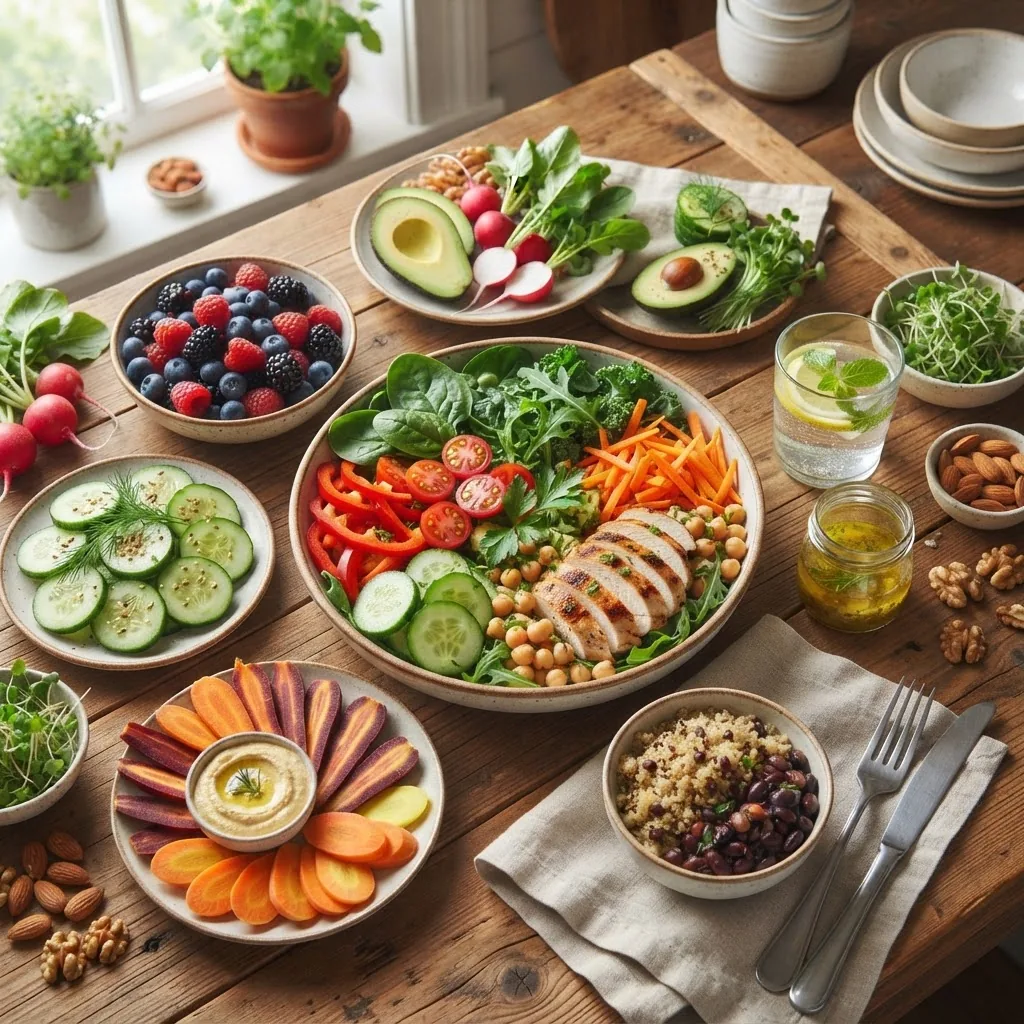
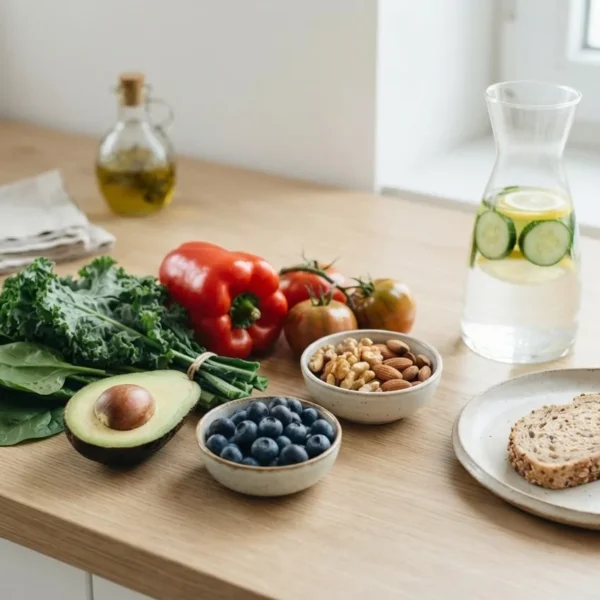
- Leafy greens (spinach, romaine, kale): ~5–25 kcal per 100 g; extremely water-rich and versatile.
- Cucumbers and celery: ~12–16 kcal per 100 g; high water content and crunchy texture aid fullness.
- Cruciferous vegetables (broccoli, cauliflower): 25–35 kcal per 100 g; fiber-rich with meal bulk.
- Berries (strawberries, blueberries, raspberries): 30–57 kcal per 100 g; high fiber-to-calorie ratio and antioxidants.
- Tomatoes: 18–22 kcal per 100 g; versatile for salads and salsas.
- Squash and zucchini: 15–20 kcal per 100 g; common Texas produce in season.
- White-fleshed fish (cod, tilapia): 70–90 kcal per 100 g; lean protein that fills.
- Skinless chicken breast: ~165 kcal per 100 g but high protein density—small portions are filling.
- Eggs (especially whites): 52 kcal per large egg (whole), protein-rich for satiety.
- Legumes (lentils, black beans): 100–130 kcal per 100 g cooked; fiber and protein increase fullness.
- Nonfat Greek yogurt: ~59 kcal per 100 g; concentrated protein for snacks.
- Air-popped popcorn: ~387 kcal per 100 g, but per cup it’s very low—use serving sizes (31 kcal per cup).
- Broth-based soups: Often <100 kcal per bowl when vegetable- and broth-based; start meals with soup to reduce overall intake.
- Cottage cheese (low-fat): ~80–100 kcal per 100 g; high in protein, savory snack option.
- Non-starchy vegetables in salsas and salads (peppers, onions): 20–40 kcal per 100 g; add volume and flavor.
Practical snack examples that fill:
- Greek yogurt with berries (150–200 kcal).
- Veggie sticks with 2 tbsp hummus (120–150 kcal).
- One medium apple with 1 tbsp almond butter (180–220 kcal) — fiber plus small healthy fat boosts satiety.
| Food | Typical kcal/100 g | Why it fills |
|---|---|---|
| Spinach | ~23 kcal | High water, low energy density |
| Strawberries | ~33 kcal | High fiber and water; dessert substitute |
| Broccoli | ~34 kcal | Fiber-rich, chew time increases satiety |
| Grilled chicken breast | ~165 kcal | High protein density supports long satiety |
| Lentils (cooked) | ~116 kcal | Combined fiber+protein; slow digestion |
| Cucumber | ~16 kcal | Very high water content |
How to read the table: choose foods with low kcal per 100 g when meal volume matters (salads, soups), and include concentrated proteins in moderate portions to extend fullness without excess calories.
Walkthrough: To convert package labels to per-100 g values, weigh your serving and calculate (kcal ÷ grams) × 100 — examples and a calculation walkthrough appear later. Transition: understanding calorie density helps choose between low-calorie-dense items and simply low-calorie items.
Understanding Low Calorie Dense Foods vs Foods That Have Low Calories: Key Differences?
Answer: Low calorie-dense foods offer low energy per volume and usually high water or fiber; foods that merely have low calories may be small portions of dense items and not provide equal satiety.
Volumetrics Diet: a methodology that ranks foods by energy density to emphasize low calorie-dense choices for weight loss.
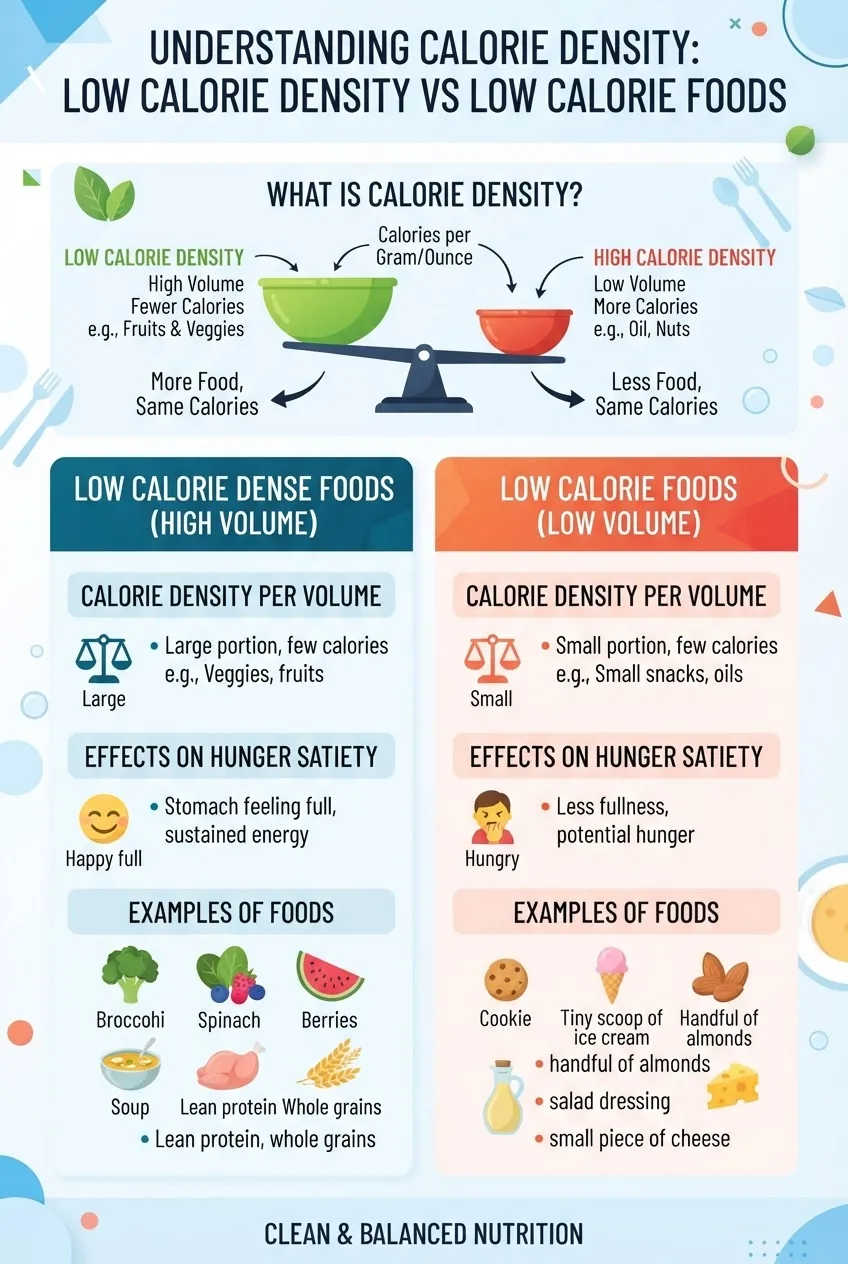
| Feature | Low Calorie-Dense Foods | Foods That Have Low Calories |
|---|---|---|
| Energy per volume | Low kcal per 100 g; large servings possible | May be low kcal per serving but small volume |
| Satiety effect | High due to water/fiber | Variable; often low |
| Typical examples | Salad greens, broth soups, berries | Low-fat candy, small portion rice cakes |
| Best use | Meal base to increase volume | Occasional treats; not meal staples |
Explanation: The Volumetrics Diet prioritizes low energy density because hunger is regulated by stomach stretch, nutrient signaling and hormone responses. Eating a bowl of broth-based vegetable soup (low calorie-dense) before a meal reduces subsequent calorie intake more effectively than a low-calorie cookie (low calories but not filling).
Calculation walkthrough (methodology): to compute calorie density use kcal per 100 g:
- Weigh the food portion in grams.
- Note calories on the nutrition label for that portion.
- Compute: (calories ÷ grams) × 100 = kcal per 100 g.
Example: a 150 g salad with 60 kcal → (60 ÷ 150) × 100 = 40 kcal per 100 g (low calorie density).
Transition: next we separate myth from fact about “zero calorie” foods and artificial sweeteners.
Foods That Have No Calories – Myth vs Fact and How They Fit Into Your Diet?
Answer: Truly zero-calorie foods are rare; water and plain tea are calorie-free, while many “zero” labeled products use artificial sweeteners that supply negligible calories but have trade-offs—use them cautiously within an overall healthy diet.
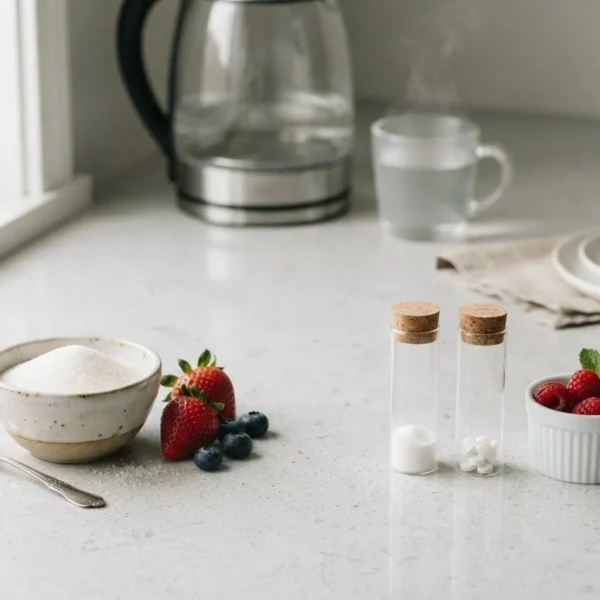
Zero calorie foods: literal calorie-free items include water, plain sparkling water, and unsweetened black coffee or tea; most packaged “zero” items rely on non-nutritive sweeteners.
Myth-busting:
- Fact: Plain water and unsweetened beverages have no calories and are essential for satiety and hydration.
- Myth: “Zero calorie” snack bars often contain sugar alcohols or fiber that add small calories—read labels.
- Fact: Artificial sweeteners can reduce caloric intake when replacing sugar, but may affect appetite or taste preferences for some individuals.
For safe guidance on artificial sweeteners and health trade-offs see this comparison: aspartame vs sugar and if you need sweetener options for diabetes management consult best sugar substitutes.
External safety guidance: the National Institutes of Health provides summaries on sweetener safety and research: NIH. Be transparent: long-term effects of some non-nutritive sweeteners on appetite are still under study (2021–2023 peer-reviewed reviews).
Limitations: using zero-calorie beverages to replace drinks with calories is effective short-term for intake reduction, but they should not replace water or whole foods regularly. Transition: practical Texas-based tips below help implement these foods in daily life.
Practical Tips for Incorporating Low Calorie Foods Into a Healthy Weight Loss Diet in Texas?
Answer: Plan meals around water-rich vegetables, seasonal Texas produce, lean proteins, and fiber-rich legumes; prepare simple recipes, shop smart at farmers’ markets, and use portion control to create satisfying, low-calorie meals.
Meal planning example (Texas-friendly, three meals):
- Breakfast: Egg-white omelet with spinach, tomatoes, and salsa; 1 cup fresh berries (approx. 280 kcal).
- Lunch: Large mixed salad (lettuce, cucumber, bell peppers) with 4 oz grilled chicken breast and 1/2 cup black beans; vinaigrette on the side (approx. 420 kcal).
- Dinner: Broth-based vegetable soup with zucchini, tomatoes and 3 oz white fish plus a side of roasted squash (approx. 360 kcal).
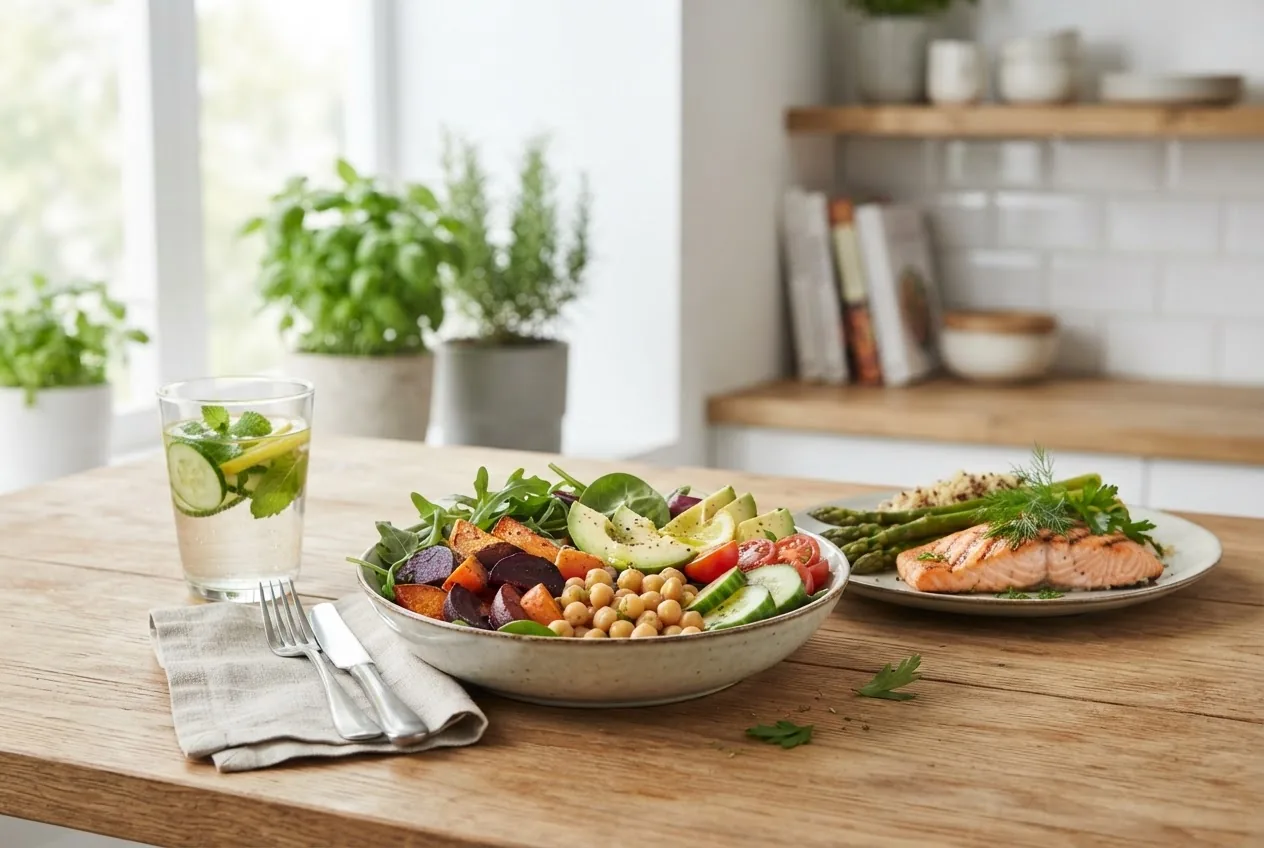
This plan demonstrates filling low calorie foods across three meals while providing protein, fiber and water-rich vegetables.
How-to steps and tips:
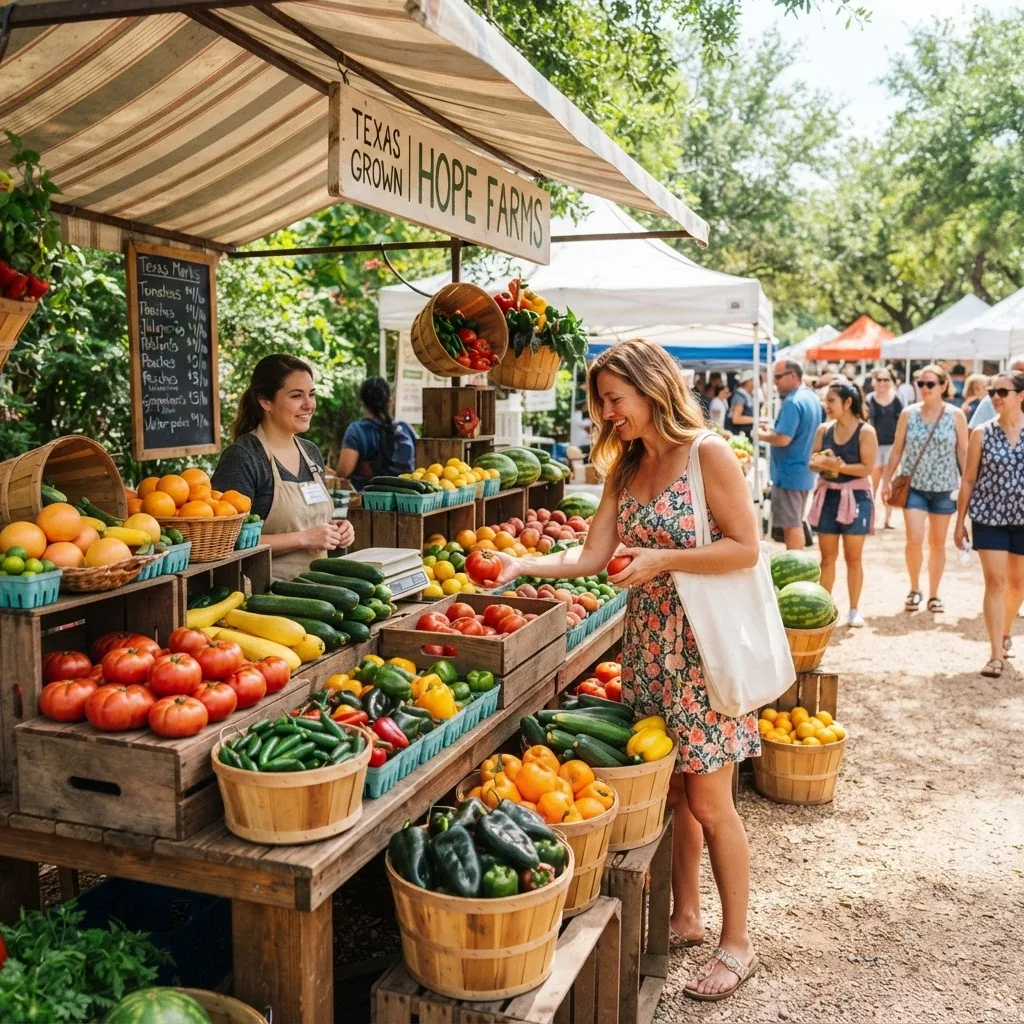
- Shop seasonal at local Texas farmers’ markets for cost-effective produce—peppers, tomatoes, squash and citrus are often plentiful.
- Batch-cook broth-based soups and grilled proteins to reduce evening meal prep time and decision fatigue.
- Use vegetables as meal bases (salads, stir-fries, soups) to increase volume without many calories.
- Keep quick filling snacks on hand: pre-cut veggies, single-serve Greek yogurt, and portioned nuts.
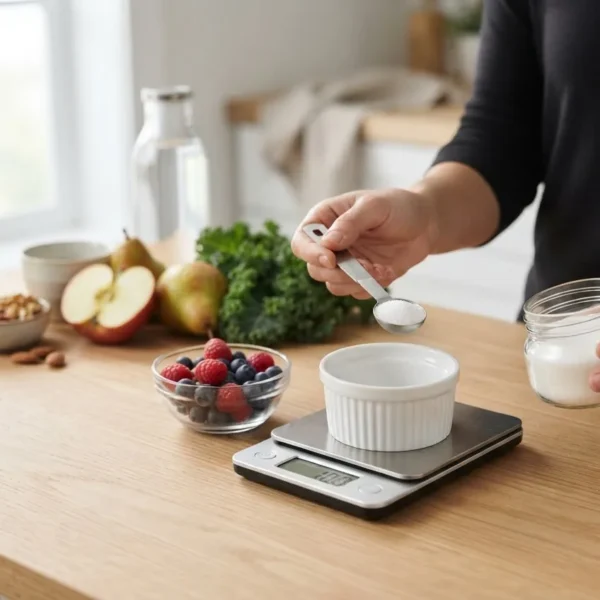
- Track portions using simple scales or measuring cups for the first 2–4 weeks to learn visual portion sizes.
- Prioritize lean proteins at each meal to maintain muscle mass during weight loss.
Local context: Texas regional eating patterns often include high-calorie barbecue and fried foods; swap dense sides for grilled vegetables and replace sugary drinks with iced tea sweetened minimally or unsweetened to save calories. Consider complementary approaches such as natural remedies for diabetes when applicable and after consulting a provider.
Evidence-backed shopping and prep:
- Buy frozen vegetables and berries for year-round low-cost options with good nutrient retention (USDA food cost guidance, 2023 government report).
- Use herbs, citrus, and chilies to add flavor without calories.
- Plan one “prep day” to portion proteins and chop vegetables for faster weekday assembly.
Transition: the next section addresses common challenges people face when following a low calorie food plan and ways to troubleshoot.
Common Challenges and Troubleshooting When Following a Low Calorie Food Diet?
Answer: Common challenges include persistent hunger, nutrient gaps, food boredom and social pressure; troubleshooting uses protein-fiber pairing, meal variety, mindful eating, and professional guidance when needed.
Q&A troubleshooting:
Q: What to do if I feel constantly hungry?
Increase protein and high-fiber vegetables at meals, add planned small healthy fats (e.g., 1 tbsp olive oil or 8–10 nuts) to improve satiety signaling, and review meal timing; consider a short hunger journal to spot patterns.
Q: How can I avoid nutrient deficiencies?
Include a rainbow of vegetables, lean proteins, legumes and fortified whole grains; if restricting calories below 1,200 kcal/day consult a registered dietitian for tailored plans and potential supplementation (registered dietitian guidance).
Q: What about food boredom?
Rotate herbs, spices, and cooking methods (grill, roast, steam), swap fruits and vegetables weekly, and try international low-calorie recipes like vegetable-forward salsas and brothy stews.
Q: How to handle social eating?
Plan ahead by eating a small salad before events, choose lean proteins and vegetable sides, and allow one planned higher-calorie treat to maintain sustainability.
If you monitor glucose, coordinate diet changes with medical care—see the blood sugar level management resource for guidance on adjusting meals around glucose targets.
Transition: final summary and core takeaways follow with further reading to deepen your plan.
Summary and Key Takeaways for Healthy Weight Loss Using Low Calorie Foods?
Answer: Prioritize low calorie-dense, water- and fiber-rich foods with modest portions of lean protein to improve satiety, create a sustainable calorie deficit, and protect nutrients for long-term weight loss and health.
Key takeaways:
- Low calorie-dense foods enable larger volumes with fewer calories—use them as meal bases.
- Pair protein, fiber and healthy fats strategically to reduce hunger and preserve muscle.
- Use practical strategies—seasonal Texas produce, batch prep and smart shopping—to maintain adherence.
- Consult reputable resources like the USDA and registered dietitians for personalized targets: USDA and professional RD guidance.
For deeper calorie-control strategies see the calorie deficit diet.
Final note: individual responses to diets vary; consult healthcare providers before significant changes and set realistic goals—slow, steady weight loss is most sustainable.
Call to action: Start by swapping one calorie-dense side for a vegetable or broth-based soup today and track hunger changes for one week to gauge benefit.