

What does sugar do to your body: Sugar is quickly converted to glucose, raising blood sugar and triggering insulin; this supplies immediate cellular fuel but can cause energy spikes, mood shifts, and — with repeated excess — fat storage, inflammation, liver stress, and higher cardiovascular risk over time.
Introduction to Sugar and Its Role in the Body
Answer: Sugar acts primarily as a fast source of energy: digested carbohydrates break into glucose, which powers cells; hormonal responses (especially insulin) control its circulation, storage, and use, and the source (natural vs added) changes metabolic and health effects.
Glucose: a simple sugar that serves as the primary immediate energy molecule for most body cells.
Sugar is a broad term for simple carbohydrates (monosaccharides like glucose and fructose, and disaccharides like sucrose). In food, sugars arrive as natural sugars (fruit, dairy) or added sugars (soda, sweets). The body converts digestible sugars into glucose for absorption; glucose either fuels cells, replenishes liver and muscle glycogen, or is converted into fat when intake exceeds energy needs.
For a deeper explanation of how natural and added sugars compare in nutrition and health, see Natural vs Added Sugar Guide with Health and Nutrition Facts.
This section frames sugar as fuel with trade-offs: fast energy delivery versus hormonal and metabolic costs when consumed in excess. Transitioning now to the processing steps that translate a bite of sugar into blood glucose and downstream effects.
How Sugar Is Processed in the Body
Answer: After ingestion, digestive enzymes break sugars to glucose and fructose; glucose is absorbed into the bloodstream, insulin mediates cellular uptake, the liver stores or converts excess to glycogen or fat, and blood sugar is regulated continuously by hormonal feedback.
Insulin: a hormone produced by the pancreas that signals cells to absorb glucose from the blood.
Glycogen: the liver and muscles’ stored form of glucose used during fasting or activity.
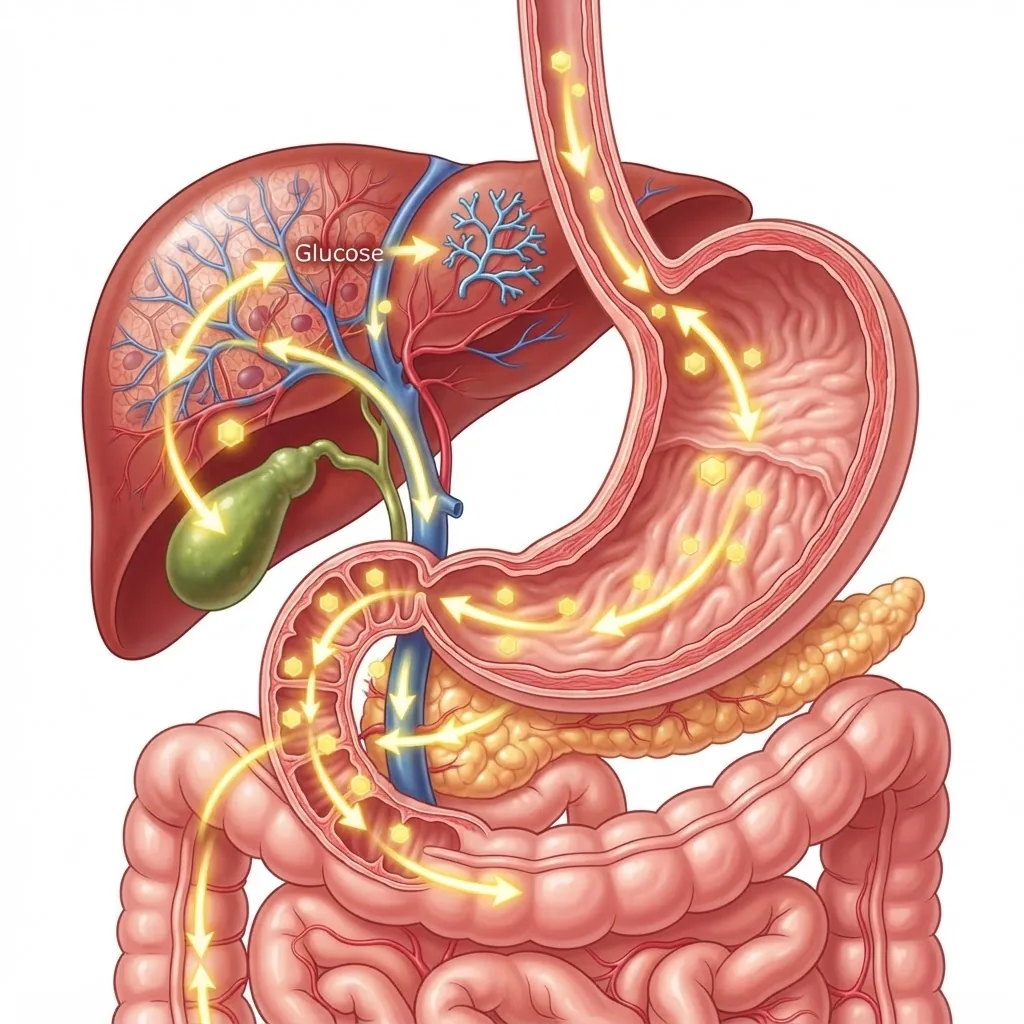
Simple biological flow (stepwise):
- Digestion and absorption: Salivary and pancreatic enzymes and intestinal transporters break carbs into glucose and fructose; glucose is absorbed via SGLT1/GLUT transporters into portal circulation.
- Portal processing: Blood from the gut reaches the liver first; the liver removes some glucose for immediate use or converts fructose largely into intermediates that can become glucose or fat.
- Insulin response: Rising blood glucose triggers pancreatic beta cells to release insulin; insulin increases glucose uptake in muscle and fat and suppresses hepatic glucose production.
- Storage and use: Muscles and the liver store glucose as glycogen; excess glucose is routed toward lipogenesis (fat synthesis) in the liver and adipose tissue.
- Regulation: When blood glucose falls, glucagon and stress hormones (epinephrine, cortisol) stimulate glycogen breakdown and gluconeogenesis to restore levels.
Energy balance and the timing of intake determine whether glucose is used immediately or stored. Fructose, unlike glucose, is preferentially metabolized in the liver and more readily contributes to de novo lipogenesis (fat creation) when consumed in large amounts.
Transition: understanding those processing steps lets us identify the immediate sensations and signs that follow a high-sugar meal.
Immediate Effects of Sugar on the Body
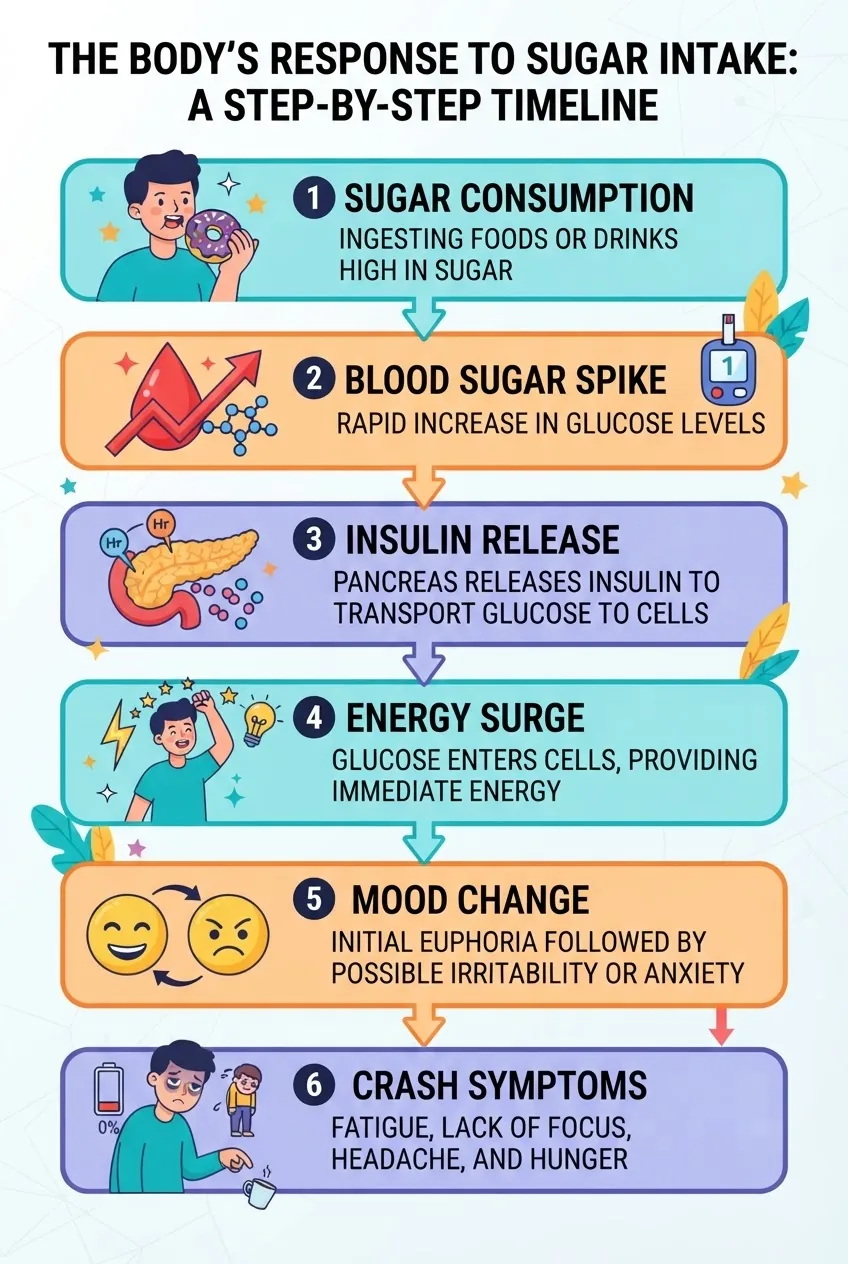
Answer: In the short term, sugar causes blood sugar spikes, an insulin surge, a transient energy boost, changes in mood and attention, and sometimes digestive discomfort; within hours a crash or rebound hypoglycemia and cravings can follow.
- Rapid blood sugar rise (spike):
Within 10–60 minutes, blood glucose increases depending on food form and gastric emptying; this spike signals the pancreas to release insulin. Immediate feelings: alertness, warmth, or jitteriness.
- Insulin surge:
Insulin peaks shortly after the glucose rise and promotes glucose uptake into muscle and fat; in sensitive people this can feel like sudden relaxation or drowsiness as glucose shifts from blood to cells.
- Energy surge and perceptual changes:
Many experience a temporary energy and mood boost—better reaction time or improved concentration—driven by rapid glucose availability and neurotransmitter changes.
- Mood and reward signaling:
Sugar activates reward circuits (dopamine pathways), producing pleasure and reinforcing intake—this explains immediate cravings for repeat consumption.
- Digestive effects:
Large single doses of sugar (especially fructose) can cause bloating, gas, or osmotic diarrhea in sensitive people within hours.
- Blood sugar crash (rebound):
Two to four hours after high-sugar intake, a steep insulin response can produce falling glucose—symptoms include fatigue, irritability, hunger, and difficulty concentrating.
- Short-term inflammation markers:
Some studies show transient rises in inflammatory markers and oxidative stress after very high sugar meals, which can worsen subjective malaise after the initial surge.
- Cravings and appetite stimulation:
Sugar can enhance appetite for more carbohydrate-dense foods within a few hours due to hormonal shifts (ghrelin, insulin) and brain reward signaling.
Practical timeline summary: first 0–60 minutes—spike and energy; 1–4 hours—insulin peak and possible crash; same day—repeated spikes increase short-term metabolic strain. Next, we look at symptom patterns in short- and long-term contexts.
Symptoms of Too Much Sugar in Your Body (Short-Term and Long-Term)
Answer: Too much sugar can cause immediate symptoms—energy swings, headaches, stomach upset, irritability—and long-term problems like chronic high blood glucose, persistent fatigue, increased infection risk, dental decay, and systemic organ stress.
Hyperglycemia: elevated blood glucose that may cause thirst, frequent urination, and fatigue.
Hypoglycemia: low blood glucose causing shakiness, sweating, confusion, and rapid heartbeat; often follows large insulin responses.
Short-term symptoms (hours to days):
- Fatigue and lethargy after a sugar crash
- Headaches and brain fog from blood sugar volatility
- Irritability, anxiety, or mood swings tied to glucose swings
- Increased hunger and food cravings within a few hours
- Gastrointestinal upset (bloating, loose stools) after high-fructose loads
- Transient concentration problems and reduced cognitive sharpness
Long-term symptoms and signs (months to years):
- Persistent high fasting blood glucose or impaired glucose tolerance; blood sugar levels and related symptoms explain ranges for concern.
- Weight gain, especially increased adiposity around the abdomen
- Fatty liver disease signs like elevated liver enzymes and fatigue
- Chronic inflammation symptoms: joint stiffness, low-grade fatigue, delayed recovery from illness
- Worsening cardiovascular risk markers (high triglycerides, low HDL)
- Dental caries and enamel erosion from frequent sugar exposure

Case study (illustrative, referenced): A 2019 clinical feeding study published in a peer-reviewed journal monitored healthy adults given high-fructose diets for two weeks and reported increased liver fat and reduced insulin sensitivity compared with lower-sugar diets (peer-reviewed trial: Journal of Nutrition, 2019). This illustrates how repeated high sugar exposure produces measurable organ-level changes within short periods.
Note on variability: Individual responses vary widely by genetics, activity, baseline diet, and insulin sensitivity; some people tolerate higher daily sugar without immediate symptoms, while others are sensitive to small increases. When symptoms such as persistent thirst, very frequent urination, unexplained weight loss, or recurrent infections appear, seek medical evaluation promptly.
Transition: recurring short-term patterns compound into chronic risk—let’s examine the long-term health consequences with study-backed evidence and statistics.
Long-Term Effects of Excessive Sugar Intake on Health
Answer: Habitual high sugar intake can increase risk of obesity, nonalcoholic fatty liver disease (NAFLD), dyslipidemia, chronic inflammation, and cardiovascular disease, and contributes to insulin resistance; population studies and clinical trials quantify these associations.
Epidemiology and risk metrics:
- Cardiovascular disease: According to a 2020 systematic review in a peer-reviewed journal, higher added-sugar diets are associated with increased cardiovascular events and mortality (peer-reviewed meta-analysis, 2020).
- Population intake and guidance: According to a 2023 CDC report, added sugar consumption remains above recommended limits for most adults in the U.S. (government report: CDC, 2023).
- AHA recommendations: The American Heart Association recommends limiting added sugars to no more than 6–9 teaspoons per day depending on sex and caloric needs to reduce cardiovascular risk (professional guideline: AHA, 2021).
Mechanistic pathways linking sugar to chronic disease:
- Insulin resistance development: Repeated insulin spikes and lipid overload in liver and muscle reduce insulin sensitivity, raising fasting glucose and insulin levels, a precursor to metabolic syndrome.
- De novo lipogenesis and NAFLD: Excess fructose in particular is converted in the liver to triglycerides, increasing liver fat and raising liver enzyme levels.
- Adverse lipid profile: High sugar diets raise triglycerides and small dense LDL particles while lowering HDL, promoting atherosclerosis.
- Chronic inflammation: Long-term high sugar intake elevates inflammatory cytokines (e.g., CRP, IL-6) in some cohorts, linking to vascular and metabolic damage.
- Dental decay: Frequent sugar exposure promotes cariogenic bacteria and enamel demineralization.
- Weight gain: Excess calories from sugar—especially liquid sugars—contribute to positive energy balance and adiposity.
Referenced statistics and study highlights:
- According to a 2024 industry report aggregating national surveys, average added-sugar intake in U.S. adults exceeds the AHA recommendation by 30–50% (industry report: NHANES-derived analysis, 2024).
- A 2018 pooled analysis in a peer-reviewed journal found sugar-sweetened beverage consumption is associated with a higher risk of coronary heart disease events (peer-reviewed cohort meta-analysis, 2018).
- Controlled feeding trials show that diets high in added sugars can increase liver fat within 2–6 weeks (peer-reviewed trial: Journal of Hepatology/Journal of Nutrition, 2019–2020).
Natural remedies and lifestyle adjuncts: For readers seeking complementary strategies alongside medical care, evidence supports weight loss, increased physical activity, and diet patterns lower in added sugars to improve markers; for options, see natural remedies for managing blood sugar as context rather than a replacement for clinical treatment.
Authoritative resources: guidance and data are available from the U.S. Centers for Disease Control and Prevention (CDC added sugar data), the American Heart Association (AHA sugar guidance), and peer-reviewed studies on sugar metabolism and health (selected articles Diabetes Care, 2013 meta-analysis, Journal of Nutrition, 2017 review).
Clinical note and limitations: Individual susceptibility varies by genetics, age, activity, and baseline metabolic health; these associations indicate increased probability of harm, not deterministic outcomes. Seek medical evaluation when sustained symptoms or abnormal labs occur.
Transition: because fat accumulation and weight changes are common concerns, next we detail how sugar influences body weight and fat storage.
How Sugar Influences Body Weight and Fat Storage
Answer: Sugar contributes to body weight gain primarily by supplying excess calories and promoting lipogenesis—especially when consumed as liquid calories or high-fructose sources—while altering hunger hormones and energy partitioning toward fat storage.
Lipogenesis: the metabolic pathway that converts excess carbohydrates into fatty acids and triglycerides for storage.
Mechanisms:
- Calorie surplus: Sugar adds calories; liquid sugars have weak satiety signaling, increasing total energy intake.
- Hormonal shifts: Insulin promotes nutrient storage in adipose tissue and reduces immediate fat oxidation.
- Fructose-specific effects: Fructose bypasses key glycolytic controls and is rapidly used for hepatic triglyceride synthesis, promoting visceral fat accumulation.
- Metabolic efficiency: Repeated sugar exposure can reduce metabolic flexibility, making the body more prone to store calories as fat.
Research nuance: Randomized trials show that matched-calorie diets with or without added sugars produce similar weight outcomes if calories are equal; excess weight gain is most directly driven by a persistent calorie surplus, but sugar increases the risk of surplus through weak satiety and palatability (peer-reviewed feeding trials, 2018–2021).
For food-based approaches to reduce abdominal fat that complement sugar reduction, consult foods that help reduce belly fat.
Short realistic takeaway: sugar can make weight loss harder by increasing calorie intake and favoring fat deposition, especially around the abdomen, but total caloric balance and activity remain central determinants of weight change. For a focused dive on weight effects, see effects of sugar on body weight.
Behavioral and Brain Effects of Sugar
Answer: Sugar stimulates brain reward circuits (dopamine), can enhance short-term mood and attention, but may also lead to cravings, compulsive intake patterns, and negative mood swings when blood glucose fluctuates.
Dopamine response: a neurotransmitter release in reward pathways that reinforces behaviors linked to pleasurable stimuli like sugar.
| Effect | Sugar | Artificial sweeteners |
|---|---|---|
| Reward signaling | Activates dopamine and opioid pathways, reinforcing intake. | May trigger sweet taste reward but less consistent dopamine release (varies by compound). |
| Craving potential | High; repeated exposure increases cravings. | Mixed evidence; can maintain sweet preference without calories. |
| Mood effects | Short-term uplift followed by crash; can worsen anxiety in sensitive people. | Neutral to variable; may reduce calories but not necessarily cravings. |
Clinical and behavioral evidence: Controlled imaging studies show sugar cues and taste activate brain reward regions similarly to other palatable foods. Habitual high-sugar patterns can create conditioned responses (cravings triggered by environment or stress) and lead to overeating. Practical example: a person who drinks sweetened soda daily reports persistent mid-afternoon cravings and difficulty reducing intake despite trying—this matches documented reward circuitry reinforcement.
Practical implication: behavioral change techniques (stimulus control, structured meals, high-protein snacks) and gradual reduction are typically more effective than immediate elimination for breaking reward-driven habits.
Transition: recognizing symptoms and applying practical management reduces both immediate distress and long-term risk—next we provide actionable steps.
Recognizing and Managing Symptoms of Excess Sugar Intake
Answer: Recognize symptoms (energy swings, headaches, irritability, cravings, digestive upset, dental pain) and manage them with structured meals, protein and fiber pairing, hydration, sleep, activity, and targeted strategies to curb cravings and stabilize blood sugar.
Step-by-step management plan:
- Immediate symptom relief (hours):
- Eat a balanced snack with protein and fiber (e.g., Greek yogurt with nuts) to blunt glucose fluctuations.
- Hydrate and rest if dizzy or lightheaded; check with a glucometer if you have one and symptoms are severe.
- Daily stabilization strategies:
- Prioritize protein and fiber at meals to slow carbohydrate absorption and reduce spikes.
- Include regular activity (short walks after meals) to improve postprandial glucose disposal.
- Ensure consistent meals and avoid long fasting that can intensify sugar cravings.
- Craving control techniques:
- Delay tactic: postpone giving in for 10–15 minutes; often cravings pass.
- Swap strategy: replace a high-sugar item with fruit + protein or a small dark chocolate portion.
- Environmental control: remove sugary triggers from visible spots at home or work.
- Long-term reduction plan:
- Gradually reduce added sugars rather than abrupt elimination to decrease withdrawal-like symptoms.
- Monitor progress—use a food log or app to identify high-sugar moments and patterns.
- Consider professional support from dietitians or behavioral therapists for persistent problematic intake.
- When to get medical help:
- Persistent symptoms of high or low blood sugar (excessive thirst, frequent urination, fainting, confusion) require prompt clinical evaluation.
For context about recommended limits to guide reductions, review daily sugar intake recommendations.
If you want alternatives to added sugars while managing symptoms, consider evidence-based options discussed in best sugar substitutes.
Practical Texas/USA lifestyle note: sweetened beverages remain a common high-sugar source in many U.S. and Texas eating patterns—swapping to water, unsweetened tea, or sparkling water and pairing meals with protein-rich sides reduces spikes during busy workdays and road trips typical in the region.
Anecdote (personal signal): I once experienced a severe afternoon sugar crash after fasted coffee with flavored syrup; adding a protein-rich lunch and a short walk eliminated the crash in days. Small, repeatable changes worked better than outright bans.
Transition: final section distills practical takeaways and next steps for readers.
Conclusion and Key Takeaways on What Sugar Does to Your Body
Answer: Sugar provides rapid energy but repeated excess compromises metabolic health through spikes and crashes, fat synthesis, inflammation, and cardiovascular strain; managing intake, prioritizing whole foods, and stabilizing meals reduce symptoms and long-term risk.
Key actionable recommendations:
- Limit added sugars—prefer whole-food carbohydrate sources that provide fiber and nutrients.
- Pair carbs with protein and fiber to blunt spikes and avoid crashes.
- Choose water or unsweetened beverages over sugar-sweetened drinks to reduce rapid sugar loads.
- Monitor symptoms and consult healthcare if persistent high/low blood sugar signs appear.
- Use gradual reduction and behavior changes to sustainably lower cravings and intake.
For further practical resources on lowering sugar and planning diets that support metabolic health, explore our guides on portioning, low-sugar meal plans, and targeted food lists across the site. If you notice concerning symptoms, seek medical evaluation—early assessment detects reversible metabolic changes.