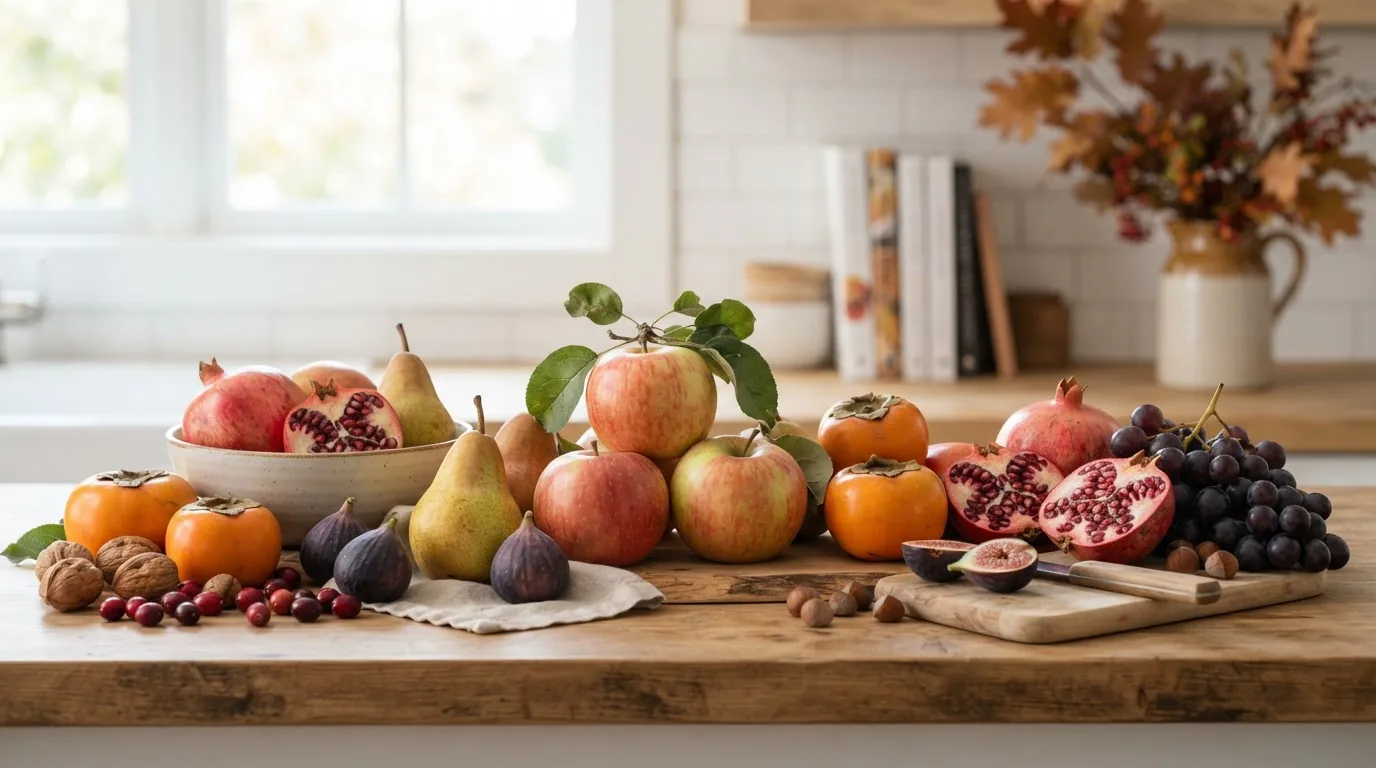
Fall fruits bring cozy flavors, crisp textures, and a bounty of seasonal produce that defines autumn cooking. This guide covers identifying in-season fruits, regional harvest timelines in the US, smart storage, and easy recipes to enjoy autumn’s yield.
Introduction to Fall Fruits
The arrival of autumn ushers in a wide range of seasonal fruits in fall that are at their peak for flavor and versatility. Eating fruits in autumn season connects meals to the harvest cycle, often offering better taste, lower cost, and higher freshness than out-of-season imports. Beyond enjoyment, seasonal eating supports local growers and often reduces the environmental cost of long-distance transport.
In the US, fall produce in season varies by region—what’s ripe in Washington state in September won’t match the harvest window in Georgia—so local knowledge matters. According to the 2025 USDA Seasonal Produce Report, many temperate fruits such as apples, pears, and grapes reach peak availability in September through November (source: federal seasonal report). This guide focuses on the practical: how to identify ripe autumn fruits, how to store them for maximum freshness, and how to use them in simple, health-focused recipes.
We’ll also touch on lesser-known options like quinces and late-season figs, plus how fall fruits overlap with early winter varieties. For foundational context about fruit types and the benefits of fresh produce, see our pillar on types of fruit and why seasonal eating matters. Types of Fruit Guide: Fresh Fruits and Vegetables Benefits
Regional availability and harvest timelines will appear throughout this guide; please note seasonal windows can shift year-to-year depending on weather and local conditions. With that in mind, let’s move into a practical seasonal list you can reference when shopping or planning meals.
Transition: Next, a clear, month-by-month list of common fall fruits and their seasonality across the US helps you know what to buy and when.
List of Common Fall Fruits and Their Seasonality
The following categorized list groups familiar and lesser-known fall fruits, with brief descriptions and broad US seasonal peaks by month. These are high-level seasonality windows (region and crop conditions can shift timing). For up-to-date local availability, consult farmer markets or state extension calendars.
Tree fruits (pomes and stone fruits)
- Apples — Widely available across the US in many varieties (eating, baking, storage apples). Peak: August–November. Best for fresh eating, baking, and long-term cellar storage.
- Pears — Include Bartlett, Bosc, Anjou varieties; ripen late summer into fall. Peak: August–November; store until ripe. Great for poaching and salads.
- Quinces — Firm, aromatic pomes used for jams and baking. Peak: September–October. Often sold firm and cooked before eating.
- Plums (late) — Some late-season plum cultivars extend into early fall. Peak: August–September.
Berries and small fruits
- Cranberries — Classic fall and early-winter fruit native to cooler regions (New England, Midwest). Peak: September–November; typically harvested and sold fresh or processed.
- Figs (late) — Many regions have a late-summer/early-fall crop; warm parts of the US (California, Texas, Florida) may have late fruit into September. Peak: August–September (regional).
- Grapes — Table grapes and wine varieties ripen in late summer through early fall. Peak: August–October depending on type and region.
Tropical and subtropical fall options
- Pomegranates — Often available in fall through early winter; widely grown in California and Arizona. Peak: September–December; ideal for fresh arils or juicing.
- Persimmons — Fuyu (firm) and Hachiya (astringent until soft) varieties ripen in fall. Peak: October–December.
Harvest and seasonal-use chart (broad US months)
| Fruit | Typical Peak Months | Common Uses |
|---|---|---|
| Apples | Aug–Nov | Fresh, baking, sauce, storage |
| Pears | Aug–Nov | Poaching, salads, baking |
| Quinces | Sep–Oct | Jams, baking, stewed fruit |
| Grapes | Aug–Oct | Fresh, roasting, juice |
| Cranberries | Sep–Nov | Sauces, preserves, baking |
| Persimmons | Oct–Dec | Raw (Fuyu), baking (Hachiya) |
| Figs | Aug–Sep | Fresh, preserves, roasting |
| Pomegranates | Sep–Dec | Arils, juice, salads |
These season peaks align with national trends; according to the 2025 USDA Seasonal Produce Report, apples and pears consistently show the longest commercial availability windows due to wide geographic production and cold-storage capabilities (source: federal seasonal report). For real-time local updates and harvest alerts, compare this list with our seasonal produce calendar. seasonal fruit guide
Note: varietal differences matter — early apples like Gala appear in late summer while storage varieties like Granny Smith may be available into winter. Also, some fruits such as persimmons and pomegranates bridge into winter, creating an overlap between fall and winter produce.
Transition: Now that you know what’s in season and when, let’s explore the nutritional and health benefits that make fall fruits valuable additions to your diet.
Nutritional and Health Benefits of Fall Fruits
Fall fruits offer concentrated nutrients—vitamins, antioxidants, and fiber—that support immune function, digestion, and overall health. While we won’t dive into exhaustive single-fruit nutrition profiles here, key patterns among autumn fruits are useful to know:
- High vitamin C: Many apples, pears, pomegranates, and cranberries contribute vitamin C for immunity and skin health.
- Polyphenols and antioxidants: Cranberries, pomegranates, grapes, and apples contain flavonoids and other antioxidants that support cardiovascular health.
- Dietary fiber: Apples, pears, and figs provide soluble and insoluble fiber for digestive regularity and satiety.
- Minerals and phytonutrients: Potassium, small amounts of magnesium, and unique compounds in quinces and persimmons add nutritional diversity.
For deeper context on fruit-and-juice contributions to health beyond autumn, see our full guide on the health benefits of fruits and juice.
Key nutrients call-out (infographic-style stat block):
| Nutrient | Fall Fruit Examples | Typical Role |
|---|---|---|
| Vitamin C | Apples, cranberries, pomegranate | Immune support, collagen synthesis |
| Fiber | Pears, apples, figs | Satiety, gut health, blood sugar moderation |
| Polyphenols | Grapes, pomegranate, cranberries | Antioxidant, heart health |
According to the Academy of Nutrition and Dietetics, consuming a mix of fruits and vegetables supports reduced chronic disease risk and provides essential micronutrients (source: professional association guidance). For a detailed vitamin breakdown across food groups, see our sources of vitamins A to K.
Carbohydrates in fruits vary, and understanding carb content helps those monitoring intake. For a complete breakdown of fruit carbohydrates, check our carbohydrates in fruits.
For green-focused nutrient perspectives and how green fruits/vegetables compare to autumn options, see our nutritional benefits of green fruits and vegetables.
If you or someone you cook for needs to manage blood sugar, many fall fruits can be part of a balanced plan when paired with protein or healthy fats. For vegetable choices that support diabetes-friendly meals, consult healthy vegetables for diabetes.
Fall fruits also fit well into heart-healthy diets due to fiber and antioxidant content; for fruit selections specifically beneficial to cardiovascular health, explore our heart-healthy fruits.
For dietary patterns like the Mediterranean approach, autumn produce provides seasonal variety—see the evidence in our Mediterranean diet benefits.
Transition: Knowing the nutritional highlights helps prioritize produce at the store—next we’ll cover practical selection and storage methods to keep fall fruits fresh and flavorful.
How to Select and Store Fall Fruits for Maximum Freshness
Selecting and storing fruits properly extends shelf life and preserves flavor and nutrition. Below are tested, experience-backed methods I’ve used at home and in seasonal recipe prep, followed by a storage comparison chart tailored to common fall fruits.
How to select ripe fall fruits — visual and tactile indicators
- Apples: look for smooth skin without soft bruises; aroma at stem end indicates ripeness. A gentle press should be firm not mushy.
- Pears: many are sold mature but not ripe — they should give slightly at the neck when ripe (for Bartlett/Anjou). Buy slightly firm if you plan to store and let ripen at home.
- Persimmons: Fuyu are firm and ready to eat; Hachiya must be very soft before eating to avoid astringency.
- Cranberries: should be firm and plump with a deep red color; soft/blemished berries indicate age.
- Grapes: plump, firmly attached to stems; avoid shriveled or sticky clusters.
- Pomegranates: heavy for size and with taut skin; weight indicates full arils versus dried-out interior.
Use your nose — ripe fruit often emits a distinctive, pleasant aroma. For many pomes and grapes, avoid fruit with visible mold, sticky exudate, or fermentation odors.
Storage fundamentals — fridge vs room temperature
General rules from experience and food-safety guidance:
- Room temperature: use for ripening (e.g., pears, some persimmons, unripe apples). Keep out of direct sun and ventilated.
- Refrigeration: slows decay and preserves crispness for apples, grapes, cranberries, and pomegranates. Refrigerate once fruit is mature or when you won’t eat it within a few days.
- Controlled-atmosphere/cold storage for long-term apple/pear storage: commercial cold storage or a cool cellar extends shelf life significantly.
Before refrigerating, remove damaged fruit to prevent ethylene and mold spread. For ethylene-sensitive or -producing fruits, store separately (apples release ethylene; berries are sensitive).
Experience-backed storage hacks I use
- Paper wrapping for apples: wrapping apples individually in paper towels and placing them in a single layer in the crisper keeps them firmer longer. I’ve kept fall storage apples this way for 6–8 weeks with good results.
- Perforated bags for grapes: store unwashed grapes in a perforated plastic bag in the fridge; wash only before eating to reduce spoilage.
- Freeze pomegranate arils: spread arils on a baking sheet to flash-freeze, then transfer to airtight bags to preserve for months.
- Quince cooking: because quinces are rarely eaten raw, I wrap and refrigerate them until I plan a batch of preserves or stewed fruit; cooking unlocks their aroma.
For authoritative safety guidance on refrigerating and shelf life, consult the FDA’s storage recommendations. FDA food storage and safety (source: federal food-safety agency).
Storage comparison chart — fridge, room temp, freezing, canning
| Fruit | Best Short-Term Store | Long-Term Preserve | Typical Shelf Life (home) |
|---|---|---|---|
| Apples | Refrigerator crisper, single layer | Cold storage or freezing slices (blanched) | 2–8 weeks (varies by variety) |
| Pears | Room temp to ripen, fridge after ripening | Canning, poaching & freezing | Several days to 2 weeks |
| Cranberries | Refrigerator in sealed bag | Freezing whole or sauce, canning | 2–4 weeks fresh; months frozen |
| Grapes | Refrigerator unwashed in perforated bag | Freeze for smoothies, drying to raisins | 1–2 weeks |
| Pomegranates | Refrigerator whole | Freeze arils or juice, canning syrups | 1–2 months whole; many months frozen |
| Persimmons | Room temp to ripen (Hachiya), fridge for Fuyu | Puree and freeze, drying | Several days to 2 weeks |
| Quinces | Cool, dry place then fridge | Cook to preserves/jelly then can | Several weeks cool |
For comprehensive year-round produce storage strategies, see our in-depth guide on fresh fruits and veggies buying and storage.
Preserving fall fruits — freezing and canning tips
Preserving extends enjoyment of fall fruits into winter. Quick guidelines:
- Freezing: wash, core/peel as needed, flash-freeze on a tray, then transfer to airtight freezer bags. Add sugar or ascorbic acid solution to prevent browning when appropriate.
- Canning: follow tested recipes and canning protocols; high-acid fruits (cranberries, pomegranate juice) are straightforward, while lower-acid fruits like pears require syrup and correct processing times. For safety procedures reference FDA canning basics. FDA home food preservation (source: federal food-safety agency).
- Jam & preserves: quinces, apples, and late figs make excellent preserves; use tested pectin and sugar ratios for safe shelf stability.
Keep in mind storage times vary by initial ripeness. A disclaimer: regional variability and fruit maturity when purchased will change how long fruit keeps; I’ve seen apples bought at peak keep far longer than apples already softened in transit.
Transition: With selection and storage tactics in hand, pairing fall fruits with seasonal vegetables unlocks savory uses that go beyond sweet preparations.
Fall Fruits and Vegetables: Complementary Seasonal Produce
Fruits and seasonal vegetables make powerful culinary combos in autumn—think roasted roots with apple chutney or a persimmon-and-arugula salad. Combining these produces balanced flavors and textures while maximizing seasonal availability.
Common fall seasonal vegetables that pair well with fruits include:
- Root vegetables: carrots, beets, parsnips — roast with apples or pomegranate molasses
- Brassicas: cabbage, Brussels sprouts, kale — toss shredded cabbage with pear and walnut slaw
- Squashes: butternut, acorn, pumpkin — pair with cranberries or roast with apple slices
- Alliums: onions and shallots — caramelize with apples for savory tarts and sides
For gardeners and cooks planning ahead, pairing fall produce with spring vegetables makes year-round menus more cohesive; to prepare your garden schedule, consult our spring vegetables growing guide.
For a deeper look at a specific fall vegetable often used with fruit—cabbage—see our analysis of the calorie content of cabbage.
Celery is another versatile fall vegetable used raw or cooked alongside fruits in salads and stews; learn its detailed nutrition in our celery nutritional information.
Complementary pairing ideas (quick list):
- Apple + Brussels sprouts + rosemary — roast for a savory side
- Pear + blue cheese + roasted beets — salad with toasted walnuts
- Persimmon + arugula + toasted pecans — light lunch salad
- Pomegranate arils + roasted squash + farro — grain bowl
- Cranberry chutney + roasted root vegetables — holiday roast accompaniment
These pairings blend sweetness, acidity, and texture—leveraging fall seasonal vegetables alongside fruit. Transitioning to preparing the fruit, the next section highlights easy, healthy recipes using fall produce.
Easy and Healthy Fall Fruit Recipes
Here are 5 practical fall fruit recipes: dessert, salad, preserve, savory side, and snack. Each recipe includes a brief intro, ingredient highlights, and adaptation ideas for health-focused or family-friendly variations. Many of these can be adapted by swapping in locally available varieties.
1. Simple Baked Apples with Oats (Family-Friendly Dessert)
Why it works: Baked apples turn naturally sweet and pair well with warm spices. This version is lower in added sugar and high in fiber.
- Ingredients highlight: baking apples (Honeycrisp or Gala), rolled oats, chopped nuts, cinnamon, small amount of maple syrup or honey, butter or coconut oil.
- Method (brief): Core apples, fill with oats-nut-spice mix, dot with a little butter, bake at 350°F for 25–35 minutes until tender.
- Health adaptation: reduce maple/honey by half and increase chopped nuts for healthy fats and protein.
2. Persimmon, Fennel, and Arugula Salad (Savory-Light)
Why it works: Fuyu persimmons provide crunchy sweetness that pairs with peppery arugula and crunchy fennel for an elegant, low-calorie salad.
- Ingredients highlight: Fuyu persimmons (sliced), fennel bulb thinly sliced, arugula, toasted walnuts, lemon vinaigrette.
- Method: Toss ingredients with olive oil, lemon, salt, and pepper. Finish with a sprinkle of Parmesan if desired.
- Family-friendly change: replace arugula with spinach for milder flavor.
3. Cranberry-Apple Chutney (Preserve for Weeks)
Why it works: Versatile condiment for roasted meats, grain bowls, or sandwiches; makes use of abundant fall apples and cranberries.
- Ingredients: fresh cranberries, peeled/diced apples, apple cider vinegar, honey or sugar, grated ginger, cinnamon stick.
- Method: Simmer all ingredients until cranberries pop and chutney thickens; cool and refrigerate in airtight jars. Can be processed in a water bath for shelf stability—follow FDA canning safety guidance. FDA canning basics (source: federal food-safety agency).
- Use: serve with roasted vegetables or as a sandwich spread.
4. Roasted Root Vegetables with Pomegranate Molasses (Savory Side)
Why it works: Pomegranate adds bright, acidic notes that lift roasted roots—this technique balances sweetness and earthiness.
- Ingredients: mixed root vegetables (carrots, parsnips, beets), olive oil, salt, pepper, pomegranate molasses or reduced pomegranate juice, pomegranate arils for garnish.
- Method: Roast vegetables at 400°F until caramelized, toss with a splash of pomegranate molasses and garnish with fresh arils and herbs.
- Health swap: reduce oil by using a nonstick pan and add a sprinkle of za’atar for flavor without extra calories.
5. Frozen Fig & Banana Smoothie (Snack/Simple Breakfast)
Why it works: Late-season figs pair with frozen banana and a splash of milk or plant milk for a fiber-rich snack that’s naturally sweet.
- Ingredients: frozen ripe figs or fresh frozen arils, frozen banana, plain Greek yogurt or plant yogurt, small amount of milk, cinnamon.
- Method: Blend to smooth; add protein powder or nut butter for more staying power.
- Kid-friendly swap: use honey for a touch of sweetness and serve with whole-grain toast.
Recipe adaptations and seasonal substitutions: swap pears for apples in chutney, use pomegranate arils instead of dried cranberries in salads, or roast grapes with squash for a new savory-sweet twist. For more ways to combine fall fruits with vegetables in main meals, see our healthy vegetable recipes.
Some fall fruits carry into winter and can extend recipe options; for fruit options that bridge seasons, refer to our winter fruits guide.
Transition: After cooking comes shopping—next we outline tips to buy the best fall fruits locally or at supermarkets.
Tips for Buying Fall Fruits: Local and Supermarket Shopping Guide
Smart buying starts with knowing where to shop and what to expect price- and quality-wise. Farmers markets, community-supported agriculture (CSA), and well-managed supermarket produce sections all offer excellent fall fruits when you know how to choose.
Practical tips:
- Visit farmers markets early in the morning for peak selection; talk to growers about varieties and harvest dates—regional differences matter and market vendors often indicate the exact orchard or farm.
- Inspect fruit for firmness and aroma; ask store produce managers about turnover—higher turnover typically means fresher fruit.
- Seasonality usually lowers cost—buying apples and pears in September–November often yields better prices than out-of-season months. According to a 2024 industry report on produce pricing, seasonal availability frequently reduces retail cost by 10–30% compared with out-of-season imports (source: industry pricing analysis).
- Buy slightly underripe if you plan to store fruit; pears and some apples ripen off the tree.
- Consider organic purchases for thin-skinned fruit if pesticide-residue reduction is a priority, but balance cost: conventional apples can be stored and washed to reduce residues.
For year-round storage and grocery strategies, see our full buying and storage guide. avocado nutrition and cost — while avocados aren’t typical fall fruits, this guide helps with year-round healthy-fat options when crafting balanced fall meals.
When shopping at supermarkets, look for signs of proper handling: coolers for berries and grapes, clean packaging, and staff who rotate stock. For local sourcing, apps and state extension services often provide weekly updates on what’s ripe in your county.
Transition: Common questions about fall fruits appear next and provide quick answers for busy shoppers and cooks.
Frequently Asked Questions
What are the most popular fall fruits available in the USA?
Apples, pears, grapes, cranberries, persimmons, figs, and pomegranates are among the most popular fall fruits in the USA, with regional variation; apples and pears have the widest availability from late summer into late fall (source: 2025 USDA Seasonal Produce Report).
How do fall fruits differ from summer or winter fruits in taste and nutrition?
Fall fruits typically offer denser textures, higher fiber, and richer polyphenols compared with many summer fruits; winter-overlap fruits like pomegranates provide extended antioxidant availability. Nutrient profiles vary by type but seasonal freshness often enhances flavor and nutrient retention.
How can I tell if a fall fruit is ripe and ready to eat?
Check visual cues (color, taut skin), scent (ripe aroma), and touch (gentle give on pears, firmness on apples). Specific fruits like Hachiya persimmons must be very soft before eating, while Fuyu can be eaten firm.
What is the best way to store fall fruits to keep them fresh longer?
Refrigerate apples, grapes, cranberries, and pomegranates in perforated bags or crisper drawers; let pears and certain persimmons ripen at room temperature before chilling. Use paper wraps for long-term apple storage and freeze or can excess fruit.
When is the peak season for cranberries and apples?
Cranberries typically peak September–November in cooler-growing regions; apples peak broadly August–November depending on variety and region, with some storage varieties extending availability into winter (source: 2025 USDA Seasonal Produce Report).
How do I prevent mold or spoilage when storing autumn fruits?
Remove damaged fruit, store items separately by ethylene production, keep humidity balanced in the fridge, and avoid washing fruit until use; for long-term, freeze or process into preserves using tested methods to prevent spoilage.
Are fall fruits generally more expensive compared to other seasons?
Fall fruits are often less expensive when in local harvest locally, but prices vary by region and crop yields; industry analyses show seasonal availability can reduce retail prices by roughly 10–30% compared to out-of-season imports (source: 2024 industry pricing report).
Can fall fruits be frozen or canned safely for use during winter?
Yes—many fall fruits freeze well (arils, sliced apples, pears) and can be canned or made into preserves; follow FDA-tested canning procedures and proper freezing techniques to ensure safety and quality.