how many ounces a water bottle contains is one of the first questions people ask when they want to track hydration simply and reliably. This guide breaks down common fluid ounces measurements, converts between ounces and liters, and shows how many bottles to drink to meet daily hydration goals.
Introduction to Water Bottle Sizes and Ounces
Understanding fluid ounces (oz) and bottle capacity is the foundation of practical hydration tracking. A water bottle’s volume—often printed on the bottle—tells you how many fluid ounces it holds. That single number turns an abstract daily goal (like 64 oz or 80 oz) into concrete actions: refill frequency, how many sips, and how many bottles to carry.
Why bottle size matters: smaller bottles increase refill frequency and promote frequent sipping; larger bottles reduce the number of refills but can be heavy and discourage finishing. This guide serves as a complete bottle capacity guide and water bottle volume reference for everyday life—office workers, athletes, parents, and travelers.
Hydration ties directly into well-being: water supports body temperature, cellular function, and cognitive performance. For a biological overview, see how much water is in the human body.
Transition: Now that you know why bottle size matters, let’s compare the standard sizes you’ll see on the market and what they mean in oz and liters.
Standard Water Bottle Sizes and How Many Ounces They Contain
This comparison table lists the most common bottle sizes in ounces alongside liter conversions, common brand examples, and quick notes about who tends to use each size. Use this as a reference when buying bottles or planning refills.
| Bottle Size (oz) | Liters (approx.) | Common Label/Brand Examples | Typical Use |
|---|---|---|---|
| 8 oz | 0.24 L | Small kids’ sippy/flask inserts | Medicine doses, toddlers |
| 12 oz | 0.35 L | Glass water bottles, small tumblers | Short outings, coffee mugs |
| 16 oz (1 pint) | 0.47 L | Standard reusable bottle, many branded sports bottles | Daily desk use, gym short sessions |
| 18 oz | 0.53 L | Some stainless bottles and grocery-store bottles | Gym and commuting |
| 20 oz | 0.59 L | Popular single-serve bottled water, commuter bottles | Workday carry, common recommended size |
| 24 oz | 0.71 L | Outdoor bottles, tall reusable bottles | Long meetings, moderate activity |
| 32 oz (1 quart) | 0.95 L | Large reusable bottles (Nalgene-style), insulated bottles | Half-day use, frequent gym sessions |
| 40 oz | 1.18 L | Jumbo insulated bottles | Travel, long outdoor days |
| 48 oz | 1.42 L | Large carafes, big insulated bottles | All-day hydration with infrequent refills |
| 64 oz (half gallon) | 1.89 L | Hydration jugs, gallon alternatives | Whole-day office or fieldwork |
| 72 oz | 2.13 L | Oversized carriers | High-output athletes, long outdoor events |
| 84 oz | 2.48 L | Specialty hydration jugs | All-day hydration without refill |
| 100 oz | 2.96 L | Large hydration bladders and jugs | Multi-hour hikes, extended travel |
Brief explanation: many people refer to a “standard water bottle” as either 16 oz or 20 oz in the U.S., while reusable bottles commonly come in 20 oz, 24 oz, 32 oz, and 64 oz sizes. When you read labels, remember that 1 US fluid ounce = 29.5735 milliliters (ml), so conversions to liters are straightforward: ounces × 0.0295735 = liters.
Contextual note: if you want metric-focused guidance about drinking 2 liters daily, check 2 liters of water guide and hydration effects.
Transition: Knowing exact bottle volumes helps you plan daily consumption—next we’ll show how to use bottle sizes to meet recommended hydration goals.
How to Use Water Bottle Sizes to Meet Daily Hydration Recommendations
Start by identifying your daily target. Common practical targets include 64 oz (about 1.9 L), 80 oz (~2.4 L), or personalized amounts from a calculator. This section shows step-by-step methods and example calculations using popular bottle sizes.
Step 1 — Choose a realistic daily target
General targets: many guideline-based plans suggest roughly 64–96 oz depending on sex, activity, and environment. Hydration goals should be individualized—use the water intake calculator if you want a tailored number.
Step 2 — Match your bottle size to the target
- Note your bottle’s volume in oz (from label or this chart).
- Divide your daily target by bottle oz to get bottles/day.
- Round up slightly to allow for missed sips or activity.
Step 3 — Use examples
Example calculations (practical, everyday scenarios):
- Target: 64 oz/day. If your bottle is 16 oz, drink 4 bottles (64 ÷ 16 = 4). If your bottle is 32 oz, drink 2 bottles (64 ÷ 32 = 2).
- Target: 80 oz/day. If your bottle is 20 oz, drink 4 bottles (80 ÷ 20 = 4). If using a 32 oz bottle, drink 2.5 bottles—round to 3 bottles plus a small glass.
- Target: 100 oz/day. If using a large 100 oz jug, one fill covers the day. If using 20 oz bottles, drink 5 bottles (100 ÷ 20 = 5).
Real-life check: if you prefer to track in bottles rather than cups or milliliters, using a consistent bottle size makes daily tracking simple and habit-based.
Tracking methods and real-life tips
- Manual tally: mark ticks on the bottle with a permanent marker at time targets (morning, midday, afternoon, evening).
- Apps and reminders: hydration apps let you set the bottle size and remind you to drink; many apps have pre-set sizes or allow custom sizes.
- Visual cues: use a bottle with time markers—these show how much to have drunk by 9AM, noon, etc.
Experience example: an office worker named Maya switched from using a 20 oz bottle to a 32 oz insulated bottle. She found she filled once in the morning and once after lunch, hitting an 80 oz target with two fills and some sips—this reduced interruptions and increased adherence.
Linking hydration to physiology: track urine color to confirm intake adequacy—see urine color hydration indicators for practical monitoring tips.
For precise planning with 32 oz bottles, use the 32 oz of water guide and hydration intake calculator to convert personal hydration needs into 32 oz servings.
Hydration during high-activity or hot weather: increase target by 12–24 oz per hour of intense exercise, or follow sports drink guidelines for electrolyte replacement rather than plain water alone.
If you’re considering a high target, learn more about drinking a gallon of water a day and whether that approach fits your needs.
Transition: With basic calculations in hand, many people ask if a specific daily number—like 80 oz—is adequate. The next section evaluates “Is 80 oz enough?” with evidence and common myths.
Is 80 oz of Water a Day Enough? Hydration Myths and Facts
Short answer: often yes for many adults, but adequacy depends on body size, activity, climate, and health status. Below we analyze the evidence and separate common myths from facts.
Expert insight: Per the 2024 National Academies’ hydration guidelines, adequate intake values provide a general framework—men often target about 125 oz (total fluids) and women about 91 oz, but these totals include water from beverages and food. For conservative, easy tracking many people use 64–80 oz as a practical baseline.
Scientific context: CDC hydration resources emphasize tailoring intake to activity and health; Mayo Clinic guidance similarly notes variability by person and environment. For overarching reference, consult National Academies.
- Myth: Everyone needs exactly 64 oz/day. Fact: 64 oz is a simple baseline but not universal—activity, pregnancy, and climate change the requirement.
- Myth: More water always equals better health. Fact: Excessive intake (hyponatremia) is possible; follow needs-based guidance and medical advice.
- Myth: Thirst is a bad indicator. Fact: Thirst is often a reliable short-term signal; combine it with urine color and bottle-tracking for best results.
Is 80 oz specifically enough?
Examples to illustrate: a moderately active adult in a temperate climate drinking 80 oz daily will likely meet basic hydration needs. However:
- If you exercise intensely for more than an hour, add 12–24 oz per hour and replace electrolytes as needed.
- If you live in a hot, dry climate or have an illness causing fluid losses (fever, vomiting, diarrhea), increase intake and consider oral rehydration solutions.
For hydration challenges during illness, see dehydration causes and recovery options.
Note: hydrating during fasts has special rules—refer to water fasting rules and safety considerations for safety guidance.
Hydration and health risks: low intake can contribute to fatigue, low blood pressure, and impaired cognition. For specifics on blood pressure effects see does dehydration cause low blood pressure.
Weight loss and hydration: adequate water supports appetite control and metabolism—see water intake for weight loss for targeted strategies.
Vulnerable groups: infants and older adults have different needs; if caring for infants, review dehydration signs in babies.
Transition: For visual comparison and quick selection, the next section presents a bottle size chart you can use as a quick reference when shopping or packing.
Bottle Size Chart: Visual Guide to Ounces in Popular Water Bottles
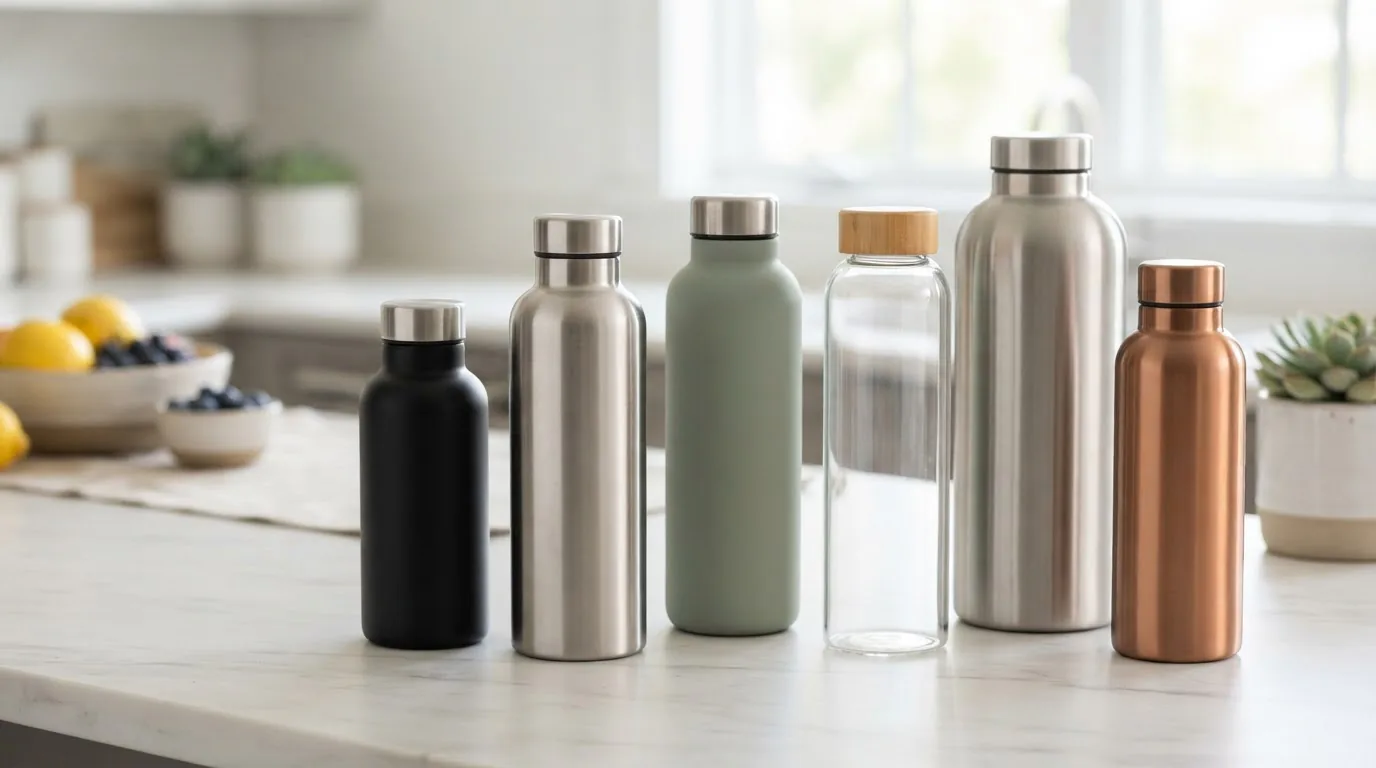
Below is a detailed table acting as a visual guide to common water bottle sizes, their ounces, liter equivalents, approximate weight when full (water weight only), and a short note on portability. Imagine bottle silhouettes labeled with ounces for easy in-store recall.
| Size (oz) | Liters | Approx. Weight Full (lbs) | Portability | Recommended For |
|---|---|---|---|---|
| 12 oz | 0.35 L | 0.78 lb | Very portable | Short walks, coffee replacements |
| 16 oz | 0.47 L | 1.04 lb | Portable | Desk use, casual outings |
| 20 oz | 0.59 L | 1.3 lb | Portable, fits cup holders | Commuting, gym |
| 24 oz | 0.71 L | 1.56 lb | Moderately portable | Long meetings, hiking snacks |
| 32 oz | 0.95 L | 2.08 lb | Bulky but common | Half-day, gym sessions |
| 40 oz | 1.18 L | 2.6 lb | Heavy | Travel, long shifts |
| 64 oz | 1.89 L | 4.16 lb | Large jug | All-day hydration |
| 100 oz | 2.96 L | 6.5 lb | Very large | Hiking groups, overnight stays |
How to use this chart: choose a bottle that balances portability and the number of refills you’re willing to do. A 32 oz bottle often hits the sweet spot for many—large enough to reduce refills, small enough to carry and fit in cup holders.
Note about materials: plastic, stainless steel, and glass vary in added weight. Insulated bottles are heavier but keep water temperature longer—important for long hikes or hot workplaces.
Transition: Now that you have a visual guide, let’s explore how to choose the right bottle size for your lifestyle and hydration habits.
Choosing the Right Water Bottle Size for Your Lifestyle and Hydration Needs
Choosing the right bottle size is a trade-off between convenience, tracking accuracy, and lifestyle fit. Below are scenarios and recommendations, with tips to optimize use for each situation.
Scenario: Desk worker or office employee
Recommended sizes: 20–32 oz. A 20 oz bottle means more frequent short refills and steady sipping; a 32 oz bottle provides fewer interruptions. If you enjoy time markers, choose a bottle with printed times to reach your target.
Scenario: Commuter or frequent traveler
Recommended sizes: 16–24 oz for portability and ease of storage in bags. Avoid very large bottles that won’t fit in compartments. If flying, empty the bottle through security and refill after.
Scenario: Athlete or gym-goer
Recommended sizes: 24–40 oz depending on workout length. For long endurance sessions, combine water with electrolyte drinks. For high sweat loss, consider larger volume per trip or a hydration pack.
For clarity on beverage types, read does drinking coffee count as drinking water to correct common misconceptions about non-water fluids.
Scenario: Parents and kids
Recommended sizes: 8–16 oz for young children; 16–20 oz for older kids. Use spill-proof designs and label bottles to avoid confusion.
Scenario: Outdoors/hiking
Recommended sizes: 64–100 oz or hydration bladders. Combine bottle size with planning for water sources on the route.
Comfort vs. compliance: Larger bottles reduce refill count but can be heavy; smaller bottles are easy to finish and encourage sipping. Pick the bottle you’ll actually use.
Also consider water quality and mineral content—see best water for hydration for tips on water types that support hydration.
For alternatives beyond plain water—sports drinks, coconut water, and low-sugar alternatives—see best hydrating beverages and soft drinks and hydration.
Transition: People often have practical quick questions about bottle counts, refill frequency, and measurement—read on for a compact Q&A that addresses common concerns.
Common Questions About Water Bottle Sizes and Hydration Intake
How many bottles of water should I drink a day to stay hydrated?
Divide your chosen daily fluid target by your bottle’s oz capacity. For example, to meet 80 oz with a 20 oz bottle, drink four bottles (80 ÷ 20 = 4). Adjust for activity, climate, and individual needs.
How many ounces are in a standard water bottle?
In the U.S., common single-use bottled waters are 16–20 oz, with 20 oz being widely labeled as a “standard” single-serve size. Reusable bottles vary widely from 12 oz to 100 oz.
How do I calculate daily water intake using my water bottle size?
Pick a daily target (e.g., 64 or 80 oz), then divide by bottle ounces. Round up to account for missed sips. Use an app or tally marks to track fills and sips throughout the day.
How often should I refill my water bottle to meet hydration needs?
Refill frequency = daily target ÷ bottle volume. Example: for 80 oz with a 32 oz bottle, expect to refill twice and drink part of a third fill (80 ÷ 32 ≈ 2.5).
Can drinking too few ounces from my water bottle cause dehydration?
Yes—consistently drinking below your needs increases dehydration risk, especially with exercise, heat, or illness. Monitor urine color and energy levels to detect early signs.
What is the best water bottle size for on-the-go hydration?
Choose a size that matches your day: 20–24 oz for commuting and convenience; 32 oz for longer periods away from refills; 64+ oz for full-day trips where refills are scarce.
Transition: To finish, review a concise summary and practical checklist to turn bottle knowledge into a sustainable hydration routine.
Summary and Practical Tips for Using Bottle Sizes to Stay Hydrated
- Pick one consistent bottle size as your tracking unit—consistency simplifies habits.
- Calculate bottles/day: daily target ÷ bottle oz, rounding up for margin.
- Use time-marked bottles or apps to spread intake evenly through the day.
- Match bottle size to activity: larger for long outdoor days, smaller for travel.
- Cross-check with urine color and energy—bottle counts are a guide, not an absolute.
Practical closing advice: choose the bottle you’ll actually carry and use. If you want further actionable strategies to reinforce these habits and improve wellness, check 5 tips to stay hydrated and improve wellness for complementary routines and habit-building tactics.
For benefits of proper hydration beyond thirst control, read hydration benefits and energy.
Final takeaway: converting daily hydration goals into specific bottle counts removes ambiguity and makes consistent hydration achievable. Start with one bottle size, measure for a week, then adjust up or down based on activity and how you feel.
Frequently Asked Questions
What does “how many ounces a water bottle” mean?
It refers to the bottle’s capacity measured in US fluid ounces (oz), telling you how much liquid the bottle holds; 1 fluid ounce equals about 29.5735 milliliters, so multiply oz by 0.0295735 to get liters.
How many bottles of water should I drink a day to stay hydrated?
Decide a daily fluid target (e.g., 64–80 oz), then divide by your bottle size. For 80 oz with a 20 oz bottle, drink four bottles (80 ÷ 20 = 4), adjusting for activity and climate.
How many ounces are in a standard water bottle?
Common single-serve bottled waters in the U.S. are 16–20 oz; reusable bottles commonly range from 12 oz to 64 oz or more, so “standard” depends on context and use.
How do I calculate daily water intake using my water bottle size?
Pick a daily goal (e.g., 64 oz), divide by your bottle’s ounces (64 ÷ bottle oz), and round up. Track fills and sips with a marker or app to ensure you meet the calculated count.
Is drinking 80 oz of water a day enough for adults?
Often yes for many adults in moderate conditions, but adequacy depends on body size, exercise, climate, and health; tailor intake using guidelines and consult a provider for medical concerns.
What is the best water bottle size for on-the-go hydration?
For on-the-go use, 20–32 oz bottles balance portability and refill frequency; choose smaller for convenience or larger if you want fewer refills during longer outings.
Can drinking too few ounces from my water bottle cause dehydration?
Yes—consistently drinking less than your needs can cause dehydration, especially with heat, exercise, or illness; use urine color and symptoms to monitor hydration status.
How often should I refill my water bottle to meet my hydration needs?
Refill frequency equals daily target ÷ bottle volume. Example: 80 oz target with a 32 oz bottle requires roughly 2.5 fills—two full refills plus part of a third.