What you’ll achieve, time required, and skill level
By the end of this guide you will be able to confidently select, clean, trim, cut, store, and cook common vegetables so they taste better and retain more nutrients. Expect to spend 60–120 minutes reading and doing the hands-on steps the first time; routine prep afterward takes 10–30 minutes per meal. This guide assumes a confident home cook with basic knife skills and access to a standard kitchen (stove, oven, basic pans).
Before you start
- Tools: 1 chef’s knife (8-inch), paring knife, cutting board, vegetable peeler, colander, large mixing bowl, measured kitchen scale, kitchen timer, instant-read thermometer (optional).
- Cookware: rimmed baking sheet, sauté pan (10–12-inch), steamer basket or pot with lid, large saucepan, microwave-safe bowl (if using microwave).
- Materials: ice for ice bath, 2–3 clean dish towels, 1 cup kosher salt, 1 tablespoon baking soda (for heavily soiled produce), 1 cup white vinegar (optional for inspection), cooking oil (olive or vegetable), cooking spray.
- Quantities to plan: aim for 400–500 g (about 3–4 cups chopped) vegetables per person for a vegetable-forward main and 150–200 g per person for a side dish.
Core step-by-step preparation
Follow this numbered sequence — each numbered item begins with a bold, action-first phrase and then gives precise, measurable instructions.
-
Inspect and select fresh produce
When you buy vegetables, choose items that are firm, vibrant, and free of soft spots or excessive blemishes. Specific targets: leafy greens should feel crisp and cold; bell peppers should weigh about 150–200 g each and sound hollow when tapped; root vegetables like carrots and beets should be firm and weigh at least 200 g for medium size.
At the farmer’s market or grocery store, check the stem area on tomatoes and peppers (no mold) and the crown on broccoli (tight, deep green florets). For mushrooms, pick caps that are dry and not slimy. If a bunch looks limp, pass — freshness matters for cooking times and texture.
Internal links: See the pillar-level overview of fruit and vegetable types for selection cues: Fruit Types Guide with Benefits and Nutritional Information. For more specific vegetables, consult sibling guides like Broccoli Nutrition Facts and the 100 Vegetables Name Guide for identification tips.
-
Store correctly immediately
Store vegetables within 2 hours of purchase. Recommended refrigerator zones and temperatures:
- Leafy greens and herbs: store in perforated plastic bag or container at 32–36°F (0–2°C) with a paper towel to absorb moisture; use within 3–7 days.
- Cruciferous vegetables (broccoli, cauliflower): store in crisper drawer 34–38°F (1–3°C); use within 4–7 days.
- Root vegetables (carrots, beets, parsnips): remove greens and store in a perforated bag at 34–40°F (1–4°C); last 2–4 weeks.
- Tomatoes and peppers: store at 50–70°F (10–21°C) — not in the fridge unless fully ripe and you must slow ripening; use within 3–7 days.
Tip: keep ethylene-sensitive vegetables (lettuce, broccoli) away from ethylene producers (apples, bananas). When in doubt, use perforated produce bags and keep humidity high for greens, lower for root crops.
-
Wash and sanitize methodically
Always clean vegetables right before cooking, not hours earlier. Procedure for most vegetables:
- Fill a large bowl with cold water and 1 tablespoon salt per 2 liters (for leafy dirt removal use 1 tablespoon white vinegar per 4 liters if heavily soiled).
- Submerge and gently agitate for 20–30 seconds; let sit 1–3 minutes to loosen soil.
- Lift out and drain through a colander; for leafy greens, finish with a 60–90 second rinse under a steady cold stream.
- Dry with a salad spinner set to medium for 10–15 seconds, then blot with paper towels; for root vegetables, scrub with a vegetable brush for 10–20 seconds under cold running water.
For mushrooms: wipe with a damp towel or quickly rinse for 5–7 seconds and pat dry; do not soak — mushrooms absorb water and dilute flavor.
-
Trim and peel to purpose
Trim only what you need. Guidelines with exact amounts:
- Leafy greens: remove 1–2 cm of thick stem for kale, discard outer wilted leaves; for spinach, remove root cluster only.
- Broccoli/cauliflower: cut off 1–2 cm of the main stalk to expose fresh stem; separate florets into 2–3 cm pieces for even cooking.
- Carrots/turnips/beets: peel 1–2 mm of outer layer with a peeler if the skin is waxed or dirty; leave skin for thin-skinned carrots if clean.
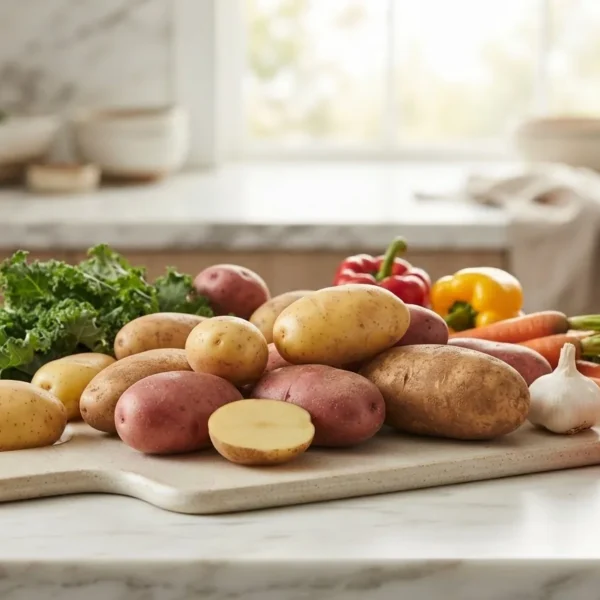
- Potatoes: peel only if recipe requires; for roasted potatoes cut into 2.5–3 cm cubes so roasting time is 25–35 minutes at 425°F (220°C).
Paring knife use: remove roots and damaged skin with a 1–2 cm incision per defect. For dense roots, peel in 3–4 passes until smooth. Preserve peels where possible for stocks.
-
Cut to even pieces for uniform cooking
Match piece size to method and target cook time. Common size-to-time mappings:
Vegetable Cut size Approx cooked time (medium heat) Broccoli florets 2–3 cm 6–8 minutes (sauté/steam) Carrot rounds 0.5 cm slices 8–12 minutes (steam/sauté) Potato cubes 2.5–3 cm cubes 25–35 minutes (roast) Leafy greens Rough chop, 2–4 cm pieces 1–3 minutes (sauté) Keep pieces within ±2 mm of each other when possible. For mixed vegetables, cut the dense vegetable slightly smaller so all components finish in the same time window.
-
Choose the best cooking method for the vegetable
Pick the method below with explicit targets for texture and nutrient retention. Use the times and temperatures provided.
Roasting — maximize flavor and browning
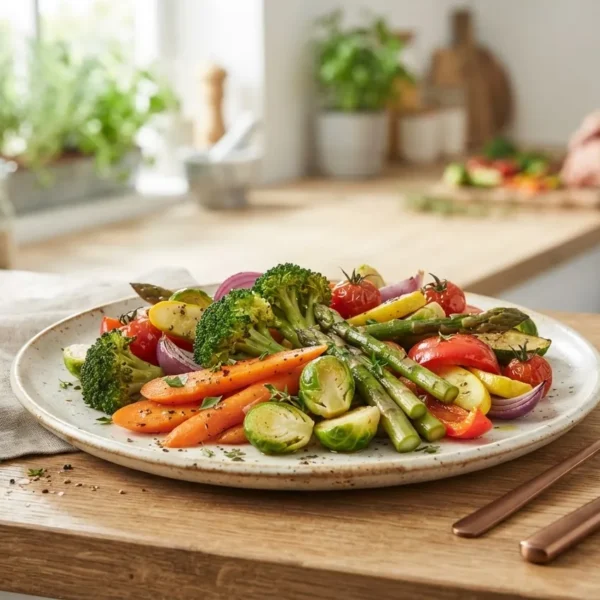
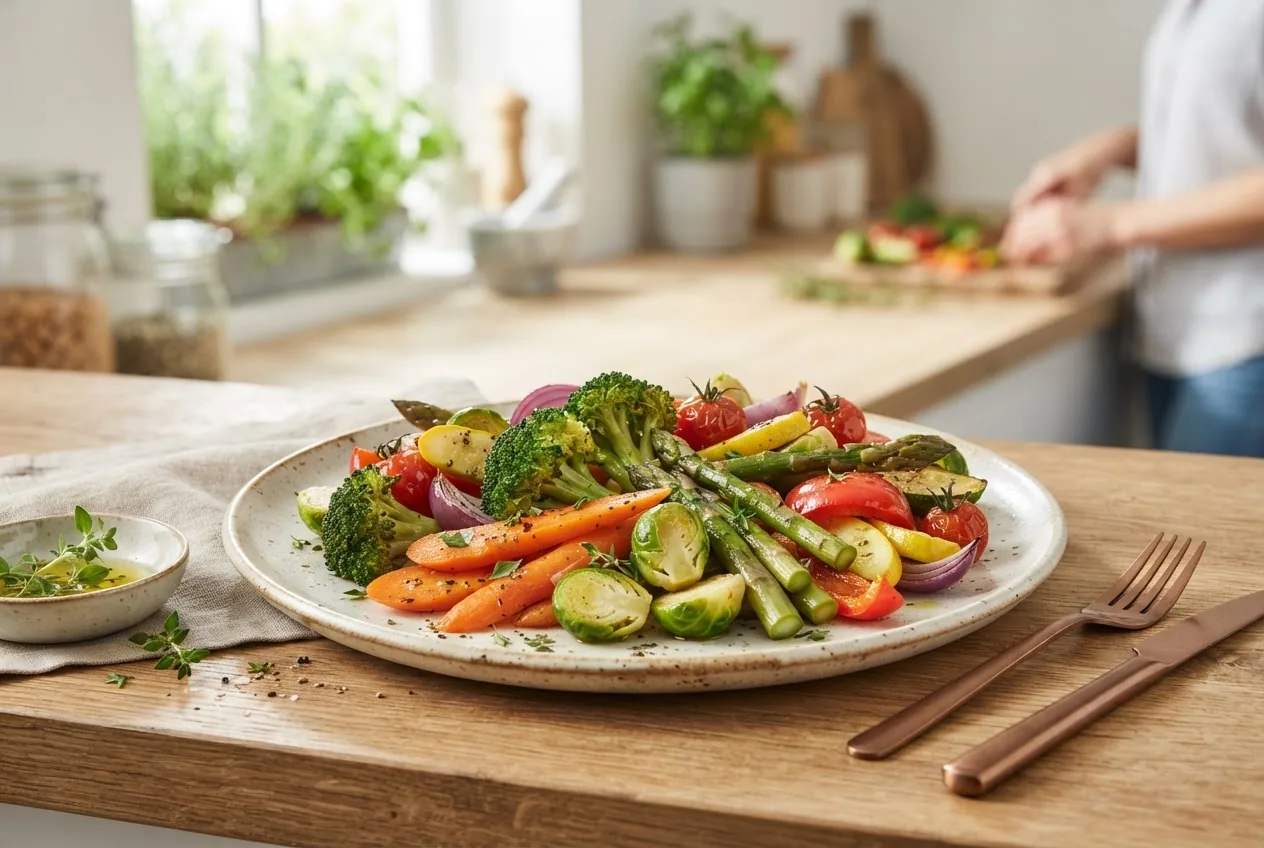
Best for: root vegetables, winter squash, broccoli, cauliflower. Oven: preheat to 425°F (220°C). Oil: toss with 1–1.5 tablespoons oil per 500 g veg. Season: 3/4 teaspoon kosher salt per 500 g and 1/4 teaspoon freshly ground black pepper.
Spread in a single layer on a rimmed baking sheet; roast 20–35 minutes depending on size — check at 15-minute mark and turn once. Target internal temperature for fork-tender is 95–100°F (35–38°C) for most roasted veggies.
Steaming — preserve color and nutrients
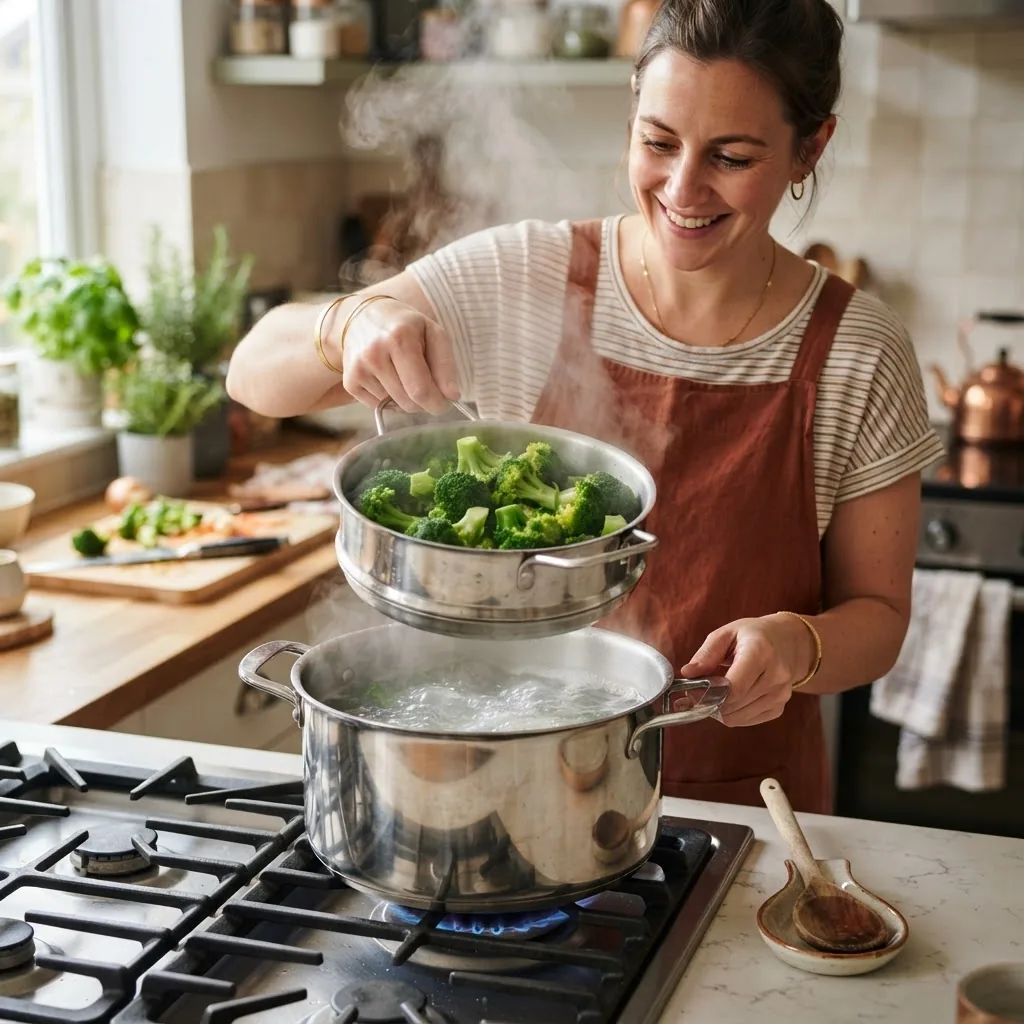
Best for: broccoli, green beans, carrots. Water level: 2–3 cm below steamer basket. Bring water to a rolling boil, add vegetables to basket, cover and steam:
- Green beans (trimmed): 4–6 minutes — bright green and tender-crisp.
- Broccoli florets (2–3 cm): 6–8 minutes — tender but not mushy.
- Carrot slices (0.5 cm): 6–10 minutes depending on thickness.
Finish immediately in an ice bath for 45–60 seconds if you plan to freeze or use in salads to lock color.
Blanching — quick cook then shock
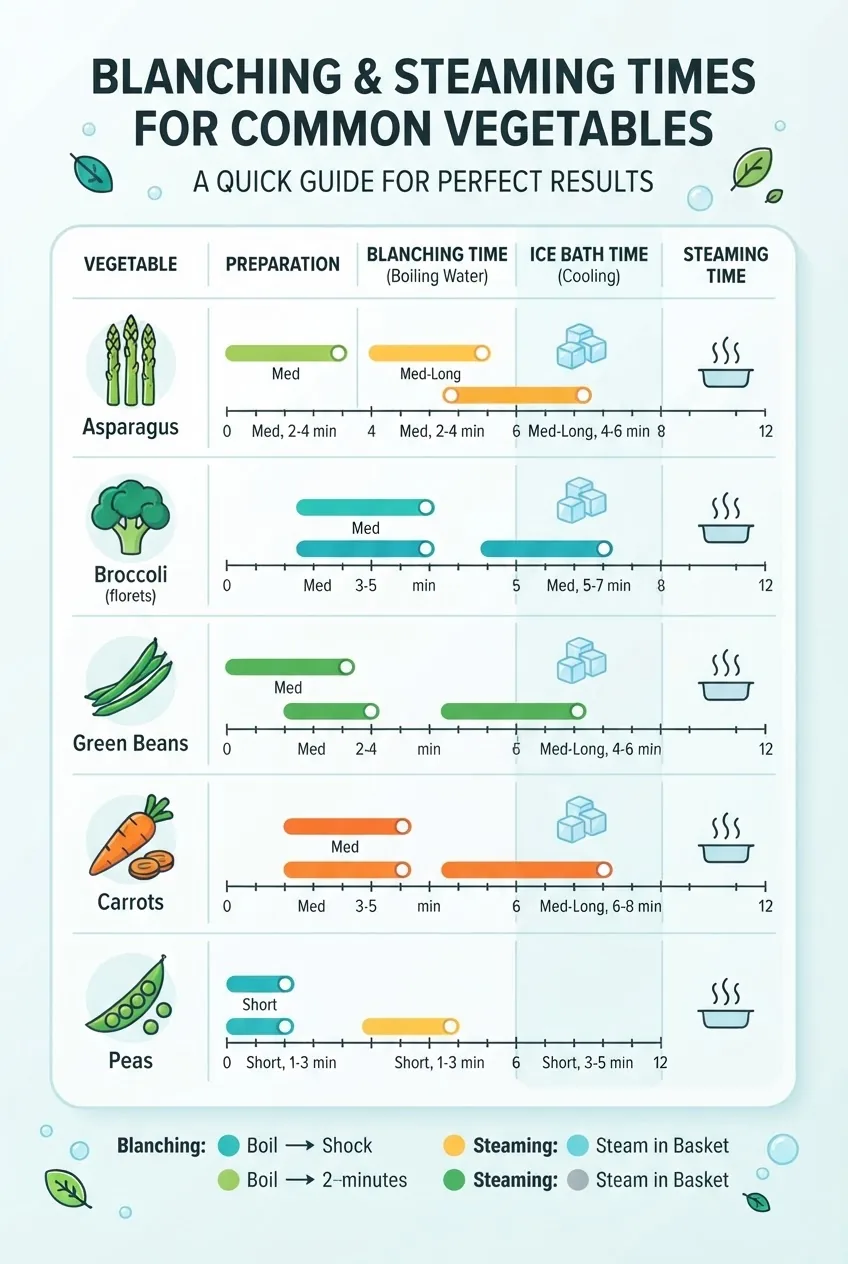
Use blanching to set color, reduce bitterness, or pre-cook before freezing. Procedure: bring 3–4 liters water to a rolling boil with 1 tablespoon salt per liter. Add vegetables in a single layer for the following times, then immediately transfer to an ice bath (water+ice) for the same time you boiled, or 45–60 seconds minimum:
- Asparagus spears (1 cm thick): 2 minutes boil, 2 minutes ice.
- Green beans: 2–3 minutes boil, 2 minutes ice.
- Peas: 1–2 minutes boil, 1 minute ice.
Sautéing — fastest for leafy greens and tender cuts
Best for: spinach, Swiss chard, sliced bell peppers, thin asparagus. Heat a heavy sauté pan over medium-high heat (between 350–375°F on the pan surface). Add 1 tablespoon oil per 250 g vegetables. Add onions first (1–2 minutes), then vegetables: cook 1–4 minutes stirring constantly for leafy greens, 4–6 minutes for sliced peppers until softened but still colorful.
Boiling — use sparingly for starchy or batch cooking
Best for: potatoes for mash, beets (whole). Use a large pot with a 4:1 water-to-veg ratio. Bring to a rolling boil then simmer:
- Potato cubes 2.5–3 cm: 12–15 minutes, drain, and steam-dry 1 minute before mashing.
- Whole beets (medium, 200–250 g each): simmer 30–40 minutes until a knife slides in; cool 10 minutes before peeling under running water.
Microwaving — fast single-portion option
Microwave in a covered microwave-safe bowl with 2 tablespoons of water per 100 g. Power: high. Time examples:
- Broccoli florets (150 g): 3–4 minutes; check at 3 minutes.
- Frozen mixed vegetables (200 g): 4–5 minutes, stir halfway.
Let stand 1 minute after cooking; drain excess water and season.
-
Season, acidify, and finish for best flavor
Seasoning guidelines with precise amounts for 500 g cooked vegetables:
- Salt: 3/4 teaspoon kosher salt (or 1/2 teaspoon table salt).
- Pepper: 1/4 teaspoon freshly ground black pepper.
- Acid: 1–2 teaspoons lemon juice or 1 tablespoon vinegar (apple cider or red wine) to brighten flavor after cooking.
- Fat: 1 tablespoon butter or 1–1.5 tablespoons extra-virgin olive oil added at finish for richness.
Herbs: add hardy herbs (rosemary, thyme) before roasting; delicate herbs (parsley, basil) and citrus zest should be added at the end — 1 tablespoon chopped parsley per 500 g or 1 teaspoon zest.
-
Test doneness precisely
Use a fork and timing guidelines below; preferred textures:
- Tender-crisp: offer gentle resistance and spring back — target 6–8 minutes for broccoli, 4–6 for green beans.
- Fully tender (for purees): soft throughout — roasted root vegetables 25–35 minutes, boiled for mash 12–15 minutes.
If using an instant-read thermometer, target 95–105°F (35–40°C) for most tender vegetables and 190–210°F (88–99°C) for hot mashed potato interiors.
-
Finish and plate with texture contrasts
Add a crunchy element to contrast soft vegetables: sprinkle 1–2 tablespoons toasted nuts (almonds or pine nuts) per 500 g or 2 tablespoons toasted breadcrumbs. For a sauce, finish 500 g of vegetables with 2 tablespoons pan juices reduced with 1 teaspoon Dijon mustard and 1 tablespoon water or stock.
-
Cool, store, and reheat safely
Cool cooked vegetables to 70°F (21°C) within 2 hours and to 41°F (5°C) within 4 hours. Store in airtight containers in the fridge for 3–4 days or freeze in single layers on a tray then pack into freezer bags up to 10–12 months. Reheat to an internal temperature of 165°F (74°C) before serving.
-
Plan portions and use leftovers
Portion targets: 400–500 g per person for vegetable-forward main dishes; 150–200 g per person for sides. Use leftover cooked vegetables within 3 days in omelets, soups, stir-fries, or blended into purees. To prevent sogginess, reheat under dry heat (oven at 375°F / 190°C for 6–10 minutes) rather than microwaving when possible.
Worked examples — exact recipes and timings
Example 1: Roasted broccoli with lemon and chili (serves 4)
Ingredients: 900 g broccoli (about two large heads), 1.5 tablespoons olive oil, 1.25 teaspoons kosher salt, 1/2 teaspoon black pepper, 1/4 teaspoon crushed red pepper, 1 tablespoon lemon juice, 1 teaspoon lemon zest, 2 tablespoons grated Parmesan (optional).
- Preheat oven to 425°F (220°C).
- Prepare trim and separate broccoli into 2–3 cm florets (see Step 5 sizing).
- Toss in a bowl with 1.5 tablespoons oil, 1.25 tsp salt, 1/2 tsp pepper, and 1/4 tsp crushed red pepper.
- Arrange in a single layer on a rimmed sheet, roast 18–22 minutes, turning once at 10 minutes. Look for deep green edges and browned tips.
- Finish off-heat with 1 tablespoon lemon juice and 1 tsp zest; scatter 2 tbsp Parmesan and serve.
Outcome: slightly crisp outside, tender inside. If florets are small (1.5 cm), reduce time to 12–16 minutes.
Example 2: Quick sautéed garlic spinach (serves 2 as side)
Ingredients: 300 g spinach (washed, spun dry), 1 tablespoon olive oil, 2 cloves garlic (minced, ~6 g), 1/4 teaspoon salt, 1/8 teaspoon pepper, 1 teaspoon lemon juice.
- Heat a 10–12″ sauté pan over medium-high; add 1 tablespoon oil and 2 minced garlic cloves; cook 20–30 seconds until aromatic (do not brown).
- Add the spinach in batches. For 300 g, cook 1–2 minutes, stirring until wilted but still bright green.
- Season with 1/4 teaspoon salt, 1/8 tsp pepper, finish with 1 teaspoon lemon juice, and serve immediately.
Example 3: Blanched carrots for salads (serves 4)
Ingredients: 500 g carrots, peeled and sliced 0.5 cm thick; 3 liters water with 3 tablespoons kosher salt; 2 liters ice water for shock.
- Boil water at a rolling boil. Add carrots and cook 4 minutes.
- Shock immediately in ice water for 2–3 minutes until completely cool.
- Drain and pat dry; toss with 1 tablespoon olive oil, 1/2 teaspoon salt, and 1 tablespoon chopped parsley.
Nutrition-focused tips: maximize vitamins and minerals
How cooking affects nutrients and precise mitigation steps:
- Water-soluble vitamins (vitamin C, B vitamins) leach into water. Reduce loss by steaming instead of boiling; steam times listed earlier retain ~85–90% of vitamin C vs. ~50–60% for long boiling.
- Fat-soluble vitamins (A, K, E) are better absorbed with a small amount of fat. Add 1 tablespoon oil per 250–500 g cooked vegetables to improve absorption of provitamin A in carrots and beta-carotene in spinach.
- To preserve glucosinolates (cruciferous vegetables), avoid over-chopping before cooking — chop right before cooking and steam 6–8 minutes rather than boiling for 12+ minutes.
- Cooking increases the availability of certain nutrients: lycopene in tomatoes is more bioavailable after cooking — simmer 15–30 minutes in a sauce with 1 tablespoon oil per 400 g tomatoes.
Special cases and troubleshooting
Tough stems and fibrous vegetables
For vegetables like collard stems or large broccoli stalks, peel the outer fibrous layer with a 2–3 mm deep strip and slice crosswise into 3–4 mm pieces. Cook 8–12 minutes in boiling water or 12–15 minutes roasted at 425°F until tender.
Vegetables with high water content (zucchini, eggplant)
Sauté or roast at high heat to reduce sogginess. For zucchini: slice 1 cm thick, salt lightly (1/4 teaspoon per 500 g) and let sit 10 minutes, then pat dry before cooking. Roast at 425°F for 12–15 minutes or sauté 4–6 minutes per side.
Bitterness in greens
To reduce bitterness in kale or mustard greens: blanch 60–90 seconds, shock in ice, then sauté with 1 tablespoon oil, 1 clove garlic, and 1 tablespoon honey or 1 tablespoon balsamic vinegar per 500 g to balance flavor.
Meal-planning with cooked vegetables — concrete weekly plan
Example plan for 1 adult for 5 days (vegetable-focused):
- Day 1 dinner: Roasted root vegetable tray (900 g mixed carrots, parsnips, beets) at 425°F for 30–35 minutes; make 2.5 servings and reserve remainder for Day 3.
- Day 2 lunch: Sautéed spinach (300 g) in 1 tbsp oil; add to 2 scrambled eggs.
- Day 3 dinner: Roast leftover roots reheated at 375°F for 8–10 minutes and served over cooked quinoa (150 g cooked).
- Day 4 lunch: Blanched green beans (300 g) tossed with 1 tbsp toasted almonds and lemon juice.
- Day 5 dinner: Stir-fry 400 g mixed vegetables (bell pepper 150 g, broccoli 150 g, mushrooms 100 g) on high heat for 5–7 minutes with 1 tbsp oil and 2 tbsp soy sauce.
Shopping list for this plan: 1.5 kg root vegetables, 700 g spinach, 600 g green beans, 400 g mixed stir-fry vegetables, quinoa 300 g dry.
Storing prepped vegetables safely
Store prepped raw vegetables in airtight containers lined with a dry paper towel. Typical fridge shelf lives after prep:
- Prepped leafy greens: 2–4 days (best within 48 hours).
- Cut bell peppers: 3–5 days.
- Prepped root vegetables: 1–2 weeks if fully dry and refrigerated.
Label containers with date prepped. For freezing, blanch per earlier times, drain, pat dry, freeze single layer on a tray for 1–2 hours, then transfer to freezer bags with date. Thaw in fridge overnight or cook from frozen for soups/stews.
Tool care and knife-safety reminders
Sharpening: hone the blade with a steel before each session and sharpen with a stone or professional service every 6–12 months depending on use. Knife safety rules I use in the kitchen:
- Keep fingertips tucked with a claw grip; cut in a controlled rhythm.
- Use a damp towel under the cutting board to prevent slipping.
- Clean cross-contamination: raw root peels left on board — sanitize with hot soapy water and a quick 1 tablespoon bleach in 1 quart water soak if heavy staining occurred; rinse thoroughly and air dry.
Common mistakes and how to avoid them
From my years cooking and teaching I’ve seen the same errors repeatedly. Here are the ones that matter and how I fixed them.
- I once roasted a tray of mixed vegetables without cutting them to uniform sizes; the smaller pieces burnt while the larger ones were undercooked. Solution: always size-match components to within 5 mm or roast dense vegetables separately.
- I used boiling water to cook delicate greens and ended up with a gray, lifeless pile. Solution: steam or sauté greens for 1–3 minutes only and shock if needed to preserve color.
- I salted vegetables only at the beginning and they tasted flat after cooking. Solution: salt in two stages — a light salting before cooking (1/2 of final salt) and finish with the remaining salt and acid to brighten flavors.
- I stored washed greens wet and they spoiled in 24 hours. Solution: wash right before use or dry thoroughly using a spinner and line storage container with paper towels to absorb moisture.
- I reheated roasted vegetables in the microwave and they went soggy. Solution: reheat at 375°F (190°C) for 6–10 minutes or sauté quickly to restore texture.
Compact verification checklist
- I selected vegetables that are firm and in season.
- I stored produce at correct temperatures within 2 hours of purchase.
- I washed and dried vegetables immediately before cooking using the salt/water method for leafy greens or a scrub brush for roots.
- I cut vegetables to uniform sizes within ±2 mm for even cooking.
- I chose the cooking method with explicit times/temperatures (e.g., roast 425°F 20–35 min; steam 4–8 min).
- I used 3/4 teaspoon kosher salt per 500 g as baseline seasoning and added acid at the end.
- I cooled leftovers to 70°F within 2 hours and stored at 41°F within 4 hours.
- I reheated to 165°F before serving leftovers.
When to call a professional
Call a professional if you need: large-volume food prep for events (caterers handle 20+ servings with safe hot-holding), advice on commercial kitchen layout, or if you suspect home storage or water contamination is causing repeated spoilage — contact a local food safety inspector or private food-safety consultant. For knife or equipment sharpening beyond home tools, a professional sharpener or kitchen equipment technician will provide consistent, safe results.
Additional resources and related guides
For deeper dives: check the pillar Fruit Types Guide with Benefits and Nutritional Information, the 100 Vegetables Name Guide for identification, and Hot Vegetable Dishes Guide for recipes and composed dishes that use these prep techniques.
Frequently Asked Questions
How long should I steam broccoli so it stays bright and not mushy?
Steam 2–3 liters water to a boil with a steamer basket 2–3 cm above the water. For 2–3 cm florets steam 6–8 minutes covered; check at 6 minutes. For salads or freezing, shock in ice water for 45–60 seconds immediately after steaming.
What is the best way to cook vegetables to keep the most vitamins?
Steam or sauté quickly: steam preserves ~85–90% of vitamin C for many vegetables versus longer boiling. Use 1 tablespoon oil per 250–500 g to aid absorption of fat-soluble vitamins like vitamin A and K.
Can I prepare and freeze cooked vegetables ahead — how long will they last?
Yes. Blanch or cook to just-tender, cool in an ice bath, freeze single layer for 1–2 hours, then pack airtight. Frozen cooked vegetables keep 10–12 months; label with date and use within a year for best quality.
How do I stop mushrooms from becoming soggy when cooking?
Wipe mushrooms with a damp towel or rinse 5–7 seconds and dry thoroughly. Cook on a hot pan without overcrowding, 4–6 minutes per batch, to encourage browning and evaporate surface moisture quickly.
What is the best way to cook mixed vegetables so everything finishes at the same time?
Cut denser vegetables (potatoes, carrots) 20–25% smaller than tender items (zucchini, bell peppers). Start with the dense items for 5–8 minutes, then add tender vegetables and finish together. Alternatively roast dense items separately.